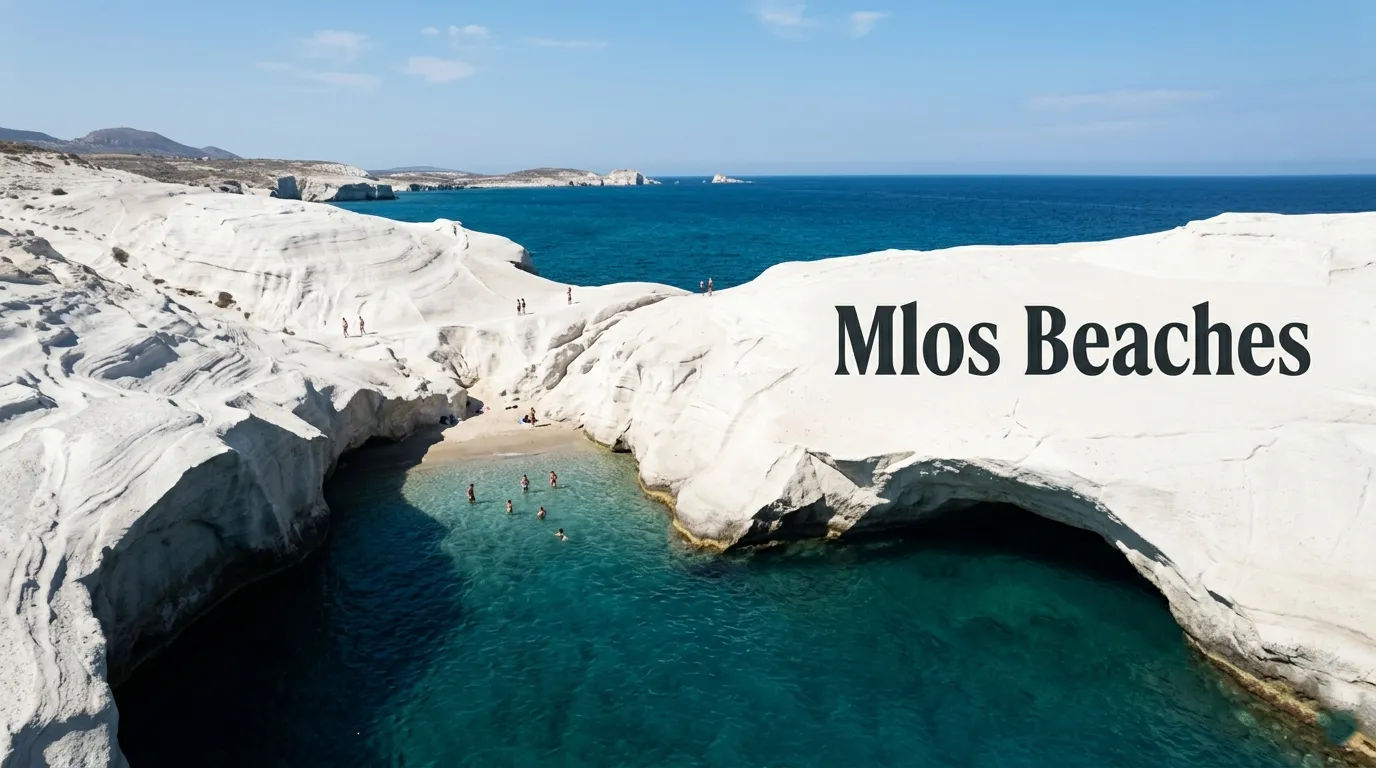
Milos Beaches 2026: Honest Wind, 4×4, and Access Guide
Milos is a volcanic Greek island with beaches that look like another planet.
The white rock coves and turquoise water are exactly as surreal as the photos
promise.
The photos do not show the ladder at Tsigrado or the dirt track to Firiplaka.
This guide tells you which beach requires a 4×4, which requires a boat, and which
one will sandblast you when the Meltemi wind howls.
Book your 4×4 rental car months before a 2026 summer trip.
The automatic, compact Suzuki you thought was fine will bottom out on the south
coast dirt roads.
Milos Beaches
Milos beaches are a geological fever dream of white, pink, and ochre rock
formations. The island is essentially a collapsed volcano with a flooded crater.
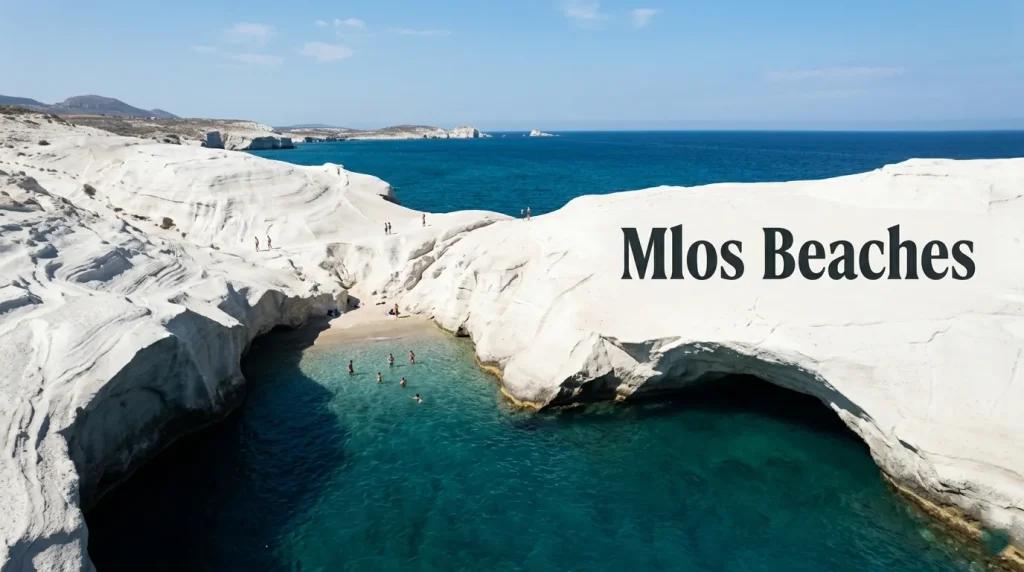
This creates a coastline of surreal, sheltered coves and dramatic sea caves.
The sand ranges from fine white powder to coarse, multi-colored pebbles.
The water is some of the clearest in the entire Aegean Sea.
Visibility on a calm day can exceed 100 feet, making it a snorkeler’s obsession.
The beaches are divided sharply by the north-south wind axis.
When the Meltemi wind blasts from the north, the entire north coast becomes a
sandblasting zone.
The south coast is sheltered on a windy day, but the roads are rougher.
This single wind dynamic defines every single beach day on Milos.
Milos Greece Beaches
The beaches of Milos are the primary reason to visit this Cycladic island.
They are entirely different from the classic, long, sandy stretches of Naxos or
Crete.
The most famous beach is Sarakiniko, a moon-like landscape of white volcanic
rock. It is a geological sculpture park that happens to have a small inlet for
swimming.
Kleftiko is the second icon, a series of white rock sea caves only accessible
by boat. The water is an impossible shade of blue, and the cliff jumping is famous.
The south coast holds the best sandy beaches, like Firiplaka and Provatas.
These are the most classically beautiful swimming beaches on the island.
The north coast coves, like Papafragas, are dramatic, narrow inlets.
They feel like hidden, secret caves carved into the rock.
Beaches in Milos
The beaches in Milos are accessed by a mix of paved roads, dirt tracks, and boat
trips. A standard rental car will successfully reach Sarakiniko, Pollonia,
and Provatas.
You need a high-clearance vehicle, ideally a 4×4 SUV, for Firiplaka,
Tsigrado, and the far west coves. The dirt tracks are deeply rutted and
scatter sharp rocks.
The most famous beaches have zero natural shade and zero facilities.
Pack a beach umbrella, a cooler of water, and a full tank of gas before leaving
Adamas.
Sun lounger sets at the organized beaches like Paliochori cost 20 to 40 euros
per pair in 2026. The beach bars provide excellent food and ice-cold Mythos beer.
The island’s beaches are not signposted with consistent, clear English names.
Download an offline Google Map of the island before you leave your hotel’s WiFi.
Milos Island Beaches
Milos island has a beach for every type of geological obsession.
The white chalk cliffs of Sarakiniko are the most photographed spot on the
island.
The rust-red and sulfur-yellow cliffs of Firiplaka back a long, sandy crescent.
The colors are created by the mineral-heavy volcanic rock leaching into the sand.
Paliochori Beach has sand that is literally hot from geothermal activity.
The water bubbles with volcanic spring gases, turning the pebbles a vivid yellow.
Alogomandra Beach is a small, sandy cove with a natural rock arch.
It is one of the best protected coves for a family with young children.
Kleftiko is not a beach but a bay of sea caves, only reachable by boat.
You swim, snorkel, and cliff jump directly from the boat into the deep blue water.
Key Takeaway: Rent a 4×4 and plan your beach day based on the Meltemi wind direction, not just the beauty of the photo.
Best Beaches in Milos
The single best beach for a classic, comfortable, sandy day is Provatas Beach.
It is on the south coast, sheltered from the wind, with shallow, calm water.
The best beach for sheer, surreal photographic wonder is Sarakiniko.
It is a terrible beach for a relaxing, comfortable sunbathing day on the sand.
The best beach for an adventurous, multicolored swim is Firiplaka.
The best beach for a secluded, hot-spring-influenced soak is Paliochori.
| Beach | Best For | Wind Shelter | Access |
|---|---|---|---|
| Sarakiniko | Photos, Cliff Jumping | Exposed (North) | Easy, Paved Road |
| Kleftiko | Boat Tour, Sea Caves | Sheltered | Boat Only |
| Firiplaka | Colored Cliffs, Sandy Swim | Sheltered (South) | Rough Dirt Track, 4×4 |
| Provatas | Classic Sandy Beach Day | Sheltered (South) | Easy, Paved Road |
| Tsigrado | Adventurous, Hidden Cove | Sheltered (South) | 4×4 + Ladder Descent |
Key Takeaway: On a north wind day, abandon Sarakiniko and drive south to Provatas or Firiplaka immediately.
Best Beaches Milos
The best Milos beach for a full-service, organized beach club day is Paliochori.
The volcanic sand is colorful, and the tavernas serve fresh seafood directly on the
pebbles.
The best for a protected, shallow, family-friendly paddle is Alogomandra.
The cove is small, and the rock arch provides natural shade and a wind barrier.
The best for a remote, wild, and clothing-optional experience is the far west end of
Agios Ioannis. This is a long, dirt-track-access-only beach with a single
seasonal taverna.
The best for a quick, dramatic dip near the port is Papafragas Cave.
It is a deep, narrow chasm in the rock with a sliver of sand and stunning water.
Do not attempt to climb down into Papafragas if the rocks are wet.
The descent is a scramble on slick volcanic stone with no safety rail.
Milos Best Beaches
The north coast beaches are the most beautiful but the most wind-exposed.
Sarakiniko, Mandrakia, and Firopotamos are all on the north side.
The south coast beaches are the safest bet for a comfortable swim day.
Provatas, Firiplaka, and Kipos provide long, sandy stretches.
The boat-access-only beaches are the most pristine and unforgettable.
Kleftiko, Sykia, and Polyegos island are only reachable by catamaran
tour.
A full-day catamaran tour to Kleftiko and Polyegos typically costs 80 to 120 euros
per person. It includes lunch, drinks, and multiple swim stops in the sea caves.
Book the catamaran tour weeks in advance for July and August 2026.
The best boats with the fewest guests sell out first.
Sarakiniko Beach Milos
Sarakiniko Beach is a blindingly white, lunar-like landscape of smooth volcanic
rock. It is the single most photographed beach in the entire Cyclades.
The rock formations are the result of a volcanic eruption meeting the sea.
They have been sculpted by wind and water into smooth, undulating curves.
The “beach” part is a small, sandy inlet leading into deep, turquoise water.
It is a swimming and cliff-jumping spot, not a sunbathing spot.
The white rock reflects the sun with an intensity that can sear your retinas.
Wear sunglasses and bring an umbrella; there is zero natural shade.
Arrive at 8 a.m. in summer to see it without the crowds.
By noon, the white rock is covered in towels and the cove is full of swimmers.
The cliff jumping spots are popular, but the entry and exit points are worn smooth.
Never jump from an unmarked or unsupervised rock ledge.
Kleftiko Beach Milos
Kleftiko is not a beach but a bay of towering white rock sea caves on the
southwest tip. It is accessible only by boat, and it is the defining Milos
experience.
The water is an impossibly clear, electric turquoise that glows inside the caves.
Pirates once used this natural fortress as a hideout in centuries past.
A catamaran tour anchors in the bay, and you swim directly from the boat.
You snorkel through arches, into caves, and alongside cliffs that plunge into
deep water.
The cliff jumping here is famous, with various heights for different nerve levels.
The highest jump is over 30 feet and requires a committed, confident leap.
Check the weather forecast before booking a Kleftiko tour.
A strong south wind makes the bay choppy and the swim dangerous.
The tour includes a cooked meal on board, usually grilled chicken or fresh fish.
You spend three to four hours swimming in some of the clearest water in the world.
Tsigrado Beach Milos
Tsigrado Beach is a tiny, spectacular cove guarded by an infamous ladder
descent. The cove is only accessible by climbing down a narrow slot canyon and a
wobbly wooden ladder.
The ladder at Tsigrado is an unmaintained, physically demanding hazard.
It is not a regulated staircase, and the Municipality of Milos has closed it in
the past.
You must be physically fit, unafraid of heights, and not carrying heavy gear.
Climbing back up requires pulling yourself out of a tight crack in the rock.
The reward for the terror is a pocket-sized cove of fine white sand and unreal
turquoise water. The isolation created by the difficult access is the luxury.
Check the official status of the Tsigrado ladder with your hotel before driving there. It can be closed without warning for safety reasons in 2026.
If the ladder is closed, drive five minutes east to Firiplaka for a similarly
beautiful, far more accessible cove. Firiplaka is the safe, sane alternative.
Key Takeaway: Tsigrado’s ladder is a real danger. Firiplaka is the safe, equally beautiful sister beach right next door.
Milos Boat Tour Beaches
The boat tour beaches of Milos are the island’s ultimate, uncrowded treasures.
Kleftiko is the star, but Sykia Cave and Polyegos Island are essential
additions.
Sykia is a collapsed sea cave where a small boat enters through a low arch into
an open-air, turquoise-water amphitheater. It is a genuinely surreal swim.
Polyegos is an uninhabited island off the east coast of Milos.
Its beaches are massive, empty, and the water is a shade of blue that does not
look real.
A full-day catamaran tour covering Kleftiko, Sykia, and Polyegos is the best single
day you can have on Milos. It costs between 80 and 120 euros per person in 2026.
Choose a smaller, 20-person catamaran over the large 80-person cruise boats.
The small boats navigate deeper into the caves and the vibe is far more personal.
Tours depart from Adamas port and return by sunset.
Book the earliest tour possible to beat the other boats to Kleftiko.
Best Milos Beach for Families
Provatas Beach is the best Milos beach for a family with young children.
The south-coast location provides wind shelter, and the water is shallow and calm.
The sand is soft, golden, and slopes very gradually into the water.
A taverna and sun lounger rental service operate directly on the beach.
Alogomandra Beach is the best for a protected, cove-style family paddle.
The natural rock arch shields the small sandy beach from wind and waves.
Pollonia Beach is the best for a family staying in the Pollonia village.
The beach is right on the edge of the village, with tavernas and cafes steps away.
Avoid Sarakiniko for a family beach day with young children.
The rocks are slippery, the water drops off quickly, and there is no shade.
Pack every essential you need for a child, including water, food, and an umbrella.
Most Milos beaches have zero facilities beyond a single taverna or sunbed rental.
Best Milos Beach for Couples
Firiplaka Beach is the best Milos beach for a romantic, active couple.
The multicolored cliffs, the sheltered sand, and the clear water are a shared
visual feast.
Kleftiko, by private catamaran tour, is the most romantic experience on the
island. A small-group sunset tour with just a dozen other people is unforgettable.
Sarakiniko at sunset is a romantic, iconic, and free experience.
The white rock glows pink and orange, and the crowd thins dramatically after 6 p.m.
Paliochori Beach offers a romantic lunch with a volcanic twist.
The beach tavernas serve food cooked in the geothermal sand right next to your
lounger.
Avoid Provatas on a windy north-coast day when everyone else flees south.
It becomes the default option for the entire island and loses its quiet intimacy.
Best Time to Visit Milos Beaches
The best time is the first three weeks of September.
The water is at its maximum warmth, the Meltemi wind begins to calm, and the crowds
thin out.
June is the second-best month, with long daylight and a less intense wind.
The water is still cool, around 70 degrees Fahrenheit, but perfectly swimmable.
Avoid the last week of July and the first three weeks of August.
This is the absolute peak of European summer holidays, and Milos is no longer a
secret.
The Meltemi wind blows most reliably and strongly in late July and August.
This is the period when the south coast beaches become the only comfortable option.
May is beautiful, with wildflowers on the hills, but the water is cold.
October is a gamble, with the risk of rain and windy storms closing the catamaran
tours.
Check the Hellenic National Meteorological Service wind forecast every morning.
It is the single most important habit for a successful Milos beach week.
Safety and Seasonal Warnings for Milos Beaches
Milos beaches present a unique set of physical hazards tied to their volcanic
geology and isolation. The beauty of the landscape directly creates the risk.
Key safety and seasonal facts every visitor should know:
- Tsigrado Ladder: Do not attempt the descent if you have a fear of heights, any mobility issue, or heavy gear. The ladder is a risky, unmaintained structure. Verify its 2026 status locally.
- Slippery Rocks at Sarakiniko: The smooth white rock is extremely slippery when wet. Never run on the rocks. Wear solid water shoes with grip.
- Meltemi Wind: A strong north wind creates powerful waves on north coast beaches. Do not swim at Papafragas or the north side of Sarakiniko during a windstorm.
- Dehydration and Sun: There is almost no natural shade on Milos beaches. Bring a UV-blocking umbrella and at least two liters of water per person. Heatstroke risk is extreme in July and August.
- Dirt Track Accidents: The south coast dirt tracks are narrow and rutted. Drive slowly in your 4×4 and do not attempt the tracks in the dark.
- Remote Beaches: Alogomandra, Agios Ioannis, and the west coves have no cell service and no lifeguards. Tell someone your plans before driving to a remote spot.
Contact the Port Authority of Milos in Adamas for marine weather warnings. Dial
112 for any pan-European emergency.
Frequently Asked Questions About Milos Beaches
Can you access Tsigrado Beach without the ladder?
No, the only access to Tsigrado Beach is via the narrow ladder and rope descent.
The ladder is an unmaintained structure that the municipality occasionally closes.
Go to Firiplaka Beach next door for a safer, equally beautiful cove access.
Do you need a 4×4 for Milos beaches?
Yes, a 4×4 SUV is mandatory for safely accessing the south coast beaches.
Standard cars will bottom out and sustain damage on the rutted dirt tracks.
Book your 4×4 months in advance for any July or August 2026 trip.
Which beach is best when the Meltemi wind blows?
The south coast beaches, especially Provatas and Firiplaka, are best in the wind.
They are naturally sheltered from the northern Meltemi blast.
Avoid Sarakiniko and all north coast beaches during a strong north wind.
Is Sarakiniko Beach good for swimming?
Yes, Sarakiniko has a beautiful, deep water inlet perfect for swimming and jumping.
It is a terrible beach for a relaxing, comfortable sunbathing day.
Bring water shoes, as the smooth white rocks are extremely slippery when wet.
Are there any sandy beaches in Milos?
Yes, Milos has several long, sandy beaches on the sheltered south coast.
Provatas, Firiplaka, and Kipos are the best wide, sandy stretches on the island.
The north coast beaches are predominantly rocky lunar landscapes with small inlets.
How do you get to Kleftiko Beach?
You reach Kleftiko Bay exclusively by booking a full-day catamaran or boat tour.
Tours depart from Adamas port and include lunch and multiple swim stops.
Book the tour weeks in advance for the peak 2026 summer season.
A Milos beach trip is an expedition, not a resort vacation.
You need a 4×4, an umbrella, a cooler of water, and a wind forecast app.
The reward is swimming through a pirate cave in water that glows an impossible blue.
The lunar rocks of Sarakiniko and the hidden cove of Firiplaka are worth the dust
and the early mornings.
Book the 4×4 now for your 2026 trip, and secure the catamaran tour before you
arrive. Check the wind direction, choose your coast, and never assume a famous
ladder is a safe ladder. That is the Milos you came for.