Florida East Coast Beaches 2026: Best Sand, Surf & Towns
Florida east coast beaches are defined by their hard-packed sand and consistent Atlantic surf. They offer a completely different trip from the calm, clear Gulf Coast.
The driving force here is the Atlantic Ocean, which shapes the coast with wind, waves, and the warm Gulf Stream current. This coast is for active beachgoers, surfers, and families who want the classic Americana beach town experience.
Visit Florida notes the east coast stretches roughly 360 miles, from the historic First Coast to the neon-charged Gold Coast. That stretch contains radically different sand textures, water colors, and local vibes.
This 2026 guide covers the best east coast beaches for families, surfers, and couples. You will find honest water clarity guidance, specific parking rules, and which towns to book now.
Florida East Coast Beaches Overview
Florida’s east coast beaches change dramatically from north to south. The northern beaches feature hard-packed, cinnamon-gray sand that is firm enough to drive on.
The water in the north is a dark, steel-gray color due to sediment from the St. Johns River. It is rarely the postcard turquoise first-timers expect.
South of the Treasure Coast, the influence of the Gulf Stream becomes powerful. The water shifts to a clearer green and eventually a pale blue-green off Miami and Palm Beach.
The sand also transitions. The coarse, compacted northern sand gives way to softer, lighter, coral-based sand in the south.
| Region | Sand Type | Water Color | Vibe |
|---|---|---|---|
| First Coast (Jax to St. Aug) | Cinnamon-gray, hard-packed | Steel-gray, often murky | Historic, nature, surf fishing |
| Space Coast (NSB to Cocoa) | Light tan, firm | Gray-green, churned | Surf, space launches, families |
| Treasure Coast (Vero to Jupiter) | Tan to light brown | Green to pale blue | Quiet luxury, wildlife, calm |
| Gold Coast (Palm Beach to Miami) | White to pale tan, soft | Pale blue-green to turquoise | Glamour, luxury, global scene |
Best East Coast Florida Beaches for Families
Cocoa Beach is the best all-around east coast beach for families in 2026. The surf is gentle enough for boogie boarding but present enough to be fun.
The beach is extremely wide, especially at low tide, giving kids plenty of room to run. The famous Ron Jon Surf Shop and the nearby Kennedy Space Center add iconic rainy-day backup plans.
Disney’s Vero Beach Resort is the top choice for families wanting a self-contained beach bubble. The resort manages a pristine stretch of sand with zero vehicle traffic.
The character breakfasts and the waterslide pool distract toddlers from the fact that the ocean here can occasionally be rough. Lifeguards are attentive, but the shore break is steeper than Cocoa Beach.
Families should avoid the hard-packed driving zones of Daytona Beach during major event weeks. The combination of vehicles, dense crowds, and strong rip currents can be stressful with small children.
Key Takeaway: Cocoa Beach is the family sweet spot for safe surf and space coast fun, but skip Daytona during car events.
Best East Coast Florida Beaches for Surfing
Sebastian Inlet State Park is the best wave on the U.S. Atlantic coast. It offers a reliable, powerful beach break and the famous “First Peak” and “Monster Hole” breaks.
The wave here is formed by a deep channel cutting through the inlet jetty. It focuses ocean swells into perfect, hollow, A-frame peaks that break in crystal-clear green water.
New Smyrna Beach is the most consistent surf town for intermediate surfers. The waves here break over a forgiving sand bottom and the town has a gritty, laid-back, surf-centric soul.
Honest surf warning: New Smyrna is also the shark bite capital of the world. The bites are almost always investigative “hit and runs” from small spinners, but it is a real psychological factor.
First Coast surf spots: The Poles in Jacksonville and the Vilano Beach jetty offer bigger, colder winter waves for experienced locals, but are not beginner-friendly tourist surf camps.
Most Romantic East Coast Florida Beaches
Palm Beach is the most romantic and upscale beach destination on the Florida east coast. The sand is soft and pale, and the water is a clear pale blue-green.
The town itself is immaculately manicured. High-end boutiques on Worth Avenue and private garden courtyards offer a quiet, affluent intimacy that feels completely separate from the typical Florida beach party scene.
For a more historic, mysterious romance, St. Augustine Beach is the right choice. You can walk the hard-packed cinnamon sand and then retreat to the cobblestone streets of the nation’s oldest city.
The beach here is wide and windy, perfect for long walks rather than still-water floating. Couples should book a bed and breakfast in the historic district, not a chain hotel on the beach highway.
Delray Beach offers a younger, more energetic romance. The walkable Atlantic Avenue is packed with sidewalk cafes and buzzing restaurants that spill out onto the street.
Key Takeaway: For quiet, high-end luxury, book Palm Beach; for historic charm and long walks, choose St. Augustine.
Florida East Coast Beach Resorts
The east coast is home to some of the most iconic American beach resorts. The Breakers Palm Beach stands at the absolute top of the luxury pyramid.
The Breakers is a sprawling, Italian-Renaissance-style palace sitting directly on a pristine private-feeling beach. The value here is in the flawless service and the opulent history, not a modern minimalist design.
Fontainebleau Miami Beach is the definitive Gold Coast luxury resort. It is a sprawling, mid-century modern icon with multiple pools, a LIV nightclub, and a dense, social beach scene.
This is the resort for travelers who want to be seen and who love high-energy glamour. Those seeking quiet relaxation will find the pool deck and beach scene here overwhelming.
Disney’s Vero Beach Resort on the Treasure Coast offers a unique Atlantic coast resort product. It delivers Disney’s famous kid-focused service on a quiet, conservation-minded stretch of beach.
Best Time to Visit Florida East Coast Beaches
The best weather window for Florida’s east coast is March through May. The air is warm, the humidity is low, and the college spring breakers have mostly cleared out.
The worst time to visit is September. It is the statistical peak of hurricane season, the daily afternoon thunderstorms are relentless, and the humidity is oppressive.
The winter months, January and February, are a gamble. It can be 75 degrees and sunny, or a damp, windy 50 degrees that makes the beach unusable.
Sargassum seaweed typically arrives between May and August. The Atlantic coast sees sporadic piles of the brown algae, but it is rarely the catastrophic stranding seen in the Caribbean.
| Month | Weather | Crowds | Water Temp | Verdict |
|---|---|---|---|---|
| Jan-Feb | Variable, can be cold/windy | Moderate | Cold (60-70°F) | Risky for swimming |
| Mar-Apr | Warm, sunny, pleasant | High (Spring Break) | Cool | Best all-round |
| May | Hot, mostly dry | Moderate | Warm | Excellent |
| Jun-Aug | Hot, humid, thunderstorms | Peak | Warm (85°F) | Seaweed, dense crowds |
| Sep-Oct | Hot, hurricane risk | Low | Very warm | Highest weather risk |
| Nov-Dec | Cool, clear | Moderate | Cool | Good value |
Florida East Coast Beaches Map and Access
The A1A Scenic Highway is the single most important piece of logistics for a Florida east coast beach trip. This road runs parallel to the ocean, connecting the beaches.
Using Interstate 95 for fast long-distance slingshots between towns is essential. Then you exit east and reconnect with the slower, more scenic A1A to reach the sand.
Parking is the single biggest daily frustration for visitors. Most public beach access points require a payment via a mobile app like ParkMobile.
Beach driving is a unique access point. You can drive and park directly on the sand in specific zones of Daytona Beach and New Smyrna Beach for a daily fee.
- Beach driving zones: Daytona Beach (core), New Smyrna Beach, St. Augustine (Vilano), Huguenot Memorial Park (Jacksonville).
- Pedestrian-only luxury: Palm Beach, Miami Beach, Fort Lauderdale, Vero Beach.
Daytona Beach Guide
Daytona Beach is the world’s most famous driveable beach. The hard-packed sand here is so firm that cars, bikes, and trucks park side-by-side with sunbathers during low tide.
The beach itself is extremely wide, flat, and long, stretching for over 23 miles. The sand is a firm, caramel-colored powder that turns into a compact highway at the water’s edge.
The driving speed limit is 10 miles per hour, and the beach operates like a regular road with marked lanes. Families should be hyper-vigilant with young children who might run into a traffic lane.
This is a poor choice for travelers seeking a quiet, natural coastal experience. The roar of engines and the smell of exhaust are part of the package, especially during the Daytona 500 and Biketoberfest.
Insider Tip: The beach driving zone south of the Daytona Beach Pier is the most congested. Drive south to Ponce Inlet for a less chaotic, more scenic driving experience.
Cocoa Beach and Space Coast Guide
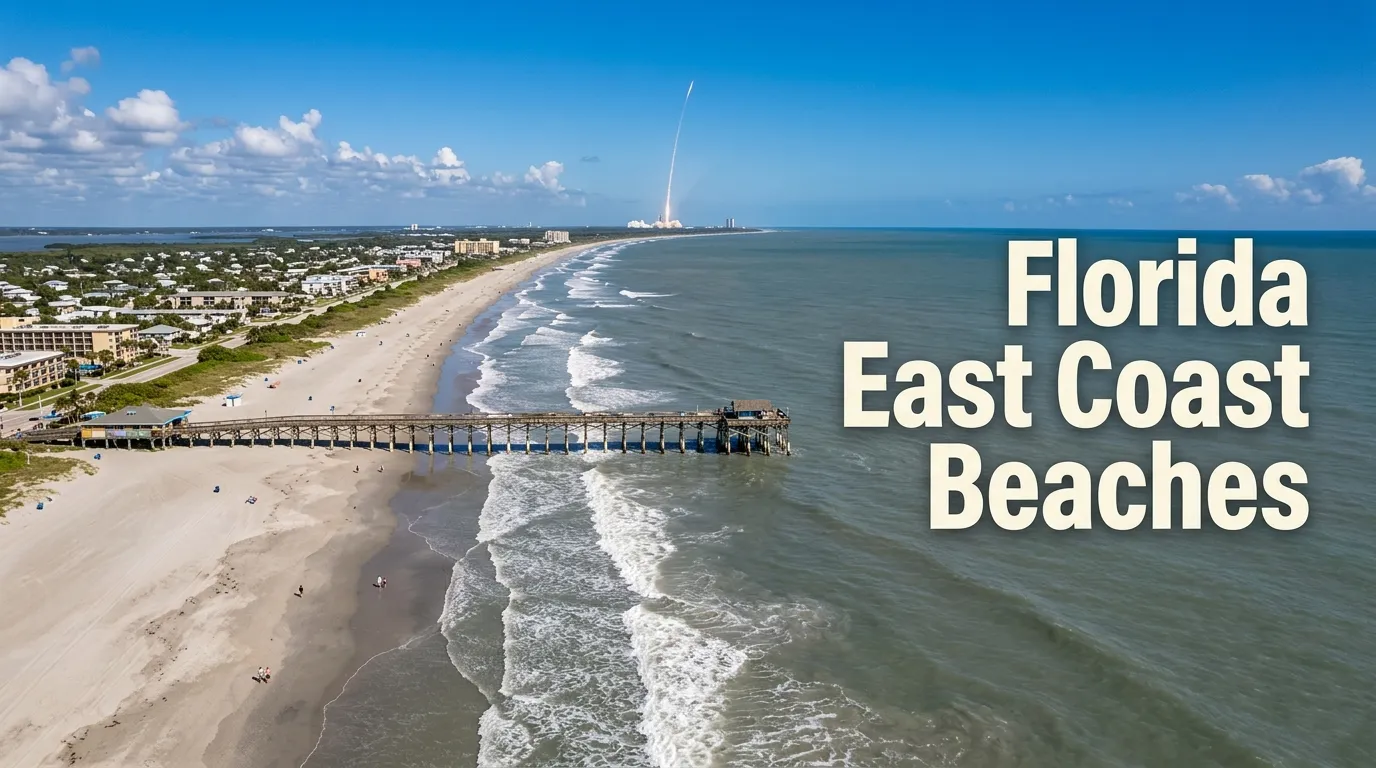
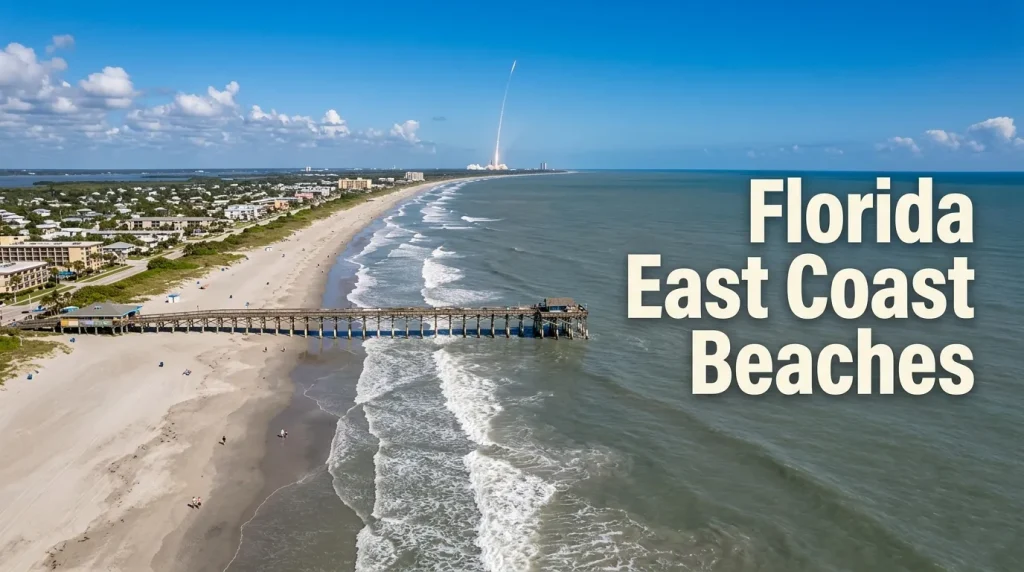
Cocoa Beach is the definitive Space Coast beach town. You can watch a rocket launch from the Kennedy Space Center while your feet are in the Atlantic Ocean.
The beach is wide with soft, light-tan sand. The water is a churned-up gray-green that clears up beautifully during the summer months when the trade winds die down.
This is the best beach for a family that wants to mix a classic surf town with a massive educational attraction. The Space Center is a world-class, full-day experience just 20 minutes away.
The pier is the social heart of the town. It stretches 800 feet over the ocean and houses multiple bars and restaurants where you can grab a cold drink and watch the surfers below.
According to the Space Coast Office of Tourism, 2026 is projected to have over 90 planned rocket launches. Check the launch schedule before booking to align your trip with a potential liftoff.
St. Augustine Beach Guide
St. Augustine Beach offers a wilder, more windswept experience than the southern beaches. The sand is a beautiful cinnamon-brown, packed hard by the relentless northeast winds.
The beach is fronted by the historic St. Johns County Ocean Pier, a local fishing and sightseeing landmark. The beach here is less about calm floating and more about an invigorating walk.
The city of St. Augustine itself is the main attraction. It is the oldest continuously occupied European settlement in the United States, with a Spanish fort and cobblestone streets.
Couples and history-loving families thrive here. The beachfront is quiet at night, and the real dining and drinking scene is five minutes inland in the historic district.
Key Takeaway: Choose St. Augustine for a cultural beach trip where the history rivals the ocean, not for still-water floating.
Vero Beach Guide
Vero Beach is the sophisticated, quiet heart of the Treasure Coast. The sand is a fine, tan color, and the beach is wide and protected by a network of offshore reefs.
The beach feels relaxed and deliberately uncommercialized. There are no towering condo canyons here, just low-rise buildings hidden behind sea oats and sabal palms.
This is a top pick for couples seeking a low-key luxury escape and nature lovers. The nearby Pelican Island National Wildlife Refuge is a premier birding destination.
The honest limitation is the lack of high-energy nightlife. Vero Beach is quiet and upscale, and younger travelers seeking a party scene will find it sleepy.
Jupiter and Palm Beach Guide
Palm Beach is the most polished beach experience in the continental United States. The sand is a soft, pale tan, and the water is the clearest blue you will find north of Miami.
The town is a masterpiece of wealth and landscaping. Giant ficus hedges hide massive estates, and the public beaches, like Midtown Beach, are pristine.
Jupiter is Palm Beach’s wilder, surfier northern neighbor. The Jupiter Inlet produces a reliable wave, and the red Jupiter Inlet Lighthouse overlooks a stunning convergence of blue ocean and green river water.
Couples and luxury seekers will find Palm Beach to be a flawless, if expensive, romantic retreat. Budget travelers will struggle to find affordable food or parking anywhere near the sand.
Fort Lauderdale Beach Guide
Fort Lauderdale Beach has successfully shed its 1980s “Spring Break” reputation. It is now a modern, upscale, and beautifully manicured waterfront destination.
The signature wave-shaped promenade, The Strip, runs alongside a wide stretch of soft, clean white sand. The water here is a consistent, clear turquoise-green.
The beach offers a perfect mix of family-friendly amenities and a sleek adult social scene. The luxury high-rise hotels fronting the sand all have pool decks that look directly over the ocean.
This is a versatile beach that works for couples, families, and groups. The honest challenge is the cost, as beachfront hotel rates and parking fees have risen sharply.
Insider Tip: The beach south of Sunrise Boulevard, near the Hugh Taylor Birch State Park, is much quieter and has a more natural feel with sea grapes sheltering the sand.
Miami and South Beach Guide
Miami Beach is a global icon of Art Deco architecture, neon energy, and world-famous people-watching. The sand is a brilliant white, soft powder imported from the Florida Keys.
The water is a stunning pale turquoise, made crystal clear by the nearness of the Gulf Stream. The swimming here is calm and warm for most of the year.
South Beach is the epicenter of the action. The beach between 5th and 15th streets is a dense, social, high-energy spectacle of fit bodies, loud music, and camera flashes.
This is a beach for extroverts and urban explorers. Travelers seeking a quiet, natural, empty stretch of sand will find the Miami Beach scene relentless and exhausting.
- South of Fifth (SoFi): The best, quietest end of South Beach for couples.
- Mid-Beach: Less dense, hipper, centered around the Fontainebleau hotel.
- North Beach: The real, quiet, local North Beach is the escape, with a slower, family-centric pace.
New Smyrna Beach Guide
New Smyrna Beach is the authentic, unfiltered surf town of the Space Coast. The sand is a beautiful, fine cinnamon color and exceptionally firm for driving.
The town has a genuine, gritty charm defined by indie surf shops and beachside fish shacks. It is the antidote to the polished, corporate feel of nearby Orlando’s tourist corridor.
The surf here is the most consistent in the state for intermediate wave riders. The Shark Bite Capital moniker is real, but it is statistically a minor risk in murky, baitfish-rich water.
This is a top choice for surfers, solo travelers, and budget-conscious families. Those with a shark phobia or who want a pristine, clear-water float may be uncomfortable.
Florida East Coast State Park Beaches
Florida’s east coast state parks protect the most pristine and undeveloped stretches of beachfront. They offer a raw, natural beach experience without high-rise condos or commercial development.
Sebastian Inlet State Park is the crown jewel. It offers world-class surf on one side and a calm, productive fishing inlet and tide pools on the other.
Amelia Island State Park at the very northern tip of the coast offers a unique horseback riding experience directly on the empty, wind-swept sand.
The entry fee for most Florida state parks is roughly $6 to $8 per vehicle. Parking lots fill completely by 9:00 AM on weekends and holidays, so arrive early.
| State Park | Best For | Signature Experience |
|---|---|---|
| Sebastian Inlet | Surfing, fishing, families | The “First Peak” wave and tide pools |
| Amelia Island | Seclusion, nature, romance | Horseback riding on the sand |
| Bill Baggs Cape Florida (Key Biscayne) | Swimming, calm water | Historic lighthouse, clear southern water |
| John D. MacArthur Beach (Palm Beach) | Kayaking, snorkeling | Pristine estuary and reef snorkeling |
Amelia Island Beach Guide
Amelia Island is the quiet, exclusive escape at Florida’s northernmost border. The beaches here feature 13 miles of untouched, cinnamon-hued sand and ancient dunes.
The grand The Ritz-Carlton, Amelia Island dominates the southern end. The resort sits on a bluff overlooking a private-seeming stretch of beach that feels miles away from the mainland.
The water here is more reminiscent of the Carolinas than the Caribbean. It is a dark gray-blue and stays relatively cool, even in summer.
This is a perfect destination for couples and luxury travelers who want a remote, nature-focused escape. The historic Victorian downtown of Fernandina Beach adds a charming, walkable attraction.
Sebastian Inlet Beach Guide
Sebastian Inlet State Park is a non-negotiable stop for anyone who surfs or fishes. It is a narrow channel of water connecting the Atlantic Ocean to the Indian River Lagoon.
The water rips through this channel, creating tide pools on the lagoon side and world-class surf on the ocean side. The “First Peak” is a legendary A-frame wave that peels perfectly.
The inlet is also one of the premier snook fishing spots on the planet. Dozens of anglers line the jetty rocks day and night.
Families will love the calm, protected water of the tide pool area, where kids can snorkel safely on a slack tide. The rough, rocky shore of the ocean side is dangerous for casual wading.
Key Takeaway: Sebastian Inlet is the east coast’s ultimate surf and fishing hub, but only the lagoon tide pools are safe for young kids.
Safety and Seasonal Warnings for Florida East Coast Beaches
The Florida east coast has specific, predictable dangers that visitors must take seriously. Rip currents are the deadliest threat, pulling swimmers away from shore rapidly.
Key safety and seasonal facts every visitor should know:
- Rip Currents: Always swim directly in front of a staffed lifeguard tower. If caught in a rip, do not fight it. Swim parallel to the shore.
- Hurricane Season (June to November): Monitor the National Hurricane Center forecasts. A hurricane watch means a storm is possible within 48 hours, and you must be ready to evacuate barrier islands immediately.
- Lightning: Afternoon summer thunderstorms produce violent, cloud-to-ground lightning. Exit the beach the instant you hear thunder.
- Sea Turtle Nesting (May to October): Close your hotel blackout curtains at night and fill in any holes you dig on the sand. Artificial light confuses hatchlings.
In a beach emergency, dial 911. The Volusia County Beach Safety Ocean Rescue and similar local lifeguard agencies are exceptionally well-trained and respond instantly.
Frequently Asked Questions About Florida East Coast Beaches
What is the prettiest beach on the east coast of Florida?
Palm Beach is the prettiest beach on Florida’s east coast for clear water and soft sand.
The pale blue-green water is the clearest north of Miami, and the town is impeccably maintained.
For a pure, undeveloped landscape, the state park at Canaveral National Seashore is unmatched.
Can you drive on all Florida east coast beaches?
No, you can only drive on specific beaches in Daytona Beach, New Smyrna Beach, and select zones in St. Augustine.
Beach driving requires a daily permit, a speed limit of 10 mph, and you must stay in the marked lanes.
Most luxury and family beaches like Miami, Palm Beach, and Cocoa Beach are pedestrian-only.
Is the water clear on Florida’s east coast?
The water clarity on Florida’s east coast varies dramatically from north to south.
The water is often murky and steel-gray in the north near Jacksonville and Daytona Beach.
It transitions to a clear turquoise-green south of West Palm Beach as the Gulf Stream bends closer to shore.
What is the best east coast Florida beach for toddlers?
Disney’s Vero Beach Resort and the tide pools at Sebastian Inlet State Park are best for toddlers.
They offer calm, shallow water zones protected from the powerful Atlantic shore break.
The natural rock pools at Blowing Rocks Preserve on Jupiter Island are another excellent wading option at low tide.
When is seaweed season on Florida’s east coast?
Sargassum seaweed season on Florida’s east coast is typically from May through August.
The brown algae piles up sporadically depending on ocean currents and trade wind patterns.
It is generally manageable and less severe than the massive Caribbean strandings seen in recent years.
Which east coast Florida beach has the best waves?
Sebastian Inlet State Park has the most powerful and high-quality waves on the east coast.
It holds a reliable, barreling peak that is considered the best surf break on the U.S. Atlantic coast.
New Smyrna Beach offers the most consistent and accessible waves for intermediate surfers.
Choosing Your East Coast Florida Beach for 2026
Florida’s east coast is a linear city by the sea. Each beach town has a starkly different personality and demographic.
Your perfect trip depends on matching your vacation style to the correct section of A1A. Pick the right town, and a classic American beach vacation awaits.
Beach driving permits, parking fees, and resort renovation schedules are subject to annual change. Verify current 2026 access rules directly with the county parks department before heading to the sand.
Book your oceanfront hotel or rental condo now, especially for the peak March and July windows. The best spots on this coast vanish a full year in advance.