Vancouver Beaches 2026: Best Swimming, Sunset & Family Spots
Vancouver beaches deliver dramatic mountain-backed shoreline unlike almost any other city. The water stays cold year-round, which surprises most first-time visitors.
The city has eleven named beaches managed by the Vancouver Park Board. Eight of them sit along English Bay and Burrard Inlet with views of the North Shore mountains.
This guide covers exactly which Vancouver beach fits your trip. You will learn where to swim, park, watch sunsets, and bring kids without making the mistakes most tourists make.
Vancouver Beaches Overview
Vancouver’s beaches are urban ocean beaches set against a Pacific Northwest backdrop. They are free public spaces, not resort-style tropical swimming destinations.
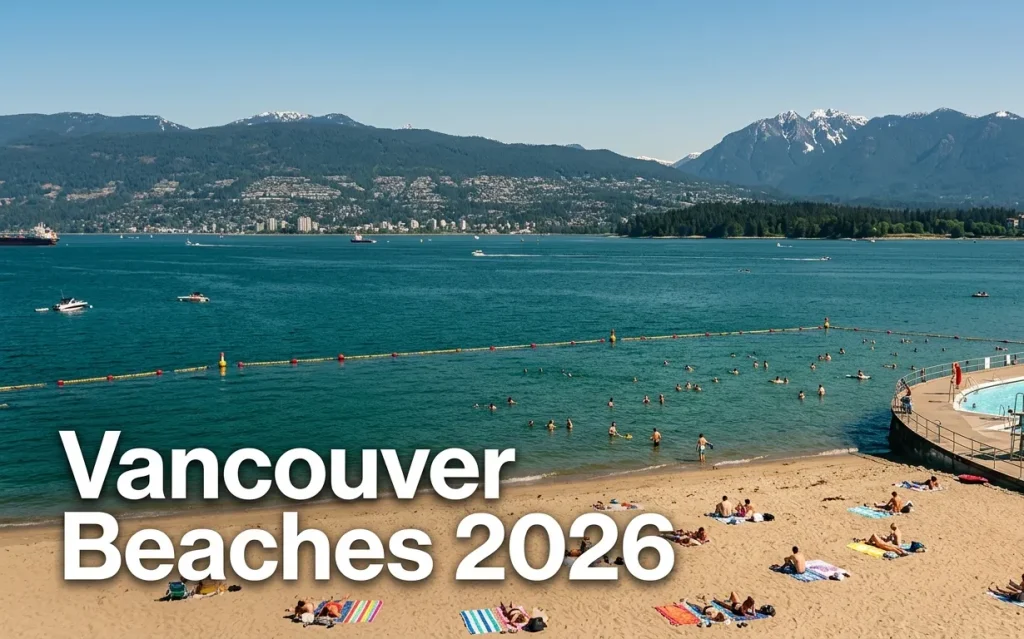
Sand quality varies dramatically from beach to beach. Kitsilano and English Bay have imported soft sand. Spanish Banks and Jericho have coarser natural sand mixed with pebbles.
Most beaches sit along the Burrard Inlet and English Bay shoreline. The water comes straight from the Pacific Ocean with no warming current to raise temperatures.
Locals use these beaches for sunbathing, volleyball, paddleboarding, kayaking, and brief cold-water swims. Tourists often arrive expecting warm California-style beach days and leave disappointed.
The beach scene shifts completely between seasons. Summer brings lifeguards, concession stands, and big crowds from June through early September. Winter empties the sand but delivers storm-watching and solitary walks.
Destination Vancouver reports that the city’s beaches draw over 3 million visitors annually. Kitsilano and English Bay account for more than half that total.
Key Takeaway: Vancouver beaches are stunning urban escapes best for sunbathing, sports, and views. They are not warm-water swimming destinations.
Best Beaches Vancouver
The single best beach in Vancouver depends entirely on what you want to do. No single beach excels at everything.
For swimming and social energy, Kitsilano Beach leads. For sunset views with a drink nearby, English Bay Beach wins. For space and solitude, Spanish Banks and Wreck Beach dominate.
Here is how the top Vancouver beaches compare side by side:
| Beach Name | Best For | Water Conditions | Crowd Level | Insider Note |
|---|---|---|---|---|
| Kitsilano | Swimming, social scene | Calm, cold even in summer | Very high | The saltwater pool is warmer than the ocean |
| English Bay | Sunsets, people-watching | Gentle waves, cold | Very high | Cactus Club Cafe patio overlooks the sand |
| Spanish Banks | Space, low-tide walks | Shallow flats, no waves | Moderate | The tide goes out nearly a kilometer |
| Jericho | Families, picnics | Calm, shallow entry | Moderate | Best picnic tables and green space |
| Wreck Beach | Solitude, naturism | Open ocean, can be rough | Low to moderate | 500 steps down, clothing optional |
| Second Beach | Families, pool access | Calm inlet water | High | Heated outdoor pool right beside the sand |
| Third Beach | Quiet sunsets, forest setting | Calm, sheltered | Low | Hidden in Stanley Park forest |
| Locarno | Quiet picnics, sailing views | Calm, shallow | Low | Locals-only feel, fewer facilities |
Couples looking for sunset romance should target English Bay or Third Beach. Families with young children need Kitsilano, Jericho, or Second Beach for facilities and safety.
Budget travelers will love that every beach is free. Pay only for parking or transit. Solo travelers looking for social energy should pick Kitsilano or English Bay.
Beaches Vancouver Swimming
Swimming at Vancouver beaches is possible from late June through early September. The water will still feel cold, rarely rising above 68 degrees Fahrenheit.
The warmest swimming window falls between late July and mid-August. Even then, most visitors find the ocean brisk and refreshing rather than warm.
Kitsilano Beach offers the most popular swimming area. Lifeguards patrol a designated zone daily from late May through Labour Day weekend.
Spanish Banks has the safest shallow-water swimming for children. At low tide the water recedes hundreds of meters, leaving warm shallow pools safe for toddlers.
English Bay is swimmable but gets deep more quickly than Kitsilano. The water quality here can drop after heavy rain due to urban runoff.
Vancouver Coastal Health tests water quality weekly during summer months. Check their beach status page before swimming. Avoid ocean swimming for 48 hours after any significant rainfall.
Second Beach and Third Beach offer sheltered swimming inside Stanley Park. The water is typically a degree or two warmer than open English Bay beaches.
Jericho Beach has a designated swimming area with a lifeguard. The water stays shallow for a good distance, making it safer for children and less confident swimmers.
Insider Tip:
- The Kitsilano Pool saltwater swimming pool sits right beside the beach. It is heated to 75 to 80 degrees Fahrenheit. It feels tropical compared to the 65-degree ocean six feet away.
- The ocean floor at English Bay drops off faster than at Kitsilano. Non-swimmers should stay well within the buoyed zone.
- Water shoes help at Spanish Banks and Jericho where pebbles and shells can be sharp underfoot.
Key Takeaway: Swimming is best at Kitsilano, Spanish Banks, and Second Beach. The ocean never gets warm. Use the pools if you want comfort.
Kitsilano Beach Vancouver
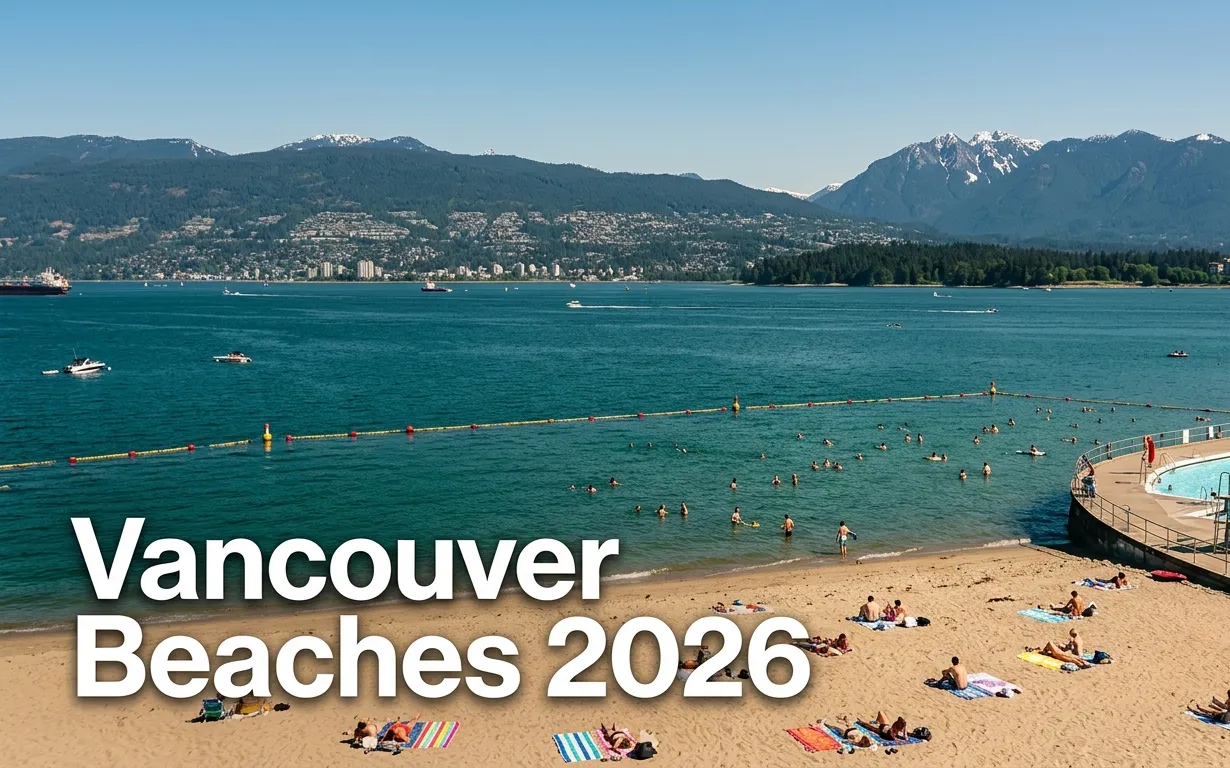
Kitsilano Beach is Vancouver’s most famous and busiest beach for good reason. It has soft sand, a huge saltwater pool, mountain views, and a vibrant social scene.
The beach stretches roughly 1,200 feet along the south shore of English Bay. Sand is soft and imported, not native to the area. The grassy park behind it fills with sunbathers on summer days.
This beach attracts a young, social crowd. Volleyball courts run constant games. The nearby Kitsilano neighborhood has excellent cafes, restaurants, and shops within a five-minute walk.
The Kitsilano Pool deserves special attention. It is a 450-foot heated saltwater pool right beside the ocean. Entry costs roughly $7 to $10 for adults depending on residency status.
Arrive before 10 AM on summer weekends to find parking. The lot fills completely by noon on hot days. The TransLink bus system drops you a block away on Cornwall Avenue.
Families benefit from a large playground, washrooms, and a concession stand. The swimming area has a gradual entry with lifeguard supervision.
Couples and solo travelers will find more social energy here than at any other Vancouver beach. The grassy area becomes a busy social scene by mid-afternoon.
Honest limitation: Kitsilano gets so crowded on sunny weekends that finding a spot for your towel feels competitive. The imported sand gets hot and dusty. Peace and quiet do not exist here in July.
English Bay Beach Vancouver
English Bay Beach sits at the edge of downtown Vancouver on Beach Avenue. It is the city’s most accessible beach and the best sunset-watching spot in town.
The beach is relatively small compared to Kitsilano. Sand space fills quickly on summer afternoons. The location makes it a default choice for downtown visitors and cruise ship passengers.
The Stanley Park Seawall begins right at English Bay Beach. Walk north from here to circle the entire Stanley Park peninsula on a paved path with ocean views the entire way.
This beach anchors the annual Celebration of Light fireworks competition. Hundreds of thousands of people pack the shoreline for three nights each summer, typically in late July.
The Cactus Club Cafe sits directly across Beach Avenue with a patio overlooking the water. It is one of the best restaurant views in the city. Expect long waits for a patio table on summer evenings.
Parking here is a serious challenge. The small lot fills early. Street parking is metered and scarce. Use the SkyTrain to Burrard Station then walk 15 minutes or take a bus.
Destination Vancouver identifies English Bay as the most photographed sunset location in the city. The sun drops directly behind the Gulf Islands with silhouetted freighters passing through the frame.
Solo travelers will appreciate the people-watching and easy access from downtown hotels. Families should choose Kitsilano or Jericho instead for more space and better facilities.
Honest limitation: English Bay is small, crowded, and offers limited sand space. It works best for a quick visit, sunset viewing, or a seawall walk rather than an all-day beach camp.
Wreck Beach Vancouver
Wreck Beach is Vancouver’s clothing-optional beach and the most unique shoreline experience in the city. It sits below the University of British Columbia campus at the western tip of Point Grey.
Access requires descending approximately 500 steps through Pacific Spirit Regional Park forest. The stairs are steep, wooden, and uneven in sections. The climb back up takes 10 to 15 minutes at a steady pace.
This is not a typical urban beach. It has a counterculture atmosphere with vendors selling crafts, food, and drinks on the sand during summer months. The vibe is relaxed, accepting, and unlike anywhere else in Vancouver.
Wreck Beach faces the open Strait of Georgia rather than sheltered English Bay. The water here is colder and rougher than at Kitsilano or Spanish Banks. Waves can be significant on windy days.
The beach stretches for nearly 5 miles. The clothing-optional section runs roughly 3 miles of that total. You can find completely isolated spots even on busy summer days if you walk far enough.
Nudity is optional, not mandatory. About half of visitors wear swimsuits. The other half do not. Photography is strongly discouraged and may provoke a hostile response from regular beach users.
Families should know this is an adult-oriented environment. The beach is not dangerous for children, but the atmosphere and nudity make it inappropriate for most families with young kids.
Couples looking for a unique, free-spirited experience will find Wreck Beach memorable. Solo travelers seeking solitude will love it on weekdays. Anyone with mobility limitations should avoid the stair access entirely.
Honest limitation: The 500-step climb keeps casual tourists away but also makes this beach completely inaccessible for anyone with physical limitations. The water is too rough and cold for comfortable swimming.
Key Takeaway: Wreck Beach offers a one-of-a-kind Vancouver experience for open-minded visitors who can handle the stairs and the cold water.
Spanish Banks Beach Vancouver
Spanish Banks is the beach locals choose when they want space, shallow water, and no crowds. It sits west of Kitsilano near the University of British Columbia campus.
The defining feature of Spanish Banks is the tide. At low tide the ocean recedes nearly a kilometer, exposing vast sand flats. Beachgoers walk out hundreds of meters on firm, wet sand.
This tidal phenomenon creates the warmest ocean swimming in Vancouver. The shallow water left behind on the sand flats warms in the sun. Pockets of water reach several degrees warmer than the open ocean.
Spanish Banks has eight designated beach volleyball courts. Groups of friends and recreational leagues fill them on summer evenings. The grassy park area offers excellent picnic space with unobstructed mountain views.
Facilities are more limited than at Kitsilano or English Bay. Concession stands operate seasonally. Washroom buildings exist but are basic. Bring everything you need for the day.
Parking is abundant and less expensive than at Kitsilano. The lots run parallel to the beach along Northwest Marine Drive. Transit access requires a bus from UBC or the Kitsilano neighborhood.
Families with toddlers will love the warm tidal pools and shallow water. The gentle slope creates a natural wading area that feels safer than deeper beaches. Budget travelers get the best free beach experience in Vancouver here.
The Vancouver Park Board maintains the sand courts and grass areas. The beach is less manicured than Kitsilano but feels more natural and spacious.
Honest limitation: At high tide the beach nearly disappears. Check tide tables before you go. A full beach day at Spanish Banks requires arriving at mid-to-low tide for the best experience.
Jericho Beach Vancouver
Jericho Beach sits between Kitsilano and Spanish Banks in a quieter residential stretch. It combines good facilities with fewer crowds than the more famous beaches.
The beach has a designated swimming area with a lifeguard in summer. Water entry is gradual and sandy on the eastern end. The western end near the sailing center gets pebblier.
The Jericho Sailing Centre operates year-round. Kayak and stand-up paddleboard rentals run from roughly $25 to $45 per hour. The protected bay makes this the best spot in Vancouver for beginner paddlers.
Grass fields and picnic tables make Jericho the top choice for group gatherings. Large families and friend groups spread out on the lawn with coolers and barbecues in designated areas.
The off-leash dog area runs along the eastern portion of the beach. Dog owners should confirm the current boundary, which shifts seasonally. This section stays busy with local dog walkers year-round.
Parking is easier here than at Kitsilano but harder than at Spanish Banks. Two lots serve the beach with pay stations accepting coins and credit cards. Summer weekends fill both lots by 1 PM.
The Rabbit Lane concession stand operates beside the parking lot. It serves burgers, fish and chips, ice cream, and cold drinks. Prices are moderate but reasonable for a captive beach audience.
Couples looking for a quieter beach day will prefer Jericho over Kitsilano. Families get better picnic infrastructure here than anywhere else on the west side. Solo travelers should choose livelier beaches unless they want quiet reading time.
Honest limitation: The sand is coarser and less comfortable than Kitsilano. The water stays cold. Jericho works best as a picnic and activity beach rather than a sunbathing destination.
Vancouver Beach Parking and Access
Parking at Vancouver beaches is paid, competitive, and frustrating on summer weekends. Plan your arrival time carefully or use transit to skip the hassle entirely.
Pay parking lots serve Kitsilano, Jericho, Spanish Banks, English Bay, and Stanley Park beaches. Rates typically range from $2.50 to $4 per hour with a maximum daily charge of $15 to $20 at most lots.
Kitsilano Beach parking fills by 10 AM on sunny Saturdays. English Bay fills even earlier on summer evenings. Spanish Banks has the largest lot and the best odds of finding a space after noon.
The TransLink bus system connects all major beaches. The 2, 22, and 5 buses serve the Kitsilano to Spanish Banks corridor. The 19 and 6 buses reach English Bay and Stanley Park beaches from downtown.
Mobi by Shaw Go bike share stations sit near Kitsilano, English Bay, and Second Beach. Cycling the Seawall from downtown to Kitsilano takes roughly 30 minutes on a flat, paved path. This is the best way to arrive on a sunny day.
HandyDART and wheelchair-accessible transit serve most beach areas. Kitsilano, English Bay, and Second Beach have beach wheelchair mats and accessible washroom facilities. The Vancouver Park Board loans beach wheelchairs at select locations with advance booking.
Wreck Beach access is stair-only with approximately 500 steps. There is no elevator, no ramp, and no accessible route. This beach is physically inaccessible for anyone with mobility limitations.
Water taxis and False Creek Ferries connect downtown to Kitsilano Point and Vanier Park. The trip offers a unique harbor-level view of the city. One-way fares run roughly $3 to $7 depending on the route.
TransLink posts current schedules online. Bus frequency drops significantly after 10 PM on most beach routes. Plan your return trip before sunset to avoid long waits.
Key Takeaway: Arrive before 10 AM to park. Use transit or bikes when possible. Spanish Banks has the most parking. Wreck Beach has none.
Best Vancouver Beach for Families
Kitsilano Beach and Jericho Beach tie as the best Vancouver beaches for families. Each serves a slightly different family need.
Kitsilano wins for families who want full facilities. The playground, washrooms, concession stand, and lifeguard create a complete package. The heated saltwater pool gives children a warm swimming option the ocean cannot provide.
The pool has a shallow section for young children. Entry fees are reduced for children, roughly $4 to $6 depending on age and residency. The pool opens in late May and closes after Labour Day.
Jericho Beach works better for families who want space to spread out. The grassy picnic area with tables allows a full-day camp setup. Children can run on the grass when they tire of the sand.
Shallow water at Jericho extends well out from shore. Young swimmers get a generous safe zone before the water deepens. The lifeguard presence in summer adds peace of mind for parents.
Second Beach in Stanley Park deserves mention for families staying downtown. The heated outdoor pool overlooks the ocean. A large playground sits right beside the sand. The location inside the park adds forest exploration to a beach day.
Spanish Banks suits families with toddlers best. The warm tidal pools created at low tide are the gentlest ocean water in the city. Bring water shoes for the pebbly sections near the shoreline.
Avoid English Bay with young children. The beach gets crowded and the water deepens quickly. Avoid Wreck Beach entirely for obvious reasons. Third Beach lacks washroom facilities nearby.
The Vancouver Park Board operates lifeguard services at Kitsilano, Jericho, Spanish Banks, English Bay, Second, and Third beaches. Lifeguards are on duty daily from roughly 10 AM to 8 PM during summer months.
Vancouver Beaches Water Temperature
Vancouver beach water is cold. Summer ocean temperatures range from 60 to 72 degrees Fahrenheit. Winter temperatures drop to 44 to 48 degrees.
The warmest ocean water arrives in late July and August. Even then, 68 to 72 degrees is typical. This feels significantly colder than California, Hawaii, or the Caribbean.
Spanish Banks tidal pools warm the most. Sun-heated shallow water on the sand flats can reach 75 degrees in August. This is the warmest ocean swimming available anywhere in Vancouver.
The two heated outdoor pools solve the temperature problem. Kitsilano Pool stays around 75 to 80 degrees. Second Beach Pool runs slightly warmer at 78 to 82 degrees.
Vancouver Coastal Health monitors water quality alongside temperature. Bacteria levels rise after heavy rain due to urban and agricultural runoff. Avoid ocean swimming for 48 hours after significant rainfall regardless of season.
The ocean is calmest from June through September. Winter brings larger swells and storm surges. These conditions attract surfers but make swimming dangerous outside summer months.
Wetsuits extend the ocean swimming season significantly. A 3mm or 4mm wetsuit makes swimming comfortable from May through October. Local triathlon clubs train at Kitsilano and Spanish Banks year-round in wetsuits.
Visitors from warm climates should adjust expectations. Vancouver ocean swimming is invigorating, not relaxing. The heated pools offer the comfort most tourists expect from a beach day.
Vancouver Beaches by Traveler Type
Different Vancouver beaches suit different travelers. Matching your beach to your trip style prevents disappointment.
Couples and romantic travelers should target Third Beach or English Bay at sunset. Third Beach offers a secluded forest-backed cove inside Stanley Park with exceptional sunset light. English Bay delivers sunset with a restaurant patio steps away.
Bring a blanket and arrive an hour before sunset. The forest setting of Third Beach feels intimate. The downtown backdrop of English Bay feels glamorous. Both deliver romance without cost.
Families with children need Kitsilano, Jericho, or Second Beach. Facilities matter more than views when kids are involved. Washrooms, playgrounds, and shallow water make these three the clear winners.
Avoid Spanish Banks with young children at high tide when the water reaches the grass. Check tide tables. Low tide Spanish Banks is perfect for kids. High tide Spanish Banks offers almost no beach.
Budget and value travelers get the best deal at Spanish Banks and Locarno Beach. Free beaches with free views. Pack your own food and drinks. Parking costs less here than at Kitsilano or English Bay.
Transit riders save parking fees entirely. The bus system reaches every major beach. A Compass Card day pass costs roughly $11. Skip the $20 parking charge and use the savings for a patio drink after.
Solo travelers and socializers belong at Kitsilano or English Bay. These beaches buzz with energy, volleyball games, and people-watching opportunities. Bring a book and watch the scene unfold around you.
Luxury seekers should recognize Vancouver is not a luxury beach destination. There are no beach clubs, no chair service, no premium cabanas. The luxury in Vancouver is the natural setting. Book a waterfront hotel room at the Westin Bayshore or the Sylvia Hotel instead.
Destination Vancouver notes that beach culture here emphasizes public access and natural scenery over commercial development. That is a feature, not a flaw, for the right traveler.
Key Takeaway: Match your beach to your traveler type. Families need facilities. Couples need sunset and privacy. Budget travelers need Spanish Banks.
Best Beach Near Vancouver for Sunset
English Bay Beach delivers the single best sunset in Vancouver. The sun drops directly into the water between the Gulf Islands with mountains in silhouette.
Arrive at least 45 minutes before sunset during summer months. The prime viewing spots on the sand fill quickly. The grassy hill above the beach offers elevated sightlines when the sand is packed.
Third Beach inside Stanley Park offers the best secluded sunset experience. The cove faces west into English Bay. Forest frames both sides. The crowds here are a fraction of English Bay’s.
Bring a sweater. Even on hot summer days the temperature drops 10 to 15 degrees within 30 minutes of sunset. The ocean breeze accelerates the chill. Many first-time visitors get caught shivering in shorts.
Spanish Banks and Locarno Beach deliver the widest sunset panorama. The view stretches from the North Shore mountains across the Strait of Georgia to Vancouver Island on clear evenings. The scale here exceeds the tighter English Bay view.
Sunset Beach, directly east of English Bay, offers a quieter alternative just five minutes’ walk away. The name is accurate. The beach is smaller and less crowded but faces the same western sky.
Photographers should position at the English Bay Inukshuk for foreground interest. The stone landmark silhouettes beautifully against the sunset sky. Tripods are permitted on the sand and seawall.
Wreck Beach faces west unobstructed across open ocean. The sunset here feels wilder and more dramatic than the city beaches. The 500-step return climb in fading light requires a flashlight. Pack one.
Vancouver Clothing Optional Beach Guide
Wreck Beach is Vancouver’s only clothing-optional beach and one of the largest naturist beaches in North America. It operates legally under Metro Vancouver Regional District jurisdiction.
Clothing is optional, not required and not prohibited. The beach welcomes clothed and unclothed visitors equally. The norm is to be comfortable however you choose. Staring, photography, and leering are considered unacceptable harassment.
The clothing-optional section extends roughly 3 miles along the shoreline. The busiest section sits directly below the main stair access at Trail 6. Walking farther west yields progressively more solitude.
The atmosphere is countercultural and community-oriented. Vendors walk the beach selling food, drinks, and handmade items during summer months. The beach operates its own informal market economy.
First-time visitors should understand a few unwritten rules. Do not photograph anyone without explicit permission. Do not stare. Do not make anyone feel observed or judged. This is a community with strong norms of mutual respect.
Access requires the 500-step descent from University Boulevard at the western edge of UBC campus. The parking lot at the trailhead fills by midday on summer weekends. Bus service from UBC reaches the trailhead.
Bring everything you need. There is a concession presence but it is inconsistent. Water, sunscreen, food, and a way to carry trash out are essential. The climb back up is strenuous after a full beach day.
This beach does not suit everyone. Families with children will likely feel uncomfortable. Anyone with mobility limitations cannot access it. Luxury travelers looking for service will find the opposite of their expectations.
Solo travelers comfortable with naturist culture will find Wreck Beach a uniquely Vancouver experience. Couples open to the atmosphere will find a memorable, unconventional beach day.
Metro Vancouver Regional District manages Wreck Beach. The beach remains wild and minimally developed by design. This is not a city park beach with manicured sand and concession stands.
Vancouver Beaches Year Round Guide
Vancouver beaches remain open and accessible 365 days a year. The experience shifts dramatically by season, not just by beach.
Summer, from June through early September, delivers the classic beach experience. Lifeguards staff designated swimming areas. Concession stands operate daily. Washrooms stay open extended hours. The beaches fill with sunbathers and volleyball players.
Vancouver Coastal Health conducts weekly water testing during summer only. Water quality advisories are posted at beach entrances and online. This monitoring stops in mid-September when the official swimming season ends.
Fall brings storm-watching season from October through November. Pacific storms push dramatic waves into English Bay. The beaches empty. The seawall remains busy with walkers in rain gear. The light turns golden and low.
Fall is the best season for beach running and seawall cycling. Cool temperatures and low crowds create ideal conditions. Parking is free at most beach lots from October through March. Confirm posted signs as some lots maintain year-round paid hours.
Winter offers a completely different beach experience. The annual Polar Bear Swim draws thousands to English Bay on New Year’s Day. The rest of winter delivers solitude, frost on driftwood, and snow-capped mountain views from the empty sand.
Winter low tides at Spanish Banks expose sand flats stretching almost to the horizon. Walking out at low tide on a clear winter day feels like walking on another planet. Dress warmly. The wind off the Strait of Georgia cuts hard.
Spring brings cherry blossoms to the neighborhood streets behind Kitsilano and Jericho beaches. The beach itself stays quiet until late May. March and April are excellent months for beach walks with a coffee and no crowds.
The heated outdoor pools open in late May and close after Labour Day. Ocean swimming outside summer requires a wetsuit. No lifeguards patrol outside the June-to-September window. Swim at your own risk during the off-season.
Key Takeaway: Summer is for swimming and socializing. Fall is for storm-watching. Winter is for solitary walks. Spring is for quiet beach days before the crowds arrive.
Frequently Asked Questions About Vancouver Beaches
What is the warmest beach in Vancouver?
Spanish Banks tidal pools are the warmest ocean water in Vancouver.
The shallow pools left behind at low tide warm in the sun and can reach 75 degrees Fahrenheit in August.
Kitsilano Pool and Second Beach Pool are heated to 75 to 82 degrees year-round during their operating season.
Can you swim in Vancouver beaches?
Yes, swimming is possible from late June through early September when lifeguards are on duty.
The ocean water ranges from 60 to 72 degrees Fahrenheit in summer, which feels cold to most swimmers.
The heated saltwater pools at Kitsilano and Second Beach offer warm-water swimming alternatives beside the ocean.
Which Vancouver beach is best for families?
Kitsilano Beach and Jericho Beach are the best Vancouver beaches for families with children.
Kitsilano has a playground, heated pool, concession stand, washrooms, and shallow-water lifeguard zone.
Jericho offers more grass space, picnic tables, and a gentler entry suitable for young waders.
Is Wreck Beach clothing optional?
Yes, Wreck Beach is Vancouver’s only legally designated clothing-optional beach.
Clothing is optional, not mandatory, and the beach welcomes both clothed and unclothed visitors equally.
Photography and staring are considered harassment in this community with strong norms of respect.
Where do locals go to avoid crowds at Vancouver beaches?
Locals go to Locarno Beach, Spanish Banks, and Third Beach to avoid crowds.
Spanish Banks offers the most space, especially at low tide when the sand flats extend nearly a kilometer from shore.
Third Beach inside Stanley Park requires a short forest walk and stays much quieter than English Bay or Kitsilano.
What time of year are Vancouver beaches warm enough to swim?
Late July through mid-August offers the warmest ocean water, typically 65 to 72 degrees Fahrenheit.
The heated outdoor pools open from late May through Labour Day weekend for warm-water swimming.
Wetsuit swimming extends the ocean season from May through October for those comfortable in cooler water.
Vancouver beaches reward visitors who match expectations to reality. The water stays cold. The scenery stays spectacular. The experience stays unlike any other city shoreline in North America.
Choose Kitsilano for energy, Spanish Banks for space, English Bay for sunsets, and Jericho for family picnics. Book a hotel near your preferred beach neighborhood so you can walk instead of fighting for parking on summer weekends.
Parking rates, concession operators, lifeguard hours, and water quality advisories all change annually. Check the Vancouver Park Board website and Vancouver Coastal Health beach status page for current conditions before you go. Arrive early, dress for sudden temperature drops at sunset, and appreciate these beaches for what they are: cold-water urban wilderness, not tropical resort coastline.