French Riviera Beaches 2026: Private Clubs to Secluded Coves
The French Riviera is not a typical beach destination of long, empty, sandy shores. It is a curated coastline of pebbly city coves and glamorous private clubs.
Over 400,000 sunbeds are rented out each summer along the Côte d’Azur’s private beach concessions. This statistic defines the region’s unique, service-driven beach culture.
This 2026 guide names the best beaches from Nice to Saint-Tropez. It covers the public versus private system, the real cost of a sunbed, and how to find a free spot with a view.
The French Riviera Beaches Guide: What to Expect
Expect to pay for a spot on the best beaches in the French Riviera. The coastline is largely divided into private concessions and small public sections.
A “beach day” here is about gastronomy, service, and socializing. It is not about a quiet, barefoot walk on a deserted shore you might find in the Caribbean.
The water is a breathtaking, clear deep blue and typically calm. However, the shore is mostly composed of smooth, round pebbles called “galets.”
Navigating the beach culture correctly is the key to a great trip. Knowing the rules before you arrive prevents expensive and uncomfortable surprises for first-time visitors.
What Are French Riviera Beaches Like? Sand, Pebbles, and Water
Most French Riviera beaches are composed of large, smooth gray pebbles, not soft sand. These pebbles can be painful to walk on and radiate intense heat.
The water is typically a clear, stunning deep blue with excellent visibility. It deepens quickly from the shoreline, making it great for swimming.
Water temperatures average a refreshing 72°F in June, peaking at 78°F in August. The iconic mistral wind can whip up choppy conditions with little warning.
Sand beaches exist but are often imported or located in specific coves like Pampelonne. The pebble reality is the single biggest shock for first-time visitors from other continents.
Key Takeaway: The French Riviera beach experience is defined by pebbles and private service, not by natural soft sand.
Best Beaches on the French Riviera: A Curated List
The best beaches span from the urban center of Nice to the exclusive capes of Saint-Tropez. Each one serves a completely different traveler profile and budget.
- Plage de Pampelonne (Saint-Tropez): A long, sandy crescent packed with legendary beach clubs.
- Paloma Beach (Saint-Jean-Cap-Ferrat): A stunning, sheltered pebble cove with crystal-clear, calm water.
- Plage Mala (Cap d’Ail): A hidden, dramatic cove accessible only by stairs, with turquoise water.
- Plage de la Garoupe (Cap d’Antibes): A beautiful sandy bay with a mix of private and public areas.
- Plage du Midi (Cannes): A long, sandy public beach close to the center of Cannes.
- Promenade des Anglais Beaches (Nice): The iconic city stretch with dozens of private clubs and public gaps.
- Île Sainte-Marguerite (Cannes): A rocky, natural escape from the mainland crowds, accessed by ferry.
- Plage de l’Espiguette (Camargue): A vast, wild, and undeveloped sandy wilderness west of the Riviera.
Nice Beaches: From Public Shores to Private Clubs
The beaches in Nice stretch for miles along the iconic Promenade des Anglais on the Baie des Anges. This is the most urban and accessible beach experience on the entire French Riviera.
The shore is entirely composed of smooth, grey pebbles that make lounging tricky without a thick mat. A private sunbed here is the best investment you can make for a comfortable day.
Famous private beach clubs like Castel Plage and Beau Rivage line the promenade. A sunbed rental typically ranges from 25 to 45 euros per day, depending on the row and season.
Free public sections of pebbles are squeezed between these concessions. Arrive before 9 a.m. in July or August to claim a small patch of rock and avoid the worst crowds.
For families, the private clubs offer stability and a safe, service-rich base with restaurants. Budget travelers must embrace the towel-on-pebbles reality and the loud, lively city atmosphere.
Beaches Near Cannes: Beyond La Croisette
The best beaches in Cannes are not all on the private Boulevard de la Croisette. The longest public sandy beaches are actually west of the old port.
Plage du Midi and Plage de la Bocca offer genuinely sandy shores without a private club fee. This is a rarity on the Riviera and a haven for families and budget travelers.
These west Cannes beaches have gentle, shallow water entry and fine, imported sand. The views stretch back towards the Estérel mountains, offering a less pretentious vibe.
Directly on the Croisette, luxury hotels like the Martinez and Carlton operate ultra-exclusive private pontoons. Renting a sunbed here can easily exceed 60 euros for the prestige of being seen.
To escape completely, take the 15-minute ferry to the car-free Îles de Lérins. Île Sainte-Marguerite offers rocky coves, forested walking paths, and a true sense of escape from the mainland’s glamour.
Key Takeaway: For free Cannes sand, head west. For luxury status, pay for a Croisette pontoon.
Saint-Tropez Beaches: The Legend of Pampelonne
Plage de Pampelonne is the most legendary stretch of sand on the entire French Riviera. This 5-kilometer bay sits south of Saint-Tropez and is the epicenter of glamorous beach club culture.
This is one of the few truly natural sandy beaches on the coast. The water is shallow and stays waist-deep for a long way out, making it ideal for wading.
Pampelonne is defined by its famous beach clubs, not just the sand. Club 55 is the rustic-chic, celebrity-magnet anchor that invented the scene decades ago.
A matelas at Nikki Beach offers a different, high-energy, champagne-spraying luxury party vibe. A sunbed at a top Pampelonne club in August can cost well over 100 euros for the day.
Reservations for the most famous clubs are essential months in advance for the summer season. The parking lots are a dusty free-for-all that can cost 10 to 20 euros a day.
Understanding French Riviera Beach Clubs: A Complete Guide
A Plage Privée is a private business renting a public beach concession from the state. They are the defining feature of the Côte d’Azur beach experience.
You pay for a transat (sunbed), a parasol, and access to a private restaurant and washroom. The price is a flat daily fee for the real estate, not a food-and-beverage credit.
The level of service and cuisine is generally excellent and the core reason the price is justified. Lunch can easily double your bill but is often the best part of the experience.
Step into any club’s reception and ask for the “tarif des transats” (sunbed price list). Rows are priced by proximity to the water, with the front row being the most expensive.
- Ultra-Luxury Clubs (100+ euros): Club 55, Nikki Beach, La Réserve à la Plage. They offer elite scene-setting and people-watching.
- High-End Gastronomic (50-80 euros): Paloma Plage, Plage Keller. The focus is on a world-class food experience with your feet in the water.
- Accessible Comfort (25-45 euros): Castel Plage (Nice), many city clubs. They provide a simple, comfortable escape from the pebbles.
Paloma Beach: The Jewel of Saint-Jean-Cap-Ferrat
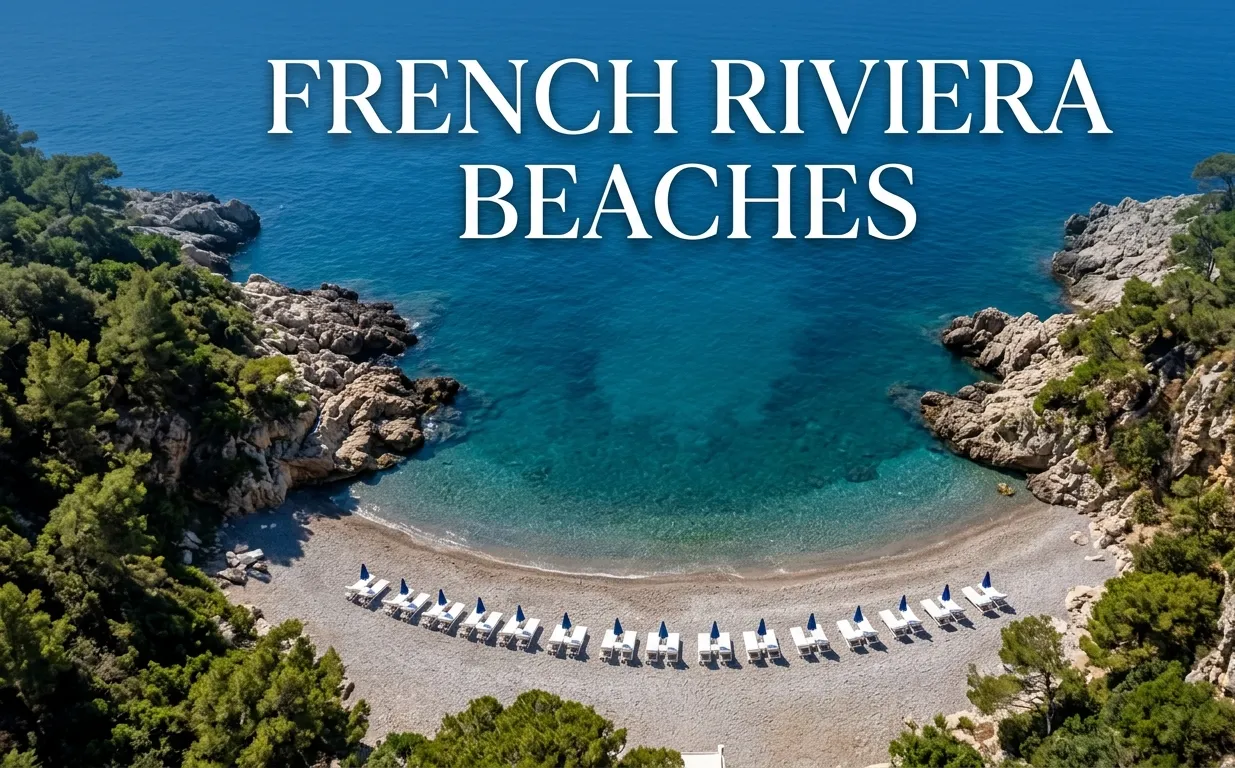
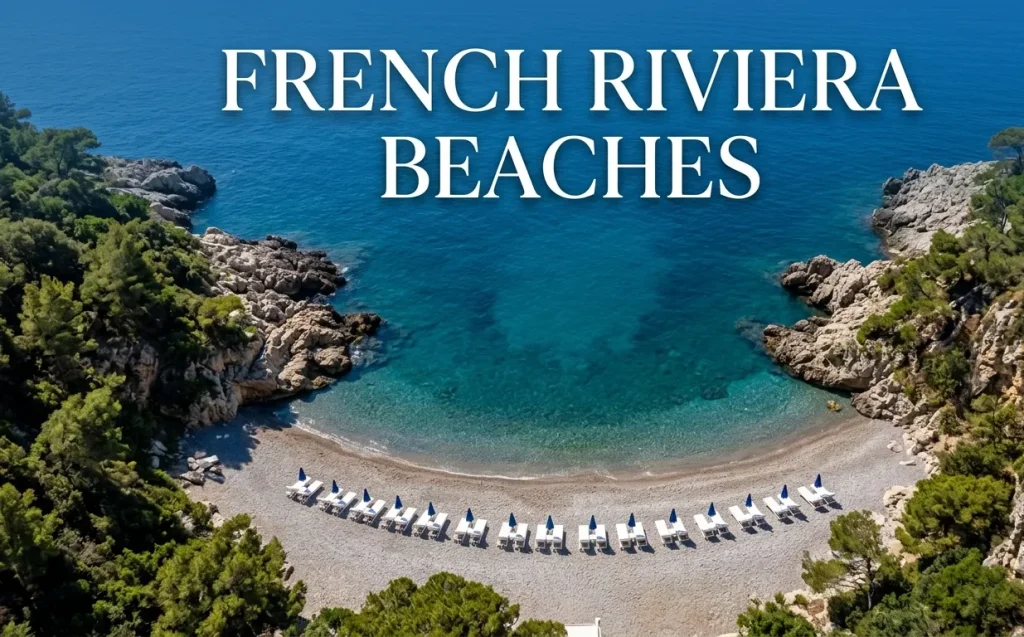
Paloma Beach is a sheltered, pebbly cove on the exclusive Saint-Jean-Cap-Ferrat peninsula. It is widely considered one of the most beautiful swimming spots on the entire Côte d’Azur.
The water here is an almost unreal, glassy turquoise and extremely calm. Steep, pine-covered cliffs shelter the cove from the wind, creating perfect conditions for a long swim.
The private Paloma Plage Restaurant offers a Mediterranean fine-dining experience right on the water. The smaller public section is notoriously tight, so you must arrive very early to claim a free spot.
The drive down is on a narrow, winding road with virtually no parking at the bottom. The number 81 bus from the Nice port is a much smarter way to reach this exclusive cove.
Couples and honeymooners will find this the most romantic setting on the Riviera. This is a place for quiet, elegant swimming and dining, not for loud socializing.
Key Takeaway: Paloma is the ultimate romantic cove, best reached by bus, not by a stressful car search.
Plage Mala: A Secluded Treasure in Cap d’Ail
Plage Mala is a dramatic, hidden beach tucked between the cliffs of Cap d’Ail. It is accessible only after descending a long staircase down the cliff face.
The visual reward is a stunning cove of turquoise water framed by jagged limestone cliffs. The beach is divided between a public section and two excellent private clubs, Eden Plage Mala and La Réserve de la Mala.
The pebble and rock shore requires sturdy water shoes for a comfortable entry into the deep, clear water. Snorkeling along the edges of the cove is excellent and a favorite activity for locals.
The climb back up the stairs is the price of admission and is strenuous in the summer heat. This natural limitation makes the beach completely unsuitable for families with young children or anyone with mobility issues.
Solo travelers seeking a dramatic, natural escape will find Mala deeply rewarding. The effort and the stairs filter the crowd, creating a calmer and more respectful atmosphere.
Are French Riviera Beaches Sandy? The Honest Truth
Most French Riviera beaches are not naturally sandy. They are composed of smooth, grey limestone pebbles called “galets.”
These pebbles are the single biggest surprise and disappointment for first-time visitors. They are hard to walk on, radiate heat, and make lying on a towel deeply uncomfortable.
The handful of sandy beaches, like Pampelonne and Plage du Midi, are celebrated for a reason. Sand is a genuine luxury commodity on this coastline, often imported or naturally scarce.
You will need water shoes to navigate the pebble shores and the rocky sea entry comfortably. This is not a frivolous accessory but a genuine necessity for an enjoyable trip.
Pebble beaches create the famously clear, deep blue water due to a lack of suspended sand. Accepting the pebbles and adapting with gear is the secret to a great Riviera beach day.
French Riviera Public Beaches: How to Find Free Access
All beaches in France are public property up to the high-tide line, by law. This means you can always find a free slice of sand or pebbles.
A free public section is called a “plage publique” and will be clearly signed on the sand. They are almost always squeezed directly between the private “plages privées.”
The public section in a glamorous cove like Paloma Beach is tiny and disappears in peak hours. Claim your free patch of paradise before 9:30 a.m. or simply give up on having any space.
Expect to find no services, no restrooms, and you will be sitting very close to your neighbors. The contrast is stark: you might be on a towel inches from a 50-euro cushioned sunbed.
The smartest strategy is to mix your days. Use public beaches for a quick swim and budget a few private club days for a full, comfortable experience.
Key Takeaway: The law guarantees free beach access, but you must claim it early and expect zero comfort.
Parking at French Riviera Beaches: A Survival Guide
Parking at the most famous French Riviera beaches is a nightmare in July and August. The strategy is to avoid driving directly to the beach whenever possible.
The coastal train line is the most efficient secret to beach hopping. Gare de Nice-Ville and Gare de Cannes connect small beach towns like Villefranche-sur-Mer and Cap d’Ail.
You can step off a train and walk to a stunning cove within 15 minutes. The bus network is also cheap but gets hopelessly gridlocked in peak summer traffic.
If you must drive, arrive before 8:30 a.m. for any paid parking lot at a famous cove. Expect to pay a flat day rate of 15 to 25 euros for the privilege of a space.
Illegally parked cars on narrow coastal roads are towed aggressively and without warning. The fine is significant and will ruin a perfectly good vacation day.
Best French Riviera Beaches for Families with Children
The best family beaches offer sand, shallow entry, and easy access to facilities. The Riviera has few of these, but they exist if you know where to go.
Plage du Midi in Cannes is the top choice for families on this coastline. The sand is soft and imported, the water entry is very gentle and shallow, and free public restrooms are nearby.
The western end of Plage de Pampelonne offers public sandy access away from the expensive clubs. The shallow water here is ideal for young children to wade and play safely for hours.
The pebble beaches of Nice and Villefranche are challenging for toddlers. The stones are hard to walk on, and the water drops off sharply after just a few feet.
A private beach club can be a smart family splurge for the security and a proper lunch. The service removes all the logistical stress of getting everyone fed and sun-screened safely.
Best Côte d’Azur Beach Clubs for Couples
The most romantic beach clubs combine a stunning view, superb food, and a calm atmosphere. They are about intimate conversation, not a loud, high-energy party scene.
Paloma Plage Restaurant on Saint-Jean-Cap-Ferrat is the ultimate choice for a romantic lunch. You dine with your feet almost in the clear water, looking across the bay at the Beaulieu cliffs.
La Réserve à la Plage on Pampelonne offers a quieter, more elegant luxury experience. It is a refuge from the high-decibel scenes at neighboring Nikki Beach.
Book a matelas in the back row of any club for more privacy and a slightly lower price. The front row is for seeing and being seen by every passing boat in the bay.
Couples should avoid clubs with DJs and magnums of rosé spraying unless that is their scene. The most romantic places let the sound of the water and the clinking of glasses do the talking.
Key Takeaway: A romantic beach club day is defined by a quiet table for two with a direct sea view and no DJ.
Best Time to Visit French Riviera Beaches
The best time to visit is June and September. The weather is perfectly warm and sunny, but the legendary crowds have not yet fully materialized.
The water in June is a brisk but swimmable 72°F, and it remains a warm 75°F well into late September. You avoid the chaotic, jam-packed beaches and sky-high prices of July and August.
July and August are the worst months for a calm and relaxing trip. The traffic is gridlocked, the beaches are uncomfortably packed, and a simple sunbed can cost over 100 euros.
The Cannes Film Festival in late May causes weeks of disruption and private closures. Many beach clubs open in late April and close by mid-October for the winter season.
The feared mistral wind can arrive with little notice, blasting sand and sending umbrellas flying. It is most common in spring and autumn and ruins a beach day instantly.
| Month | Weather | Crowds | Cost | Verdict |
|---|---|---|---|---|
| May | Warm, sunny spells | Low | Mid-Range | Good, but water is chilly. |
| June | Hot, long sunny days | Medium | High | The absolute sweet spot. |
| July | Very hot | Extreme | Very High | Only if you love a party scene. |
| August | Very hot | Maximum | Very High | The most difficult month to visit. |
| September | Hot, warm water | Medium | High | Equally as good as June. |
| October | Mild, occasional rain | Low | Mid-Range | A gamble, but quiet. |
What to Pack for French Riviera Beaches in 2026
Packing correctly for the pebbles and the glamour is the secret to looking like you belong. This is a social catwalk, not a rugged wilderness.
Essential items for a successful 2026 beach trip:
- Water Shoes: This is the single most critical item for navigating the painful hot pebbles.
- A Large, Thick Beach Mat: A thin souvenir towel provides zero cushion against the stones.
- Reef-Safe Sunscreen: The intense Mediterranean sun requires high SPF and frequent reapplication.
- A Cover-Up or Kaftan: This is non-negotiable for entering any beach club restaurant for lunch.
- Cash and a Premium Card: Many beachfront bars and valet services operate on a cash basis.
- A Good Book: This is a destination for reading and posing, not for playing loud beach games.
Safety and Seasonal Warnings for French Riviera Beaches
The primary safety risk is heat exhaustion, combined with a lack of shade and high sunbed costs. The Mediterranean sun in a cloudless Riviera summer is relentless and unforgiving.
Key safety and seasonal facts every visitor should know:
- Jellyfish: Swarms of “méduses” can arrive with a shift in wind and currents and their stings are painful. Heed all purple flag warnings on lifeguarded beaches.
- Sea Urchins: These black, spiny creatures hide on the rocks of the most beautiful wild coves. Never put your hand or foot on a rock you cannot see clearly.
- Heat Stroke: Direct sun on a pebble beach with no breeze can feel like a furnace. Hydrate constantly and take regular cool-down dips.
- Mistral Wind: This gale-force northerly wind creates sudden, dangerous, choppy sea conditions. Secure all loose items immediately when it hits.
- Stonefish: A rare but present danger in the rocky calanques, their venomous spines are a serious medical emergency. Wear water shoes on all rocky bottoms.
In a medical emergency, dial 112 for pan-European emergency services from any mobile phone. Lifeguards are only present on designated, flagged beaches during peak summer months.
Frequently Asked Questions About French Riviera Beaches
Are beaches in the French Riviera free?
All beaches in France are public property by law, so a free spot is always available.
The free public sections are often small and squeezed between large, expensive private clubs.
You will receive no services, shade, or restrooms on the public portion of the sand.
Which part of the French Riviera has the best beaches?
The Saint-Jean-Cap-Ferrat peninsula has the most stunning and dramatic swimming coves.
Pampelonne Beach near Saint-Tropez has the best long, sandy beach with legendary clubs.
The choice depends entirely on whether you prioritize natural beauty or social glamour.
Do you need water shoes for French Riviera beaches?
Yes, water shoes are an absolute necessity for 90% of the French Riviera’s beaches.
The large, smooth pebbles are extremely painful to walk on and radiate intense heat.
They also protect your feet from sharp rocks and the spines of hidden sea urchins.
What is the most glamorous beach in the French Riviera?
Plage de Pampelonne near Saint-Tropez is the most famous glamorous beach.
The beach is home to iconic clubs like Club 55 and Nikki Beach.
The front-row sunbed culture here is the epicenter of celebrity spotting and luxury.
Can you swim in the sea on the French Riviera?
Yes, the water is famously clear, calm, and perfect for swimming for most of the summer.
The water deepens quickly from the shore, so it’s great for a proper deep-water plunge.
Be aware of jellyfish and the sudden onset of strong winds from the mistral system.
Are there any sandy beaches on the French Riviera?
Yes, but sandy beaches are rare and a prized exception to the region’s pebble rule.
Plage de Pampelonne and Plage du Midi in Cannes are the two best examples.
Many other “sandy” beaches are actually imported sand placed over a natural pebble base.
Final Verdict on the Côte d’Azur Beach Experience
The French Riviera offers a beach experience you pay for with euros and effort. The reward is a world-class blend of gastronomy, design, and deep blue water.
Your first move should be to book a private beach club sunbed for your most important day. A reservation at a place like Paloma Plage months in advance is the best investment you can make.
Verify the opening dates for the 2026 season directly with each club, as they change annually. The real Côte d’Azur is found when you stop fighting the pebbles and embrace the service culture.
A well-planned Riviera beach day is a memory of pure, sun-drenched elegance.