What Are Brazil’s Beaches Actually Like by Region
Brazil’s coastline spans roughly 7,400 kilometers across multiple climate zones. A beach in the far northeast bears almost no resemblance to one in the south.
The Northeast is the postcard Brazil: warm turquoise water, coconut palms leaning over golden sand, and natural reef pools. Water temperatures stay between 78 and 82 degrees Fahrenheit year-round.
Rio de Janeiro state offers dramatic, mountain-backed crescents with cooler water and a social scene. The water hovers around 72 to 78 degrees Fahrenheit depending on the season.
The South, around Florianópolis, feels closer to a California or Australian beach. Surf is serious, water is cool, and the vibe is more active than languid.
Each region demands a different packing list and a different mindset. Choose your Brazilian coast based on the experience you want, not just the photograph.
Couples and honeymooners will find the Northeast and Fernando de Noronha most romantic. Budget travelers will get more value in the Northeast than in Rio or the South.
Solo travelers should match their social comfort to the region. Rio beaches are highly social; remote Bahia beaches offer solitude with limited infrastructure.
Key Takeaway: Brazil’s beaches are four distinct regions; pick the coast before you pick the beach.
Baia do Sancho Fernando de Noronha
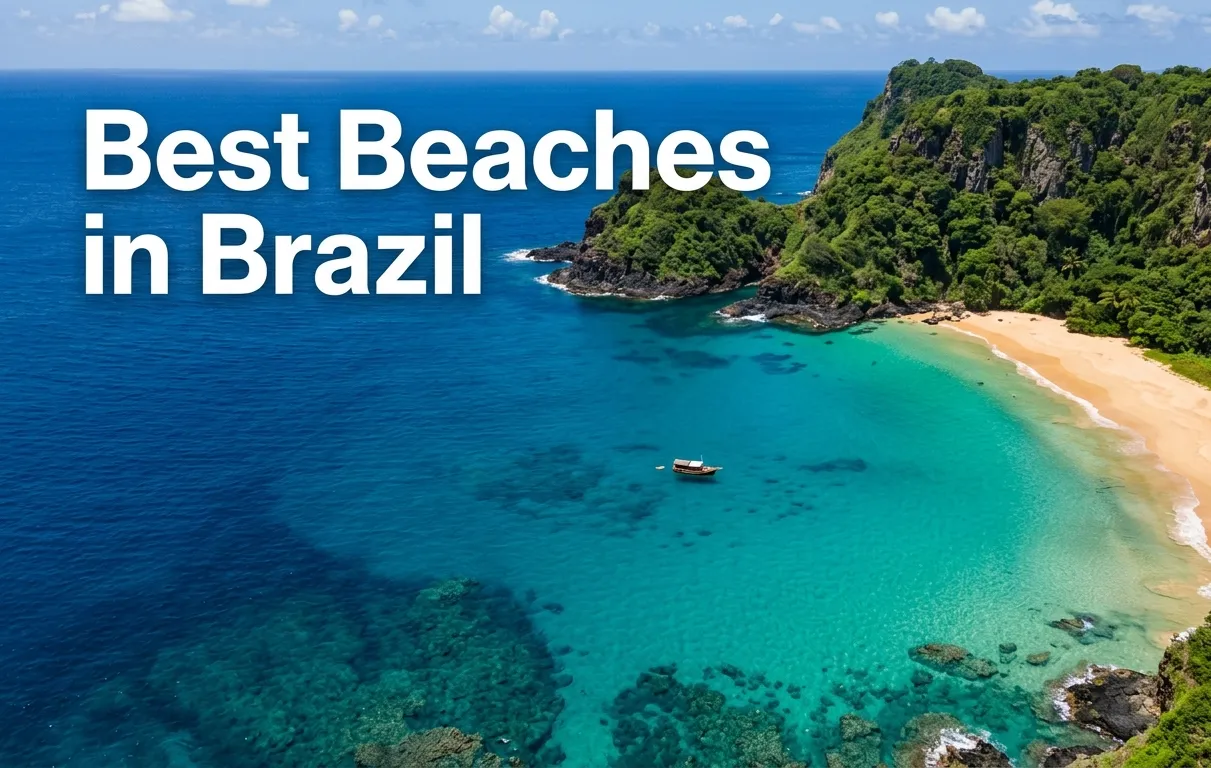
Baia do Sancho on Fernando de Noronha is consistently ranked the best beach in Brazil and often the world. TripAdvisor Travelers’ Choice has awarded it the top global spot multiple times.
The beach sits at the base of towering volcanic cliffs covered in green vegetation. You reach it by descending two steel ladders fixed into the rock face.
The water is impossibly clear, a deep indigo that shifts to electric turquoise near the sand. Visibility often exceeds 100 feet, making it Brazil’s premier snorkeling destination.
Fernando de Noronha is a protected marine park managed by Instituto Chico Mendes de Conservação da Biodiversidade. You pay a daily environmental preservation tax that increases with your length of stay.
A five-day stay in Noronha, including the tax, a mid-range pousada, and flights from Natal or Recife, can easily run 2,000 to 4,000 dollars per person. This is Brazil’s most expensive beach destination by a wide margin.
Couples and honeymooners will find Sancho and the island’s other beaches the most romantic and pristine in Brazil. Budget travelers should look elsewhere, as even basic pousadas are expensive by Brazilian standards.
Visit from September through March for the best combination of calm seas and clear skies. Book pousadas and flights 6 to 12 months in advance for peak season.
The ladder descent is safe but not accessible for anyone with mobility limitations or a fear of heights. Once down, there are no vendors or facilities, so pack water and food.
Key Takeaway: Baia do Sancho is Brazil’s best beach but also its most expensive and regulated.
Praia do Espelho Bahia
Praia do Espelho, Mirror Beach, sits on Bahia’s southern coast near the village of Trancoso. At low tide, the wet sand reflects the cliffs and sky like a polished mirror.
The beach is a long crescent of soft golden sand backed by rust-colored cliffs and dense coconut palms. The water is calm, warm, and shifts through shades of turquoise and green.
Natural reef pools form at low tide, trapping tropical fish in warm shallow water. Snorkeling in these pools is a gentle, accessible highlight.
Access from Trancoso requires a 30-minute drive on a partly unpaved road. A 4×4 is not strictly required but makes the journey significantly more comfortable.
Pousadas in Trancoso range from rustic-chic to ultra-luxury, with beachfront rooms at properties like UXUA Casa Hotel costing 500 to over 1,000 dollars per night. Mid-range options exist further from the Quadrado.
Couples and honeymooners will find the Trancoso-Espelho combination one of the most romantic beach escapes in the Americas. Families should note the limited facilities directly on Espelho itself.
Visit from October through March for the best weather. April through July brings heavy rain to Bahia’s southern coast.
The beach has a few excellent but expensive barracas serving seafood and caipirinhas. Bring cash, as card machines are unreliable here.
Key Takeaway: Praia do Espelho is Bahia’s most photogenic beach; pair it with Trancoso village.
Lopes Mendes Ilha Grande
Lopes Mendes on Ilha Grande is Brazil’s most celebrated wild beach. It faces the open Atlantic on an island with no cars and no paved roads.
The beach is a three-kilometer stretch of fine, powder-white sand backed by dense Atlantic rainforest. The water is clear, green-blue, and often has real surf.
Access requires a boat trip from the village of Abraão and a 20-minute forest hike. The effort filters the crowd to a manageable, appreciative number.
There are no buildings, no beach bars, and no pousadas on Lopes Mendes. The beach is a protected area within the Parque Estadual da Ilha Grande, so you pack everything in and out.
Abraão village has pousadas ranging from 50-dollar backpacker rooms to 200-dollar boutique suites. The journey from Rio de Janeiro takes about three hours by car to Angra dos Reis or Mangaratiba, then a ferry or speedboat.
Couples and active travelers will find the combination of jungle hike and pristine beach unforgettable. Families with young children may find the access journey too long.
Visit from June through September for drier weather and smaller crowds. December through March is hotter but rainier and more crowded with Brazilian and Argentine tourists.
The surf can be strong, and there are no lifeguards. Swim with caution and never alone.
Key Takeaway: Lopes Mendes is a car-free, jungle-backed reward for those who earn it.
Praia dos Carneiros Pernambuco
Praia dos Carneiros on Pernambuco’s coast is a gentle, shallow-water beach that feels designed for families and honeymooners alike. The iconic white church, Capela de São Benedito, sits on the sand with its door facing the sea.
The water is shallow, calm, and warm for hundreds of feet from shore. Sandbars emerge at low tide, creating natural wading pools in shades of pale turquoise.
The beach is lined with coconut palms and a few low-key barracas serving fresh seafood and cold beer. Sunbeds and umbrellas rent for roughly 10 to 20 reais, making this one of Brazil’s best-value premium beach experiences.
Access is easy, a 90-minute drive south from Recife on paved roads. The beach is free, and parking is plentiful and affordable.
Families with young children will find the shallow, calm water and easy logistics ideal. Couples will find the church and palm-fringed setting deeply romantic without the Noronha price tag.
Visit from September through March to avoid the heavy rains that can hit the Pernambuco coast from April through July. Weekends get busy with locals, so aim for a weekday for more space.
The church hosts weddings, which adds to the romantic atmosphere. Do not expect luxury resorts; this is a more authentic, local-style beach experience.
Combine Carneiros with a day trip to Maragogi or São Miguel dos Milagres further south. The entire Costa dos Corais region is Brazil’s best reef coast.
Key Takeaway: Praia dos Carneiros is shallow, safe, romantic, and surprisingly affordable.
Arraial do Cabo Beaches Rio de Janeiro
Arraial do Cabo, a few hours east of Rio de Janeiro city, is often called the Brazilian Caribbean. The water here is clearer and colder than further north, but the color is a stunning deep turquoise.
Praia do Forno and Prainhas do Pontal do Atalaia are the standout beaches. Praia do Forno sits in a cove reached by a short, well-maintained trail or a water taxi.
Prainhas do Pontal do Atalaia offers a view of two crescent beaches with impossibly white sand and deep blue water. The stair descent from the parking area delivers one of Brazil’s most photographed panoramas.
Water temperatures are cool by Brazilian standards, typically 66 to 72 degrees Fahrenheit. The cold upwelling is what keeps the water so clear.
Boat tours from Arraial do Cabo’s harbor visit multiple beaches and coves for roughly 50 to 100 reais per person. These tours get crowded, so book a smaller private boat if your budget allows.
Couples and active travelers will find Arraial do Cabo the best beach escape within day-trip distance of Rio. Families should note the cooler water and the stair access at Prainhas.
The town of Arraial do Cabo is functional but not charming. Stay in Búzios, an hour north, for a more upscale, romantic base with better dining.
The drive from Rio takes about two and a half hours without traffic. Leave early to avoid the summer weekend congestion that can double that time.
Key Takeaway: Arraial do Cabo is Rio state’s clearest water, best reached from a Búzios base.
| Beach | Region | Water/Sand | Best For | Honest Limitation |
|---|---|---|---|---|
| Baia do Sancho | Noronha | Crystal indigo, golden | Couples, snorkelers | Very expensive, ladder access |
| Praia do Espelho | Bahia | Turquoise, soft gold | Couples, honeymooners | Unpaved access road |
| Lopes Mendes | Ilha Grande | Green-blue, powder white | Active travelers | Boat and hike access only |
| Praia dos Carneiros | Pernambuco | Pale turquoise, soft | Families, budget | Can get busy on weekends |
| Arraial do Cabo | Rio de Janeiro | Deep turquoise, white | Day-trippers | Cooler water, functional town |
Maragogi and São Miguel dos Milagres Alagoas
Maragogi and São Miguel dos Milagres anchor Alagoas’ Costa dos Corais, Brazil’s largest coastal reef system. The natural pools here, piscinas naturais, sit in shallow water far from shore.
At low tide, boats take you out to reef pools where you stand in waist-deep, crystal-clear water surrounded by tropical fish. The experience feels like a natural aquarium.
Maragogi is the more developed and accessible hub, with larger hotels and more boat operators. São Miguel dos Milagres, 40 minutes south, is quieter and more exclusive.
The water is warm, calm, and translucent green over the reefs. The sand is golden and the palm tree density is exactly what the Northeast postcard promises.
Boat trips to the pools cost roughly 50 to 100 reais per person from Maragogi. São Miguel’s pools are less crowded but require a longer, pricier boat ride.
Families will find Maragogi’s reef pools the single best family beach experience in Brazil. The shallow, calm water and abundant fish thrill children without risk.
Couples seeking romance and solitude should choose São Miguel dos Milagres over Maragogi. Pousadas like Pousada do Toque offer a quiet luxury that Maragogi’s larger hotels lack.
Access requires a flight to Maceió and a two-hour drive north. Visit from October through March for the best combination of sun and low-tide pool windows.
Key Takeaway: Maragogi’s natural reef pools are Brazil’s best family beach experience.
Praia da Pipa Rio Grande do Norte
Praia da Pipa in Rio Grande do Norte is Brazil’s best blend of bohemian village, surf culture, and dolphin-watching beach. The cliffs here offer a panoramic Atlantic view down to golden sand.
Praia do Amor, Love Beach, is the main surf beach, a crescent of golden sand backed by high cliffs. The waves are consistent and beginner-friendly at the edges.
Dolphins surf the waves alongside swimmers and surfers daily, particularly at the nearby Baía dos Golfinhos. The bay is a protected dolphin sanctuary where boats are restricted.
The village of Pipa sits on a clifftop with restaurants, bars, and pousadas ranging from 40-dollar hostels to 200-dollar boutique stays. The vibe is relaxed, international, and slightly hippie-chic.
Access is via a 90-minute drive south from Natal. The road is paved and well-maintained, making Pipa one of the easiest remote-feeling beaches to reach.
Couples and solo travelers will find the village atmosphere perfect for a week-long stay. Families should note the surf can be strong at Praia do Amor, so use the calmer Praia do Centro for young swimmers.
Visit from September through March for dry, sunny weather. Pipa is a year-round destination, but April through July sees more rain.
Buggy tours north to the dunes and lagoons of Genipabu make an excellent day trip. Book through your pousada for reliable operators.
Key Takeaway: Pipa offers the best beach-town vibe in Brazil with daily dolphin sightings.
Jericoacoara Ceará
Jericoacoara, or Jeri, is a remote former fishing village turned windsurfing mecca on Ceará’s dune coast. The sand literally buries the streets, and the beach stretches for miles in both directions.
The main beach faces a calm bay ideal for swimming and stand-up paddleboarding. Dune buggy tours take you to hidden freshwater lagoons like Lagoa do Paraíso with hammocks strung over crystalline water.
The wind is constant and strong, making Jeri one of the world’s best wind and kitesurfing destinations. If you do not surf wind, the sand can feel like an exfoliating blast on windy afternoons.
Access from Fortaleza requires a four-hour 4×4 transfer. The final stretch is a sand track that reinforces Jeri’s end-of-the-world feel.
Pousadas range from rustic to high-end, with luxury options like Essenza Hotel pushing 300 to 500 dollars per night in peak season. The village has excellent Italian and Brazilian dining.
Couples and active solo travelers will find Jeri’s mix of adventure and barefoot luxury addictive. Families should note the remote access and the windy conditions that can frustrate young children.
Visit from September through February for the best wind conditions and clearest skies. The lagoons are most full and blue from July through October.
The sunset dune behind the village is a daily ritual. Everyone climbs the sand mountain to watch the sun sink into the Atlantic.
Key Takeaway: Jericoacoara is Brazil’s wind-sport capital with surreal dune lagoons.
Copacabana and Ipanema Rio de Janeiro
Copacabana and Ipanema are not Brazil’s most beautiful beaches. They are the most culturally significant urban beaches on the planet.
Copacabana is a four-kilometer sweep of wide golden sand backed by an unbroken wall of high-rise hotels. The water is clean by urban standards, with waves that are fun but not dangerous.
Ipanema, separated by the Arpoador rock, is the more upscale and consistently beautiful sister. The view of the Dois Irmãos mountains from Ipanema at sunset is Rio’s signature image.
These beaches are social stages, not serene escapes. Vendors sell everything from caipirinhas to sarongs to grilled cheese on a stick.
Do not bring valuables to Rio’s beaches. Phone theft on the sand is a real and common occurrence. Carry only the cash you need for the day and a cheap pair of flip-flops.
Couples and solo travelers who love urban energy will find Rio’s beach culture electrifying. Budget travelers can enjoy a world-class beach day for the cost of a caipirinha and a bus fare.
Visit from December through March for the hottest weather and the most vibrant social scene. Winter months, June through August, are cooler and quieter.
The water quality varies after heavy rain. Avoid swimming for 24 hours after a big storm, when the city’s drainage reaches the shore.
Leblon, west of Ipanema, is the quietest of the three main beaches. Families with children will find Leblon’s atmosphere more relaxed.
Key Takeaway: Rio’s beaches are social icons, not natural paradises; leave valuables at home.
Florianópolis and Ilha do Mel Southern Beaches
Florianópolis in Santa Catarina is Brazil’s southern surf capital, an island city with over 40 distinct beaches. Praia Mole and Joaquina are the surf stars, with consistent waves and an active, youthful scene.
The water in Florianópolis is cool, typically 65 to 72 degrees Fahrenheit. The sand is golden, the dunes are vast, and the Atlantic rainforest frames the beaches.
Ilha do Mel, Honey Island, in Paraná state is a car-free ecological paradise reached by a 30-minute boat from Paranaguá. Praia de Encantadas and Praia do Farol offer wild, dune-backed surf beaches.
Ilha do Mel has no ATMs and limited internet, so bring cash and download maps. Pousadas are rustic and affordable, typically 50 to 150 reais per night.
Couples seeking an off-grid adventure will love Ilha do Mel’s raw beauty. Surfers will find Florianópolis the best urban surf hub in Brazil.
Families should choose Florianópolis over Ilha do Mel for better infrastructure and medical access. Budget travelers will find both destinations far cheaper than Rio or the luxury Northeast.
Visit from December through March for the warmest beach weather. Winter, June through August, brings cold water and chilly evenings but excellent surf.
The seafood in Santa Catarina is outstanding, especially the oysters in Florianópolis. Pair a surf morning with a seafood lunch for the full southern Brazil beach day.
Key Takeaway: Brazil’s south offers surf, cool water, and a completely different beach rhythm.
Brazil Beach Seasonal Guide and Best Time to Visit 2026
Brazil’s beaches span two hemispheres in effect, with distinct seasonal patterns by region. Booking the right region in the wrong month can ruin a beach trip.
The Northeast coast, from Bahia to Maranhão, is best from September through March. These months bring sunny skies, warm water, and minimal rain.
April through July is the rainy season in the Northeast. Heavy downpours can last for days, and some remote beach access roads become impassable.
Rio de Janeiro and the Southeast are best from December through March. This is the Brazilian summer, with hot days, warm water, and the vibrant energy of Carioca beach culture.
The South, including Florianópolis, also peaks from December through March. Winter beach visits here require a wetsuit and a tolerance for chilly wind.
Fernando de Noronha is best from August through December for calm seas and optimal diving visibility. January through July is rainier but greener and less crowded.
Carnival in February or March transforms Rio and Salvador’s beaches into festival extensions. Book a year in advance if you want to experience this controlled chaos.
Brazilian summer holidays in January pack all beaches with domestic tourists. Avoid the two weeks after Christmas and New Year’s unless you thrive on dense crowds.
Key Takeaway: September to March for the Northeast; December to March for Rio and the South.
Brazil Beach Safety and Practical Logistics
Brazilian beaches are generally safe, but specific risks differ dramatically from European or North American beaches. Urban beach theft, strong currents, and remote access are the primary concerns.
Key safety and logistical facts every visitor should know:
- Never bring valuables to urban beaches in Rio, Salvador, or Recife. Phone snatching on the sand is opportunistic and common. Carry only the cash you need, and leave jewelry and electronics locked in your pousada safe.
- Rip currents are strong on surf beaches across the South and at Jericoacoara. Swim near lifeguard posts and obey flag systems. If caught, swim parallel to shore.
- Shark risk exists specifically in Recife’s urban beaches like Boa Viagem. Obey all posted warnings and swim only in protected reef areas. This risk does not apply to Pernambuco’s outer reef beaches like Carneiros.
- Sun intensity in the Northeast is extreme year-round. The UV index regularly hits 12+. Apply reef-safe SPF 50+ sunscreen every 90 minutes and wear a rash guard for extended water time.
- Domestic flights are essential for multi-region beach trips. Brazil is larger than the continental United States. Budget 150 to 400 dollars per regional flight segment.
- Cash is required at many remote beach barracas and for buggy tours. ATMs are scarce outside towns; carry sufficient reais for your day.
Embratur, Brazil’s tourism board, provides updated regional travel guidance. Check the ICMBio website for Fernando de Noronha access rules and fees before booking.
What Tourists Get Wrong About Brazil Beaches
Tourists assume Brazil’s best beaches are in Rio. The most beautiful Brazilian beaches are thousands of kilometers north in Bahia, Alagoas, and Pernambuco.
Visitors underestimate Brazil’s size. Flying from Rio to Fernando de Noronha takes longer than flying from New York to Miami and requires connections.
Many travelers do not realize that Fernando de Noronha requires advance planning and a daily tax. You cannot decide to go on a whim; book the island months ahead.
People assume all Brazilian beaches are cheap. Luxury pousadas in Trancoso, Noronha, and Jericoacoara rival Caribbean resort pricing.
Winter in Brazil is real, even if the country looks tropical on a map. Southern beaches are genuinely cold from June through August.
Urban beach theft is a genuine and frequent problem that glossy travel magazines downplay. Leave your phone at your pousada.
The best beach days in Brazil start early, before 9 a.m., when the light is soft and the barracas are just opening. The midday sun is punishing, and the late afternoon light is a photographer’s reward.
Brazilian beaches reward travelers who plan regionally, respect local safety norms, and understand that the postcard-perfect spots often require a flight, a drive, and a short hike. The payoff is a beach experience of staggering natural beauty.
Key Takeaway: Brazil’s best beaches require regional flights, early starts, and a phone-free sand setup.
Frequently Asked Questions About Brazil Beaches
What is the number one beach in Brazil?
Baia do Sancho on Fernando de Noronha is consistently ranked the number one beach in Brazil.
It holds the top spot on TripAdvisor Travelers’ Choice for global beaches multiple years running.
The crystal-clear water, dramatic cliffs, and protected status make it genuinely exceptional.
Which part of Brazil has the best beaches?
The Northeast has the best overall beaches in Brazil for warm water, soft sand, and natural beauty.
Bahia, Pernambuco, and Alagoas offer the best combination of accessibility and postcard-perfect scenery.
Fernando de Noronha is the single best island, but it is remote and expensive.
What is the most beautiful beach in Brazil for swimming?
Maragogi and São Miguel dos Milagres have the most beautiful natural reef pools for safe, shallow swimming.
Praia dos Carneiros in Pernambuco offers extremely calm, shallow, warm water ideal for swimmers.
Baia do Sancho offers the most beautiful deep-water swimming with exceptional visibility.
Is it safe to go to the beach in Brazil?
Yes, most Brazilian beaches are safe, but urban beaches require specific precautions.
Never bring valuables to the sand in Rio, Salvador, or Recife.
Remote natural beaches have no theft issues but require standard ocean safety awareness.
What is the best time of year to visit Brazil beaches?
September through March is the best time for the Northeast coast with sunny skies and minimal rain.
December through March is the best time for Rio and the South with warm summer weather.
Avoid the Northeast from April through July for heavy rain.
Do you need a visa to visit Brazil beaches in 2026?
Visa requirements for Brazil are changing for 2026 for citizens of the United States, Canada, and Australia.
Check the official Embratur website or your local Brazilian consulate for the most current 2026 visa rules.
Visa policies are in flux, and checking 90 days before travel is essential.
Brazil delivers some of the most beautiful and diverse beaches on Earth, from the reef pools of Alagoas to the surf breaks of Santa Catarina. Choose your region first, your specific beach second. Book Fernando de Noronha and peak-season pousadas 6 to 12 months ahead. Verify the 2026 visa requirements and the daily Noronha tax directly with official sources before you commit. Brazil rewards the traveler who plans regionally, packs light for the sand, and understands that the best beach day here starts with a coconut water at sunrise, not a phone screen at noon.