Iceland Beaches: The Complete 2026 Safety and Travel Guide
Iceland beaches are not for swimming. They are for witnessing raw, violent, volcanic drama where the North Atlantic slams into black sand under a shifting Arctic sky.
The Icelandic Met Office tracks the swell that creates lethal sneaker waves at beaches like Reynisfjara, where tourists die because they turn their back on the ocean. This guide treats that danger as its foundation, not a footnote.
What follows is a complete, honest 2026 guide to every type of beach in Iceland. It matches specific beaches to your photography goals, your hiking ability, your appetite for risk, and your tolerance for crowds, and it tells you exactly when to go and when to stay away.
Iceland Beaches Overview
Iceland’s coastline spans over 3,000 miles of volcanic rock, black basaltic sand, and glacial lagoon shores. There are no tropical beaches here, and no one comes to Iceland to sunbathe.

The beaches fall into distinct categories: south coast black sand death traps with world-famous sea stacks, iceberg-strewn lagoon outlets in the east, remote red and golden sand arcs in the Westfjords, and geothermally heated lagoons in urban Reykjavik.
Each beach type demands a different season, a different vehicle, and a different safety protocol. Visit Iceland notes that coastal conditions change by the hour, and a safe beach in the morning can become a fatal hazard by afternoon under a building North Atlantic swell.
Insider Tip:
- The majority of fatalities occur on south coast beaches when visitors misjudge the reach of sneaker waves.
- The most beautiful light for photography occurs in the two hours before sunset and the two hours after sunrise.
- In winter, the sun never fully rises on south coast beaches, offering four hours of golden twilight rather than a single golden hour.
Best Time to Visit Iceland Beaches
The best time to visit Iceland beaches for photography and road access runs from late May through early September. All Ring Road routes are open, the midnight sun provides 20-plus hours of shootable light, and puffins nest on coastal cliffs.
The best time for northern lights on beaches runs from October through March, when full darkness returns and aurora displays reflect on wet black sand. This is the season of ice, wind, and lethal coastal conditions.
| Season | Months | Daylight | Road Access | Primary Beach Activity |
|---|---|---|---|---|
| Summer | Jun-Aug | 20-24 hrs | All roads open | Photography, hiking, puffins |
| Shoulder | May, Sep | 14-18 hrs | High F-roads closed | Fewer crowds, variable weather |
| Winter | Oct-Mar | 4-7 hrs | Many roads closed | Northern lights, ice caves |
| Deep Winter | Dec-Jan | 3-5 hrs | Hazardous driving | Aurora photography, extreme caution |
Key Takeaway: July and August deliver maximum access; October through March deliver auroras but demand strict coastal hazard awareness.
Reynisfjara Beach Safety
Reynisfjara is the most dangerous tourist beach in Iceland, and the safety protocol here is not optional. Sneaker waves have killed visitors in recent years, and the Icelandic Search and Rescue association responds to near-misses weekly during peak season.
The danger is specific and well-documented. The beach sits on a steep shelf where the North Atlantic builds waves that surge far past the wet sand line with no warning, grabbing adults and dragging them into lethal 37-degree water with a rip so powerful it cannot be fought.
Safetravel.is issues the official safety rule for Reynisfjara: never turn your back on the ocean, and stay at least 50 meters from the waterline. The warning signs at the parking lot are not for other people, they are for you.
- Reynisfjara Survival Rules:
- Never stand between the water and any obstacle. A wave can pin you against basalt columns.
- Keep children within arm’s reach at all times. Do not let them run toward the water.
- If a wave drags someone in, do not enter the water to rescue them. Call 112 immediately.
- Photograph the basalt columns and Reynisdrangar sea stacks from well back on the dry upper beach.
- Check the surf forecast on vedur.is before driving to Reynisfjara. A high surf advisory means stay entirely off the lower beach.
For families with young children, Reynisfjara is not an appropriate beach destination in any season. The risk calculus changes, and Diamond Beach or Nauthólsvík are far safer alternatives.
Best Black Sand Beaches in Iceland
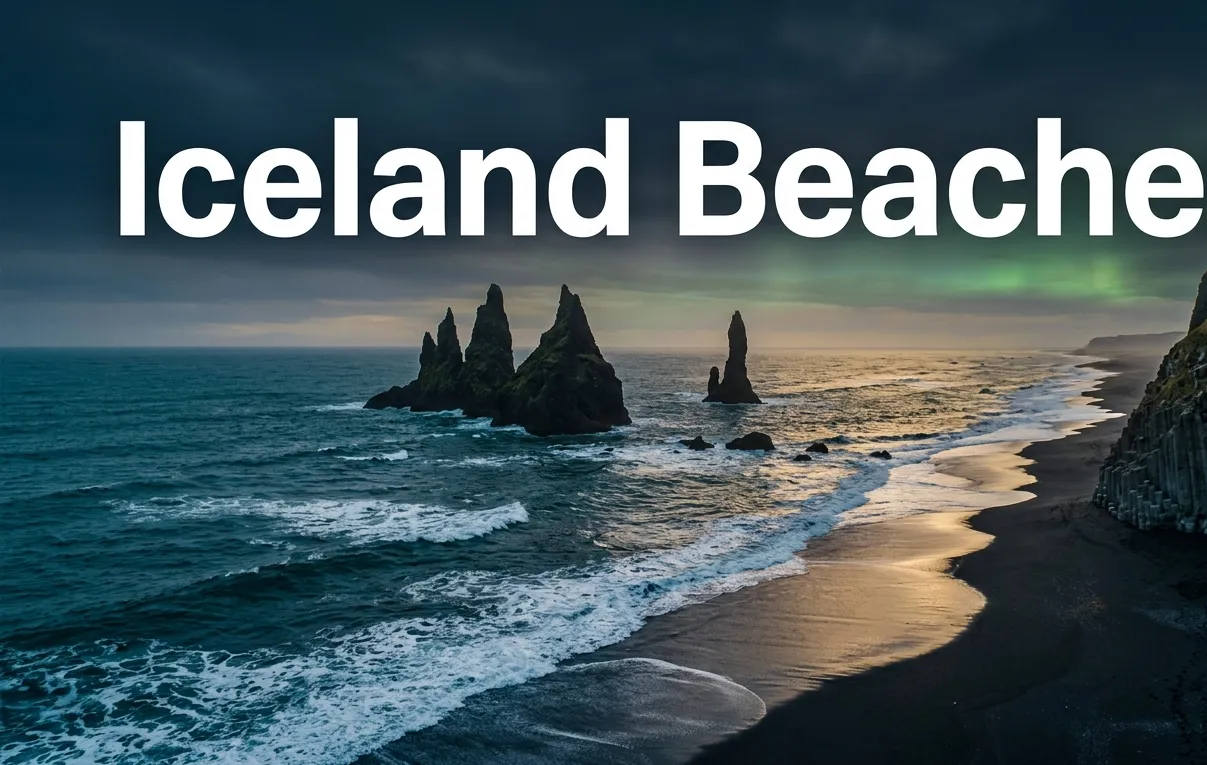
Reynisfjara near the town of Vík is the most famous black sand beach in Iceland and the most photographed. The basalt column cave and the Reynisdrangar sea stacks rising from the surf define the iconic Iceland beach image.
The sand is jet-black basaltic grit, not soft powder. It gets into every camera lens and zipper, and the wind hurls it horizontally with enough force to sting exposed skin.
Djúpalónssandur on the Snæfellsnes Peninsula is a black pebble beach with a completely different character. The beach is strewn with the rusted wreckage of a British trawler that ran aground in 1948.
Four lifting stones sit on the beach, historic tests of strength for fishermen. The drive requires a short but steep gravel road, and the beach is far less crowded than Reynisfjara.
Diamond Beach at Jökulsárlón is a black sand beach where icebergs calved from the Breiðamerkurjökull glacier wash ashore and sit glinting on the dark sand. The ice chunks range from fist-sized to car-sized and create the most surreal beach photography on Earth.
| Black Sand Beach | Crowd Level | Primary Risk | Best Time |
|---|---|---|---|
| Reynisfjara | Very high, bus tours | Sneaker waves | Early morning, late evening |
| Djúpalónssandur | Moderate | Slippery rocks | Summer, calm days |
| Diamond Beach | High at sunrise/set | Slippery ice on rocks | Winter aurora, summer sunrise |
Key Takeaway: Diamond Beach delivers the most unique black sand experience with lower fatal risk than Reynisfjara.
Diamond Beach Iceland
Diamond Beach is the black sand outlet where the Jökulsárlón glacial lagoon drains into the North Atlantic. Icebergs that calved from the Breiðamerkurjökull glacier float through the lagoon, break apart in the surf, and wash up on the black sand like scattered glass.
This beach works for every traveler profile. Families can safely explore the ice chunks on the upper beach well away from the water. Photographers get a subject that changes hourly as the ice melts and the light shifts.
The ice is most abundant in winter when the glacier calves heavily and the lagoon is full. In summer, smaller chunks persist, but the midnight sun reflecting off wet ice and black sand creates a completely different, equally compelling image.
The access is straightforward from the Ring Road. Park in the Jökulsárlón lot and walk under the bridge through a short path. The beach is wide and flat, but the ice chunks are genuinely slippery, and a fall onto jagged ice cuts skin.
According to Vatnajökull National Park rangers, walking onto floating ice at the lagoon outlet is strictly prohibited. The current can sweep icebergs out to sea with a person on top in seconds.
Iceland Geothermal Beach
Nauthólsvík Geothermal Beach in Reykjavik is the only beach in Iceland where a person can comfortably enter the water. A man-made lagoon traps geothermally heated seawater, and a hot tub sits directly on the sand.
The lagoon water is heated to roughly 60 to 80 degrees Fahrenheit depending on the season and the efficiency of the geothermal exchange system. The open ocean beyond the sea wall remains at a lethal 37 to 40 degrees.
This is a local Reykjavik experience, not a wild natural beach. Icelanders swim here year-round, running from the hot tub into the freezing Atlantic for a few seconds before sprinting back, a tradition that tourists can watch from the warm lagoon.
The beach has full facilities: changing rooms, showers, a steam bath, and lifeguard supervision during opening hours. Entry is free at time of publication, but confirm on the Reykjavik city website before visiting in 2026.
For families traveling with children, this is the only Icelandic beach where swimming is genuinely safe. Budget travelers get a free geothermal experience that would cost significantly more at the Blue Lagoon or Sky Lagoon.
Iceland Beach Hot Springs
Several remote hot springs in Iceland sit directly on the shoreline, creating a surreal bath at the edge of the North Atlantic. These are not developed facilities, they are wild pools with variable temperatures and zero services.
Reykjadalur Hot Spring River is the most famous, a geothermal stream flowing down a valley that empties near the ocean. The hike in takes roughly 45 to 60 minutes, and the water temperature drops the closer you get to the sea.
The Strandir Coast in the remote Westfjords holds several unnamed coastal hot springs known only to locals and experienced geothermal enthusiasts. Access requires a serious 4×4 vehicle, detailed local knowledge, and complete self-sufficiency.
Seljavallalaug is one of Iceland’s oldest swimming pools, built into a narrow valley with a view of the ocean in the distance. The water is geothermally heated but often tepid rather than hot, and algae can coat the bottom in summer.
- Wild Hot Spring Rules:
- Never enter a hot spring without testing the temperature with a thermometer. Geothermal water can reach scalding temperatures inches from a comfortable soak.
- Pack out all trash. These are not serviced sites, and any garbage ruins the next visitor’s experience.
- Do not assume a coastal hot spring is swimmable at high tide. Some fill with freezing seawater when the tide rises.
Key Takeaway: Wild coastal hot springs deliver an unrivaled experience but demand full self-sufficiency and temperature-testing gear.
Stokksnes Beach Iceland
Stokksnes in the Eastfjords is the most dramatic photography beach in Iceland, and it is privately owned, so an entry fee applies. The Vestrahorn mountain rises like a blackened spike directly behind a vast flat of black sand and dune grass.
The beach itself is a wide tidal flat where shallow water sits on top of the sand, creating perfect reflections of Vestrahorn at low tide. This is the single best reflection shot in Iceland, and the midnight sun keeps the light workable for hours.
The entry fee to the Stokksnes Viking Village and beach is roughly 1,500 to 2,000 ISK per person, paid at the café. This is one of the few paid beaches in Iceland, and the fee keeps the crowds manageable compared to the free and chaotic Reynisfjara.
Photographers should aim for low tide when the wet sand creates a mirror surface. The wind here is frequently brutal, and a tripod weighted with a camera bag is essential for long exposures.
For couples and honeymooners seeking a dramatic, private-seeming beach for an Iceland elopement shoot, Stokksnes delivers far better than the bus-tour chaos of Reynisfjara. The fee creates a quieter experience.
Iceland Red Sand Beaches
Rauðisandur in the Westfjords is Iceland’s most famous red sand beach, a vast 10-kilometer arc of iron-rich sand that shifts from pale gold to deep rust depending on the light and the tide. It is not the bright red of Prince Edward Island, but a subtle, oxidized earth tone that photographs beautifully against a moody sky.
The access road is a steep, winding gravel pass over a mountain that is impassable in winter without a 4×4 and often closed entirely from November through April. The road down to the beach itself is also gravel and requires careful driving.
This beach is huge and empty. Even in high summer, the scale of the place swallows visitors, and you can walk for an hour without seeing another person. The sea here is as deadly as the south coast, with the same sneaker wave risk, and there are no services or lifeguards.
For landscape photographers, the beach offers an entirely different color palette than the black sand south coast. Visit Iceland notes that the golden hour on Rauðisandur produces a warm glow on the red sand that is entirely unlike the monochromatic drama of Reynisfjara.
Iceland White Sand Beaches
Breiðavík in the Westfjords is one of Iceland’s few genuine white sand beaches, a sheltered bay with sand made from crushed white shells rather than volcanic rock. The water is still lethally cold, but the beach looks Caribbean on a rare sunny day.
The beach sits near the Látrabjarg bird cliffs, the westernmost point of Iceland. In summer, this coast is alive with puffins, razorbills, and guillemots nesting on the cliffs above the white sand.
Ytri Tunga on the Snæfellsnes Peninsula is a golden sand beach known for its resident seal colony. It is not white sand in the Caribbean sense, but it is pale by Icelandic standards, and the seals hauled out on the rocks provide a wildlife photography opportunity absent from most Icelandic beaches.
The seals are wild and unpredictable. Photographers must use a long lens and never approach a seal on land, especially during pupping season in late spring and early summer when mothers are protective and a human approach can cause abandonment.
| Non-Black Sand Beach | Color | Region | Key Feature |
|---|---|---|---|
| Rauðisandur | Red/gold | Westfjords | 10km empty arc |
| Breiðavík | White | Westfjords | Sheltered, shell sand |
| Ytri Tunga | Golden | Snæfellsnes | Seal colony |
Key Takeaway: The Westfjords hold Iceland’s color-sand beaches, but they demand a dedicated multi-day detour from the Ring Road.
Best Beaches in Iceland for Photography
Stokksnes is the best beach in Iceland for single-shot landscape photography because of the Vestrahorn reflection and the managed crowd flow from the entry fee. The dune grass in the foreground, the mountain in the midground, and the brooding sky create an image that requires almost no compositional effort.
Diamond Beach offers the most creative photography variety. Each iceberg is a unique sculpture that changes shape as it melts, and the combination of translucent ice and black sand works in every light from harsh midday sun to soft winter twilight.
Reynisfjara produces the most dramatic long-exposure images of sea stacks and swirling surf. The basalt columns provide a leading line that draws the eye directly to the Reynisdrangar rocks, but the photographer must stay well back from the water, and a telephoto lens is safer than a wide angle for isolating the stacks.
According to professional Icelandic landscape photographers, the single most common mistake at Iceland beaches is arriving with only a wide-angle lens. A 70-200mm or 100-400mm telephoto compresses the sea stacks, glaciers, and distant cliffs into powerful layered compositions.
Iceland Beaches Northern Lights
The best beaches for northern lights photography in 2026 are Diamond Beach and Stokksnes, both on the south and east coasts where the auroral oval is frequently active and the beaches face the right direction for a dark sky over the ocean.
Diamond Beach at Jökulsárlón is the most iconic aurora beach shot in Iceland. The icebergs on the black sand reflect green and purple light, and the lagoon behind adds a second reflective surface.
This shot requires serious winter preparation. The temperature at midnight on Diamond Beach in January can drop to minus 10 degrees Fahrenheit with a wind chill that freezes camera batteries in minutes.
Stokksnes offers the Vestrahorn mountain silhouetted against the aurora, with the wet sand reflecting the mountain and the sky together. The private entry fee still applies in winter, but the hours are limited, and a pre-arranged key pickup from the landowner may be required for nighttime access.
- Aurora Beach Photography Kit for 2026:
- At least four fully charged camera batteries kept in an inner jacket pocket against your body.
- A carbon-fiber tripod that does not freeze your hands to the metal.
- A headlamp with a red-light mode to preserve night vision while setting up shots.
- Chemical hand warmers taped to the lens barrel to prevent condensation and frost.
Key Takeaway: Diamond Beach offers the best foreground for aurora shots, but winter shooting demands dedicated cold-weather camera kit.
Iceland Puffin Watching Beaches
The best beach for puffin watching in Iceland is Dyrhólaey on the south coast near Vík. The high promontory above the black sand beach holds a large puffin colony from May through mid-August, and the birds nest in burrows within feet of the designated viewing path.
Ytri Tunga on the Snæfellsnes Peninsula is less reliable for puffins but excellent for seals, and some puffins do nest on the nearby cliffs. The golden sand makes it a more pleasant beach to wait and watch than the sharp black grit of the south coast.
Látrabjarg in the Westfjords is the ultimate puffin cliff, not a beach in the traditional sense, but the white sand of Breiðavík sits directly below. Millions of seabirds nest on these westernmost cliffs of Iceland, and puffins are so accustomed to human presence that they allow close approach.
The puffin nesting season in 2026 is expected to run from roughly May 15 through August 20. The birds depart when their chicks fledge, and arriving in late August means finding empty burrows.
Safetravel.is warns that cliff edges at puffin colonies are unstable and often undercut by erosion. A puffin photograph is never worth stepping off the marked path onto a cornice of turf that can collapse under body weight.
Iceland Beach Hiking Trails
The best beach hiking trail in Iceland runs from the Sólheimasandur plane wreck path to the black sand coast beyond. Most visitors walk the flat 4-kilometer round trip to the DC-3 wreck and turn back, but continuing another kilometer south brings you to a vast, empty stretch of black sand where the Jökulsá river meets the sea.
The Fimmvörðuháls trail between Skógafoss and Þórsmörk is not a beach hike, but its final descent toward the ocean passes through a landscape of black volcanic sand and new lava that feels like a beach at the edge of a post-apocalyptic world.
The hike from Djúpalónssandur to Dritvík on the Snæfellsnes Peninsula follows a coastal path past lava formations and abandoned fishing hut ruins. The black pebble coves along this trail are entirely empty, and the sound of the sea pulling back through the round stones creates a low, grinding roar unlike anything on a sand beach.
Hiking boots are mandatory on all Iceland coastal trails. The rock is sharp, the boulders are unstable, and a twisted ankle on a remote Westfjords beach means a long, painful wait for help that may not arrive the same day.
Iceland Beach Driving Rules
Driving directly onto Iceland beaches with any vehicle is illegal, environmentally destructive, and enforced with fines that can exceed 200,000 ISK. The black sand is a fragile ecosystem, and tire tracks remain visible for years.
All designated beach parking is on paved or gravel lots adjacent to the access paths. The Ring Road, Route 1, is a paved two-lane highway that passes within easy reach of Reynisfjara, Diamond Beach, and most south coast beaches.
F-roads are the gravel tracks into the highlands and remote Westfjords beaches. These roads are only open from roughly June through September, and driving an F-road in a 2WD rental car voids the rental insurance and can result in rescue costs charged directly to the driver.
- 2026 Iceland Beach Driving Essentials:
- Rent a 4×4 for any beach beyond the Ring Road south coast. A Dacia Duster is the minimum; a Land Cruiser or similar for the Westfjords.
- Check road.is every morning before departure. Road closures happen overnight due to wind, snow, or flooding.
- Fill the gas tank at the last station before leaving the Ring Road. Gas stations are hundreds of kilometers apart in the Westfjords and Eastern Region.
- Download offline maps and save the 112 Iceland emergency app. Cell service vanishes on remote coastal roads.
Key Takeaway: Never drive on the sand, and never enter an F-road in a 2WD car.
Iceland Beach Camping
Þakgil near Vík is the best camping experience near a black sand beach in Iceland. The campsite sits in a mountain-rimmed valley a 30-minute gravel drive from the coast, and the communal cave dining area with picnic tables and candles makes it one of the most atmospheric campgrounds in the country.
Svínafell near the Jökulsárlón lagoon offers the closest camping to Diamond Beach. The campsite is basic but well-located, and aurora photographers can drive from their tent to the iceberg beach in under 10 minutes for a midnight shoot.
Iceland no longer permits wild camping outside designated campsites. Camper vans must park in registered campgrounds overnight, and enforcement has increased significantly for the 2026 season.
The Iceland Camping Card is accepted at dozens of campsites across the country and typically pays for itself within five to seven nights of use. For budget travelers road-tripping the Ring Road, this is the most economical way to sleep near a different beach each night.
Frequently Asked Questions About Iceland Beaches
Is it safe to swim at Iceland beaches?
Swimming in the open ocean at Iceland beaches is not safe and is never recommended.
The water temperature hovers between 36 and 46 degrees Fahrenheit year-round, causing cold-water shock and hypothermia within minutes.
Nauthólsvík Geothermal Beach in Reykjavik is the only beach with a safe, heated swimming lagoon.
What is the most dangerous beach in Iceland?
Reynisfjara is the most dangerous beach in Iceland due to fatal sneaker waves that surge up the steep sand with no warning.
The Icelandic Search and Rescue association responds to incidents here regularly, and tourists have drowned at this exact beach in recent years.
The official rule is to stay at least 50 meters from the waterline and never turn your back on the ocean.
Can you see the northern lights on Iceland beaches?
Yes, Diamond Beach and Stokksnes are the best Iceland beaches for northern lights viewing and photography.
The dark ocean-facing horizon and reflective wet sand create ideal conditions for aurora shots from October through March.
Stokksnes may require pre-arranged nighttime access with the landowner in the winter months.
What beach in Iceland has the warmest water?
Nauthólsvík Geothermal Beach in Reykjavik has the warmest beach water in Iceland, heated geothermally to roughly 60 to 80 degrees Fahrenheit.
The warm water is confined to the man-made lagoon, and the open ocean beyond the sea wall remains lethally cold.
It is the only beach in Iceland where comfortable, safe swimming is possible.
When is the best time to photograph Iceland beaches?
Late May through early September offers the best combination of open roads, midnight sun for hours of golden light, and accessible beaches.
October through March offers dark skies for aurora photography on beaches but demands winter driving skills and extreme cold-weather gear.
The midnight sun in June and July provides 20-plus hours of shootable light for landscape photographers.
Do you need a 4×4 to visit Iceland beaches?
You do not need a 4×4 for Ring Road beaches like Reynisfjara, Diamond Beach, and Nauthólsvík.
You need a 4×4 for remote Westfjords beaches like Rauðisandur and Breiðavík, and for any F-road access.
Driving an F-road in a 2WD vehicle invalidates rental insurance and can result in large rescue charges.
Iceland’s beaches deliver the most dramatic coastal landscapes on Earth, but they demand more respect for weather, water, and road conditions than any other beach destination. The price of admission is preparation, and the cost of unpreparedness here is higher than almost anywhere else travelers bring a camera and a sense of adventure.
Your single most important decision is not which beach to visit first, but whether you treat Reynisfjara’s sneaker waves as a real and present lethal hazard. Stay 50 meters from the waterline there, keep your children within arm’s reach, and never turn your back to the ocean.
Before you depart in 2026, check road conditions on road.is, the surf forecast on vedur.is, and file a travel plan on Safetravel.is if venturing to any remote Westfjords or Eastern Region beach. These are not optional steps, they are the difference between the photograph of a lifetime and a statistic. All road, puffin, and geothermal pool conditions are subject to seasonal change and must be verified on official Icelandic sources just before travel.