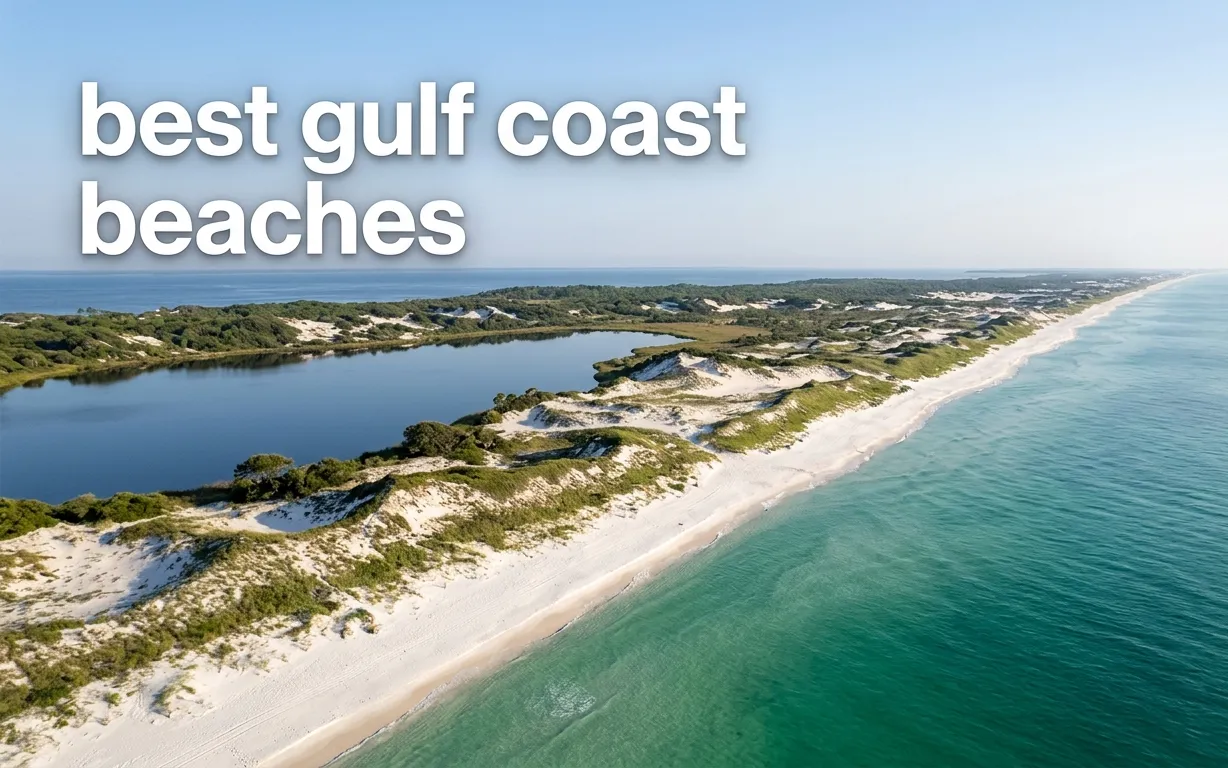
Best Gulf Coast Beaches 2026: Ranked by Region and Traveler
The Gulf Coast spans five states with radically different beach personalities. Booking the wrong region for your trip wastes money and vacation days.
Some beaches deliver sugar-white sand and emerald water. Others offer shell-strewn solitude and birding nirvana. The difference matters enormously.
According to Visit Florida, the Gulf Coast welcomes over 40 million visitors annually. Most concentrate in a handful of well-marketed beach towns.
This guide ranks 15 Gulf Coast beaches by region and traveler profile. It covers seaweed season reality, red tide safety, honest water clarity assessments, and exactly which beaches to skip for your trip type.
Best Gulf Coast Beaches Overview
The Gulf of Mexico coastline divides into four distinct beach regions. The Florida Panhandle delivers the whitest sand and clearest water.
The Alabama and Mississippi coast offers family-friendly resorts and a slower pace. The Texas barrier islands provide wide-open space and a different kind of Gulf experience.
Florida’s central and southern Gulf beaches mix island preserves with developed resort towns. Each region rewards a different traveler.
The shared Gulf reality is warm water, gentle surf, and seasonal seaweed variability. Hurricane season officially runs from June through November.
| Region | Best For | Sand Quality | Water Clarity | Seasonal Risk |
|---|---|---|---|---|
| FL Panhandle (Destin, 30A, Pensacola) | Families, couples, clearest water | Sugar-white quartz, softest in US | Best in Gulf, 20-40ft visibility common | Seaweed low, hurricane moderate |
| AL Coast (Gulf Shores, Orange Beach) | Families, budget value, fishing | White, fine, less powdery than Panhandle | Moderate, 5-15ft typical | Seaweed low-moderate, hurricane moderate |
| TX Barrier Islands (S Padre, Mustang) | Nature lovers, space seekers, budget travelers | Light brown to beige, coarser | Lower, 1-8ft typical | Seaweed high Jun-Oct, hurricane lower |
| FL Central/South Gulf (Sanibel, Caladesi) | Shellers, nature, romantic escapes | Varied, shell-rich to fine white | Variable, island-dependent | Seaweed moderate-high, red tide risk |
Key Takeaway: The Florida Panhandle from Destin to 30A delivers the most consistently beautiful sand and clearest water on the entire Gulf Coast.
Destin and South Walton Beaches Florida
Destin Beach and the South Walton 30A beaches anchor the Emerald Coast. The sand here is quartz crystal washed down from the Appalachian Mountains over millennia.
The sand stays cool underfoot even in August heat. The water runs genuinely emerald green in the right light conditions.
Grayton Beach State Park on 30A offers the best undeveloped beach experience in the Panhandle. The coastal dune lake ecosystem here exists in only a handful of places worldwide.
The 30A beach towns, including Seaside, Rosemary Beach, and Alys Beach, each operate as architecturally distinct planned communities. They are walkable, photogenic, and expensive.
Parking at Destin’s public access points fills by 9:00 AM during peak summer. The Henderson Beach State Park access offers more parking and a less crowded beach.
Families will find Destin’s calm water and wide sand ideal for young children. The harbor walk and fishing fleet add genuine family entertainment options.
Couples and honeymooners should bypass Destin proper and head to the 30A towns. Rosemary Beach and Alys Beach deliver romantic, walkable luxury at a premium price point.
| 30A Town | Best For | Vibe | Accommodation Type |
|---|---|---|---|
| Seaside | Families, first-timers | Classic beach town, central hub | Rental cottages, limited hotels |
| Rosemary Beach | Couples, luxury seekers | European village aesthetic, quieter | High-end rentals, The Pearl Hotel |
| Alys Beach | Honeymooners, design lovers | White-washed Bermuda modern | Ultra-luxury rentals |
| Grayton Beach | Nature lovers, laid-back travelers | Funky, historic, artistic | Mix of old Florida and new luxury |
Pensacola Beach and Navarre Beach Florida
Pensacola Beach sits on Santa Rosa Island, a barrier island with sugar-white sand and a genuinely relaxed atmosphere. It lacks the high-rise condo canyons of Destin.
The Pensacola Beach Pier anchors the central beach area. The water here matches Destin’s clarity on most days.
Navarre Beach, 25 minutes east, strips the Gulf Coast experience down to its essentials. There is sand, water, a fishing pier, and very little else.
Navarre markets itself as “Florida’s Most Relaxing Place.” The absence of high-rise development and chain restaurants supports the claim.
Both beaches connect to the Gulf Islands National Seashore. This federal preserve protects miles of undeveloped barrier island.
Families will find Pensacola’s downtown district, historic sites, and Blue Angels air shows add meaningful non-beach activity.
Budget travelers should target Navarre Beach over Pensacola Beach. Condo rental rates run 20 to 30 percent lower on comparable properties.
Couples seeking a quieter Panhandle experience should choose the eastern end of Pensacola Beach. The Opal Beach area within the national seashore offers near-solitude on weekdays.
Insider Tip: The best Gulf Coast beach day you will ever have is on an uncrowded stretch of Gulf Islands National Seashore. Enter at the Fort Pickens gate and drive until the parking lots empty out.
Key Takeaway: Pensacola Beach offers the best ratio of sand quality to crowd levels in the Florida Panhandle. Navarre Beach strips it down even further.
Panama City Beach Florida Guide
Panama City Beach offers 27 miles of white sand and the broadest range of accommodation price points on the Panhandle. It is the most accessible Gulf Coast beach for budget-conscious families.
The water clarity here matches Destin on calm days. The sand is the same Appalachian quartz crystal.
The reputation for spring break excess has faded substantially. The beach has shifted toward a family-friendly identity over the past decade.
St. Andrews State Park at the eastern end delivers the best nature experience in Panama City Beach. The jetty, bay side, and Gulf side offer three distinct beach environments.
Families will find the concentration of affordable condo rentals, mini-golf courses, and family attractions unmatched on the Gulf Coast.
Couples seeking a romantic experience should look east toward 30A or west toward Navarre. Panama City Beach remains fundamentally a family and group-travel destination.
The Russell-Fields Pier provides excellent fishing and dolphin-watching. The adjacent Pier Park shopping and dining complex offers a manufactured but convenient evening destination.
Spring break season, roughly mid-February through early April, still brings a noticeable energy shift. Verify specific spring break calendar dates for 6 before booking a family trip during this window.
- Panama City Beach Pros: Widest accommodation selection, best budget-to-mid-range value, excellent state park access.
- Panama City Beach Cons: Condo-canyon aesthetic in central stretch, spring break residue, less walkable than 30A towns.
Gulf Shores and Orange Beach Alabama
Gulf Shores Beach and Orange Beach deliver the best Gulf Coast beach experience outside Florida. The sand is white, fine, and genuinely beautiful.
The water clarity runs a visible step below the Florida Panhandle. The Mississippi River sediment plume and Mobile Bay outflow affect near-shore visibility.
Gulf State Park anchors the nature side of the Alabama coast. The extensive trail system and freshwater lake offer meaningful non-beach activity.
Orange Beach runs more upscale than Gulf Shores. The marina and fishing fleet infrastructure here is substantial.
Families will find the Alabama coast offers better value than the Florida Panhandle. Condo rates typically run 15 to 25 percent below comparable Destin or 30A properties.
Couples should target Orange Beach over Gulf Shores. The resort concentration and dining scene cater more intentionally to adult travelers.
The Alabama Gulf Coast Zoo and Waterville USA water park add genuine family entertainment beyond the sand.
According to Gulf Shores & Orange Beach Tourism, the Alabama coast welcomes over 6 million visitors annually. The peak summer months fill lodging and restaurants completely.
Insider Tip: The Fort Morgan Road peninsula west of Gulf Shores offers miles of quieter beach access. The historic fort at the terminus adds genuine history to a beach day.
Dauphin Island Alabama Beach
Dauphin Island sits three miles off the Alabama coast, connected by bridge. It is the anti-Gulf Shores.
The beach here is less white, less groomed, and significantly less crowded. The west end delivers a genuinely wild barrier island experience.
The Dauphin Island Audubon Bird Sanctuary covers 164 acres of maritime forest, dunes, and marsh. It sits on a critical spring migration flyway.
Shelling on Dauphin Island’s west end rivals Sanibel Island for quality and quantity. The lower visitor numbers mean shells stay on the sand longer.
The island operates on a different rhythm than the mainland resort coast. Restaurants close early. Nightlife is essentially nonexistent.
Solo travelers and nature-focused couples will find Dauphin Island the most rewarding Alabama beach. The quiet intensity of the bird sanctuary and empty west-end sand create a specific solitude.
Families with teenagers may find the island too quiet. The absence of entertainment infrastructure forces a self-directed beach experience.
The Dauphin Island Sea Lab and Estuarium offers a small but genuinely educational marine science experience. It punches above its weight for curious children and adults.
Key Takeaway: Dauphin Island is the Gulf Coast’s best beach for travelers who value solitude and nature over amenities and entertainment.
South Padre Island Texas Beaches
South Padre Island sits at Texas’s southern tip. It is the warmest winter beach on the US Gulf Coast.
The sand runs lighter and finer here than other Texas beaches. The water is greener, influenced by clearer Gulf currents farther from Mississippi River sediment.
Spring break defines South Padre’s national reputation. The March window brings crowds and energy that dominate the island for several weeks.
Outside spring break, South Padre offers wide, drivable sand and a relaxed barrier island atmosphere. The Isla Blanca Park at the southern tip provides the best-maintained beach facilities.
Padre Island National Seashore stretches north for 70 miles of undeveloped barrier island. It is the longest undeveloped barrier island beach in the world.
Families should target the summer months and avoid March entirely. The waterpark, sea turtle rescue center, and dolphin watch operations add genuine family value.
Couples and solo travelers will find South Padre more attractive in the fall shoulder season. October and November deliver warm water, empty beaches, and lower lodging rates.
Sea turtle nesting season runs from April through August. The Sea Turtle Inc. rescue center offers year-round educational programming.
Insider Tip: Drive north on the sand from Beach Access 5 or 6 toward the national seashore boundary. Ten minutes of driving delivers a completely empty beach even during peak summer.
Galveston and Mustang Island Texas Beaches
Galveston Beach serves Houston. The proximity to a major metro area defines both its convenience and its water quality.
Galveston water runs brown-gray, not green or blue. The Mississippi River sediment plume and shallow near-shore Gulf shelf create this permanent condition.
The sand is coarser, beige to light brown. The Galveston Seawall and adjacent beaches serve a functional urban-beach purpose rather than an aesthetic one.
Families from Houston will find Galveston incredibly convenient. The historic downtown, Moody Gardens, and Pleasure Pier add non-beach entertainment value.
Travelers seeking clear water should look elsewhere. Galveston is not the right beach for water-color expectations.
Mustang Island State Park near Port Aransas offers a different Texas beach experience. The sand is still beige, but the water clarity improves with distance from Galveston Bay.
Port Aransas operates as a classic Texas beach town. Fishing culture, golf carts, and a laid-back atmosphere define the experience.
Couples seeking a romantic Texas beach should target Port Aransas over Galveston. The smaller scale, better water, and genuine beach town character serve couples more effectively.
Budget travelers will find the Texas coast significantly less expensive than the Florida Panhandle. Beach house rentals in Port Aransas run 30 to 40 percent below comparable 30A properties.
| Texas Beach | Best For | Water Color | Crowd Level |
|---|---|---|---|
| South Padre Island | Warm winter escape, nature, spring break | Green to green-brown | High spring break, moderate otherwise |
| Mustang Island / Port Aransas | Fishing, casual beach town, couples | Brown to green-brown | Moderate summer, low otherwise |
| Galveston | Houston day trips, families, history | Brown-gray | High summer weekends |
Gulf Islands National Seashore Beaches
Gulf Islands National Seashore protects 160 miles of barrier island coastline across Florida and Mississippi. It delivers the purest beach experience on the Gulf Coast.
The Florida section spans Santa Rosa Island from Pensacola Beach to Navarre Beach. The Mississippi section includes Ship Island, Horn Island, and Petit Bois Island.
The Florida district offers drive-up access to miles of undeveloped sand. The Fort Pickens and Opal Beach areas reward visitors who drive past the crowded access points.
The Mississippi islands require ferry access. This barrier keeps visitor numbers low and the beach experience genuinely wild.
Ship Island, accessible by ferry from Gulfport, offers the best day-trip island beach on the northern Gulf Coast. Fort Massachusetts, a pre-Civil War brick fortification, sits directly on the beach.
Water clarity at the Mississippi islands matches the Florida Panhandle. The distance from mainland river outflow creates cleaner Gulf water.
Solo travelers and nature-focused couples will find the Gulf Islands the most rewarding Gulf Coast experience. The combination of undeveloped sand, wildlife, and isolation is unmatched.
Families with young children should target the Florida sections with vehicle access. The Mississippi islands require a ferry transit and self-sufficiency.
Insider Tip: Ship Island ferry tickets sell out on summer weekends. Book at least 48 hours in advance during peak season.
Key Takeaway: Gulf Islands National Seashore offers the most pristine, least-crowded beach experience available on the US Gulf Coast.
Caladesi Island and Honeymoon Island Florida
Caladesi Island State Park, near Clearwater, is only accessible by ferry or private boat. It consistently ranks among America’s top beaches.
The three-mile beach delivers soft, white sand and clear Gulf water. Mangrove kayak trails through the interior offer a distinct ecosystem experience.
The ferry runs from Honeymoon Island State Park, which is accessible by car. Honeymoon Island offers its own beautiful beach but with more crowds and easier access.
Caladesi Island limits visitor numbers through the ferry capacity. This natural crowd control creates a genuinely relaxed beach experience even in peak season.
Couples and honeymooners will find Caladesi Island ideal. The ferry-access-only dynamic, soft sand, and mangrove trail intimacy create a romantic, adventurous day.
Families with young children may find Honeymoon Island more practical. The vehicle access allows for gear transport and flexible departure timing.
Parking at Honeymoon Island fills completely on summer weekends. Arrive before 9:30 AM or plan a weekday visit.
The ferry to Caladesi Island typically costs $14 to $18 per adult. Verify the 2026 ferry schedule and pricing with Caladesi Island State Park before planning.
Sanibel Island and Captiva Island Beaches
Sanibel Island and Captiva Island offer the best shelling beaches on the Gulf Coast. The islands run east to west, perpendicular to the Florida peninsula.
This orientation, unique on Florida’s Gulf Coast, acts as a giant scoop. Shells wash up in extraordinary quantity and diversity.
The sand on Sanibel and Captiva is shell-rich, not pure white quartz. The texture underfoot is crunchier, the color more varied.
Captiva Island at the northern end offers narrower, more intimate beach frontage. The sunsets here rival any on the Gulf Coast.
Couples and shelling enthusiasts will find these islands irreplaceable. The shelling culture here is genuine, not manufactured.
Families should know the beaches are not wide, smooth, and uniformly sandy. Young children expecting a Destin-style sandbox may be confused by the shell terrain.
Parking at Sanibel’s public access points is limited and expensive. The paid lots fill early during peak season.
The Bailey-Matthews National Shell Museum on Sanibel adds a genuine educational layer to the shelling experience. It is the only museum in the United States devoted entirely to shells.
Insider Tip: Shelling peaks at low tide after a storm front passes. The best finds appear at the Sanibel Lighthouse point and Bowman’s Beach.
Best Shelling Beaches Gulf Coast
Shelling on the Gulf Coast concentrates in three zones. Sanibel Island ranks first for shell diversity and volume.
Captiva Island runs a close second with a more intimate setting. The shell piles at the northern tip reward walkers willing to cover distance.
Dauphin Island in Alabama delivers Sanibel-quality shelling with a fraction of the crowd pressure. The west end beach past the Audubon Sanctuary is the prime zone.
Honeymoon Island State Park near Clearwater offers reliable shelling on a drive-accessible beach. The north end delivers the best results.
Padre Island National Seashore in Texas stretches for 70 miles. Shells, sea beans, and occasional Portuguese man-of-war wash ashore along the entire length.
Shelling conditions peak during winter cold fronts and after tropical storms pass offshore. The rough water churns shells loose from the Gulf floor.
- Best for shell diversity: Sanibel Island
- Best for uncrowded shelling: Dauphin Island west end
- Best for drive-accessible shelling: Honeymoon Island State Park
- Best for Texas shelling: Padre Island National Seashore
- Best shelling window: Low tide after a passing storm front
Key Takeaway: Sanibel Island remains the Gulf Coast shelling champion. Dauphin Island delivers equivalent quality without the parking and crowd pressure.
Best Family Beaches Gulf Coast
Families need gentle surf, warm water, nearby facilities, and enough entertainment to fill non-beach hours. The Gulf Coast delivers these better than any US coastline.
Destin Beach wins the overall family beach category. The calm, clear water and wide, soft sand create ideal young-child conditions.
Gulf Shores and Orange Beach rank second for families. The lower cost, comparable facilities, and family-oriented attractions deliver genuine value.
Panama City Beach offers the widest range of family-priced accommodations. The waterpark, amusement parks, and state park access fill a full vacation week.
Pensacola Beach suits families wanting a more relaxed pace. The Blue Angels practice shows and historic downtown add non-beach family activity.
South Padre Island in summer, outside spring break, delivers warm water and wide sand that families with older children appreciate.
- Best overall family beach: Destin
- Best value family beach: Gulf Shores / Orange Beach
- Best budget family beach: Panama City Beach
- Best relaxed family beach: Pensacola Beach / Navarre Beach
- Best summer family beach (Texas): South Padre Island (avoid March)
Avoid Galveston with young children expecting clear water. The brown-gray water disappoints kids who have seen Florida beach photos.
Gulf Coast Seaweed Season and Red Tide Guide
Sargassum seaweed and red tide are the two environmental factors that determine Gulf Coast beach quality in any given week. They are not the same thing.
Sargassum is floating brown macroalgae. It washes ashore in clumps and mats, decomposing with a sulfur-like odor.
Sargassum season peaks from May through October on Texas beaches. The Florida Panhandle sees substantially less seaweed due to different Gulf current patterns.
Red tide is a harmful algal bloom caused by Karenia brevis. It produces respiratory irritation in humans and causes fish kills.
Red tide affects Florida’s central and southern Gulf beaches most frequently. The Panhandle experiences red tide less often and less intensely.
Check the NOAA Harmful Algal Bloom forecast and local beach condition reports before traveling. These conditions change weekly and are hyper-local.
Texas beaches experience the most consistent heavy sargassum. Padre Island National Seashore and South Padre Island can see substantial mats during summer months.
The Florida Panhandle from Pensacola through Destin to Panama City Beach experiences the least seaweed on the Gulf Coast. This is a primary driver of its consistent beach quality.
- Lowest seaweed risk: Florida Panhandle (Pensacola to Panama City Beach)
- Highest seaweed risk: Texas coast (South Padre, Mustang Island) May through October
- Highest red tide risk: Central Florida Gulf (Sanibel, Captiva, Clearwater) late summer through fall
- Check before traveling: NOAA HAB forecast, local beach condition webcams
Best Time to Visit Gulf Coast Beaches
The best time to visit Gulf Coast beaches is late April through early June, then late September through October. These windows deliver warm water, lower crowds, and reduced environmental risks.
Peak summer, July through early August, brings maximum crowds, maximum rates, and maximum heat. The water is warmest, but the experience is most congested.
Spring break, roughly mid-February through March, affects different Gulf beaches differently. Panama City Beach and South Padre Island see the most intense spring break energy.
Hurricane season runs from June through November. Peak hurricane activity typically occurs from mid-August through October.
Early fall delivers a specific Gulf Coast magic. The water stays warm into October, the crowds vanish after Labor Day, and lodging rates drop 25 to 40 percent.
Winter on the Gulf Coast, November through February, varies by latitude. South Padre Island stays warm enough for beach sitting. The Panhandle requires jackets on many days.
| Month | Water Temp | Crowds | Seaweed Risk | Verdict |
|---|---|---|---|---|
| January | 58-65°F (Panhandle), 65-70°F (S Texas) | Low | Low | South Texas only for swimming |
| March | 62-68°F | Spring break spikes | Low | Avoid spring break beaches |
| April | 68-74°F | Moderate, rising | Low | Excellent sweet spot |
| May | 74-80°F | Moderate | Low | Best month overall |
| June | 80-84°F | High | Low-moderate | Good, book early |
| July | 84-86°F | Peak | Moderate | Peak crowds, peak pricing |
| August | 84-86°F | Peak early, drops late | Moderate-high | Late August improves |
| September | 80-84°F | Low after Labor Day | Moderate-high | Excellent value sweet spot |
| October | 74-80°F | Low | Declining | Best fall month |
| November | 65-72°F | Low | Low | South Texas for warmth |
Key Takeaway: The first two weeks of May and the last two weeks of September deliver the best combination of warm water, low crowds, and reduced environmental risk on the Gulf Coast.
Safety and Seasonal Warnings for Gulf Coast Beaches
Rip currents and marine life are the primary safety concerns. The Gulf of Mexico is not a swimming pool, even on calm days.
Key safety and seasonal facts every visitor should know:
- Rip currents kill more Gulf Coast swimmers than any other hazard. Swim parallel to shore if caught. Do not fight the current directly.
- The beach flag warning system saves lives. Double red flags mean water closed to all entry. Purple flags mean dangerous marine life present.
- Red tide respiratory irritation affects people with asthma and COPD most severely. Check the NOAA HAB forecast before travel if you have respiratory conditions.
- Sargassum seaweed is a nuisance, not a hazard. However, decomposing seaweed on the beach can attract insects. Beachfront properties in heavy seaweed zones should be booked with flexible cancellation terms.
- Jellyfish and Portuguese man-of-war are present year-round with seasonal peaks. Apply vinegar to stings. Do not rub with sand or fresh water.
- Stingrays shuffle your feet when wading. The “stingray shuffle” alerts buried rays to your presence and prevents most stings.
- Heat exhaustion develops faster on the Gulf Coast than inland. The high humidity reduces sweat evaporation. Drink water constantly.
- Hurricane season June through November requires flexible booking terms. Travel insurance with hurricane coverage is a genuine value for peak-season bookings.
The United States Lifesaving Association coordinates rip current safety education. Check beach flag status on arrival. Do not assume calm-looking water is safe.
Frequently Asked Questions About Gulf Coast Beaches
What is the best Gulf Coast beach for families?
Destin Beach in the Florida Panhandle is the best Gulf Coast beach for families, thanks to its calm, clear water and wide, soft sand.
The gentle surf and gradual water entry create safe conditions for young children.
Gulf Shores and Orange Beach in Alabama rank second, offering similar quality at a lower price point.
Which Gulf Coast beach has the clearest water?
The Florida Panhandle beaches from Pensacola Beach through Destin to Panama City Beach have the clearest water on the Gulf Coast.
The quartz sand reflects light rather than clouding the water with suspended sediment.
Gulf Islands National Seashore offers even clearer water at the offshore Mississippi islands accessible by ferry.
When is seaweed season on the Gulf Coast?
Sargassum seaweed season on the Gulf Coast peaks from May through October, with the heaviest accumulation on Texas beaches.
The Florida Panhandle receives substantially less seaweed due to favorable Gulf current patterns.
Check local beach condition webcams for real-time seaweed status at your specific destination.
What is the best beach on the Gulf Coast for shelling?
Sanibel Island in Florida is the best beach on the Gulf Coast for shelling, thanks to its unique east-west orientation that acts as a natural shell trap.
Dauphin Island in Alabama delivers equivalent shelling quality with significantly fewer people.
The best shelling occurs at low tide after a storm front passes offshore.
Are Gulf Coast beaches safe from hurricanes?
No Gulf Coast beach is safe from hurricanes during the June through November hurricane season.
The peak hurricane risk period for the Gulf Coast is mid-August through October.
Book with flexible cancellation terms and consider travel insurance during hurricane season.
Which Gulf Coast beach is the least crowded?
Gulf Islands National Seashore in Florida offers the least crowded drivable beach on the Gulf Coast.
Dauphin Island in Alabama west end and Padre Island National Seashore in Texas deliver similar solitude for those willing to walk or drive farther.
Any Gulf Coast beach is quiet before 9:00 AM and after 4:00 PM, even during peak summer.
The Florida Panhandle delivers the most consistently beautiful sand and water on the Gulf Coast. Gulf Shores offers similar quality at better value.
Book your beach region based on your water clarity expectations and your tolerance for crowds. The wrong region choice frustrates even the most patient traveler.
Seaweed forecasts, red tide conditions, beach flag status, and seasonal facility hours change in real time. Verify current conditions with local beach authorities before finalizing your 2026 Gulf Coast trip.
Ignore the beach flag system, and the Gulf does not offer second chances. Respect the flags. Choose your region for your water expectations. A well-matched Gulf Coast beach delivers the best family beach vacation value in the United States.