Tulum Beaches in 2026: An Honest Logistics Guide
Tulum’s beaches are a stunning, white-powder mirage that the Caribbean Sea is actively trying to reclaim with rotting seaweed. The postcard photos you see are often a seasonal lie.
The Sargassum Monitoring Network of Quintana Roo confirms that massive, unpredictable influxes of sargassum seaweed now define the Tulum beach experience from spring through fall. The smell alone can ruin a beach day.
This guide gives you the 2026 reality. It names the public access points, decodes the beach club minimum-spend model, and tells you the one honest window to book for the turquoise water you are actually chasing.
Tulum Beaches
The Tulum coastline is a single, thin strip of powder-white sand running for about ten kilometers. It is framed by the ruins at the northern end and the Sian Ka’an Biosphere Reserve to the south.

The sand is technically federal public land. The reality is that most of the beachfront is blocked by private hotels and clubs that have built right up to the high-tide line.
Your access to the sand is entirely dependent on finding narrow, unmarked public staircases or paying a beach club cover charge. This is the fundamental tension of a Tulum beach day.
| Beach Name/Club | Access Type | Min Spend (2026 Est.) | Sargassum Cleaning | Honest Note |
|---|---|---|---|---|
| Playa Paraiso | Public Staircase | Free | None | The most famous, often the most choked by seaweed. |
| Playa Ruinas | National Park Entry | $60 MXN Park Fee | None | The view is unbeatable. The beach is tiny. |
| Ahau / Coco | Beach Club | $30-$50 USD pp | Daily, Heavy-Duty | The social heart of the hotel zone. |
| Ziggy’s | Beach Club | $25-$40 USD pp | Daily | A better, more relaxed beach experience. |
| South Tulum Beach | Public or Club | Free or $50 USD pp | Minimal | The longest, quietest, and cleanest stretch. |
Key Takeaway: Public access is a legal right, but you must know the exact staircase locations.
Best Beaches in Tulum
The best beach in Tulum is South Tulum Beach, the long, undeveloped stretch that runs from the end of the hotel zone towards Boca Paila and Sian Ka’an. It offers the space, peace, and natural beauty that the crowded north has lost.
Playa Paraiso is the most visually iconic beach, a perfect arc of white sand framed by a palm tree leaning at a postcard angle. It is also the most crowded and the most vulnerable to severe sargassum, turning the turquoise water to a brown stew.
For a swim, the calmest, clearest water is often found at the small coves cut into the limestone near the ruins. These natural “caletas” provide a protected, shallow swimming area when the main beach is rough.
Tulum Public Beaches
There are legally mandated public access points to Tulum’s beaches, but they are poorly marked and constantly contested by hotels. The most famous is the staircase next to Playa Paraiso.
The entrance on Calle Pepen is another key access point. You will walk down a narrow alley between two hotels and emerge onto the crowded sand in front of the Ahau and Coco Tulum beach clubs.
The public access point at the very southern end of the hotel zone, near the bridge, is the least known. It deposits you onto the quietest section of South Tulum Beach.
A public access point grants you the sand, not the services. You must bring your own shade, water, and accept that there will be no bathroom. Budget travelers and determined purists rely on these spots.
Tulum Beach Clubs
The Tulum beach club is the dominant business model. You buy access to a comfortable sunbed, a clean beach, and a bathroom by committing to a minimum spend on food and drinks.
Ahau Tulum and its neighbor Coco Tulum operate on a $30 to $50 USD minimum spend per person in 2026. This buys you a sunbed and access to their heavily cleaned, sargassum-free sand.
The minimum spend is easier to hit than it sounds. A single cocktail costs $15 to $20 USD. An appetizer runs $20 to $25. You will spend the money quickly.
This model is ideal for couples and groups wanting the social, musical atmosphere. It is a terrible model for a quiet, cheap, or introspective beach day.
Playa Paraiso Tulum
Playa Paraiso is the image you see when you Google Tulum. The wide arc of white sand and the leaning palm tree are real, but the experience is often a disappointment.
The beach is a bottleneck. It sits at the end of the main public staircase, so it absorbs the maximum number of day-trippers and the maximum amount of sargassum that washes in on the prevailing current.
Visit Playa Paraiso only at dawn for a photograph. Do not plan a relaxing beach day here, as you will be sitting on a towel inches from the next group while vendors constantly approach you.
Tulum Ruins Beach
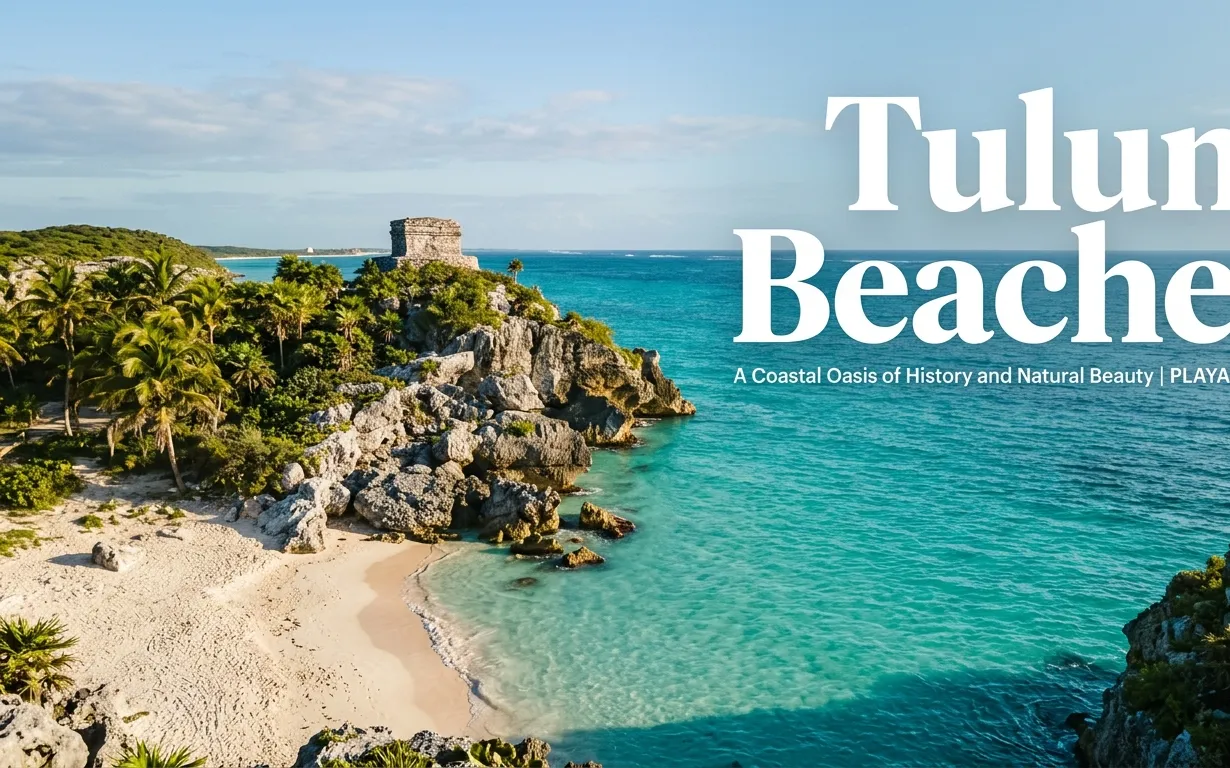
Playa Ruinas is the most visually dramatic beach in Tulum, a tiny pocket of sand tucked below the cliff where the ancient Mayan city of Tulum watches over the sea. The water here is a protected, brilliant turquoise caleta.
You must pay the entry fee to the Tulum National Park, which is roughly $60 Mexican Pesos in 2026. The park opens at 8:00 AM, and you must arrive exactly then to have this beach to yourself before the tour buses disgorge.
The sand patch is small, and the sun is intense. This is an experience for a two-hour visit, combining the ruins with a swim, not a full-day beach camp.
It is one of the few spots unsuitable for large beach club setups. History and nature lovers will find it the most rewarding single experience on the coast.
Playa Pescadores Tulum
Playa Pescadores is a small, functional beach at the northern end of the hotel zone, traditionally used by local fishing boats. It is one of the more accessible and less pretentious spots.
The sand is clean, and several smaller, more affordable beach clubs and restaurants offer day beds with lower or no minimum spends. You will see a more authentic mix of local families and tourists here.
The water conditions are similar to the main coast, with a gentle shelf and the same vulnerability to sargassum. It provides a practical, lower-cost alternative to the hyper-stylized central beach clubs.
Key Takeaway: Playa Pescadores is the pragmatic choice for a no-hassle, less expensive Tulum beach day.
South Tulum Beach
South Tulum Beach is the antidote to the hotel zone’s chaos. The further south you drive on the Boca Paila road, the wilder, emptier, and more beautiful the beach becomes.
This is the zone where the boutique, eco-luxury hotels like Nomade and Be Tulum are located. Their beach clubs, like La Eufemia and Ziggy’s, offer a more relaxed, spread-out experience than the central party strip.
The beach faces a slightly different angle here, sometimes resulting in clearer water and less seaweed accumulation during mild sargassum events. The sand is wider, and the crowd is thinner.
Couples and luxury seekers will find the vibe of the southern beach clubs far more romantic and peaceful. The minimum spends are higher, typically $50 to $100 USD, but the space and tranquility justify the premium.
Tulum Sargassum Season
The Tulum sargassum season is a tragic, foul-smelling reality that runs roughly from April to October. The peak of the crisis is typically in June and July.
Sargassum is a brown macroalgae that forms vast, floating mats on the ocean’s surface. When it hits the shore, it forms a dense, rotting barrier that can extend ten to twenty feet into the water.
The decomposition releases hydrogen sulfide, a gas that smells like rotten eggs. It can cause respiratory irritation and tarnish metal jewelry within hours.
You must consult the Quintana Roo Sargassum Monitoring Network webcams and forecasts. These independent observers provide real-time, honest beach conditions that hotels and tourism boards often downplay.
Best Time to Visit Tulum Beaches
The best time to visit Tulum beaches for guaranteed turquoise water and a sargassum-free experience is the window from late November to late February. This is the dry, cool season, and the prevailing currents push the seaweed away.
The trade-off is that this is the peak tourist season. Prices for flights and accommodation are at their highest, and the beach clubs are full.
March and April are shoulder months. The weather is heating up, the crowds thin slightly, but the sargassum risk begins to climb significantly, and a bad early influx can arrive without warning.
The worst, most heartbreaking time to book a non-refundable trip is July or August. The heat is oppressive, and the sargassum is almost a guarantee, turning your expensive beach vacation into a view of a brown, stinking shoreline.
Tulum Beach Access Guide
Accessing the Tulum beach is a game of knowing specific, narrow entry points. The most reliable public staircases in 2026 remain the ones at the end of Calle Pepen and next to Playa Paraiso.
Parking is a significant challenge. The small lots near the public access points are run by local cooperatives and charge $150 to $200 Mexican Pesos (about $8 to $11 USD) for the day, cash only.
The single best way to navigate the beach zone is by bicycle. Rent a bike in Tulum Pueblo or Aldea Zama for around $10 USD per day, ride the dedicated bike path, and lock it to a public rack before walking down to the sand.
Do not attempt to walk the beach freely. Some hotels have security that will prevent you from walking in front of their property. You will be forced back onto the road to bypass them.
Tulum Beach Cost and Minimum Spends
A Tulum beach day is expensive. Budget a minimum of $50 to $75 USD per person if you plan to use a beach club’s sunbed, umbrella, and restroom.
The minimum spend model means you prepay for this privilege by consuming food and drinks. This is not a hidden fee, but it is an unbudgeted shock for many first-time visitors.
A completely free beach day is possible but rugged. You must find a public staircase, walk to an unoccupied patch of sand, and bring absolutely everything you need, including shade and water, with no bathroom access.
| Item | Cost (2026 Estimate, USD) |
|---|---|
| Beach Club Sunbed (via min. spend) | $30 – $80 per person |
| Single Cocktail | $15 – $22 |
| Parking (Day Rate) | $8 – $12 |
| Bike Rental | $10 per day |
| Public Beach Access | Free |
Key Takeaway: The free beach is a myth of convenience; budget $50 minimum for a comfortable Tulum beach day.
Best Tulum Beaches for Swimming
The best swimming in Tulum is at the protected caleta inside the Tulum National Park, directly beneath the ruins. The limestone headland blocks the swell, creating a natural, shallow, wave-free pool.
When the sargassum is absent, the main stretch of Playa Paraiso offers a classic, gentle-sloping swim in clear, calm water. The seabed is soft sand, and there are no rocks or sudden drop-offs.
The southern zone in front of Ziggy’s Beach Club also provides excellent swimming. The club cleans its section meticulously, and the water is usually a deep, brilliant turquoise in the winter months.
Swimming at any Tulum beach during a sargassum event is deeply unpleasant. The rotting seaweed traps you, and the decaying organic matter in the water can cause skin irritation.
Best Tulum Beach Clubs for Couples
The most romantic beach club for couples is Nomade Tulum. The design is a breathtaking, low-lit, Moorish-influenced bohemian fantasy set among the palm trees on the quieter southern beach.
The minimum spend at Nomade is high, typically $70 to $100 USD per person. This secures you a plush day bed and a genuinely serene, intimate atmosphere with quiet, organic music and excellent food.
Ziggy’s is the best alternative for couples who want a lively but not overwhelming scene. The music is upbeat, the sunbeds are comfortable, and the menu features shareable plates and cold bottles of rosé.
Couples must avoid the central Coco Tulum and Ahau area during peak hours. These are high-energy, DJ-driven party zones, not romantic retreats.
Tulum Beaches for Families
Tulum is a genuinely poor destination for a family beach vacation. The infrastructure, the social scene, and the sargassam crisis create a high-stress environment for parents.
The only viable spot for families with young children is the protected swimming caleta at the Tulum Ruins. The water is shallow and calm, and the historical context is a brilliant educational moment for older children.
The beach clubs with their loud music, heavy drinking culture, and open drug use on the periphery are completely inappropriate for children. The long, hot bike ride down the hotel zone road is a logistical nightmare with a stroller.
Families should consider basing themselves in Akumal or Playa del Carmen and making a single, targeted day trip to the Tulum ruins beach.
Tulum Hotel Zone Beach Road Guide
The Tulum Hotel Zone is a single, narrow, often-gridlocked road that runs parallel to the beach for about ten kilometers. It is officially called the Boca Paila road.
Traffic in the high season and on weekends is a standstill. A taxi or car journey of three miles can take forty-five minutes. This is not an exaggeration.
A bicycle is the only rational form of transport. You will pass frustrated drivers in their air-conditioned SUVs while you glide past on the dedicated bike path.
Power outages and generator noise are constant features of this strip. The boutique eco-hotels trade on their aesthetics, but the reality includes the constant hum of diesel generators and unreliable air conditioning.
Safety and Seasonal Warnings for Tulum Beaches
The most pervasive safety threat on Tulum’s beaches is the hydrogen sulfide gas released by rotting sargassum. It can cause serious respiratory issues for people with asthma and severe headaches for anyone exposed for long periods.
Key safety and seasonal facts every visitor should know:
- Never swim in a severe sargassum event. The decomposing matter breeds bacteria and can trap you physically if you attempt to push through a thick mat.
- The Mexican sun at midday in summer is brutal. Reapply SPF 50+ sunscreen every hour, and stay under a physical shade structure between 12:00 and 3:00 PM.
- The party culture can mask a serious organized crime presence. Do not buy drugs from strangers on the beach, as this has led to well-documented extortion and security incidents.
- The beach road is unlit and dangerous at night. If you cycle, bring a powerful headlamp. Avoid walking alone on the dark sections south of the main cluster of clubs.
The nearest reliable hospital is in Playa del Carmen. Pack a comprehensive first-aid kit with antiseptic, painkillers, and any personal prescription medications.
Frequently Asked Questions About Tulum Beaches
Is it true Tulum beaches are covered in seaweed?
Yes, the sargassum seaweed crisis is a severe, annual event from roughly April to October.
It forms a thick, rotting, foul-smelling barrier on the sand and water.
The peak is unpredictable but almost always devastating in June and July.
Can you visit Tulum beaches without paying?
Yes, you can access the sand for free via the legal public staircases at Playa Paraiso and Calle Pepen.
You will have no bathroom access, no shade, and no sunbed, and the seaweed will not be cleaned for you.
A completely free, comfortable beach day is almost impossible to execute in the hotel zone.
What is the best beach in Tulum for swimming?
The caleta at Playa Ruinas inside the Tulum National Park is the safest, most beautiful swimming spot.
It is a protected, wave-free, turquoise pool below the Mayan ruins.
South Tulum Beach in front of Ziggys is the best open-ocean swimming when the water is clear.
How much does a beach club in Tulum cost?
A Tulum beach club operates on a minimum spend model, typically $30 to $80 USD per person.
This buys you a sunbed, umbrella, bathroom access, and a clean stretch of sand.
The spend is easily reached through a few expensive cocktails and a shared appetizer.
Is it safe to go to Tulum beach at night?
It is not safe to walk on the dark, unlit beach at night, especially alone.
The beach road is dangerous for pedestrians, and the risk of petty crime increases significantly in the darkness.
Stay within the well-lit perimeter of your beach club or restaurant and take a taxi directly home.
What is the difference between Tulum and Playa del Carmen beaches?
Tulum’s beaches are a thin strip of iconic white powder sand backed by a low-density, eco-chic hotel zone.
Playa del Carmen’s beaches are much wider, heavily developed with high-rise resorts, and have a bustling city behind them.
Tulum feels like a bohemian outpost, while Playa del Carmen feels like a large, energetic beach city.
The real Tulum is a place of intense, fragile beauty that you must strategically hunt during the winter months. Your entire trip hinges on choosing the late November to February window and accepting that a good beach day will cost you.
Book a bike, pack a headlamp, and reserve your beach club day bed a day in advance. Confirm the current sargassum status on the independent monitoring webcams on the morning you plan to swim.
Beach access rights, club minimum spends, and the sargassum forecast are dynamic, daily-changing variables in Tulum. Verify your chosen beach’s exact 2026 conditions directly with the club before you spend a single peso.