Best Beaches Near Fort Myers for 2026: Shells, Sand, and Real Talk
The best beaches near Fort Myers are not for swimming in turquoise water. They are for bending at the waist in the “Sanibel Stoop” hunting for perfect shells. This distinction is the single most important thing to understand before you book.
Lee County manages over 50 miles of Gulf-front beaches across multiple barrier islands. The area attracts millions of visitors annually, mostly for its shelling reputation.
This guide gives you the honest 2026 reality. We cover which beaches are truly back after Hurricane Ian, which suit families, and where to find a quiet patch of sand.
What Are the Beaches Near Fort Myers Actually Like?
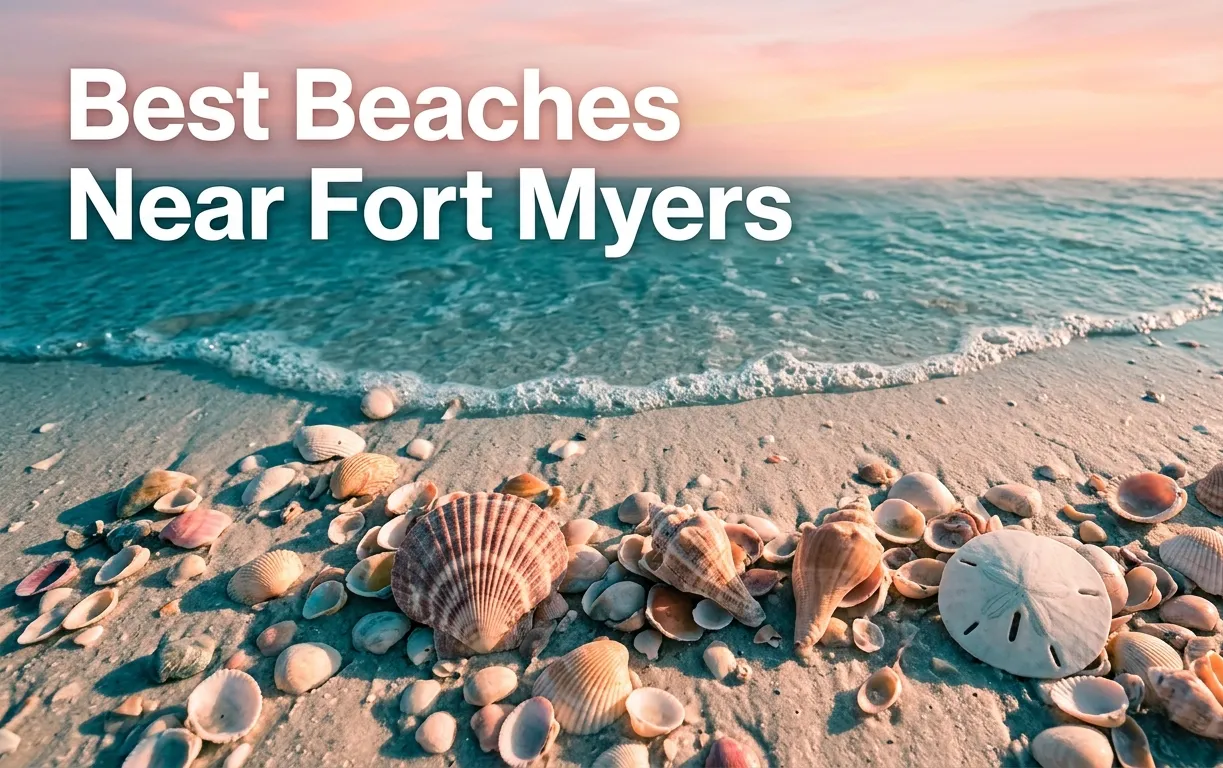
The beaches near Fort Myers are wide, flat, shallow-water barrier island strands on the Gulf of Mexico. Sand is soft and white but heavily mixed with crushed shells. The water is calm and often murky, not transparent blue.
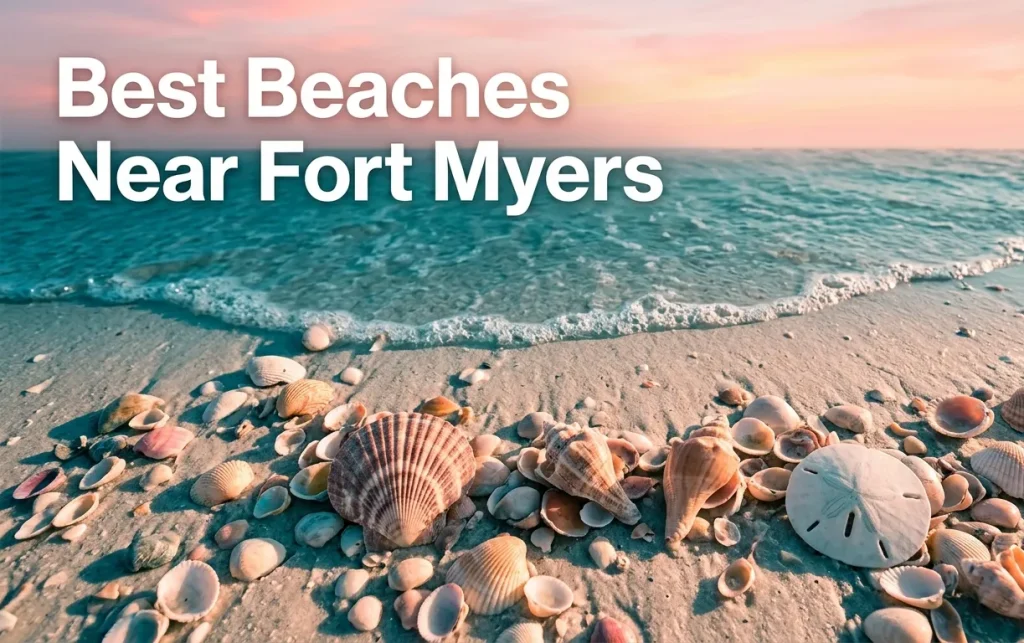
These beaches slope so gradually that you can wade out a hundred feet and still be waist-deep. This makes them incredibly safe for children and terrible for active swimming or surfing. The energy here is low-key, natural, and oriented toward wildlife and finding sea treasures.
Think of it as a giant, warm, salty shallow bay. The sand feels like walking on finely crushed, soft pottery shards. A typical beach day involves a chair, a shelling net, and staring at the horizon for dolphins.
Visitors expecting the clear water of Destin or the Caribbean are frequently disappointed. The outflow from the Caloosahatchee River and churned-up shell sediment keep the water from being clear. The reward comes when you find a perfect alphabet cone shell, not when you open your eyes underwater.
Best Beaches Near Fort Myers at a Glance
Choosing a beach here is a trade-off between shell quality, swimming comfort, and crowd density. One single beach cannot win all three categories. This table will point you in the right direction immediately.
| Beach Name | Best For | Swimming Quality | Shelling Quality | Crowd Level |
|---|---|---|---|---|
| Bowman’s Beach | Serious Shelling | Poor (Murky) | World-Class | Moderate-High |
| Turner Beach | Shelling, Sunsets | Poor (Strong Currents) | Excellent | Moderate |
| Barefoot Beach | Families, Swimming | Best in Area | Moderate | Low-Moderate |
| Lovers Key | Nature, Kayaking | Good (Sheltered) | Moderate | Moderate |
| Captiva Beach | Romance, Sunsets | Moderate | Good | Low |
| Fort Myers Beach | Activities, Social | Moderate | Fair | High |
Key Takeaway: For pure shelling, go to Sanibel. For a calm, sandy swim with kids, head south to Barefoot Beach.
Sanibel Island Beaches and Shelling
Sanibel Island is one of the world’s great shelling destinations. Its unique east-west orientation acts like a giant rake, catching shells from the Gulf. The shelling here is a legitimate, world-class natural phenomenon.
Bowman’s Beach is the island’s crown jewel for serious shellers. The beach is a wide, flat plain of crushed and whole shells. You will see people doing the “Sanibel Stoop” at sunrise after a strong tide.
The post-Ian recovery at Bowman’s is nearly complete for 2026. The new parking lot and restroom facilities are fully operational. The dune vegetation is still sparse, making the beach feel more open and windswept than it did pre-storm.
This is a terrible swimming beach, a point most guides avoid making. The water is murky with suspended sediment. The shell fragments underfoot are sharp, and water shoes are mandatory for entry.
Key Takeaway: Sanibel is a shelling museum. Treat it as a nature experience, not a swimming pool day.
Captiva Island Beaches for a Quieter Escape
Captiva Island is Sanibel’s smaller, quieter, and more upscale sister to the north. The beaches here are narrower, with coarser pink-tinted sand and a more dramatic surf line. The vibe shifts from public shelling mecca to private, romantic escape.
Turner Beach at Blind Pass is the best spot on Captiva for both shelling and a fiery sunset. The current rips through the pass, depositing fresh shells with every tide. The parking here is a tiny, battered lot, and you must arrive very early.
For a classic, lazy beach day, the Captiva Beach access point at the end of Andy Rosse Lane is perfect. There are no big parking lots here. The beach feels like a local secret even when it’s busy.
This beach suits couples and solo luxury seekers best. The nearby South Seas Island Resort is currently in a phased reopening through 2026, so verify its full amenity status. Families with restless kids might find the lack of space and facilities limiting.
Fort Myers Beach Area Today
Fort Myers Beach on Estero Island was ground zero for Hurricane Ian. The recovery is still a patchwork of brand-new buildings and empty lots in 2026. The beach itself is wide and the sand is back, but the island’s character is forever changed.
The area around the Fishing Pier and Times Square is the social hub. It is loud, lively, and packed with new restaurants and bars. This is the best beach for travelers who want action, live music, and a party atmosphere.
The sand is soft and white here, and the water is the same calm, cloudy Gulf water. It’s the best beach for a group trip with differing interests. Some can parasail, some can drink at a beach bar, and others can simply float.
DiamondHead Beach Resort is a solid, reliable upscale option if you want to stay in the thick of things. For a quieter section of this island, drive south to Lovers Key State Park and walk north onto the uncrowded end of the Fort Myers Beach sand strip.
Lovers Key State Park Beach
Lovers Key State Park feels like a hidden nature sanctuary just minutes from a high-rise hotel zone. The park entrance is on the south end of Estero Island. A tram takes you from a vast parking lot to a pristine, 2.5-mile beach.
This is a swimming beach first, a shelling beach second. The sand here is softer than on Sanibel, with a much lower concentration of harsh shell fragments. The gentle surf is ideal for kids to bob around safely.
The real draw here is the kayaking and manatee spotting in the back-bay estuaries. You can rent a kayak and paddle through mangrove tunnels. Dolphins and manatees are a common sight in the calm, protected waters.
Families should prioritize this park. It has clean, modern bathrooms, a concession stand, and tons of room to spread out. The $8 state park entry fee is the best value on the entire coast.
Key Takeaway: Pay the state park fee at Lovers Key. You trade a small cost for vastly superior facilities and breathing room.
Barefoot Beach in Bonita Springs
Barefoot Beach Preserve in Bonita Springs, just south of Fort Myers in Collier County, is the single best family swimming beach in the area. This is the softest, most shell-free sand you will find anywhere near RSW. The water is still Gulf-cloudy but tends to be a shade clearer here.
The preserve is a narrow strip of barrier island with a vast, $10 parking lot that never seems to fill up. The beach is backed by a natural dune system, not condo towers. This gives it a preserved, wild feel that Fort Myers Beach completely lacks.
Budget travelers will appreciate that $10 buys a full day with excellent facilities. Families will love the gentle slope and protected swimming areas. Couples seeking a romantic, empty stretch should walk a quarter-mile north of the main boardwalk.
A local guide gave me the best advice here years ago. “Barefoot is where the locals go when Sanibel is a parking lot.” That remains true in 2026.
Best Beaches Near Fort Myers for Families
The top family beach is Barefoot Beach Preserve for its soft sand and easy swimming. A very close second is Lovers Key State Park for its space and nature-based activities. Both offer safe, gentle water entry and clean facilities.
Lynn Hall Memorial Park on Fort Myers Beach is the best choice for families who want action. The new playground directly on the sand is a modern marvel for kids under 12. The adjacent pier and restaurants mean you never have to repack the car for lunch.
Avoid Bowman’s Beach with very young children. The long walk from the parking lot to the water can feel like a death march for a toddler. The sharp shell hash at the waterline will shred sensitive feet.
All Gulf beaches here are excellent for baby-safe wading because of the bathtub-like summer water temperatures. Water shoes are not optional for kids on Sanibel or Captiva. The sharp coquina shells will cut feet within minutes.
Key Takeaway: Let the beach’s primary texture dictate your family choice. Go soft sand for kids, shelly sand for older shell hunters.
Best Beaches for Swimming and Clear Water
Let’s be brutally honest. There is no truly “clear” water here by Caribbean standards. The best clarity you can hope for is a calm, sunny winter day with no wind and no red tide. In those conditions, Barefoot Beach and the south end of Fort Myers Beach are your best bets.
The water is clearest during the dry season from December through April. This is when wind is low and storms aren’t churning up the Gulf. The trade-off is that the water will be its coldest, dipping into the mid-60s in January.
Clam Pass Park in Naples, a 30-minute drive south of RSW, is worth the trip for a clearer swim. A free boardwalk tram takes you through a mangrove forest to a massive, sheltered bay beach. The water here filters through the bay, often resulting in calmer and visually clearer conditions.
The worst swimming conditions occur in the summer rainy season. The water becomes a hot, murky, tannin-stained soup flowing out of the Caloosahatchee River. This is shelling season, not swimming season.
Prettiest and Most Secluded Beaches
The single prettiest and most secluded beach near Fort Myers is the northern tip of Captiva Beach at sunset. You park at a small public access and walk half a mile north. The beach narrows to a point where the Gulf meets the bay, and the sunset view is completely uninterrupted.
For a true castaway experience, you must take a boat. Cayo Costa State Park is an undeveloped barrier island accessible only by private boat or ferry. Its nine miles of shoreline are raw, wild, and scattered with the most incredible shells in Florida.
Cayo Costa has no roads, no stores, and primitive cabins you must book a year in advance. The ferry from Captiva Island takes about 30 minutes. This is the single best day trip for a couple or a solo luxury seeker who wants total isolation.
A more accessible mid-week secluded spot is Alison Hagerup Beach Park on Captiva. The parking lot holds maybe 30 cars. Once it fills, the beach is closed to new arrivals, creating a guaranteed uncrowded experience for those who arrived at 8:00 AM.
Closest Beach to Fort Myers Airport (RSW)
The absolute closest beach to Southwest Florida International Airport (RSW) is Bunche Beach Preserve. It is a 15-minute drive from the rental car center. This is a natural, mangrove-fringed beach on San Carlos Bay, not the open Gulf.
Bunche Beach is best for a quick nature fix or a sunset kayak paddle before your flight home. The sand is muddy and dark at low tide, attracting hundreds of wading birds. It is not a classic “beach day” destination.
For the closest true beach experience, drive 25 minutes to Fort Myers Beach. You can be parked and in the water in under half an hour from baggage claim. The Margaritaville Beach Resort is a convenient, on-brand spot for a first-night decompression drink by the Gulf.
Do not attempt a quick Sanibel run from a tight flight schedule. The Sanibel Causeway and island traffic can turn a 35-minute no-traffic trip into a 75-minute crawl during season. You will miss your flight.
Fort Myers Beach vs. Sanibel Island
Fort Myers Beach is for social, high-energy vacations, and Sanibel Island is for quiet, nature-focused solitude. The islands are connected by a single bridge but offer completely different trip personalities. This is the most critical choice you will make when planning.
Choose Fort Myers Beach if your group wants bars, live music, parasailing, and a bustling pier. The beach itself is a wide, soft-sand playground. The crowds are dense and loud, but the energy is infectious for the right group.
Choose Sanibel Island if your trip is centered on world-class shelling and biking quiet nature trails. The island has a strict no-high-rise building code. Restaurants close by 9:00 PM, and the loudest noise at night is the Gulf wind.
Budget travelers should look at mid-island Fort Myers Beach for cheaper condos. Couples and luxury seekers should pay the premium to stay on Captiva or Sanibel’s quiet east end. A family with teenagers will find Sanibel “boring” after two days.
Bowman’s Beach vs. Turner Beach
Bowman’s Beach on Sanibel is a vast, open expanse for long shelling walks. Turner Beach on Captiva is a concentrated, high-yield spot right at the tide line. The choice depends on whether you want a leisurely hunt or an intense treasure dig.
Bowman’s offers a full, modern infrastructure in 2026. The renovated parking lot is huge, the showers are clean, and a playground sits in the shade. The walk from car to water is a solid quarter-mile, so pack light.
Turner Beach at Blind Pass is a raw, crowded strip of sand with a tiny, frustrating lot. The shelling here is better after a storm because the pass churns up the bottom. The current here is dangerously strong for swimming, so keep kids in life jackets at all times.
A seasoned sheller from the Bailey-Matthews National Shell Museum once told me to time Turner Beach for a falling tide after a northwest wind. This pushes the best shells right into the pass. Bowman’s is better on a simple calm morning low tide.
Key Takeaway: Bowman’s for families and space, Turner for serious shellers and sunsets.
Parking, Access, and Beach Logistics
Parking is the most stressful and expensive part of visiting any Fort Myers beach. Sanibel and Captiva beach lots typically charge $5 per hour with a strict time limit. A full beach day can cost $40 before you even touch the sand.
Fort Myers Beach has a mix of public lots and garages behind the Times Square area. The new Margaritaville garage is the easiest, most centrally located option. Expect to pay $20 to $30 for a half-day.
The undisputed parking hack is Lovers Key State Park. For an $8 per vehicle day pass, you get a vast, secure lot, a tram ride, and superb facilities. For a group, this is an $8 total parking cost versus $40-plus on Sanibel.
Insider Tip:
- Bike to Sanibel beaches if you are staying on the island. Every main beach has bike racks.
- Use the free Island Tram on Fort Myers Beach to avoid reparking as you move along the strip.
- Parking at Bowman’s is pay-by-plate at a kiosk. Take a photo of your license plate with your phone.
The Honest Seasonal and Red Tide Guide
The best time to visit Fort Myers beaches is October and November. The water is still warm from summer, the hurricane threat is fading, and the snowbirds have not yet arrived. Prices are at their lowest shoulder-season sweet spot.
December through April is peak snowbird season. The weather is perfectly sunny and dry, with temperatures in the 70s. The trade-off is that restaurant lines are an hour long, and beach parking lots close by 9:30 AM.
Avoid July through September if you have any respiratory sensitivity. This is peak red tide season. Red tide (Karenia brevis) is a toxic algal bloom that kills fish and releases an aerosol that makes you cough and your eyes burn.
Red tide is unpredictable. It can last for days or months and can affect one island and not another. Check the Florida Fish and Wildlife Conservation Commission (FWC) red tide map online the morning you plan a beach day.
Sea turtle nesting season runs from May through October. This is a magical time, but it means strict blackout rules for beachfront lighting at night. Do not use a flashlight or cell phone light on the beach at night, or you risk disorienting a nesting turtle.
Safety and Seasonal Warnings for Fort Myers Beaches
The ocean here is not the biggest danger. The sun, the respiratory effects of red tide, and the afternoon lightning are what you truly need to watch. Respect these three things, and your trip will be safe.
Key safety and seasonal facts every visitor should know:
- Red Tide Alert: Do not enter the water or sit on the beach if you see dead fish. The airborne toxin can cause a severe, hours-long coughing fit that a mask will not stop.
- Lightning Protocol: Afternoon thunderstorms in summer are not a suggestion. When you hear thunder, leave the beach immediately and seek a hard-topped shelter or your car.
- Sun Exposure: The sun reflects off the white sand and shallow water, burning you from below. Sunscreen must be applied to the underside of your nose and chin.
- Sharp Shells: Water shoes are mandatory for anyone swimming on Sanibel or Captiva. The shells are beautiful but can slice feet open.
- Wildlife: Give nesting sea turtles and shorebirds a 50-foot berth. Harassment of wildlife is a criminal offense in Lee County.
All beaches are guarded by Lee County Lifeguards during peak season hours. Their towers are your first line of defense. Swim directly in front of an occupied tower.
Frequently Asked Questions About Fort Myers Beaches
What is the absolute best beach near Fort Myers for shelling?
Bowman’s Beach on Sanibel Island is the absolute best beach for shelling.
Its unique east-west orientation catches an unparalleled volume and variety of shells.
Go at sunrise on a low tide after a storm for the best haul.
Where is the clearest water near Fort Myers?
Barefoot Beach and Clam Pass Park in Naples typically have the clearest water.
This clarity occurs only on calm, sunny winter days with no wind.
The water is never truly transparent blue like the Caribbean here.
Is Fort Myers Beach rebuilt after Hurricane Ian?
Yes, the beach is wide and open, but the town’s character is a mix of new and empty lots in 2026.
The Times Square and Pier area is fully active with new businesses.
Construction is ongoing, and some old landmarks are permanently gone.
Are Sanibel Island beaches open to the public?
Yes, all Sanibel beaches are public up to the mean high tide line.
The larger beaches like Bowman’s have rebuilt public parking lots and facilities.
Beach access points with parking are pay-by-plate or pay-at-kiosk.
What is the closest beach to RSW airport?
Bunche Beach Preserve is the closest, a 15-minute drive from the terminal.
It is a natural mangrove beach good for birds and kayaking, not swimming.
For a classic sand beach, Fort Myers Beach is a 25-minute drive.
When should I avoid visiting Fort Myers beaches because of red tide?
Avoid July through September, which is peak red tide season.
Red tide is a sporadic toxic algae bloom that causes respiratory irritation and fish kills.
Always check the live FWC Red Tide Status map online before heading to the beach.
Your Perfect Fort Myers Beach Day is a Choice
The Fort Myers area does not give you one perfect beach. It gives you a menu of highly specialized beaches, each doing one thing exceptionally well. The success of your trip depends entirely on picking the right beach for the right day.
Do not fight for parking on Sanibel on a Saturday if you just want to float. Do not take a toddler to a shelling beach with sharp coquina fragments at the waterline. Match your day’s weather, tide, and group energy to the specific beach that fits.
This coastline is still healing and rebuilding in 2026. Give it your patience, spend the money on a legal parking spot, and spend an afternoon doing the Sanibel Stoop. Parking fees, red tide status, and resort amenity lists change constantly, so verify your chosen beach’s conditions on the official Lee County Parks and Recreation site the day you visit.