Best Beaches Near Myrtle Beach: Escape the Crowds in 2026
The best beaches near Myrtle Beach are not on the main Grand Strand strip. They are
tucked away in state parks, historic hamlets, and across the North Carolina line.
According to the South Carolina Department of Parks, Recreation & Tourism,
the Myrtle Beach area draws over 19 million visitors annually.
This massive crowd volume fits tightly into a single central 10-mile corridor.
This guide breaks down the specific sand, surf, and parking realities of every
nearby alternative. You will discover which beach fits your family, which ones
charge zero dollars for parking, and which are just a 20-minute drive away.
Best Beaches Near Myrtle Beach
Huntington Beach State Park claims the top spot for the best beach near
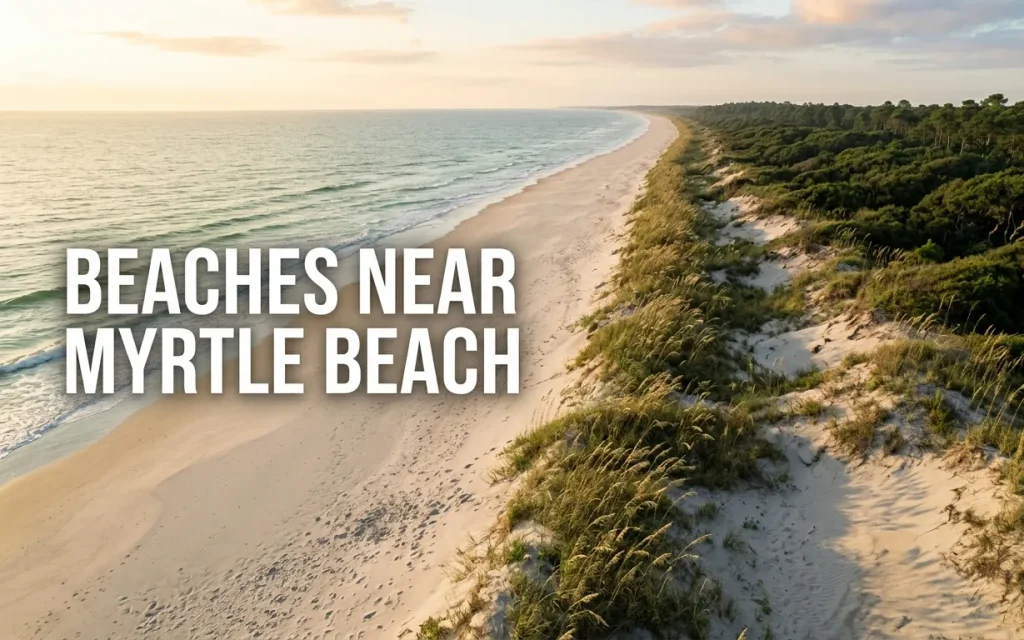
Myrtle Beach that remains completely undeveloped. The three-mile stretch of
wide, firm sand faces a gentle surf and sits entirely free of buildings.
You pay a small entry fee of $8 per adult to access this pristine barrier island
beach. The view of the historic Atalaya Castle mooring adds a distinct cultural
layer missing from the high-rise canyons.
This is a family dream for nature-loving kids who want to spot alligators in the
freshwater causeway before hitting the ocean. Couples seeking a quiet, literary
vibe will love the empty northern stretch near the jetty.
Insider Tip:
- The beach erodes significantly near the jetty after winter storms. Walk south
for the widest dry sand in 2026. - The causeway marsh loop is a top-three birding spot on the East Coast.
- No dogs are allowed inside the castle walls, so plan accordingly.
Grand Strand Geography Explained
The term “Grand Strand” runs over 60 miles from Little River down to Georgetown.
Central Myrtle Beach is a dense zone of high-rises and shag-dancing pavilions.
The South End, known as Surfside Beach and Garden City, lowers the building
height and raises the family quotient. The North End, stretching through North Myrtle Beach, shifts back to mid-rise condos but with wider sand shelves.
Traffic on Highway 17 acts as the cruel gatekeeper of this geography.
A five-mile drive from the airport to Barefoot Landing can take 40 minutes in
June, so choose your beach base near your lodging to avoid the daily gridlock.
| Zone | Vibe | Building Type | Sand Quality | Best For |
|---|---|---|---|---|
| Central Myrtle | Party/Crowds | High-Rise Canyon | Fine, Soft | Teens/Events |
| South End | Family Relax | Low-Rise Houses | Coarse Shell Mix | Toddlers |
| North End | Mixed Groups | Mid-Rise Condos | Very Wide | Golfers |
| Pawleys Island | Old Money Rustic | Historic Cottages | Fine, Shelly | Couples |
Key Takeaway: Pick your Grand Strand zone based on your tolerance for traffic lights
and building shadows, not just the beach width.
Best Beaches Close to Myrtle Beach for Families
Garden City Beach delivers the safest, most mellow surf for toddlers in 2026.
The southernmost point near the inlet creates a calm, shallow lagoon-like effect
at low tide that acts like a natural kiddie pool.
The sand quality here is slightly grittier with more broken shell fragments than
the powder-fine central strand. This means it packs down hard, making it perfect
for pushing a stroller along the waterline.
Families should look for rentals on the marsh side to save significant money.
A beachfront house in Garden City costs a steep premium, while a marsh-side cottage
a three-minute walk away drops the price by 30 to 40 percent.
Things to bring specifically here:
- Water shoes for the shell bed at the Point.
- A beach wagon with all-terrain wheels for the softer dune sand.
- Cash for the iconic Sam’s Corner hot dogs near the pier.
Key Takeaway: Garden City is the practical family pick, trading the silky quartz of
the central coast for a safer, shallower entry and a friendlier parking scene.
Secluded and Less Crowded Alternatives
Waites Island stands as the only truly wild, unbridged barrier island accessible
near Myrtle Beach. You reach this 1,000-acre reserve by kayak or private boat
launching from the Little River Inlet.
Expect zero bathrooms, zero lifeguards, and zero other people on a Tuesday morning.
The sand here shifts constantly, forming temporary tidal pools that fill with
small fish and sand dollars during the outgoing tide.
The crossing over Hog Inlet is deceptively dangerous for novice paddlers.
The tidal current rips through here at speeds exceeding four knots during the
ebbing tide, so schedule your crossing within one hour of slack high tide only.
This island is for adventurous couples and experienced kayakers only.
Hauling a nervous toddler across a fast-moving inlet is not safe, and there is
zero shade or fresh water once you arrive.
Key Takeaway: Waites Island is the crown jewel of solitude, but the price of
admission is solid seamanship and a strict schedule dictated by the tide tables.
Myrtle Beach North Carolina Beaches
Sunset Beach, North Carolina, sits just 25 minutes north of the Myrtle Beach
city center and offers a dramatically different aesthetic. The sand here is whiter,
softer, and less shelly than the South Carolina coast.
You will lose all cell signal on the old pontoon bridge approach to the island.
This psychological break from the Myrtle noise is exactly why couples and
romantic travelers choose Sunset Beach over the bustling boardwalk.
The Bird Island Reserve on the west end of Sunset Beach features a mailbox
in the dunes called the “Kindred Spirit.” Walking the tidal flats at low tide to
reach this mailbox is a unique, intimate experience you cannot find in Horry County.
Crucial Parking Notice: Your South Carolina parking permits do not work here.
The Town of Sunset Beach strictly enforces its seasonal parking rules, and parking
near the pier fills solid by 9:00 AM all summer.
Key Takeaway: The Brunswick Islands serve as the instant “peace switch” for the
Myrtle vacation, but you must budget for the distinct NC parking infrastructure.
Beaches South of Myrtle Beach
The Hammock Coast south of Myrtle Beach begins in Murrells Inlet and runs
through the historic Waccamaw Neck to Pawleys Island. This stretch trades the
neon of the boardwalk for 300-year-old live oaks draped in Spanish moss.
The beaches here are uniquely narrow and “erosion-raw” compared to the wide
renourished central strand. At high tide, the water pushes right up to the sea
wall in front of historic cottages, leaving almost no dry sand.
Pawleys Island is famously “arrogantly shabby.” You come here to sit in a rope
hammock on a screened-in porch, not to hit a waterpark.
The shelling at the south end near the creek is exceptional after a summer storm.
This area does not work for teens who want a buzzing social scene.
There is no boardwalk, no arcade, and the nearest fast food is a 15-minute drive
back to the Highway 17 corridor.
Key Takeaway: Pawleys Island offers a romantic, literary, slow-travel beach
experience that is fundamentally incompatible with the “more is more” Myrtle ethos.
Pawleys Island and Litchfield Beach
Litchfield Beach provides the sand width and luxury that Pawleys Island lacks,
just three miles north of the historic district. The dune system here is high,
wide, and protected, leaving a massive flat beach shelf even at peak high tide.
Litchfield is the perfect compromise for multi-generational groups.
Grandparents get the quiet, manicured Litchfield by the Sea resort atmosphere
while kids have a massive, safe sandbar for skimboarding at low tide.
Pawleys Island proper is a literal ghost town on Tuesday mornings in July.
The lack of commercial development means you must pack a full cooler and all
supplies because there is not a single gas station or snack bar on the island.
Honest Limitation: The pluff mud smell from the adjacent salt marsh is potent
at dead low tide on a hot August afternoon. First-timers often mistake the
sulfuric, rotten-egg scent for a sewage problem, but it is the natural, thriving
estuary at work.
Key Takeaway: Choose Litchfield for the wide sand and modern plumbing, and visit
Pawleys for the three-hour porch sit where the only sound is the ceiling fan.
Huntington Beach State Park
Huntington Beach State Park offers the richest nature-meets-beach combo near
Myrtle, but it comes with a specific seasonal insect warning. The no-see-ums
(sand gnats) are ferocious here at dawn and dusk from May through October.
The beach walkway leads you directly to a long, flat, litter-free shore framed by
an undisturbed primary dune. SCPRT reports this as one of the few remaining
“wild” beach segments without erosion-fighting sea walls.
The Brookgreen Gardens pass across the street is a must-buy if you stay for
multiple days. A combo ticket saves money and gives you access to the Lowcountry’s
most stunning sculpture and botanical preserve during the heat of midday.
Rent a kayak to paddle the causeway’s blackwater creek.
Alligators slide off the banks as you pass, and the sheer density of wading birds
during the spring migration rivals any Florida Everglades experience.
Key Takeaway: Huntington is a steal for the entry price, but you must douse yourself
in a heavy, DEET-free oily bug repellent to survive the windless twilight hours.
Myrtle Beach State Park
Myrtle Beach State Park acts as the budget-friendly forest sanctuary embedded
directly in the high-rise city sprawl. The maritime forest of oaks and wax myrtles
creates a cool, shaded picnic grove just 200 yards from the busy downtown strip.
The fishing pier here charges just a few dollars for a daily fishing pass.
You do not need a saltwater license to fish from this state-owned pier, making it
a rare bargain for a low-stakes afternoon activity with kids.
The beachfront here is narrower than Huntington due to proximity to the downtown
jetties. The sand traps more shell hash and debris from the urban runoff, so
the water clarity suffers significantly after a heavy summer thunderstorm.
2026 Renourishment Note: The Army Corps of Engineers cycle schedules sand
pumping specifically for this park zone.
Check the Myrtle Beach city website before booking to ensure you won’t be vacationing
next to heavy dredging equipment and piping.
Key Takeaway: The State Park is the cheapest and greenest access point in the central
corridor, but the water clarity here is the murkiest in the entire Grand Strand.
Surfside Beach and Garden City Beach
Surfside Beach brands itself as “The Family Beach,” and its strict no-smoking,
no-fireworks ordinances actually back that up. The lifeguard stands here are
densely spaced during the summer 2026 season, and the police enforce the no-tent
rule strictly to keep sightlines clear for safety patrols.
The sandbar at Garden City Point creates a powerful, sucking rip current where
the creek empties into the ocean. Never swim in the inlet mouth itself, no matter
how calm and inviting the “beach” side appears.
Garden City offers the better value for pier dining without the Myrtle markup.
The Garden City Pier arcade is a gritty, old-school gem that hasn’t been
sanitized into a modern, ticketless “fun center” yet.
Surfside’s town-run parking lots are much smaller and more expensive than Garden
City’s private cash lots. If you are day-tripping, the privately owned lots on
the Garden City side of the line often have better, cheaper all-day availability.
Key Takeaway: Surfside and Garden City share a continuous sandbar but split
dramatically on parking cost and the vibe between a strict town code and a
laid-back fishing hamlet.
Cherry Grove Beach and North Myrtle Beach
Cherry Grove Beach offers the most dramatic low-tide experience near Myrtle.
The water recedes nearly 100 yards, leaving a solid, compact sand flat perfect
for launching kites or playing a long game of morning bocce ball.
The Cherry Grove Point section is a critical habitat for migrating shorebirds.
Walkers must avoid the fenced-off dune nesting areas or risk a hefty federal fine
for disturbing a protected piping plover scrape.
Channel fishing off the sea wall at Little River Inlet is excellent.
You can catch a slot redfish here without a boat just by casting a live shrimp
on a falling tide into the deep, swirling channel edge.
Couples hate the massive, aging condo towers that dominate the Cherry Grove skyline.
These 1970s-era “pillbox” buildings block morning sun for the back row houses,
so confirm your rental actually gets direct rays on the sand before 10:00 AM.
Key Takeaway: Cherry Grove wins for the sheer scale of the low-tide playground,
but the architectural eyesores and inlet currents demand constant parental vigilance.
Budget-Friendly and Free Parking Options
The southernmost streets of Garden City Beach (like Calhoun Drive) offer the
last reliable free and legal street parking near a clean stretch of sand. You must
arrive before 9:00 AM to grab a spot within a reasonable four-block walk to the
public access.
Horry County’s south-end boat ramp access road provides a gravel pull-off zone
that locals use to fish the Murrells Inlet channel. This sand is muddy and littered
with oyster shells, so it’s only good for a quick cool-off dip, not a blanket
lay-out session.
Avoid the central Ocean Boulevard street meters entirely if you are on a budget.
The digital Smart Pay kiosks charge even for a 15-minute stop to run onto the sand
and take a photo, and the enforcement officers are merciless.
North Myrtle Beach offers a handful of free hour-long spots on Ocean Boulevard
east of the main strip if you are willing to walk. The rows directly in front of
the high-rises are all private permit-only zones, so check the small white signs
at the curb before leaving your car.
Key Takeaway: Free parking on the Grand Strand requires a dawn wake-up call and a
willingness to hike, but you can save $20 to $30 a day by avoiding the main lots.
Best Shelling and Wildlife Beaches
The southern tip of Pawleys Island where the creek splits the dune is the
premier spot for large, intact whelk shells. The best time to hunt is the falling
tide immediately after a roaring overnight nor’easter in the late fall.
Waites Island offers the best chance at finding an unbroken, freshly deposited
sand dollar. Wade into the knee-deep water directly across from the Cherry Grove
Point channel and sift carefully with your toes.
Atalaya’s beach at Huntington State Park is a fossil shark tooth goldmine.
The constant erosion of the ancient dune line deposits Miocene-era teeth directly
onto the coarse shell hash near the jetty after a heavy rainstorm.
Loggerhead sea turtles nest heavily near the Litchfield dune line from May
through October. You must turn off all beachfront balcony lights facing the ocean
at night or a confused female turtle may abandon her nesting attempt.
Key Takeaway: The further south you drive toward the Waccamaw Neck, the chunkier
and more intact the shells become due to the reduced foot traffic grinding them
down.
Safety, Rip Currents, and Water Quality
The South Carolina Department of Health and Environmental Control (SCDHEC)
updates its beach water quality swimmability map every Friday in the summer. High
bacteria counts spike most often near the 14th Avenue Pier swim zone.
A sudden deep drop-off and strong outflow pull exists at the Garden City Creek mouth. Even strong adult swimmers should avoid this exact 50-yard stretch on the
falling tide cycle.
Beware of the shore break at high tide on the north end. The steep, compacted
sand at Cherry Grove creates a violent crashing wave that breaks directly onto the
wet sand, which has snapped collarbones of unexpecting body surfers.
Swim in front of lifeguard stands between 10:00 AM and 5:00 PM.
Drowning is a silent, fast event, and the rip currents along the Grand Strand are
strongest three hours before low tide when the water is rushing back to the ocean.
Planning a 2026 Coastal Road Trip
Park your car and leave it there for the week to keep your sanity on Highway 17.
The 2026 summer widening construction zones near the Backgate intersection will
cause multi-mile traffic snarls between 11:00 AM and 2:00 PM daily.
Book a grocery delivery slot for your arrival day several weeks in advance.
The Lowes Foods and Publix chains get overwhelmed with tourist demand, and you
will waste four hours of your Saturday fighting for parking and standing in deli
lines.
Road Trip Day-Trip Pairing Logic:
- Day 1: Stay South. Hit Huntington State Park, then eat fried flounder at a
Murrells Inlet MarshWalk restaurant. - Day 2: Go North. Kayak to Waites Island in the morning, then eat at the
Calabash seafood capital just over the state line at sunset. - Day 3: Stay Central. Hit the State Park pier at sunrise, then retreat to the
air-conditioned woods for a nature walk when the sun gets high.
Frequently Asked Questions About Beaches Near Myrtle Beach
What is the quietest beach near Myrtle Beach?
Pawleys Island is the quietest beach near Myrtle Beach due to its strict no-
commercial-zoning ordinance that bans hotels, bars, and vending machines.
The island has zero public restrooms or concession stands, which keeps day-tripping
crowds away.
The loudest sound you typically hear is the wind through the salt marsh spartina
grass and the distant pop of a tennis ball at the one private club.
Are there any North Carolina beaches close to Myrtle Beach?
Sunset Beach, North Carolina, is only a 25-minute drive north of the Myrtle Beach
Boardwalk via Highway 17 North.
Ocean Isle Beach is just five minutes further and offers a slightly more developed,
family-friendly pier scene.
Both NC beaches require a separate North Carolina town parking pass, which your
South Carolina Horry County decal will not cover.
Is the water clear at Myrtle Beach?
The water at Myrtle Beach typically has a pale green to soft brown tint, not the
bright blue of Florida, due to fine organic sediment suspended in the coastal waters.
This color is a natural feature of the Grand Strand’s gently sloping sandy shelf
and is not an indicator of a pollution or sewage issue.
Water clarity improves sharply on cold winter days when the wind is offshore and
the sediment settles to the ocean floor.
Do you have to pay for parking at Myrtle Beach beaches?
Yes, almost every central Myrtle Beach public lot and street meter uses a digital
Smart Pay per-hour or flat-day fee system that is strictly enforced.
Free parking exists but is mostly limited to residential side streets on the far
south end near Garden City if you arrive very early.
Check the small white curbside regulation signs because most blocks require a
resident-only decal from March through September.
Which beach is better for toddlers: Surfside or Garden City?
Garden City is better for toddlers than Surfside because of the protected, shallow
tidal pool that forms at the southern inlet point during low tide.
This natural wading pool has zero wave energy, allowing toddlers to splash safely
without being knocked over by surf.
Surfside has a steeper, narrower beach face with a stronger shore break that can be
intimidating for a child just learning to walk on sand.
Can you swim at Myrtle Beach in October?
Yes, you can comfortably swim at Myrtle Beach in October because the shallow
coastal water holds its late-summer heat and hovers around 75 to 78 degrees.
The air temperature typically sits in the high 70s with zero oppressive humidity,
making it the most comfortable swim season for adults.
Lifeguard stands officially shut down for the season after Labor Day, so you swim
at your own risk on the unguarded fall beaches.
Escape the Strip on Your 2026 Trip
The best beaches near Myrtle Beach are all within a single tank of gas, yet they
feel worlds apart from the neon strip. Huntington State Park offers the best raw
nature value, while Sunset Beach in North Carolina gives you the whitest sand for
the effort of crossing one state line.
Book your accommodation based on the zone that fits your profile, not just the
listing price. A cheap high-rise at the 15th Avenue pier area is a bad deal for a
family seeking quiet, just as a remote Pawleys creek house is a bad deal for a
teenager wanting pizza delivery and an arcade.
Verify the SCDHEC water quality map and the local tide chart exactly one day before
your beach day. Sand availability, rip current strength, and water bacteria levels
are all dynamic metrics that change with the wind and moon cycle.