Best Beaches in Florida Gulf Coast for 2026: Full Guide
The best beaches in Florida Gulf Coast are not the ones most loudly marketed. The Gulf Coast stretches over 700 miles and contains beaches that range from world-class quartz-sand shores to overcrowded resort strips that disappoint in person.
Visit Florida identifies more than 1,300 miles of total Florida coastline, but the Gulf side consistently produces the state’s finest swimming beaches. The Gulf of Mexico’s natural calm and shallow depth create conditions the Atlantic coast cannot match.
This guide covers 16 specific Gulf Coast beaches and beach areas. It names which suits families, which rewards couples, which disappoint despite their reputations, and when the entire coast is best avoided.
Best Beaches in Florida Gulf Coast: What to Actually Expect
The best beaches in Florida Gulf Coast share three consistent qualities: white or near-white sand, calm and shallow water entry, and warm Gulf temperatures.
What they do not share is crowd level, access ease, or activity suitability. A first-time visitor who books Clearwater Beach expecting a quiet escape will have a very different day than a visitor who takes a ferry to Caladesi Island State Park.
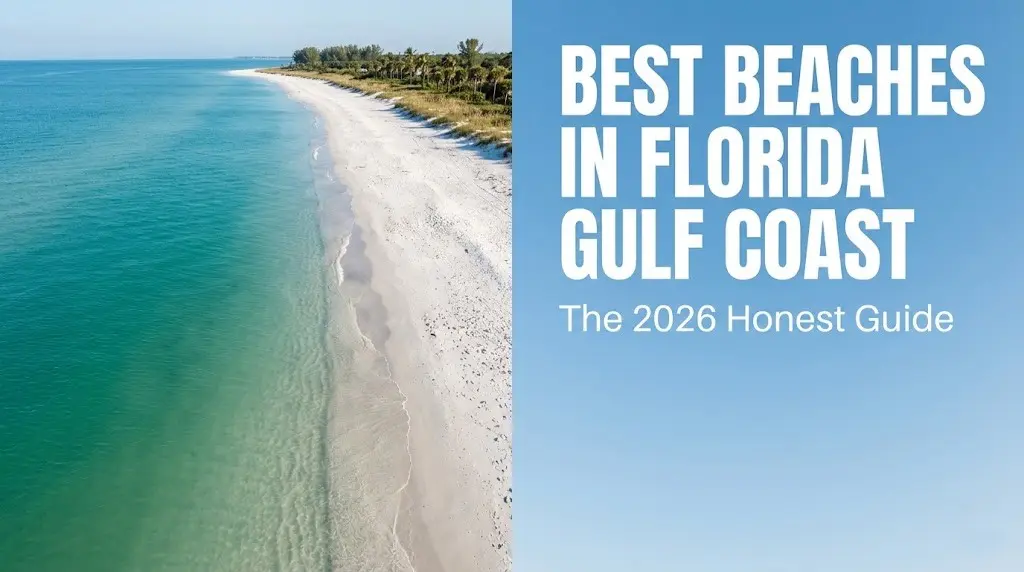
The Gulf of Mexico produces minimal wave action on most southwest Florida beaches. This makes the water genuinely safe for young children and non-swimmers, but it also means surfers will find very little here worth paddling out for.
Water color on the Gulf Coast varies by location and season. The Panhandle beaches around Destin and Pensacola run a distinctive emerald green. Southwest Florida beaches near Naples and Sanibel tend toward clear teal with occasional murky patches after storms.
Insider Tip:
- The finest sand on the entire Gulf Coast is found at Siesta Key Beach in Sarasota County, where the sand is 99 percent pure quartz and stays cool to the touch even in July heat.
- Cayo Costa State Park near Fort Myers requires a ferry but delivers isolation and natural beauty that no drive-up beach can replicate.
- Couples and honeymooners will find the quieter mid-coast beaches, particularly Lovers Key State Park and Boca Grande, far more romantic than the resort-heavy Clearwater or Fort Myers Beach strips.
Florida Gulf Coast Beaches Overview: Panhandle vs. Southwest
Florida Gulf Coast beaches divide naturally into two distinct coastal personalities separated by roughly 400 miles.
The Panhandle (Pensacola east through Destin and Panama City Beach) has emerald-to-turquoise water and brilliant white quartz-and-chalk sand. The Southwest Florida coast (Tampa Bay south through Naples) has calmer, shallower water and a more tropical palette.
Both regions sit on the Gulf of Mexico. The experience at each is different enough to matter when you are choosing a trip.
| Region | Water Color | Sand Type | Wave Conditions | Best For |
|---|---|---|---|---|
| Pensacola/Destin Panhandle | Emerald green to turquoise | Bright white quartz | Moderate, occasional surf | Swimming, beach activities |
| Panama City Beach | Clear blue-green | White quartz | Moderate | Young adults, families |
| Tampa Bay / Pinellas Coast | Clear teal | Fine white to off-white | Very calm | Families, elderly, calm-water seekers |
| Sarasota / Siesta Key | Clear teal to pale blue | Pure white quartz | Minimal | Families, couples, competitive beach lovers |
| Fort Myers / Sanibel | Clear teal, occasional murky | White to shell-mix | Very calm | Shelling, nature, wildlife |
| Naples / Southwest tip | Clear blue-green | White fine sand | Minimal | Couples, luxury travelers, nature |
According to the Florida Department of Environmental Protection, Panhandle beaches consistently test among the state’s cleanest for water quality. Southwest Florida beaches occasionally experience water quality events tied to red tide and blue-green algae from inland waterways.
Families with very young children often fare better on the Sarasota and Naples coast. Water entry is shallower and gentler. Panhandle beaches can have stronger rip currents and more wave action, particularly in summer.
Clearwater Beach and the St. Pete Area Gulf Beaches
Clearwater Beach is the most visited beach on Florida’s Gulf Coast, and that popularity is both its biggest draw and its most significant limitation.
The beach itself earns its reputation. The sand is fine and white, the water is clear and warm, and the sunset views from Pier 60 are legitimately worth seeing. The problem is the crowd density on summer weekends and spring break weeks, which makes the experience closer to a crowded urban beach park than a peaceful Florida beach day.
Pass-a-Grille Beach at the southern tip of St. Pete Beach is the antidote to Clearwater’s crowds. It has the same quality Gulf water with a fraction of the foot traffic.
St. Pete Beach and Treasure Island Beach sit on the same barrier island chain and offer similar water quality to Clearwater at meaningfully lower crowd levels, especially on weekdays.
Parking at Clearwater Beach is a genuine logistical challenge in summer. The city’s Jolley Trolley operates between Clearwater Beach and Belleair Beach, offering a practical alternative to driving.
Couples and romantic travelers will find Pass-a-Grille and Treasure Island more satisfying than Clearwater. The commercial strip behind Clearwater Beach, while convenient, creates an atmosphere closer to a theme park beach than a romantic coastal escape.
Budget and value travelers should note that beach access itself is free at all Pinellas County beaches. Parking costs vary from free street spots to paid garages near Clearwater pier, typically running $3 to $5 per hour at metered locations. Verify current rates before visiting.
Insider Tip:
- Arrive at Clearwater Beach before 9 a.m. on summer weekends to secure parking and a viable beach position.
- Indian Rocks Beach, about seven miles south, gets less than half the traffic of Clearwater and has comparable water quality.
- Honeymooners specifically should skip Clearwater Beach and stay in the Pass-a-Grille area of St. Pete Beach instead.
Key Takeaway: Clearwater Beach is worth visiting but not worth centering a romantic or quiet-beach trip around. Pass-a-Grille Beach delivers the same Gulf water quality with far better atmosphere for couples.
Siesta Key Beach: Why It Keeps Winning Best Beach Rankings
Siesta Key Beach in Sarasota County is the most consistently ranked top beach in the United States, and the ranking is grounded in a specific, verifiable physical fact.
The sand at Siesta Key is 99 percent pure quartz crystal. This is not a marketing claim. Dr. Stephen Leatherman, known as Dr. Beach, has ranked Siesta Key the number one beach in the US multiple times, citing sand quality as a primary criterion.
Quartz sand reflects heat rather than absorbing it. Walking barefoot at Siesta Key in midday July is genuinely more comfortable than at most Florida beaches. The sand also stays brilliantly white in all conditions.
The water at Siesta Key ranges from clear pale teal close to shore to deeper blue further out. The entry is gradual and shallow, making it accessible for all ages.
Crowd levels are the honest limitation. Siesta Key Beach, particularly the main village entrance and Siesta Key Public Beach, draws significant crowds from spring break through Labor Day. Weekend parking can require arriving before 8 a.m.
Families with children will find Siesta Key genuinely excellent. Water depth increases gradually, wave action is minimal, and the sand stays cooler than most Florida beaches, reducing the burn-on-contact issue for small feet.
Couples and romantic travelers will have a better experience at the north end of the beach near Crescent Beach or visiting on weekday mornings. The main beach section becomes uncomfortably crowded on summer weekends.
Sarasota and Anna Maria Island Gulf Coast Beaches
The Sarasota area offers more beach variety than its most famous name suggests. Beyond Siesta Key, Lido Key Beach provides a quieter alternative with similarly quality sand just minutes from Sarasota’s cultural district.
Anna Maria Island, 40 minutes north of Sarasota, is one of the Gulf Coast’s most genuinely underappreciated beach destinations. The island has no chain hotels, no high-rise development, and beaches that still feel like Florida before the resort boom.
Bean Point at the northern tip of Anna Maria Island is the island’s most secluded beach. Reaching it requires a short walk along a nature path, which naturally deters casual visitors.
Coquina Beach at the southern end of Anna Maria Island has facilities, parking, and calm shallow water suited for families. It handles crowds better than Siesta Key due to its larger footprint.
Longboat Key Beach, between Sarasota and Anna Maria, is largely fronted by private resorts. Public beach access is limited to designated access points. This is worth knowing before driving there expecting easy public access.
Budget and value travelers should note that Anna Maria Island has free public beach access at multiple points, and parking, while increasingly competitive in peak season, is still free in most residential-adjacent access areas. Verify current parking status before visiting.
According to Visit Florida, Anna Maria Island is consistently cited among the state’s best family beach destinations for its shallow calm water and low-development environment.
Insider Tip:
- Bradenton Beach on Anna Maria Island has a historic bridge street corridor with local restaurants within walking distance of the Gulf. It suits couples who want beach proximity with easy access to independent dining.
- Avoid Longboat Key for public beach days unless you are staying at a resort with private beach access.
Naples and Southwest Florida Gulf Beaches
Naples sits at the southern end of the Gulf Coast resort corridor and delivers a different Gulf Coast experience than anywhere north of it.
The beaches here are white, fine-grained, and reliably uncrowded compared to the Pinellas County strips. Vanderbilt Beach in North Naples and Delnor-Wiggins Pass State Park are the strongest public beach options in this area.
Barefoot Beach Preserve in Bonita Springs, between Naples and Fort Myers, is one of the most intact natural beach environments remaining on the southwest Florida coast. Gopher tortoises nest here. Shorebird populations are significant. The beach itself is wide, clean, and far less crowded than its quality would suggest.
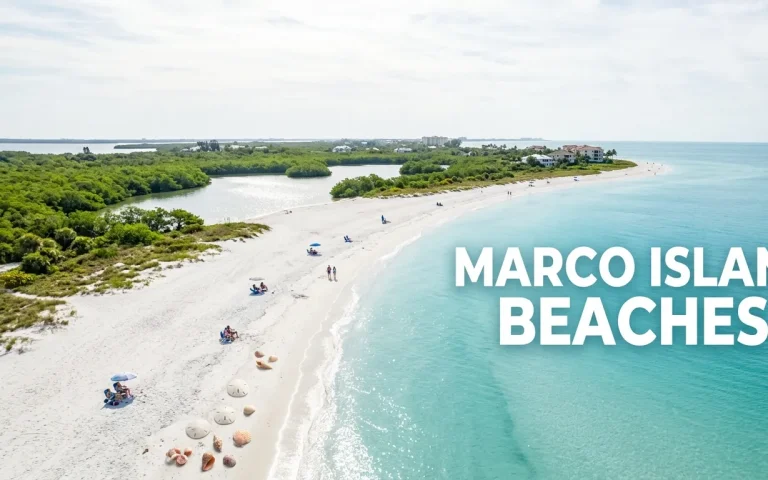
Tigertail Beach on Marco Island is a double-beach system. The Gulf-facing main beach sits adjacent to a lagoon that creates calm, wading-depth water perfect for young children. The sandbar between beach and lagoon shifts seasonally, but the general configuration remains a reliable find for families.
Luxury and couples travelers will find Naples the most sophisticated base on the southwest coast. The downtown Naples waterfront, the Fifth Avenue South dining corridor, and the beach at the end of 12th Avenue South create an environment that pairs genuine beach quality with upscale infrastructure most Gulf Coast beach towns lack.
Families should prioritize Delnor-Wiggins Pass State Park over Vanderbilt Beach on busy weekends. The park limits car entry when the lot fills, ensuring crowd control that the open public beach at Vanderbilt cannot match.
Florida Panhandle Gulf Coast Beaches
The Florida Panhandle beaches between Pensacola and Panama City Beach are technically part of the Gulf Coast but feel like an entirely different destination from southwest Florida.
The water here runs a distinctive clear emerald-to-teal color that photographers consistently prefer over the paler blues further south. The sand is brilliant white quartz that photographs as bright as Caribbean beaches.
Henderson Beach State Park near Destin is the Panhandle’s answer to the overcrowded resort strip. It preserves a half-mile of undeveloped beach that the commercial Destin Harbor strip makes visitors forget exists.
Grayton Beach State Park near Santa Rosa Beach is routinely cited by travel journalists, including writers at Travel + Leisure, as one of Florida’s finest beaches. Its Western Lake and coastal dune lake system creates an ecosystem not found at any other beach on this list.
Pensacola Beach operates within the federally managed Gulf Islands National Seashore, giving it a degree of natural preservation that commercial beaches cannot replicate. Water quality testing at Gulf Islands National Seashore beaches consistently ranks among the best in Florida.
Honeymooners and couples considering the Panhandle should look at the 30A corridor between Panama City Beach and Destin. Towns like Seaside, Watercolor, and Rosemary Beach offer boutique accommodations, calm Gulf frontage, and an architectural environment more suited to romantic travel than the high-rise resort strips.
Families will find Panama City Beach convenient for amenity-heavy beach days. The downside is significant commercial development and crowd density in summer that can overwhelm the beach experience itself.
Key Takeaway: The Panhandle’s emerald water and quartz sand are genuinely superior for photography and visual impact. Southwest Florida wins on calm water, shelling, and natural island access.
Best Gulf Coast Beaches for Families
The best Gulf Coast beaches for families with young children prioritize shallow water entry, minimal wave action, and reliable facilities.
Siesta Key Beach, Coquina Beach on Anna Maria Island, Fort De Soto Park North Beach, and Tigertail Beach on Marco Island consistently perform best for families on these criteria.
Fort De Soto Park in Pinellas County deserves specific mention. Its North Beach faces Tampa Bay rather than the open Gulf, which means water that is even calmer than most Gulf beaches. Children can wade significant distances without the water exceeding waist height.
| Beach | Water Depth at 20ft | Wave Conditions | Facilities | Crowd Level |
|---|---|---|---|---|
| Siesta Key Beach | Gradual, knee-deep | Minimal | Full facilities | High in summer |
| Fort De Soto North Beach | Very shallow, bay-calm | None | Full facilities | Moderate |
| Coquina Beach, Anna Maria | Shallow, Gulf-calm | Minimal | Basic facilities | Low to moderate |
| Tigertail Beach, Marco Island | Lagoon-shallow | None | Moderate facilities | Low |
| Lovers Key State Park | Shallow Gulf entry | Minimal | Basic facilities | Low |
Budget and value travelers with families will find Fort De Soto Park the strongest combination of beach quality and cost control. The park entry fee is modest (confirm current rates before visiting) and the beach quality rivals paid-admission beach clubs.
Honeymooners traveling after a family beach phase should note that Siesta Key Beach is genuinely dual-purpose. It works for families during beach hours and shifts to a more relaxed couples atmosphere in the late afternoon when families clear out.
Best Gulf Coast Beaches for Couples and Romance
The best Gulf Coast beaches for couples balance water quality with the kind of atmosphere that actually feels romantic rather than just scenic.
Lovers Key State Park near Fort Myers earns its name more honestly than most romantically branded beaches. It requires a short tram or bicycle ride from the parking area to the beach, which naturally filters out the day-trippers who show up purely for convenience.
Pass-a-Grille Beach at the southern end of St. Pete Beach is the Gulf Coast’s most consistently underrated romantic beach. It has wide, clean sand, excellent Gulf water, a quiet village atmosphere, and the kind of sunset views that Clearwater Beach promises but rarely delivers without a crowd.
Boca Grande Beach on Gasparilla Island sits about 90 minutes south of Sarasota. It has a small-town fishing village character, limited commercial development, and a Gulf beach that remains genuinely uncrowded even in peak season.
The 30A corridor in the Panhandle (Seaside, Watercolor, Rosemary Beach) suits couples who want a full beach town experience rather than just a beach day. The architecture is intentional, the restaurants are independent, and the Gulf frontage is quiet.
Honeymooners specifically should ask about honeymoon packages at Gulf-front properties in Naples or the 30A area. Both regions have boutique properties that offer private beach setups, champagne arrivals, and couples spa treatments without the cruise-ship scale of larger resort properties.
Luxury seekers will find Naples the clear winner on the southwest coast. The combination of genuinely fine beach, sophisticated dining, and high-quality boutique and luxury resort options makes it the Gulf Coast’s most complete upscale couples destination.
Best Gulf Coast Beaches for Snorkeling and Shelling
The Gulf Coast is not a snorkeling destination in the same category as the Florida Keys or the Caribbean. This is an honest assessment most Gulf Coast coverage avoids stating clearly.
There are no coral reefs on the Gulf Coast. Water visibility, while often good close to shore, rarely exceeds 20 to 30 feet and drops significantly after wind events or rain. Marine life is present but not the reef diversity that snorkelers expect.
The best snorkeling on the Gulf Coast occurs at specific structured environments:
- Honeymoon Island State Park: Caladesi Island’s ferry route passes natural sea grass beds with fish activity.
- Fort De Soto Park: The fishing pier area has visible fish populations in clear water.
- Cayo Costa State Park: The Gulf side of this island has the clearest water access on the southwest coast and occasional visibility of sea turtles and rays.
- Lovers Key State Park: Brackish water channels have manatee sightings, particularly October through March.
Shelling is the genuine star activity on the southwest Gulf Coast. Sanibel Island and Captiva Island are North America’s premier shelling destinations. The island’s east-west orientation causes shells to funnel ashore in extraordinary quantities. Live shelling (removing live animals from shells) is illegal on Sanibel. Respect that rule consistently.
According to the US Fish and Wildlife Service, Sanibel Island’s J.N. “Ding” Darling National Wildlife Refuge adds a wildlife dimension to the shelling experience that makes it a destination for naturalists beyond the shelling community.
Key Takeaway: For shelling, Sanibel Island has no competitor on the US Gulf Coast. For snorkeling, manage expectations; the Florida Keys are a four-hour drive south and offer genuinely different water clarity and reef life.
Least Crowded and Local-Favorite Gulf Coast Florida Beaches
The least crowded quality beaches on the Florida Gulf Coast are almost uniformly the ones requiring the most effort to reach.
Cayo Costa State Park near Boca Grande is the Gulf Coast’s most isolated significant beach. Access is by ferry only (departing from Pineland Marina, schedule and pricing subject to change; verify before visiting). The beach stretches four miles with no commercial development and camping available for those who want a full overnight.
Caladesi Island State Park in Pinellas County requires a ferry from Honeymoon Island State Park or an approach by private boat. The beach regularly earns top-10 national beach rankings. The ferry limits the daily visitor count in a way no drive-up beach can replicate.
Englewood Beach in Charlotte County sits between Sarasota and Fort Myers but gets less attention than both. The sand is fine, the water is clear Gulf, and the crowd level is a fraction of Siesta Key or Clearwater.
Little Hickory Island (accessed via Lovers Key State Park) suits nature-focused travelers. The park’s four connected barrier islands have distinct beach environments ranging from active Gulf frontage to sheltered bay beaches.
Solo travelers and luxury seekers will appreciate Cayo Costa most. The combination of genuine isolation, natural beauty, and the effort-based access creates an experience that Clearwater or Siesta Key cannot replicate at any price.
Budget and value travelers note that Caladesi Island ferry tickets add cost beyond state park entry. Budget for both, and check the ferry operator’s current schedule before planning a specific day trip.
Best State Park Beaches on the Florida Gulf Coast
Florida’s state park system includes some of the Gulf Coast’s finest beaches, often better maintained and better managed for crowd control than adjacent commercial beaches.
The Florida State Parks system maintains 175 parks including many Gulf Coast beach parks. Nine of the ten best state park beaches on the Gulf Coast charge vehicle entry fees in the range of $4 to $8 per vehicle (current fees vary; confirm before visiting).
| State Park Beach | Location | Access | Best For | Crowd Level |
|---|---|---|---|---|
| Caladesi Island | Dunedin, Pinellas Co. | Ferry only | Couples, nature, isolation | Low (ferry caps visitors) |
| Fort De Soto Park | Tierra Verde, Pinellas Co. | Drive-in | Families, camping, variety | Moderate |
| Honeymoon Island | Dunedin, Pinellas Co. | Drive-in | Couples, dog-friendly | Moderate-high |
| Lovers Key | Fort Myers Beach area | Drive-in, tram | Couples, wildlife, quiet | Low to moderate |
| Cayo Costa | Near Boca Grande | Ferry only | Isolation, camping, nature | Very low |
| Delnor-Wiggins Pass | North Naples | Drive-in (capped) | Families, nature | Low to moderate |
| Henderson Beach | Destin (Panhandle) | Drive-in | Couples, nature, escape from Destin | Low |
| Grayton Beach | Santa Rosa Beach (30A) | Drive-in | Nature, couples, coastal dune lakes | Low to moderate |
According to the Florida State Parks division, Caladesi Island State Park has won the number one beach in America designation from multiple independent ranking organizations, making it the state park beach with the strongest documented peer-reviewed quality assessment.
Families with dogs should prioritize Honeymoon Island State Park, which has a designated dog-friendly beach section.
Gulf Coast Florida Beach Towns Worth Staying In
The quality of your Gulf Coast beach trip depends significantly on which town you base yourself in, not just which beach you visit.
Sarasota is the Gulf Coast’s most complete base city. It has airport access (SRQ), excellent independent restaurant culture, the John and Mable Ringling Museum, and Siesta Key Beach within 20 minutes. It suits couples, families, and solo travelers equally.
Naples is the Gulf Coast’s most sophisticated beach town. The 5th Avenue South corridor, the Third Street South restaurant district, and the waterfront pier area create an environment that pairs genuinely with the beach quality nearby. It suits couples and luxury travelers most specifically.
Anna Maria Island suits families and couples who want a beach town that still feels like pre-boom Florida. No high-rise hotels. No chain restaurants on the main street. The island is deliberately low-key.
Destin in the Panhandle is the region’s most commercially developed beach town. It suits travelers who want beach proximity with maximum entertainment and dining infrastructure nearby. The beach quality at Henderson Beach State Park is excellent. The surrounding commercial strip is not for everyone.
Seaside on 30A is the Panhandle’s most distinctive beach town, a planned community built around walkability and architectural consistency. It suits couples and design-conscious travelers specifically. Accommodation prices here run higher than comparable Gulf Coast towns.
Honeymooners will find Rosemary Beach (adjacent to Seaside on 30A), Naples Old Town, and the village area near Boca Grande the three most genuinely romantic Gulf Coast town bases.
Key Takeaway: Naples and Sarasota are the two strongest base cities for a Gulf Coast beach trip that combines beach quality, dining, and infrastructure without sacrificing coastal character.
Best Time to Visit Florida Gulf Coast Beaches
The best time to visit Florida Gulf Coast beaches is November through April, with March requiring careful navigation around spring break.
November through January delivers the Gulf Coast’s most comfortable weather. Air temperatures range from the low 60s to mid-70s Fahrenheit. Water temperatures drop to the mid-to-upper 60s Fahrenheit, which is cool for swimming but entirely manageable with gradual entry.
February and March offer warm air (70s to low 80s), water approaching the low 70s, and the Gulf Coast’s lowest crowd levels outside of spring break weeks.
| Month | Air Temp Range (°F) | Water Temp Range (°F) | Crowd Level | Red Tide Risk | Verdict |
|---|---|---|---|---|---|
| November | 68-78 | 68-74 | Low | Low-moderate | Excellent |
| December | 62-72 | 66-70 | Low | Low | Very good |
| January | 60-70 | 65-68 | Low-moderate (snowbirds) | Low | Good |
| February | 64-75 | 67-71 | Moderate | Low | Very good |
| March | 68-80 | 70-74 | High (spring break) | Low | Good, avoid spring break weeks |
| April | 74-84 | 74-78 | Low-moderate | Low | Excellent |
| May | 80-88 | 78-82 | Moderate | Low-moderate | Good |
| June | 85-92 | 83-86 | High | Moderate | Manageable but hot |
| July | 88-94 | 85-88 | Very high | Moderate | Challenging; best at state parks |
| August | 88-94 | 86-89 | High | Moderate-high | Difficult; hurricane risk begins |
| September | 83-91 | 84-88 | Moderate | High | Avoid; peak hurricane and red tide |
| October | 75-85 | 78-84 | Low | High | Risky; red tide often peaks here |
Honeymooners planning a Gulf Coast trip should target late April through early May or late October (if red tide forecasts are clear). Both windows offer warm air, warm water, and manageable crowds.
Families scheduling a summer trip should book state park beaches exclusively in peak weeks. Caladesi Island’s ferry capacity limit and Delnor-Wiggins Pass State Park’s controlled entry system will protect the experience when open beaches are at maximum stress.
Florida Gulf Coast Beach Water Conditions and Safety
Florida Gulf Coast water conditions are generally safer than Atlantic side beaches for swimming, but specific hazards require specific awareness.
Red tide (Karenia brevis algal bloom) is the Gulf Coast’s most significant seasonal water hazard. It causes respiratory irritation in healthy adults near affected beaches, is dangerous for people with asthma or respiratory conditions, and kills fish in bloom areas. The Florida Fish and Wildlife Conservation Commission maintains a real-time red tide status map at their official website. Check it before every Gulf Coast beach visit.
Key safety and seasonal facts every visitor should know:
- Red tide season peaks August through November but can occur any month. Confirm FWC status before traveling, especially for October trips.
- Rip currents occur on all Gulf Coast beaches despite the generally calm water. Look for the flag warning system at all staffed beaches. Yellow means caution. Red means no swimming. Double red means the beach is closed to swimming.
- Jellyfish presence increases May through September across all Gulf Coast beaches. Moon jellyfish are common and cause mild stings. Portuguese man-of-war can appear after offshore wind events and cause serious pain. If you see any man-of-war on the beach, exit the water.
- Summer afternoon thunderstorms are daily events from June through September. Lightning clears Gulf beaches instantly and should not be underestimated. If thunder sounds, exit the water immediately and move away from the beach and open areas.
- Water temperatures in summer (July-August) reach 86-89 degrees Fahrenheit, which sounds appealing but can cause heat stress in young children after extended exposure. Hydration is critical.
- Sunburn on Gulf Coast beaches is severe even on overcast days. SPF 50 or higher with reapplication every 90 minutes is minimum appropriate protection, especially for children.
The US Coast Guard Sector St. Petersburg covers most of the southwest Gulf Coast for maritime emergencies. Know the VHF Channel 16 emergency call standard if using watercraft.
Florida Gulf Coast Beach Resorts and Where to Stay
Florida Gulf Coast beach resorts range from large convention-scale properties to small boutique hotels that put you directly on the sand.
The Gulf Coast does not have the all-inclusive resort infrastructure of Caribbean destinations. Most Gulf Coast properties operate on room-only or bed-and-breakfast rates, with dining, water sports, and beach services charged separately.
For Couples and Luxury Travelers:
The Ritz-Carlton Naples fronts the Gulf directly and pairs high-end room quality with genuine Gulf beach access. Room rates typically run premium for the Naples market; verify current rates when booking. The limitation is its scale: it operates at conference hotel volume during peak season, which can dilute the intimate feel.
Mainsail Beach Inn on Anna Maria Island is a boutique Gulf-front property that genuinely suits couples who want Gulf water without resort-strip atmosphere. Smaller, independently operated, and in a location where the island’s character comes through.
For Families:
TradeWinds Island Resorts on St. Pete Beach combines multiple resort towers with Gulf-front pools, beach access, and on-site activity programming suited for families. It is a large operation and feels like one. The limitation is that the beach frontage can feel crowded when the resort is at capacity.
For Budget and Value Travelers:
Vacation rental properties on Anna Maria Island, Treasure Island, and Indian Rocks Beach typically deliver better per-night value than comparable hotel rooms, especially for families or groups traveling together. Book well in advance for peak season availability. Coastal rental inventory is often claimed six to nine months ahead for July and August weeks.
Honeymooners should ask specifically about Gulf-view room categories and honeymoon packages when contacting any Gulf-front property. Many properties offer complimentary room upgrades, champagne, and breakfast inclusions for honeymoon stays that are not automatically applied. You must request them at booking.
Insider Tip:
- Gulf-front rooms on upper floors of mid-rise properties at St. Pete Beach and Clearwater Beach deliver sunset views equivalent to beachfront villa positions at a fraction of the price.
- Confirm resort fee amounts before booking any Gulf Coast hotel. Many add $25 to $55 per night in resort fees not included in the advertised rate.
- All resort packages, amenity inclusions, and pricing are subject to change. Verify every detail directly with the property before finalizing a booking.
Key Takeaway: The Florida Gulf Coast has no large-scale all-inclusive resorts comparable to Caribbean options. Budget your dining, activities, and beach services separately from room rates.
Safety and Seasonal Warnings for Florida Gulf Coast Beaches
Red tide is the Florida Gulf Coast’s most serious and most underreported hazard for visiting beachgoers.
Key safety and seasonal facts every visitor should know:
- Check the Florida FWC red tide status map before every beach visit. Conditions can change within 48 hours.
- Do not swim at any Gulf Coast beach showing active red tide. The respiratory effects of airborne toxins begin within minutes for sensitive individuals.
- Rip current warnings require immediate compliance. Never swim against a rip current. Float parallel to shore and swim diagonally out of the current.
- Summer lightning storms clear beaches in seconds. Do not wait to see how a storm develops. Exit the water at the first sound of thunder.
- Jellyfish stings should be treated with seawater rinse and tweezers for tentacle removal. Do not use fresh water or vinegar on typical moon jellyfish stings. Portuguese man-of-war stings require medical attention.
- Children’s sun exposure on the Gulf beach reflects off both water and white sand. Apply water-resistant SPF 50 or higher every 90 minutes without exception.
- Hurricane season runs June 1 through November 30. Peak risk months are August, September, and October. Travel insurance that covers hurricane-related cancellations and evacuation is worth the cost for any Gulf Coast trip planned between August and October.
The Florida Division of Emergency Management provides real-time hurricane tracking and beach closure updates. Bookmark their official site before your trip.
Frequently Asked Questions About Florida Gulf Coast Beaches
What is the best beach on the Florida Gulf Coast?
Siesta Key Beach in Sarasota County is the most consistently recognized top beach on the Florida Gulf Coast, regularly earning national rankings from Dr. Beach and major travel publications.
Its 99 percent quartz sand, calm Gulf water, and gradual entry make it objectively excellent for swimming and beach lounging.
Travelers seeking isolation rather than quality-at-scale will find Caladesi Island State Park or Cayo Costa State Park more rewarding.
What is the calmest beach on the Florida Gulf Coast for young children?
Fort De Soto Park’s North Beach in Pinellas County is the calmest quality beach on the Gulf Coast for young children.
It faces Tampa Bay rather than the open Gulf, producing wave action that is essentially nonexistent even in breezy conditions.
The water stays very shallow for a significant distance from shore, which means children can wade and play safely without strong swimming ability.
When is red tide season on the Florida Gulf Coast?
Red tide (Karenia brevis) can occur any month but peaks most predictably from August through November on the Florida Gulf Coast.
The Florida Fish and Wildlife Conservation Commission maintains a real-time monitoring map that shows active bloom locations by beach area.
Always check the FWC map within 48 hours of your planned beach day, especially if visiting between August and October.
What is the difference between panhandle beaches and southwest Florida Gulf Coast beaches?
Panhandle beaches (Pensacola, Destin, Panama City Beach) have emerald-green to turquoise water and brilliant white quartz sand with slightly more wave action than southwest Florida.
Southwest Florida beaches (Sarasota south through Naples) have calmer, shallower water, a teal-to-pale-blue color, and are generally better suited for young children and non-swimmers.
Both regions share the Gulf of Mexico but feel like entirely different beach destinations in atmosphere, development intensity, and crowd character.
Which Florida Gulf Coast beaches have free parking?
Several Gulf Coast beaches offer free public parking, including Anna Maria Island (multiple access points), Pass-a-Grille Beach (limited street parking), Englewood Beach (partially free), and Madeira Beach (some free street spots).
State park beaches charge vehicle entry fees that typically range from $4 to $8 per vehicle; confirm current rates before visiting.
Clearwater Beach, Siesta Key main beach, and Fort Myers Beach charge for most practical parking options during peak season.
What is the least crowded beach on the Florida Gulf Coast?
Cayo Costa State Park is the least crowded quality beach on the Florida Gulf Coast because it is accessible only by ferry or private boat.
The ferry-dependent access from Pineland Marina naturally limits daily visitor numbers to a fraction of any drive-up beach.
Caladesi Island State Park in Pinellas County is the second-least crowded high-quality Gulf Coast beach, also requiring a ferry from Honeymoon Island.
The single most useful planning decision you can make for a Florida Gulf Coast beach trip is to commit to one specific beach based on your actual traveler profile, not based on whichever name you have seen most often. Siesta Key Beach earns its rankings. But the Gulf Coast’s finest experiences often sit on the other side of a short ferry ride.
Book any state park beach day that requires a ferry well ahead of your travel dates. Caladesi Island and Cayo Costa ferries run limited daily schedules, and peak season capacity fills quickly. Confirm all red tide status, parking fees, ferry schedules, and resort inclusions directly with current sources before departure.
Resort rates, seasonal conditions, state park entry fees, and red tide patterns change from year to year. Everything in this guide reflects 2026 general knowledge and research; verify all specifics before booking.