Most Beautiful Beaches in the World: 2026 Travel Guide
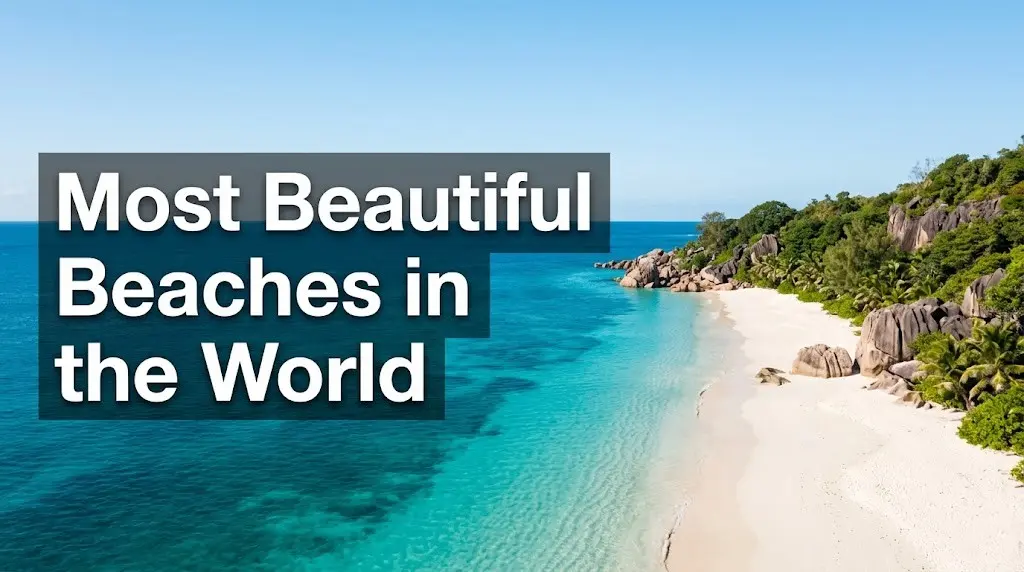
The most beautiful beaches in the world are not the most photographed ones. They are the beaches that genuinely deliver on their visual promise when you actually arrive.
Grace Bay Beach in Turks and Caicos and Baia do Sancho in Brazil have both topped global rankings from the Caribbean Tourism Organization and Travel + Leisure. Both earn those positions through measurable qualities: water clarity, sand texture, and accessibility combined.
This guide covers 20 named beaches across eight global regions. It tells you which beaches suit which traveler type, when to go, and what most visitors get wrong before they book.
Most Beautiful Beaches in the World: What Actually Earns That Title
The world’s most beautiful beaches earn that description through three specific qualities: water clarity and color, sand texture and composition, and the ratio of natural setting to infrastructure.
A beach with turquoise water and white sand still fails the test if it is overcrowded, covered in seaweed seasonally, or accessible only through a resort you cannot afford. The beaches that consistently outperform their reputation share a measurable quality standard.
Blue Flag certification, awarded by the Foundation for Environmental Education, provides one reliable benchmark. Blue Flag beaches meet specific water quality, environmental management, safety, and service standards confirmed annually.
That certification matters because it is independently verified. A beach’s Instagram presence is not an independent verification of anything.
The best-performing beaches in global rankings from Condé Nast Traveler, Travel + Leisure, and Lonely Planet consistently share specific characteristics: water visibility commonly exceeding 60 feet, sand that is fine enough to squeak underfoot, wave conditions that allow swimming without constant surf management, and a natural setting that does not require a professional photographer to make look good.
Insider Tip:
- Avoid ranking lists that include both accessible public beaches and remote boat-access-only beaches without distinguishing them. The planning requirements are completely different.
- Water color photographs differently than it looks in person. A beach that appears pale aqua in photos may appear deep sapphire in person, and vice versa. Both can be beautiful. They suit different preferences.
- For honeymooners specifically: the sense of seclusion matters as much as water color. A world-famous beach with 800 visitors per day does not deliver the same romantic experience as a less-famous one with 40.
World’s Best Beaches by Region: A Practical Geographic Overview
The world’s best beaches divide cleanly into six geographic zones, each with a distinct character, price tier, and seasonal window.
Understanding which zone fits your travel dates and budget eliminates most poor beach decisions before they happen.
| Region | Standout Beach | Best Season | Price Tier | Best Traveler Profile |
|---|---|---|---|---|
| Caribbean | Grace Bay, Turks and Caicos | Dec through Apr | Mid-range to Ultra-luxury | Couples, families, honeymooners |
| Southeast Asia | El Nido, Palawan Philippines | Nov through Apr | Budget to Mid-range | Adventure travelers, couples |
| Maldives | North Malé Atoll beaches | May through Oct | Ultra-luxury | Honeymooners, couples |
| Mediterranean | Cala Macarella, Menorca | May through Jun, Sep | Mid-range to Premium | Couples, culture travelers |
| South Pacific | Matira Beach, Bora Bora | May through Oct | Premium to Ultra-luxury | Honeymooners, couples |
| Australia | Whitehaven Beach, Whitsundays | Jun through Oct | Mid-range to Premium | Adventurous pairs, photographers |
| Indian Ocean | Anse Source d’Argent, Seychelles | Apr through May, Oct through Nov | Premium to Ultra-luxury | Couples, luxury seekers |
| South America | Baia do Sancho, Brazil | Sep through Mar | Budget to Mid-range | Nature travelers, couples |
Each region has a distinct access model, climate pattern, and cost floor. The Caribbean has the widest range of price tiers and the most accessible logistics for North American travelers. Southeast Asia has the highest ratio of natural beauty to cost. The Maldives and Bora Bora have the most dramatic water quality but the lowest value-to-cost ratio outside of overwater accommodations.
Profile note for budget travelers: Baia do Sancho in Brazil and Flamenco Beach in Culebra, Puerto Rico offer genuinely world-class beach quality at public beach access costs. Budget travelers should not assume world-class beach quality requires a luxury resort budget.
Most Famous Beaches in the World: Reputation vs. Reality
The most famous beaches in the world are not always the most beautiful ones. Several of the most photographed beaches globally underperform their reputation in person.
Navagio Beach (also called Shipwreck Beach) in Zakynthos, Greece is one of the most photographed beaches on Earth. It is also one of the most genuinely difficult to actually enjoy: boat-access only, with zero shade infrastructure, dangerous crowd density from July through August, and a visiting window of roughly 90 minutes before the returning boat requires boarding.
Copacabana Beach in Rio de Janeiro is globally famous. It is also an urban beach with significant water quality variability and a safety environment that requires specific urban beach awareness, particularly for solo travelers and tourists unfamiliar with the local environment.
Bondi Beach in Sydney, Australia has iconic status. Its surf conditions are genuinely strong, making it unsuitable for weak swimmers and families with young children. The real value of Bondi is its cultural energy and the cliff walk to Coogee, not quiet swimming.
Honest candidates for world’s most beautiful beaches that consistently match their reputation in person:
- Grace Bay Beach, Turks and Caicos: calm, shallow, 82 to 86 degrees year-round, powder-white sand, no seaweed history
- Anse Source d’Argent, La Digue, Seychelles: granite boulder formations, warm Indian Ocean water, genuinely secluded interior sections
- Baia do Sancho, Fernando de Noronha, Brazil: national environmental protection area, limited visitor access, water clarity measured at over 130 feet
- Trunk Bay, St. John, US Virgin Islands: National Park Service managed, guided snorkel trail, calm water, consistent sand quality
- Matira Beach, Bora Bora: free public beach access, consistent lagoon water, genuinely as vivid as the photographs suggest
Insider Tip:
- The beaches that most consistently match their photographs are the ones with naturally calm, shallow lagoon water. Open ocean beaches look dramatic in photos but deliver a rougher in-person swimming experience.
- Checking recent guest reports on TripAdvisor’s destination forums from travelers who visited in the same month you plan to go is the single most reliable way to get real-time sargassum, jellyfish, or closure condition information.
Key Takeaway: The most famous beach in the world and the most beautiful beach in the world are frequently not the same place.
Most Beautiful Beaches in the Caribbean
Grace Bay Beach in Turks and Caicos is the most consistently beautiful Caribbean beach for actual visitor experience, not just photography.
The Turks and Caicos Islands Tourist Board confirms Grace Bay’s three-mile stretch faces northwest, which keeps swell and seaweed intrusion minimal compared to south or east-facing Caribbean beaches. Water color ranges from pale aqua in the shallows to deep cobalt beyond the barrier reef, creating the color gradient that makes Caribbean water genuinely spectacular.
Seven Mile Beach in Grand Cayman offers similar calm water in a more developed, accessible setting. Cayman Islands Tourism notes it as one of the most accessible public beach stretches in the Caribbean, with free public access for its full length.
Eagle Beach in Aruba deserves more attention than it typically receives. Aruba sits outside the hurricane belt, which means its beaches are consistently accessible year-round with reliable weather. Eagle Beach has wider, less crowded sand than the more famous Palm Beach to its north.
Flamenco Beach on the island of Culebra, Puerto Rico consistently ranks among the Caribbean’s finest. The Puerto Rico Tourism Company identifies it as one of the best public beaches in US territory. Entry fees are minimal (confirm current rates before visiting), and the horseshoe bay shape keeps water calm and clear.
Sargassum seaweed warning: Some Caribbean beaches, particularly along the eastern coasts of Barbados, the Dominican Republic, and parts of Mexico’s Caribbean coast, experience heavy seasonal sargassum accumulation from May through October. Check destination-specific sargassum monitoring reports before booking for this period.
| Beach | Location | Water Color | Crowd Level | Best For | Honest Note |
|---|---|---|---|---|---|
| Grace Bay | Turks and Caicos | Pale aqua to deep cobalt | Moderate | All profiles | Resort area, limited budget accommodation |
| Seven Mile Beach | Grand Cayman | Clear turquoise | Moderate to High | Families, couples | Long and developed, less secluded |
| Eagle Beach | Aruba | Turquoise | Low to Moderate | Couples, quiet seekers | Less famous, genuinely better than Palm Beach |
| Flamenco Beach | Culebra, Puerto Rico | Clear blue-green | Low to Moderate | Budget travelers, families | Ferry required from Ceiba, Puerto Rico |
| Pink Sands Beach | Harbour Island, Bahamas | Pale pink sand, clear blue water | Low | Couples, luxury travelers | Small island, limited accommodation options |
Pink Sands Beach on Harbour Island, Bahamas genuinely has pink-tinted sand. The color comes from crushed red coral and foraminifera mixed with white sand. It is not a marketing claim.
Profile note for families: Grace Bay and Seven Mile Beach are the two most family-practical Caribbean beaches on this list. Both have calm, shallow water suitable for young children and strong resort infrastructure within walking distance.
Most Beautiful Beaches in Southeast Asia and the Maldives
El Nido in Palawan, Philippines hosts some of the most dramatic beach scenery in Southeast Asia, combining limestone karst formations, hidden lagoons, and water clarity that reaches extraordinary depths.
The Philippines Department of Tourism identifies El Nido and Coron in Palawan as among the country’s signature destinations. Island-hopping tours from El Nido town operate daily, with Tour A covering the Big Lagoon and Small Lagoon particularly suited for first-time visitors.
Railay Beach in Krabi, Thailand is only accessible by longtail boat from Ao Nang or Krabi town, which effectively limits visitor numbers and maintains a secluded atmosphere. West Railay has the calmer water; Phra Nang Cave Beach at the southern tip combines a white sand crescent with dramatic limestone cliffs.
Radhanagar Beach on Havelock Island in the Andaman Islands, India consistently ranks among Asia’s finest. Time magazine previously named it the best beach in Asia. Government-controlled development limits visitor numbers and preserves water quality.
The Maldives operates differently from every other beach destination in this guide. Most beaches are private resort beaches accessible only to guests, not public stretches. Water clarity in the Maldives is among the highest in the world, with visibility commonly exceeding 100 feet on calm days.
Visit Maldives reports that snorkeling conditions are optimal from May through October during the dry northeast monsoon season. Water temperatures remain consistently between 82 and 86 degrees Fahrenheit year-round.
Profile note for budget travelers: Railay Beach and El Nido offer genuinely world-class beach quality at a fraction of Maldives costs. Longtail boat transfers to Railay from Ao Nang typically cost a few hundred Thai Baht per person (confirm current rates before visiting). El Nido island-hopping tours typically range from a few hundred to several hundred Philippine Pesos depending on tour type and provider.
Profile note for honeymooners: The Maldives is the most extreme version of private, water-centered romance available globally. The trade-off is genuine: you are largely confined to your resort island, which suits some couples and frustrates others after more than five days.
Key Takeaway: Southeast Asia delivers the highest ratio of natural beach beauty to accessible cost; the Maldives delivers the highest water clarity on earth at a premium that requires genuine commitment.
Most Beautiful Beaches in the Mediterranean
Cala Macarella and Cala Macarelleta on the island of Menorca, Spain represent the Mediterranean at its genuinely finest. The water color ranges from pale mint in the shallows to deep jade at the center, set against white limestone cliffs and pine forest.
Visit Menorca notes that Cala Macarella is accessible by a 20-minute forest walk from the parking area at Cala Galdana or by boat. No motorized vehicles are permitted on the final approach path, which limits crowd density significantly compared to more accessible Balearic beaches.
Ölüdeniz (Blue Lagoon) in Turkey offers one of the Mediterranean’s most protected and consistently calm swimming environments. The lagoon sits inside a natural conservation zone, with entry fees confirmed as applicable (verify current rates before visiting). Water visibility in the lagoon commonly exceeds 50 feet.
Navagio Beach (Zakynthos, Greece) photographs better than any Mediterranean beach. The reality is more complicated. Access is by boat only, with no shade on the beach. Peak July to August visits involve crowds that can reach hundreds of people simultaneously on a beach with limited usable space.
Cala Mondragó in Mallorca, Spain offers a more practical alternative for families: two connected coves within the Mondragó Natural Park, pine tree shade on the beach itself, calm shallow water suitable for children, and a parking and facility area within a short walk.
Profile note for couples seeking romance: May, early June, and September are the months when Mediterranean beach quality genuinely peaks. Crowds thin dramatically in September while water temperatures remain warm from summer. July and August deliver the highest temperatures and the most crowded beaches simultaneously, which does not suit couples seeking a quiet, romantic beach day.
Insider Tip:
- Sardinia’s beaches, particularly Spiaggia della Pelosa near Stintino and Cala Luna in the Gulf of Orosei, consistently outperform better-known Greek islands for water clarity and sand quality while drawing smaller international crowds.
- Early morning visits to popular Mediterranean beaches like Cala Macarella eliminate 70% of the crowd experience. Most day-trippers arrive between 10:30 AM and 2:00 PM.
Most Beautiful Beaches in the South Pacific and Hawaii
Matira Beach on the island of Bora Bora in French Polynesia is the most accessible of the South Pacific’s elite beaches. It is a genuine public beach with free access, something rare in an island dominated by luxury resort land.
French Polynesia Tourism identifies Bora Bora’s lagoon as one of the most visually dramatic in the South Pacific, with water color that ranges from pale turquoise over the sandy shallows to deep teal over coral and volcanic drop-offs. Snorkeling directly from Matira Beach is possible and rewarding, with manta rays and blacktip reef sharks present in the lagoon year-round.
Ka’anapali Beach on Maui, Hawaii is the most resort-developed beach on this list but remains genuinely beautiful. The Hawaii Tourism Authority notes Ka’anapali’s three-mile stretch of golden sand faces west, making sunset viewing from the beach exceptional. Black Rock at the northern end is a snorkeling site with sea turtles commonly visible.
Lanikai Beach on Oahu’s windward coast is the more genuinely secluded Hawaiian option. The fine white sand and calm channel water are backed by a residential neighborhood rather than resort infrastructure. Parking is limited to street parking on Mokulua Drive (confirm current public access arrangements before visiting as local parking regulations change periodically).
Anse Lazio on Praslin Island in the Seychelles competes directly with Bora Bora and the Maldives for Indian Ocean water quality. The Visit Seychelles tourism authority identifies it as one of the finest beaches in the Indian Ocean basin. Granite boulders frame both ends of the beach, which creates natural windbreaks and adds visual drama that photographs cannot fully capture.
Profile note for families with children: Ka’anapali Beach in Maui has the best combination of calm surf, resort facilities, nearby restaurant access, and child-appropriate snorkeling on this list. Matira in Bora Bora is also family-friendly in water conditions, but the island’s remoteness and cost make it a less practical choice for most families.
Key Takeaway: Matira Beach in Bora Bora is the only South Pacific elite beach that is both free to access and genuinely as spectacular as its resort-marketing neighbors.
Most Beautiful Beaches in Australia
Whitehaven Beach in the Whitsunday Islands is the most consistently ranked Australian beach in global lists, including Tourism Queensland’s own destination rankings.
The silica sand at Whitehaven is 98% pure silica, which means it stays cool even in direct sun and has a flour-fine texture unlike almost any other beach sand on earth. The water color at Hill Inlet, the tidal estuary at Whitehaven’s northern end, shifts through extraordinary swirling patterns as the tide moves in and out across the white sand.
The critical access point most visitors miss: Whitehaven Beach is on uninhabited Whitsunday Island, reachable only by boat or seaplane from Airlie Beach or Hamilton Island. Day-trip catamaran tours from Airlie Beach typically take 90 minutes to reach the beach. The round trip, including time on the beach, is typically a full day commitment.
Profile note for families with very young children: Whitehaven is a genuinely difficult choice for families with toddlers or infants. The long boat crossing on open water, lack of shade infrastructure on the beach itself, and the absence of facilities beyond basic amenities make it demanding for young children. Families with children over eight to ten years old who enjoy outdoor adventure will find it rewarding.
Safety warning: Box jellyfish are present in Queensland coastal waters from approximately October through May. This includes the water at Whitehaven Beach. During stinger season, wearing a full-body stinger suit for swimming is strongly recommended. Confirm current stinger conditions with your tour operator before swimming.
Cable Beach in Broome, Western Australia is a fundamentally different experience: 22 kilometers of rust-red pindan sand meeting turquoise Indian Ocean water. The famous camel rides at sunset along the waterline are a Broome tradition. Cable Beach suits a different traveler than Whitehaven: those who want a long, uncrowded, sunset-focused beach experience rather than a hike-and-swim excursion.
Profile note for couples: Cable Beach at sunset in Broome is one of Australia’s most genuinely romantic beach experiences. The color contrast between the red sand, the turquoise water, and the sunset sky is something no filter is needed to enhance.
Best White Sand and Pink Sand Beaches
The world’s finest white sand beaches get their color from different geological sources, and those sources affect the sand’s texture, temperature, and visual quality.
Whitehaven Beach in Australia’s Whitsundays (98% silica, flour-fine texture) and Grace Bay Beach in Turks and Caicos (crushed coral and calcium carbonate, soft and cool underfoot) represent two of the purest white sand experiences globally.
Pink Sands Beach on Harbour Island in the Bahamas genuinely earns its name. The pink color comes from crushed Foraminifera shells (single-celled organisms with pink-red shells) mixed with white sand. The effect is subtle in direct midday sun and most visible in morning light or overcast conditions.
Horseshoe Bay Beach in Bermuda has a similar pink sand character, derived from crushed coral and pink foraminifera. The Bermuda Tourism Authority identifies it as the island’s most visited beach for good reason: the pink-tinged sand, calm protected water, and surrounding limestone cliffs form a complete natural composition.
Elafonissi Beach in southwestern Crete, Greece has areas of distinctly pink-tinted sand near the lagoon section, created by crushed pink shells. The lagoon water is shallow enough for toddlers in most sections, making it one of the rare pink sand beaches that is also genuinely family-practical.
Profile note for photographers: Pink sand beaches are best photographed in the first two hours after sunrise or the last two hours before sunset. Midday direct sun washes the pink tones out significantly.
Insider Tip:
- Pink sand beaches that see heavy foot traffic have their pink tones diminished over time as the shell material compacts. The far ends of Horseshoe Bay away from the main entrance typically show the strongest pink tones.
- White silica sand beaches like Whitehaven stay cool to the touch even on hot days. White coral sand beaches like Grace Bay can become warm on the surface in direct afternoon sun. Pack reef shoes if you plan to walk barefoot in the early afternoon.
World’s Clearest Water Beaches
The world’s beaches with the clearest water are not necessarily the most famous ones. Water clarity is a product of water depth, reef health, tidal patterns, and human activity levels.
Baia do Sancho in Fernando de Noronha, Brazil consistently records snorkeling and diving visibility exceeding 130 feet. The island is a UNESCO-recognized environmental protection area with strict visitor caps enforced by the Fernando de Noronha Environmental Secretariat. Both factors contribute directly to water quality.
The Maldives atolls produce water clarity that competes with Brazil’s Fernando de Noronha. The absence of river inputs and the health of the surrounding reef system in remote northern and southern atolls maintains visibility that frequently exceeds 100 feet. Visit Maldives identifies North Malé Atoll and South Ari Atoll as consistently offering the best visibility conditions for snorkeling and diving.
Anse Source d’Argent on La Digue in the Seychelles sits behind a natural reef barrier that filters water coming into the beach area. Visibility in the beach’s shallows is exceptional in calm conditions, typically 40 to 80 feet depending on tidal state and wind.
Trunk Bay on St. John in the US Virgin Islands is managed by the National Park Service as part of Virgin Islands National Park. The NPS manages visitor numbers, maintains reef health guidelines, and prohibits fishing in the bay. These management factors contribute directly to water clarity. Entry fees apply (confirm current National Park Service fees before visiting).
| Beach | Location | Typical Visibility | Best Season | Visitor Cap? |
|---|---|---|---|---|
| Baia do Sancho | Fernando de Noronha, Brazil | 100 to 130+ feet | Sep through Mar | Yes, daily visitor limit |
| Maldives atolls | Multiple, Maldives | 80 to 130 feet | May through Oct | No general cap, resort-controlled |
| Anse Source d’Argent | La Digue, Seychelles | 40 to 80 feet | Apr through May, Oct through Nov | No formal cap |
| Trunk Bay | St. John, USVI | 40 to 70 feet | Dec through Apr | No formal cap |
| Ölüdeniz Lagoon | Turkey | 40 to 60 feet | May through Oct | Entry fee enforced |
Profile note for snorkelers: Baia do Sancho and the Maldives atolls offer the highest-quality snorkeling clarity globally, but both require advance planning and, in the case of Fernando de Noronha, specific permit arrangements that must be confirmed before travel.
Key Takeaway: Water clarity at the world’s finest beaches is directly linked to reef health and visitor management controls. The clearest water beaches are almost always the ones with enforced visitor caps or protected area status.
Best Beaches for Snorkeling in the World
The best snorkeling beaches in the world combine accessible reef systems, calm surface conditions, warm water, and high marine biodiversity in shallow enough water to reach without dive certification.
Trunk Bay on St. John, USVI has a marked underwater snorkel trail maintained by the National Park Service. The trail is approximately 225 yards long and guides snorkelers past labeled coral formations. Water depth over the trail ranges from about 4 to 12 feet, making it accessible for beginners and genuinely interesting for experienced snorkelers.
Hanauma Bay on Oahu, Hawaii requires advance online booking (confirm current Hawaii Division of State Parks reservation requirements before visiting). It is one of the most carefully managed snorkel sites in the United States. The bay’s bowl shape and reef structure support approximately 400 species of fish in accessible shallow water.
Anse Lazio on Praslin, Seychelles offers excellent snorkeling from the beach itself without a boat. Granite boulder formations at both ends of the beach create protected microhabitats. The water is warm enough year-round for comfortable snorkeling without a wetsuit.
Muri Lagoon in Rarotonga, Cook Islands is one of the most beginner-friendly snorkel environments in the South Pacific. The lagoon reef sits approximately 500 meters from shore, with calm, shallow water between the beach and the reef suitable for paddleboard, kayak, and snorkeling access.
Best beaches for snorkeling globally, ranked by accessibility and marine biodiversity:
- Trunk Bay, St. John USVI (National Park Service managed trail, beginner-accessible)
- Hanauma Bay, Oahu Hawaii (protected bay, 400 fish species, advance booking required)
- Baia do Sancho, Fernando de Noronha Brazil (exceptional clarity, permit required)
- Maldives house reefs (resort-specific, nurse sharks and rays common)
- Anse Lazio, Praslin Seychelles (from-beach access, no boat required)
- Cala Macarella, Menorca Spain (clear water, posidonia sea grass meadows, octopus common)
- Muri Lagoon, Rarotonga Cook Islands (calm, beginner-friendly, colorful reef fish)
Profile note for families with children: Trunk Bay and Muri Lagoon are the two most family-practical snorkel beaches on this list. Both have shallow, calm water suitable for children as young as six or seven with basic swimming ability. Hanauma Bay is also family-appropriate but requires advance booking and planning.
Most Secluded and Least Crowded Beautiful Beaches
The world’s most secluded beautiful beaches require effort to reach, and that effort is precisely what keeps them uncrowded.
Baia do Sancho in Fernando de Noronha has a strict daily visitor cap enforced by the Brazilian environmental authority. The island itself requires a paid environmental preservation fee (confirm current fee structure with the Fernando de Noronha government before visiting). The access path to the beach involves descending through a narrow crack in the clifface via iron ladders, which contributes to keeping casual tourist numbers low.
Anse Cocos on La Digue in the Seychelles requires a 45-minute walk along a coastal trail from the southern end of Grand Anse beach. No road access exists. The beach is a crescent of coarse white sand with rough, unswimmable surf conditions on its main face, but the far northern section is calmer and genuinely secluded.
Flamenco Beach on Culebra, Puerto Rico is reached by ferry from the Puerto Rico mainland town of Ceiba (confirm current ferry schedules and ticketing with Puerto Rico Ferry before traveling). Despite being a publicly accessible US territory beach, its island location keeps crowds significantly lower than similarly beautiful mainland US beaches.
Cala Macarelleta in Menorca (the smaller cove adjacent to Cala Macarella) requires a short additional walk beyond the main beach. That extra ten minutes eliminates most of the day-trippers from Cala Galdana and leaves a beach that rivals its more famous neighbor in beauty with a fraction of the crowd.
Insider Tip:
- The most effective way to access a normally crowded beautiful beach in near-seclusion is to arrive at or before sunrise. This works for Flamenco Beach, Cala Macarella, Whitehaven Beach (if staying overnight on a charter boat), and Ka’anapali Beach.
- Visiting during shoulder season (May to June or September to October in the Mediterranean, April and November in Southeast Asia) delivers both lower crowds and significantly lower accommodation rates at nearby properties.
- For solo travelers specifically: secluded beaches with no other visitors require additional safety planning. Always tell someone your access route and expected return time when visiting remote beaches alone.
Key Takeaway: Every genuinely secluded beautiful beach on earth requires either physical effort, advance booking, or seasonal timing to experience it without crowds.
Best Beach Destinations for Couples and Honeymooners
The best beach destinations for couples prioritize two qualities that generic “top beaches” lists never address: privacy and atmosphere that feels genuinely romantic rather than resort-festive.
The Maldives is the most unambiguously couple-focused beach destination in the world. Overwater bungalow properties in the Maldives such as Gili Lankanfushi in North Malé Atoll and the Four Seasons Resort Maldives at Landaa Giraavaru in Baa Atoll are designed from the ground up for couples and honeymooners. The trade-off is clear: ultra-luxury rates (typically $1,500 to $5,000 per night or higher depending on villa category and season) and resort-island seclusion that can feel limiting after five to seven days if you want cultural exploration.
Turks and Caicos offers a more versatile romantic beach experience. Grace Bay Club and Amanyara are the two standout romantic resort properties, each with different character. Grace Bay Club emphasizes suite-only accommodation and a social but intimate atmosphere. Amanyara emphasizes extreme privacy and natural setting, with a more immersive natural environment at a corresponding price premium. Verify current room categories and inclusions directly with each property before booking.
Bora Bora in French Polynesia is the most visually dramatic honeymoon destination in the South Pacific. The Park Hyatt Bora Bora and Four Seasons Resort Bora Bora both offer overwater villa accommodation with direct lagoon access. The honest limitation: Bora Bora’s town and cultural infrastructure are limited. Couples who want both beach romance and cultural engagement will find the island’s offering thin beyond the resort experience.
Profile note for honeymooners on a budget: The US Virgin Islands offer a genuinely romantic beach experience at a fraction of Maldives or Bora Bora costs. St. John in particular has excellent boutique accommodation options, world-class snorkeling at Trunk Bay, and calm, beautiful water without the ultra-luxury price floor.
What to book in advance for a honeymoon beach trip:
- Overwater villa or beachfront suite accommodation (6 to 12 months in advance for Maldives peak season)
- Couples spa treatments at your resort property
- Private beach dinner or sunset sailing excursion (often books out weeks in advance)
- Snorkel or dive tours at the destination’s signature reef sites
- Airport-to-resort seaplane transfer in the Maldives if applicable (limited capacity, books early)
Best Beach Destinations for Families
The best beach destinations for families with children require calm, shallow water entry, nearby food and bathroom facilities, age-appropriate activities, and accommodation that does not require parents to ration every activity for cost reasons.
Grace Bay Beach in Turks and Caicos consistently performs best for families across all of these criteria. The water stays shallow for a significant distance from shore in most sections, wave action is minimal year-round, and the resort corridor along Grace Bay Road provides immediate access to food, equipment rental, and family-friendly facilities.
Ka’anapali Beach on Maui, Hawaii is the best family-practical beach in the Hawaiian Islands. The beach is three miles long, which means genuinely uncrowded sections are always available. Snorkeling at Black Rock is accessible from the beach without a boat, and the density of nearby resort restaurants and facilities means no logistical planning is required for a family day on the beach.
Eagle Beach in Aruba is underrated for families specifically because Aruba sits outside the Atlantic hurricane belt. It is one of the few Caribbean destinations where a family can book confidently in August or September without significant weather risk. Eagle Beach has calm water, wide sand, and less resort density than Palm Beach to the north.
Seven Mile Beach in Grand Cayman is heavily resort-developed but maintains excellent public beach access throughout its length. The water is calm and clear, and the concentration of family-friendly resort properties makes it logistically simple for families.
| Beach | Location | Young Child Safety | Facilities | Family Value | Honest Limitation |
|---|---|---|---|---|---|
| Grace Bay | Turks and Caicos | Excellent | Excellent | Mid-range to Premium | High accommodation costs |
| Ka’anapali | Maui, Hawaii | Good | Excellent | Mid-range to Premium | Surf can pick up seasonally |
| Eagle Beach | Aruba | Excellent | Good | Mid-range | Less shade infrastructure |
| Seven Mile Beach | Grand Cayman | Good | Excellent | Mid-range to Premium | Resort density reduces atmosphere |
| Trunk Bay | St. John USVI | Good | Moderate | Budget to Mid-range | No nearby resort facilities |
Profile note: Families with children under three years old will find the Maldives, Bora Bora, and remote boat-access beaches like Whitehaven and Navagio genuinely impractical. The logistics of boat crossings, limited shade, and absence of nearby medical facilities make them ill-suited to very young children regardless of their visual appeal.
Best Time to Visit the World’s Most Beautiful Beaches
The best time to visit the world’s most beautiful beaches depends entirely on which region you are targeting, and the difference between the right month and the wrong one can be the difference between a perfect trip and a weather-disrupted or seaweed-compromised experience.
According to the Caribbean Tourism Organization, the Caribbean’s dry season runs from approximately December through April, with the lowest hurricane risk, lowest humidity, and most consistent beach conditions across the region. August through October represents peak hurricane risk and is when most regional weather disruptions occur.
Mediterranean beaches peak in beauty and manageability in May, early June, and September. July and August deliver full summer water temperatures (warm and clear) but also the highest tourist density across Menorca, Mykonos, Zakynthos, and Sardinia. Crowds at Cala Macarella in August are genuinely oppressive from midday through late afternoon.
Southeast Asian beaches are best visited from November through April, which represents the dry season for most of Thailand, the Philippines, Vietnam, and the Andaman Islands. May through October brings monsoon patterns that can close beaches, create dangerous surf conditions, and significantly reduce water clarity.
The Maldives and Indian Ocean beaches (Seychelles, Maldives, Zanzibar) are generally best from May through October during the northeast monsoon dry season. Visit Maldives notes that underwater visibility is at its peak from June through August in most atolls.
| Region | Best Months | Months to Avoid | Key Risk |
|---|---|---|---|
| Caribbean | Dec through Apr | Aug through Oct | Hurricane season |
| Mediterranean | May, Jun, Sep | Jul through Aug | Extreme crowds and heat |
| Southeast Asia | Nov through Apr | May through Oct | Monsoon and rough seas |
| Maldives and Indian Ocean | May through Oct | Jan through Apr | Variable winds and reduced visibility |
| South Pacific (Bora Bora, Fiji) | May through Oct | Nov through Apr | Cyclone season |
| Australia Whitsundays | Jun through Oct | Nov through May | Box jellyfish season and wet season |
| Hawaii | Apr through Jun, Sep through Nov | Jul through Aug (crowds) | Peak tourist density |
All seasonal dates above represent general patterns. Verify specific monthly conditions with the relevant destination tourism authority before booking your trip.
Key Takeaway: Booking the world’s most beautiful beaches during their should-avoid period is the single most preventable beach vacation mistake, and it is almost always made because travelers prioritize school calendars over destination conditions.
How to Choose the Right Beautiful Beach for Your Trip
Choosing the right beach from the world’s best options requires matching four specific criteria to your actual trip: access logistics, water character, traveler profile, and budget honesty.
Most travelers choose a beach based on a photograph. That photograph tells them nothing about whether the beach requires a boat to reach, whether it is covered in sargassum in their travel month, whether it suits their children’s swimming ability, or whether the nearest accommodation is $200 a night or $2,000.
To choose the right beautiful beach for your 2026 trip, follow this sequence:
- Identify your travel dates first. Let the destination calendar dictate the region, not the reverse. If you can only travel in August, the Caribbean hurricane risk and Mediterranean peak-crowd problem are both real constraints.
- Identify your access tolerance. Are you willing to take a 90-minute boat ride to reach a beach? If yes, Whitehaven, Railay, El Nido, and Navagio are available to you. If no, Grace Bay, Ka’anapali, Eagle Beach, and Matira are your realistic options.
- Identify your traveler profile honestly. A couple seeking romantic seclusion and a family with a four-year-old need completely different beaches. Name your profile before you start comparing destination photographs.
- Set a honest cost floor. The Maldives has a price floor that is simply non-negotiable for ultra-luxury resort access. Fernando de Noronha requires an environmental permit fee on top of accommodation costs. Flamenco Beach in Culebra requires a ferry but has a genuinely low cost floor for actual beach access.
- Check current sargassum, jellyfish, and seasonal condition reports for your shortlisted beaches. Use the destination tourism board’s official website and TripAdvisor traveler forums for the most current field reports.
- Verify entry requirements. Fernando de Noronha requires a daily visitor permit. Trunk Bay charges a National Park Service entry fee. Hanauma Bay requires advance online booking. Baia do Sancho has an environmental fee. None of these are optional or refundable.
- Book accommodation early for peak season travel. Popular beachfront properties at Grace Bay, Bora Bora, and the Maldives book 6 to 12 months in advance for December through April peak season.
Profile note for luxury seekers: The premium at overwater properties in the Maldives and Bora Bora is genuinely justified by the water access and visual environment that standard hotel rooms cannot replicate. It is not justified if you spend most of your stay at the pool bar rather than in the water. Be honest about your actual beach habits before committing to the price.
Safety and Seasonal Warnings for World Beach Travel
Certain seasonal and natural hazards affect the world’s most beautiful beaches seriously enough that they should directly influence your booking decisions.
Key safety and seasonal facts every visitor should know:
- Box jellyfish in Queensland, Australia: Box jellyfish are present in Queensland coastal waters, including near the Whitsunday Islands, from approximately October through May. Box jellyfish stings can be fatal. Always wear a full stinger suit when swimming in Queensland coastal waters during stinger season. Confirm current conditions with your tour operator before entering the water.
- Hurricane season in the Caribbean: The Atlantic hurricane season runs from June 1 through November 30, with peak activity from August through October. Significant storms can cause beach closures, resort damage, and flight disruptions. Travel insurance that covers weather disruption is strongly recommended for Caribbean travel from June through November.
- Sargassum seaweed: Seasonal sargassum accumulation affects eastern Caribbean beaches from May through October in heavy seaweed years. Affected beaches include parts of Barbados, the Dominican Republic, parts of Mexico’s Caribbean coast, and occasionally the USVI. Check destination-specific reports from the Caribbean Sargassum Monitoring Network before booking beach-focused trips during this period.
- Cyclone season in the South Pacific: Fiji, Bora Bora, and surrounding South Pacific islands have elevated cyclone risk from November through April. Book travel insurance with weather coverage for South Pacific travel during this period.
- Rip currents: Beaches with open ocean exposure, including Bondi Beach (Australia), Waikiki (Hawaii), and Copacabana (Brazil), have active rip current systems. Swim only between the flags at patrolled beaches. Check current surf and rip current conditions with Surf Life Saving Australia or equivalent local beach patrol services before swimming at open ocean beaches.
- UV exposure at tropical latitudes: UV index at most tropical beach destinations from 10 AM to 2 PM regularly reaches 10 to 11 or higher. Apply SPF 50+ reef-safe sunscreen every 90 minutes. Seek shade during peak UV hours. Reef-safe formulations protect coral systems at snorkeling sites.
In the event of a water emergency at any beach destination, contact the local coast guard or marine patrol emergency services. Know the local emergency number before you reach the beach.
Frequently Asked Questions About the World’s Most Beautiful Beaches
What is the most beautiful beach in the world?
Baia do Sancho in Fernando de Noronha, Brazil is the most consistently top-ranked beach globally, appearing at number one in TripAdvisor’s Travelers’ Choice Awards across multiple consecutive years.
It offers water clarity exceeding 130 feet, a protected environmental area with strict visitor limits, and a beach setting of extraordinary natural composition combining clifftop access, warm clear water, and near-zero resort development.
The honest caveat is that reaching it requires international travel to Recife or Natal, a domestic flight to Fernando de Noronha, and a daily environmental preservation fee.
Which Caribbean beach has the clearest water?
Grace Bay Beach in Turks and Caicos consistently offers the clearest, calmest water of any major Caribbean beach accessible by air.
Its position behind the world’s third-largest coral reef system filters ocean water before it reaches the beach, maintaining visibility of 60 to 100 feet on calm days.
Trunk Bay in St. John, USVI is a close second for clarity within a protected National Park setting.
What are the most beautiful beaches in the world for couples?
The best beaches for couples globally are those in the Maldives, Bora Bora, Turks and Caicos, and the Seychelles, where water quality, natural setting, and resort privacy combine to create genuinely romantic environments.
Specific properties that consistently deliver for couples include Amanyara in Turks and Caicos, Gili Lankanfushi in the Maldives, and the Park Hyatt Bora Bora in French Polynesia.
Verify current honeymoon package inclusions and room category options directly with the property before booking.
Which beach in the world has the whitest sand?
Whitehaven Beach in the Whitsunday Islands, Australia has the whitest sand in the world by silica content, with the beach’s sand measuring approximately 98% pure silica.
The sand stays noticeably cool even in direct sun and has a powder-fine texture that distinguishes it from coral-based white sand beaches like Grace Bay.
Queensland Tourism identifies it as Australia’s most-awarded beach destination across environmental and tourism categories.
What is the least crowded beautiful beach in the world?
Baia do Sancho in Fernando de Noronha, Brazil is the least crowded genuinely world-class beach with consistent visitor limits enforced by government regulation.
The daily visitor cap, environmental permit requirement, and physical access challenge of descending the cliff via iron ladders combine to maintain very low crowd density.
Outside of South America, Anse Source d’Argent on La Digue, Seychelles and Cala Macarelleta in Menorca offer near-seclusion within genuinely beautiful natural settings.
What time of year should I visit the world’s most beautiful beaches?
The ideal visiting window depends entirely on which region you are targeting, and no single season works globally.
Caribbean beaches are best from December through April; Southeast Asian and Philippine beaches are best from November through March; Maldives and Indian Ocean beaches peak from May through October; Mediterranean beaches are best in May, June, and September; Australia’s Whitsundays are safest and calmest from June through October.
Always verify specific monthly conditions with the relevant destination tourism board before booking, as seasonal patterns can shift year to year.
Choosing Your Beach Is the Actual Work
The world’s most beautiful beaches are not interchangeable. Grace Bay and Navagio and Baia do Sancho are all genuinely exceptional and genuinely different in what they require and deliver.
The most useful action you can take after reading this guide is to narrow your shortlist to two or three beaches that match your dates, access tolerance, traveler profile, and honest budget. Then verify current conditions directly with the destination tourism board or your resort before confirming any booking.
Resort packages, seasonal conditions, entry fees, and sargassum reports all change. What this guide gives you is the framework to choose the right beach. What you confirm directly with official sources in the weeks before your trip is what makes the decision final and reliable.