Best Family Beaches on the East Coast for 2026
The best family beach is not the one with the most dramatic scenery. It is the one with the calmest water, the closest bathroom, and a parking spot you can actually get.
A beautiful beach with a pounding surf and freezing water is a disaster for a two-year-old. The entire East Coast, from Maine to Florida, is a lesson in choosing the right beach for your child’s age.
This 2026 guide names the safest, calmest, and most logistically sane beaches from New England to the Gulf of Mexico. It covers water temperatures, parking nightmares, rip current safety, and the one beach with a playground directly on the sand.
Good Family Beaches on the East Coast: A 2026 Overview
A good family beach on the East Coast solves a specific set of parental pain points. It has a lifeguard, a gentle slope into the water, and restrooms you can reach in under sixty seconds.
The East Coast is not one uniform beach destination. It is a 2,000-mile spectrum of freezing cold water, pounding surf, and bath-warm tidal pools.
The critical factor you must understand is the ocean current that dictates your child’s comfort. The cold Labrador Current chills the water from Maine to the Mid-Atlantic, even in August.
The warm Gulf Stream finally bends inshore around the Carolinas. This is why a trip to the Outer Banks feels like a different planet from a trip to Cape Cod.
A family with a toddler needs the 80-degree, bath-warm shallows of the Gulf Coast of Florida. A family with a teen boogie-boarder will thrive on the gentle, rolling waves of the Outer Banks.
What Makes a Beach Truly Family Friendly
A family-friendly beach is not defined by its beauty but by its logistics and physics. The most stunning cliff-backed cove is a parental nightmare if the shore break dumps a toddler.
- Gentle Slope and Calm Surf: A shallow, gradual entry with no sudden drop-off is non-negotiable. A sandbar that creates a natural shallow pool at low tide is a gift.
- Lifeguard Presence: A USLA-certified lifeguard on a stand is the only acceptable standard. Check the specific beach’s staffing calendar for the 2026 season before you book.
- Facilities at the Sand’s Edge: Restrooms must be close, clean, and have a changing table. A snack bar or a grill is what turns a two-hour trip into an all-day success.
- Shade Potential: A beach with zero natural shade is a risk for a baby. You need the option of bringing your own pop-up tent, which is not allowed at every beach.
- Parkable Reality: The single best beach is useless if you have to walk a mile with a cooler, three chairs, and a screaming three-year-old. The walk from the car to the sand is the first and most important test.
Key Takeaway: Family-friendly means safe, shallow, and logistically simple, not the most photogenic coastline.
Family Friendly Beaches East Coast: A Regional Guide
The East Coast’s family beach character is defined entirely by latitude. You must pick your region based on your child’s age and your tolerance for cold water.
- New England (Maine to Cape Cod): Frigid water (55-68°F), vast tidal flats, and historic seaside charm. Best for families who are happy with wading, sandcastle building, and tide-pooling, not full swimming.
- Mid-Atlantic (Jersey Shore to Virginia): Warmer water (68-75°F), wide sandy beaches, and classic boardwalk culture. This is the heart of the American beach vacation, with moderate waves and high crowds.
- Southeast (Carolinas to Georgia): Truly warm water (78-84°F), flat barrier islands, and gentle surf. The Goldilocks zone for families who want to swim for hours without freezing or facing monster waves.
- Florida’s Gulf Coast: Bath-warm, crystal-clear, and often completely wave-free. The single best choice in the continental US for a toddler who is just learning to love the water.
Kid Friendly Beaches East Coast: New England’s Best
The best kid-friendly beaches in New England use natural geography to create gentle, calm water. They are bayside beaches, sheltered from the open Atlantic surf.
Mayflower Beach in Dennis, Massachusetts, on Cape Cod Bay is the gold standard. At low tide, the water recedes for nearly a mile, creating a vast, warm, ankle-deep tidal playground.
The sand here is firm, sugar-fine, and perfect for running and biking on. The water on the bay side warms up to a tolerable 70°F in late August, which is a bath compared to the ocean side.
Sand Beach in Maine’s Acadia National Park is beautiful but brutally cold (55°F max). It is a stunning scene for a family photo and a quick, brave wade, not a swim day.
Hampton Beach State Park in New Hampshire has a long, sandy beach and a family-friendly boardwalk. The surf is moderate, and the state park facilities are well-maintained and reliable.
The key to New England is to chase the low tide on a bayside beach. Forget swimming in the ocean side’s pounding waves and iced-tea-colored water unless your kids are in wetsuits.
Key Takeaway: In New England, chase the bay side and the low tide for the warmest, calmest water.
Best Family Beaches on the Mid-Atlantic Coast
The Mid-Atlantic is the classic American family beach machine. It runs on pizza, mini-golf, and wide stretches of sand from the Jersey Shore down to Virginia.
Ocean City, Maryland, and Rehoboth Beach, Delaware, are the twin capitals of this scene. The beaches are wide, the surf is gentle enough for a boogie board, and the boardwalks are legendary.
The water here finally hits the low 70s in peak summer, making a full-day swim realistic. The cost is the crowd: a Saturday in July is a carnival of umbrellas and the buzz of a dozen competing bluetooth speakers.
Assateague Island National Seashore in Maryland offers a complete escape from the boardwalk. The wild horses roam the sand, and the beach is a raw, natural barrier island with powerful surf.
Cape Henlopen State Park in Delaware has calm water at the bay beach for toddlers and a World War II observation tower to explore. This combination of calm water and a history lesson is a brilliant family two-for-one.
A budget traveler will find a great value in a Maryland or Delaware beach motel. A luxury seeker should look elsewhere or lower their expectations on the quality of the furnishings.
Southeast Family Beaches for Toddlers and Young Kids
The Southeast is where the East Coast finally gets a warm, hospitable ocean. The Gulf Stream brushes the coast, and the barrier island beaches are wide, flat, and perfect for little swimmers.
Duck in the Outer Banks of North Carolina is the quiet, upscale family choice. The sound side offers shallow, warm water with zero waves, and the ocean side is just a short walk over the dune.
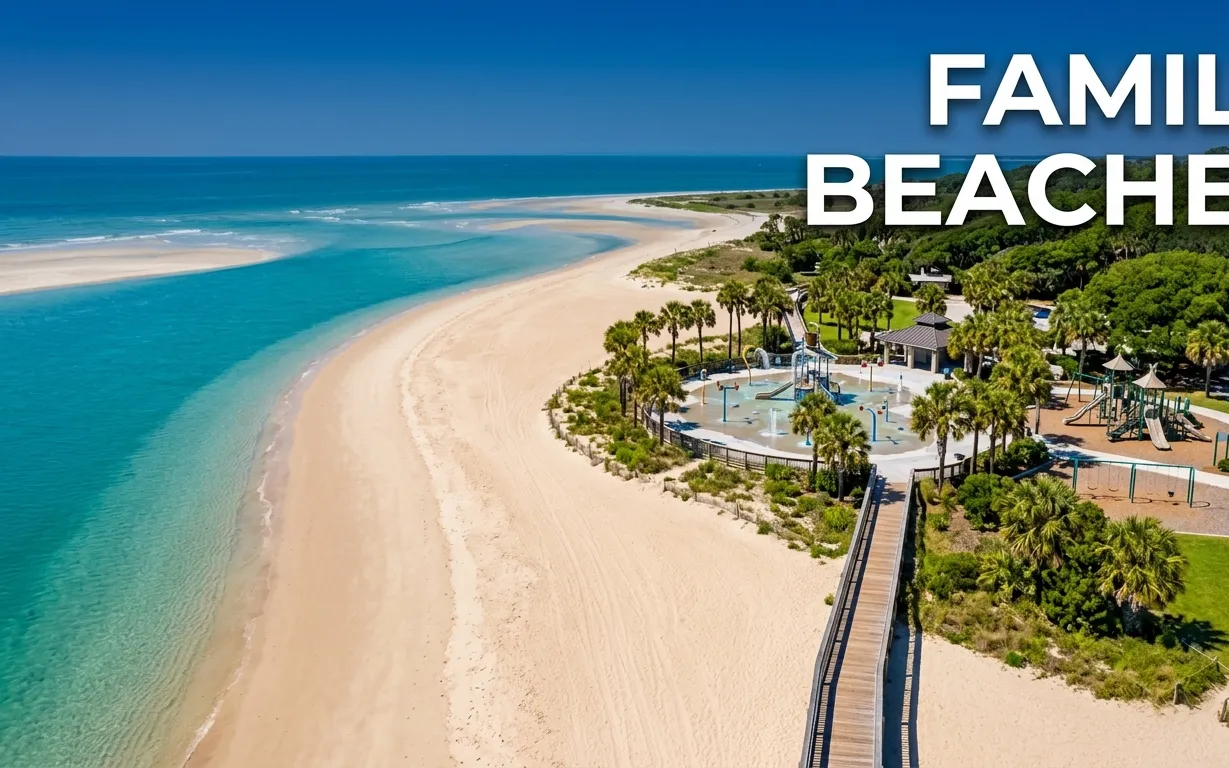
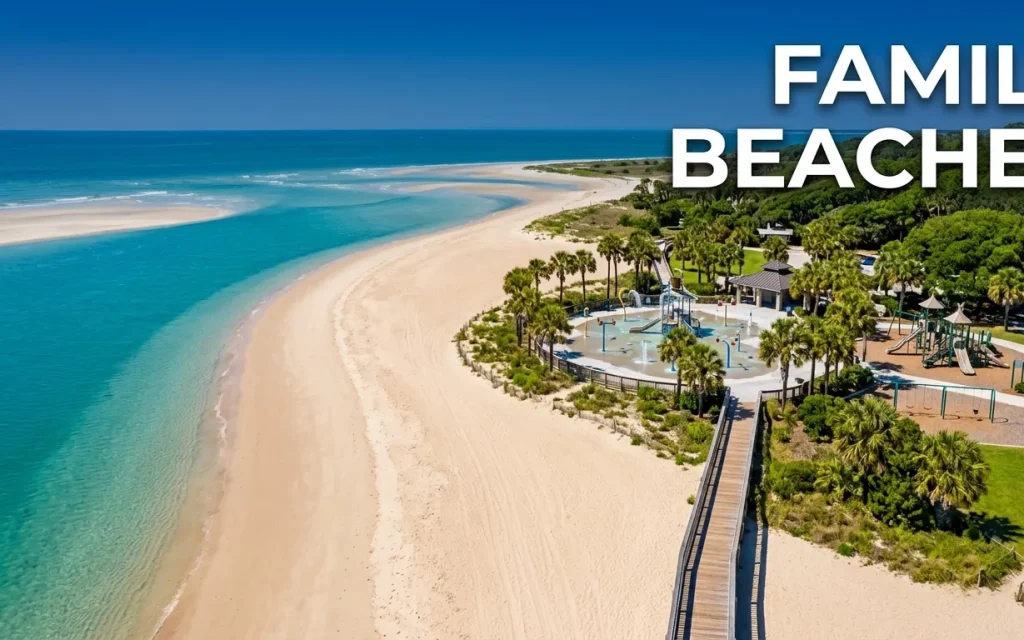
Coligny Beach Park on Hilton Head Island, South Carolina, is the most toddler-friendly beach on the entire East Coast. It has a splash pad, a playground, swings, and pristine restrooms directly at the sand entry point.
The water is a warm 80-85 degrees in the summer, with a very gentle, gradual slope. A family with a one-year-old and a four-year-old can spend an entire day here without a single meltdown.
Tybee Island near Savannah, Georgia, is a simpler, more rustic version of the experience. The vibe is laid-back and unpretentious, with a long, flat beach and a historic pier.
Hilton Head’s Coligny Beach is the single best beach infrastructure for a family. The complex of park, splash pad, and beach is a genius piece of civic design for parents.
Cape Cod’s Best Beaches for Families
Cape Cod’s family beach experience is defined by a single choice. You are either on the calm, warmer bayside or the freezing, shark-patrolled ocean side.
Mayflower Beach on Cape Cod Bay is the supreme bayside choice for its tidal flats. The endless shallow, warm pools at low tide are nature’s perfect toddler play zone.
Coast Guard Beach in Eastham is the stunning, dramatic, and risky ocean-side choice. It is regularly ranked among the most beautiful beaches in the US, but the water is cold and the surf is powerful.
The presence of a large seal population has drawn great white sharks close to shore. Swimming at dusk and dawn is strictly prohibited, and a parent must have a heightened sense of awareness.
For a family with a boat, the beaches on the outer Cape are magnificent. For a family with a toddler and a bucket, the bay side is a non-negotiable, safer, and far warmer choice.
The difference in water feel between these two beaches, just a few miles apart, is twenty degrees. That twenty-degree difference is the entire game with a small, shivering child.
Key Takeaway: Cape Cod with kids is a simple choice: warm, calm bay or cold, shark-patrolled ocean.
Outer Banks Family Beaches: The Complete Guide
The Outer Banks are a 200-mile string of barrier islands off the coast of North Carolina. They offer the most diverse, adventurous, and affordable family beach trip on the East Coast.
Duck and Corolla in the northern Banks are the quiet, upscale family enclaves. The beaches here are wide, clean, and backed by dunes where wild Spanish mustangs roam.
Emerald Isle in the southern Banks has the calmest, clearest water due to its orientation. It faces south, away from the prevailing winds, making it a haven for families with young body-surfers.
The Outer Banks are famous for their lack of massive commercial development. You rent a house with a kitchen and cook local shrimp, which is a huge value win for a large family.
The single biggest mistake is not understanding the rip current risk on the ocean side. The sound side is perfectly calm but can have a mucky, grassy bottom that picky swimmers will hate.
The value proposition of a seven-bedroom house in Duck is unbeatable for a multi-generational family reunion. That same money buys you one hotel room on Martha’s Vineyard.
Florida Family Beaches on the Gulf Coast
The Gulf Coast of Florida is the safest, warmest, and most visually stunning beach in the continental United States for a toddler. The water is bath-warm, the sand is white, and the waves are often nonexistent.
Fort De Soto Park in Tierra Verde is the single best family beach infrastructure in Florida. The park has a massive pirate-ship playground, a dog beach, a historic fort, and a calm, shallow lagoon.
The water in the protected North Beach lagoon is only knee-deep for a huge area. A toddler can sit in the 85-degree water and play without a single wave knocking them over.
Siesta Key Public Beach has sand that is 99% pure quartz crystal. It feels like walking on cold, powdered sugar, and it never gets hot, even under a blazing Florida sun.
Clearwater Beach is a classic, lively resort strip with soft sand and calm water. The nightly sunset festival on the pier is a free, joyful, and memorable family event.
A family of five can have a spectacular, zero-stress beach week on the Gulf Coast. The only risk is a passing afternoon thunderstorm, which you can see coming for an hour.
Best East Coast Boardwalk Beaches for Families
A boardwalk transforms a beach trip from a simple swim into a full-blown sensory family event. It is the fries, the rides, and the neon lights that fill the hours after the sun goes down.
Rehoboth Beach, Delaware, has the cleanest, most charming, and most family-friendly boardwalk on the entire East Coast. It is a mile of shops, pizza, salt water taffy, and a classic wooden amusement park.
Ocean City, Maryland, has a longer, louder, and more chaotic three-mile boardwalk. The vibe is pure, high-energy Americana, and kids from eight to eighteen will be in heaven.
Wildwood, New Jersey, has a boardwalk so wide it feels like a vast, wooden boulevard. The beach is famous for being so absurdly wide that the walk to the water with a toddler in your arms is a legitimate workout.
Myrtle Beach, South Carolina, is the modern, neon-lit, chain-driven version of the boardwalk. It is a sensory overload of arcades, souvenir shops, and a massive SkyWheel.
A family with a teenager who has outgrown sandcastles will find the perfect fit on a boardwalk. The beach is the day activity, and the boardwalk is the main event.
Key Takeaway: A boardwalk turns a family beach trip into a 12-hour entertainment marathon.
Calm Water Beaches for Toddlers on the East Coast
The single most important factor for a toddler beach is the absence of waves. A perfect toddler beach has a natural geography that creates a calm, shallow lagoon.
The best calm-water toddler beaches on the East Coast are all defined by a protective sandbar or a sheltered bay. They are found by looking for the word “sound,” “bay,” or “lagoon” on a map.
- Coligny Beach Park, Hilton Head, SC: A gentle, flat slope with warm water and a splash pad at the sand. The ultimate zero-wave, high-amenity setup.
- Fort De Soto North Beach Lagoon, FL: A massive, shallow, pool-like lagoon with bath-warm water. It has no waves and no boat traffic.
- Mayflower Beach, Cape Cod, MA: The vast low-tide flats create miles of warm, ankle-deep water. The tidal cycle itself becomes the day’s entertainment.
- Cape Henlopen State Park Bay Beach, DE: A calm, protected bay facing inside the Delaware Bay. The surf is nonexistent, and the sand is soft.
- Duck Soundside, NC: The shallow, warm water of the Currituck Sound offers perfect kayaking and splashing. It’s a safe, peaceful escape from the ocean’s waves.
East Coast Beach Parking, Tags, and Access Guide
The greatest threat to a happy family beach day is the parking lot. The logistics of getting from the car to the sand with all your gear can break a parent by 10 a.m.
Most top New England and New Jersey beaches require a daily or weekly beach tag purchased at a municipal office. In 2026, many towns have shifted to a mobile app system, but you must verify before you walk on the sand.
Parking at a prime beach like Coast Guard Beach on Cape Cod fills before 9 a.m. in July. You will be turned away and directed to a satellite lot, where you must wait for a shuttle bus with a hot, screaming child.
The game-changing strategy is to book a rental within walking distance of a beach access path. Pay the premium for a house one block from the sand and delete the parking nightmare from your life entirely.
A beach wagon with large, balloon-style wheels is not a luxury item. It is an essential tool for hauling the chairs, the tent, the cooler, and the sleeping toddler across 200 yards of deep, soft sand.
Rip Current Safety for Families: What to Know
Rip currents are the number one public safety risk on East Coast beaches. They are powerful, narrow channels of water flowing away from shore that can sweep a child off their feet in seconds.
According to the United States Lifesaving Association, rip currents account for over 80% of all rescues at surf beaches. An adult can be pulled off a sandbar in seconds.
The safety protocol for a family with a young child is simple and absolute. Never let a child enter water above their knees without an adult holding their hand.
Always swim at a beach with a lifeguard on duty and obey the colored warning flags. A red flag means the water is closed, and entering it with a child is a reckless, life-threatening act of parental negligence.
If you are caught in a rip, do not fight it directly. Swim parallel to the shore until you are out of the narrow current, and then swim back to the beach at an angle.
Teach your child the phrase: “Flip, Float, and Follow.” If they are ever in trouble, they should flip onto their back, float to breathe and calm down, and follow the current’s exit path.
Key Takeaway: A lifeguard’s red flag is a non-negotiable no. Do not second-guess it, ever.
Best Time for an East Coast Family Beach Trip
The absolute sweet spot for a family trip to the Mid-Atlantic and Southeast is the last two weeks of August. The ocean water has had all summer to warm up to its peak temperature.
The oppressive July crowds have already started to thin out as local schools return for the year. You get the warmest water of the year combined with a slightly less crowded beach.
The worst time for a trip north of the Carolinas is early June. The air is beautiful, but the ocean is still a frigid 60 degrees from the winter, which is a shock to a small body.
September is the secret, golden month of the East Coast beach. The water is still warm, the room rates drop, and the light is a perfect, golden photographer’s dream.
Hurricane season peaks in September and early October for the Southeast and Gulf Coast. You must book refundable accommodation and buy travel insurance with a named-storm clause.
| Month | Water Temp (Mid-Atlantic) | Crowds | Family Verdict |
|---|---|---|---|
| June | 65-70°F | Medium | Too cold for young swimmers north of VA. |
| July | 72-78°F | Extreme | Prime weather, but peak crowds and prices. |
| August | 78-80°F | High | The sweet spot for the warmest water. |
| September | 75-78°F | Low | The golden month, but a hurricane risk exists. |
The Ultimate Family Beach Packing List for 2026
A well-packed bag is the difference between a joyful family beach day and a miserable one. You are packing for a mobile nursery and kitchen on a patch of hot sand.
- A Pop-Up Sun Shelter: A lightweight, SPF-rated canopy is the most critical item for a baby. It creates a shaded home base and prevents a midday heatstroke meltdown.
- A Heavy-Duty Beach Wagon: The one with large, wide balloon wheels for deep, soft sand. This single tool will save your back and your sanity.
- Mineral Sunscreen Sticks: A zinc oxide stick is the easiest way to apply sunscreen to a squirming child’s face. It will not run into their eyes and sting.
- Microfiber Towels: They dry fast and shake off sand easily. A thick cotton terry towel just becomes a heavy, wet, sandy mess.
- A Thermos of Ice Water: Leave the individual plastic bottles at home. A single frozen gallon jug of water will provide ice-cold drinking water for the whole day.
- Baby Powder: The ultimate, cheap secret weapon. Sprinkle it on sandy, sticky skin, and the sand brushes off like magic.
Frequently Asked Questions About East Coast Family Beaches
What is the best beach on the East Coast for families with toddlers?
Coligny Beach Park on Hilton Head Island, SC, is the best beach for toddlers.
It has a splash pad and playground directly at the clean, accessible sand entry.
The water is warm, the slope is very gentle, and the summer surf is minimal.
Are East Coast beaches warm enough to swim in the summer?
The water gets warm enough for a comfortable, full-day swim from the Carolinas southward.
The Gulf Stream warms the water to a bath-like 80-85°F by late summer on the Southeast coast.
Beaches in New England are frigid, with water temperatures peaking at a bracing 68°F in August.
What is the safest beach for kids on the East Coast?
A calm, lifeguarded beach on a sheltered bay is the safest choice for children.
Fort De Soto Park’s North Beach lagoon in Florida has no waves and a very shallow, warm entry.
A beach with a lifeguard, a red flag warning system, and no sudden drop-offs is the standard.
Do you have to pay to get on beaches on the East Coast?
Many popular New Jersey and Delaware beaches require a daily beach tag purchased per person.
Tags typically cost $5 to $10 per person per day, and they must be displayed on your chair.
Most public beaches in the Southeast and Florida are free to access, but you pay for parking.
What is the best time of year to take a family beach trip?
The last two weeks of August are the best time for the warmest ocean water and smaller crowds.
September offers the same warm water with much lower prices and a lower hurricane risk.
Avoid early June on any beach north of Virginia if you want to swim without being in pain.
What should I pack for a day at the beach with kids?
A pop-up sun shelter, a heavy-duty beach wagon, and a zinc oxide sunscreen stick are essential.
Pack a frozen gallon of water as an ice block for cold drinking water all day long.
Baby powder is the secret weapon for brushing wet, sticky sand off a child’s legs and feet.
The Smartest 2026 Family Beach Strategy
The perfect family beach is a formula of calm water, close parking, and a lifeguard you can see from your towel. The view is secondary to your child’s safety and your own parental stress level.
Before you book anything for 2026, pull up a satellite map and look for a sheltered bay or a lagoon. Coligny Beach for its splash pad and Mayflower Beach for its tidal flats are the two safest bets on the entire East Coast.
Verify the specific 2026 beach tag policy and the parking lot distance directly on the town’s official website. These small logistical details are subject to last-minute changes that can redefine a trip.
Get the wagon, check the tide chart, and pick a beach where the water is shallow and the day is long.