Athens Beaches
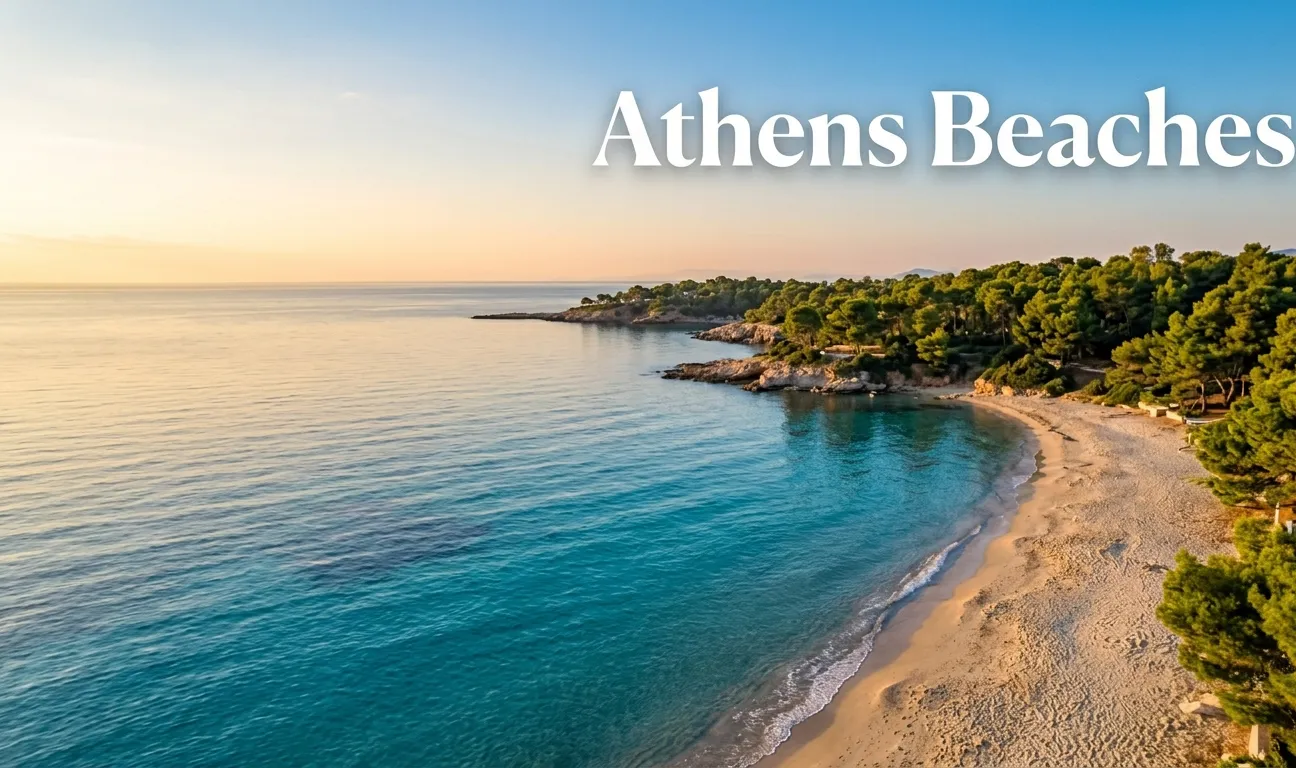
Athens beaches are on the Saronic Gulf coast. The water is clean, calm, and safe for swimming.
The Athens coastline is approximately 70 kilometres long. This makes it the longest coastline of any European capital .
The best beaches are south of the city center. Vouliagmeni, Glyfada, Voula, and Cape Sounio have the highest quality options.
Many beaches have Blue Flag certification for 2026. This means excellent water quality, safety, and facilities .
The beaches fall into three categories. Organized sandy beaches with sunbeds, rugged coves with no facilities, and the unique thermal Lake Vouliagmeni.
Athenians flock to the coast from June through September. Arrive early (before 10 AM) to secure sunbeds on summer weekends.
Athens Greece Beaches
Athens Greece beaches are surprisingly good. The city combines ancient history with modern coastal living .
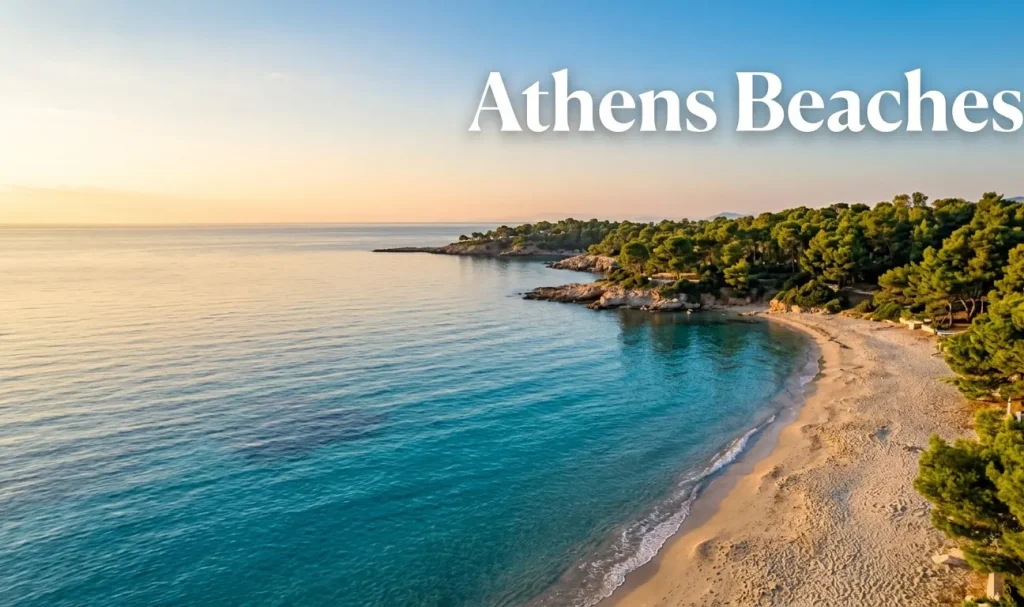
The Greek capital sits on the Attica peninsula. The southern coast faces the Saronic Gulf and the Aegean Sea.
Unlike Greek islands, Athens beaches are on the mainland. This means easy access by tram, bus, or rental car.
The most famous stretch is the “Athenian Riviera.” This runs from the port of Piraeus down to Cape Sounio .
The Riviera has pine forests, hidden coves, and laidback tavernas. Upscale neighborhoods with elegant hotels line the coast.
Winter swimming is possible for the brave. Sunny seaside lunches happen year-round, even in January .
Summer water temperatures reach 25-26°C (77-79°F). July and August are peak season with warmest swimming.
Are There Beaches in Athens
Yes, there are beaches in Athens. Many first-time visitors are surprised by this fact.
Athens is not just the Acropolis and museums. The city has a thriving coastal culture.
The closest beaches are 20-30 minutes from Syntagma Square. Palaio Faliro, Flisvos, and Edem are easily reached by tram .
These urban beaches are clean and have facilities. They are not the most beautiful, but they are convenient.
Better beaches require going further south. Vouliagmeni, Voula, and Glyfada are 45-60 minutes from the center.
The best beaches are at Cape Sounio. The 1.5-2 hour drive rewards you with temple views and crystal water .
Local Athenians go to the beach all year. Swimming is best June through September, but walking and seaside lunches happen every month .
| Beach Category | Location | Travel Time from Center | Best For |
|---|---|---|---|
| Urban | Palaio Faliro | 20-30 min tram | Quick convenience |
| Riviera | Vouliagmeni | 45-60 min tram/car | Organized facilities |
| Secluded | Cape Sounio | 1.5-2 hours car | Temple views, adventure |
Best Beaches Near Athens Greece
The best beaches near Athens Greece for 2026 are Blue Flag certified. Seventeen beaches in Attica received this award in 2026 .
Blue Flag means excellent water quality, safety, and environmental management. Look for the blue flag flying at these beaches.
On the Athenian Riviera, Vouliagmeni, Voula A, and Glyfada (A and B) earned Blue Flags. These are the most accessible high-quality options.
Astir Vouliagmenis Beach also received a Blue Flag for 2026 . This is one of the most exclusive beach clubs on the Riviera.
Further south, Lagonisi has three awarded beaches. Grand Beach, Mediterraneo, and Kochylia are all within the Grand Resort Lagonissi.
On the east coast, Avlaki Beach in Markopoulo earned a Blue Flag. Porto Rafti visitors should prioritize this beach.
For a unique experience, Lake Vouliagmeni has thermal waters year-round. While not a Blue Flag beach, it is a must-visit attraction.
Kinetta Beach on the west coast of Attica also received a Blue Flag. This is farther from Athens but less crowded.
Beaches in Athens Greece
Beaches in Athens Greece vary from urban to wild. The Athenian Riviera has something for every travel style.
Vouliagmeni is the most famous beach suburb. The area has sandy shores, calm waters, and a playground for kids .
Glyfada is an upscale neighborhood with grand mansions. The beaches here are quieter because the road is set back .
Voula has both organized and free sections. The free beach is popular with locals, while the organized area has amenities.
Palaio Faliro is the closest to central Athens. Flisvos, Batis, and Edem beaches have showers, umbrellas, and toilets .
Alimos has Kalamaki and Akti Iliou beaches. The Bolivar Beach Club here offers food, lounges, and international DJs .
Lake Vouliagmeni is a unique natural attraction. The brackish water stays warm year-round from thermal springs .
For adventurous swimmers, head to Cape Sounio. KAPE Beach sits beneath the Temple of Poseidon with 100 steps down to the water .
Key Takeaway: The best beach depends on your transport. Tram for Palaio Faliro to Voula. Car for Vouliagmeni to Sounio.
Vouliagmeni Beach
Vouliagmeni Beach is one of Athens’ most popular coastal spots. The sandy shores and calm waters attract families and couples.
The beach is located close to central Athens. Go early in the morning to find an umbrella and chairs .
There is a small fee to rent a chair at the beach. The facilities include snacks, drinks, and Greek frappé coffee.
A playground for kids keeps children entertained. Lawns where you can play racket ball are available.
Free WiFi is provided for beachgoers. You can easily spend the entire day here without getting bored.
Vouliagmeni Beach has a Blue Flag for 2026 . The water quality and safety standards are excellent.
The beach is accessible by public transport. Tram line reaches Vouliagmeni from central Athens in approximately 60 minutes.
Alternatively, the hop-on hop-off bus has a Green Line to Vouliagmeni . This is convenient for tourists.
Vouliagmeni is best for families with children. The shallow entry and playground make it ideal.
Couples seeking romance should consider Lake Vouliagmeni instead. The lake is more unique and intimate.
Lake Vouliagmeni
Lake Vouliagmeni is not a beach. It is a natural thermal lake with brackish water from underground springs .
The lake sits above one of the most complex cave systems in the world. The water comes from both sea and thermal springs on Mount Hymettus.
The temperature stays between 22-29°C (72-84°F) year-round. This makes it swimmable even in winter .
Garra Rufa fish live in the lake. These “doctor fish” nibble dead skin for a natural pedicure experience.
The entrance fee is approximately €15 per person . You pay the full fee even if no lounge chairs are available.
Arrive early to secure a spot. The lake is popular with both tourists and locals.
Lake Vouliagmeni is best for couples and wellness travelers. The thermal waters are healing and romantic.
Families with young children should choose the nearby sandy beach instead. The lake has rocky edges and no shallow sandy entry.
From Athens, take the tram or hop-on hop-off bus to Vouliagmeni. The lake is a short walk from the main beach area .
Insider Tip: Visit Lake Vouliagmeni in the late afternoon. The sun hits the water beautifully, and crowds thin out after 4 PM.
Glyfada Beach
Glyfada Beach is located just south of Athens. The stretches of azure waters are lined by golden sand .
The neighborhood of Glyfada is upscale with grand mansions. The beach area is quieter because the main road is set back .
Visitors can explore many beach bars and restaurants. Chairs can be rented for a small price.
Glyfada Beach has three Blue Flag sections for 2026. Glyfada, Glyfada A, and Glyfada B all received the certification .
The tram from Syntagma Square takes approximately one hour to reach Glyfada. The stop is Plateia Vergoti or Paralia Glyfadas .
Glyfada is best for travelers who want upscale amenities. The area has fancy bars and elegant restaurants.
Budget travelers may prefer Voula or Palaio Faliro. Glyfada is more expensive than other Riviera beaches.
The beach can be reached by the Yellow Line of the hop-on hop-off bus. This route covers the Athenian Riviera from the Planetarium to Glyfada .
Glyfada is also a shopping destination. The town center has international brands and Greek designers.
Astir Beach
Astir Beach is one of the most exclusive beach clubs in Greece. It is set on 300 metres of coastline in Vouliagmeni .
The beach is located on the Laimos peninsula. The crystal blue waters and pristine facilities justify the premium entry fee.
Astir Vouliagmenis received a Blue Flag for 2026 . The water quality is exceptional.
The beach offers changing rooms, showers, and a self-serve restaurant. Three bars serve drinks throughout the day.
Water sports are available for active visitors. Trampolines and a playground keep children entertained.
Astir Beach is part of the Four Seasons Astir Palace complex. The hotel is a 1960s modernist landmark transformed into luxury accommodation .
Day visitors can access the beach for a fee. Cabanas and beach bungalows with private plunge pools are available for hotel guests .
The Four Seasons also has Taverna 37 for seaside dining. The cold mezze platter and Assyrtiko wine are excellent choices .
Astir Beach is best for luxury travelers and special occasions. Budget travelers should choose public beaches nearby.
Voula Beach
Voula Beach is the final stop on the tram line from central Athens . The journey takes approximately one hour from Syntagma.
The beach has both an organized paid section and a free section. Budget travelers can enjoy the same water without paying.
Voula A received a Blue Flag for 2026 . The water quality is excellent in the organized section.
Next to Voula Beach is Pikpa, a nudist beach on a rocky peninsula. The area has trees, shrubs, and rocks with clear water views .
Pikpa has no sand, so swimmers jump directly from the rocks. It can be very hot, so visit in the afternoon.
The nudist beach is popular with the LGBT+ community. It is isolated, quiet, and has no facilities.
Bring your own food and water to Pikpa. There are no shops or snack bars.
Voula is best for budget travelers who want Blue Flag quality. The free section offers the same water as the paid area.
Families should use the organized section. The free area has fewer amenities for children.
Cape Sounio Beaches
Cape Sounio is the southern tip of the Attica peninsula. The area is known for dramatic landscapes and the ancient Temple of Poseidon .
The temple was built around 400 BC. It sits on a cliff 60 metres above the Aegean Sea.
Lord Byron carved his name into the temple’s stone. The site is one of Greece’s most important archaeological landmarks.
Beaches near Sounio include Legrena Beach and Pounta Zeza Beach. These offer a more rugged and secluded setting than beaches closer to Athens .
The water is crystal clear at Cape Sounio. The beaches have small pebbles rather than sand.
For a unique experience, combine temple exploration with swimming. Visit the archaeological site first, then descend to the beach.
Sounio is famous for its sunsets. As the sun descends over the Aegean, the cliffs and waters are illuminated in golden light .
Akrogiali Taverna sits in the shadow of the temple. Get a table in the sand for sunset with grilled fish and ouzo .
Cape Sounio is best reached by car or tour bus. The KTEL Attikis bus from Pedion Areos Park takes 1.5-2 hours .
Key Takeaway: Cape Sounio combines Greece’s two greatest assets: ancient history and stunning coastline. Do not miss this day trip.
KAPE Beach
KAPE Beach is hidden beneath the Temple of Poseidon at Cape Sounio. It is emerging as one of Greece’s most spectacular coastal escapes for 2026 .
The name KAPE comes from a Greek acronym for Centre for Renewable Energy Sources. The beach is not widely known by tourists.
Located less than two hours from central Athens, KAPE combines crystal-clear waters with rugged landscapes. The setting beneath the ancient temple is dramatic .
To reach the beach, you must descend approximately 100 steps . The hike down is steep but rewards you with seclusion.
Parts of the beach are known for naturist visitors. The growing popularity comes from the remarkable scenery, not facilities.
There are no beach bars, restaurants, or sunbed rentals at KAPE. Bring your own umbrella, food, and water .
The beach has small pebbles rather than sand. Water shoes are recommended for comfort.
KAPE is best for adventurous travelers and couples seeking privacy. The secluded coves feel like a hidden treasure.
Families with young children should choose organized beaches instead. The stairs and lack of facilities make KAPE challenging.
Visit KAPE after touring the Temple of Poseidon. The combination of history and coastal beauty is unique in Europe .
Limanakia Beach
Limanakia Beach is located in Vouliagmeni. The name means “little ports” in Greek.
The beach is a popular meeting point for young people. They come to enjoy the sea and the sun .
From the main road, you must go downhill. The scenery has rocky terrain with crystal clear emerald waters.
Limanakia has no sand. Only rocky terrain lines the coast .
To swim, you must dive in right away. There is no gradual entry into the water.
The beach is particularly popular among younger people. The rocky diving spots are fun for adventurous swimmers.
There are no facilities at Limanakia. Bring your own food, water, and shade.
Reach Limanakia by car from central Athens in approximately 40 minutes . Public transport does not go directly to this cove.
The beach is best for young adults and adventure seekers. The rocky coastline is not suitable for small children or elderly visitors.
Local Athenians have been coming here for generations. Respect the natural environment and take your rubbish with you.
Beaches Near Athens Greece by Transport
Beaches near Athens Greece by public transport are surprisingly accessible. The tram system is your best option.
The tram departs from Syntagma Square in central Athens. It reaches Palaio Faliro beaches (Flisvos, Edem) in 30 minutes .
Continuing south, the tram reaches Glyfada in approximately 60 minutes. Voula is the final stop on the line .
The tram has stops at Flisvos, Batis, Edem, Kalamaki, and Akti Iliou. All have showers, umbrellas, and toilets .
For Cape Sounio and KAPE Beach, take the KTEL Attikis bus. Buses depart from the parking lot in front of Pedion Areos Park, north of Omonia .
The bus journey to Sounio takes 1.5-2 hours. This is best done as a full-day trip.
For car rental, the drive from central Athens to Vouliagmeni takes 30-40 minutes. Cape Sounio is 1.5-2 hours via the coastal road .
The coastal drive itself is part of the attraction. You pass through seaside communities, marinas, and waterfront viewpoints .
Taxis from central Athens to Vouliagmeni cost approximately €25-35 one way. To Sounio, expect €60-80.
| Transport | Destinations | Travel Time | Cost |
|---|---|---|---|
| Tram | Palaio Faliro to Voula | 30-60 min | €1.20 |
| Bus (KTEL) | Sounio | 90-120 min | €6-8 |
| Car | Vouliagmeni | 30-40 min | Variable |
| Taxi | Vouliagmeni | 30-40 min | €25-35 |
When to Visit Athens Beaches
When to visit Athens beaches determines water temperature and crowds. June through September is the best window.
Water temperatures reach 25-26°C (77-79°F) in July and August. This is the warmest and most comfortable swimming .
July and August have the largest crowds. Arrive at beaches before 10 AM to secure sunbeds.
September has warm water with smaller crowds. Water stays above 24°C (75°F) through mid-September.
May and October are shoulder months. Water temperatures are 19-21°C (66-70°F), comfortable for some but cold for others.
The long Greek summer means beach season extends beyond calendar summer. Locals swim from May through October.
Winter swimming (November through April) is for the brave. Water temperatures drop to 15-18°C (59-64°F).
The Athens Riviera is pleasant year-round for coastal walks. Sunny seaside lunches happen even in January .
Check wind conditions before heading to the beach. Strong winds can make swimming uncomfortable and stir up sand.
| Month | Water Temp (°C) | Water Temp (°F) | Crowds | Verdict |
|---|---|---|---|---|
| May | 19-21 | 66-70 | Low | Good for locals |
| Jun | 22-24 | 72-75 | Moderate | Best value |
| Jul-Aug | 25-26 | 77-79 | Peak | Warmest water |
| Sep | 24-25 | 75-77 | Low | Best overall |
| Oct | 21-23 | 70-73 | Low | Good for some |
Key Takeaway: September is the best month for Athens beaches. Warm water, smaller crowds, and lower accommodation prices.
Safety and Seasonal Warnings for Athens Beaches
The Athenian sun is intense from June through August. High-SPF sunscreen, hats, and hydration are essential.
Jellyfish can appear in the Saronic Gulf during summer. Their presence depends on currents and weather.
Sea urchins hide in rocky areas at beaches like Limanakia and KAPE. Wear water shoes when entering from rocks.
The tram to beaches can be crowded in July and August. Services run frequently, but peak hours (9-11 AM) are packed.
Parking at popular beaches like Vouliagmeni and Glyfada fills by 10 AM on summer weekends. Arrive earlier or use public transport.
At KAPE Beach, the 100-step descent is safe but steep. Wear sturdy sandals and take your time .
At Limanakia, there is no sand and no gradual water entry. Non-swimmers should avoid this beach.
At Lake Vouliagmeni, the water is deep near the cave entrance. Non-swimmers should stay in the shallower areas near the entry.
For emergencies, dial 112. This works for police, ambulance, and fire services throughout Greece.
Frequently Asked Questions About Athens Beaches
Does Athens have beaches?
Yes, Athens has beaches. The city has the longest coastline of any European capital, stretching approximately 70 kilometres from Piraeus to Cape Sounio . The Athenian Riviera offers sandy beaches, organized beach clubs, and secluded coves within 30-60 minutes of the city center.
Which Athens beach has a Blue Flag for 2026?
Seventeen beaches in Attica received Blue Flags for 2026 . On the Athenian Riviera, Astir Vouliagmenis, Voula A, Glyfada, Glyfada A, and Glyfada B are certified. Lagonisi has three certified beaches. Avlaki in Porto Rafti and Kinetta on the west coast also earned Blue Flags.
What is the closest beach to Athens city center?
Palaio Faliro beaches (Flisvos, Batis, Edem) are the closest to central Athens. The tram from Syntagma Square takes approximately 30 minutes . These urban beaches have showers, umbrellas, and toilets.
Can you swim at Lake Vouliagmeni year-round?
Yes, Lake Vouliagmeni maintains a constant temperature of 22-29°C (72-84°F) year-round due to thermal springs . This makes it swimmable even in winter. The entrance fee is approximately €15 per person.
Which Athens beach is best for families with children?
Vouliagmeni Beach is best for families. The sandy shores and calm waters are safe for young children. A playground is available, and there are lawns for racket sports . The beach has a Blue Flag for 2026 .
How do you get to the beaches near Athens by public transport?
The tram from Syntagma Square reaches Palaio Faliro (30 minutes), Glyfada (60 minutes), and Voula (final stop) . For Cape Sounio, take the KTEL Attikis bus from Pedion Areos Park (1.5-2 hours) . The hop-on hop-off bus also has a Riviera route .
Athens beaches are a genuine surprise for most visitors. The city combines ancient history with a thriving coastal culture.
The Athenian Riviera stretches 70 kilometres from Piraeus to Cape Sounio. You can swim, sunbathe, and see the Temple of Poseidon in one day.
Seventeen beaches in Attica have Blue Flag certification for 2026 . These are the cleanest and safest choices.
Choose Vouliagmeni for family-friendly sandy shores. Choose Lake Vouliagmeni for year-round thermal swimming.
Choose KAPE Beach for adventure beneath the temple. Choose Glyfada for upscale amenities.
Use the tram for Palaio Faliro to Voula. Rent a car for Vouliagmeni to Sounio.
September offers warm water with smaller crowds. July and August have peak heat and peak tourists.
The right beach depends on your transport and travel style. Urban beaches for convenience. Riviera beaches for quality. Sounio for drama.
Book your beach day around your Acropolis visit. The combination is what makes Athens unique.
Enjoy the coast. Swim in the Saronic. And remember that Athens is more than just the cradle of Western civilization.
It is also a seaside city with Blue Flag beaches waiting for you.