Best Beaches of Costa Rica for 2026: Pacific vs. Caribbean
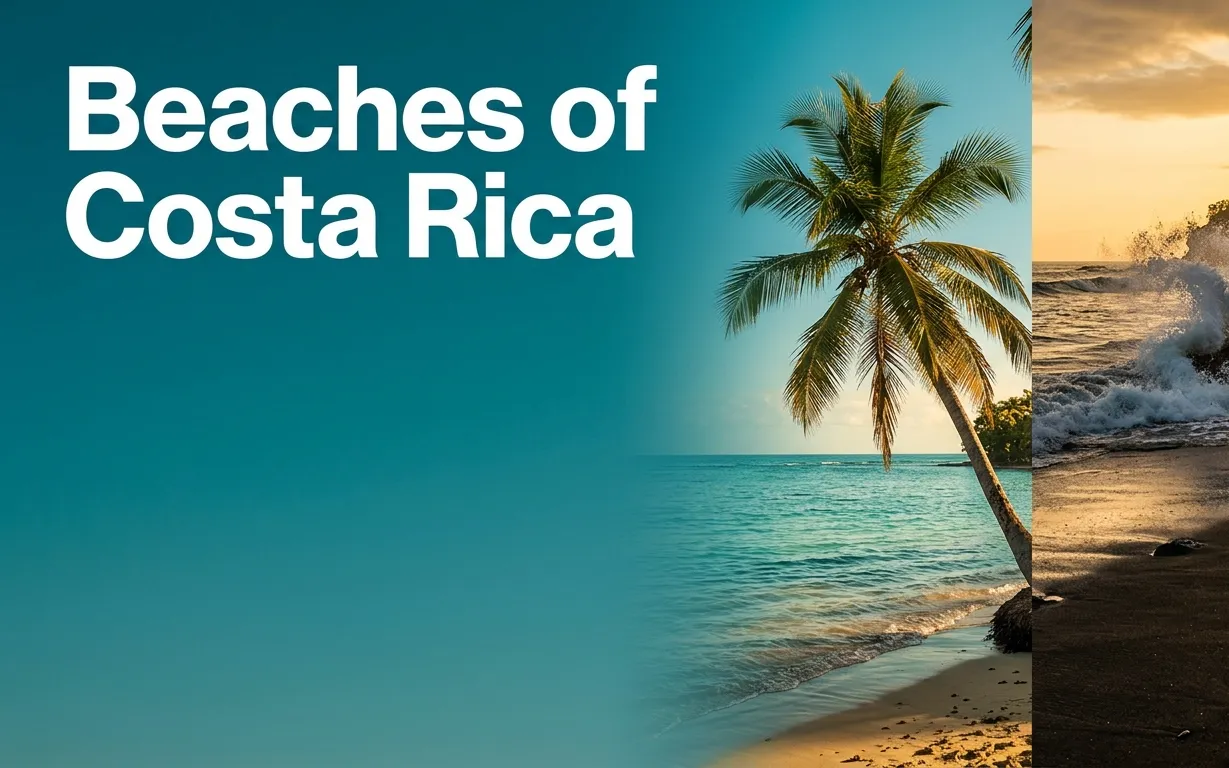
Costa Rica has two completely different beach personalities split by a mountainous spine. The Pacific side is a rugged, surf-pounded stage for sunsets. The Caribbean side is a calm, reggae-infused postcard of turquoise water.
The Costa Rica Tourism Board (ICT) protects all beaches as public land up to 50 meters from the high tide line. No resort can legally own the sand here.
This guide forces you to answer the one question every other guide skips. Should you commit your entire trip to the Pacific or the Caribbean? You cannot do both well in a single week.
Costa Rica Beaches: The Honest Reality Check
Yes, Costa Rica has spectacular, world-famous beaches and they are a primary reason to visit. But they do not look like the uniformly white sand and turquoise water of a Cancun hotel zone. They are wilder and more diverse.
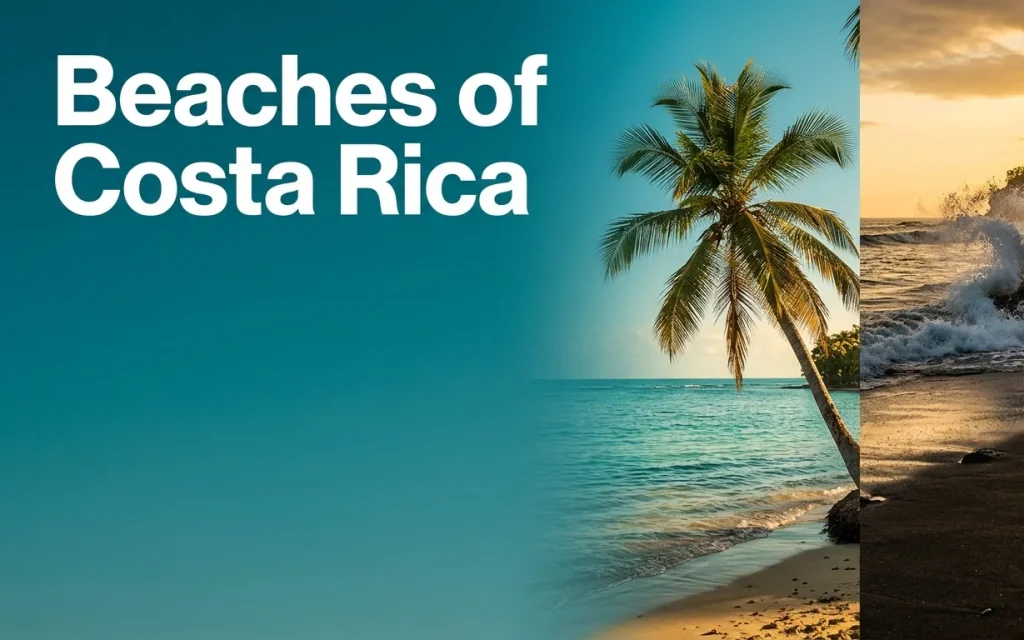
The sand ranges from volcanic black to crushed-shell white and powdery beige. The water alternates between powerful, dark-blue barrels and bath-calm reef-protected lagoons. A single beach can change dramatically from a placid swimming pool in the morning to a thundering closeout by afternoon.
Budget travelers must plan carefully. The most beautiful beaches are often ringed by ultra-luxury hotels or require a 45-minute hike. The classic Caribbean all-inclusive beach resort with a swim-up bar barely exists here.
Pacific vs. Caribbean: Which Coast Is Right for You?
Choose the Pacific Coast if you want guaranteed sun and world-class surf from December to April. The dry season here is as reliable as a Swiss watch. This coast is the right choice for a first-time visitor prioritizing ease and iconic sunsets.
Choose the Caribbean Coast if you want lush, rainforest-backed beaches with calm, bath-warm turquoise water. The vegetation here literally drips into the sea. This is the authentic, less-developed, reggae-infused side of Costa Rica.
The mistake most travelers make is trying to split a one-week trip between both coasts. The drive from Tamarindo on the Pacific to Puerto Viejo on the Caribbean takes ten hours on a good day. You will lose two full vacation days to a windshield view of semi-trucks.
Key Takeaway: Pick a coast based on the season of your trip. The weather decides which side is paradise and which is a mud pit.
Best Beaches on the Pacific Side
The best beaches on the Pacific side are concentrated in the northwestern province of Guanacaste and the southern Nicoya Peninsula. The Guanacaste coast features a drier tropical dry forest landscape. The Nicoya Peninsula is a wetter, greener, and more bohemian jungle vibe.
| Beach Name | Best For | Sand/Water | Vibe | 4×4 Needed? |
|---|---|---|---|---|
| Playa Conchal | Swimming, Snorkeling | White Shells, Calm Blue | Luxury, Polished | No |
| Playa Tamarindo | Beginner Surf, Social | Beige Sand, Steady Waves | Bustling Town | No |
| Playa Santa Teresa | Expert Surf, Yoga | White Sand, Powerful Surf | Bohemian Hipster | Yes (Strongly) |
| Playa Hermosa | Families, Calm Swimming | Grey Sand, Gentle | Quiet Local | No |
| Playa Manuel Antonio | Wildlife, Scenery | White Sand, Green Water | Park Setting | No |
The Pacific side is also home to the Papagayo Peninsula, a gated luxury enclave. This is the only place in Costa Rica that feels like a curated, manicured resort compound. The Four Seasons Resort Costa Rica at Peninsula Papagayo sets the ultra-premium standard.
The Guanacaste Gold Coast
Playa Conchal is arguably the single most beautiful beach in Guanacaste. The sand here is not sand at all. It is billions of tiny, crushed white shells that shimmer like a pearl pavement in the sun.
The water is a protected, crescent-shaped bay in the lee of a rocky headland. The result is the clearest, calmest turquoise water on the entire Pacific coast. This is the best swimming and snorkeling beach for miles.
The catch for budget travelers is that the access road dead-ends at the five-star W Costa Rica Reserva Conchal. You must park at the nearby public lot in Brasilito and walk 20 minutes down the sand to reach Conchal. Do not try to bluff your way through the resort gate.
Playa Tamarindo is the polar opposite. It is a noisy, dusty, vibrant surf town with a long, flat crescent of beige sand. The surf here is the most consistent and forgiving on the coast for beginners.
Nicoya Peninsula Surf and Bohemian Beaches
Playa Santa Teresa is not a single beach but a seven-kilometer strip of connected white sand coves. The energy here is a gritty, upscale hybrid of Tulum and a jungle frontier town. Yoga studios and artisan coffee shops sit next to unpaved, potholed roads.
The surf at Playa Hermosa (not the Guanacaste one) is a fast, hollow, barreling wave for experts. Playa Santa Teresa itself offers a more manageable and playful wave for intermediate surfers. The tide change here is extreme, turning a surfable face into a shore break within two hours.
The 4×4 reality on the Nicoya is brutal. The last 15 kilometers of road to Santa Teresa from the Cabo Blanco ferry is a punishing washboard of loose rock and dust. A sedan will bottom out and leave you stranded.
Luxury seekers should book at Florblanca Resort, an architectural masterpiece built right into the jungle edge. Budget travelers should look for eco-cabanas in the jungle, a five-minute walk from the sand.
Manuel Antonio: Beach Meets Rainforest
Manuel Antonio National Park delivers the iconic Costa Rican postcard. White-faced capuchin monkeys descend from the rainforest canopy onto a perfect white sand crescent beach. The sand is a fine, bright powder that stays cool in the shade of the almond trees.
The swimming inside the protected park at Playa Manuel Antonio and Playa Espadilla Sur is wonderfully calm. A protective cove and offshore reef block the open Pacific swell. The water here is a murky jade green, not clear, because of the rich organic matter from the forest.
Families must understand that this is a structured, ticketed experience. SINAC, the national park authority, strictly limits daily entry to the park. You must buy your ticket online in advance for a specific time slot, and it often sells out by 8:00 AM during peak season.
Insider Tip:
- Book the 7:00 AM entry slot. The animals are most active then.
- Stay at Tulemar Resort, which has its own private beach access outside the park chaos.
- Do not feed the monkeys. A fed monkey is a dead monkey in park management’s eyes.
Best Caribbean Beaches in Costa Rica
The best Caribbean beaches in Costa Rica are south of Puerto Viejo de Talamanca in the Limon Province. This coastline is a straight, palm-fringed run of golden sand and transparent turquoise water. The entire strip from Playa Cocles to Punta Uva is a series of postcard-perfect coves.
Playa Punta Uva is the most beautiful and best for swimming. A living coral reef sits just offshore, flattening the waves into a placid lagoon. You can rent a kayak and paddle out to the reef break to snorkel with parrotfish.
Playa Cocles is the hub for surfing on this coast. The wave here is a heavy, challenging beach break. The world-famous Salsa Brava wave just offshore is a massive, shallow reef break for experts only.
A family with children should stay in Playa Punta Uva. The water is shallow and perfectly calm inside the reef. A couple seeking a romantic, rustic escape should book a treehouse-style room at Le Cameleon Boutique Hotel in Cocles.
Best Swimming Beaches With Calm, Clear Water
The best swimming beach on the Pacific is Playa Conchal for its protected, cove-like entry and absence of strong currents. The best swimming beach on the Caribbean is Playa Punta Uva for its bath-warm, reef-flattened lagoon. These are the two beaches where you can float on your back and not worry about the next wave.
Playa Hermosa in Guanacaste is the best calm-water beach for families with small children. The grey volcanic sand slopes so gradually that you can wade out 30 meters and still be at waist depth. The lack of a strong surf break means you won’t get sandblasted by rogue waves.
A common complaint on both coasts is the turbidity caused by river mouths after a heavy rain. Never swim directly in front of an estuary. The water is full of sediment, hides a deep drop-off, and can attract crocodiles.
According to the Costa Rica Tourism Board, many of the most photographed clear-water beaches have zero lifeguard presence. Do not mistake calm water for safe water. Hidden rip currents can form at any beach with a small river outflow.
Best Surfing Beaches for Every Skill Level
The best beginner surf beach is Playa Tamarindo. The wave is a rolling, forgiving, sandy-bottom break that reforms nicely on the inside. A dozen surf shops offer lessons and board rentals right on the sand.
Playa Avellanas, a 30-minute drive south of Tamarindo, is the best spot for an intermediate surfer. The wave peels more perfectly and is less crowded than the town break. The “Little Hawaii” section offers a long, fast right-hander over a reef.
Expert surfers must make a pilgrimage to Salsa Brava in Puerto Viejo on the Caribbean coast. It is a terrifyingly powerful, shallow slab of reef that detonates with a thick lip. It breaks hardest during the Caribbean dry season from February to March and September to October.
Playa Hermosa in the Central Pacific, near Jaco, is the most consistent heavy beach break on the continent. It is a pulsing, dark-sand tube that closes out with zero mercy. This is not a wave for the hesitant.
Best Beaches for Families
The single best family beach is Playa Hermosa in Guanacaste for its gentle, pool-like water entry. Manuel Antonio is the best for a wildlife-and-beach combo day that kids will never forget. The “monkeys on the beach” moment is a core memory machine.
The JW Marriott Guanacaste Resort & Spa sits on a spectacular, wide stretch of sand in Guanacaste. The property has a massive free-form pool that is the ideal zero-worry alternative to the Pacific’s strong surf. The limitation for families is the remote location, a 75-minute drive from Liberia airport.
A family with teenagers should pick Tamarindo for the social scene, surf lessons, and food variety. A family with toddlers should prioritize a secluded, calm beach like Playa Punta Uva or a resort pool.
A crucial warning for all parents is that the Pacific sand gets scorching hot by midday. The dark volcanic sand at a beach like Playa Hermosa can burn a child’s feet instantly. Always pack water shoes for the whole family.
Key Takeaway: Match the family beach to the age of your youngest child. Calm water is always the priority.
Most Beautiful and Secluded Beaches
The most beautiful beach on the Pacific is Playa San Juanillo, a secret tree-framed cove 90 minutes north of Tamarindo. Two rocky headlands frame a perfect white-sand crescent. A single giant ficus tree provides natural shade at the waterline.
The most beautiful beach on the Caribbean is Punta Uva. The water here is a true, photoshop-defying shade of jade and turquoise. The jungle behind the sand is alive with howler monkeys and sloths.
For a truly secluded, hard-to-reach gem, hike to Playa Cocalito in the Osa Peninsula. This is the wildest, most remote beach in Costa Rica. The hike from the Corcovado National Park ranger station takes two hours, and you will likely be the only person there.
These secluded beaches share a common warning for couples. Do not leave valuables in your rental car. The isolated parking areas are targets for smash-and-grab theft.
Santa Teresa vs. Tamarindo: An Honest Comparison
Santa Teresa is a raw, dusty, jungle-backed surf strip for the committed traveler. Tamarindo is an easy, developed, arid-climate surf town for the casual vacationer. The choice is a personality test.
Choose Tamarindo for convenience, beginner surf, and a lively social scene. It is a 75-minute drive from LIR airport on a fully paved road. The town is full of restaurants, bars, and shops that accept credit cards.
Choose Santa Teresa for a more romantic, bohemian, and physically active vacation. The road is unpaved and punishing, but the reward is a seven-kilometer stretch of perfect white sand coves. The yoga scene here is world-class, with weekly retreats and drop-in classes at The Sanctuary.
Budget travelers will find better value in Tamarindo, with far more hostels and cheap sodas (local diners). Luxury seekers will find more genuine, architecturally unique boutique hotels in the Santa Teresa area. Couples often prefer the quiet, romantic isolation of Santa Teresa, while friend groups thrive in Tamarindo.
Beach Access, 4×4 Reality, and Driving Logistics
A 4×4 vehicle with high clearance is not a suggestion. It is a requirement for reaching most of the best beaches on the Nicoya Peninsula and the Caribbean coast. A compact sedan will leave you stuck in a washed-out riverbed.
The drive from Liberia (LIR) to Tamarindo is a paved, easy 75 minutes. The drive from San Jose (SJO) to Santa Teresa is a six-hour endurance event including a ferry crossing. The drive to Puerto Viejo from San Jose is five hours on a winding, frequently truck-blocked highway.
Do not trust Google Maps drive times. A “three-hour” drive on the Nicoya Peninsula can take five hours if a thunderstorm turns the unpaved road into slick, impassable clay. Never, under any circumstances, drive at night.
All beaches in Costa Rica are public by law. This means you have a legal right to access any beach. The practical challenge is that luxury resorts like the Four Seasons Papagayo control the only road access, and the legal public path is an unsigned trail through a construction zone.
Best Time to Visit Costa Rica Beaches
The best time to visit the Pacific Coast beaches is the dry season from December through April. The sun is guaranteed, the surf is consistent, and the roads are passable. This is peak season, so expect high prices and booked-up resorts at Christmas and Easter.
The best time to visit the Caribbean Coast is September and October. This is a strange meteorological phenomenon. While the Pacific drowns, the Caribbean is in its mini-dry season, with flat-calm turquoise water and zero rain.
The worst time to visit the Pacific is September and October. The rain is not a passing shower. It is a catastrophic, road-washing, bridge-collapsing monsoon that can trap you in your hotel for three days.
Honeymooners should target late April or early May for a sweet spot of lush green landscapes, low crowds, and a reliable Pacific dry season just ending. Families should target July, which is a surprising mini-dry season called “veranillo” on the Pacific, with a two-week break in the rain.
Key Takeaway: The coast you choose dictates your month. Never book a Pacific trip in October.
Safety and Rip Current Warnings
The single greatest danger on a Costa Rica beach is a rip current pulling a confident swimmer out to sea. The Pacific surf is powerful and deceptively calm between sets. Most drownings happen when tourists panic and try to swim directly against the current.
Key safety facts every visitor should know:
- Rip Current Escape: Swim parallel to the shore until the pull stops. Then swim back in.
- River Mouths: Never swim in front of a river mouth. The unstable sand, crocodile risk, and strong outflow current are a lethal combination.
- Jellyfish: Caribbean beaches have a season of tiny, nearly invisible jellyfish called “agua mala” after rains. A rash guard prevents the worst stings.
- Sun Exposure: Costa Rica is 10 degrees from the equator. The sun burns you through cloud cover in 20 minutes. Apply SPF 50 or higher.
- Driving to the Beach: Do not leave luggage in a parked car at an isolated beach. Keep valuables in a waterproof dry bag on your person.
The Cruz Roja Costarricense (Red Cross) provides most emergency response. Their lifeguard presence is limited to only the most popular public beaches like Tamarindo and Manuel Antonio. You are your own first responder at a remote beach.
Frequently Asked Questions About Beaches of Costa Rica
What is the single best beach in Costa Rica for first-time visitors?
Playa Conchal on the Guanacaste Pacific coast is the best beach for first-timers.
Its crushed-shell white sand and calm, clear turquoise water are the easiest to enjoy.
It pairs the best of Pacific luxury convenience with a genuinely spectacular natural setting.
Does Costa Rica have nice beaches with clear water?
Yes, the Caribbean coast and select Pacific coves have genuinely clear, turquoise water.
The best clarity is at Playa Punta Uva and Playa Conchal on a calm day.
The water on the open Pacific surf beaches is typically a dark, opaque blue-green.
Can you swim on the Caribbean coast of Costa Rica?
Yes, the Caribbean coast offers the warmest, calmest, and safest swimming beaches in the country.
The living coral reef at Punta Uva acts as a natural breakwater, creating a shallow lagoon.
Avoid swimming directly in front of the powerful river mouths like the one at Playa Negra.
What is the best time to visit Costa Rica for a beach vacation?
For the Pacific Coast, visit from December through April for guaranteed sun.
For the Caribbean Coast, visit in September or October for the mini-dry season.
May through August is a mixed-bag “green season” that offers lower prices and afternoon rain.
Do I need a 4×4 to reach Costa Rica’s beaches?
Yes, you absolutely need a 4×4 to reach any beach on the Nicoya Peninsula or Caribbean coast.
The unpaved roads turn into impassable clay mud during a heavy rain.
The paved road to Tamarindo and Manuel Antonio is fine for a standard sedan.
Are Costa Rica’s beaches safe from rip currents?
No, many of the best Pacific surf beaches have dangerous, unmarked rip currents.
Always swim directly in front of a lifeguard tower or a surf school.
The calmest swimming beaches are Playa Hermosa in Guanacaste and Punta Uva on the Caribbean.
The Ocean Is Worth the Drive
Costa Rica does not give you the easy, mass-produced beach vacation of a Cancun high-rise. It gives you a wilder, more personal, and infinitely more memorable coastline that you have to work a little to reach. The effort of the drive and the discipline of the tide charts are the price of admission.
Do not try to see both coasts in a short trip. Pick your coast, pick your season, and stay in a two-beach radius for the entire week. That is how you move past the driving stress and fall into the pura vida rhythm.
Book your 4×4 the moment you book your flight, and confirm your Manuel Antonio park tickets online a week in advance. National park entry rules, road access, and resort amenities change without warning in Costa Rica, so verify the critical logistics directly with your hotel before departing.