Swimming Beaches Near Me: Find Safe Water Quality Spots
Finding swimming beaches near you requires checking official water quality data, not just Google Maps. A beautiful beach can hide dangerous bacteria or rip currents.
This article teaches you how to find, evaluate, and safely enjoy swimming beaches in any location. The methodology works for any coastal area or lake region.
According to the Environmental Protection Agency (EPA), over 3,500 beaches across the United States are monitored for swimming safety under the BEACH Act. Most swimmers never check this data before entering the water.
You will learn which tools locate guarded beaches, how to read water quality reports, and how to spot rip currents before they spot you.
Swimming Beaches Near Me
“Swimming beaches near me” is a search for safe, accessible water at a local beach. The best answer comes from official data sources, not static lists.
Every beach is different day to day. Water quality, rip current risk, and lifeguard coverage change with weather, season, and budget cycles.
A beach that was safe for swimming yesterday might have elevated bacteria today. Rainfall runoff, sewage overflow, or algae blooms can change conditions within hours.
Start your search with these three steps. First, check the EPA BEACH Act portal for your state’s monitored beaches. Second, confirm lifeguard presence through the United States Lifesaving Association database.
Third, check the NOAA rip current forecast for coastal beaches. These three checks filter out most dangerous swimming situations before you leave home.
| Check | Tool | What It Reveals |
|---|---|---|
| Water quality | EPA BEACON portal, state health dept | Bacterial safety, swim advisories |
| Lifeguard presence | USLA database, beach website | Rescue capability, safety oversight |
| Rip current risk | NOAA rip current forecast | Daily risk level by beach zone |
Key Takeaway: Safe swimming beaches require checking water quality, lifeguard presence, and rip current risk before every visit.
How to Find Swimming Beaches Near Me
Use the Swim Guide app or EPA BEACON portal to locate monitored swimming beaches with current water quality data. These tools update daily during swimming season.
Google Maps shows beaches but does not show water quality advisories. A five-star rated beach on Google can have an active bacteria warning.
State health department websites list every monitored beach with pass or fail bacterial test results. Bookmark your state’s beach monitoring portal for one-click access during summer.
The Surfrinder Foundation Blue Water Task Force supplements government data with volunteer-collected samples. This provides coverage for beaches government programs may miss.
County parks departments publish lifeguard staffing schedules online. Many update their social media accounts daily with surf, tide, and safety conditions.
The United States Lifesaving Association maintains a national database of lifeguarded beaches. Filter by state to find beaches with professional rescue capability near you.
Insider Tip:
- State beach monitoring portals update bacterial test results 24 to 48 hours after sampling.
- Check the portal the morning you plan to swim, not the night before.
- Heavy rain within the past 24 hours means avoid swimming regardless of the most recent test result.
Key Takeaway: EPA BEACON, Swim Guide, and state health department portals are your primary swimming beach locator tools.
What Makes a Beach Good for Swimming
A good swimming beach has protected calm water, gradual depth entry, lifeguard supervision, and regularly tested clean water. Scenic beauty matters far less than these safety factors.
Calm water with minimal wave action defines a swimmable beach. Protected coves, bays, and beaches sheltered from prevailing winds offer the safest swimming conditions.
Gradual depth increase allows swimmers to control their exposure. Beaches that drop steeply from shore create unexpected deep water that can panic inexperienced swimmers.
Clean sand or pebble bottom with good visibility helps swimmers see what is beneath them. Murky water hides drop-offs, rocks, and marine life.
Lifeguard presence is the single strongest indicator of a swimming beach. USLA-lifeguarded beaches account for the vast majority of safe ocean swimming locations in the US.
Regular water quality testing with publicly posted results separates monitored swimming beaches from unmonitored ones. If you cannot find bacterial test results, assume the water is untested.
Key Takeaway: Calm protected water, gradual depth, lifeguards, and tested clean water define a true swimming beach.
How to Evaluate Beach for Swimming
Evaluate a beach for swimming by checking water clarity, wave height, bottom composition, entry gradient, and posted warning flags. Do this before entering the water.
Stand at the shoreline and look across the water surface. Rips appear as darker, flatter channels between breaking waves. Avoid these areas entirely.
Check the wave height on a surf forecast app like Surfline or Magicseaweed. Waves over two feet challenge inexperienced swimmers and increase rip current formation.
Test the bottom composition by wading in with water shoes. Sudden drop-offs, rocky ledges, or thick seaweed indicate a beach better suited for other activities.
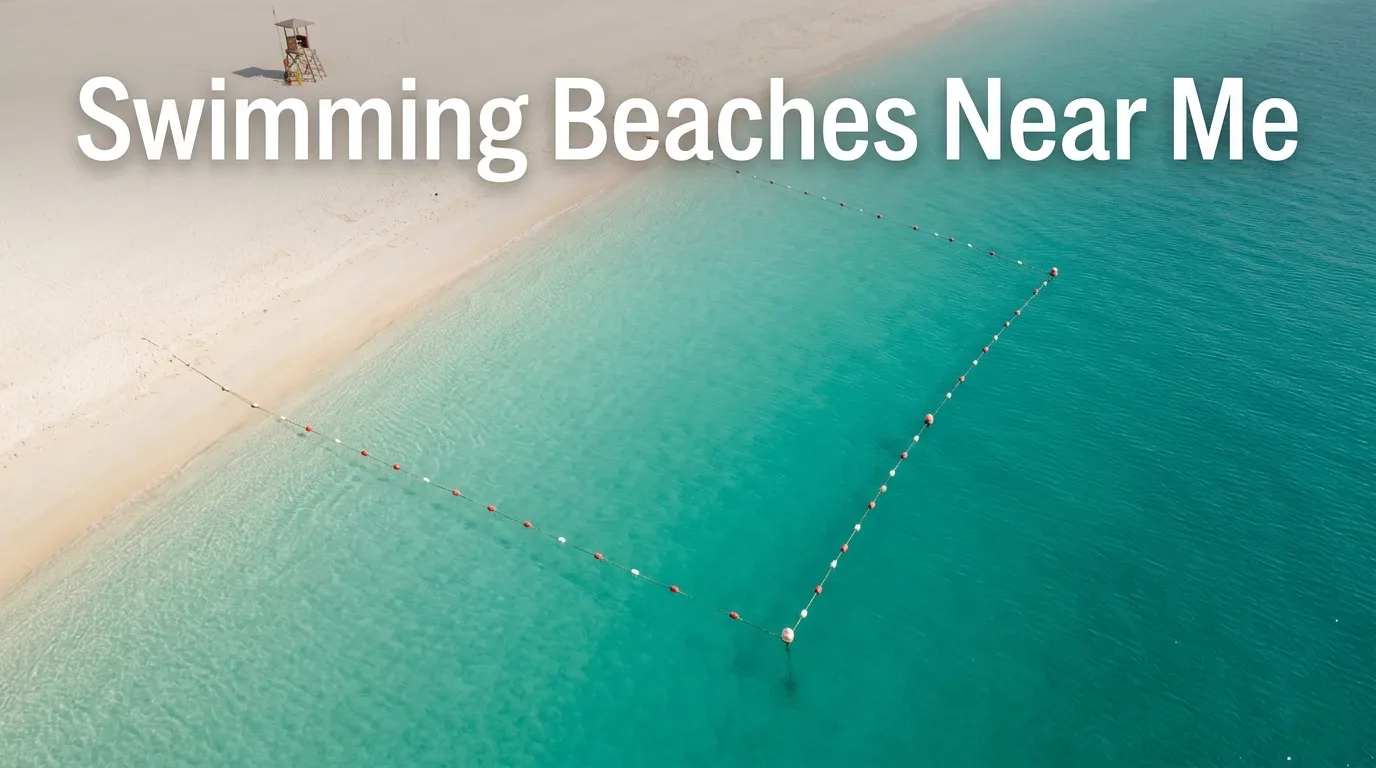
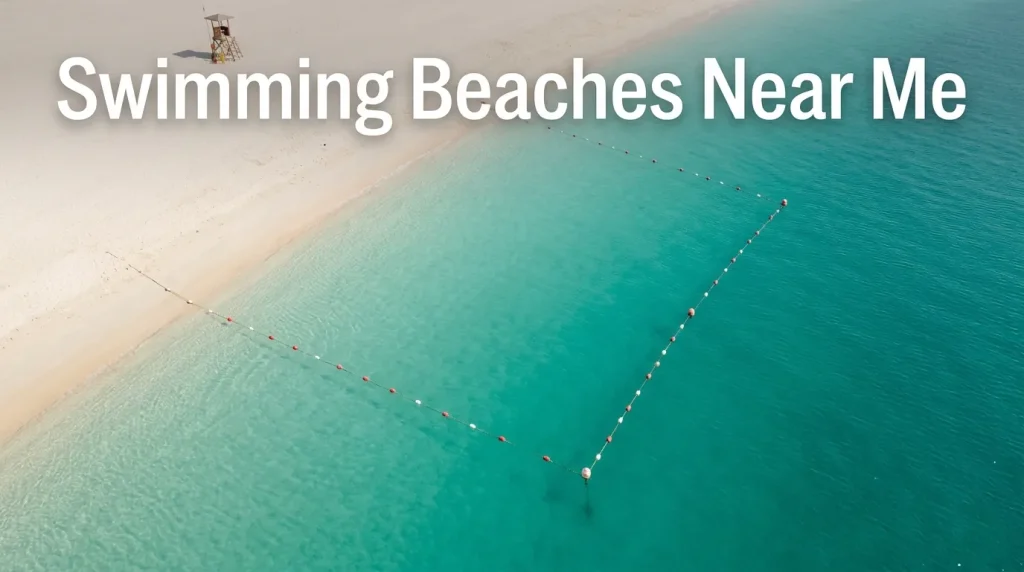
Look for the designated swimming zone marked by buoys. Swimming outside buoy lines puts you in boat traffic or unmonitored water.
Beach warning flags communicate daily swimming risk. A green flag signals calm conditions but never eliminates all risk. A red flag means swimming is prohibited.
NOAA reports that rip currents kill more people annually at US beaches than hurricanes, lightning, and tornadoes combined. The beach might look beautiful but hide deadly currents.
Key Takeaway: Evaluate water clarity, wave height, bottom gradient, buoy lines, and warning flags before swimming at any unfamiliar beach.
How to Check If a Beach Is Safe for Swimming
Check if a beach is safe for swimming by looking up the water quality advisory status on your state’s beach monitoring portal. This is the definitive safety step.
The EPA BEACH Act requires coastal states to test recreational beach water for enterococci bacteria. Results are public and updated regularly during swimming season.
Bacterial counts above 104 colony-forming units per 100 milliliters of marine water trigger a swimming advisory. This standard protects against gastrointestinal illness from contaminated water.
Search “[your state] beach water quality” to find your state’s monitoring database. Florida has Florida Healthy Beaches. California has the Water Quality Monitoring Council portal.
County health departments issue preemptive advisories after heavy rainfall. Stormwater runoff carries bacteria, pesticides, and sewage overflow into beach water.
Check the advisory status the morning you plan to swim. Bacterial conditions change with tides, rainfall, and temperature shifts.
To check beach safety near you:
- Open your state’s beach water quality monitoring portal on your phone
- Search for your specific beach name or browse by county
- Look for the most recent bacterial test date and pass or fail status
- Check for any active swimming advisories or rainfall-related warnings
- If the beach passed and no advisory exists, proceed to check surf and rip current conditions
Key Takeaway: State beach monitoring portals provide the definitive answer on whether your beach water is bacteria-free today.
Beach Water Quality Testing Near Me
Beach water quality testing near you is conducted by county health departments under EPA BEACH Act guidelines. Results appear on state portals and the Swim Guide app.
Enterococci bacteria serve as the indicator organism for marine water testing. These bacteria correlate with the presence of pathogens that cause swimmer illness.
Testing frequency varies by state and beach tier. High-use beaches get tested weekly or twice weekly. Lower-priority beaches might only get monthly testing.
The EPA BEACON (Beach Advisory and Closing Online Notification) system aggregates testing data from all participating states. Enter your zip code or beach name to see recent results.
Sampling occurs at specific monitoring stations along the beach. Test results represent conditions at the sampling time, roughly 24 to 48 hours before publication.
A single exceedance triggers a resample and advisory consideration. Two consecutive exceedances typically close the beach to swimming until bacteria levels drop.
The Surfrider Foundation supplements government data with volunteer testing at beaches outside official monitoring programs. Their Blue Water Task Force covers gaps in government coverage.
Key Takeaway: County health departments test beach water for bacteria under EPA guidelines. Check results before every swim visit.
Rip Current Identification for Swimmers
Rip currents appear as darker, flatter channels of water moving away from shore between breaking waves. Look for these visual signs from an elevated position before entering the water.
A rip current channel looks like a calm river flowing out to sea through surf zone waves. The water appears darker because the rip is deeper and carries suspended sand.
Rip currents form when waves push water toward the beach and that water must return to the ocean. The returning water concentrates into narrow, fast-moving channels.
Stand at the dune line or an elevated boardwalk to spot rips before swimming. The perspective from beach level makes rip identification much harder.
The NOAA National Weather Service issues daily rip current risk forecasts for coastal regions. Check this forecast alongside your water quality check.
If caught in a rip current, the USLA teaches “flip, float, follow.” Flip onto your back, float to conserve energy, and follow the current until it dissipates. Then swim parallel to shore to escape.
Never swim against a rip current. Even Olympic swimmers cannot outswim a rip flowing at up to eight feet per second.
Key Takeaway: Look for dark flat channels between breaking waves to identify rips. Check NOAA rip current forecasts and never fight a rip.
What Temperature Is Warm Enough for Ocean Swimming
Water temperatures above 70 degrees Fahrenheit are warm enough for comfortable recreational ocean swimming without a wetsuit. Temperatures from 60 to 70 degrees require wetsuit consideration.
The National Oceanic and Atmospheric Administration (NOAA) publishes real-time ocean water temperature data from buoys and coastal stations nationwide. Check your local station before swimming.
Southern California summer water peaks around 68 to 72 degrees. Gulf Coast and South Florida beaches reach 84 to 87 degrees in summer, warmer than most swimming pools.
New England beaches rarely exceed 68 degrees even in August. The Pacific Northwest stays in the 50s year-round, requiring wetsuits for all but the briefest swims.
Cold water below 60 degrees triggers cold water shock. Involuntary gasping, rapid breathing, and immediate muscle impairment can incapacitate even strong swimmers within minutes.
Extended swimming in water below 65 degrees risks hypothermia. Children and lean adults lose body heat faster and should limit exposure in cooler water.
Wetsuit thickness guides based on water temperature help open water swimmers prepare. A 3 or 2mm wetsuit handles 62 to 68 degree water comfortably for most swimmers.
Key Takeaway: 70°F and above for comfortable swimming. Check NOAA buoy data for your local water temperature before entering.
Swimming Beaches Near Me with Lifeguards
USLA-lifeguarded beaches provide the safest swimming environment with trained rescue professionals, designated swim zones, and daily condition monitoring. Use the USLA database to find guarded beaches near you.
The United States Lifesaving Association lists member agencies and their guarded beaches on their website. Filter by state to see all professional lifeguard operations near you.
Lifeguarded beaches post daily condition flags and adjust swim zone boundaries based on rip current and surf conditions. Swimmers benefit from this real-time professional assessment.
Most USLA-guarded beaches operate from Memorial Day through Labor Day. Some Florida, Southern California, and Hawaii beaches extend lifeguard seasons year-round.
Guarded beaches still require personal responsibility. Lifeguards are a rescue backup, not a substitute for swimming ability or parental supervision of children.
Beaches without lifeguards carry significantly higher drowning risk. The USLA reports that the chance of drowning at an unguarded beach is roughly five times higher than at a guarded beach.
Families with children and inexperienced swimmers should only swim at lifeguarded beaches. The rescue capability and professional oversight make a measurable safety difference.
Key Takeaway: USLA-lifeguarded beaches offer the safest swimming. Use the USLA database to find guarded beaches near you.
Swimming Beaches Near Me for Families
Family swimming beaches need calm shallow water, gradual entry, lifeguard presence, and nearby restroom facilities. These criteria matter more than scenic ratings or popularity.
Bay beaches and protected coves offer the calmest family swimming conditions. Ocean-facing beaches with even small surf challenge young children who are not strong swimmers.
State park beaches often provide the best combination of family facilities, lifeguard coverage, and natural setting. Many have bathhouses, picnic areas, and playgrounds near the sand.
Municipal beaches in coastal towns typically offer the most accessible family swimming. Parking, restrooms, and concession stands are usually within walking distance.
Toddler and young child swimming requires special attention to depth gradient. Beaches where the water stays below two feet deep for several yards from shore let children wade safely.
The USLA recommends that parents stay within arm’s reach of children at all times in the water. Even guarded beaches require constant parental supervision.
Beaches with designated children’s swim areas separated from boat traffic and surf zones provide the safest family swimming environment. Look for buoyed-off shallow zones.
Key Takeaway: Calm bay beaches with lifeguards, gradual depth, and facilities are best for family swimming.
Swimming Beaches Near Me No Waves
Protected bay beaches, harbor coves, and beaches sheltered by headlands or barrier islands offer swimming with minimal waves. These locations provide the calmest water conditions.
Bay side beaches on barrier islands face away from the open ocean. The water stays calm because the island blocks incoming swell energy.
Harbor coves and marinas often have small swimming beaches with flat water. The breakwater or jetty protection eliminates wave action entirely.
Lake and reservoir swimming areas provide naturally wave-free swimming. Freshwater beaches typically have designated swim zones with no boat access.
Beaches at the end of long narrow bays or inlets stay calm even when ocean beaches experience heavy surf. The geography naturally filters out wave energy.
Check local tide charts before heading to calm water beaches. Some protected coves become too shallow for swimming at low tide.
Families with young children and nervous swimmers benefit most from wave-free swimming locations. The calm water builds confidence and reduces panic risk.
Insider Tip:
- Look at a satellite map of your coast and identify bay-side beaches facing away from the prevailing wind direction.
- These beaches stay calm even when ocean beaches have heavy surf.
- Early morning offers the flattest water before afternoon winds pick up.
Key Takeaway: Bay beaches, harbor coves, and barrier island back-bay locations offer wave-free swimming for families and nervous swimmers.
Public Swimming Beaches Near Me Free
Many public beaches offer free access with free street parking nearby, though prime beachfront parking lots typically charge daily fees from $5 to $25. Beach access itself is usually free.
State parks charge vehicle entry fees from $5 to $20 per car but do not charge per person. Annual state park passes save money for frequent beach visitors.
Municipal beaches in small coastal towns often provide free parking and free access for residents. Non-resident day fees range from $10 to $30 per vehicle.
National seashores managed by the National Park Service charge entry fees from $15 to $30 per vehicle. Annual America the Beautiful passes cover entry to all federal recreation sites.
True free beaches with free parking exist but require research. Look for municipal beaches in residential neighborhoods or beaches at the end of public streets with unmetered parking.
Street parking near popular beaches fills before 9 AM on summer weekends. Arrive early, bike in, or take public transit to avoid parking frustration and fees.
The public trust doctrine in most coastal states guarantees public access to beaches below the mean high water line. Private property cannot extend onto the wet sand beach area.
Key Takeaway: Beach access is usually free. Parking is the primary cost. Arrive early for free street parking or bike to the beach.
Best Apps for Finding Swimming Beaches
The Swim Guide app provides the best all-in-one swimming beach finder with water quality data, beach descriptions, and user photos for thousands of beaches across North America.
Surfline delivers surf height, swell direction, and wind forecasts essential for evaluating ocean swimming conditions. Flat surf predictions mean calm swimming water.
NOAA Tide Predictions shows tide charts for any coastal location. Low tide can expose rocks and make swimming entry difficult at certain beaches.
Magicseaweed provides detailed surf and wind forecasts popular with surfers but equally useful for swimmers seeking calm conditions.
EPA BEACON is the official government portal for beach water quality advisories. Bookmark the mobile version for quick checks before beach visits.
State-specific apps like Texas Beach Watch or the California Water Quality Monitoring Council portal offer the most locally detailed water quality data.
Google Maps remains useful for finding beach access points and parking lots. Satellite view helps identify protected coves and bay beaches before visiting.
Key Takeaway: Swim Guide for water quality, Surfline for wave conditions, NOAA for tides. Use all three before heading to the beach.
Beach Bacteria Levels After Rain
Heavy rainfall significantly increases bacteria levels at beaches due to stormwater runoff carrying contaminants into coastal water. Avoid swimming for at least 24 hours after significant rain.
The EPA identifies urban runoff as the leading known cause of beach water quality impairments. Runoff carries pet waste, fertilizers, pesticides, and sewage overflow pathogens.
County health departments issue preemptive rain advisories recommending against swimming for 24 to 72 hours after rainfall. These advisories apply regardless of the most recent bacterial test result.
Combined sewer overflow systems in older coastal cities discharge untreated sewage into beach water during heavy rain. This creates severe bacterial spikes at affected beaches.
The 24-hour rule is a minimum guideline. After very heavy rain or at beaches near storm drain outfalls, wait 48 to 72 hours before swimming.
Water clarity after rain is not a reliable safety indicator. Clear-looking water can still carry dangerous bacteria levels invisible to the human eye.
Beaches near river mouths, storm drains, and marina entrances experience the worst post-rain bacteria spikes. Choose beaches with open ocean flushing for faster bacterial die-off.
Key Takeaway: Never swim within 24 hours of heavy rain. Check for preemptive rain advisories on your state beach monitoring portal.
Can You Swim at Any Beach
You can legally swim at most public beaches, but swimming safety varies dramatically between beaches. Legal access does not equal safe swimming conditions.
Some beaches are designated for surfing, not swimming. The wave conditions, bottom composition, and rip current patterns make these beaches dangerous for casual swimmers.
Private beaches may restrict access above the high water line but cannot prevent swimming in public water below the high water line in most coastal states.
Beaches posted with “No Swimming” signs or red flags prohibit swimming for specific safety reasons. The prohibition is legally enforceable and based on documented hazards.
Marine protected areas, wildlife refuges, and some national parks restrict swimming to protect ecosystems. Check local regulations before entering the water.
Harbor beaches and working waterfront areas often prohibit swimming due to boat traffic, water quality, and submerged hazards. Obey posted restrictions at these locations.
The public trust doctrine guarantees public access to navigable water and the wet sand beach below the mean high water line. This right exists even in front of private property.
Key Takeaway: Legal access does not equal safe swimming. Obey posted restrictions and choose designated swimming beaches with water quality monitoring.
Swimming Beach Access Rules
Standard beach access rules require staying below the mean high water line on private beaches, obeying posted hours, and respecting designated swim zone boundaries. Rules vary by jurisdiction.
Swimming hours at guarded beaches typically run from 9 AM or 10 AM until 5 PM or 6 PM during summer season. Swimming outside guarded hours significantly increases risk.
Designated swim zones marked by buoys separate swimmers from boat traffic and surf zones. Swimming outside buoys can result in fines and puts swimmers in dangerous water.
Alcohol is prohibited at most public beaches. Glass containers are banned at virtually all beaches due to the risk of buried broken glass in the sand.
Dogs are restricted from most guarded swimming beaches during summer hours. Check local leash laws and dog-permitted beach areas before bringing pets.
Fires and grilling are restricted to designated fire rings at specific beaches. Most swimming beaches prohibit open flames entirely.
Beach closures for water quality, dangerous surf, or marine hazard events are legally enforceable. Entering closed beaches risks fines and endangers emergency responders.
The USLA recommends never swimming alone and always informing someone on shore of your swim plan. These basic rules apply regardless of beach location.
Key Takeaway: Obey posted hours, swim in designated zones, and never swim alone or outside guarded hours.
Safety and Seasonal Warnings for Swimming Beaches
Rip currents kill more beach visitors annually than any other hazard. Learn to identify rip currents before entering the water at any unfamiliar ocean beach.
Key safety and seasonal facts every swimmer should know:
- Never swim within 24 hours of heavy rainfall. Stormwater runoff carries bacteria and pathogens that cause gastrointestinal illness and skin infections.
- Check water quality advisories the morning of every beach visit. Bacterial conditions change daily and the previous week’s results are no longer valid.
- Rip currents appear as dark, flat channels between breaking waves. If caught, float on your back and signal for help. Never fight the current directly.
- Water below 60°F triggers cold water shock within minutes. Involuntary gasping can cause drowning before hypothermia even begins.
- Unguarded beaches carry roughly five times the drowning risk of guarded beaches. Swim at USLA-lifeguarded beaches whenever possible.
- Algae blooms and red tide events create respiratory irritation and skin reactions. Check for harmful algal bloom advisories through your state environmental agency.
- Jellyfish and sea lice season varies by region. Ask lifeguards about current marine stingers and wear protective swimwear in affected areas.
- The surf zone is unpredictable. Never turn your back on the ocean and never let children play unsupervised at the water’s edge.
For beach emergencies, dial 911. Notify the nearest lifeguard immediately if you witness a water rescue situation. The USLA emphasizes that most beach drownings occur at unguarded beaches outside patrol hours.
Frequently Asked Questions About Swimming Beaches
How do I find safe swimming beaches near me right now?
Check your state’s beach water quality monitoring portal for bacterial test results and active swimming advisories at beaches within driving distance.
Use the Swim Guide app or EPA BEACON portal to see beaches with current clean water test results.
Confirm lifeguard presence through the USLA database and check NOAA rip current forecast before leaving home.
What makes a beach safe for swimming?
A safe swimming beach has tested clean water, lifeguard supervision, protected calm water without rip currents, and gradual depth entry.
Regular bacterial testing with publicly posted results distinguishes monitored safe beaches from unmonitored risky ones.
Designated swim zones marked by buoys protect swimmers from boat traffic and separate swimming areas from surf zones.
How can I check water quality at my local beach?
Visit your state health department’s beach water quality portal or use the Swim Guide app to see recent bacterial test results for your specific beach.
Look for the most recent test date and whether the beach passed the EPA enterococci bacteria standard.
Check for rainfall advisories that recommend avoiding swimming for 24 to 72 hours after heavy rain.
What do beach warning flags mean for swimmers?
Green flags indicate calm conditions suitable for swimming with normal caution.
Yellow flags signal moderate surf and rip current risk requiring stronger swimming ability.
Red flags prohibit swimming entirely due to dangerous conditions and double red flags close the water to all entry.
How do I know if a beach has rip currents?
Look for dark, flat channels of water moving away from shore between areas of breaking waves from an elevated viewing position.
Check the NOAA rip current forecast for your coastal zone before visiting.
Ask lifeguards about current rip locations since rip channels shift with tide and surf conditions throughout the day.
Is it safe to swim at the beach after rain?
No, avoid swimming for at least 24 hours after significant rainfall because stormwater runoff introduces bacteria and pathogens into beach water.
County health departments issue preemptive rain advisories that apply regardless of the most recent bacterial test results.
Wait 48 to 72 hours after very heavy rain or at beaches near storm drain outfalls where bacterial spikes are most severe.
The single most important habit for safe swimming is checking water quality data the morning of every beach visit. Bacterial conditions change faster than most people realize.
Bookmark your state’s beach monitoring portal on your phone home screen. Check it alongside the weather forecast. This two-minute habit prevents the most common cause of beach-related illness.
Download the Swim Guide app and the NOAA tide forecast for your region. Use them to identify guarded, clean-water beaches with calm conditions before you leave home. Conditions and advisories change daily, verify before every visit.