Best Beaches in Malibu 2026: An Honest Local Guide
The best beaches in malibu are not just about the view. They are about whether you can legally park and whether you want to swim in cold water.
Malibu is a 21-mile strip of coastal drama. It is world-famous for surf breaks, cliff-backed coves, and a brutal parking situation.
This guide names the beaches worth the hassle. It also names the famous ones that disappoint, and it matches every beach to a specific traveler profile and arrival strategy.
best beaches in malibu
The best beaches in malibu for your specific trip depend entirely on your arrival time and your tolerance for cold water. This is not a one-list-fits-all destination.
If you arrive after 10 a.m. on a summer Saturday, your best beach is whatever has a legal parking spot. This reality trumps all aesthetic preferences.
The beaches break down into three geographic zones. The east end has wide, sandy, family-friendly beaches.
The central coast has the iconic surf breaks and the heaviest crowds. The west end has the rocky coves, sea stacks, and the best photography.
Choose your beach based on your activity. Surfing points you to Surfrider. Family swimming points you to Zuma. Sunset photos with no swimming point you to El Matador.
best malibu beaches
A shortlist of the best malibu beaches for a complete, low-friction beach day is shorter than most guides admit. Many famous spots are better for looking than for staying.
Zuma Beach is the undisputed champion for a full beach day. It has wide sand, lifeguards, and a massive paid parking lot.
Point Dume State Beach is the best combination of scenery and activity. You get a protected cove, a hike, and tide pools in one stop.
Leo Carrillo State Park is the best beach for escaping the Malibu scene. It is at the far western edge of the county and feels like a different coast.
These three beaches offer the most complete package of parking, facilities, and usable sand. The Instagram-famous coves are beautiful but functionally limited.
Key Takeaway: Zuma, Point Dume, and Leo Carrillo are the three beaches that justify a full day trip.
beaches malibu
All beaches malibu operate under a legal framework that surprises first-time visitors. The beach is public up to the mean high tide line, but the access paths are often hidden.
The California Coastal Commission mandates public access. Wealthy homeowners are required to provide access ways.
These paths are often narrow walkways between multi-million dollar homes. They are marked by small blue signs that are easy to miss at driving speed.
The sand itself is a mix of coarse golden grains and pebbles. It is not the soft white quartz powder of Florida.
The water is cold, clear green-blue, and full of kelp. Visibility is low, usually 5 to 15 feet, and the ocean floor drops off quickly on many beaches.
best beaches malibu
The honest framework for choosing the best beaches malibu for your group is a matrix of parking, activity, and crowd tolerance.
| Beach | Best For | Parking Score | Water/Crowd Note |
|---|---|---|---|
| Zuma Beach | Full Family Day | A (Huge paid lot) | Calmest surf, crowded but spreads out |
| Point Dume | Scenery & Exploring | C+ (Small lot, street) | Clearer water cove, moderate crowd |
| El Matador | Photography | F (20 spots) | Rocky, dangerous surf, no facilities |
| Leo Carrillo | Camping & Quiet | B (Large state lot) | Tide pools, quieter, far west |
| Surfrider | Expert Surfing | D (Tiny lot, street) | Aggressive localism, zero sand at high tide |
This table is your cheat sheet. If you have kids, you go to Zuma. If you want a photo, you suffer El Matador’s parking.
Zuma Beach
Zuma Beach is the only Malibu beach that functions as a true, full-service beach destination for a full day. It is the best answer for families and swimmers.
The sand is wide, deep, and relatively fine by Malibu standards. The beach stretches for almost two miles, so crowds spread out.
The water is still cold, peaking at 68 degrees in late summer. Waves are generally gentle shore break, safe for boogie boarding.
The parking lot is massive and costs $3 to $8 depending on the season and day of the week. Even this lot fills by 11 a.m. on peak summer Saturdays.
Facilities include restrooms, outdoor showers, and a small snack bar. It is the only Malibu beach where you feel like you are at a managed, predictable beach facility.
Point Dume State Beach
Point Dume State Beach offers the most concentrated dose of Malibu’s natural drama in one stop. A volcanic headland juts into the Pacific, creating a protected cove.
The main beach is a sandy crescent at the base of the cliff. The water here is often slightly clearer and calmer than the open coast.
Hike up the boardwalk trail to the top of the Point. From December through April, you can spot migrating gray whales.
The small parking lot on Westward Beach Road fills extremely quickly. A second, even smaller lot is at the top of the point.
For a couple (Profile 1) wanting a romantic, scenic beach with a short hike, Point Dume is Malibu’s best offering. The cove feels intimate, especially on a weekday.
El Matador Beach Malibu
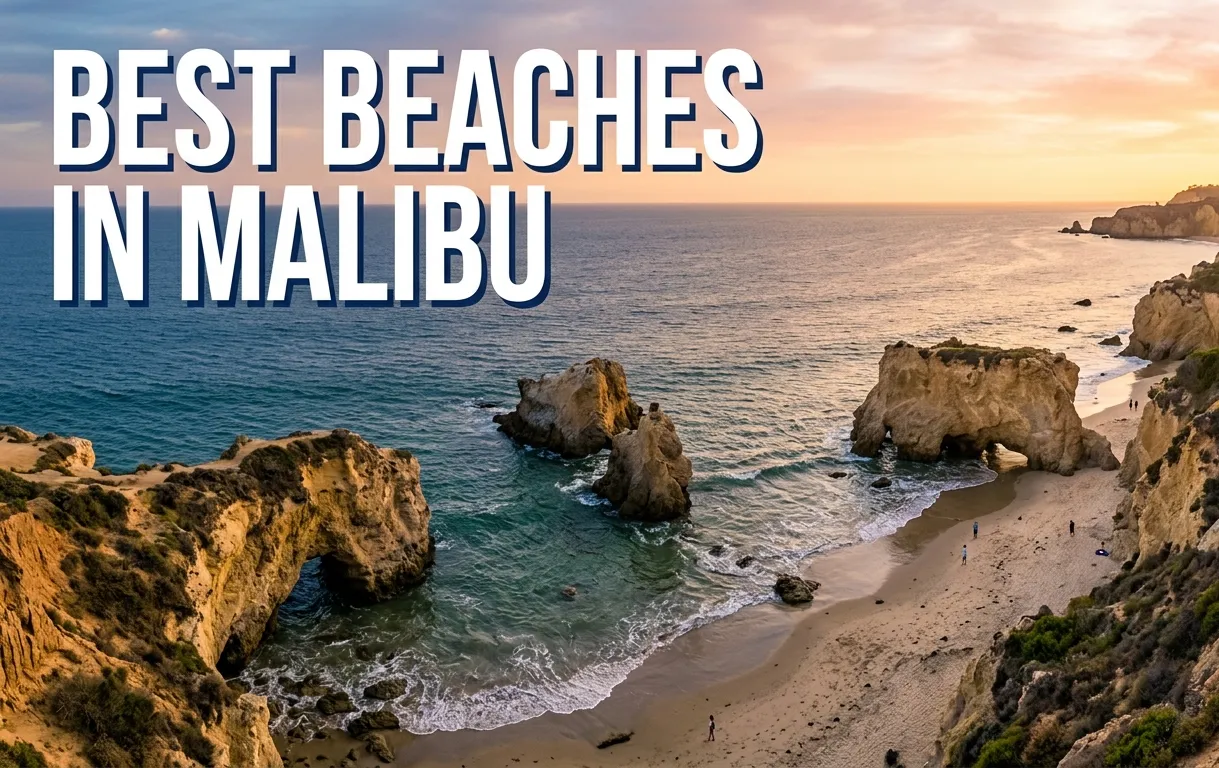
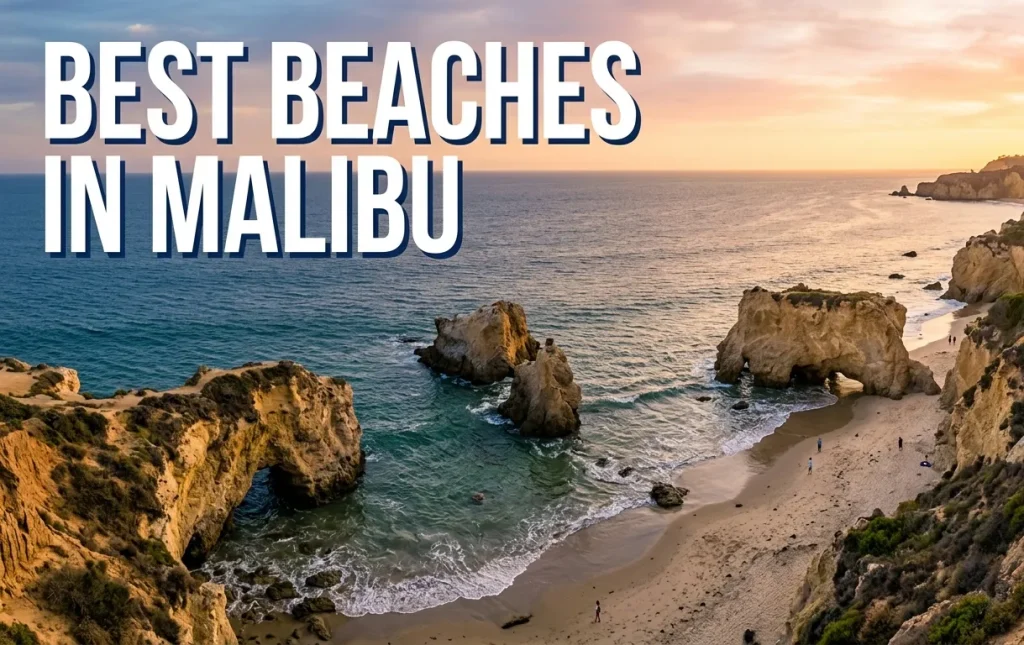
El Matador Beach Malibu is the most photographed beach in the region for a reason. It is also the most misrepresented by Instagram.
The beach is a narrow, rocky cove with giant sandstone sea stacks just offshore. The light at sunset reflects off the water and the arches.
The parking lot is a dirt patch with roughly 20 spots. It is on the inland side of PCH, requiring a descent down a steep, unpaved staircase.
There are no restrooms, no showers, and no lifeguards. The surf is rough, and the rocks are slippery.
This beach is for one purpose: a sunset photography shoot. It is a terrible choice for a family with a cooler and a beach umbrella.
For a solo traveler or luxury seeker (Profile 5) who wants the iconic photo, arrive at 4 p.m. on a weekday and accept the parking anxiety.
Key Takeaway: El Matador is a photo set, not a beach day. Treat it as a one-hour visit, not a destination.
Malibu family beaches
The best Malibu family beaches require one thing above all else: easy, guaranteed parking within a short walk of the sand. This single rule eliminates half of Malibu’s famous spots.
Zuma Beach is the definitive family choice. The parking lot is adjacent to the sand, and the lifeguard presence is the strongest in Malibu.
Leo Carrillo State Park is the runner-up. It has a large paid lot, gentle tide pools for exploring, and a campground if you want to stay overnight.
Avoid Surfrider Beach for families. The surf culture is intense, the sand strip is narrow, and the parking is a stress-inducing street hunt.
For families (Profile 3) with young children, the shallow, flat sections of Zuma’s shore break are the safest entry point. The waves here do not knock a toddler over with the same force as the steeper beaches.
Surfrider Beach Malibu
Surfrider Beach Malibu is a world-famous right-hand point break. It is a cultural landmark for surfing and a terrible beach for everyone else.
The surf here is consistent, long, and perfect. It is also fiercely protected by a deeply embedded local surf culture.
This culture is not welcoming to casual swimmers, boogie boarders, or inexperienced surfers dropping in on the wrong wave. The tension in the water is palpable.
At high tide, the sand completely disappears. The water reaches the sea wall, and there is nowhere to sit.
For a luxury seeker or solo traveler (Profile 5) who is an expert surfer, this is a pilgrimage site. For anyone else, watch the surfers from the Malibu Pier and go swim at Zuma.
Malibu surf beaches
The Malibu surf beaches are a holy trinity of breaks, and they are not interchangeable. Each suits a radically different skill level.
Surfrider Beach is for experts only. The takeoff zone is crowded, and the hierarchy is enforced.
Malibu Lagoon State Beach, just east of Surfrider, offers a softer, less aggressive wave. It is a better spot for longboarders who are not quite at the Surfrider elite level.
Zuma Beach is the best surf spot for beginners and intermediate surfers. The beach break spreads the crowd out across a long stretch, and the vibe is far more forgiving.
Rent a board from Malibu Surf Shack near the pier. Book wetsuit rentals in advance during summer, as walk-in inventory runs out.
romantic beaches Malibu
True romantic beaches Malibu require privacy, and privacy in Malibu requires walking away from the parking lot. The most romantic spots are accessible only by foot or kayak.
Point Dume at sunset on a weekday is the peak Malibu romance experience. Hike to the top of the headland, then descend to the secluded little cove on the south side.
El Matador Beach after 6 p.m. on a summer evening sees the crowds thin as the light turns gold. The sea stacks frame a spectacular sunset.
Carbon Beach, also called Billionaire’s Beach, is a long, quiet stretch east of the pier. Public access is via a narrow path off PCH, and the sand is almost always empty.
For a couple (Profile 1), the romantic move is a weekday afternoon. Weekends at any named Malibu beach kill the romantic atmosphere with crowd noise and parking rage.
Key Takeaway: Romantic Malibu exists on weekdays in the fall. Summer Saturdays are a crowded, stressful scene.
Malibu beaches public access
Malibu beaches public access is a legal right constantly contested by private landowners. The California Coastal Commission enforces public easements.
You will see small blue “Public Access” signs between private gates. These are not trespassing; they are legally mandated public paths.
The most famous hidden access is to Carbon Beach. A narrow, unsigned walkway between two mega-mansions leads to a vast, empty stretch of sand.
Escondido Beach and Paradise Cove are additional public access points fronting private land. You cannot use the private stairs, but you can walk onto the sand from the waterline.
Do not let a “Private Beach” sign intimidate you. Below the mean high tide line, all California beaches are public property.
Malibu beach parking
Malibu beach parking is the single most important variable in a successful Malibu trip. It is the filter that determines which beach you actually end up on.
There are three parking tiers. Tier 1 is a dedicated state or county lot with hundreds of spaces, like Zuma or Leo Carrillo.
Tier 2 is a small lot with 20 to 50 spaces, like Point Dume or the Malibu Lagoon lot. Tier 3 is street parking on PCH, which is free, risky, and a long walk.
Never park on the shoulder of PCH with your tires over the white line. The ticket exceeds $60, and tow trucks patrol aggressively on weekends.
For a value traveler (Profile 4), the street parking on PCH near the east end beaches is the only free option. It requires arriving before 8 a.m. to find a spot.
Leo Carrillo State Beach
Leo Carrillo State Beach is the exit strategy from Malibu’s chaos. It sits at the very northwestern edge of Los Angeles County.
The beach is a long, broad strand backed by a massive state park campground. This is the only Malibu beach where you can stay overnight.
The rocky north end of the beach has some of the best tide pools in the county. At low tide, the exposed reef is full of sea stars, anemones, and small crabs.
The surf here is gentler than Surfrider but still consistent enough for a fun longboard session. The vibe is quiet, and the crowds are thin compared to Zuma.
For a family (Profile 3) or a couple (Profile 1) who want to escape the PCH traffic, Leo Carrillo justifies the extra 15-minute drive. The day-use parking fee is $3 to $10.
Malibu beach tide pools
The best Malibu beach tide pools are a secret world revealed at low tide. You need to time your visit to a negative or low tide for the best experience.
Leo Carrillo State Park has the most extensive and accessible tide pools. The flat reef at the north end is a natural aquarium.
Point Dume has excellent tide pools at the base of the headland inside the marine conservation area. Touching or taking anything is prohibited here.
Malibu Lagoon State Beach offers a different kind of tidal experience. The estuary where Malibu Creek meets the ocean is a birdwatching hotspot.
Check the NOAA tide chart for Malibu before you go. A tide of zero feet or lower reveals the best pools.
best time to visit Malibu beaches
The best time to visit Malibu beaches is September and October. This two-month window is Southern California’s secret summer.
The marine layer fog, known as June Gloom, has burned off. The air is clear and warm, and the water has been heating up all summer.
The ocean temperature peaks at around 68 to 70 degrees Fahrenheit. This is as warm as Malibu ever gets.
Crowds collapse after Labor Day. The kids are back in school, and the pressure on parking lots evaporates.
Avoid June entirely if you want sun. A dense, gray marine layer can sit on the coast all day without breaking.
Safety and Seasonal Warnings for Malibu Beaches
Rip currents and cold water shock are the primary risks. The Pacific Ocean here is not a warm, gentle bathtub.
Key safety and seasonal facts every visitor should know:
- Rip Currents: Common near rocks and piers. If caught, swim parallel to the shore to escape the current’s pull, then swim in.
- Cold Water Shock: Water is in the high 50s in winter and only reaches 68°F in late summer. Enter slowly to avoid an involuntary gasp reflex.
- Shore Break: Steep beaches like those near the pier can slam swimmers into the sand. Never dive headfirst into shallow water.
- Sneaker Waves: Larger, unexpected waves can sweep people off rocks, especially at El Matador and Leo Carrillo. Never turn your back on the ocean.
- Sun Exposure: There is no shade on the sand. Pack a beach umbrella or a sun tent and apply SPF 50 reef-safe sunscreen.
Los Angeles County Lifeguards patrol Zuma, Point Dume, and Surfrider. Dial 911 for any beach emergency.
Frequently Asked Questions About Malibu Beaches
What is the best beach in Malibu for swimming?
Zuma Beach is the best beach in Malibu for general swimming and body surfing.
Its long, sandy shoreline has a gentle shore break and a full staff of LA County lifeguards.
The water is still cold by tropical standards, so expect a bracing entry even in summer.
Can you swim at Malibu beaches?
Yes, you can swim at Malibu beaches, but the water is cold year-round.
Water temperatures range from the high 50s in winter to a peak of 70°F in late August.
A wetsuit makes swimming far more comfortable for anything longer than a quick dip.
Where do locals go to the beach in Malibu?
Locals avoid the main Zuma lot on summer weekends and go to the west end early.
Leo Carrillo State Park is a favorite local escape at the county line.
They also use the hidden public access paths to Carbon Beach, arriving before 9 a.m.
Is Malibu beach parking free?
Street parking on Pacific Coast Highway is free but extremely limited.
Official lots at Zuma, Point Dume, and Leo Carrillo charge $3 to $15 per day.
Illegal shoulder parking will get you a ticket exceeding $60, enforced aggressively.
What is the prettiest beach in Malibu?
El Matador State Beach is the most visually iconic and prettiest beach for photography.
Its sandstone sea stacks and rocky coves are unmatched at sunset.
It is a poor choice for swimming or a full beach day due to rough surf and no facilities.
Are Malibu beaches open to the public?
Yes, all Malibu beaches are public up to the mean high tide line by California law.
The California Coastal Commission mandates public access paths, even next to private homes.
Look for small blue “Public Access” signs along PCH for entry points.
Malibu delivers the best beach experience when you match your expectation to the specific beach. Zuma is for a full day. El Matador is for a quick photo. Point Dume is for exploring.
Book your parking strategy before you book your beach. Arrive before 9 a.m. on weekends, or shift your trip to a September weekday for a genuinely relaxing day.
Verify current parking rates and any PCH road closure advisories with LA County Beaches & Harbors before your 2026 trip. The Pacific Coast Highway is dynamic.
Pick the beach that fits your group’s activity, not the one with the most Instagram tags. Your day will succeed or fail on parking and water temperature honesty.