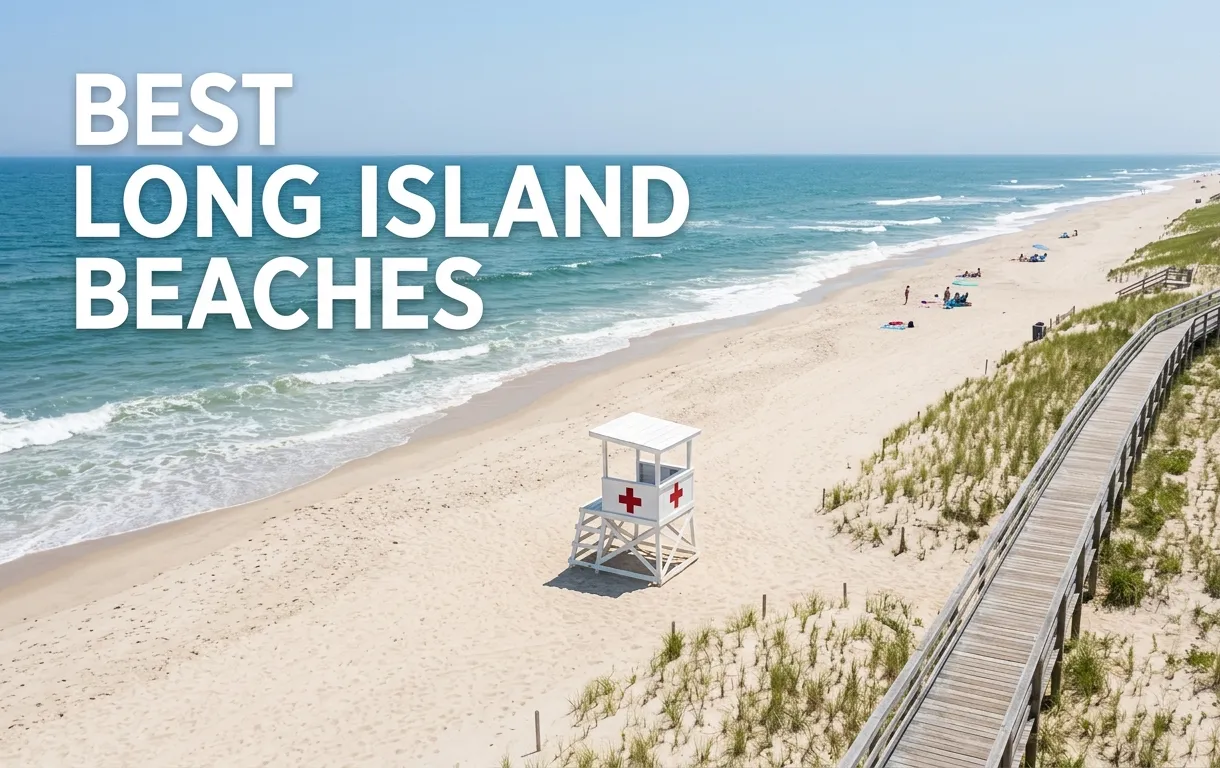
Best Long Island Beaches 2026: State Parks to Hamptons
The best Long Island beaches split into two distinct geological and thermal
worlds in 2026. The Atlantic South Shore is cold, salty, and crashing with surf.
The Long Island Sound North Shore is warm, calm, rocky, and prone to jellyfish.
You must choose your water temperature tolerance before you pick your exit on
the Long Island Expressway.
According to NYS Parks, the state beaches attract over 30 million visitors
annually. The competition for a flat patch of sand is vicious on a sunny Saturday.
This guide breaks down the exact parking fees, resident-only traps, and water
conditions of every major beach. You will learn which train takes you to the
sand and which lot closes before you even finish your morning coffee.
Long Island Beach Geography Explained
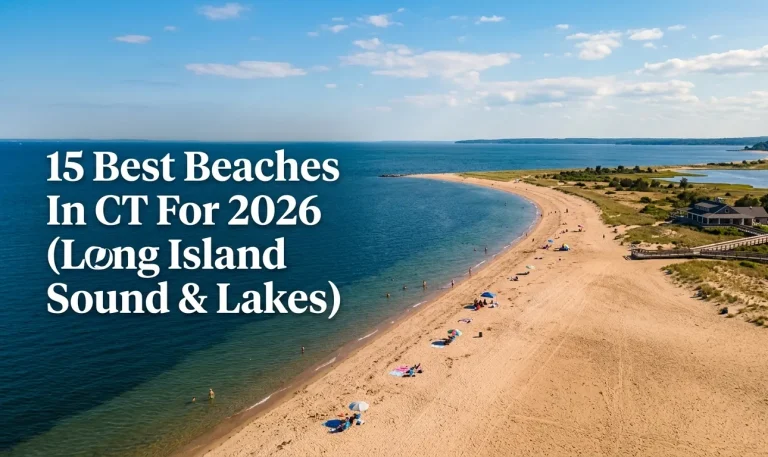
Long Island beaches are split between the Long Island Sound (North Shore)
and the Atlantic Ocean (South Shore). The Sound is a protected, shallow body
of water averaging 75 degrees in August.
The Atlantic coast is a raw, open-ocean barrier island with powerful surf and
a stubborn 65-degree water temperature that stings your ankles in June.
The Sound waters are murky, dark, and often filled with harmless floating seaweed.
The Atlantic waters are a clearer, steel-blue green but frigid.
Budget travelers should note that Sound beaches are often town-run and
cheaper, while Atlantic sand is dominated by state parks and wealthy villages.
Key Takeaway: The Long Island Sound is your bath-warm, child-friendly option,
while the Atlantic is your surf-hungry, cold-shock endurance test.
Best Long Island Beaches
Jones Beach State Park in Wantagh is the most accessible and architecturally
iconic beach on the island in 2026. The Art Deco bathhouses and the central tower
define the massive, six-mile stretch of powdery, light-tan sand.
Coopers Beach in Southampton offers the luxury-estate-backed, wide, flat,
ultra-fine powder sand that defines the “Hamptons” ideal. It is consistently
ranked by Dr. Beach as a top-ten national shore for its softness.
Montauk’s Ditch Plains is the undisputed king of East Coast surfing culture.
The beach here is a mix of coarse, golden sand and rounded, polished cobblestones
set against dramatic, crumbling clay bluffs.
| Beach | Region | Parking Fee (Non-Res) | Water Type | Vibe |
|---|---|---|---|---|
| Jones Beach | South Shore | $10 | Cold Atlantic | Mass Public |
| Coopers Beach | Hamptons | $50+ | Cold Atlantic | Old Money Luxury |
| Ditch Plains | Montauk | $0 (Street) | Cold Atlantic | Surfer Grit |
| Sunken Meadow | North Shore | $10 | Warm Sound | Family Playground |
Key Takeaway: The best sand in New York is locked behind the most aggressive
parking bureaucracy in the Northeast.
Jones Beach State Park
Field 6 at Jones Beach is the designated “scene” for young adults, volleyball
players, and the social media crowd. The sand here is wide, soft, and organized
into strict volleyball court grids.
The parking lot fills completely by 10:00 AM on a sunny Saturday in July 2026.
You must arrive early or pre-book your spot through the NYS Parks reservation app, which was fully implemented for the 2025 season and remains mandatory.
Zach’s Bay on the north side of the Ocean Parkway is the shallow, calm,
no-wake zone specifically built for families with toddlers. The water here warms
up to a pleasant 80 degrees by midday because it is cut off from the main channel.
Honest Limitation: The sheer scale of Jones Beach feels like a human parking
lot of flesh. If you want a quiet, introspective walk through the dunes, the
central fields near the tower are a sensory overload of bluetooth speakers.
Key Takeaway: Jones Beach is a “city beach” without the subway, a spectacularly
engineered public amusement that demands extreme patience for crowds.
Robert Moses State Park
Field 5 at Robert Moses State Park is the best family-friendly alternative
to the Jones Beach chaos. The parking lot sits directly behind a high, protective
dune, meaning you walk through a wooden tunnel and emerge onto an expansive,
pristine shore.
The surf here is slightly rougher and the drop-off steeper than Jones Beach.
Parents must watch smaller children closely because the shore break can knock a
toddler over and pull them into the deep trough quickly.
The Fire Island Lighthouse is a 15-minute walk from the eastern edge of
Field 5. This is a perfect “break from the sun” activity that gives you a
panoramic view of the Great South Bay and the Atlantic.
Budget travelers prefer Robert Moses over Jones Beach because the parking is
the same price but the crowds are thinner. The trade-off is a longer drive and
zero food vendors, so pack a serious cooler.
Key Takeaway: Robert Moses delivers a wilder, taller dune system and a less
hectic boardwalk, but the absence of a snack bar is a dealbreaker for lazy planners.
Best Hamptons Beaches
The best Hamptons beaches in 2026 operate on a two-tier system of “Resident
Permit” and “Non-Resident Daily Pass.” If you do not live in the specific village
tax district, you are paying a premium of $40 to $50 per day to park.
Main Beach in East Hampton and Coopers Beach in Southampton are the
crown jewels. The sand is imported-level soft, the lifeguards are vigilant, and
the parking lots are clean, organized, and absolutely ruthlessly enforced.
Flying Point Beach in Water Mill offers a slightly more bohemian atmosphere
than the polished jewel of Coopers. The parking lot is smaller and fills up faster,
but the sandbar here creates a warm, shallow tidal pool at low tide.
The value assessment on a $50 Hamptons parking pass depends entirely on your
tolerance for crowds. You are paying for the space between towels, not the water,
which is the same cold Atlantic hitting Jones Beach 80 miles west.
Key Takeaway: The Hamptons beaches are a luxury parking lot experience, and the
sand quality is genuinely superior to the state parks, but the water is exactly
the same ocean.
Main Beach, East Hampton
Main Beach in East Hampton is the definitive “gold coast” of Long Island
sand in 2026. The beach features pristine, wide, white quartz sand and a row
of massive, historic mansions peering over the dunes.
The 2026 non-resident daily parking fee is $50. You must purchase this pass
using the mobile app or at the kiosk, and parking is strictly limited to a
specific number of cars daily, after which the lot is closed even if spaces exist.
Insider Tip:
- Non-resident parking restrictions lift after 5:00 PM. You can drive in for
free at 5:30 PM and enjoy the golden hour “magic light” for a stunning three-hour
evening walk without paying the entry tax. - The main lot has a strict “no leaving and returning” policy.
- Couples and honeymooners should book a room at the Maidstone Hotel
to get a walk-to-beach life without a parking hassle.
Key Takeaway: Main Beach is a one-stop shop for the “Hamptons aesthetic,” but
the $50 fee is a sun tax that feels punitive if you just want a quick dip.
Coopers Beach, Southampton
Coopers Beach is wider, flatter, and softer than Main Beach, with a massive
dune buffer separating the sand from the mega-mansions of Meadow Lane. It feels
more natural and less manicured than Main Beach.
The 2026 non-resident parking fee is $50 per day on weekends and $40 on weekdays.
The parking lot is larger than Main Beach, so it rarely closes entirely, but it
still fills solid by 11:00 AM on a hot Saturday.
The sand at Coopers is a light, creamy beige, so fine it squeaks underfoot.
The surf is typically gentle, breaking far out on a series of sandbars, making
it slightly safer for strong swimmers than the steep drop-offs further east.
Budget travelers should use the Southampton Village beach shuttle or bike
to the beach if staying locally, as the daily car fee is the only major expense.
Bringing a bike on the LIRR can turn a $100 parking day trip into a much cheaper
train-and-pedal adventure.
Key Takeaway: Coopers is the widest, most physically impressive sandbox in the
Hamptons, but the car gate fee is a serious barrier to entry for casual visitors.
Montauk Beaches and Ditch Plains
Ditch Plains is the spiritual home of East Coast surf culture, a rugged
beach of coarse sand and glacial cobblestones at the tip of the island. The
parking is free, but the lot is small and fills up before 8:00 AM all summer.
The surf break here is consistent, gentle, and perfect for longboards.
The bottom is rocky, so water shoes are mandatory unless you want to slice your
feet open on the sharp, hidden glacial erratics just offshore.
The Ditch Witch food truck serves world-class breakfast burritos directly
on the bluff. Solo travelers and surfers who can travel light with just a
towel and a board find this the most welcoming scene on the island.
Honest Limitation: There are absolutely no bathrooms and no fresh water.
If you drink too much coffee on the drive out, you will suffer.
Key Takeaway: Montauk is the anti-Hamptons, trading luxury-soft sand for a
gnarled, rocky, authentic surf energy that rewards the early riser.
Fire Island National Seashore
Fire Island is a 32-mile barrier island totally devoid of private cars.
You must take a passenger ferry from Bay Shore, Sayville, or Patchogue
to reach the sand in 2026.
The towns of Ocean Beach and Kismet offer a charming, boardwalk-lined
village scene with tiny food stands and wagon-based luggage transport. The beaches
here are vast, wide, and surprisingly empty just a five-minute walk from the dock.
Fire Island is a habitat for the Lone Star tick.
Stay on the sand or the boardwalk paths and off the dune grass. The bite from
this tick can trigger Alpha-gal syndrome, a permanent severe allergy to red meat.
Luxury seekers should rent a bay-front house in The Pines or Cherry Grove, where the private dock and infinity pool lifestyle replaces the sand.
Budget travelers can camp at the Watch Hill campground, but it books up a
year in advance for 2026 summer weekends.
Key Takeaway: Fire Island is the most unique beach experience on the East Coast,
but you trade complete isolation from cars for complete exposure to ticks.
Best North Shore Beaches
Sunken Meadow State Park is the best North Shore beach for families in 2026.
The newly renovated boardwalk connects a wide pebble-sand mix to a massive
playground and a fresh-water splash pad.
The water of the Long Island Sound is calm, flat, and significantly warmer
than the Atlantic. It laps gently at the shore, making it perfect for toddlers
who are afraid of crashing waves.
The pebble mix is hard on bare feet, and the water clarity is poor.
You cannot see the bottom, and floating seaweed often wraps around your ankles,
a sensation that grosses out some swimmers but is entirely harmless.
Wildwood State Park offers a quieter, more rustic Sound beach with a popular
campground overlooking the bluffs. Couples seeking a nature escape without the
Hamptons traffic find this a hidden, affordable gem.
Key Takeaway: The North Shore beaches trade the “surf aesthetic” for a warmer,
tamer, jellyfish-prone paddle that is vastly more comfortable for small children.
Long Island Beaches for Families
Zach’s Bay at Jones Beach and Sunken Meadow State Park are the two
safest family-friendly Long Island beaches in 2026. Both offer zero surf, zero
waves, and warm, contained water.
Long Beach on the South Shore offers a vibrant, walkable city-beach experience
with an iconic boardwalk and ice cream shops. The surf here is medium-intensity
but well-guarded by lifeguards every hundred yards during peak season.
The boardwalk at Long Beach was recently renovated and is completely
accessible for strollers and wheelchairs. Families with teenagers will appreciate
the nearby pizza shops and the ability to walk to the train in less than ten
minutes from the sand.
Avoid Main Beach in East Hampton if you have young children and are not
staying in the village. The $50 parking fee, the cold ocean shock, and the
complete lack of a food vendor make it a logistical nightmare for a one-hour
baby nap window.
Key Takeaway: For families, the presence of a snack bar, a lifeguard, and a
warm puddle to splash in trumps the prestige of a world-class sand grain.
Parking, Permits, and Non-Resident Access
The 2026 non-resident parking fee for East Hampton Village beaches is $50
per day. You buy this pass through a mobile app, and once the lot is full, you
are turned away with no refund.
Southampton Town beaches like Ponquogue require a $40 non-resident daily
permit. You cannot park on the surrounding residential streets without a town
sticker, and the enforcement officers patrol using license-plate scanners.
NYS Parks like Jones Beach and Robert Moses charge an $8 to $10 vehicle fee
for the 2026 season if you book in advance online. The Empire Pass ($80 for
the unlimited season) is the single best value purchase if you visit more than
eight times.
Free street parking at Ditch Plains in Montauk exists but is a myth on weekends.
If you arrive after 8:30 AM, you will circle for 40 minutes before giving up and
skipping the beach entirely.
Key Takeaway: The administrative battle to park your car is the primary filter
determining who gets to enjoy the best Long Island sand.
Long Island Beach Water Quality and Safety
The Suffolk County Health Department publishes a real-time closure map for
bacterial runoff in 2026. Avoid swimming for 24 hours after a heavy rainstorm,
as fecal coliform levels spike near storm drain outfalls, particularly at
Tanner Park and Copiague Beach.
Rip currents are a serious, daily risk at the Atlantic beaches, especially near
groins and jetties. Jones Beach and Robert Moses have the most aggressive
“after-hours swimming” enforcement because of the high drowning statistics.
Jellyfish (mostly bay nettles and lion’s mane) invade the South Shore in
late August. The warm Sound waters often harbor sea lice (microscopic larvae)
that cause a red, itchy rash under your bathing suit.
Ticks on Fire Island and Montauk are not a minor nuisance but a medical
hazard. Douse your shoes and socks in Permethrin and do a full-body scan after
walking through any grass.
Key Takeaway: The Atlantic Ocean is actively trying to pull you out to sea, while
the warm Sound water is actively nurturing a jellyfish bloom.
Best Time to Visit Long Island Beaches
September is the single best month for a 2026 Long Island beach trip because the
ocean temperature peaks at 72 degrees while the air loses its oppressive humidity.
The parking lots clear out after Labor Day, and the non-resident fees drop.
July is the best month for swimming in the Sound because the shallow water warms
to 80 degrees. The trade-off is the horrific weekend traffic on the Long Island Expressway, which can take three hours to move thirty miles.
Avoid June for ocean swimming unless you are a surfer in a thick wetsuit.
The water temperature hovers in the high 50s, and the “June Gloom” fog can sock
in the beach for days, making it colder on the sand than in the city.
Memorial Day weekend is the worst combination of freezing water, sky-high
Hamptons prices, and a collective mood of desperate, premature summer fever.
Taking the LIRR to the Beach
The Long Island Rail Road (LIRR) offers direct “Beach Getaway” packages to
Long Beach, Jones Beach, and the Hamptons in 2026. The package includes
a round-trip train ticket and a shuttle bus or ferry connection.
Long Beach is the easiest train-to-sand walk on the island.
You walk six blocks straight down National Boulevard, and you touch the ocean
without ever stepping inside a car.
Jones Beach is accessible via the LIRR to Freeport, where the NICE bus takes
you directly to the East Bathhouse. The bus transfer adds 25 minutes, but it
saves you the fury of the parking lot gridlock.
The Hamptons require the LIRR to East Hampton or Southampton, followed by a
bike rental or Uber to Main Beach. This is a chic, lengthy, and expensive day
trip that works beautifully if you pre-book the train ticket.
Frequently Asked Questions About the Best Long Island Beaches
What is the best beach on Long Island for a family?
Zach’s Bay at Jones Beach is the best Long Island beach for families with small
children because it is a contained, no-wave lagoon with warm, shallow water.
Sunken Meadow State Park on the Sound is the best for families who want a
playground and a boardwalk adjacent to the calm water.
Both locations have clean, modern restroom facilities and easy, paid parking lots.
Can you go to Hamptons beaches without a resident permit?
Yes, you can legally access Hamptons beaches like Main Beach and Coopers Beach as
a non-resident in 2026, but you must pay a steep daily parking fee of $40 to $50.
The passes are available through a mobile app or at the beach kiosk until the
limited daily quota sells out.
You cannot park on the adjacent residential streets without a resident sticker.
Which is warmer: the Atlantic Ocean or the Long Island Sound?
The Long Island Sound is significantly warmer than the Atlantic Ocean, reaching
temperatures of 75 to 80 degrees Fahrenheit in August.
The Atlantic Ocean on the South Shore rarely exceeds 72 degrees even at its peak,
lingering in the low 60s through most of June and July.
The Sound warms faster because it is shallow and protected from the open ocean swells.
Are there free beaches on Long Island?
Yes, Ditch Plains in Montauk offers free, unrestricted street parking if you
arrive very early in the morning.
Many North Shore town beaches offer free entry for pedestrians and bike riders.
Most state parks charge a per-vehicle fee, but some local Suffolk County parks
have free walk-in access.
Is Fire Island worth a day trip?
Yes, Fire Island is worth a day trip for its unique, car-free wilderness atmosphere
and the charming village of Ocean Beach.
The ferry ride and logistics of bringing only what you can carry in a wagon add
a distinct sense of nautical adventure.
You must stay strictly on the sand paths to avoid the high density of Lone Star
ticks living in the dune grass.
How much does it cost to park at Long Island beaches?
NYS parking at Jones Beach or Robert Moses costs $8 to $10 per vehicle in 2026.
Southampton Town non-resident daily permits cost $40 to $50 depending on the
specific beach lot.
East Hampton Village beaches charge a flat $50 non-resident daily fee with no
hourly option.
Win the Summer of 2026 on the Shore
The best Long Island beach is the one you can physically get to without a
parking-induced anxiety attack. If you want no stress, buy an Empire Pass and
drive to Field 5 at Robert Moses before 9:00 AM.
If you want the luxury aesthetic, pay the $50 Hamptons ransom once for Main
Beach and stay for sunset. The permit lifts at 5:00 PM, so bring a late lunch
and turn a day trip into an elegant evening.
Book your LIRR package or your mobile parking pass days in advance for a 2026
Saturday. Showing up to a Hamptons lot without a pre-loaded app at 11:00 AM is
the single fastest way to ruin your day.