11 Best Shelling Beaches in Florida (2026 Gulf Coast Guide)
The Florida Gulf Coast holds the world’s best shelling beaches.
Sanibel Island earned the title “Shell Capital of the World” for good reason .
Florida’s unique geography creates perfect shell-collecting conditions.
The east-west orientation of Sanibel and Captiva acts like a scoop for Caribbean currents .
This guide covers the 11 best shelling beaches in Florida.
You will find parking details, access methods, shell varieties, and timing tips for each beach.
All information reflects 2026 conditions or general guidance.
Verify parking fees and ferry schedules before you go.
best shelling beaches in florida
Sanibel Island and Captiva Island are the undisputed best shelling beaches in Florida.
Their unique east-west orientation captures shells from the Gulf and Caribbean currents .
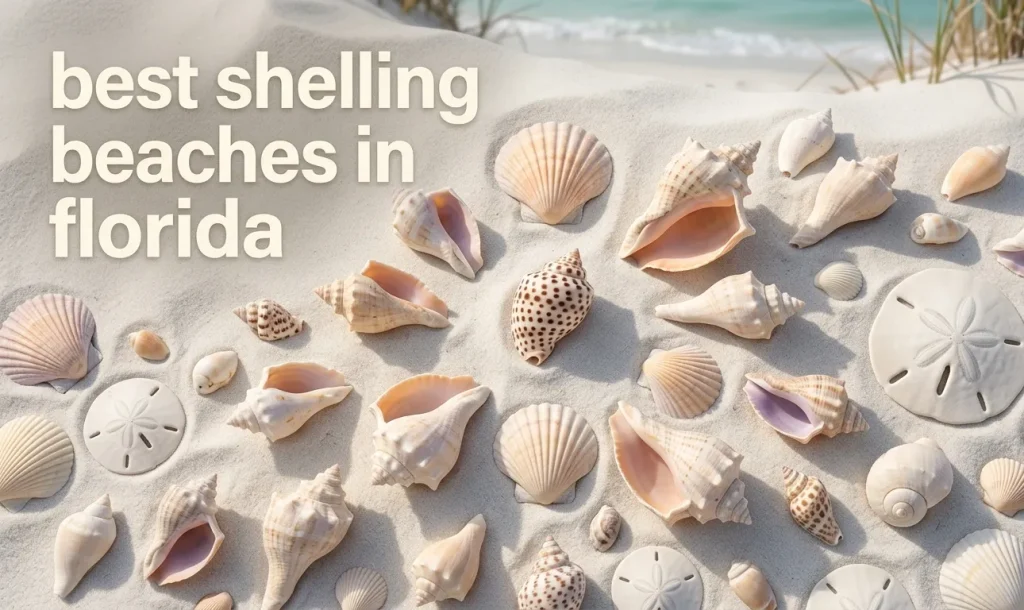
The “Sanibel Stoop” describes the bent-over posture of serious shell hunters.
You will adopt this position within minutes of hitting the sand .
These islands produce the widest variety of shells in North America.
Expect to find lightning whelks, fighting conchs, scallops, sand dollars, and angel wings .
The legendary Junonia shell is the rarest and most coveted find.
Finding one is like winning the shelling lottery .
| Beach Name | Best For | Access Method | Parking Fee | Shell Types |
|---|---|---|---|---|
| Turner Beach (Captiva) | Rare shells | Drive-up | $5/hour | Junonia, lightning whelk, angel wing |
| Blind Pass (Sanibel) | Variety | Drive-up | $5/hour | Mixed, all varieties |
| Bowman’s Beach (Sanibel) | Seclusion | Drive + walk | $5/hour | Sand dollars, conch, whelk |
| Lighthouse Beach (Sanibel) | Dolphins + shells | Drive-up | $5/hour | Scallop, coquina, olive |
| Tigertail Beach (Marco Island) | Remote pristine | Drive + wade | $8/vehicle | Calico scallop, moon snail |
| Captiva Beach | Less crowded | Drive-up | $5/hour | Coquina, murex, tulip |
Serious shellers arrive at dawn for the best picks.
Most tourists show up at noon when shells are already taken.
Winter months produce the richest shell harvests.
Storms and strong tides stir up fresh treasures from the ocean floor .
best seashell beaches in florida
Sanibel Island’s Bowman’s Beach ranks among the best seashell beaches in Florida.
This stretch offers seclusion with minimal development visible from shore .
The beach sits on Sanibel’s less crowded western end.
You will walk a short trail from the parking lot to reach the sand.
Low tide reveals shell beds that seem to go on forever.
Sand dollars, lightning whelks, and fighting conchs are common finds here.
The water stays shallow and calm for swimming.
Families with young children can hunt shells safely in the shallows.
Parking costs $5 per hour at the Bowman’s Beach lot.
Arrive before 9 AM or the lot fills completely.
Key Takeaway: The best shelling happens at low tide, especially after a full moon or storm. Plan your beach day around the tide chart, not lunchtime.
best shell beaches in florida
Blind Pass Beach sits where Sanibel Island meets Captiva Island.
The strong currents here deliver an ever-changing bounty of shells .
This narrow stretch produces some of the most abundant shell piles in Florida.
The water rushes through the pass between the two islands with serious force.
Serious shellers wade into the shallow water with mesh bags.
They scoop shells directly from the current before waves deposit them on shore.
The parking lot is small and fills before sunrise on peak days.
Arrive by 6 AM during winter shelling season (November through February).
Fighting conchs are so plentiful here that locals use them in landscaping.
You can fill a five-gallon bucket in under an hour on a good day.
The current is strong and not safe for young children.
This beach suits serious adult shellers, not casual family swimming.
best beaches for shells in florida
Tigertail Beach on Marco Island is a hidden gem for shells .
Hurricane Wilma created this unique beach setup back in 2005.
The beach splits into two distinct areas: an inner lagoon and an outer shore.
The inner lagoon is calm and shallow, perfect for young children.
To reach the outer beach, you must wade through shallow grassy water.
The quick wade rewards you with three miles of pristine shell-covered sand.
Calico scallops, sand dollars, and moon snail shells are everywhere.
The outer beach feels completely untouched and remote.
Kayaks are another option to cross the lagoon.
Rentals are available near the beach entrance.
Parking costs $8 per vehicle at Tigertail Beach.
Bring water shoes for the wade across the lagoon bottom.
best beaches for shelling in florida
Blind Pass Beach on Manasota Key deserves a spot on this list .
Tall palm trees line this stretch of pristine white sand.
The beach feels far less crowded than Sanibel’s famous spots.
Shell collectors find beautiful specimens with each tide change.
The water shifts between gorgeous shades of blue and green.
Sunset here paints the sky in oranges, pinks, and purple.
Wildlife sightings include birds diving for fish along the shoreline.
Dolphins frequently cruise past just beyond the sand bars.
The parking lot is small but manageable on weekdays.
Weekends fill quickly, especially from December through April.
Bring a small mesh bag for your shell collection.
Plastic bags break and harm marine life if they blow into the water.
| Beach Name | Location | Best Tide | Best Season | Crowd Level |
|---|---|---|---|---|
| Blind Pass (Manasota Key) | Englewood | Low tide | Winter | Low-medium |
| Turner Beach | Captiva | Outgoing | Nov-Feb | Medium |
| Bowman’s Beach | Sanibel | Low tide | Dec-Mar | Medium-high |
| Tigertail Beach | Marco Island | Low tide | Jan-Apr | Low |
| Shell Key Preserve | St. Petersburg | Low tide | Year-round | Very low |
Key Takeaway: The least crowded shelling beaches require boat access. Shell Key Preserve and Keewaydin Island have no crowds because you cannot drive there.
best shelling beaches florida
Cayo Costa State Park is among the best shelling beaches Florida offers.
The park is only reachable by boat, which keeps crowds away .
Nine miles of untouched shoreline await you here.
The sand is dotted with shells, driftwood, and fossilized shark teeth.
Water clarity on calm days lets you see straight to the bottom.
Fish dart between your legs as you wade through the shallows.
Bring your snorkel gear for shallow-water exploration.
You do not need to swim far to see marine life.
Camping is available for those wanting the full island experience.
Fall asleep to gentle waves and wake up to spectacular sunrises.
Ferry service runs from Pine Island to Cayo Costa.
The ride takes about 30 minutes each way.
Pack all food and water for your visit.
The island has no stores or restaurants.
best beaches in florida for shells
Keewaydin Island stretches for seven miles without any roads or buildings .
No bridges connect this island to the mainland at all.
Boats are the only way to reach this shelling paradise.
The boat-access requirement means you will never deal with crowds.
The sand here is coarser and more golden than powder-white beaches.
Shells collect in thick piles along the high-tide line.
Local families have visited Keewaydin for generations.
They pass down favorite shelling spots like family secrets.
The “burger boat” sometimes anchors offshore selling grilled lunches.
This floating food truck is a welcome sight after hours of shelling.
Loggerhead turtles nest on these beaches during summer months.
Respect the nesting areas and do not disturb marked zones.
Anchor your boat just offshore and wade in.
The gradual entry makes landing easy even for small boats.
shelling beaches in florida
Shell Key Preserve near St. Petersburg is a boat-access-only island .
The preserve feels like your own private paradise for the day.
Water around the island shifts between deep blue and clear turquoise.
The color changes as the sun moves across the sky.
Bird watchers should bring binoculars to this preserve.
Species nest here that you will not easily find elsewhere in Florida.
The island changes shape slightly after major storms.
Nature redecorates Shell Key with each passing hurricane season.
You can walk around the entire island in about two hours.
Each turn reveals a different view of the surrounding Gulf.
Shells here form entire banks that crunch beneath your feet.
The shell piles are so thick you barely see the sand.
Camping overnight is allowed with a permit.
Night skies here are free from city light pollution.
Bring all your own water and snacks.
The preserve has no facilities of any kind.
Key Takeaway: Boat-access beaches always have better shelling. The effort to reach Cayo Costa, Keewaydin, or Shell Key pays off in untouched shell beds that drive-up beaches cannot match.
best sea shell beaches in florida
Caladesi Island State Park near Dunedin requires a ferry to reach .
Three miles of untouched shoreline wait for your footprints.
The sand is so white it almost hurts your eyes.
Bring sunglasses for your visit to this bright beach.
Water shifts between emerald and turquoise depending on depth.
Swimming here feels like floating in a gemstone.
Kayaking through the mangrove trails offers a different perspective.
Paddle through green tunnels where the only sounds are birds.
Shells collect in “shell pockets” along the shoreline after high tide.
Early birds find sand dollars, lightning whelks, and conchs.
The island has remained completely undeveloped.
You see what Florida’s beaches looked like centuries ago.
Pack a picnic and make a full day of it.
Covered pavilions offer shady spots to rest and eat.
The ferry departs from Dunedin’s marina.
Book tickets in advance during peak season (December through April).
best shelling beaches in florida gulf coast
Cape San Blas curves like a protective arm around St. Joseph Bay .
The peninsula shape creates two distinct beach experiences in one spot.
One side faces the open Gulf with excellent shelling.
The other side hugs calm bay waters safe for young swimmers.
You can watch both sunrise and sunset over water here.
That is rare even in a state completely surrounded by water.
The sand contains more shells than most Florida beaches.
The shell content gives the sand a slightly pinkish hue.
Horseback riding is permitted on these shores.
Few Florida beaches allow this activity.
T.H. Stone Memorial St. Joseph Peninsula State Park protects this area .
The park supports nesting sea turtles and the endangered St. Andrews beach mouse.
The bay side is shallow and calm for kids.
The Gulf side delivers the best shelling.
Deer roam freely throughout the park.
You might see them grazing near the dunes at dawn.
| Beach Name | Access Method | Facilities | Best For | Drawback |
|---|---|---|---|---|
| Turner Beach | Drive-up | Restrooms, outdoor showers | Rare shells | Small parking lot |
| Cayo Costa | Ferry only | Primitive camping | Seclusion | No stores or water |
| Keewaydin Island | Boat only | None | No crowds | Requires boat ownership |
| Shell Key | Boat/kayak only | None | Shell banks | No facilities |
| Caladesi Island | Ferry only | Pavilions, restrooms | Clean sand | Ferry schedule limits time |
best beaches to find shells in florida
Pass-a-Grille Beach near St. Pete Beach offers easy access and good shelling .
The sand here is so fine it squeaks under your feet when you walk.
This beach town has kept its old Florida charm.
Small ice cream shops and local restaurants line the street.
You can walk the entire beach length in about one hour.
Friendly locals fish or read under umbrellas along the way.
Sunset celebrations happen naturally without any organization.
People just gather to applaud as the sun dips below the horizon.
Dolphins swim so close to shore you might touch them.
The shallow water stays safe for families with small children.
Historic buildings from the early 1900s sit right behind the beach.
The architecture tells stories of Florida’s development.
Visit after high tide when the ocean delivers new shells.
Local artists set up easels on weekends to paint the scenery.
Parking is available in municipal lots for a few dollars per hour.
Street parking fills early on summer weekends.
blind pass beach sanibel
Blind Pass is the narrow waterway connecting Sanibel and Captiva Islands.
The bridge and parking area at this spot are simply called Blind Pass.
This is widely considered the most productive shelling spot in Florida.
The currents here never stop delivering fresh shells .
Park in the lot on the Sanibel side of the bridge.
Walk onto the beach and turn either direction for immediate shell piles.
The outgoing tide is the best time to hunt here.
Water rushing out of Pine Island Sound carries shells onto the sand.
Fighting conchs wash up by the dozens on good days.
Horse conchs, the state shell of Florida, are also common finds.
The water moves quickly through the narrow pass.
Do not let small children wade near the current.
Parking costs $5 per hour with a two-hour maximum.
The lot opens at sunrise and fills before 7 AM in winter.
Insider Tip:
- Check the tide chart and arrive 90 minutes before low tide.
- Bring a shell scoop or kitchen strainer for sifting sand.
- Wear water shoes — broken shells hide in the shallow water.
Key Takeaway: Blind Pass on Sanibel delivers more shells per square foot than any beach in Florida. The trade-off is fierce competition from serious shellers who arrive before sunrise every single day.
turner beach captiva
Turner Beach sits at the southwestern tip of Captiva Island.
The Gulf of Mexico currents act as nature’s conveyor belt here .
Each rolling wave delivers a fresh batch of shells to your feet.
It feels like Mother Nature opened a shell boutique just for you.
Delicate angel wings with paper-thin elegance are common finds.
Lightning whelks spiral dramatically in the shallow water.
Lettered olives polished to a high gloss wash up frequently.
The legendary Junonia shell is the holy grail of Turner Beach.
Finding a Junonia here is like spotting a celebrity.
Local newspapers might run your picture if you find one .
True shelling experts arrive at Turner Beach at dawn.
They study tide charts like they are preparing for a final exam.
There is real camaraderie among dedicated beachcombers here.
Strangers gather around someone’s palm to admire a perfect specimen.
Parking costs $5 per hour with limited spaces.
The beach sits just off Captiva Drive near the Blind Pass Bridge.
Safety and Seasonal Warnings for Florida Shelling Beaches
Hurricane season runs from June through October each year.
Storms can close beaches and completely change sand conditions.
Red tide occurs most frequently between August and December.
Check Florida Fish and Wildlife websites before traveling.
Rip currents exist even on calm-looking Gulf days.
Swim near lifeguarded beaches when possible.
Jellyfish are most common from July through September.
Portuguese man-of-war sightings happen after strong onshore winds.
Sun exposure is extreme even on cloudy winter days.
Use reef-safe sunscreen and wear a sun hat.
Emergency number for Florida beaches: 911.
Lifeguards are present only at major public beaches.
Frequently Asked Questions About Florida Shelling Beaches
What is the single best beach for shelling in Florida?
Blind Pass between Sanibel and Captiva Islands is the best shelling beach in Florida, thanks to strong currents that constantly deposit fresh shells from the Gulf of Mexico.
When is the best time of year to find shells in Florida?
Winter months from November through February produce the richest shell harvests, with the best conditions following storms or strong tides that stir up the ocean floor.
Do I need a permit to collect shells on Florida beaches?
No permit is required for empty shells on most Florida beaches, but you cannot take live shells containing living creatures, and some state parks have collection limits.
What is the rarest shell to find in Florida?
The Junonia shell is the rarest and most coveted find on Florida beaches, and finding one on Sanibel or Captiva is considered a once-in-a-lifetime event.
Can I take sand dollars home from Florida beaches?
You may take only dead sand dollars that are white and have no hairs or fuzz on the surface, as live sand dollars are protected marine animals.
What equipment do I need for serious shelling?
Bring a mesh bag (not plastic), a shell scoop or kitchen strainer, water shoes for wading, sunscreen, and a tide chart for your specific beach.
Florida’s Gulf Coast delivers shelling experiences found nowhere else in North America.
Sanibel and Captiva Islands rightfully lead every list for good reason.
The best shelling requires early mornings, low tide timing, and sometimes a boat.
Your effort will be rewarded with shell piles that seem to go on forever.
Book your accommodations well in advance for winter shelling season.
Parking lots fill before sunrise, and ferries sell out days ahead.
Verify parking fees and ferry schedules on Florida State Parks websites before you go.
Conditions change after storms, and new shell beds appear overnight.
The Sanibel Stoop is waiting for you.
Get there at dawn, and you will understand why shellers never leave Florida disappointed.