Croatian Beaches 2026: Honest Guide by Coast and Island
Croatian beaches are predominantly pebble and rock, not sand. That single fact shapes every beach decision you make on the Adriatic coast.
The water is impossibly clear because there is no sand to cloud it. Visibility regularly reaches 50 feet on calm days.
According to the Croatian National Tourist Board, Croatia has over 1,000 islands and roughly 1,800 kilometers of mainland coastline. Most beaches are small coves, not long stretches.
This guide names the specific beaches worth your time. It tells you honestly which are pebble, which are sand, and who each one suits.
Croatian Beaches
Croatian beaches split into three distinct types across the Dalmatian coast and islands. Pebble beaches dominate the mainland and most islands.
Fine white pebble beaches create the classic Croatian beach experience. The pebbles are smooth and comfortable to walk on with water shoes.
Rock platform beaches offer ladder access into deep, clear water. These suit swimmers and snorkelers more than sunbathers.
True sand beaches are rare in Croatia. Sunj Beach on Lopud Island and Sakarun Beach on Dugi Otok are the most famous sandy exceptions.
The water color across all Croatian beaches is a distinctive deep turquoise. The Adriatic Sea lacks the suspended sediment that clouds sandy-bottom shorelines.
Pine forests often grow directly behind Croatian beaches. This provides natural shade, a feature most tropical beaches cannot match.
Key Takeaway: Croatian beaches are mostly pebble and rock with extraordinary water clarity. Water shoes are essential equipment.
Does Croatia Have Sandy Beaches
Croatia does have sandy beaches, but they are rare and concentrated on specific islands. The mainland coast is almost entirely pebble and rock.
Sunj Beach on Lopud Island near Dubrovnik offers the best sandy beach experience in southern Dalmatia. The sand is fine, golden, and the bay is shallow and calm.
A ferry from Dubrovnik reaches Lopud in about 50 minutes. Sun loungers and umbrellas rent for roughly 80 to 120 HRK per set.
Sakarun Beach on Dugi Otok near Zadar provides a Caribbean-style white sand bay. The water stays shallow far from shore.
The sand here is genuinely soft and white. The beach sits in a protected bay with a beach bar operating June through September.
Rajska Plaža (Paradise Beach) on Rab Island in the Kvarner Gulf is the best sandy beach in northern Croatia. The sand stretches long and shallow.
Families with young children should target these three sandy beaches specifically. Pebble beaches frustrate toddlers who cannot walk comfortably on the stones.
The Croatian National Tourist Board identifies Sunj, Sakarun, and Rajska Plaža as the country’s primary sandy beaches. These are the exceptions, not the norm.
Key Takeaway: Sandy beaches exist in Croatia but require specific island trips. Lopud, Dugi Otok, and Rab are your targets.
Which Part of Croatia Has the Best Beaches
The Dalmatian Coast between Split and Dubrovnik has the best beaches in Croatia overall. This stretch includes the Makarska Riviera and the islands of Brač, Hvar, and Korčula.
Southern Dalmatia offers warmer water, more reliable summer weather, and the highest concentration of Blue Flag certified beaches. The water temperature reaches 78°F in August.
The Makarska Riviera provides the best mainland pebble beaches with dramatic mountain backdrops. Punta Rata Beach in Brela ranks among Europe’s finest pebble coves.
The islands of Brač and Hvar deliver the most photogenic beach experiences. Zlatni Rat on Brač is Croatia’s single most iconic beach.
Istria in the north offers rocky coves and clear water but fewer classic beaches. The water is cooler, and the coastline is more rugged.
Dubrovnik’s immediate coastline has limited beach options compared to the islands. Banje Beach is the city’s main beach but it is small, pebbly, and extremely crowded in summer.
The Split-Dalmatia County Tourist Board reports that the Makarska Riviera alone holds over 20 Blue Flag certified beaches. This concentration is unmatched elsewhere in Croatia.
Key Takeaway: The Split to Dubrovnik Dalmatian coast offers Croatia’s best beaches, especially the Makarska Riviera and nearby islands.
Best Beaches Croatia
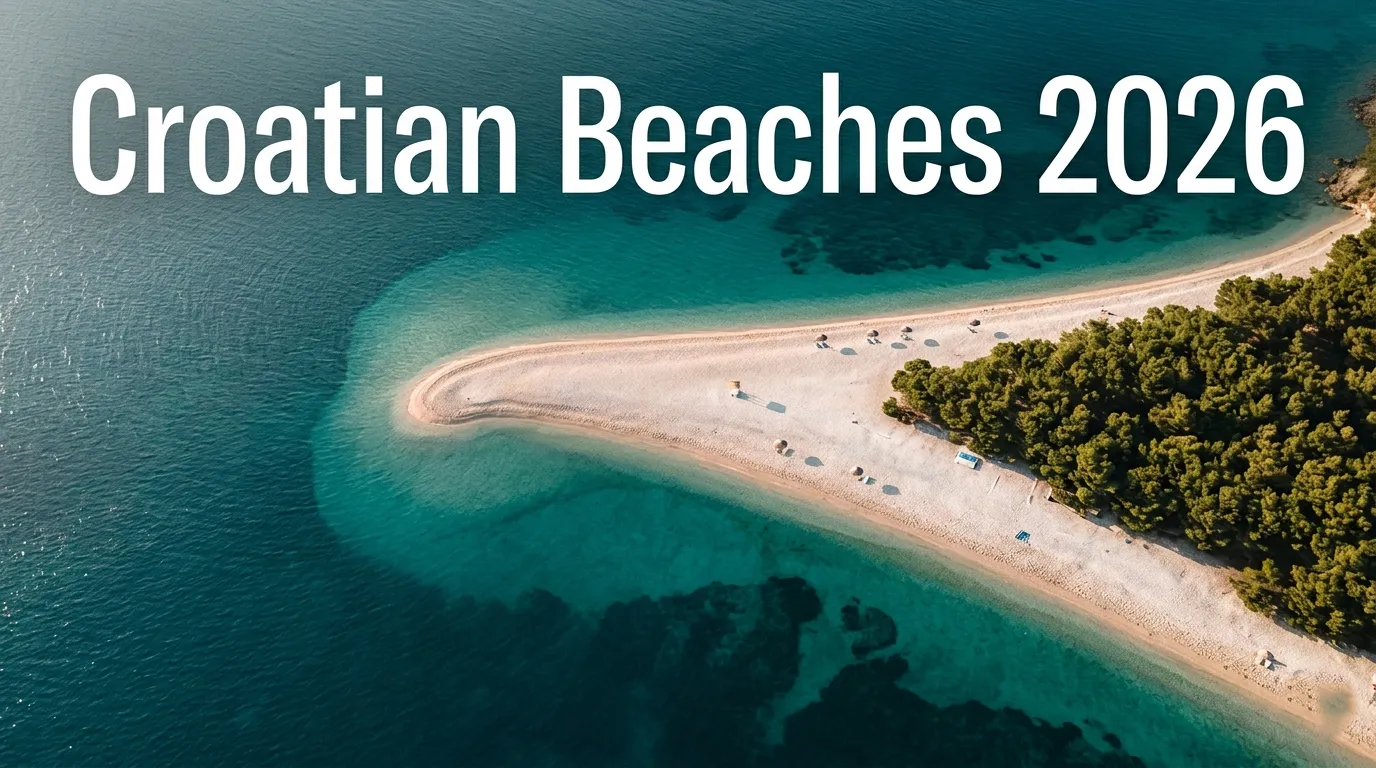
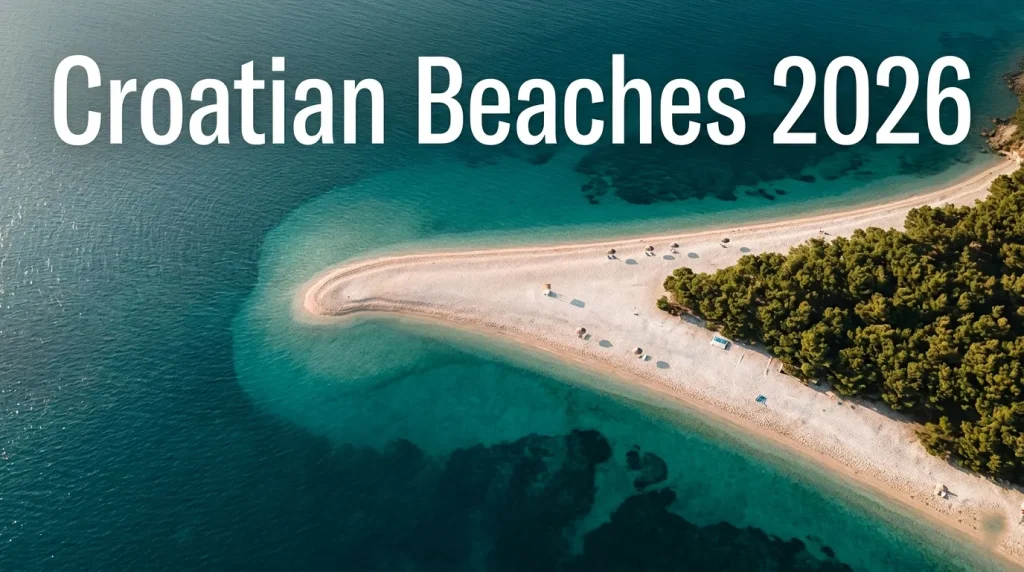
Zlatni Rat Beach on Brač Island is Croatia’s most iconic beach. The horn-shaped white pebble spit shifts shape with wind and currents.
The water around Zlatni Rat stays crystal clear year-round. Pine trees behind the beach provide natural shade.
Stiniva Cove on Vis Island won Europe’s Best Beach designation from a major travel publication. The cove is a small white pebble bay enclosed by towering cliffs.
Access requires a steep downhill hike or a small boat. This limitation keeps crowds manageable even in peak season.
Sakarun Beach on Dugi Otok delivers rare white sand in a shallow turquoise bay. The beach sits far from major tourist hubs.
Getting here requires a car and ferry from Zadar. The journey filters out casual visitors and preserves the beach’s relaxed character.
Punta Rata in Brela on the Makarska Riviera represents the best mainland beach experience. Fine pebbles, pine shade, and the iconic Brela Stone rock formation define this beach.
Sunj Beach on Lopud Island offers the best sandy swimming near Dubrovnik. A ferry day trip makes this accessible without staying on the island.
| Beach | Location | Surface | Best For | Crowd Level |
|---|---|---|---|---|
| Zlatni Rat | Brač Island | Fine pebble | Photos, windsurfing | Very high |
| Stiniva Cove | Vis Island | Pebble cove | Seclusion, photos | Moderate |
| Sakarun Beach | Dugi Otok | White sand | Swimming, families | Moderate |
| Punta Rata | Brela (Makarska) | Fine pebble | Swimming, families | High |
| Sunj Beach | Lopud Island | Golden sand | Families, swimming | Moderate |
Key Takeaway: Zlatni Rat for iconic photos, Stiniva for seclusion, Sakarun and Sunj for rare sand.
Split Croatia Beaches
Bačvice Beach is Split’s most famous city beach, a shallow sand and pebble bay within walking distance of Diocletian’s Palace. The water stays waist-deep far from shore.
Locals play picigin here, a traditional shallow-water ball game unique to Split. The beach is lively, social, and often very crowded.
Bačvice works for a quick city swim. It does not work for a quiet, relaxing beach day during July and August.
Kašjuni Beach west of Split offers a quieter alternative with clear water and a beach bar. The pebble beach sits below Marjan Hill.
Bene Beach inside Marjan Park provides the best family beach near Split. Pine forest shade, a playground, and calm shallow water suit young children well.
The beach is concrete and pebble, not sand. Water shoes help children navigate the entry comfortably.
Split’s mainland beaches are convenient but cannot compete with the islands. Serious beach seekers should use Split as a ferry hub for Brač and Hvar.
The Split-Dalmatia County Tourist Board confirms that Bačvice holds Blue Flag certification. The water quality is tested regularly throughout the summer season.
Key Takeaway: Split’s city beaches work for quick swims and social atmosphere. Take a ferry to Brač or Hvar for genuine beach experiences.
Dubrovnik Croatia Beaches
Banje Beach is Dubrovnik’s primary city beach, a pebble cove directly below the Old Town walls. The view of the UNESCO-listed city from the water is extraordinary.
The beach itself is small, crowded, and expensive by Croatian standards. Sun loungers can cost 150 HRK or more per day in peak season.
Banje Beach suits travelers who prioritize the Old Town view over beach quality. Couples and city-break visitors get the most from this location.
Sveti Jakov Beach offers a better swimming experience about a 30-minute walk from the Old Town. The pebble beach is larger and less crowded than Banje.
The access requires descending many stairs. This keeps the crowds thinner and rewards those who make the effort.
Copacabana Beach near Babin Kuk provides a more relaxed beach experience away from the Old Town. The pebble beach has water sports, a beach bar, and more space.
Dubrovnik’s best beach experiences require leaving the city entirely. The Elaphiti Islands, especially Lopud with its sandy Sunj Beach, offer what the city cannot.
The Dubrovnik-Neretva County Tourist Board recommends the Elaphiti Islands for the best swimming beaches in the Dubrovnik region. A ferry day pass provides access to multiple islands.
Key Takeaway: Dubrovnik’s city beaches are limited and crowded. Take a ferry to Lopud Island’s sandy Sunj Beach for a genuine beach day.
Hvar Croatia Beaches
Dubovica Beach is the best beach on Hvar Island, a white pebble cove about 20 minutes east of Hvar Town. A stone house sits directly behind the crescent of clear water.
Access requires parking along the main road and walking down a steep path. The descent takes about 10 minutes on foot.
Pokonji Dol Beach offers the closest good swimming to Hvar Town. The pebble beach has a beach bar, clear water, and walking access from the town center.
The beach faces south for all-day sun. Arrive before 10 AM in peak season to secure a lounger.
The Pakleni Islands just offshore from Hvar Town provide the best beach experience in the Hvar area. Small boats taxi visitors to Jerolim, Stipanska, and Palmizana beaches.
These islands offer rocky coves, pine shade, beach bars, and significantly clearer water than the Hvar mainland. Naturist (FKK) sections exist on several Pakleni beaches.
Hvar’s beaches are predominantly rocky and pebble. The island suits couples, groups, and luxury travelers more than families with young children.
The Croatian National Tourist Board identifies the Pakleni Islands as one of Croatia’s most beautiful archipelago beach zones. A water taxi from Hvar Town costs roughly 50 to 80 HRK round trip.
Key Takeaway: Hvar’s best beaches are on the Pakleni Islands. Dubovica is the best mainland Hvar cove but requires a steep access hike.
Brač Croatia Beaches
Zlatni Rat Beach dominates Brač Island’s beach reputation for good reason. The horn-shaped white pebble spit is Croatia’s most photographed beach.
The beach shape shifts subtly with wind and current patterns. This means Zlatni Rat looks slightly different each time you visit.
Zlatni Rat offers excellent windsurfing conditions on the western side. The eastern side stays calmer for swimming and sunbathing.
Parking costs roughly 50 to 80 HRK per day and fills by 10 AM in July and August. Arrive early or take the tourist train from Bol town.
Murvica Beach west of Zlatni Rat provides a quieter, more secluded Brač experience. The pebble cove sits below dramatic cliffs with a small beach bar in season.
Lovrečina Bay on the north coast of Brač offers a rare sandy patch on the island. The shallow bay has remnants of a Roman villa behind the beach.
Brač suits active travelers and couples who want iconic scenery. Families should target Lovrečina Bay for the gentler entry and sand patches.
The Split-Dalmatia County Tourist Board confirms that Zlatni Rat holds Blue Flag status. The beach is fully equipped with loungers, umbrellas, and a beach bar.
Key Takeaway: Zlatni Rat is the must-visit Brač beach. Lovrečina Bay is better for families with its sandy patches and shallow water.
Zlatni Rat Beach
Zlatni Rat Beach on Brač Island is a unique horn-shaped white pebble spit that extends roughly 500 meters into the Adriatic Sea. Pine trees shade the landward end of the beach.
The shape shifts slightly depending on wind and current direction. This natural phenomenon means no two visits to Zlatni Rat look identical.
The western side of the horn catches breezes and suits windsurfers. The eastern side stays calmer and works better for swimming and lounging.
Parking at Zlatni Rat costs approximately 50 to 80 HRK per day. The lot fills completely by 10 AM in July and August.
A tourist train runs from Bol town to Zlatni Rat throughout the day. This eliminates the parking stress if you stay in Bol or arrive by ferry.
The beach is entirely pebble, not sand. Water shoes make walking and entering the water significantly more comfortable.
Sun loungers and umbrellas rent for roughly 80 to 120 HRK per set. Book ahead through your accommodation or arrive very early in peak season.
The Croatian National Tourist Board identifies Zlatni Rat as the country’s most recognizable beach symbol. The beach appears on countless Croatia tourism promotional materials.
Key Takeaway: Zlatni Rat is Croatia’s iconic beach photo but it is crowded, pebbly, and requires early arrival for parking.
Best Beaches in Croatia for Families
Sunj Beach on Lopud Island is the single best family beach in southern Dalmatia. The sandy bottom and shallow entry create safe conditions for children of all ages.
The bay stays calm with no significant waves. The water deepens very gradually, allowing toddlers to wade safely.
Rajska Plaža on Rab Island delivers the best family beach in northern Croatia. The sandy beach stretches long and wide with shallow water perfect for young swimmers.
The beach has facilities including restrooms, a beach bar, and sun lounger rentals. Pine trees behind the beach offer natural shade.
Punta Rata in Brela on the Makarska Riviera offers the best mainland family beach. The fine white pebbles are smooth and walkable with water shoes.
The beach holds Blue Flag certification for water quality and safety. The iconic Brela Stone rock provides a memorable landmark children love.
Lovrečina Bay on Brač Island combines sandy patches with Roman ruins behind the beach. Children can swim, build sandcastles, and explore history in one location.
Families should avoid steep-access beaches like Stiniva Cove on Vis. The difficult descent with children and beach gear creates more stress than the cove is worth.
Key Takeaway: Sunj Beach (Lopud), Rajska Plaža (Rab), and Punta Rata (Brela) are Croatia’s best family beaches for sand and safe swimming.
Best Beaches in Croatia for Couples
Stiniva Cove on Vis Island delivers Croatia’s most romantic beach experience. The small white pebble cove sits enclosed by towering limestone cliffs.
A small fishing boat often anchors in the cove, completing the secluded Mediterranean scene. Access requires effort, which preserves the intimacy.
Dubovica Beach on Hvar Island offers a romantic, accessible cove with a historic stone house on the shore. The white pebble beach and clear water create a classic Dalmatian setting.
Arrive before 9 AM or after 4 PM for the quietest couple experience. Midday brings day-trippers who dilute the romantic atmosphere.
Pasjača Beach near Dubrovnik in the Konavle region offers a dramatic, secluded cove carved into coastal cliffs. The beach is small, pebbly, and reached by a steep path.
The effort limits visitors and rewards couples with a near-private beach experience. There are no facilities here, bring everything you need.
Couples should book shoulder season (June or September) for the most romantic experience. July and August crowds at Zlatni Rat and Banje Beach destroy any sense of intimacy.
The Dubrovnik-Neretva County Tourist Board identifies Pasjača as one of the region’s most beautiful hidden coves. Access requires a car and a steep descent.
Key Takeaway: Stiniva (Vis), Dubovica (Hvar), and Pasjača (Konavle) offer Croatia’s most romantic couple beaches. Visit in shoulder season.
Best Sandy Beaches Croatia Mainland
The Croatian mainland has very few true sandy beaches. Rajska Plaža on Rab Island, Sunj Beach on Lopud, and Sakarun Beach on Dugi Otok are the sandy standouts, all on islands.
On the mainland itself, Ninska Laguna near Zadar offers sandy shallows and warm, shallow water. The lagoon is more mudflat than classic beach but works well for families.
The Makarska Riviera features fine pebble beaches that approach sand-like comfort. Punta Rata in Brela and Nugal Beach offer smooth, small pebbles that feel almost sandy.
Bačvice Beach in Split has a sandy section near the water’s edge. This is the closest thing to a sandy city beach on the Dalmatian mainland.
Travelers requiring genuine sandy mainland beaches should look toward Nin near Zadar or Kraljičina Plaža near Nin. These are the rare exceptions on the Croatian mainland.
Lopar Peninsula on Rab Island technically qualifies as an island but connects by ferry in 15 minutes. The sandy beaches here, including Rajska Plaža, provide the best sandy beach experience near the mainland.
The Croatian National Tourist Board confirms that sandy beaches represent a small percentage of Croatia’s coastline. Most visitors seeking Caribbean-style sand should target the specific named exceptions above.
Key Takeaway: Croatia’s mainland has almost no true sand beaches. Target the islands of Rab, Lopud, and Dugi Otok for genuine sand.
Makarska Riviera Beaches
The Makarska Riviera between Split and Dubrovnik offers the best concentration of high-quality mainland beaches in Croatia. The Biokovo Mountain range creates a dramatic backdrop.
Punta Rata in Brela is the standout beach on this stretch. Fine white pebbles, pine shade, and the iconic Brela Stone rock formation define this Blue Flag beach.
Nugal Beach between Makarska and Tučepi is a clothing-optional pebble cove with exceptionally clear water. Access requires a 20-minute coastal walk from the nearest parking.
Makarska Town Beach offers a long, wide pebble beach with a promenade of cafes, ice cream shops, and restaurants. It suits families who want facilities within walking distance.
The Makarska Riviera beaches share common traits. Fine pebbles, pine forest backing, mountain views, and reliable summer sun define this coastline.
Parking along the Makarska Riviera costs roughly 30 to 60 HRK per day. Spaces fill early in peak season, particularly at Punta Rata.
The Split-Dalmatia County Tourist Board reports that the Makarska Riviera holds the highest concentration of Blue Flag beaches in Croatia. Water quality and safety standards are consistently high.
Key Takeaway: The Makarska Riviera is Croatia’s best mainland beach region. Punta Rata in Brela is the highlight beach.
Banje Beach Dubrovnik
Banje Beach is Dubrovnik’s most famous beach, a pebble cove sitting directly below the UNESCO-listed Old Town walls. The view from the water looking up at the city walls is genuinely unique.
The beach itself is small, crowded, and expensive. Sun lounger rentals can reach 150 HRK per day in peak season.
Banje Beach operates as a beach club with a restaurant, bar, and DJ sets during summer. It suits travelers who want a social scene more than a quiet swim.
Couples and city-break visitors who want the iconic Dubrovnik wall view get the most from Banje. Families and budget travelers should look elsewhere.
The water quality at Banje Beach is generally good. The Dubrovnik-Neretva County Tourist Board confirms regular water testing during the summer season.
For a better swimming experience, walk 30 minutes to Sveti Jakov Beach. Or take the ferry to Lopud Island for sandy Sunj Beach, which beats Banje in every category except proximity.
Key Takeaway: Banje Beach is about the Old Town view, not the beach quality. It is small, expensive, and extremely crowded in summer.
Are Croatian Beaches Free
Most Croatian beaches are free to access by law. The Croatian Maritime Code guarantees public access to all beaches and the coastline.
What costs money are sun loungers, umbrellas, and beach club amenities. You can always bring your own towel and sit on the free section of any beach.
Some beaches have limited free space because concessionaires rent most of the area. Arrive early in peak season to secure a free spot on popular beaches.
Parking costs at major beaches range from 30 to 80 HRK per day. Free street parking exists but fills before 8 AM in summer at popular locations.
Beach clubs like Banje Beach in Dubrovnik charge for lounger use but cannot legally prevent you from sitting on the beach itself. Bring a towel and claim your space.
The Croatian National Tourist Board confirms that all beaches are public property. No hotel or private entity can restrict beach access to guests only.
Key Takeaway: Croatian beaches are free to access. You pay only for parking, loungers, and amenities, never for the beach itself.
Sea Urchin Risk Croatian Beaches
Sea urchins are present on rocky and pebble seabeds throughout Croatian beaches. The black spiny urchins sit on rocks and can puncture bare feet.
Water shoes are essential for Croatian beaches. They protect against sea urchin spines and make walking on pebbles comfortable.
Sea urchins are more common on less-visited, rocky beaches. Popular pebble beaches with heavy foot traffic have fewer urchins.
Sandy beaches like Sunj (Lopud) and Sakarun (Dugi Otok) have essentially no sea urchin risk. These are the safest beaches for barefoot walking.
If you step on a sea urchin, soak the foot in hot water and seek medical attention for spine removal. Most spines can be treated at local pharmacies or clinics.
Children should wear water shoes at all times on Croatian pebble and rocky beaches. The peace of mind is worth the small footwear investment.
The Croatian Ministry of Tourism advises water shoes for all rocky and pebble beach areas. This is standard local practice, not an overreaction.
Key Takeaway: Water shoes are essential on Croatian pebble and rocky beaches. Only sandy beaches like Sunj and Sakarun are safe barefoot.
Safety and Seasonal Warnings for Croatian Beaches
Sea urchins on rocky seabeds pose the most common injury risk on Croatian beaches. Water shoes prevent nearly all sea urchin injuries.
Key safety and seasonal facts every visitor should know:
- Water shoes are essential on all pebble and rocky beaches. Barefoot walking on pebbles is painful and sea urchins can cause serious foot injuries.
- The Adriatic bura wind creates sudden rough conditions on exposed beaches. Watch for whitecaps and exit the water immediately if wind strengthens.
- Cliff jumping is popular but dangerous at unverified locations. Only jump where locals jump and check water depth first.
- July and August bring extreme UV exposure with minimal natural shade on many beaches. Pine forest-backed beaches offer the best sun protection.
- Most Croatian beaches have no lifeguards. Swim within your ability and supervise children closely.
- Beach bar and restaurant operating seasons run roughly June through September. Remote beaches have no facilities or water sources.
- Ferry schedules reduce significantly from October through April. Island beaches become inaccessible without a car ferry or private boat.
- Pebble beaches absorb and radiate intense heat. Footwear is necessary to walk from your towel to the water on summer afternoons.
For beach emergencies, call 112 for general emergency services or 195 for the National Search and Rescue Center. Response times to remote island coves are slower than mainland beaches.
Frequently Asked Questions About Croatian Beaches
Does Croatia have sandy beaches or pebble beaches?
Croatia has predominantly pebble and rocky beaches, with only a few rare sandy beaches on specific islands like Lopud, Dugi Otok, and Rab.
The pebble beaches feature smooth white stones and exceptionally clear water because there is no sand to cloud visibility.
True sand beaches exist but are the exception and require targeted island trips to reach them.
Which part of Croatia has the best beaches for swimming?
The Dalmatian Coast between Split and Dubrovnik offers the best swimming beaches in Croatia with the warmest water and highest Blue Flag concentration.
The Makarska Riviera provides the best mainland swimming beaches with fine pebbles and dramatic mountain backdrops.
Islands like Brač and Hvar offer the clearest water and most photogenic swimming coves.
What is the best beach in Croatia for families with children?
Sunj Beach on Lopud Island is Croatia’s best family beach because it has a sandy bottom, shallow calm water, and gentle entry suitable for children of all ages.
Punta Rata in Brela on the Makarska Riviera is the best mainland family beach with fine pebbles, facilities, and Blue Flag safety certification.
Rajska Plaža on Rab Island offers a long sandy beach ideal for families in northern Croatia.
Are Croatian beaches free to access?
Yes, all Croatian beaches are free to access by law under the Croatian Maritime Code guaranteeing public coastline access.
You pay for parking, sun loungers, and umbrellas but never for beach entry itself.
Bring your own towel and find free space on any beach, even those with concession rentals.
Is there seaweed or sea urchins on Croatian beaches?
Sea urchins are common on rocky Croatian seabeds and require water shoes for protection on all pebble and rocky beaches.
Seaweed is generally minimal on Croatian beaches due to the rocky seabed and clear Adriatic water.
Sandy beaches like Sunj on Lopud have virtually no sea urchin risk and are safe for barefoot walking.
Which Croatian island has the best beaches?
Brač Island has the best individual beach in Croatia with Zlatni Rat, the iconic horn-shaped white pebble spit.
Hvar Island offers the best variety of beach experiences including the Pakleni Islands archipelago and Dubovica Cove.
Vis Island provides the most secluded and romantic coves including Stiniva Cove, Europe’s former Best Beach winner.
Croatian beaches reward travelers who understand what they are getting. The water is some of the clearest in Europe. The scenery with pine forests and limestone mountains is extraordinary.
The beaches are predominantly pebble, not sand. Water shoes, early arrival for parking, and realistic expectations about crowds in July and August transform your experience.
Book island ferry tickets in advance during peak season. Target June or September for the best balance of warm water, open facilities, and manageable crowds.
Verify 2026 ferry schedules, parking fees, and beach bar operating dates with the Croatian National Tourist Board or your accommodation before planning beach visits. These details change annually and seasonal conditions affect accessibility.