La Jolla Beaches Guide 2026: 8 Best Spots & Tips
La Jolla’s beaches are not a single, continuous stretch of sand. They are a scattered collection of distinct coves and a single long shoreline.
Each beach has a radically different character. One is a tiny, crowded gem for snorkeling, and another is a mile-long family playground.
This guide names every significant beach in La Jolla. I will tell you which one fits your specific day, from a romantic sunset to a morning surf session with locals.
La Jolla Beaches Overview
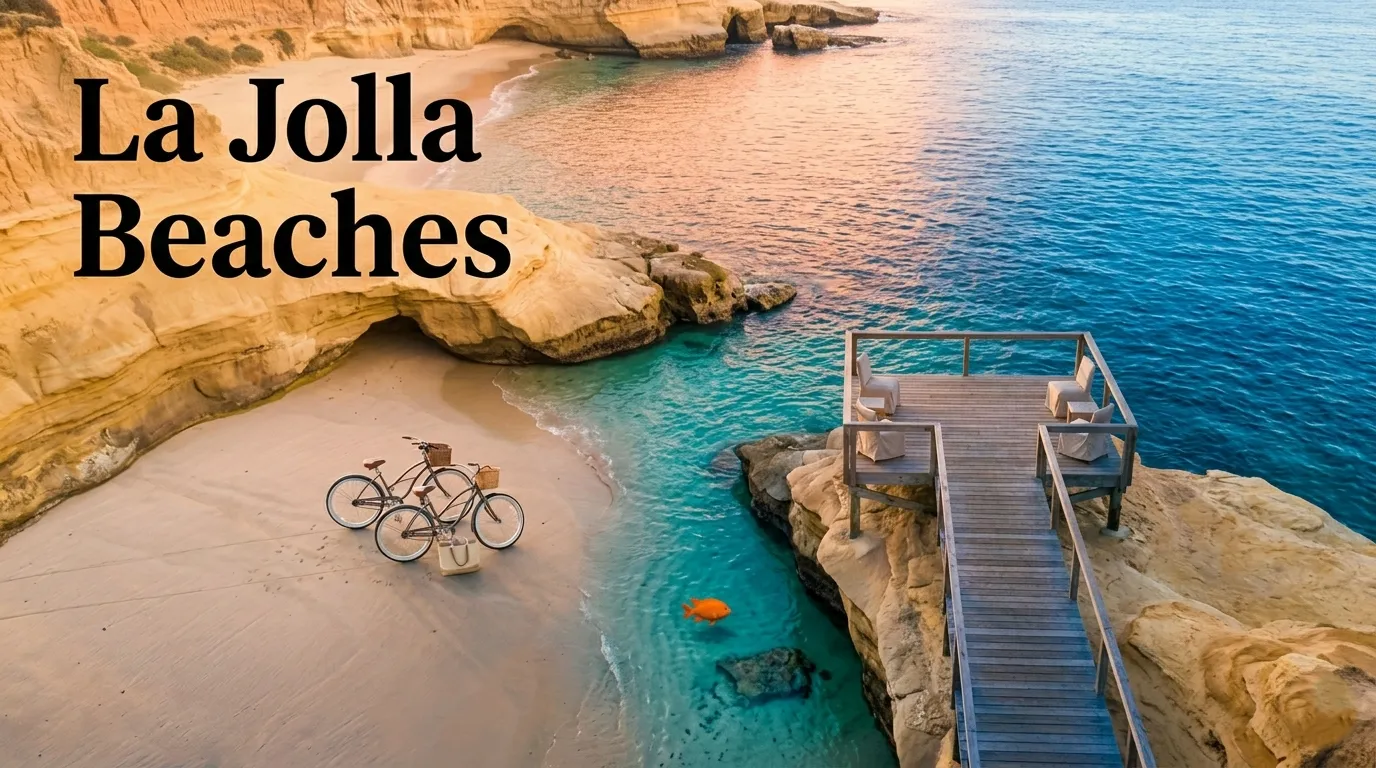
La Jolla beaches are defined by dramatic sandstone cliffs, cold clear water, and a protected underwater park. The coastline here is rugged, curated, and expensive.
The sea life is the main event. The water off La Jolla Cove and Shores is part of the San Diego-La Jolla Underwater Park Ecological Reserve, a 6,000-acre protected zone where fishing is banned and marine life flourishes.
You will see orange garibaldi, leopard sharks, sea lions, and cormorants. The beaches are a theater of wild, accessible ocean life that is rare for a mainland US city.
The water, however, is cold. Summer temperatures peak around 72°F, but winter and spring hold steady in the chilly mid-50s to low 60s, so a wetsuit is standard for any extended swim or surf session.
According to the San Diego Tourism Authority, La Jolla’s seven miles of coastline attract millions of visitors annually. The beaches are free, but the parking meters are not, and enforcement is relentless.
Key Takeaway: La Jolla beaches are about intimate coves, marine life, and cold water, not long, warm-water sandy strands.
La Jolla San Diego Beaches
La Jolla is a distinct village within the city of San Diego, and its beaches carry a premium, exclusive feel. They sit about 12 miles north of downtown San Diego.
You reach them via a short drive from Interstate 5. The moment you descend the hill into the village, the ocean view and the property values shift into a higher bracket.
The beaches here are cleaner and quieter than the central San Diego strands of Mission and Pacific Beach. The trade-off is a much more difficult parking situation and a far more regulated, less party-oriented atmosphere.
The coastline divides into two zones. The main coves cluster around the village center on Coast Boulevard, and the long, sandy La Jolla Shores stretch sits just north, closer to the marine reserve.
Experienced San Diegans know to bypass central La Jolla for the Shores on a weekend. The cove is for a quick, specific mission, not an all-day beach camp with a cooler and an umbrella.
Best Beaches in La Jolla
The best beach in La Jolla depends entirely on your mission. There is no single correct answer for all travelers.
La Jolla Cove is for snorkeling and the iconic postcard photo. La Jolla Shores is for a long, easy family beach day with gentle surf and ample sand.
Windansea Beach is for surfing and a pure, local, scenic experience. The other named coves each serve a smaller, more specific purpose.
My comparison table below provides an honest, direct ranking. It matches each beach to its ideal traveler and core activity.
| Beach | Best For | Water & Sand | Crowd Level | Insider Note |
|---|---|---|---|---|
| La Jolla Cove | Snorkeling, photos | Crystal clear, tiny beach | Extremely High | Parking is the island’s hardest puzzle. Arrive by 8 AM. |
| La Jolla Shores | Families, beginners, kayaking | Gentle, wide sandy beach | High | The north end by Scripps Pier is quieter and has free street parking. |
| Windansea Beach | Surfing, local scene, sunsets | Heavy surf, rocky shore | Moderate | No amenities. Just a historic surf shack and raw beauty. |
| Marine Street Beach | Body surfing, strong swimmers | Powerful shore break, coarse sand | Low to Moderate | Not for children. The shore break can cause serious spinal injuries. |
| Shell Beach | Secluded, low-tide exploration | Rocky, small sandy pocket | Low | Park near Windansea and walk south. Often empty. |
| Children’s Pool | Viewing seals, easy access | Seals dominate the beach | High | You watch the seals, but you cannot swim with them. |
| Black’s Beach | Nude sunbathing, expert surfing | Powerful surf, deep sand | Low | A steep, 300-foot cliff hike is the only legal access. |
A first-time visitor should start at the Cove at 8 AM to see the iconic view. Then spend the rest of the day at La Jolla Shores for an actual comfortable beach experience.
La Jolla Shores Beach
La Jolla Shores is the best all-around beach in La Jolla for a long, traditional beach day. It is a mile-long, wide, sandy crescent with gentle waves.
This is the launching point for kayaking tours to the sea caves. The gentle surf and soft sand make it the safest place for beginner surf lessons and children’s swimming.
The north end of the beach, near Scripps Pier, is the prime spot for the summer leopard shark aggregation. Dozens of harmless, spotted sharks gather in the calm, knee-deep water from June through October.
Parking is easier here than at the Cove, but still challenging. The main paid lot fills quickly, so head for the residential streets north of the beach, read the permit signs carefully, and walk two blocks.
This is the beach for families with young children. The southern end has a playground and restrooms, and the gentle wave break creates a safe, shallow zone for toddlers to splash.
Key Takeaway: La Jolla Shores is the family-friendly workhorse beach. The Cove is the postcard star.
La Jolla Cove Beaches
La Jolla Cove is the tiny, iconic, and intensely crowded beach you see on every San Diego postcard. It sits protected by cliffs, creating a natural, calm swimming pool.
The water here is exceptionally clear because it is part of the no-fishing marine reserve. Snorkeling with the bright orange garibaldi and harmless leopard sharks is the cove’s signature experience.
The beach itself is a small patch of coarse sand that disappears entirely at high tide. This is not a spread-out-and-play-football beach. It is a set-up-a-towel-shoulder-to-shoulder-with-strangers beach.
Parking is a genuine, trip-altering nightmare. The tiny adjacent lot is a non-starter, so you must use the street meters on Coast Boulevard or park in the village and walk down, and you must arrive before 8 AM in summer.
Insider Tip:
- Pay for parking using the ParkMobile app, not the physical kiosks, which often have a line.
- Walk down the stairs at the north end of the cove at low tide to explore the small, hidden pocket beaches.
- Families with young children should skip the Cove for La Jolla Shores due to the crowds and lack of sand at high tide.
The sea lions that lounge on the rocks create a constant, raucous soundtrack. The smell of guano can be strong on a hot day, which is part of the honest, unfiltered cove experience.
Windansea Beach La Jolla
Windansea Beach is the gritty, beautiful, and deeply local soul of La Jolla’s surf culture. It is the anti-Cove.
There is no parking lot, no restroom, and no concession stand. Just a historic palm-thatched surf shack, a jagged rocky shoreline, and a powerful, world-class reef break.
The surf here is for experienced locals only. The wave breaks hard and fast over a shallow reef, and the paddle-out is long and demanding, with a strict, unwritten pecking order in the lineup.
For non-surfers, Windansea is the best sunset spot in La Jolla. You sit on the smooth sandstone rocks and watch the sun melt into the Pacific with a fraction of the Cove’s crowd.
A walk south from Windansea at low tide reveals a series of small, hidden sandstone coves like Shell Beach. These pocket beaches feel like a secret, private world and are ideal for quiet, romantic moments.
Couples will find Windansea’s raw, unstructured beauty far more romantic than the commercialized Cove. The lack of amenities and the steep, rocky entry make it a poor choice for families with children.
La Jolla Snorkeling Beaches
The best snorkeling beach in La Jolla is La Jolla Cove for its calm, clear water and protected marine reserve status. The garibaldi, California’s state marine fish, are a brilliant, unmissable flash of orange.
The second-best spot is the south end of La Jolla Shores, near the rocky reef. This is where you can snorkel alongside docile leopard sharks during their summer aggregation from June through October.
The water is cold. A 3mm wetsuit is standard and necessary for comfort from October through June, and even in summer, most snorkelers prefer a light neoprene top.
Do not touch or harass the marine life. The garibaldi, sea lions, and sharks are protected by law, and the lifeguards and rangers actively enforce a no-contact rule with significant fines.
Rent quality gear from a shop on Avenida de la Playa near the Shores, not a cheap souvenir mask from a village shop. A proper, well-fitting mask that doesn’t fog makes the difference between a memorable swim and a frustrating one.
La Jolla Kayaking
Kayaking in La Jolla is synonymous with exploring the sea caves. The seven sandstone caves, accessible only from the water, are a defining La Jolla experience.
All tours launch from La Jolla Shores beach. You paddle south along the cliffs, past the Cove, and into the largest cave, the Clam, if the ocean conditions allow it.
Book a guided tour. The guides know the kelp forest, the sea lion behavior, and the safe ocean swell windows that a novice on a rental cannot read, making a guided kayak tour worth the price, which typically runs from $40 to $80 per person.
Morning tours are the best choice for calm, glassy water. Afternoon wind chop makes the paddle back to the Shores a genuine workout, which can be exhausting for casual paddlers.
This activity is best for couples and families with older, active children. Solo luxury seekers will appreciate the unique perspective of the coastline from the water, which is far superior to the view from the road.
La Jolla Tide Pools
The best tide pools in La Jolla are found during a low tide at the rocky ledges south of Shell Beach and north of Dike Rock near Scripps Pier. A negative low tide is required to expose the best pools.
A negative low tide occurs when the tide drops below the average low water line. Check a specific La Jolla tide chart, and plan your visit for a morning with a minus tide for the most active pools.
You will see hermit crabs, sea anemones, ochre sea stars, and small octopi if you are patient. The key is to stand still at a single pool for several minutes and watch the life emerge.
California Coastal Commission regulations require that you never remove animals, shells, or rocks. Touch anemones gently with one wet finger, and never pry a creature off a rock, as this kills it.
Tide pooling is the single best free activity for families with curious children. It is a quiet, slow, and deeply educational contrast to the crowded chaos of the main beaches.
Key Takeaway: Snorkeling is at the Cove, kayaking launches from the Shores, and tide pooling works best south of Windansea.
La Jolla Surfing Beaches
La Jolla is not a beginner surfing destination. The waves break over shallow, jagged reefs and powerful shore breaks.
Windansea Beach is the most famous and intense surf spot. The reef break produces a fast, hollow, and powerful wave that is for experienced surfers only.
Marine Street Beach has a notoriously heavy shore break. The wave dumps directly onto hard, wet sand in just a few feet of water, causing severe spinal injuries to the unprepared.
The safest and most appropriate surf spot for beginners is the south end of La Jolla Shores. Several licensed surf schools offer lessons here, and the gentle, rolling whitewater is perfect for a first timer.
Never surf north of Scripps Pier. That is Black’s Beach, a powerful, expert-only break accessible by a treacherous cliff trail or a miles-long walk from Torrey Pines, and it is not a place for casual swimmers or curious beginners.
La Jolla Beach Parking
Parking at La Jolla beaches is a calculated mission, not a casual drive-up. It is the single greatest source of visitor frustration.
You must pay at every coastal meter and lot. Rates typically range from $3.00 to $6.00 per hour in 2026, and you pay via credit card at a kiosk or the ParkMobile app.
The small lot at La Jolla Cove is a tourist trap. Pretend it does not exist; instead, drive north to find a spot near the Museum of Contemporary Art and walk the short, scenic coastal path back to the cove.
For La Jolla Shores, the main paid lot is the obvious choice, but it fills by 9 AM. Go two blocks inland to the residential streets, read every parking sign three times for permit-only restrictions, and park legally.
The smartest move is to park once near the village and walk the entire coastline. The path from the Cove to Windansea is a flat, beautiful mile, and it frees you from the parking anxiety of moving between spots.
Beaches Near La Jolla
The beaches near La Jolla offer a broader range of San Diego experiences. They are a short drive south or north on the coast.
Directly south is Pacific Beach, a long, sandy stretch with a boardwalk, a lively young crowd, and a completely different social atmosphere. It is the anti-La Jolla.
North of La Jolla lies Torrey Pines State Beach, a stunning, undeveloped stretch backed by sandstone cliffs and a protected natural reserve. This is the best beach for a solitary, scenic hike followed by a swim.
Parking at Torrey Pines requires a state park day-use fee, typically $15 to $20. Alternatively, you can park for free along the Pacific Coast Highway and walk in, but the spots fill at sunrise on weekends.
Blacks Beach, between La Jolla Shores and Torrey Pines, is famous for powerful surf and a clothing-optional section. The only access is a strenuous, 300-foot vertical hike down a cliff path, so it is a serious, self-sufficient beach day.
Best La Jolla Beach for Families
The best La Jolla beach for families is La Jolla Shores. It is the only beach with the complete package of a playground, restrooms, gentle surf, and a wide sandy expanse.
The southern end near the main lifeguard tower is the epicenter of family activity. The waves are small, the water deepens slowly, and the sand is soft and perfect for castle building.
Children’s Pool is a poor choice for swimming with children. It is a seal rookery, and the water is contaminated by seal waste, so the beach is for viewing the animals from the wall, not for contact.
For a quieter family beach day, drive north to Torrey Pines State Beach. Pack a full cooler, bring an umbrella, and accept that you will have a long walk from the parking lot to the water’s edge.
The single most important family safety rule is to obey the warning flags at Marine Street Beach. The shore break there is genuinely dangerous for children and weak swimmers, and it should be strictly avoided.
La Jolla Romantic Beaches
A romantic beach in La Jolla is a quiet, scenic pocket without the crowds. This means avoiding La Jolla Cove at midday.
Windansea Beach at sunset is the single most romantic spot. The view from the sandstone rocks as the sun drops into the ocean is an iconic, quiet, and deeply local ritual.
Shell Beach, a tiny cove just south of Windansea, is the best place for a private, romantic moment. It feels hidden and exclusive, and it is only accessible by a small staircase from the road.
Book a sunset kayak tour from La Jolla Shores for the ultimate romantic experience. Paddling together through a calm kelp forest as the sky turns orange and pink is a memory that far outlasts a dinner reservation.
Couples seeking luxury should book a room at The Lodge at Torrey Pines, which offers a secluded, craftsman-era romantic atmosphere. Then drive down to Windansea for the sunset, away from the village crowds.
Key Takeaway: Romance in La Jolla is found at a quiet sunset cove, not at the crowded midday hub.
Best Time to Visit La Jolla Beaches
The single best month to visit La Jolla beaches is September. The summer crowds have vanished, the water is at its warmest around 70°F, and the afternoon wind is minimal.
July and August offer the warmest air and peak sunshine, but you pay for it with crushing, stressful crowds and hotel rates at their annual maximum. Book summer accommodations at least three months in advance.
The “June Gloom” is a real and persistent marine layer that can blanket the coast in cool, gray overcast for days. Do not book a June trip expecting uninterrupted blue-sky sunshine all day long.
Winter, from December through February, is for surfers and scenic walkers, not casual swimmers. The water drops to the mid-50s°F, and powerful winter swells erode the beaches and make the coves dangerous.
The best time to see the docile leopard sharks is from June through October, with peak numbers in August and September. Snorkeling in the calm, knee-deep water at the Shores during this window is a world-class wildlife experience.
La Jolla Summer Crowds
La Jolla summer crowds from late June through Labor Day are intense. The village traffic clogs to a standstill, and parking becomes a zero-sum game.
The Cove beach is a dense, noisy patch of towels by 10 AM. The water’s edge is a churning line of snorkelers, and the sea lion viewing wall is packed three people deep.
Your primary strategy is to adopt a local’s schedule. Arrive at your chosen beach by 8 AM, enjoy the quiet morning, and leave by noon when the chaos peaks.
Return after 4 PM when the meters are free and the day-trippers have left. The last two hours of light on the beach are the most beautiful and peaceful of the entire day.
According to the San Diego Tourism Authority, July is the peak visitation month. Book a rental car with a guaranteed parking spot at your hotel or rental property, as on-street parking in the village is a non-starter.
Safety and Seasonal Warnings for La Jolla Beaches
La Jolla’s raw beauty is paired with serious, non-negotiable ocean dangers. The water is cold, the cliffs are unstable, and the shore break can break you.
Key safety and seasonal facts every visitor should know:
- Stingrays: Shuffle your feet when walking into the water at the Shores. The “stingray shuffle” alerts buried rays, and a sting is an intensely painful, though rarely life-threatening, injury requiring hot water immersion.
- Shore Break: The wave at Marine Street Beach breaks directly onto hard sand in inches of water. It causes neck and spinal injuries every summer, so never bodysurf here unless you are highly experienced.
- Cliff Collapse: The sandstone bluffs above Black’s Beach and along the coast are unstable and prone to collapse without warning. Stay well back from the edge, and never sit or climb on the cliff face.
- Sea Lion Harassment: It is a federal crime to approach, touch, or harass any marine mammal. Stay at least 50 yards from seals and sea lions on the beach, and if an animal reacts to your presence, you are too close.
- Rip Currents: At the Shores and Windansea, rip currents can pull swimmers out quickly. If caught, do not fight the current; swim parallel to shore until you are free, then swim back in.
For emergencies, dial 911 for the San Diego Lifeguards, who are the best-trained and most experienced ocean rescue service on the West Coast.
Frequently Asked Questions About La Jolla Beaches
Can you swim in La Jolla Cove?
Yes, swimming is allowed and excellent in La Jolla Cove’s calm, protected water.
The water is cold, so a wetsuit is recommended for comfort year-round.
You share the water with bright orange garibaldi and curious sea lions, which is the main draw.
Which La Jolla beach is best for kids?
La Jolla Shores is the best beach for children of all ages.
It has a playground, restrooms, soft sand, and very gentle, small waves perfect for safe wading.
The Cove is too crowded and sandy beaches like Windansea and Marine Street are too dangerous for kids.
Are La Jolla beaches free?
Yes, all La Jolla beaches are completely free to access on foot.
However, parking anywhere near the coast requires payment at a meter or kiosk.
You pay for the parking, not for stepping onto the sand itself.
Where do you park for La Jolla Cove?
Do not try to park in the tiny adjacent Cove lot, which is impossible.
Park on a meter on Coast Boulevard south of the cave shop, or find a spot in the residential area near the Museum of Contemporary Art.
Arrive before 8 AM or plan to walk a significant distance from the village center.
Is the water cold at La Jolla beaches?
Yes, the water is consistently cold by tropical vacation standards.
Summer temperatures peak at a pleasant 70°F to 72°F in August and September.
Winter and spring water temperatures drop to the mid-50s°F, requiring a full wetsuit.
What is the best time of year to see leopard sharks in La Jolla?
The best time is June through October, with the peak aggregation in August and September.
The sharks gather in the calm, knee-deep water at the south end of La Jolla Shores.
Snorkeling with them is a gentle, world-class wildlife experience requiring no special skill.
La Jolla’s beaches are a study in understanding exactly which cove fits your mission. The wrong choice, like a family day at Windansea, will be a disaster.
Your first step is to define your primary activity. Then choose the one named beach in this guide that matches it and arrive by 8 AM to solve the parking puzzle.
All beach access rules, 2026 parking rates, and water conditions are subject to change. Confirm the current details on the official City of San Diego website before you leave home.