2026 Guide to Sicily Beaches: 15 Best Spots by Coast
Sicily beaches deliver some of the Mediterranean’s most dramatic coastline. The water clarity rivals the Caribbean on calm days.
Many visitors assume Sicily’s beaches are all the same. This island has three seas and four distinct beach types.
This guide names every major beach worth visiting in 2026. You will learn which coast suits your travel style and how to avoid summer crowds.
Sicily Beaches: What Makes This Island Special
Sicily beaches surround the largest island in the Mediterranean Sea. The coastline stretches for more than 1,000 kilometers .
Three different seas touch Sicily’s shores. The Tyrrhenian Sea sits to the north, the Ionian Sea to the east, and the Mediterranean Sea to the south and west.
Each sea produces different beach conditions. The Tyrrhenian coast has white sand and clear water, while the Ionian coast features pebble beaches and volcanic black sand in some areas.
The southern Mediterranean coast offers the calmest water and warmest temperatures. This is where you find Rabbit Beach on Lampedusa, often ranked among the world’s best beaches.
Sicily’s volcanic history created unique beach formations. Scala dei Turchi’s white limestone cliffs and the Aeolian Islands’ black sand beaches both resulted from volcanic and geological activity.
According to the Foundation for Environmental Education, Sicily earned 16 Blue Flag certifications for 2026 . This means cleaner water, better facilities, and sustainable management at these beaches.
Key Takeaway: Sicily’s three seas create distinct beach types across the island, and 2026 Blue Flag awards confirm 16 beaches have excellent water quality.
Best Beaches in Sicily for First-Time Visitors
San Vito Lo Capo offers the most classic Sicily beach experience. This wide white sand crescent is beginner-friendly and easy to access.
Mondello Beach is the best choice if you are based in Palermo. A direct bus from the city center costs just €2 one way .
Cefalu Beach works perfectly for travelers wanting culture plus sand. The medieval town sits directly behind the beach, so you can sightsee and swim on the same day.
Isola Bella in Taormina delivers dramatic scenery but requires effort. You will walk down approximately 140 steps from the cable car station .
For first-time visitors, focus on the northern coast between Palermo and Cefalu. This region has the most developed tourist infrastructure and easiest beach access.
Avoid basing your entire trip on reaching Lampedusa or the Aeolian Islands as a day trip. These require ferries or flights and deserve multi-night stays.
Key Takeaway: First-time visitors should start with San Vito Lo Capo, Mondello, or Cefalu — all offer easy access and classic Sicily beach scenery.
San Vito Lo Capo: Sicily’s Most Famous White Sand Beach
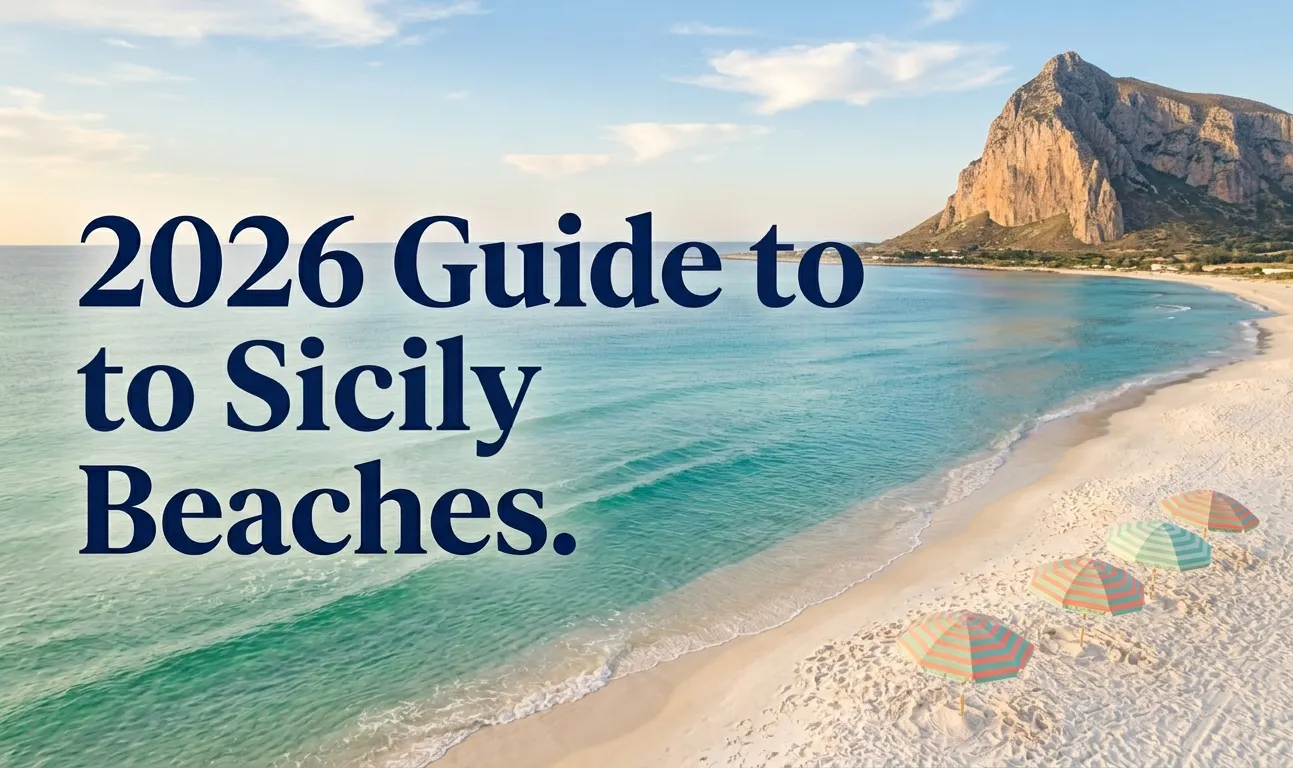
San Vito Lo Capo is the most beautiful beach in Sicily according to multiple travel publications . The white sand stretches for nearly three kilometers beneath Monte Monaco mountain.
The water here is crystal clear with a turquoise color that feels tropical. This is the closest you will get to Maldives-style water in mainland Sicily .
The beach has both free public sections and paid lidos with sunbeds. Sunbed and umbrella rentals are reasonably priced compared to other Italian beach destinations.
Parking can be difficult in July and August. Arrive before 9 AM or after 4 PM to find a spot.
San Vito Lo Capo is famous for its annual Cous Cous Festival in September. This is the best time to visit for food lovers who still want beach weather.
For families with children, this is the safest choice. The water stays shallow for a long distance from shore.
Insider Tip:
- Book sunbeds in advance for July and August through local lido websites
- The beach fills completely by 10:30 AM on summer weekends
- Hiking Monte Monaco takes 45 minutes and gives you an incredible view of the beach below
Key Takeaway: San Vito Lo Capo delivers the classic white sand and turquoise water that Sicily is famous for, but summer crowds are intense.
Isola Bella Taormina: The White Lotus Beach
Isola Bella is a small island connected to the mainland by a narrow strip of sand. At low tide, you can walk across to the island nature reserve .
The beach is actually pebble and small stones, not sand. Bring water shoes because the entry into the sea is rocky .
The water clarity is exceptional here. Snorkelers can see fish and coral formations close to shore.
You reach Isola Bella by taking the Taormina cable car down to Mazzaro Beach. From there, walk about five minutes around the coastal road to the access stairs .
This is the most expensive beach in Sicily. Sunbeds cost significantly more than elsewhere, and nearby restaurants charge premium prices.
The beach appeared in season two of The White Lotus. This has increased visitor numbers substantially since 2023.
For couples seeking dramatic scenery, this is worth the premium. For budget travelers or families, nearby Mazzaro Beach offers similar water with lower costs.
Insider Tip:
- Visit at 5 PM when cruise ship tours have left and the light is golden
- The steps down are steep — wear proper shoes, not flip-flops
- Book a boat tour of Isola Bella marine park to see sea caves inaccessible from shore
Key Takeaway: Isola Bella delivers stunning scenery and clear water but costs more and requires physical effort to access than other Sicily beaches.
Mondello Beach: Palermo’s Local Favorite
Mondello Beach sits just 30 minutes from Palermo city center . The 806 bus from Piazza Sturzo costs €2 and runs frequently in summer.
The beach has white sand and shallow, calm water. This makes it popular with Palermo families who come for the day.
There are both free public sections and paid lidos. The free section gets extremely crowded on weekends, while lidos offer reserved sunbeds and umbrella service.
Vendors walk the beach selling coconuts, beer, doughnuts, and panelle (chickpea fritter sandwiches) . This adds a lively, local atmosphere you won’t find at resort beaches.
For travelers based in Palermo without a car, Mondello is your best beach option. The bus is easy, and the beach delivers the full Sicily experience.
The water here can get choppy in the afternoon when wind picks up. Morning swimming is usually calmer.
Insider Tip:
- The main square across from the beach has better and cheaper food than beachfront restaurants
- Capo Gallo Nature Reserve is a 20-minute walk west for a quieter cove
- August weekends are extremely crowded — go on a weekday or take the bus by 9 AM
Key Takeaway: Mondello is the most accessible beach for Palermo visitors, but it is a city beach with city-level crowds.
Scala dei Turchi: The White Marble Staircase
Scala dei Turchi translates to “Stair of the Turks.” The name comes from Saracen pirates who used this white cliff as a landing point .
The beach itself is at the bottom of a striking white limestone rock formation. The cliff looks like a staircase flowing into the Mediterranean Sea.
You must pay an entrance fee and receive a one-hour time slot to visit. This system was implemented in 2024 to manage overtourism.
The walk down to the beach involves climbing stairs carved into the cliff. There is no shade, so bring a hat and plenty of water.
The water here is clear but not as turquoise as San Vito Lo Capo. The Mediterranean Sea on this coast has a deeper blue color.
For photographers and geology enthusiasts, this is a must-see. For travelers wanting a full beach day with facilities, choose somewhere else.
This beach is near Agrigento and the Valley of the Temples. Most visitors combine a morning at the temples with an afternoon time slot at Scala dei Turchi.
Insider Tip:
- Book your time slot online at least a week in advance during summer
- Go at sunset for the most dramatic photos when the white rock turns gold
- Water shoes are essential — the rock entry is slippery and sharp
Key Takeaway: Scala dei Turchi is a unique geological wonder worth seeing, but it is not a full-day lounging beach.
Rabbit Beach Lampedusa: Protected Turtle Nesting Site
Rabbit Beach is on the island of Lampedusa, south of Sicily. It has been named the most beautiful beach in the world by multiple publications.
The beach faces Rabbit Island, a small uninhabited islet you can swim to. The water between the beach and island is shallow and crystal clear.
This is a protected loggerhead sea turtle nesting site. From April through September, you may see nesting turtles or hatchlings .
Daily visitor numbers are limited to 730 people in summer . You must book your visit in advance through the official reservation system.
The sand is white and fine. The water is the clearest you will find anywhere in Sicily or its islands.
Getting to Lampedusa requires either a flight from Catania or Palermo or an overnight ferry from Porto Empedocle. This is not a day trip from mainland Sicily.
For travelers willing to make the journey, this is genuinely one of the world’s great beaches. For those with limited time, stick to mainland Sicily.
Insider Tip:
- Book your beach access at least one month before travel for July and August
- Bring all food and water — there are very limited facilities
- Swim to Rabbit Island early in the day before the wind picks up
Key Takeaway: Rabbit Beach delivers world-class sand and water, but the journey requires either a flight or overnight ferry from mainland Sicily.
Calamosche Beach: Natural Pool for Families
Calamosche Beach is inside the Vendicari Nature Reserve near Noto. The beach is a small, sheltered cove protected by rocky outcrops on both sides.
The water here is exceptionally calm because the rocks block waves. This creates a natural swimming pool effect, perfect for children .
The sand is golden and fine. The beach is roughly 200 meters wide, so space is limited.
Access requires a 1.2 kilometer walk from the parking area . Bring only what you can carry easily.
There are no facilities inside the reserve. No beach clubs, no sunbed rentals, no food vendors. You must bring everything.
For families who want a quiet, natural beach day without loud music or crowds, Calamosche is perfect. For travelers wanting amenities, this is not the right choice.
Combine this with a visit to the Baroque town of Noto. The beach is a 20-minute drive from Noto’s historic center.
Insider Tip:
- Arrive by 9 AM to get parking at the reserve entrance
- Bring an umbrella because there is no natural shade on the beach
- Visit in September when the water is still warm but crowds have thinned
Key Takeaway: Calamosche offers calm, family-friendly water in a stunning nature reserve setting, but you must bring all supplies and walk in.
Cefalu Beach: Sandy Shore at a Medieval Town
Cefalu Beach sits directly in front of this historic seaside town. The beach is a 1.5 kilometer stretch of sand just steps from the medieval center .
The water here is clear and calm. The beach slopes gently, making it safe for children and weak swimmers.
You can spend the morning at the beach, then walk into town for lunch and sightseeing. The Norman Cathedral, a UNESCO World Heritage site, is a five-minute walk from the sand.
Both free public sections and paid lidos are available. The lidos offer sunbeds, umbrellas, food service, and restrooms.
Cefalu is easily reached by train from Palermo. The 45-minute train ride makes this one of the most accessible beaches on the island .
For travelers who want to combine beach time with cultural sightseeing, Cefalu is the best choice in Sicily. The town itself is as beautiful as the beach.
Insider Tip:
- The old port area at sunset is the most photogenic spot in town
- Climb La Rocca (the rock behind the town) for an incredible view of the beach below
- Try a granita at one of the shops along the promenade — almond is the local specialty
Key Takeaway: Cefalu delivers the rare combination of a beautiful sandy beach directly adjacent to a historic, walkable town.
Favignana Beaches: Cala Rossa and the Egadi Islands
Favignana is the largest of the Egadi Islands, located off the coast of Trapani. The island is famous for Cala Rossa, a cove with the bluest water in all of Sicily .
Cala Rossa is surrounded by white rock cliffs that plunge into turquoise water. The beach is rocky, not sandy, but the swimming is unforgettable.
You can reach Favignana by Liberty Lines ferry from Trapani. The journey takes approximately 30 minutes .
Rent a scooter to explore the island’s many coves. Cala Rossa is a 15-minute ride from the port.
The water here is the clearest in western Sicily. Snorkelers will see fish, sea stars, and rock formations.
For active travelers who want to explore multiple coves in one day, Favignana is perfect. For travelers seeking sandy beaches with facilities, stick to San Vito Lo Capo.
Insider Tip:
- Book return ferry tickets in advance because afternoon ferries sell out
- Water shoes are essential at Cala Rossa — the rock entry is sharp
- The island has limited shade, so bring a sun umbrella or rent one at the beach
Key Takeaway: Favignana’s Cala Rossa delivers the bluest water in Sicily, but the rocky entry requires water shoes and confidence.
Aeolian Islands Beaches: Black Sand and Volcanic Coves
The Aeolian Islands are a volcanic archipelago off Sicily’s northeastern coast. The beaches here are black sand or dark pebble, formed by volcanic activity .
Lipari is the largest island and regained its Blue Flag certification for 2026 . Beaches include Acquacalda, Canneto, and Gelso on nearby Vulcano island.
Salina offers the most varied coastline. Rinella has a popular black sand beach, while Santa Marina Salina’s seawall is a great swimming spot with ladders .
You reach the Aeolian Islands by hydrofoil from Milazzo port. The journey takes one to two hours depending on the island.
These islands are for travelers who prioritize dramatic landscapes over sandy comfort. The swimming is excellent, but most beaches are pebble or rock.
For couples seeking a romantic, remote island experience, the Aeolian Islands deliver. For families with toddlers needing sandy, shallow beaches, stay on mainland Sicily.
Insider Tip:
- Book ferry tickets and accommodation at least two months in advance for summer
- Rent a scooter on each island to reach the best swimming spots
- The water around Stromboli is warmest because of volcanic activity
Key Takeaway: The Aeolian Islands offer unique volcanic black sand beaches and dramatic scenery, but pack water shoes and expect pebble shores.
Beaches in Sicily by Coast: Tyrrhenian vs Ionian vs Mediterranean
The Tyrrhenian coast (north) has white or golden sand and turquoise water. San Vito Lo Capo, Mondello, and Cefalu are on this coast.
The Ionian coast (east) has pebble beaches and clearer water for snorkeling. Isola Bella, Giardini Naxos, and Aci Trezza are on this coast.
The Mediterranean coast (south and west) has the calmest water and warmest temperatures. Calamosche, Punta Secca, and Santa Maria del Focallo are on this coast.
Choose the Tyrrhenian coast for sandy beaches and easy access from Palermo. Choose the Ionian coast for dramatic scenery and snorkeling near Taormina and Mount Etna.
Choose the Mediterranean coast for quiet, family-friendly swimming and Baroque town access. Choose the islands (Aeolian, Egadi, Pelagie) for the clearest water and most dramatic landscapes.
Travelers with only five days should pick one coast and stick to it. Driving across Sicily takes three to four hours and burns a full vacation day.
Key Takeaway: Each of Sicily’s three coasts offers completely different beach experiences — choose one based on your travel style rather than trying to see them all.
Sicily Italy Beaches: Access and Parking Reality
You need a rental car to visit most Sicily beaches. Public transport only reaches major town beaches like Mondello and Cefalu.
Parking fills by 9:30 AM at popular beaches from July through September. At San Vito Lo Capo and Isola Bella, arrive by 8:30 AM or do not go.
Beach clubs (lidos) reserve sunbeds and umbrellas for the entire day. Expect to pay €15 to €30 per pair in peak season.
Free public beach sections exist everywhere, but they are the first to fill. Local families arrive early to claim spots and bring their own umbrellas.
Many remote beaches require walking from parking areas. Calamosche requires a 1.2 km walk, while some Zingaro Reserve beaches require 20 to 40 minutes of hiking .
Some popular beaches now require advance reservations. Scala dei Turchi has one-hour time slots, and Rabbit Beach on Lampedusa limits daily visitors to 730 people .
Insider Tip:
- Use Google Maps offline because cell service is spotty at remote beaches
- Bring cash because remote beach parking lots often do not take cards
- Consider staying overnight near your target beach to access early morning parking
Key Takeaway: Car rental is essential for most Sicily beaches, and arriving before 9 AM is non-negotiable at popular spots from July through September.
Best Time to Visit Sicily Beaches for 2026
September and October are the best months for beach vacations. Water temperatures stay in the low 70s to mid 70s Fahrenheit, and summer crowds have gone home.
May and early June offer warm water and lower prices. The water is cooler (mid 60s to low 70s), but sunny days are common.
July and August are peak season with intense crowds and heat. Temperatures regularly exceed 90°F, and beach parking is extremely difficult.
March and April are too cold for comfortable swimming. Water temperatures are in the 50s and 60s, though sunny days are possible.
August 15 (Ferragosto) is the busiest beach day of the year. All of Italy takes this holiday, and every beach is packed.
June through November is jellyfish season, though sightings are sporadic. Mediterranean Sea jellyfish stings are generally mild but can be uncomfortable.
Visit Sicily recommends May and September for the best balance of good weather and manageable crowds. The Italian National Tourist Board notes that October sea temperatures remain pleasant for swimming.
Key Takeaway: September is Sicily’s secret beach month — warm water, empty beaches, and prices 30 to 50 percent lower than July and August.
Blue Flag Beaches Sicily 2026: Clean Water Certified
The Foundation for Environmental Education awarded 16 Sicily beaches Blue Flag status for 2026 . This certification confirms clean water, good facilities, and sustainable management.
Returning destinations include Lipari in the Aeolian Islands. Ispica on the southeastern coast also rejoined the list after recovering from storm damage.
Other 2026 Blue Flag beaches include Taormina, Letojanni, Santa Teresa di Riva, and Furci Siculo on the Ionian coast. Menfi, Pozzallo, and Scicli are also certified .
Blue Flag does not guarantee a sandy beach. Some certified beaches are pebble or rocky with excellent water quality.
The certification also considers accessibility for disabled visitors and environmental education programs. Beach wheelchair availability varies by location.
For travelers who prioritize clean water and reliable facilities, focus on Blue Flag beaches. They are generally more organized than non-certified options.
Key Takeaway: Blue Flag certification for 2026 confirms excellent water quality at 16 Sicily beaches, including Lipari, Taormina, Menfi, and Ispica.
Safety and Seasonal Warnings for Sicily Beaches
The most important safety warning for Sicily beaches is the absence of lifeguards at most locations. You swim entirely at your own risk at free public beaches.
Pebble and rock beaches have slippery, uneven entry points. Water shoes are essential at Isola Bella, Cala Rossa, Scala dei Turchi, and all Aeolian Islands beaches.
Jellyfish appear from June through November, most commonly after storms. The Mediterranean moon jellyfish causes mild stings; rinse with vinegar and remove tentacles carefully.
Red flags indicate dangerous swimming conditions at beaches that have lifeguards. Only about 20 percent of Sicily beaches have lifeguards, mostly at paid lidos.
Sea urchins hide in rocky areas and shallow water. Do not walk on rocks at low tide without water shoes.
Rip currents can occur on sandy beaches after storms, especially on the Ionian coast. The Mediterranean Sea is generally calm, but conditions change quickly.
The summer sun is intense from 11 AM to 4 PM. Use high-SPF sunscreen, wear a hat, and seek shade between these hours.
For any beach emergency, dial 118 for an ambulance or 112 for general emergencies. These numbers work throughout Italy and have English-speaking operators.
Comparison Table of the Best Sicily Beaches
| Beach | Best For | Sand Type | Crowd Level | Access Ease | Facilities | Insider Note |
|---|---|---|---|---|---|---|
| San Vito Lo Capo | First-time visitors | White sand | High | Easy | Full | Arrive by 9 AM |
| Isola Bella | Couples/scenery | Pebble | High | Hard (140 steps) | Limited | Visit after 5 PM |
| Mondello | Palermo base | White sand | High | Easy (bus) | Full | Go on weekdays |
| Scala dei Turchi | Photography | Rock/pebble | Medium | Medium (stairs) | None | Book time slot |
| Rabbit Beach | World-class water | White sand | Medium | Very hard | Minimal | Book weeks ahead |
| Calamosche | Families/kids | Golden sand | Medium | Hard (walk in) | None | Bring everything |
| Cefalu | Culture + beach | Sand | Medium | Easy | Full | Train from Palermo |
| Cala Rossa (Favignana) | Bluest water | Rock | Medium | Medium | Minimal | Water shoes required |
| Aeolian Islands | Volcanic scenery | Black sand/pebble | Low-Medium | Hard (ferry) | Varies | Book ferries early |
Frequently Asked Questions About Sicily Beaches
Which part of Sicily has the best beaches?
The northwestern coast between Palermo and Trapani has the best sandy beaches, including San Vito Lo Capo and Mondello. The Aeolian and Egadi Islands have the clearest water but require ferry travel. The southeastern coast near Noto has the calmest swimming for families. No single region is best for everyone.
Are Sicily beaches sandy or rocky?
Sicily has both. The northern Tyrrhenian coast has white or golden sand beaches like San Vito Lo Capo, Mondello, and Cefalu. The Ionian and southern coasts are often pebble or rock, including Isola Bella, Scala dei Turchi, and Cala Rossa. Research your specific beach before going.
Do you need a car to visit beaches in Sicily?
Yes for most beaches. Only major town beaches like Mondello (bus from Palermo) and Cefalu (train from Palermo) are easily reached by public transport. Remote beaches, nature reserves, and island ferry ports require a rental car. Book your car at least two months in advance for summer travel.
What is the least crowded beach in Sicily?
Calamosche inside Vendicari Reserve is less crowded because of the 1.2 km walk from parking. The Aeolian Islands (Salina, Lipari, Stromboli) receive fewer visitors than mainland beaches. September and October visits to any beach will be significantly less crowded than July and August.
Can you visit Rabbit Beach on Lampedusa without a tour?
Yes, but you must book your visit through the official reservation system. Daily visitor limits are 730 people, and advance booking is required. Flights from Catania or Palermo are the easiest way to reach Lampedusa. Overnight ferries also operate from Porto Empedocle near Agrigento.
When is the best month for beach weather in Sicily?
September offers the best combination of warm water (low 70s to mid 70s Fahrenheit), lower crowds, and hotel prices 30 to 50 percent below peak season. May and early June are also excellent with fewer crowds but cooler water. July and August are hot and crowded.
Sicily beaches reward travelers who plan ahead and choose their coast carefully. The island offers everything from white sand coves to black volcanic shores and secluded nature reserve beaches.
The single most practical piece of advice for 2026 is to pick one coast and explore it thoroughly. Driving across Sicily to see multiple coasts wastes precious vacation time.
Confirm current beach conditions, parking status, and reservation requirements before you travel. Blue Flag certifications for 2026 are confirmed for Lipari, Ispica, Taormina, and Menfi . Book ferry tickets to the islands and rental cars at least two months in advance for summer travel. Your beach experience in Sicily depends more on when and where you go than on any other decision you will make.