What Hawaii Beaches Are Actually Like by Island
Hawaii’s beaches are not a monolith. Each island delivers a fundamentally different sand, water, and crowd experience.
Oahu beaches are the most accessible and the most crowded. You get soft white sand, turquoise water, and a genuine city-to-surf pipeline from Honolulu.
Maui beaches are the most resort-groomed and reliably swimmable. The west and south shores offer calm, clear water with golden sand and full-service amenities.
Kauai beaches are the most dramatic and lush. Towering green cliffs, wild surf on the north shore, and a rugged, less-developed feel define the Garden Island’s coastline.
The Big Island beaches are the most volcanic and diverse. You will find everything from powder-white sand to jet-black lava beaches to a rare olive-green sand cove.
Matching your trip to the right island is the most important decision. A family with toddlers should not book a winter trip to Kauai’s north shore.
Couples and honeymooners will find Maui and Kauai the most romantic. Budget travelers will struggle on every island.
Key Takeaway: Pick your island first; each one offers a completely different beach experience.
Which Island Has the Best Beaches in Hawaii
Maui has the best overall beaches in Hawaii for the broadest range of travelers. It offers the most consistent combination of accessibility, calm water, and soft sand.
Kauai has the single most beautiful individual beach, Hanalei Bay, and the most dramatic coastline. The tradeoff is rougher winter water and fewer swimmable days.
Oahu has the best beaches for convenience and variety. You can surf Waikiki, snorkel Hanauma Bay, and stroll Lanikai all in one day with no inter-island flight.
The Big Island has the most unique beaches, from black sand to green sand. It lacks the dense concentration of swimmable, postcard-perfect beaches found on Maui and Oahu.
Your personal best island depends entirely on your travel profile. Families with young children should lean Maui or Oahu for calm water and infrastructure.
Couples and honeymooners should lean Kauai or Maui for romance and scenery. Adventure seekers and geology buffs will find the Big Island endlessly fascinating.
Do not try to beach-hop across three islands in a week. Inter-island flights consume half a day each with airport security and rental car logistics.
Pick one island for a week-long trip. Pick two islands maximum for ten days or more.
Key Takeaway: Maui wins for overall beach quality; Kauai wins for single-beach drama.
Lanikai Beach Oahu
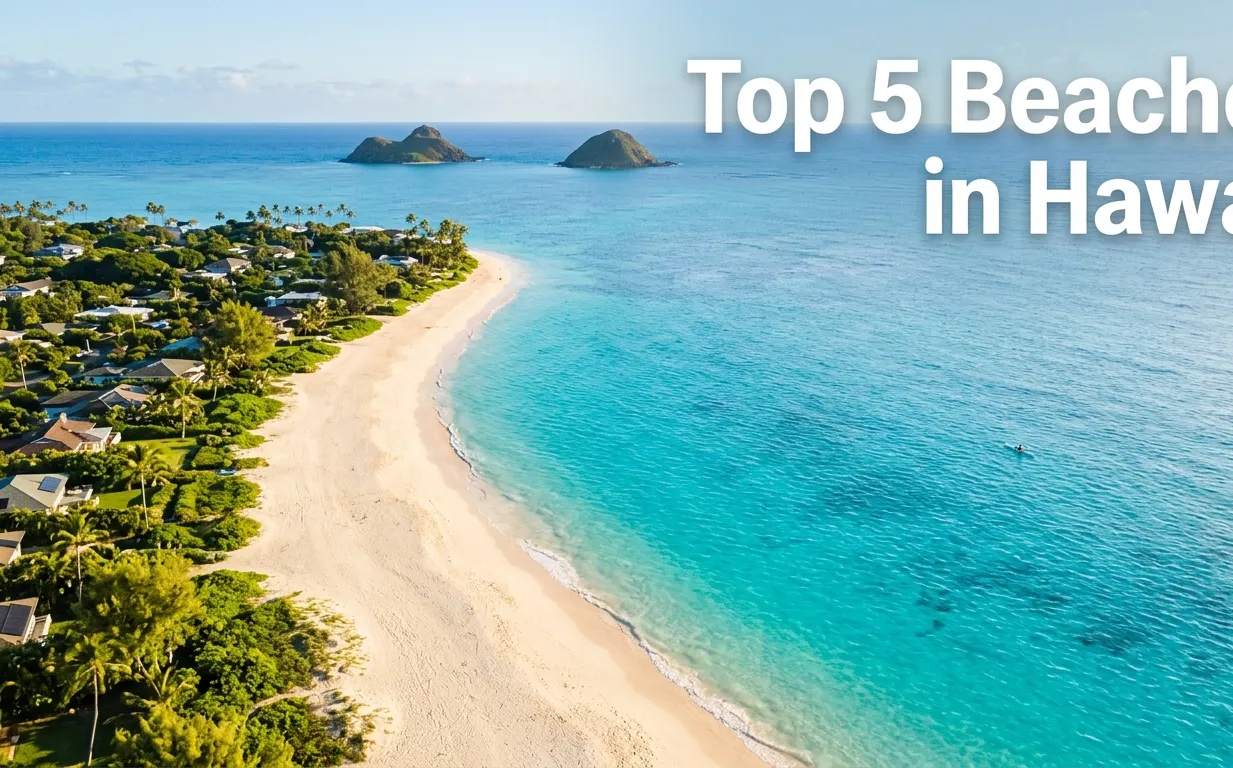
Lanikai Beach on Oahu’s windward coast is consistently ranked among the most beautiful beaches in Hawaii. The name means “heavenly sea,” and the water earns that description daily.
The sand is fine, soft, and brilliantly white, stretching for roughly half a mile. The water is a vivid turquoise with exceptional clarity on calm mornings.
The Mokulua Islands, twin offshore islets, sit on the horizon and complete the postcard composition. Kayaking out to the Mokes is the essential Lanikai activity.
Parking is the single biggest challenge at Lanikai. There is no parking lot at the beach. You park on residential streets, and enforcement is aggressive.
Arrive before 8 a.m. or risk circling for 30 minutes or more. Do not block driveways or park on the grass; local fines are steep and strictly enforced.
Couples will find the sunrise here deeply romantic, as the beach faces east. Families should note there are no restrooms, no showers, and no lifeguards.
The water is typically calm from April through October. Winter brings wind and choppier conditions on this windward shore.
This is a residential neighborhood beach, not a resort beach. Pack everything you need and pack it all out.
Key Takeaway: Lanikai is Oahu’s most beautiful beach but has no parking and no facilities.
Ka’anapali Beach Maui
Ka’anapali Beach is Maui’s signature resort beach, a three-mile stretch of golden sand backed by hotels, restaurants, and the Whalers Village shopping center. It delivers the full-service Hawaiian beach experience.
The sand is soft and golden, sloping gently into clear, calm water. The view of Lanai and Molokai islands on the horizon adds a layer of beauty.
Black Rock, Pu’u Keka’a, anchors the beach’s northern end. This is Maui’s best accessible snorkeling spot, with sea turtles, reef fish, and the occasional eagle ray.
A nightly cliff diving ceremony at Black Rock recreates a legendary feat by Maui’s King Kahekili. It is a brief, torch-lit spectacle that draws a crowd.
Sunbed and umbrella rentals run roughly 30 to 60 dollars per set. Resort guests often have them included; day visitors should budget for the cost.
Couples and honeymooners will find the resort-lined stretch romantic and convenient. Budget travelers will find Ka’anapali’s pricing premium steep.
Parking is extremely limited for non-resort guests. A small public lot and limited street parking fill by 8 a.m., so use rideshare or the resort shuttle.
Winter months occasionally bring larger surf and reduced visibility. The beach remains swimmable far more often than north shore alternatives.
Key Takeaway: Ka’anapali is Maui’s best full-service resort beach with top snorkeling.
Hanalei Bay Kauai
Hanalei Bay on Kauai’s north shore is the most dramatically beautiful beach in Hawaii. A two-mile crescent of golden sand wraps around a bay backed by 4,000-foot green mountains striped with waterfalls.
The view from the Hanalei Pier looking back at the mountains is the single best beach panorama in the state. The water is a shifting palette of turquoise, green, and deep blue.
Summer, from May through September, brings calm, swimmable water ideal for families. The pier is a popular jump spot, and the sandy bottom is forgiving.
Winter, from November through March, transforms Hanalei Bay into a world-class surf break. The winter shore break is powerful and dangerous for casual swimmers.
The town of Hanalei sits a short walk away with excellent food trucks, shave ice, and surf shops. The vibe is laid-back, bohemian, and distinctly Kauai.
Families should target July and August for the calmest, safest water. Couples will find the sunset view from the pier one of Hawaii’s most romantic scenes.
Parking is available at the pier lot and along the beach road. It fills by mid-morning in summer, so plan an early start.
The 2026 condition of the Hanalei Pier itself may vary due to ongoing maintenance. Verify access before you go with the Hawaii Department of Land and Natural Resources.
Key Takeaway: Hanalei Bay is Hawaii’s most scenic beach; only swim it in summer.
Hapuna Beach Big Island
Hapuna Beach on the Big Island’s Kohala Coast is the island’s finest white sand beach. It is a broad, half-mile stretch of soft golden-white sand with consistently excellent swimming.
The water is clear, warm, and typically calm, especially in summer. The beach drops off enough to body surf, but not so steeply that it feels dangerous on calm days.
This is a state-managed beach park with real facilities. Lifeguards, restrooms, showers, and a large paved parking lot make this the Big Island’s most user-friendly beach.
A non-resident entry fee applies, typically 5 to 10 dollars per vehicle. Hawaii state parks passes cover the fee if you plan to visit multiple parks.
Families will find Hapuna the single best family beach on the Big Island. The combination of soft sand, calm water, lifeguards, and facilities is unmatched.
Couples seeking seclusion will find Hapuna too busy, especially on weekends. The beach is wide enough that it rarely feels cramped, but it is not a hidden cove.
Winter months bring larger surf that can close the beach to swimming. Obey all lifeguard flag warnings; the shore break here can shift from fun to dangerous quickly.
The Kohala Coast is sunny year-round, making Hapuna a reliable beach choice when Hilo and Kona are cloudy. Pair it with a meal in nearby Waimea town.
Key Takeaway: Hapuna is the Big Island’s best swimmable white sand beach with full facilities.
| Beach | Island | Sand/Water | Best For | Honest Limitation |
|---|---|---|---|---|
| Lanikai | Oahu | White powder, turquoise | Couples, kayakers | No parking, no facilities |
| Ka’anapali | Maui | Golden soft, clear blue | Couples, snorkelers | Expensive, limited public parking |
| Hanalei Bay | Kauai | Golden, turquoise-green | Scenery, summer families | Deadly winter surf, no swimming |
| Hapuna | Big Island | Golden-white, clear | Families, swimmers | State park entry fee, busy weekends |
| Waikiki | Oahu | Golden soft, calm | First-timers, surfers | Extremely crowded, urban setting |
Waikiki Beach Oahu
Waikiki Beach is Hawaii’s most famous and most urban beach. It is a two-mile stretch of imported golden sand backed by a wall of high-rise hotels and the Diamond Head crater view.
The water is calm, shallow, and protected by an offshore reef. This makes Waikiki the single best beach in Hawaii for learning to surf, with gentle, rolling waves ideal for beginners.
The sand is not naturally occurring in its current form. Waikiki’s beach has been engineered and replenished for decades, which does not diminish the experience but is worth knowing.
The crowd is dense, international, and constant. Waikiki handles more beach visitors per day than any other beach in the state by a massive margin.
Budget travelers will find Waikiki the most accessible Hawaiian beach with public transit, abundant food options, and free beach access. Couples seeking romance should walk toward the quieter Diamond Head end.
Surf lessons from the iconic beach boys run 50 to 100 dollars per session. Book through a licensed operator on the beach rather than a hotel concierge for the best rate.
The sunset view with Diamond Head silhouetted to the east is iconic. The sand clears out significantly after 5 p.m.
Leave absolutely nothing unattended on the sand. Petty theft is common due to the high tourist density and quick escape routes into the city.
Key Takeaway: Waikiki is the best beginner surf beach but is crowded, urban, and engineered.
Poipu Beach Kauai
Poipu Beach on Kauai’s south shore is the island’s most family-friendly and reliably sunny beach. It offers calm, shallow water and the best chance of seeing endangered Hawaiian monk seals.
The beach is split into two crescents by a tombolo, a narrow sand spit. The eastern crescent is shallow and protected, perfect for toddlers and tentative swimmers.
The western crescent offers better snorkeling with a reef that attracts tropical fish and the occasional honu, green sea turtle. The water clarity is generally good year-round.
Facilities include restrooms, showers, a large playground, and a lifeguard tower. Parking is free in a decent-sized lot that still fills by 9 a.m. in summer and winter high season.
Families will find Poipu the best family beach on Kauai. The shallow water, lifeguards, and playground create a stress-free day for parents.
Couples should explore the beaches further west toward Spouting Horn for more solitude. Poipu itself is the busiest beach on the south shore.
Winter brings larger surf to the outer reef, but the inner crescent typically stays calm. South shore beaches are sheltered from the massive winter swells that pound the north shore.
Never approach a monk seal on the sand. Volunteers and lifeguards will set up perimeter cones. Federal law requires a minimum 50-foot distance.
Key Takeaway: Poipu is Kauai’s best family beach with monk seal sightings and calm water.
Big Beach Makena Maui
Big Beach, or Makena Beach, is Maui’s wildest and most spectacular stretch of undeveloped sand. It runs for nearly a mile south of Wailea, backed by nothing but kiawe trees and the dormant Haleakala volcano.
The sand is fine and golden, the water is a deep, clear turquoise, and the beach is broad enough that it never feels crowded. The view of the offshore island of Molokini completes the panorama.
The shore break at Big Beach is famously powerful and has earned the nickname “Breakneck Beach.” Never turn your back on the waves here, and body surf only if you are experienced.
A smaller, clothing-optional cove called Little Beach sits just over the northern lava point. The Sunday evening drum circle and fire-dancing gathering at Little Beach is a long-running local tradition.
Parking is a large dirt lot that fills by mid-morning on weekends. The state-managed lot charges a small fee, typically 5 dollars per vehicle.
Couples and adventure-seeking travelers will find Big Beach’s wild beauty intoxicating. Families with young children should choose the calmer, lifeguarded Makena Landing or Wailea Beach instead.
Facilities are limited to portable toilets and no lifeguards. Pack water, food, and an umbrella, as the midday sun is relentless.
Visit on a weekday morning for the best chance of solitude on this massive beach. The afternoon trade winds can kick up sand, so mornings are calmer.
Key Takeaway: Big Beach is Maui’s most beautiful wild beach but has a dangerous shore break.
Makalawena Beach Big Island
Makalawena Beach on the Big Island’s Kona Coast is the island’s most beautiful and least accessible white sand beach. It sits behind a lava field, reachable only by a 20-minute hike or a 4×4 track.
The sand is soft white coral, and the water is a brilliant turquoise that rivals any Caribbean cove. A series of three connected coves and a freshwater lava tube pool make this a genuinely unique beach.
The hike in from Kekaha Kai State Park’s parking lot crosses rough, sharp lava rock. Wear sturdy sandals or closed-toe shoes, not flip-flops, and carry plenty of water.
There are no facilities, no lifeguards, and no shade beyond a few kiawe trees. The reward for the effort is a beach that feels miles from civilization.
Couples and adventure seekers will find Makalawena the most romantic and rewarding beach on the Big Island. Families with young children or anyone with mobility limitations should not attempt the hike.
The water is typically calm in summer but can get rough in winter. The offshore reef provides some protection.
The lava tube freshwater pool near the first cove is a surreal, cold soak. It sits just inland from the sand, shaded by trees, and is completely hidden from first-time visitors.
Visit on a weekday morning for the best chance of solitude. The hike deters the crowds that overwhelm the easier-access Kona beaches.
Key Takeaway: Makalawena is the Big Island’s hidden gem, earned only by a lava hike.
Best Hawaiian Beaches for Couples and Romance
Hanalei Bay at sunset, with the mountains turning gold and pink behind you, is Hawaii’s most romantic beach scene. A picnic on the sand near the pier as the sun drops is pure honeymoon material.
Lanikai Beach at sunrise delivers a quieter, equally romantic experience. The east-facing beach catches first light over the Mokulua Islands with far fewer people than Hanalei.
Kapalua Bay on Maui is a protected, intimate cove perfect for snorkeling together. The calm, clear water and golden sand crescent feel like a private tropical aquarium.
Makalawena Beach rewards the effort with near-solitude in a postcard-perfect setting. The hike filters out everyone except those who genuinely value seclusion and beauty.
Waikiki at night, with the city lights reflecting on the calm water and Diamond Head silhouetted, is a different but genuinely romantic urban beach moment. Walk toward the quieter Diamond Head end after dark.
Honeymooners should book a sunset dinner at a beachfront restaurant like Merriman’s on Maui or Beach House on Kauai. The combination of a great meal and the sunset over the ocean is unbeatable.
Avoid crowded resort beaches during midday if romance is the goal. The early morning and late afternoon offer the same beaches with a fraction of the people.
The best romantic beach in Hawaii is the one you find at the right time. A famous beach at sunrise can be more romantic than a secret cove at noon.
Key Takeaway: Hanalei at sunset and Lanikai at sunrise are Hawaii’s peak romantic beach moments.
Good Beaches in Oahu for Families
Waikiki Beach is the best family beach on Oahu for logistics and beginner surf. The calm, shallow water, gentle wave break, and immediate access to food and bathrooms reduce family stress.
Kailua Beach is the best family beach on Oahu for space and soft sand. It is a wide, flat crescent with consistent calm water, a large parking lot, and full facilities.
Ko Olina Lagoons on Oahu’s west side are the best family beaches for toddlers. Four man-made lagoons with rock barriers create near-pool-calm conditions with zero wave concern.
Ala Moana Beach Park near Waikiki offers a large, calm, lifeguarded beach with a massive park, playground, and Magic Island peninsula. It is a local family favorite for good reason.
Do not take young children to North Shore beaches in winter. The surf is genuinely life-threatening, and the shore break at beaches like Waimea Bay can knock an adult unconscious.
Sandy Beach on Oahu’s east side has a dangerous shore break. Locals know it as a body-surfing spot for experts, not a family beach, despite its soft sand.
Hanauma Bay requires advance reservations for 2026, booked online through the city. The snorkeling is exceptional, but the entry fee and reservation system mean you cannot just show up.
Reef-safe sunscreen is required by Hawaii state law. Buy it before you travel, as the beachside markup is steep.
Key Takeaway: Ko Olina Lagoons and Kailua Beach win for Oahu family safety and ease.
Top 10 Most Beautiful Beaches in Hawaii
Hanalei Bay on Kauai tops the list for sheer dramatic beauty. The mountain backdrop and two-mile golden crescent are unmatched in the state.
Lanikai Beach on Oahu follows closely with its powdery white sand and Mokulua Island views. The turquoise water color is the most photogenic in Hawaii.
Ka’anapali Beach on Maui earns its spot for the perfect resort beach panorama. Black Rock, the offshore islands, and the consistent golden light create a classic Hawaiian image.
Makalawena Beach on the Big Island is the most beautiful secluded cove. The white sand and turquoise water against black lava rock is a color combination no other island delivers.
Big Beach Makena on Maui is the most beautiful wild beach. The vast, undeveloped sweep of sand with Haleakala looming behind is powerful and raw.
Waimea Bay on Oahu is the most beautiful North Shore beach. In summer, the massive rock, calm water, and golden sand create a scene that feels like a movie set.
Polihale Beach on Kauai’s far west side is the most beautiful remote beach. The 17-mile stretch of sand with the Na Pali cliffs at the end is otherworldly.
Hapuna Beach on the Big Island is the most beautiful classic beach. The wide, clean, white sand arc is Hawaii’s best pure swimming beach.
Kapalua Bay on Maui is the most beautiful intimate cove. The small crescent of golden sand and calm clear water feels like a private discovery.
Punalu’u Black Sand Beach on the Big Island is the most hauntingly beautiful. The jet-black sand against green coconut palms and blue water is unforgettable.
Key Takeaway: Hanalei and Lanikai top the beauty list, but each island has its champion.
Hawaii Beach Seasonal Guide and Best Time to Visit 2026
Hawaii has two distinct beach seasons that flip each island’s coast from calm to dangerous. Understanding this seasonal switch is critical for safety and enjoyment.
Summer, from April through October, brings calm water to all south and west-facing shores. This is the best time for swimming, snorkeling, and family beach days.
Winter, from November through March, brings massive north shore swells across all islands. Beaches like Waimea Bay and Hanalei Bay transform from calm swimming coves to big-wave surf arenas.
Winter is the best time to watch big-wave surfing, not to swim on north shores. Stay well back from the waterline on north-facing beaches in winter.
The south shores pick up occasional south swells in summer, but these are generally manageable. South and west shore beaches are the most reliable year-round swimming options.
December through March is peak tourist season with the highest airfare and accommodation prices. Book 6 to 12 months in advance for holiday travel.
April through May and September through October offer the best value. Crowds are thinner, prices dip, and the water remains warm.
Hurricane season runs from June through November, with the highest risk from July through September. Storms are infrequent but can bring heavy rain and rough surf.
Key Takeaway: South and west shores are safe year-round; north shores are dangerous in winter.
Hawaii Beach Safety and Practical Logistics
Hawaii’s beaches are beautiful but can be deadly. The ocean here demands respect in ways that Florida or California beaches do not.
Key safety and logistical facts every visitor should know:
- Never turn your back on the ocean. Sneaker waves and powerful shore breaks at beaches like Big Beach Makena and Sandy Beach can break necks and backs.
- Obey lifeguard flag warnings without exception. Yellow means caution, red means dangerous, and double red means beach closed. Ignoring red flags is not adventurous; it is reckless.
- Winter north shore surf is for experts only. Beaches like Waimea Bay and Pipeline see waves exceeding 20 feet. Casual swimming is not an option from November through March.
- Reef cuts and sea urchins are common on rocky shorelines. Wear reef shoes and never touch coral or marine life.
- Reef-safe sunscreen is Hawaii state law. Only mineral-based sunscreens with zinc oxide or titanium dioxide are permitted. Chemical sunscreens with oxybenzone and octinoxate are banned.
- Rental cars and parking require advance planning. Maui and Kauai lots at popular beaches fill by 8 a.m. Rental cars on Maui can sell out entirely in peak season.
The Hawaii Tourism Authority provides updated beach safety and condition information. For state parks requiring reservations, check the Hawaii DLNR website for 2026 booking windows.
What Tourists Get Wrong About Hawaii Beaches
Tourists assume every Hawaiian beach is swimmable year-round. Winter north shore waves on any island will quickly and dangerously correct that assumption.
Visitors underestimate Hawaii’s parking and access challenges. Famous beaches like Lanikai and Ka’anapali have almost no public parking relative to demand.
Many travelers do not realize that inter-island flights are necessary for multi-island trips. You cannot drive from Oahu to Maui.
People assume Waikiki is a quiet tropical escape. It is a dense, urban beach neighborhood with high-rise hotels and constant crowds.
Budget travelers are shocked by Hawaii’s cost. A beachfront hotel room routinely runs 400 to 800 dollars per night, and a casual lunch for two can easily exceed 50 dollars.
The reef-safe sunscreen law surprises and frustrates unprepared visitors. Buy compliant sunscreen at home to avoid the steep Hawaii markup.
Some of the most beautiful beaches require advance state park reservations. Hanauma Bay, Ke’e Beach, and Waianapanapa State Park all have 2026 booking requirements.
Hawaii rewards travelers who plan island by island, book parking and reservations ahead, respect the ocean, and understand that the best beach moments happen before 9 a.m. or after 4 p.m. The midday crush is avoidable, and the early morning light is a gift.
Key Takeaway: Hawaii requires island-specific planning, early starts, and deep ocean respect.
Frequently Asked Questions About Hawaii Beaches
What is the number one beach in Hawaii?
Lanikai Beach on Oahu is consistently ranked the most beautiful beach in Hawaii.
Hanalei Bay on Kauai is the most scenic with its mountain and waterfall backdrop.
The number one title depends on whether you prioritize sand quality, scenery, or swimming.
Which Hawaiian island has the best beaches?
Maui has the best overall beaches for the broadest range of travelers.
Kauai has the most dramatic individual beaches but rougher winter conditions.
Oahu has the most accessible and varied beaches with the best infrastructure.
What is the best beach in Hawaii for swimming?
Ko Olina Lagoons on Oahu offer the calmest, safest swimming with wave-breaking barriers.
Hapuna Beach on the Big Island is the best natural swimming beach with soft sand and lifeguards.
Poipu Beach on Kauai offers calm, shallow swimming on the protected eastern crescent.
Are all beaches in Hawaii public?
Yes, all beaches in Hawaii are public by state law up to the high-water mark.
Access paths through private property are not guaranteed, so use designated public access points.
Some beachfront resorts must provide public access, but parking is often extremely limited.
What months are best for Hawaii beaches?
April through October offers the best swimming conditions on south and west shores.
November through March brings dangerous surf to north shores but excellent whale watching.
April through May and September through October offer the best combination of weather and smaller crowds.
Do you need reservations for Hawaii beaches in 2026?
Yes, several popular Hawaii beaches require advance state park reservations in 2026.
Hanauma Bay, Ke’e Beach on Kauai, and Waianapanapa State Park on Maui all require booking ahead.
Check the Hawaii DLNR website for each beach’s 2026 reservation window and book as early as possible.
Hawaii’s beaches are worth every bit of planning they demand. Choose your island based on your travel profile, not just the photographs. Book your state park reservations and rental car months ahead. Respect the ocean, the reef-safe sunscreen law, and the power of winter surf. The best Hawaiian beach day starts before sunrise and ends with sand in your shoes and salt on your skin. Verify 2026 state park access rules and inter-island flight schedules directly with the Hawaii DLNR and your airline before locking in your plans.