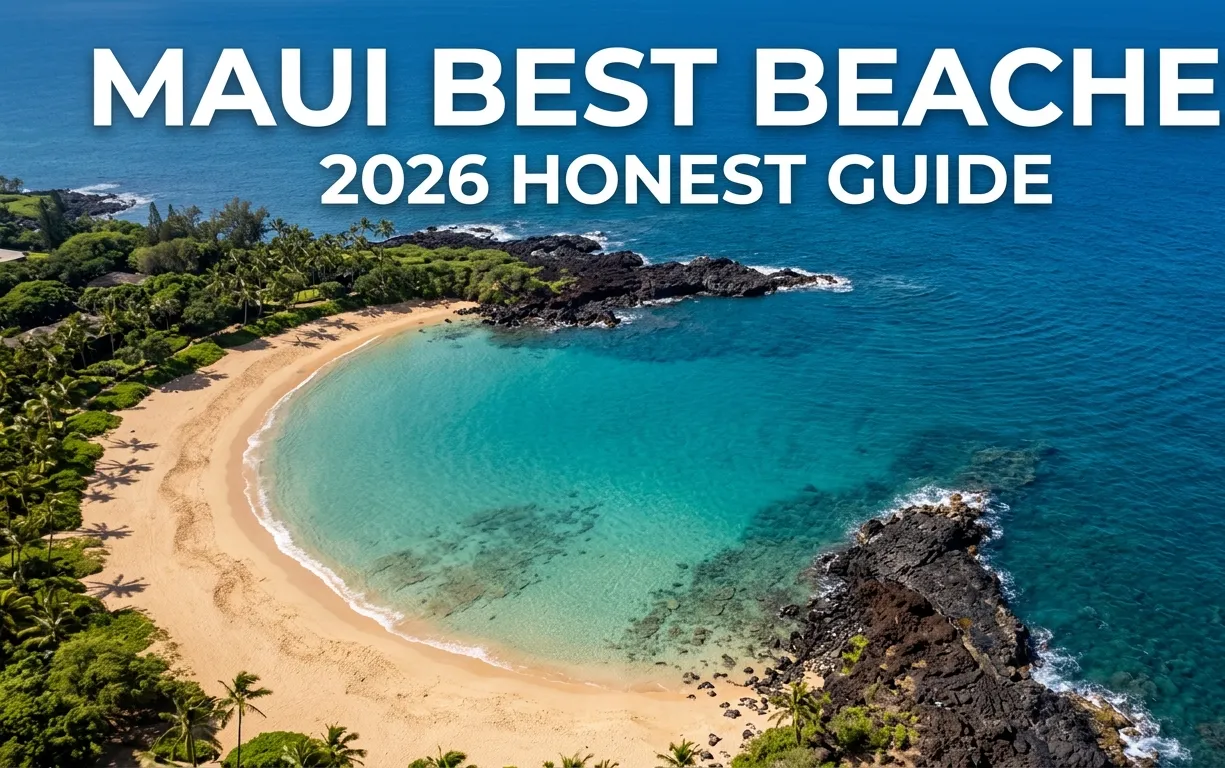
Maui Best Beaches 2026: Honest Swim, Sand & Safety Guide
Maui’s best beaches are not all calm, swimmable, or easy to reach. The island’s coastline changes dramatically by season, shore exposure, and crowd pressure.
The Hawaii Tourism Authority reports that Maui receives nearly 3 million visitors annually. Most of them concentrate on fewer than a dozen named beaches.
This guide tells you exactly which Maui beaches earn their reputation in 2026. You will learn which beaches suit your specific travel profile and which to skip.
Maui Best Beaches
Maui’s best beaches cluster on the south and west shores. Kaanapali, Wailea, Kapalua Bay, and Napili Bay lead nearly every honest ranking.
These beaches offer the most reliable combination of sunshine, swimmable water, and accessible facilities. But “best” depends entirely on what you want to do.
Families with young children and couples seeking calm water will gravitate toward different beaches. Your ideal Maui beach exists if you know which shore to target.
| Beach Name | Best For | Swimming | Crowds | Parking |
|---|---|---|---|---|
| Kapalua Bay | Families, calm water | Excellent | Moderate | Limited |
| Wailea Beach | Resort access, couples | Good | High | Difficult |
| Kaanapali Beach | Resort amenities, walking | Good | High | Resort valet |
| Napili Bay | Families, gentle surf | Excellent | Moderate | Street only |
| Maluaka Beach | Turtle snorkeling | Good | Low | Ample |
| Makena Big Beach | Scenery, experienced swimmers | Dangerous | High | Large lot |
Wailea and Kaanapali dominate the resort beach category. Kapalua Bay and Napili Bay offer better natural protection for actual swimming.
Insider Tip:
- The best beach for you might be 10 minutes from your resort.
- Most visitors never leave the beach directly in front of their hotel.
- That hotel-front beach is rarely the best one in the area.
Beaches of Maui
Maui has over 30 named beaches and dozens more accessible coves. They span roughly 120 miles of coastline across five distinct regions.
South Maui beaches run from Maalaea to La Perouse Bay. West Maui beaches stretch from Lahaina up through Kapalua and beyond.
North Shore beaches face powerful winter surf that creates world-class waves. East Maui beaches along the Hana Highway offer dramatic settings and colored sand.
The Hawaii Department of Land and Natural Resources manages most beach access points. All Maui beaches are public by state law up to the vegetation line.
Resort areas cannot legally block beach access. Public right-of-way paths exist between properties, though signage is deliberately subtle.
Key Takeaway: Maui has five distinct beach regions. South and west shores offer the most swimmable water year-round.
Top Maui Beaches
The top Maui beaches for 2026 reflect a balance of accessibility, water quality, and honest crowd management. Kapalua Bay, Wailea Beach, and Makena Beach top most credible lists.
Kapalua Bay sits in a natural crescent protected by lava rock outcroppings on both sides. The water stays calm and the sand is soft golden-white.
Parking is the genuine limitation here. The small lot fills by 8:00am and street parking is aggressively ticketed.
Wailea Beach fronts the Four Seasons and Grand Wailea resorts. The beach path connects it to Ulua, Mokapu, and Polo Beaches for an excellent walking route.
The sand is wide and golden. Water clarity is excellent in the morning before afternoon trade winds kick up chop.
Crowds are significant because Wailea Beach serves multiple large resorts. The public parking lot holds roughly 40 cars and fills immediately.
Makena Beach, also called Big Beach, is a stunning three-quarter-mile stretch of golden sand. The shore break here is notoriously dangerous and has caused serious neck injuries.
The beach is beautiful for walking and sunbathing. Swimming requires extreme caution and is not recommended for children or inexperienced swimmers.
Best Swimming Beaches Maui
The best swimming beaches on Maui are Kapalua Bay, Napili Bay, and the Kamaole Beach Parks in Kihei. These beaches offer protected entry and gentle water conditions.
Kapalua Bay remains the gold standard for swimming on Maui. The natural lava rock arms on both sides create a near-lagoon effect.
Water depth increases gradually, making it ideal for swimmers building confidence. The sand bottom is clean and free of sharp coral close to shore.
Napili Bay offers a similarly protected crescent just south of Kapalua. The bay faces southwest and is shielded from the trade winds that chop up other beaches by midday.
Morning swimming here is typically flat and clear. The bay is smaller than Kapalua, so space fills quickly.
The three Kamaole Beach Parks in Kihei all offer lifeguard towers and generally calm morning conditions. Kamaole Beach Park I has the gentlest entry and best sand bottom for young swimmers.
Afternoon trade winds affect all three Kamaole beaches. Swim before 11:00am for the smoothest water.
The Maui County Ocean Safety Division staffs lifeguard towers at all three Kamaole parks. Always swim near a lifeguard tower if you are unfamiliar with the beach.
Calmest Beaches in Maui
The calmest beaches in Maui are Kapalua Bay, Napili Bay, and Kalepolepo Beach Park in Kihei. These beaches are naturally protected from wind and wave exposure.
Kapalua Bay’s double lava-rock arms create the island’s most reliably flat water. The protection works in both summer and winter conditions.
Napili Bay’s southwest orientation means it avoids the worst of both winter north swells and summer south swells. The bay is shallow and warms quickly.
Kalepolepo Beach Park is a lesser-known calm-water option in North Kihei. An ancient Hawaiian fishpond wall creates a natural breakwater offshore.
The water inside the fishpond wall is extremely calm and shallow. This is an excellent choice for families with toddlers.
The Hawaii Tourism Authority notes that calm-water beaches fill earliest each day. Arrive before 8:00am at Kapalua and Napili to secure a spot.
Insider Tip:
- Afternoon trade winds affect even protected beaches by 1:00pm.
- Plan swimming for 7:00am to 11:00am for the calmest conditions.
- South-facing beaches are calmest in winter. West-facing beaches are calmest in summer.
Key Takeaway: Kapalua Bay is the single calmest beach on Maui. Morning swimming anywhere on island is smoother than afternoon.
Best Beaches West Maui vs South Maui
West Maui beaches offer more dramatic scenery and better snorkeling. South Maui beaches provide more consistent sunshine and easier parking logistics.
The South Maui shoreline from Kihei through Wailea gets less annual rainfall than West Maui. This translates to more reliable beach weather days.
South Maui beaches like Wailea, Makena, and the Kamaole parks are strung along a continuous coastline. Beach-hopping by car is straightforward with parking lots every half-mile.
West Maui beaches feel more contained and intimate. Kaanapali Beach stretches three miles with Black Rock as its central landmark.
Kapalua and Napili bays sit further north and feel more removed from the resort corridor. The drive from Kaanapali to Kapalua takes about 15 minutes.
Parking in West Maui is genuinely difficult. Kaanapali Beach has very limited public lots, and most visitors park at Whalers Village with validation.
South Maui offers more free and paid public parking options. The tradeoff is higher crowd density at the most popular beaches.
Families often prefer South Maui for the easier logistics. Couples and honeymooners frequently choose West Maui for the more dramatic landscape.
Comparison Table:
| Factor | West Maui | South Maui |
|---|---|---|
| Scenery | Dramatic, mountains behind beaches | Open coastline, neighbor island views |
| Sunshine | Good, more afternoon clouds | Excellent, driest part of island |
| Snorkeling | Superior, especially Honolua Bay | Good at Ahihi-Kinau, Maluaka |
| Parking | Difficult, limited public access | Moderate, more public lots |
| Resort density | High along Kaanapali | High along Wailea |
| Best for families | Kapalua and Napili areas | Kihei and Wailea areas |
Maui Beaches for Snorkeling
Honolua Bay, Ahihi-Kinau Natural Area Reserve, and Maluaka Beach offer Maui’s best snorkeling. These locations combine protected water, healthy coral, and abundant marine life.
Honolua Bay is a Marine Life Conservation District on the northwest coast. The bay is protected from wind and waves during summer months.
Entry is rocky and requires water shoes. Once in the water, the coral formations are among Maui’s healthiest.
Green sea turtles and schools of reef fish are almost guaranteed. The bay closes to snorkeling during winter when high surf arrives.
According to the Hawaii Department of Land and Natural Resources, Honolua Bay’s protected status means no fishing and no anchoring. This has preserved the reef quality significantly.
Ahihi-Kinau Natural Area Reserve sits at the far southern end of South Maui Road. The reserve protects a lava-flow coastline with exceptional snorkeling.
The entry is challenging over volcanic rock. The underwater lava formations create sheltered pockets where fish concentrate.
This area is best for confident snorkelers who can handle rocky entries. Beginners should choose Maluaka or Ulua Beach instead.
Maluaka Beach in South Maui is the best turtle snorkeling beach on the island. Green sea turtles feed on algae along the rocky points at both ends of the beach.
The sand entry is easy and the water is typically calm in the morning. Visibility ranges from 30 to 60 feet on a good day.
| Beach | Skill Level | Marine Life | Entry Type |
|---|---|---|---|
| Honolua Bay | Intermediate | Turtles, reef fish, coral | Rocky |
| Ahihi-Kinau | Advanced | Diverse reef fish, coral | Rocky |
| Maluaka | Beginner | Turtles, occasional rays | Sand |
| Ulua Beach | Beginner | Reef fish, occasional turtles | Sand |
Key Takeaway: Maluaka Beach is the best combination of easy entry, reliable turtles, and calm water for snorkeling.
Best Maui Beaches for Families
The best Maui beaches for families are Kapalua Bay, Napili Bay, and Kamaole Beach Park I. These beaches offer lifeguard coverage, gentle water entry, and manageable facilities.
Kapalua Bay is the top family choice for its protected swimming area. The crescent shape naturally contains small children near shore.
The sand is soft for digging and the shade from bordering ironwood trees provides afternoon relief. Restrooms and showers are available at the adjacent parking area.
Napili Bay functions similarly but on a smaller scale. The bay is shallow enough that children can wade far from shore.
Parking is the genuine challenge at Napili. The beach sits in front of Napili Kai Beach Resort, and public parking is street-only.
Kamaole Beach Park I in Kihei offers the best combination of lifeguard coverage, gentle entry, and parking convenience. The grassy park behind the beach has picnic tables and shade.
The lifeguard tower is staffed daily. The beach is wide enough that families can spread out.
Avoid Makena Big Beach with children. The shore break has caused spinal injuries, and the Hawaii Department of Land and Natural Resources posts warning signs that visitors routinely ignore.
Baby Beach in Lahaina was a former top family choice. Verify its status before visiting in 2026, as post-fire Lahaina conditions continue to evolve.
Family Beach Checklist:
- Lifeguard tower present and staffed
- Sandy entry with no sudden depth changes
- Restroom and shower facilities
- Shade available or easily created with an umbrella
- Parking within reasonable walking distance
Maui Beaches for Couples
Maui beaches for couples split into two categories: resort-front beaches with service and seclusion-focused coves requiring effort.
Wailea Beach and the connected Wailea Beach Path offer the best resort-adjacent couples experience. The path connects five beaches and multiple high-end resorts.
A morning walk from Ulua Beach to Polo Beach takes about 30 minutes. You can stop for coffee at any of the resort beachfront cafes along the way.
The Four Seasons, Grand Wailea, and Andaz Maui all front this stretch. Restaurant and bar access from the beach path makes this ideal for a long, unstructured beach day.
For couples seeking genuine privacy, the small coves beyond Makena Big Beach offer the most secluded beach experience on Maui. These coves require a hike past the north end of Big Beach.
Little Beach sits just north of Big Beach over a rocky point. This clothing-optional beach is popular with locals and offers excellent sunset views.
The hike is short but steep. The beach itself is beautiful, though the surf can be rough.
Insider Tip for Couples:
- Book a late-afternoon beach walk along the Wailea path.
- Sunset at Little Beach or Keawakapu Beach is quieter than resort beaches.
- Kapalua Bay at sunset is genuinely romantic and less crowded than midday.
The Andaz Maui and Four Seasons Wailea both offer beachside cocktail service. The value is in the setting, not the drink price.
Key Takeaway: Couples get the best of both worlds with resort service at Wailea and secluded coves near Makena.
Maui Black Sand Beach
Waianapanapa State Park in Hana is Maui’s famous black sand beach. The jet-black sand is made of crushed lava pebbles against electric-blue water.
The contrast between the black sand, green naupaka vegetation, and turquoise water creates one of Hawaii’s most photographed scenes. The beach is genuinely dramatic in person.
A timed entry reservation is required for all visitors in 2026. Reservations open 30 days in advance through the Hawaii Department of Land and Natural Resources online system.
The parking lot sells out daily. Non-reservation visitors are turned away at the gate.
The black sand gets extremely hot under midday sun. Water shoes are essential for walking across it.
The water at Waianapanapa is typically rough with strong currents. Swimming is secondary to photography and sightseeing at this beach.
The coastal trail from the parking lot leads to sea caves, a blowhole, and an ancient Hawaiian heiau. Allow two hours to explore the full park.
Waianapanapa Visit Checklist:
- Book entry reservation exactly 30 days before your visit date
- Arrive during your reserved time slot with ID
- Bring water shoes for hot black sand
- Budget time for the coastal trail beyond the beach
- Do not plan this as a swimming beach
Maui Beaches with Calm Water
The calmest water on Maui is found at Kapalua Bay, Napili Bay, and Kalepolepo Beach Park. These beaches maintain flat conditions when other shores are choppy.
Kapalua Bay’s calm water is its defining feature and the reason it fills by 8:00am daily. The double lava rock arms block swell from both directions.
Water clarity inside the bay is excellent. The sandy bottom and gradual depth change make it ideal for floating and gentle swimming.
Napili Bay is the smaller, slightly less protected sibling. Morning conditions are typically glassy and crystal-clear.
The bay faces directly west, so afternoon sun exposure is intense. Bring shade or plan a morning-only visit.
Kalepolepo Beach Park uses a historic fishpond wall as a natural breakwater. The swimming area inside the wall is extremely calm and shallow.
This beach is in North Kihei near the Maui Ocean Center. It is one of the most underrated beaches on the island for families with toddlers.
Calm Water Beach Timing:
- 7:00am to 10:00am: glassy conditions at all three beaches
- 10:00am to noon: still calm, but parking fills
- Afternoon: trade winds create chop even at protected beaches
The Hawaii Tourism Authority notes that calm-water beaches are the most in-demand category on Maui. The early start is not optional if you want a parking spot.
Key Takeaway: The calmest water is at Kapalua Bay before 9:00am. After that, parking is gone and the beach is full.
Best Maui Beaches for Turtles
Maluaka Beach, Ho’okipa Beach, and the rocky points at Napili Bay offer the most reliable turtle sightings on Maui. Green sea turtles, or honu, are protected under state and federal law.
Maluaka Beach in South Maui is the single best turtle beach on the island. Turtles feed on algae along the rocky outcroppings at both ends of the beach.
Snorkelers regularly see five to ten turtles in a single session. The turtles are habituated to human presence but must not be approached within 10 feet.
Ho’okipa Beach on the North Shore is Maui’s turtle-watching headquarters. Dozens of honu haul out onto the sand each afternoon to rest.
A viewing platform above the beach keeps visitors at a respectful distance. Volunteers from the Hawaii Wildlife Fund are often present to educate visitors.
The turtles arrive in the late afternoon. The viewing is from land, not in the water.
Napili Bay’s rocky edges attract turtles during calm morning conditions. The turtles move into deeper water as the bay fills with swimmers.
Turtle Viewing Rules (Hawaii State Law):
- Stay at least 10 feet from turtles on land and in water
- Never touch, chase, or feed a turtle
- Do not block a turtle’s access to the ocean
- Photograph from a distance with no flash
- Report harassment to the NOAA Marine Wildlife Hotline
Dangerous Beaches Maui
Makena Big Beach, Ho’okipa Beach in winter, and Kaihalulu Red Sand Beach are Maui’s most dangerous beaches. Each presents a different hazard that has caused serious injuries and fatalities.
Makena Big Beach is the most dangerous beach on Maui for swimming despite its beauty. The shore break drops swimmers onto hard-packed sand in shallow water.
Neck and spinal injuries occur regularly. The Hawaii Department of Land and Natural Resources posts warning signs that visitors ignore daily.
Enter the water only if you understand shore break dynamics. Most visitors should enjoy Big Beach from the sand.
Ho’okipa Beach is deadly during winter north swell months from November through March. Waves routinely exceed 15 feet and sweep across the beach with no warning.
The Maui County Ocean Safety Division closes the beach to swimming during high surf. Spectating from the parking lot overlook is safe and impressive.
Kaihalulu Beach, the red sand beach in Hana, is dangerous for a different reason. The trail to reach it is an unofficial, crumbling cliff path with no safety barriers.
Visitors have fallen and been seriously injured on this trail. The Hawaii Department of Land and Natural Resources does not maintain or endorse access to Kaihalulu.
Dangerous Beach Quick Reference:
| Beach | Hazard | Season |
|---|---|---|
| Makena Big Beach | Shore break, spinal injury | Year-round |
| Ho’okipa | High surf, sweep waves | November-March |
| Kaihalulu (Red Sand) | Unsafe access trail, falling rocks | Year-round |
| Baldwin Beach | Strong currents at river mouth | Winter months |
| DT Fleming | High surf, strong rip currents | Winter months |
Key Takeaway: Makena Big Beach is more dangerous than it looks. The shore break has paralyzed swimmers.
Maui Beach Parking Tips
Maui beach parking is the single biggest logistical frustration for visitors. Popular lots fill by 8:00am, and street parking is heavily restricted near resorts.
The Wailea Beach public parking lot holds approximately 40 cars and fills by 7:30am in summer. The Kamaole Beach Park lots are larger but still fill by 9:00am.
Kapalua Bay has the smallest parking-to-popularity ratio on the island. The 30-car lot fills before 8:00am year-round.
Street parking near Kapalua is aggressively ticketed. Do not park on Kapalua Place or in the resort lot without a permit.
Kaanapali Beach has very limited public parking. The Whalers Village lot offers validation with purchase, and the Sheraton Maui lot sometimes has paid public spaces.
The north end of Kaanapali near Black Rock has a small public lot. It holds about 20 cars and fills at sunrise.
South Maui offers the most parking flexibility. The three Kamaole Beach Parks have separate lots, and Kihei has more street parking than resort areas.
The roadside pull-offs along Makena Road provide free access to Makena Big Beach and Little Beach. These fill by mid-morning during peak season.
Parking Strategy:
- Target beach arrival before 7:30am at popular spots
- Park at the south end of Kamaole Beach Park III for overflow availability
- Use the Wailea Beach Path to walk between beaches instead of reparking
- Do not leave valuables in your car at any Maui beach lot
- Resort valet parking costs $25-40 but is sometimes the only legal option
The Hawaii Tourism Authority confirms that parking capacity has not grown with visitor numbers. The early start is your only reliable strategy.
Best Time to Visit Maui Beaches
The best time to visit Maui beaches is April through May and September through October. These shoulder months offer calm water, manageable crowds, and moderate accommodation pricing.
April and May deliver excellent conditions on both north and south shores. Winter swells have subsided, summer trade winds have not fully arrived, and whale season runs through April.
September and October offer the warmest water temperatures of the year. The summer crowds have left, and accommodation rates drop 20 to 30 percent from peak summer.
June through August brings peak crowds, peak pricing, and afternoon trade winds on south shores. Mornings are still beautiful, but beaches are crowded and parking is competitive.
November through March presents a split picture. South and west shore beaches are calm and beautiful. North shore beaches are dangerous with surf regularly exceeding 15 feet.
Whale watching peaks January through March. The whales are spectacular, but accommodation prices are at their annual maximum.
Jellyfish influx occurs 8 to 10 days after each full moon. Box jellyfish and Portuguese man o’ war appear primarily on south-facing beaches.
Seasonal Quick Guide:
| Period | Water | Crowds | Pricing | Verdict |
|---|---|---|---|---|
| April-May | Calm all shores | Low-medium | Moderate | Best overall |
| June-August | Afternoon chop | Peak | Peak | Mornings only |
| September-October | Warmest, calm | Low | Lower | Excellent value |
| November-March | North shore dangerous | Holiday peaks | High | South beaches only |
| After full moon | Jellyfish possible | N/A | N/A | Check beach reports |
Key Takeaway: April, May, September, and October are the sweet spots for Maui beach conditions and value.
Safety and Seasonal Warnings for Maui Beaches
Maui’s beaches change dramatically by season, and conditions that were safe yesterday can be dangerous today. Never assume a beach is swimmable without checking current conditions.
Key safety and seasonal facts every visitor should know:
- Check daily ocean conditions through the Maui County Ocean Safety Division website or lifeguard tower flags before entering the water.
- Shore break at Makena Big Beach has caused permanent spinal injuries. Enter only if you understand shore break mechanics and risk.
- Winter north swells from November through March make all north-facing beaches life-threatening for swimmers. Observe from a distance only.
- Box jellyfish arrive 8 to 10 days after each full moon primarily on south-facing beaches. Check jellyfish calendars before swimming.
- High surf advisories are not suggestions. They mean trained lifeguards have assessed conditions as unsafe for most swimmers.
- Do not turn your back on the ocean anywhere on Maui. Sneaker waves can sweep across dry sand without warning.
- Reef-safe sunscreen is required by Hawaii state law. Sunscreens containing oxybenzone and octinoxate are banned for sale on Maui.
The Maui County Ocean Safety Division operates lifeguard towers at designated beaches. Swim near a lifeguard tower whenever possible, especially if you are unfamiliar with local conditions.
Frequently Asked Questions About Maui Beaches
Which side of Maui has the best beaches?
South Maui and West Maui both have excellent beaches that suit different priorities.
South Maui offers more reliable sunshine, easier parking, and generally calmer swimming.
West Maui offers more dramatic scenery, better snorkeling, and more intimate coves.
What is the calmest beach on Maui for swimming?
Kapalua Bay is the calmest beach on Maui for swimming in all seasons.
The double lava rock arms protect the bay from wind and waves on both sides.
Napili Bay is the second-calmest option and is usually less crowded than Kapalua.
Do you need a reservation for Waianapanapa black sand beach?
Yes, timed entry reservations are required for Waianapanapa State Park in 2026.
Reservations open 30 days in advance through the Hawaii Department of Land and Natural Resources.
Non-reservation visitors are turned away regardless of how far they have driven.
Which Maui beaches have the most turtles?
Maluaka Beach in South Maui is the best beach for seeing turtles while snorkeling.
Ho’okipa Beach on the North Shore has the most turtles but they are viewed from land.
Turtles also frequent the rocky points at Napili Bay and Ulua Beach.
Is it safe to swim at Maui beaches year-round?
No, Maui beaches are not safe to swim at year-round on all shores.
North shore beaches are dangerous from November through March due to high surf.
South and west shore beaches are generally safe year-round, but always check daily conditions.
What is the best Maui beach for first-time visitors?
Kamaole Beach Park I in Kihei is the best beach for first-time Maui visitors.
It offers a lifeguard tower, gentle swimming, easy parking, and a central location.
The grassy park, restrooms, and nearby dining make it an easy, low-stress introduction.
Your Maui Beach Plan
You now know that Maui’s best beaches require planning and early starts. The reward is access to some of the finest beach days available anywhere in the world.
Pick your beach based on your travel profile and the season you are visiting. A family in June needs a different beach strategy than a couple in October.
Book your Waianapanapa reservation exactly 30 days before your Hana day. Reserve your rental car at the same time.
Check daily ocean conditions before driving to any beach. A lifeguard flag or jellyfish advisory changes your plan instantly.
Resort packages, parking fees, and beach access conditions change seasonally. Verify current details when booking your 2026 trip.
The morning start, the honest beach assessment, and the daily condition check are what separate a great Maui beach day from a frustrating one.