Guatemala Beaches 2026: Pacific vs Caribbean Coast Guide
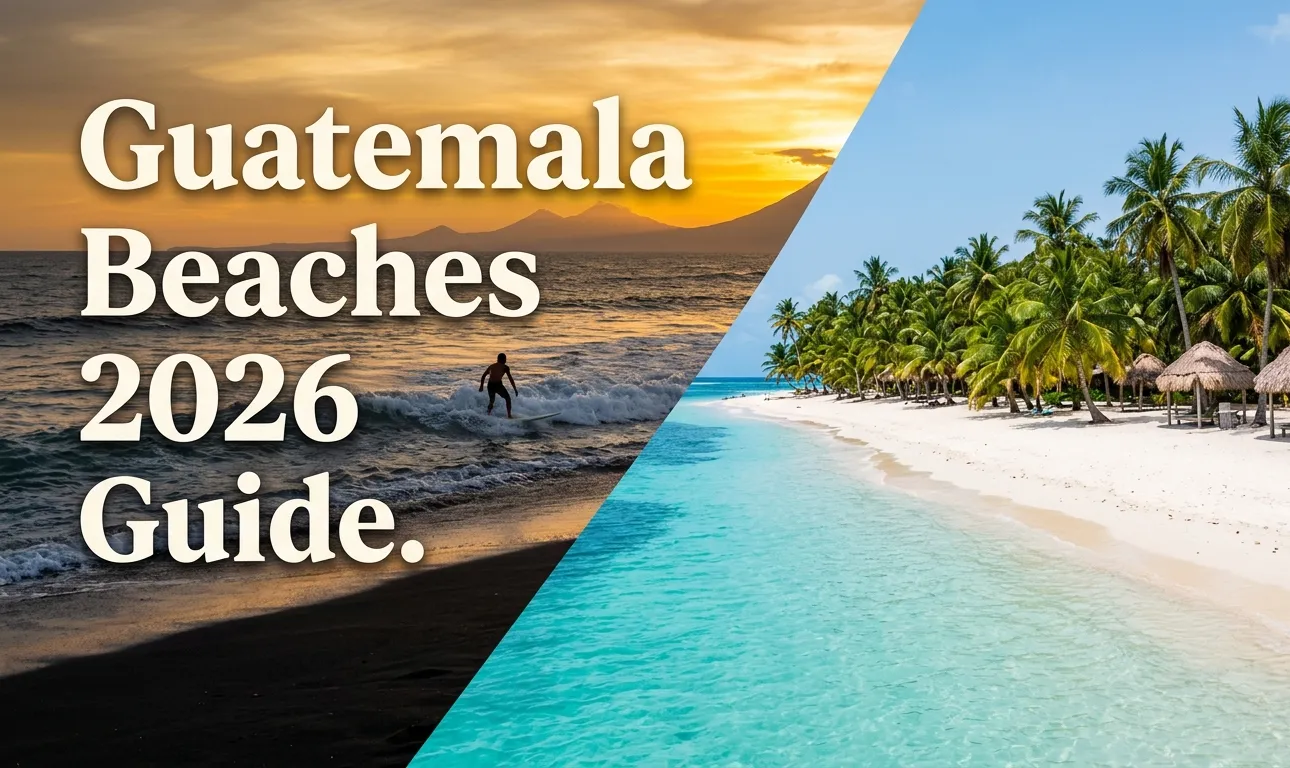
Guatemala beaches exist on two completely different coastlines. The country has both Pacific and Caribbean shores with dramatically different sand and water.
Many travelers assume Guatemala has Caribbean white sand beaches like Belize. The reality is more complicated and requires planning.
This guide answers the essential question: does Guatemala have beaches worth visiting? You will learn which coast matches your travel style and what safety warnings you cannot ignore.
Does Guatemala Have Beaches?
Yes, Guatemala has beaches on two distinct coastlines. The Pacific coast runs long with black volcanic sand shaped by 37 active volcanoes .
The Caribbean coast is much shorter but offers white coral sand and turquoise water. Most travelers are surprised by how different the two coasts are.
Guatemala is not a classic beach destination like Mexico or Costa Rica. Accommodation is generally rustic, and swimming can be dangerous on the Pacific side .
The country has approximately 300 kilometers (186 miles) of Pacific coastline. The Caribbean coast adds about 100 kilometers (62 miles) more .
Most visitors combine beach time with cultural destinations like Antigua and Lake Atitlán. Building a trip solely around beaches may leave you disappointed.
Key Takeaway: Yes, Guatemala has beaches, but they are not the main attraction — expect black volcanic sand on the Pacific and harder-to-reach white sand on the Caribbean.
Guatemala Beaches: Pacific vs Caribbean at a Glance
The Pacific coast has black volcanic sand and strong currents. Swimming is dangerous at most Pacific beaches, including Monterrico .
The Caribbean coast has white coral sand and clear turquoise water. Playa Blanca near Livingston is the standout example .
Pacific beaches are closer to Antigua and Guatemala City. Caribbean beaches take significantly longer to reach .
Surfing is excellent on the Pacific coast at El Paredon and Sipacate. The Caribbean coast has calm water but is not known for surf .
Turtle nesting happens on the Pacific from November to April. The Caribbean coast offers Garifuna culture and access to Rio Dulce .
Key Takeaway: Choose the Pacific for surfing and turtle conservation but accept dangerous swimming and rustic accommodation. Choose the Caribbean for white sand and calmer water but accept harder access.
El Paredon: Best Surf Town on the Pacific Coast
El Paredon is the top Pacific beach destination for surfers. The consistent waves attract travelers from around the world .
The sand is black volcanic and the water is warm year-round. The vibe is laid-back and social with a strong backpacker culture .
Several surf schools offer lessons for beginners. Experienced surfers can rent boards and hit the waves at sunrise or sunset .
Turtle watching and mangrove boat tours are also available. Local conservation groups protect nesting sites and release baby turtles .
Access is straightforward via tourist shuttle from Antigua. Expect to pay around 120 Quetzales for the bus journey .
For surfers and backpackers seeking a rustic, non-touristy beach town, El Paredon is excellent. For families or those wanting resorts, this is not the right choice.
Insider Tip:
- Surf conditions are best at sunrise before afternoon winds pick up
- Sunsets in El Paredon are unforgettable — the sky turns orange, pink, and purple
- Bring cash — there are no ATMs in the town itself
Key Takeaway: El Paredon is Guatemala’s best surf destination with consistent waves and a backpacker vibe, but do not expect luxury or safe swimming for non-surfers.
Monterrico: Black Sand and Baby Turtles
Monterrico is the most visited black sand beach on Guatemala’s Pacific coast. It is also the country’s most important sea turtle nesting site .
The ocean at Monterrico is dangerous for swimming. Strong currents and undertows mean even surfers should be cautious .
The main attraction is the baby turtle release tours. Guided tours run from November to April during nesting season .
The Biotopo Monterrico-Hawaii nature reserve sits nearby. Mangrove boat tours, kayaking, and bird watching are popular activities .
The town itself is a single main road with hotels and restaurants. Waste management is a known problem here .
For turtle conservation enthusiasts and nature lovers, Monterrico is essential. For anyone wanting to swim in the ocean, choose a different beach entirely.
Insider Tip:
- Book turtle tours in advance during nesting season (November to April)
- Stay at Dos Mundos Pacific Resort if you want the upscale option in the area
- Wear shoes on the black sand — it retains heat and can hide debris
Key Takeaway: Monterrico is for turtle lovers and nature explorers only — the ocean is genuinely dangerous for swimming.
Sipacate: Safer Swimming and Luxury Lodges
Sipacate sits near El Paredon but is harder to reach. A river blocks direct access, requiring travel through Escuintla and Siquinalá .
The payoff is that swimming is possible here. Sipacate has safer water conditions than Monterrico or other Pacific beaches .
Luxury lodges are available in Sipacate, including Pacific Pearl Lodge. The lodge offers private balconies with ocean and sunset views .
Mar Maya provides basic bungalows directly on the beach for budget travelers. The area remains quieter and less developed than El Paredon.
For travelers who want Pacific coast scenery but safer swimming, Sipacate is the best option. For those without a car, access is genuinely difficult.
Key Takeaway: Sipacate offers safer swimming than other Pacific beaches and some luxury lodging options, but it requires a car to reach.
Playa Las Lisas: Remote Sunken Ships and Whales
Playa Las Lisas is located in the Santa Rosa department. The beach sits between a canal (Canal de Chiquimulilla) and the ocean .
The merging point of canal and sea is called Boca Barra. This is a must-see natural phenomenon at this beach .
Two sunken ships are visible for diving and exploration. Humpback whale and dolphin watching are also possible here .
The beach is remote, quiet, and offers stunning sunset views. Accommodation is best found by staying at a beach hotel or using Uber to get there .
For adventurous travelers seeking remote scenery and wildlife, Las Lisas is a hidden option. For those wanting facilities and easy access, skip this beach.
Key Takeaway: Playa Las Lisas is remote and quiet with sunken ship diving and whale watching, but access is difficult and facilities are minimal.
Playa Blanca: Best White Sand Beach in Guatemala
Playa Blanca is widely regarded as the best beach in Guatemala. It has white coral sand and clear turquoise water .
You reach Playa Blanca by boat from Livingston. The journey takes approximately 30 minutes from the town .
The beach is private with an admission fee of approximately 15 Quetzales ($2 USD). A tour guide or boat operator is required .
The water is calm with no big waves. This makes Playa Blanca a first-choice beach for families .
Many tour packages combine Playa Blanca with Los Siete Altares waterfalls. Agencies in Livingston offer various day trip options .
For travelers who want classic white sand Caribbean scenery, Playa Blanca is worth the journey. For those with limited time, the travel effort may outweigh the reward.
Insider Tip:
- Pack all food and water — facilities at the beach are very limited
- Combine your visit with Los Siete Altares waterfalls for a full day trip
- Go early to avoid the midday heat and have the beach less crowded
Key Takeaway: Playa Blanca delivers Guatemala’s only white sand Caribbean beach experience, but it requires a boat trip from Livingston and has minimal facilities.
Punta de Palma: Puerto Barrios’ Local Escape
Punta de Palma is located across the bay from Puerto Barrios. It functions as the city’s “salty backyard escape” for locals .
The water is calmer here than on the Pacific coast. Swimming is generally safe, though afternoon waves can pick up .
The sand is clean-ish away from the main pier area. The scenery is more “working Caribbean” than postcard-perfect .
Food shacks serve fresh ceviche and local seafood cheaply. Accommodation nearby is functional rather than luxurious .
For travelers passing through Puerto Barrios or Rio Dulce, Punta de Palma is a convenient stop. For those seeking stunning scenery, Livingston and Playa Blanca are better.
Key Takeaway: Punta de Palma is a convenient local beach near Puerto Barrios with calm water and cheap food, but it is not a destination beach.
Los Siete Altares: Waterfalls Near the Beach
Los Siete Altares is a series of seven waterfalls near Livingston. The name means “Seven Altars” in Spanish.
The waterfalls cascade through a tropical canyon into natural pools. Swimming in the pools is possible and very popular.
The site is often combined with Playa Blanca on day tours from Livingston. A boat and then a short walk are required to reach the falls .
For travelers already visiting Livingston, Los Siete Altares is an excellent addition. For those solely focused on beaches, prioritize Playa Blanca instead.
Key Takeaway: Los Siete Altares offers waterfall swimming near Livingston and pairs well with a Playa Blanca beach day.
Best Beaches in Guatemala by Traveler Profile
For surfers, El Paredon is the undisputed best choice. The consistent Pacific waves and surf schools make it ideal .
For families, the Caribbean coast is safer. Playa Blanca has calm water and white sand . Avoid Pacific beaches with young children due to dangerous currents.
For turtle conservation enthusiasts, Monterrico is essential. Baby turtle releases run from November to April .
For luxury seekers, Sipacate has the best upscale lodging. Pacific Pearl Lodge offers private balconies and sunset views .
For backpackers on a budget, El Paredon has hostels and a social scene. Punta de Palma has cheap food shacks and basic accommodation .
For cultural travelers, Livingston and the Caribbean coast offer Garifuna culture. This is unlike anywhere else in Guatemala .
Key Takeaway: Surfers go to El Paredon, families go to Playa Blanca, turtle lovers go to Monterrico — choose your beach based on your travel profile and safety priorities.
How to Get to Guatemala Beaches from Antigua and Guatemala City
A rental car is the most reliable way to reach Pacific beaches. Roads are generally good but can be bumpy near the coast .
Tourist shuttles run from Antigua to El Paredon and Monterrico. The bus to El Paredon costs approximately 120 Quetzales .
To reach Livingston and Playa Blanca, you must take a boat. Boats depart from Rio Dulce or Puerto Barrios .
The Caribbean coast takes significantly longer to reach. Plan for a full day of travel from Antigua or Guatemala City.
Chicken buses are for locals and not recommended for tourists. Arrange transport through your hotel or a reputable shuttle company .
Insider Tip:
- Download offline Google Maps before driving to remote beaches
- Fill your gas tank in major towns — stations are scarce on the coast
- Do not drive at night on coastal roads
Key Takeaway: Tourist shuttles go to El Paredon and Monterrico from Antigua, but a rental car gives you flexibility. The Caribbean coast requires boat travel.
Best Time to Visit Guatemala Beaches 2026
The dry season runs from November to April. This is the best time to visit both coasts .
Expect sunny skies, warm temperatures, and minimal rain. Water clarity is at its best during these months .
The rainy season runs from May to October. Heavy downpours and increased humidity are common .
Surf conditions can become unpredictable during the wet season. Strong currents and murky water make swimming less appealing .
Turtle nesting season on the Pacific coast is November to April. This aligns perfectly with the dry season .
Temperatures on the Pacific coast range from 20°C to 37°C (68°F to 99°F) year-round. The Caribbean coast is warm and humid .
Key Takeaway: November to April is the best time for both coasts — dry weather, good water clarity, and turtle nesting season on the Pacific.
Safety and Seasonal Warnings for Guatemala Beaches
The most important safety warning is that swimming is dangerous at most Pacific coast beaches. Monterrico’s ocean is not safe for most visitors .
Rip currents and strong undertows are common on the Pacific. Even experienced swimmers should exercise extreme caution .
Check local conditions before entering the water at any beach. Never swim alone or after consuming alcohol.
The sun is intense, especially between 11 AM and 3 PM. Use high-SPF sunscreen, wear a hat, and seek shade .
Heat, sun exposure, and long travel hours make dehydration a real risk. Bring plenty of water .
Petty theft can occur on crowded beaches. Keep valuables secure and do not leave bags unattended .
The rainy season (May to October) brings risk of road closures and landslides. Check weather forecasts before traveling .
For any emergency in Guatemala, dial 110 for police or 119 for ambulance. CONRED coordinates disaster response .
What to Pack for Guatemala Beaches
| Item | Why It’s Essential |
|---|---|
| Reef-safe sunscreen | Intense UV exposure, protects marine life |
| Water shoes | Volcanic rock and debris on Pacific beaches |
| Hat and sunglasses | Sun protection, especially 11 AM to 3 PM |
| Plenty of water | Dehydration risk is real on the coast |
| Cash in Quetzales | Small beach vendors and entrance fees |
| Quick-dry towel | Humid conditions make drying slow |
| Bug spray | Mosquitoes near mangroves and estuaries |
| Power bank | Outlets may not be available at rustic accommodations |
Key Takeaway: Pack reef-safe sunscreen, water shoes, and plenty of cash — and accept that swimming is off-limits at most Pacific beaches.
Comparison Table of Guatemala Beaches
| Beach | Coast | Sand Type | Water Safety | Best Activity | Access Difficulty | Insider Note |
|---|---|---|---|---|---|---|
| El Paredon | Pacific | Black volcanic | Dangerous (rip currents) | Surfing | Moderate (shuttle from Antigua) | Best for surfers and backpackers |
| Monterrico | Pacific | Black volcanic | Very dangerous | Turtle watching | Moderate | Ocean not safe for swimming |
| Sipacate | Pacific | Black volcanic | Safer than other Pacific | Swimming, luxury lodging | Difficult (car required) | Harder to reach but safer water |
| Playa Las Lisas | Pacific | Black volcanic | Moderate (check conditions) | Sunken ships, whales | Difficult | Remote and quiet |
| Playa Blanca | Caribbean | White coral | Safe, calm | Swimming, relaxing | Hard (boat from Livingston) | Best white sand beach in Guatemala |
| Punta de Palma | Caribbean | Mixed | Generally safe | Local food, quick dip | Moderate (boat from Puerto Barrios) | Convenient local beach |
Frequently Asked Questions About Guatemala Beaches
Does Guatemala have good beaches?
Guatemala has interesting beaches, but they are not “good” in the classic Caribbean resort sense. The Pacific has black sand and dangerous swimming with great surfing. The Caribbean has white sand but is difficult to reach. Most travelers are better off focusing on Guatemala’s highlands and Mayan ruins and adding a beach day as a secondary activity .
Which side of Guatemala has white sand beaches?
The Caribbean coast has white coral sand beaches. Playa Blanca near Livingston is the best example, with white sand and turquoise water . The Pacific coast has black volcanic sand.
Is it safe to swim in the ocean in Guatemala?
No, swimming is not safe at most Pacific coast beaches. Monterrico has strong currents and dangerous undertows. Sipacate has safer conditions but still requires caution. The Caribbean coast around Livingston is generally safer for swimming .
What is the closest beach to Guatemala City?
Puerto San Jose is the closest Pacific beach to Guatemala City. However, it is primarily a sport fishing destination with limited appeal for general beach visitors . El Paredon and Monterrico are better options but require 2-3 hours of travel.
Do I need a car to visit beaches in Guatemala?
A rental car is highly recommended, especially for reaching Pacific beaches like Sipacate. Tourist shuttles from Antigua go to El Paredon and Monterrico. The Caribbean coast requires a boat from Rio Dulce or Puerto Barrios .
Is Guatemala a good beach vacation destination?
Guatemala is not a good choice for a pure beach vacation. The swimming is dangerous on the Pacific coast, and the Caribbean white sand beaches are difficult to reach. Most travelers should combine a beach day with cultural destinations like Antigua, Lake Atitlán, and Tikal rather than planning a trip around beaches .
Guatemala beaches offer dramatic variety but require honest expectations. The Pacific coast is for surfers and turtle lovers who accept dangerous swimming and rustic lodging. The Caribbean coast delivers white sand but demands significant travel effort.
The single most practical piece of advice for 2026 is to avoid swimming at Monterrico and most Pacific beaches unless you are an experienced surfer . The currents are genuinely dangerous, and local authorities issue consistent warnings.
A rental car or tourist shuttle from Antigua will serve you better than relying on chicken buses . Confirm current conditions with INGUAT (Guatemalan Institute of Tourism) or CONRED before traveling during rainy season (May to October) . Your Guatemala beach experience will be much better if you approach it as a secondary activity to complement the country’s world-class highlands and Mayan ruins, not as the main event.