Green Sand Beaches: How Many Exist & How to Visit in 2026
There are only four true green sand beaches on the entire planet. This fact alone explains why you are here planning a trip.
The green sand comes from a semi-precious gemstone called olivine eroded from ancient volcanic cinder cones. Hawaii’s Papakōlea Beach is by far the most famous and accessible.
This 2026 guide covers exactly how many green sand beaches exist, where to find them, and how to visit Hawaii’s main attraction. We provide an honest assessment of the brutal hike, the illegal shuttle, and who should genuinely make the trip.
How Many Green Sand Beaches Are There in the World
Only four beaches on Earth are officially recognized as having genuine green sand. This extreme rarity is a result of very specific and uncommon geological conditions.
The sand must originate from an olivine-rich cinder cone exposed to direct coastal erosion. Most volcanic activity simply does not create this precise combination of minerals and wave action.
- Papakōlea Beach (Mahana Beach) on the Big Island of Hawaiʻi, USA
- Talofofo Beach on the island of Guam, a US territory
- Floreana Island in the Galapagos Islands, Ecuador, at Punta Cormorant
- Hornindalsvatnet in Norway, a green sand beach on a freshwater lake
Key Takeaway: Fewer green sand beaches exist than you likely imagined, making each one a unique global rarity.
What Makes Green Sand Beaches Green
The olive-green color comes from a mineral called olivine. Olivine is a common component of Hawaiian basalt lava.
The specific cinder cone of Puʻu Mahana was formed 49,000 years ago during an explosive volcanic eruption. This eruption concentrated olivine crystals in the cone’s structure.
Ocean waves now relentlessly attack the base of the cinder cone. The wave action erodes the cone, washing away lighter volcanic ash and sand.
The heavier, denser olivine crystals remain behind and accumulate on the shoreline. The result is a beach composed entirely of dark, olive-green semi-precious gemstones.
The sand is technically peridot, the gem-quality version of olivine. The color is rarely a bright emerald green and more often a deep, dark olive.
Green Sand Beaches Hawaii: The Main Attraction
Hawaii is home to the planet’s most famous green sand beach on the Big Island’s southern tip. This island’s active geology makes such a phenomenon possible.
The Big Island is the youngest Hawaiian island and remains volcanically active above a hotspot. Mauna Loa and Kilauea are the two volcanoes that built this landscape.
The formation of olivine is directly tied to the island’s unique basaltic lava chemistry. No other Hawaiian island has a true green sand beach.
Papakōlea Beach is the main attraction and a bucket-list destination for geology lovers. The remote Ka Lae (South Point) area feels like the edge of the world.
The entire south shore is wind-blown, arid, and powerful. This is not the lush tropical Hawaii of postcards but a raw geological wonder.
Papakōlea Green Sand Beach: A Detailed Overview
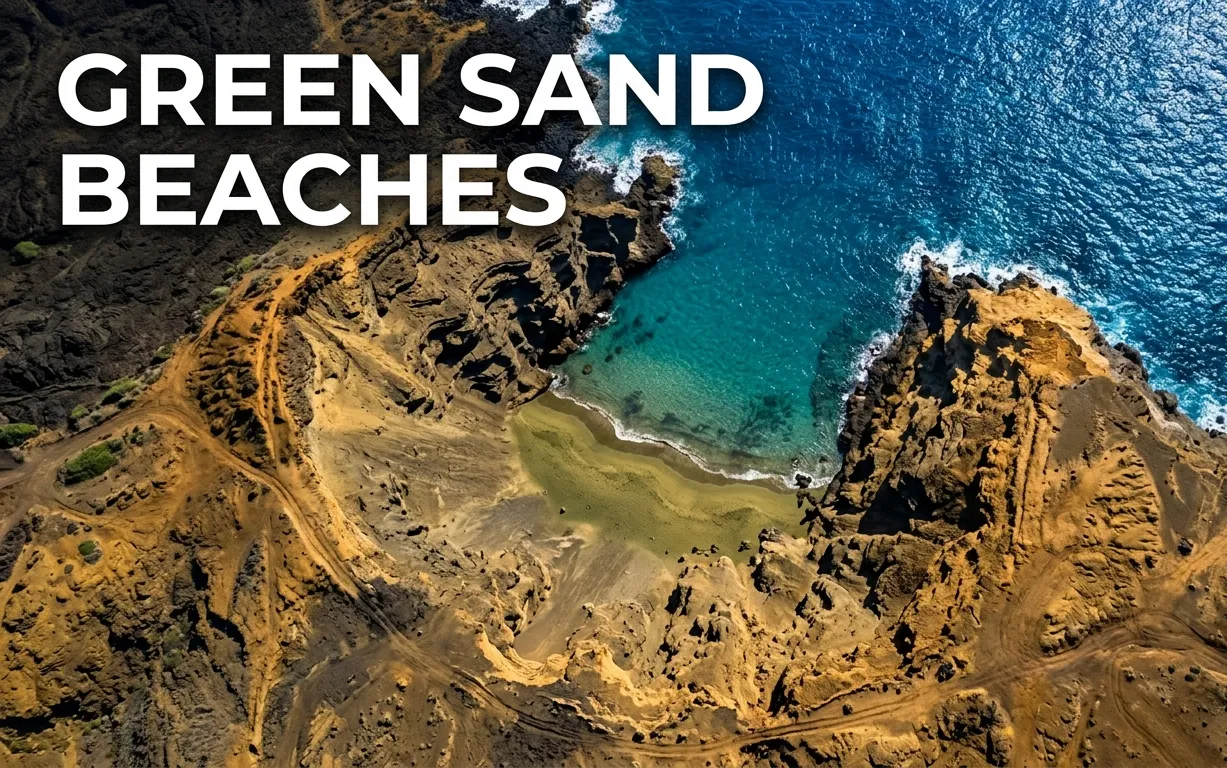
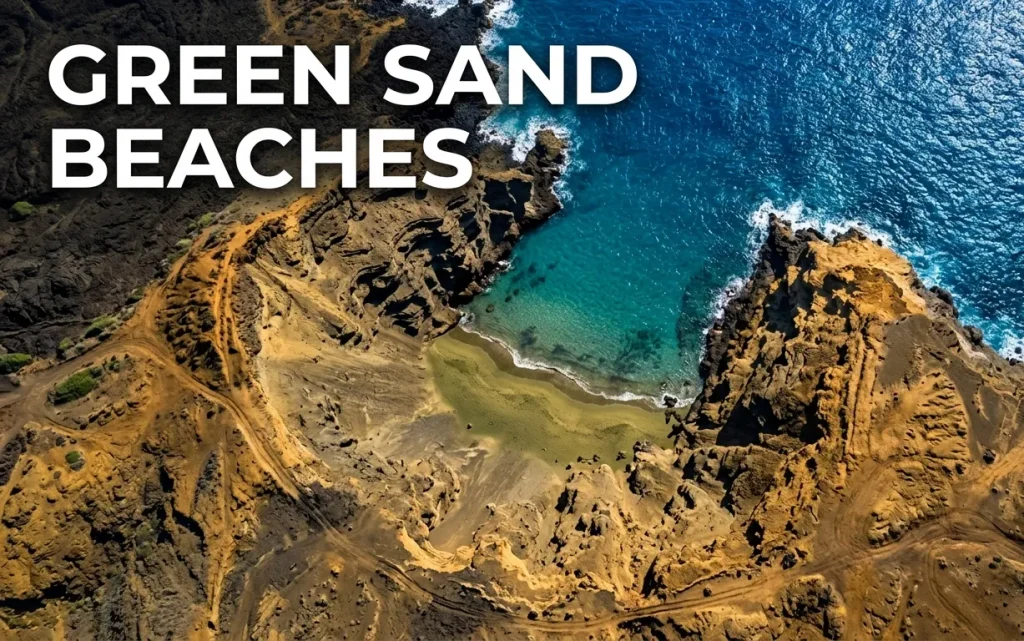
Papakōlea Beach is a small, crescent-shaped cove carved into the side of the Puʻu Mahana cinder cone. The beach sits at the base of eroding golden-brown cliffs streaked with dark lava.
The sand is a heavy, coarse mix of dark grey lava grains and dense olivine crystals. The green color is most visible when the sun is high overhead during midday.
The water is typically rough, with a steep shore break and strong rip currents. You will find zero shade, no restrooms, and no fresh water here.
The crescent beach is only about 100 feet wide, enclosed by lava rock walls. Arriving feels like discovering a secret geological laboratory rather than a resort.
The land is sacred to Native Hawaiians, and the entire formation is protected. Removing the olivine sand is illegal and culturally disrespectful.
Key Takeaway: Papakōlea’s magic is in the journey and its geological story, not in the typical comforts of a Hawaiian beach day.
Mahana Beach: The Local Name and Its History
Mahana Beach is the more traditional Hawaiian name for what is now commonly called Papakōlea. The name refers to the specific ahupuaʻa (land division) where it sits.
The name Papakōlea itself means “plover flats” in Hawaiian, referencing the kōlea bird. These migratory Pacific golden plovers can sometimes be spotted in the area.
The cinder cone, Puʻu Mahana, was long thought to be a littoral cone formed only by ocean-lava interaction. Recent geological studies now suggest a more explosive aerial eruption 49,000 years ago.
This violent formation concentrated the olivine crystals that give the beach its color. The beach is a significant cultural site, and visitors must tread with respect.
Staying on established trails is essential to prevent further erosion of the fragile cone. Treat this site as a geological museum, not a playground.
The Papakōlea Beach Hike: A Step-by-Step Trail Guide
The hike to Papakōlea is a grueling 5.6-mile round trip from the Ka Lae parking area. It offers absolutely zero shade and traverses dusty, rutted dirt tracks.
To complete the hike safely and successfully, follow these steps:
- Park in the designated lot for South Point (Ka Lae) and begin walking toward the boat hoist on the coast.
- Follow the deeply rutted dirt road along the shoreline heading east for about 2.5 miles.
- Avoid the temptation to cut across the open, rugged lava fields, as this is dangerous and illegal.
- Stay left at any fork in the road, always keeping the ocean in view on your right side.
- After roughly 90 minutes of walking, you will see the beach in a crescent cove below the cinder cone to your left.
- Descend carefully down the eroded, steep path cut into the side of the cliff to reach the sand.
The hike typically takes 2.5 to 3 hours to complete without a long rest. Turn back immediately if you are out of water or feeling heat exhaustion symptoms.
The Papakōlea Beach Shuttle Situation in 2026
You will see local trucks offering shuttle rides from the parking lot to the beach. Do not take them.
The shuttle operation is illegal and has been for years. The drivers are trespassing on state land and operating unpermitted vehicles.
The Hawaiʻi Department of Land and Natural Resources (DLNR) consistently warns visitors not to use these trucks. They are uninsured, unregulated, and their presence accelerates erosion of the trail.
Paying for a ride supports a dangerous, exploitative practice that harms the land. Fines for the drivers can be issued, but the practice persists due to tourist demand.
Your only ethical and legal option is to walk the full 5.6 miles yourself. This is a non-negotiable part of earning access to this sacred and fragile place.
Key Takeaway: The illegal shuttles are a sign of overtourism harming a cultural site, and responsible visitors must reject them outright.
Can You Swim at Papakōlea Beach? Safety and Conditions
Swimming at Papakōlea Beach is extremely dangerous and not recommended for most visitors. The remote location has no lifeguards, zero emergency services, and limited cell reception.
The shore break is steep and powerful, with strong rip currents that pull swimmers out to sea. These conditions exist year-round but are even worse during south swells from October to April.
Only a very strong, experienced open-water swimmer should even consider entering the water. And only on an exceptionally flat and calm day with someone watching from shore.
The water is not a calm turquoise lagoon. It is a raw, deep blue, open-ocean force battering a rocky coastline.
For most people, the experience is about looking, not swimming. Put your feet in a gentle wave surge on the shoreline at your own risk and call that a win.
South Point Hawaii: Directions, Parking, and What to See
Ka Lae, or South Point, is the southernmost point in the entire United States. The drive from Kona takes about 1.5 hours via Highway 11 and South Point Road.
The final 12 miles on South Point Road are a narrow, paved road that feels remote. You do not need a 4WD vehicle to reach the official parking lot at the end.
From the parking lot, it’s a short walk to see the famous Ka Lae Heiau and the cliff-jumping spot. This is where ancient Polynesians first landed and where fishing remains a vital tradition.
The wind is relentless here, powering rows of surreal, creaking wind turbines. The color of the deep blue water against the black lava cliffs is truly stark and beautiful.
Use the restrooms at the parking lot; these are the last facilities for miles. Then, prepare for the long, dusty hike to the green sand beach from here.
Best Time to Visit Papakōlea Beach for Ideal Conditions
The best time to visit Papakōlea Beach is from May through September. During these months, the south shore swell is calmer, and the trade winds are more consistent.
The calmer surf makes the shoreline slightly less dangerous, though never fully safe. These months also see less heavy rainfall that can turn the dirt trail to deep mud.
The single worst time to hike is in the middle of a summer day in July or August. The heat between 11 a.m. and 2 p.m. is extreme with zero shade available.
A dawn start is non-negotiable for a comfortable and safe experience. Arrive at the South Point parking lot just as the sun is rising.
You will complete most of the hike in the cool morning shadows. This simple timing decision is the difference between a rewarding adventure and a dangerous, heat-exhausted ordeal.
Key Takeaway: A summer dawn start is the single most important planning decision you will make for a successful visit to Papakōlea.
What to Pack for the Papakōlea Beach Hike
Packing correctly is essential for a safe and comfortable hike to this remote beach. You are walking through a high-UV, arid, windy, and completely unsupported landscape.
Essential gear for the Papakōlea Beach hike:
- Water: Pack at least 2 to 3 liters of water per person. There is no fresh water source.
- Sunscreen: Use only reef-safe, high-SPF sunscreen and reapply every hour.
- Sun Protection: A wide-brimmed hat, UV-protective sunglasses, and a long-sleeved rash guard are vital.
- Footwear: Sturdy, closed-toe hiking shoes are non-negotiable for the sharp, rocky lava terrain.
- Navigation: Download an offline map on your phone of the trail and area.
- Snacks: Pack salty snacks to replenish electrolytes lost through extreme sweating.
- First Aid: A small kit for blisters from the 5.6-mile walk on uneven ground is essential.
Green Sand Beaches Outside of Hawaii: The Global List
Hawaii’s beach is the most famous, but the other three are equally fascinating. Visiting them requires far more logistical planning and significant travel budgets.
Talofofo Beach in Guam features a subtle olive tint derived from volcanic olivine in the cliffs. It’s a popular local surf break with a completely different feel from Hawaii.
Access is easy, right off the main road on Guam’s southeast coast. The green color is far less vibrant and often unnoticed unless searched for.
Punta Cormorant on Floreana Island in the Galapagos is rich in olivine crystals. You access this beach only via a guided expedition cruise tour.
A wet landing on the olive-green sand is followed by a walk to a flamingo lagoon. The experience is a strictly controlled, world-class wildlife encounter.
Hornindalsvatnet lake in Norway has a green sand beach from glacial olivine deposits. This is a freshwater beach with a completely different ecosystem, surrounded by mountains.
Are Green Sand Beaches Worth the Effort? A Traveler’s Honest Verdict
A green sand beach is only worth it for a very specific type of traveler. You must be a geology enthusiast, a dedicated hiker, or a photographer with a niche interest.
For a family seeking a relaxing beach day with safe swimming and amenities, it is absolutely not worth it. The hike is a sufferfest for young children, and the water is dangerous.
A romantic couple expecting a secluded tropical paradise will be shocked by the harsh reality. The wind, dust, and rough water are the opposite of a honeymoon-style beach.
The experience is about the journey and the geological story, not the destination’s comfort. If you value earning a unique view and a science lesson, you will love it.
The view of an olive-hued gemstone beach from a cliff is genuinely unique and memorable. It’s an adventure you will talk about for years, but only if you are properly prepared.
| Traveler Profile | Verdict | Why? |
|---|---|---|
| Geology Enthusiast | 100% Worth It | A rare chance to walk on a beach of semi-precious gemstones. |
| Family with Kids | Not Worth It | The hike is too long, hot, and dangerous, with no safe swimming. |
| Adventure Hiker | Worth It | A rewarding, rugged coastal trail with a unique payoff. |
| Luxury Seeker | Not Worth It | Zero amenities, a rough hike, and no resorts in sight. |
Key Takeaway: A green sand beach visit is an adventure hike to a geological wonder, not a beach day.
Safety and Seasonal Warnings for Papakōlea Beach
The primary risk at Papakōlea is the deadly combination of extreme heat, zero shade, and a lack of water. Heat exhaustion and severe dehydration can set in quickly on the exposed trail.
Key safety and seasonal facts every visitor should know:
- Rip Currents: The shore break is powerful and has deadly rip currents, which are strongest during the south swell season (October-April).
- Heat Exposure: The midday sun is brutal; hiking between 10 a.m. and 3 p.m. without shade is a genuine health risk year-round.
- Flash Floods: Heavy rains can turn the trail into impassable, slick mud and flood low-lying areas, making the hike dangerous.
- Falling Hazards: The cliff edge near the descent to the beach is steep and unstable. Stay well back from the edge of the eroding cinder cone.
- No Services: There is no cell service on the trail and zero emergency medical services. You are fully on your own once you leave the parking lot.
In any emergency, call 911, but be prepared for a significant delay in any response. Your safety is entirely your own responsibility on this remote and unprotected coastline.
Frequently Asked Questions About Green Sand Beaches
How many green sand beaches are there in the world?
There are only four official green sand beaches on the entire planet.
They are located in Hawaii, Guam, the Galapagos Islands, and Norway.
The extreme rarity is due to the unique volcanic geology required.
Where is the most famous green sand beach?
Papakōlea Beach, also called Mahana Beach, on the Big Island of Hawaii is the most famous.
Its accessibility relative to a popular tourist destination makes it well-known.
The beach sits at the base of a 49,000-year-old olivine-rich cinder cone.
Is the hike to Papakōlea Beach difficult?
The hike is a 5.6-mile round trip on a flat but completely shadeless and dusty trail.
The difficulty comes from extreme sun exposure, heat, and wind, not steep elevation gain.
It takes most people 2.5 to 3 hours and requires sturdy shoes and ample water.
Can you drive to the green sand beach in Hawaii?
You cannot legally drive a rental vehicle to the beach itself, despite what guides say.
The deeply rutted 4WD track is illegal for vehicles, and rental car contracts prohibit it.
You must walk or take a shuttle truck, which the state of Hawaii says is also illegal.
Is it illegal to take sand from Papakōlea Beach?
Yes, it is illegal under Hawaii state law to remove any sand, rocks, or minerals.
The sand is a protected geological and cultural resource belonging to the land.
Taking a handful of green sand can result in fines and is culturally disrespectful.
What is the best time of day to photograph the green sand?
The high midday sun is the best light for revealing the true olive-green color.
Morning and late afternoon shadows can make the sand appear a dull grey.
A photographer’s polarized lens filter is essential for cutting water glare on the sand.
A Final Note on Visiting a Global Rarity
A green sand beach represents one of Earth’s rarest geological occurrences. There are only four in existence, and the journey is the true experience.
The most important thing you can do is verify the trail conditions and weather forecast before you depart. Speak with a ranger or a local business in Nāʻālehu for the most current 2026 information.
Your planning should start with the decision to hike, not ride. The responsible choice protects a fragile cultural landscape and guarantees a genuine sense of personal adventure.
A well-prepared visit to Papakōlea delivers a story you will never forget. Go early, pack water, and earn the view of a lifetime.