Best Florida Beaches in 2026: Gulf Coast to the Keys
Florida’s best beaches are not all equal, and most travel content treats them as if they are.
Visit Florida reports that the state receives more than 100 million domestic and international visitors annually. A meaningful percentage of them end up at the wrong beach for their specific goals.
This guide covers the Gulf Coast, the Panhandle, the Keys, and both coasts by traveler profile, crowd level, and seasonal honesty. Read it before you book.
Best Florida Beaches: What Every First-Time Visitor Gets Wrong
The single biggest mistake first-time Florida beach visitors make is choosing a beach by photograph alone.
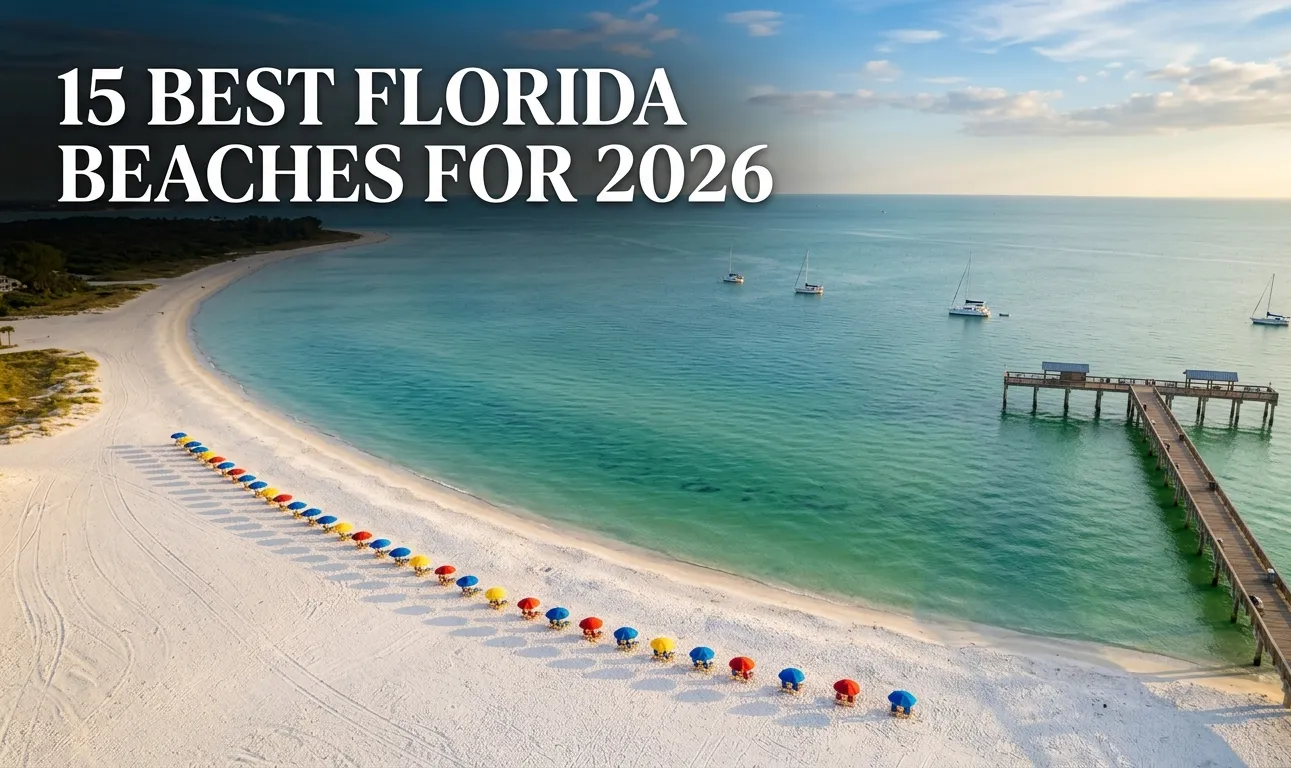
Clearwater Beach looks extraordinary in drone footage. It earns that reputation on its sand quality and water color.
What the photographs do not show: summer weekend crowd density that rivals a theme park. Parking is competitive, expensive, and often full by 9 a.m. during peak season.
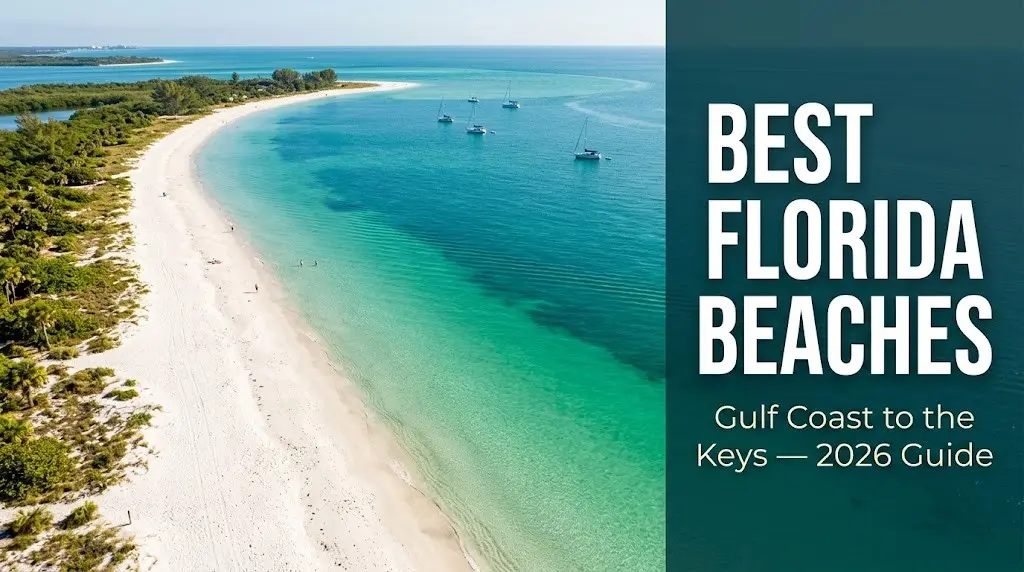
Siesta Key Beach in Sarasota earns its consistently high rankings more honestly. The quartz sand genuinely stays cool underfoot even in July heat.
But Siesta Key is also a popular destination. Expect substantial crowds at the main public beach access on summer weekends.
The Gulf Coast and Atlantic Coast behave like completely different beach environments. The Gulf typically offers calmer water, whiter sand, and warmer temperatures in spring and fall.
The Atlantic side has more wave energy. It suits surfers and body-boarders better than the Gulf does.
Insider Tip:
- Arrive at any Florida Gulf Coast beach before 8:30 a.m. on summer weekends to secure parking
- Atlantic-side beaches near Cocoa Beach are generally less crowded than Gulf Coast equivalents
- Families with toddlers consistently do better on the Gulf side, where shallow calm water extends further from shore
Most Beautiful Beaches in Florida: The Gulf vs. Atlantic Reality
The most visually striking beaches in Florida sit on the Gulf Coast, not the Atlantic side.
Gulf Coast sand from Siesta Key through the Panhandle is composed largely of fine white quartz. This sand reflects light differently than Atlantic Coast sand, which tends to be coarser and darker in color.
Grayton Beach State Park in the Panhandle and Caladesi Island State Park near Clearwater consistently rank among the most beautiful Gulf Coast beaches. Neither is overhyped relative to the actual in-person experience.
Grayton’s water shifts through shades of jade and emerald depending on light conditions and time of day. Caladesi requires a ferry, which controls crowd volume and preserves the visual quality of the beach.
The Atlantic side offers its own appeal. South Beach Miami has the visual architecture of its Art Deco district as a backdrop, which creates a different kind of striking experience.
Bahia Honda State Park in the Florida Keys sits at a geographic point where Atlantic and Gulf waters meet. The visual effect of both water colors merging is genuinely unusual and worth the drive.
| Beach | Sand Type | Water Color | Visual Ranking | Notes |
|---|---|---|---|---|
| Siesta Key Beach | Fine white quartz | Clear turquoise | 9/10 | Crowds reduce the experience in summer |
| Caladesi Island | Fine white quartz | Clear aqua-green | 9.5/10 | Ferry access limits crowds |
| Grayton Beach | Fine white quartz | Emerald-green | 9/10 | State park, excellent condition |
| Bahia Honda | Mixed sand and shell | Dual-tone teal | 8.5/10 | Unique Keys geography |
| South Beach Miami | Packed white sand | Blue-green | 8/10 | Urban backdrop, very crowded |
| Henderson Beach Destin | Fine white quartz | Clear emerald | 9/10 | Less known than nearby Destin main |
Best Beaches on Florida’s Gulf Coast
Florida’s Gulf Coast beaches consistently outperform Atlantic-side beaches for calm swimming and fine white sand.
The Gulf of Mexico water along Florida’s coast typically runs between 68 and 86 degrees Fahrenheit depending on season. In April and May, it hits the 74 to 78 degree range that most swimmers find ideal.
Fort De Soto Park in Pinellas County offers five interconnected islands with two distinct beach areas. The North Beach swim area has calm, shallow water suitable for young children.
Fort De Soto charges a vehicle entry fee; confirm the current rate with Pinellas County Parks before visiting. The beach avoids the concentrated resort-area crowds of Clearwater Beach despite its proximity.
Anna Maria Island sits about 45 minutes south of Tampa. Its three main beach access points (Manatee Public Beach, Coquina Beach, and Bean Point) all have public access and free or low-cost parking by Gulf Coast standards.
Anna Maria suits couples and families equally well. The island has a genuinely local feel compared to the resort-heavy atmosphere of Clearwater.
Lovers Key State Park near Fort Myers provides a quieter Gulf Coast alternative for adults. The beach is only accessible by tram or a short walk, which naturally filters the crowd.
Day-use fees at Florida State Parks typically run in the $3 to $8 per vehicle range. Verify current fees with Florida State Parks before visiting.
Key Takeaway: Gulf Coast beaches offer calmer water and whiter sand than the Atlantic side, but summer crowds and red tide risk are real factors that require seasonal planning.
Florida Panhandle Beaches: The Emerald Coast Explained
The Florida Panhandle beaches between Destin and Panama City Beach feature some of the clearest nearshore water in the continental United States.
The water color earns its “Emerald Coast” regional nickname. The combination of white quartz sand and shallow Gulf water creates a green-to-turquoise gradient visible from shore.
Henderson Beach State Park in Destin sits immediately adjacent to the densely developed Destin resort area but maintains its natural condition. The park limits daily vehicle entry, which controls crowd levels effectively.
Grayton Beach State Park near Santa Rosa Beach on the 30A corridor is consistently one of the least-developed beaches in the Panhandle. Dune lake access and a forested trail system add options beyond beach time.
Navarre Beach sits between Pensacola Beach and Fort Walton Beach. It is consistently less crowded than its neighbors and offers free parking at most access points.
Navarre Beach suits budget travelers and couples seeking a quieter Panhandle experience. The trade-off is fewer nearby dining and nightlife options compared to Destin or 30A.
Panama City Beach is the most commercially developed Panhandle beach. It offers broad white sand and clear water, but the strip of hotels, nightclubs, and tourist attractions makes it feel more like a resort town than a natural beach experience.
Spring break at Panama City Beach, historically one of the most chaotic in the country, has been moderated by local ordinances. However, March through April still brings substantial crowds.
Florida Keys Beaches: What You’re Actually Getting
The Florida Keys do not have long stretches of natural white sand beach. Most visitors are surprised by this.
The Keys are a coral island chain. Most shoreline is rocky or lined with mangrove root systems. Sand beaches exist but are typically smaller and calmer than mainland Gulf beaches.
Bahia Honda State Park offers the Keys’ best natural sand beach. The park sits at Mile Marker 37 and provides one of the only genuinely swimmable sandy beach areas in the entire Keys chain.
Day-use fees and boat-in camping at Bahia Honda require advance booking, especially during peak winter season. Verify current availability and rates with Florida State Parks.
Smathers Beach in Key West is the longest public beach in the Keys at approximately two miles. The sand here is largely trucked in rather than naturally occurring.
Smathers Beach suits travelers staying in Key West who want easy beach access. It is not worth making a special trip to the Keys solely for Smathers Beach.
The real draw of Keys “beaches” for most experienced visitors is the water, not the sand. Snorkeling directly off shore at spots like Fort Zachary Taylor Historic State Park in Key West puts swimmers over live reef sections that are not accessible anywhere on the Florida mainland.
Best Beaches in Florida for Adults Seeking Space and Quiet
Cayo Costa State Park is the best beach in Florida for adults who genuinely want seclusion.
Cayo Costa is accessible only by private boat or the Tropic Star ferry from Pine Island. The ferry schedule limits daily visitor volume in a way that no mainland beach can replicate.
The beach runs for approximately nine miles along Lee County’s barrier island system. There are no hotels, no restaurants, and no road access.
Adults seeking a full-day solitary beach experience should plan the ferry trip as an all-day excursion. Bring all food, water, and sun protection; no facilities are available beyond basic restrooms.
Caladesi Island State Park near Dunedin offers a similar concept. The Pelican Ferry from Honeymoon Island State Park is the only access route.
Caladesi suits couples and adults-only groups more than families with young children. The walk from the ferry dock to the best beach sections is roughly 15 minutes.
Haulover Beach Park in Miami-Dade County includes a designated clothing-optional section that is well-maintained and actively patrolled. It is one of the most attended clothing-optional beaches in the United States.
Haulover suits adults across a range of traveler profiles. The non-clothing-optional sections are also well-maintained and less crowded than South Beach.
Key Takeaway: The most reliably adult-oriented Florida beaches require either ferry access (Cayo Costa, Caladesi) or deliberate off-peak timing. Boat-access beaches are the most effective crowd filter in Florida.
Best Family Beaches in Florida
Fort De Soto Park’s North Beach is the best family beach in Florida for children under 10.
The swim area has a gradual sandy entry, minimal wave action, and lifeguard coverage during peak season. Lifeguard schedules vary; confirm coverage with Pinellas County Parks before visiting.
The shallow wading zone at Fort De Soto extends well from shore. Young children can stand at distances that would be over their heads at Atlantic-side beaches.
Siesta Key Beach at Siesta Key Village suits families with older children who can handle more foot traffic. The fine cool sand is a genuine comfort advantage over beaches with coarser, hotter sand.
Parking at Siesta Key Beach public areas fills early on summer weekends. Budget travelers should know that street parking near the village often remains available longer than the main lot.
Cocoa Beach on the Atlantic side suits families with children aged 8 and older who have some interest in surfing or wave play. The beach is adjacent to a well-developed beachside commercial strip.
Surf lessons at Cocoa Beach are widely available from multiple providers. Expect a range of prices from roughly $50 to $100 per person for a group lesson; verify current pricing with individual operators.
Families seeking a resort-integrated beach experience should evaluate Marco Island on the Gulf Coast. The JW Marriott Marco Island Beach Resort provides the broadest range of family amenities of any Gulf Coast beach resort property.
Best Beaches for Snorkeling in Florida
The best snorkeling in Florida is in the Keys, not on the mainland, and it is not close.
John Pennekamp Coral Reef State Park at Mile Marker 102.5 in Key Largo provides the most accessible coral reef snorkeling in the continental United States. Glass-bottom boat and snorkel tours depart from the park marina daily.
Snorkel tours from John Pennekamp typically run two to three hours. Prices generally range from $30 to $50 per adult for snorkel tours; verify current pricing with the park concession operators before booking.
Underwater visibility at John Pennekamp varies by season and conditions. It is typically best from November through April when water clarity is highest and boat traffic is lower.
Dry Tortugas National Park offers the most spectacular snorkeling in Florida but requires the most planning. The Yankee Freedom III ferry from Key West makes a full-day excursion possible for most travelers.
Ferry tickets for Dry Tortugas typically run $200 to $250 per adult; book as far as 3 to 6 months in advance for peak season visits. Verify current pricing and availability directly with the Yankee Freedom III operator.
On the mainland Gulf side, Bahia Honda State Park and Fort Zachary Taylor Historic State Park both offer accessible nearshore snorkeling. Visibility is lower than the Keys but reef fish and sea grass encounters are reliable.
According to Visit Florida, the Florida Keys National Marine Sanctuary encompasses approximately 2,900 square nautical miles of protected reef, sea grass, and open-water habitat. This concentration of protected reef is the only coral barrier reef system in the continental United States.
Key Takeaway: Florida Keys snorkeling at John Pennekamp or Dry Tortugas is genuinely different in quality from mainland Gulf Coast snorkeling. Budget the trip to the Keys specifically if snorkeling is your primary goal.
Secluded Beaches in Florida That Require Real Effort to Reach
Cayo Costa State Park and Caladesi Island State Park are the two most reliably secluded beaches in Florida accessible without a private boat charter.
Both require ferry service that creates a natural ceiling on daily visitors. Neither has roadside parking that allows spontaneous overcrowding.
Dry Tortugas National Park offers the most remote beach experience accessible to most travelers. The park sits 70 miles west of Key West in the Gulf of Mexico.
Only a limited number of visitors are permitted per day by ferry, which preserves the experience. The beach at Fort Jefferson’s moat wall area is calm, clear, and largely uncrowded even in peak season.
Cape San Blas in Gulf County sits on a narrow peninsula southwest of Apalachicola. The beaches here are wide, undeveloped, and far removed from the commercial resort strip that defines Destin and Panama City Beach.
Most Cape San Blas beach access is through St. Joseph Peninsula State Park. The park’s remote location means it sees a fraction of the visitors that Panhandle resort beaches attract.
Couples and adults seeking genuine seclusion should prioritize Cape San Blas or Cayo Costa over more famous alternatives. The trade-off is distance from airports and limited nearby accommodation.
Least Crowded Beaches in Florida for 2026
The least crowded accessible beaches in Florida in 2026 are concentrated in four areas: the Nature Coast, the Big Bend region, the upper Panhandle, and the underdeveloped Lee County barrier islands.
Keaton Beach in Taylor County on the Nature Coast offers a genuinely local Gulf beach experience with minimal tourism infrastructure. Water here is shallower and occasionally murky from freshwater springs, but the solitude is authentic.
St. George Island State Park in Franklin County is significantly less crowded than nearby Apalachicola would suggest. The eastern end of the park’s beach is accessible only by foot or bike, which effectively eliminates casual visitors.
The easternmost sections of St. George Island State Park beach can be reached by a 2.5-mile walk from the last parking area. Bring water and shade because no facilities exist beyond the trailhead.
Navarre Beach in Santa Rosa County consistently sees lower crowd levels than Pensacola Beach or Destin. It lacks the resort strip infrastructure that draws large visitor volumes to its neighbors.
Perdido Key State Park near the Alabama border offers a relatively undiscovered western Panhandle beach. The park’s parking capacity is limited, which naturally controls visitor volume.
Budget travelers benefit most from these lower-profile beaches. State park day-use fees remain the most cost-effective beach access in Florida.
| Beach | Crowd Level | Access | Best For | State Park Fee |
|---|---|---|---|---|
| Cayo Costa State Park | Very low | Ferry only | Adults, nature lovers | Yes, verify before visiting |
| Caladesi Island State Park | Low | Ferry only | Couples, adult groups | Yes, verify before visiting |
| St. George Island State Park east end | Very low | 2.5-mile walk | Solitude seekers | Yes, verify before visiting |
| Navarre Beach | Low to moderate | Drive-in | Budget travelers, families | No day-use fee |
| Perdido Key State Park | Low | Drive-in | Adults, couples | Yes, verify before visiting |
| Cape San Blas / St. Joseph Peninsula SP | Low | Drive-in | Couples, adults | Yes, verify before visiting |
Hidden Gem Beaches in Florida Most Visitors Never Find
Barefoot Beach Preserve County Park in Collier County is one of the least-known Gulf Coast beaches near Naples.
The preserve sits within the northern part of Bonita Springs and protects a stretch of Gulf shoreline that feels removed from the high-rise resort atmosphere of nearby Naples proper. Gopher tortoises and nesting sea birds are common sightings.
Access is limited to county residents on some days of the week. Verify the current public access schedule with Collier County Parks before visiting.
Delnor-Wiggins Pass State Park, also in Collier County, provides another Gulf Coast alternative that most visitors driving to Naples skip entirely. The park limits parking to a set number of vehicles, which maintains beach quality throughout the day.
Honeymoon Island State Park near Dunedin is frequently treated as merely the ferry point to Caladesi Island. It is actually a quality beach destination in its own right, with osprey nesting platforms visible along the trail and consistent Gulf-side calm water.
Honeymooners who book Clearwater Beach and discover Honeymoon Island on arrival consistently report preferring it to their original beach plan. The name is appropriate; the atmosphere is quieter and more intimate than Clearwater’s main beach.
Blowing Rocks Preserve on Jupiter Island on the Atlantic coast is managed by The Nature Conservancy. At high tide and during winter storms, wave action forces water through eroded limestone formations in a genuinely unusual spectacle.
Blowing Rocks suits couples and nature-oriented travelers. It is not a swimming beach; it is a geology and wildlife observation experience.
Key Takeaway: Florida’s genuinely uncrowded beaches are concentrated in state parks with limited parking and ferry-access barrier islands. The more effort required to reach a Florida beach, the more it typically delivers.
Best Quiet Beaches in Florida for a Low-Key Day
St. George Island State Park provides the best quiet full-day beach experience in Florida for travelers willing to drive to the Panhandle.
The nine miles of beach within the park receive a fraction of the visitor volume that Destin or Panama City Beach handles on an equivalent day. The park’s remote location in Franklin County means most visitors are intentional rather than impulse visitors.
Amelia Island in Nassau County, near the Georgia border, operates at a pace and scale that is distinctly different from South Florida beach destinations. The main beach areas at Fort Clinch State Park and along the Atlantic Beach Drive access points are consistently calm.
Amelia Island suits couples, older travelers, and anyone seeking a beach experience with genuine town character nearby. The island’s historic district and restaurant scene supplement the beach day in a way that purely resort-focused beaches cannot.
Lovers Key State Park near Bonita Springs provides quiet Gulf access via a short tram ride from the parking area. The beach here is backed by mangrove habitat rather than hotels.
Lovers Key genuinely underperforms its quality in visitor volume terms. Most travelers driving from Naples to Fort Myers drive past it without stopping.
Honeymooners and couples who want Gulf Coast water without resort-strip noise should prioritize Lovers Key or Delnor-Wiggins Pass over the more marketed Clearwater and Siesta Key options. The experience is more intimate at a comparable distance from Southwest Florida airports.
Best Beaches Near Miami
The best beach near Miami for swimming is Crandon Park Beach on Key Biscayne, not South Beach.
Crandon Park sits about 30 minutes from downtown Miami and offers 2.5 miles of relatively calm, shallow Atlantic water. The park has parking, picnic facilities, and consistent lifeguard coverage.
South Beach is an extraordinary visual and cultural experience. As a functional swimming beach for a relaxed beach day, it is dense, noisy, and frequently surveilled by vendors.
Haulover Beach Park in Surfside sits about 20 minutes north of South Beach along Collins Avenue. It is far less crowded than South Beach and has a broader range of beach characters across its sections.
Bill Baggs Cape Florida State Park at the southern tip of Key Biscayne provides another quality alternative. A historic lighthouse, a waterfront restaurant, and consistent Atlantic-side beach access make it a full-day destination.
Day-use parking at Bill Baggs fills quickly on weekends. Arrive before 10 a.m. or consider cycling from Key Biscayne via the Rickenbacker Causeway.
Families near Miami are better served by Crandon Park than by South Beach. The water is calmer, the crowds are lighter, and the park infrastructure is more family-appropriate.
Honeymooners and couples staying in Miami who want a more private atmosphere than South Beach should book a cabana at a Collins Avenue hotel pool-deck rather than competing for South Beach towel space. The beach access is comparable; the experience is significantly better.
Best Time to Visit Florida Beaches
The best time to visit Florida beaches is March through May or October through November.
Spring visits hit the sweet spot of warm-but-not-extreme air temperatures, water temperatures between 72 and 80 degrees Fahrenheit on the Gulf Coast, and pre-summer crowd levels. Spring break (typically the two to three weeks straddling mid-March) is the exception; avoid major spring break destinations during that window.
Fall visits in October and November offer the same crowd benefits as spring with one key risk: the tail end of hurricane season extends through November 30. Watch forecasts closely for Gulf Coast and Panhandle travel in October.
December through February is high season for Southwest Florida (Naples, Marco Island, Sanibel, Fort Myers Beach) due to the snowbird influx. Prices rise substantially during this period. Water temperatures can drop to the mid-60s Fahrenheit on the Gulf Coast in January and February.
Summer (June through August) offers the warmest water but also peak crowds, extreme UV exposure, and the highest red tide and jellyfish activity risk. It is the most popular time to visit Florida beaches, and that popularity has real consequences for the experience.
| Month | Weather | Crowds | Water Temp (Gulf) | Red Tide Risk | Verdict |
|---|---|---|---|---|---|
| January | Mild 65-75F air | High (snowbirds) | 65-70F | Low | Good for Southwest FL, pricey |
| February | Mild 65-75F air | High (snowbirds) | 65-70F | Low | Similar to January |
| March | Warm 70-82F air | Very high (spring break) | 70-75F | Low | Avoid spring break dates |
| April | Warm 75-84F air | Moderate | 72-76F | Low | Excellent timing |
| May | Warm 80-88F air | Moderate | 76-80F | Low-moderate | Very good timing |
| June | Hot 85-92F air | High | 82-85F | Moderate | Manageable with early starts |
| July | Hot 88-94F air | Very high | 83-86F | Moderate-high | Peak crowds, strong UV |
| August | Hot 88-94F air | High | 83-86F | High | Red tide risk peaks |
| September | Hot 86-92F air | Moderate | 83-85F | High | Hurricane and red tide risk |
| October | Warm 78-86F air | Low-moderate | 78-82F | Moderate | Very good after mid-October |
| November | Mild 68-78F air | Low | 72-76F | Low | Excellent timing |
| December | Mild 65-75F air | Rising | 68-72F | Low | Good before Christmas crowds |
Red Tide on Florida Beaches: What It Is and When It Strikes
Red tide on Florida’s Gulf Coast is caused by Karenia brevis, a naturally occurring microscopic algae that blooms unpredictably in Gulf waters.
During a red tide bloom, the algae releases toxins that kill fish, cause respiratory irritation in humans on shore, and make swimming inadvisable. The beach may look and smell normal to an inexperienced visitor; the effects are real regardless.
Red tide season on the Gulf Coast runs most intensively from August through October, though blooms can occur at any time of year. The Florida Fish and Wildlife Conservation Commission (FWC) maintains a real-time red tide monitoring map at its official website.
Before visiting any Gulf Coast beach from July through November, check the FWC red tide status map for your specific destination. This is the single most important pre-trip logistics step Gulf Coast visitors skip.
Red tide does not affect Atlantic-side beaches. The Atlantic Ocean’s circulation prevents Karenia brevis from establishing blooms on Florida’s east coast.
Key safety and seasonal facts every Gulf Coast visitor should know:
- People with asthma or respiratory sensitivities should avoid Gulf Coast beaches entirely during active red tide events
- Even mild red tide conditions can cause throat irritation and watery eyes in sensitive individuals
- Fish kill events on the beach during red tide make swimming strongly inadvisable even if water appears clear
- Red tide events can last days to weeks with no reliable advance prediction timeline
- The FWC hotline and website provide beach-specific updates within 24 hours
The FWC Beach Conditions Reporting System is the authoritative source for current red tide status at specific Florida Gulf Coast beach locations.
Best State Park Beaches in Florida
Florida’s state park beach system is one of the best-managed public beach networks in the United States.
The Florida State Parks system operates more than 100 coastal units with beach access. Day-use fees typically run $3 to $8 per vehicle. Verify current fees before visiting; rates are subject to change.
The five strongest state park beach experiences in Florida:
Caladesi Island State Park (Pinellas County): Accessible by ferry from Honeymoon Island State Park. Consistently rated among the top public beaches in the US by multiple travel publications. Fine white sand, calm clear Gulf water, no commercial development. Ferry-access limitation preserves the experience effectively. Limitation: the ferry schedule is limited and books quickly on weekends; plan ahead.
Grayton Beach State Park (Walton County): The anchor beach of the 30A Panhandle corridor. Emerald-green Gulf water, dune lake access, and a forest trail system make it a full-day destination. Limitation: the main parking area fills quickly in summer; arrive before 8 a.m.
Fort De Soto Park (Pinellas County): Five connected islands with two distinct beach areas, a fishing pier, and a dog-friendly beach section. The North Beach swim area is one of the best family-oriented beaches in Florida. Limitation: summer weekends bring significant crowds from the Tampa Bay area.
Bahia Honda State Park (Monroe County/Florida Keys): The best natural sand beach in the Keys. Two beach areas, snorkeling access, and a historic bridge remnant add context. Limitation: the park’s small size means it reaches capacity quickly; make advance reservations.
St. Joseph Peninsula State Park (Gulf County): The remote tip of Cape San Blas. Nine miles of undeveloped Gulf beach, excellent birding, and minimal crowds. Limitation: the drive from any major Florida airport is long (3+ hours from Tallahassee, 4+ from Tampa).
According to Florida State Parks, the state’s park system hosts more than 30 million visits annually, with coastal parks consistently ranking among the most visited units.
Key Takeaway: Florida State Park beaches consistently outperform comparable commercial beach areas on solitude, natural condition, and cost. The trade-off is often ferry access, limited parking, or significant driving distance.
Safety and Seasonal Warnings for Florida Beaches
Rip currents kill more people on Florida beaches than hurricanes, sharks, and lightning combined, according to the United States Lifesaving Association.
Key safety and seasonal facts every Florida beach visitor should know:
- Check for rip current flags before entering the water. Florida beaches use a standardized flag system: green (low hazard), yellow (moderate hazard), red (high hazard, no swimming), double red (water closed), purple (dangerous marine life present)
- Rip currents are most dangerous at beaches with break-wall structures, piers, and sand bar formations. Sebastian Inlet, the Destin jetties, and structured beach access points carry elevated rip current risk
- Jellyfish season on both Florida coasts runs approximately May through August. Portuguese man-o-war sightings are most common on Atlantic-side beaches during onshore wind conditions
- Purple flag conditions for dangerous marine life most commonly indicate jellyfish or man-o-war activity; contact with man-o-war tentacles requires immediate medical attention
- Sea turtle nesting season runs May through October. Do not disturb nesting activity or approach nesting females at night on any Florida beach; federal and state law prohibits interference
- Lightning is the most statistically significant weather risk at Florida beaches from June through September. When thunder is audible, exit the water and seek shelter immediately; wait 30 minutes after the last thunder before returning to the water
- UV exposure at Florida latitudes is extreme. SPF 30 is the minimum; SPF 50 or higher is appropriate for full beach days between 10 a.m. and 4 p.m.
- Water temperature on the Gulf Coast in winter can drop below 65 degrees Fahrenheit, making hypothermia a risk for extended swimming sessions for children
In any water emergency on a Florida beach, contact the local county sheriff’s marine unit or dial 911. The US Coast Guard Sector Key West covers the Florida Keys; the US Coast Guard Sector St. Petersburg covers the Gulf Coast.
Frequently Asked Questions About the Best Florida Beaches
What is the best beach in Florida overall?
Siesta Key Beach in Sarasota is the best overall Florida beach for most visitors, combining fine quartz sand, calm clear Gulf water, and accessible public facilities.
The beach’s white sand stays noticeably cooler than standard Florida beach sand, which is a genuine practical advantage during summer visits.
Crowd levels at Siesta Key are significant in summer but manageable with an early arrival; the beach’s size absorbs visitors better than smaller Gulf Coast options.
What is the least crowded beach in Florida?
Cayo Costa State Park is the least crowded accessible beach in Florida, requiring a ferry ride from Pine Island that naturally limits daily visitor numbers.
The island has no road access and no commercial development, which provides a quality of solitude unavailable at any drive-in Florida beach.
For travelers who need to drive, St. George Island State Park’s eastern section, reached only by a 2.5-mile walk, achieves comparable solitude with a different kind of access barrier.
Which Florida beach has the clearest water?
The clearest water at any Florida beach accessible without a private boat is at Caladesi Island State Park, where Gulf visibility can reach 20 to 30 feet on calm days.
Dry Tortugas National Park offers the clearest water of any Florida destination, with visibility occasionally reaching 60 to 80 feet, but requires a 70-mile ferry trip from Key West.
For snorkeling-grade clarity, John Pennekamp Coral Reef State Park in Key Largo provides the best accessible reef visibility on any budget.
What is the best time of year to visit Florida beaches?
April and May are the best months to visit Florida beaches for most traveler profiles.
Water temperatures are warm (72 to 80 degrees Fahrenheit on the Gulf), air temperatures are comfortable rather than brutal, crowds are moderate outside of spring break weeks, and red tide risk is low.
November is a strong second choice, particularly for Gulf Coast and Panhandle beaches, combining warm water, low crowds, and the end of active hurricane season.
Are there secluded beaches in Florida that are free to access?
Navarre Beach on the Panhandle offers free public beach access with lower crowds than Destin or Pensacola Beach.
St. George Island’s unincorporated beach areas along the main road offer pull-off access at no charge, though the state park sections require a day-use fee.
Free beach access in Florida is available at most county and municipal beach parks, but “free” entry often means paid parking; verify current parking fees before visiting any specific location.
What should I know about red tide before visiting a Florida Gulf Coast beach?
Red tide on the Gulf Coast is caused by Karenia brevis algae and can make swimming inadvisable and shore conditions irritating even when the water looks normal.
Check the Florida Fish and Wildlife Conservation Commission red tide monitoring map before any Gulf Coast beach visit between July and November.
Red tide does not affect Florida’s Atlantic Coast beaches, so east-coast alternatives remain unaffected even during active Gulf Coast bloom events.
Make the Right Florida Beach Choice Before You Book
The difference between a Florida beach trip that delivers and one that disappoints comes down to three decisions: which coast, which specific beach, and which month.
The Gulf Coast is the right choice for calm water, white sand, and family swimming. The Florida Keys are the right choice for snorkeling. The Panhandle is the right choice for the visual experience of emerald water without the resort-strip density of major Gulf Coast cities.
Resort rates, state park fees, ferry schedules, and red tide conditions all change. Verify pricing, availability, and current beach conditions directly with Florida State Parks, individual resort operators, and the Florida Fish and Wildlife Conservation Commission before finalizing any booking.
Book state park beaches and ferry-access destinations well in advance for peak season visits. The beaches that require the most planning consistently deliver the experience that makes Florida beach travel worth the effort.