Best Beaches in Australia 2026: Your Complete Honest Guide
Australia has more than 10,000 beaches. Choosing which ones are actually worth your time is the real challenge when planning any trip to its coastline.
Tourism Australia reports the country’s coastline spans approximately 60,000 kilometers. That scale means wildly different beach experiences exist within the same country, separated by thousands of kilometers.
This guide covers the best beaches in Australia by region, activity, and traveler profile. Every recommendation includes access logistics, honest crowd assessments, and water condition specifics for 2026.
Best Beaches in Australia: What the Country Actually Offers
The best beaches in Australia range from pristine silica-sand island beaches to wild surf coasts and remote Indian Ocean wilderness.
No single state owns the title. Queensland delivers reef-adjacent beaches and Whitsunday island perfection. Western Australia offers the most unspoiled Indian Ocean coastlines on earth.
New South Wales holds the country’s most accessible iconic beach in Bondi, plus the genuinely white-sand surprise of Hyams Beach. Tasmania and Victoria round out the picture with cold-water wilderness beaches unlike anything in the tropics.
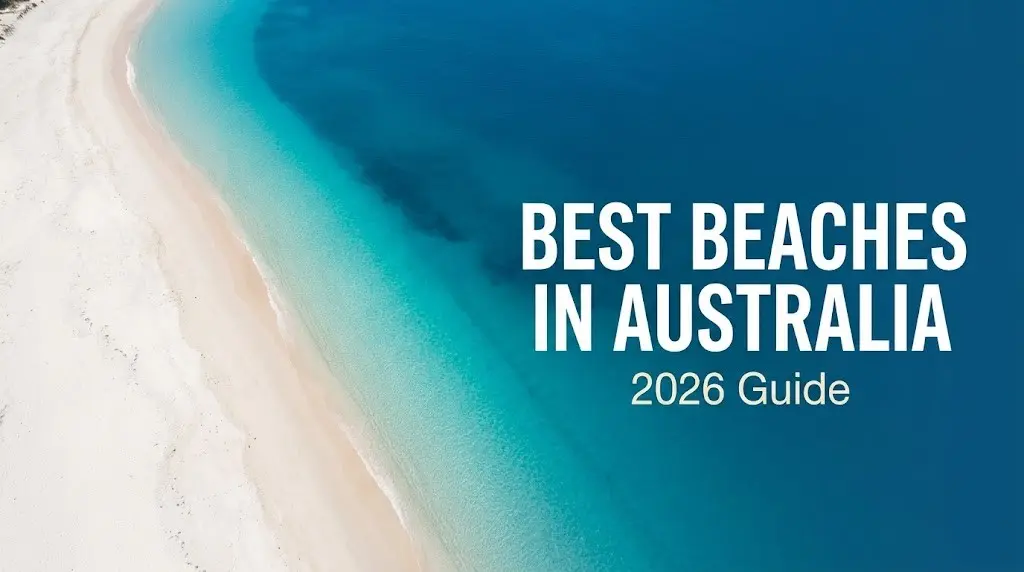
The key distinction most visitors miss: Australia’s best beaches are generally not next to its major cities. They require driving, domestic flights, or boat transfers to reach.
Here is how Australia’s beach character breaks down by type:
- Silica-sand island beaches: Whitehaven Beach (Whitsundays, QLD) ranks among the finest globally for sand quality
- Reef-snorkeling beaches: Turquoise Bay and Coral Bay (Ningaloo, WA), Four Mile Beach (Port Douglas, QLD)
- Remote national park beaches: Lucky Bay (Cape Le Grand, WA), Wineglass Bay (Freycinet, TAS), Squeaky Beach (Wilsons Promontory, VIC)
- Urban accessible beaches: Bondi Beach (Sydney, NSW), Noosa Main Beach (Sunshine Coast, QLD)
- Long red-sand ocean beaches: Cable Beach (Broome, WA)
Insider Tip:
- Australia’s most photographed beaches and its most swimmable beaches are often different places entirely
- Whitehaven Beach photographs magnificently but is not a snorkeling beach; Turquoise Bay photographs less dramatically but snorkels spectacularly
- Honeymooners specifically should separate their beach choice from their resort choice: the best beach and the best honeymoon resort are rarely at the same location
Australia Beaches Overview by State: Where to Focus
Each Australian state offers a fundamentally different beach experience, and knowing which state fits your priorities saves serious planning time.
| State/Territory | Beach Character | Best Season | Iconic Named Beach |
|---|---|---|---|
| Queensland | Reef, Whitsundays, tropical coast | May to October | Whitehaven Beach |
| Western Australia | Remote Indian Ocean, ningaloo reef | April to October | Turquoise Bay, Cable Beach |
| New South Wales | Accessible, surf coast, bay beaches | December to March | Bondi, Hyams Beach |
| Victoria | Cold-water wilderness, scenic coast | December to February | Squeaky Beach |
| Tasmania | Wild, remote, cold-water drama | December to March | Wineglass Bay |
| South Australia | Gulf beaches, surf coast | November to March | Waitpinga Beach |
Queensland is the right choice for warm water, reef access, and resort infrastructure. Western Australia is for travelers who want remote beauty and fewer crowds.
New South Wales suits visitors staying in Sydney who want quality beaches without major domestic travel. Victoria and Tasmania are for travelers who find cold-water drama and wilderness more appealing than tropics.
Profile note for families: Queensland and northern New South Wales offer the most family-friendly infrastructure. Victoria and Tasmania beaches require more self-sufficient travel and offer fewer resort facilities nearby.
According to Tourism Australia, Western Australia’s Ningaloo Coast and the Whitsunday Islands consistently rank as Australia’s two most visited domestic beach destinations for international visitors.
Western Australia Beaches: The Indian Ocean Classics
Western Australia beaches represent the strongest argument that this state has the best beach offering in the country.
The WA coastline stretches over 20,000 kilometers. Most of it is accessible only by four-wheel-drive vehicles or small aircraft, which means crowd levels at even famous beaches stay manageable by global standards.
Turquoise Bay, near Exmouth in the Ningaloo Coast World Heritage Area, features water so clear that visibility routinely reaches 10 to 20 meters on calm days. The sand is white and fine. The Indian Ocean here runs warm, typically 22 to 27 degrees Celsius from April through October.
Lucky Bay in Cape Le Grand National Park near Esperance features the whitest sand in Australia by silica content measurement. Water is deep teal-green with excellent clarity. Kangaroos regularly visit the beach, creating a scene that no other beach destination in the world replicates.
Greens Pool near Denmark in the far southwest offers sheltered, calm water protected by granite boulders. It suits families and non-swimmers who want safe, clear water without wave risk.
Cable Beach in Broome runs 22 kilometers of red pindan-sand meeting turquoise Indian Ocean water. Sunsets here are genuinely remarkable, drawing crowds in the dry season (May to October).
Coral Bay sits at the southern edge of the Ningaloo Reef and offers direct reef access from the beach without a boat. Manta rays and whale sharks are seasonal visitors.
Access reality for Western Australia beaches: Turquoise Bay requires flying to Exmouth or driving 1,260 kilometers north of Perth. Lucky Bay requires driving 720 kilometers east of Perth along the South Coast Highway. Neither is a quick side trip from any major city.
Budget and value note: Most Western Australia national park beaches charge a vehicle entry fee, typically AUD $13 to $17 per car per day in 2026, though these fees change; verify current rates with the Department of Biodiversity, Conservation and Attractions before visiting.
Key Takeaway: Western Australia has the most ecologically significant and least crowded iconic beaches in Australia, but reaching them requires serious domestic travel planning and significant time investment.
Famous Beaches in Australia: The Names Everyone Knows
The famous beaches in Australia earn their reputations for different reasons, and understanding those reasons tells you which ones actually fit your trip.
Whitehaven Beach is famous for its silica sand, which registers 98 percent pure silica. Sand this fine does not absorb heat, meaning you can walk on it barefoot at midday without burning.
Bondi Beach is famous for its surf culture, its Icebergs ocean pool, its Sydney proximity, and its December-January atmosphere that draws tens of thousands of visitors on peak summer weekends.
Wineglass Bay is famous for its geographic perfection. The beach forms a nearly symmetrical curved bay framed by granite peaks, earning its reputation primarily from the viewpoint above rather than the beach itself.
Cable Beach is famous for camel rides at sunset along its 22-kilometer expanse. The image of camels silhouetted against an Indian Ocean sunset has appeared in virtually every major travel publication covering Australia.
The honest assessment: Bondi Beach is the most overrated on this list for visitors arriving from overseas specifically for beach quality. Its surf is strong and can be dangerous for casual swimmers. Its summer crowds are intense. Its sand is not particularly fine. It suits urban beach culture seekers, not people chasing beach beauty.
Whitehaven Beach earns its fame honestly. The sand is genuinely unlike anything most travelers have experienced. The water clarity is real. The beach is only accessible by boat or seaplane from Airlie Beach, which limits crowds significantly.
Profile note for couples: Wineglass Bay is more suited to hiking couples than beach-relaxing couples. The beach requires a 4.5-kilometer round-trip walk from the carpark, and facilities on the beach itself are minimal.
Most Beautiful Beaches in Australia: Beyond the Instagram Shots
The most beautiful beaches in Australia are not always the most photographed ones. Several genuinely extraordinary beaches receive a fraction of the attention they deserve.
Hyams Beach in Jervis Bay, New South Wales, holds a Guinness World Record claim for the world’s whitest sand. The water is a cold but crystal-clear deep blue. The beach is protected within Jervis Bay Territory, keeping development minimal.
Squeaky Beach in Wilsons Promontory National Park, Victoria, is named for the sound quartzite sand makes underfoot when you walk on it. The color is bright white against cold deep-blue Southern Ocean water.
Greens Pool near Denmark, Western Australia, offers shallow turquoise water sheltered by granite boulders, creating a natural pool effect rarely seen elsewhere.
Pebbly Beach in Murramarang National Park, New South Wales, is known for eastern grey kangaroos that come to the beach at dawn and dusk. Sunrise here with kangaroos on the shore is one of the more genuinely unusual beach experiences in the country.
According to Tourism Western Australia, Greens Pool in Denmark consistently ranks among Western Australia’s most visited coastal destinations despite being far less internationally famous than Turquoise Bay.
None of these beaches have resort infrastructure adjacent to them. That is partly why they remain beautiful. Visitors need to be comfortable with national park camping, self-catering, or driving to nearby towns for accommodation.
Profile note for luxury seekers: Squeaky Beach and Greens Pool are spectacular but offer no luxury accommodation within walking distance. The nearest quality lodging is typically 20 to 45 minutes by car.
Best Beaches in Queensland: Reef, Whitsundays, and the Coast
The best beaches in Queensland split into two genuinely different experiences: the Whitsunday Island beaches accessed by boat, and the mainland coast beaches with resort infrastructure.
Whitehaven Beach on Whitsunday Island is the undisputed centerpiece. It is not a swimming beach in the traditional sense; the water is shallow and warm but lacks the reef structure that makes other Queensland beaches worth snorkeling. Its value is entirely visual and sensory.
Four Mile Beach in Port Douglas offers the most accessible combination of beach quality and reef proximity on the Queensland mainland. The beach runs four miles of sand with calm, shallow water. Boat transfers to the Great Barrier Reef pontoons leave directly from Port Douglas marina.
Noosa Main Beach on the Sunshine Coast is the most sophisticated urban beach town in Queensland. The beach faces north, which gives it protected, calm water and reduces wind exposure. It suits couples and families who want beach quality combined with good restaurants and accommodation nearby.
Airlie Beach is the launch point for Whitsundays trips but is not itself a notable swimming beach. It has a manmade lagoon pool in the town center that serves as the primary swimming facility.
Best Queensland beaches by traveler profile:
| Beach | Best For | Water Conditions | Resort Access | Honest Note |
|---|---|---|---|---|
| Whitehaven Beach | Couples, honeymooners, photographers | Calm, warm, 22-26C, shallow | Boat or seaplane from Airlie Beach | Not a snorkeling beach |
| Four Mile Beach | Families, reef travelers | Calm, warm, stinger net present | Port Douglas resorts adjacent | Stinger season Oct-May limits access |
| Noosa Main Beach | Couples, families, culture seekers | Protected, calm, north-facing | Noosa Heads resort strip | Crowds peak December-January |
| Mission Beach | Adventurous travelers, kayakers | Warm, some wave action | Limited accommodation | Gateway to Dunk Island |
Profile note for honeymooners: Qualia Resort on Hamilton Island is the most legitimate luxury honeymoon property in Queensland, though Hamilton Island’s own beaches are modest. Qualia honeymooners typically take day trips to Whitehaven Beach by seaplane.
Key Takeaway: Queensland’s best beach experiences require separating your resort base (Hamilton Island, Port Douglas, or Noosa) from your beach destination, as the most beautiful beaches are not the same locations as the best resorts.
Whitehaven Beach Guide
Whitehaven Beach is Australia’s most consistently cited top beach, and for sand quality specifically, the reputation is earned.
The beach stretches seven kilometers along Whitsunday Island, the largest island in the Whitsunday group. It is uninhabited. There are no hotels, no restaurants, and no facilities beyond basic toilets at one end.
The sand’s 98 percent silica purity creates a white color that does not change with moisture. Wet or dry, it stays bright white. Silica sand also does not retain heat the same way that regular quartz beach sand does, though walking on it at midday in summer still requires care.
Hill Inlet, at the northern end of the beach, creates the swirling sand and water patterns seen in every aerial photograph of the Whitsundays. The best view is from the lookout above. The patterns are most vivid at low tide.
Access requires a boat transfer or seaplane from Airlie Beach. Day-trip boat tours typically run AUD $120 to $200 per person and take 1.5 to 2 hours each way. Seaplane transfers cost approximately AUD $280 to $450 per person return, though prices vary by operator and change seasonally; verify before booking.
Day-trip crowds peak from June to September, when the dry season draws the most visitors. The beach handles these crowds reasonably well given its seven-kilometer length, but the Hill Inlet lookout gets congested between 10am and 2pm.
To make the most of a Whitehaven Beach visit:
- Book the earliest available departure from Airlie Beach to reach Hill Inlet before the bulk of day-trippers arrive
- Choose a tour that includes a Hill Inlet lookout walk, not just a beach landing
- Confirm your tour operator’s stinger net policy from October to May
- Bring reef-safe sunscreen; the area is within the Whitsunday Islands National Park and Great Barrier Reef Marine Park
- Pack your own food; on-beach catering from tours is usually basic
Profile note for budget travelers: Multi-day sailing trips from Airlie Beach (typically AUD $350 to $600 per person for two nights) include Whitehaven Beach as a stop and offer significantly better value per beach-hour than day trips.
Cable Beach Broome Western Australia
Cable Beach in Broome, Western Australia, is a 22-kilometer stretch of red pindan-sand beach meeting turquoise Indian Ocean water.
The pindan red color of the sand is distinctive. It comes from iron oxide in the local soil and creates a visual contrast with the turquoise water that no other major Australian beach replicates. The color is not a photography filter effect.
Cable Beach is most famous for its sunset camel rides. Licensed operators run camel strings along the waterline in the late afternoon from approximately April to October. The experience has become commercialized but remains genuinely scenic.
Swimming at Cable Beach is good in the dry season (May to October). The wet season (November to April) brings dangerous marine stingers, including irukandji jellyfish, that make ocean swimming inadvisable without protective gear.
The beach is free to access. Broome township is 6 kilometers from the beach, and accommodation ranges from backpacker options to Cable Beach Club Resort, which sits directly adjacent to the waterfront.
Cable Beach Club Resort is the primary upmarket property here. It offers beachfront access, a pool, multiple dining options, and spa facilities. Rates vary significantly by season and room category; verify current pricing directly with the property. The resort’s honest limitation: room quality and service consistency receive mixed reviews in recent guest reports, and the price point has crept into premium territory for what some guests describe as solid mid-range execution.
Profile note for couples: The sunset camel ride experience suits couples who want an active, photogenic Broome moment. The beach itself is better for long walks than for swimming given the lack of protected swimming zones in most sections.
Insider Tip:
- The far northern end of Cable Beach near the rocks is less crowded than the main access point near the resort
- Saltwater crocodiles have been spotted on Cable Beach; follow all local signage and current safety warnings from the Department of Biodiversity, Conservation and Attractions before entering water
- June to August is the peak dry season and the most pleasant time, but accommodation books out months in advance
Key Takeaway: Cable Beach is worth visiting specifically for its sunset and its unique red-sand visual character, not for swimming quality, which is significantly limited by seasonal marine stinger danger.
Recommended Swimming Beaches in Australia
The recommended swimming beaches in Australia are those patrolled by Surf Life Saving Australia lifeguards, enclosed by stinger nets where applicable, and rated for calm entry conditions.
Not all beautiful Australian beaches are safe for swimming. Rip currents, strong surf, marine stingers, and saltwater crocodiles in northern areas all affect swimmer safety at different locations and seasons.
The safest and most reliably swimmable beaches in Australia:
- Noosa Main Beach (Queensland): North-facing, protected, patrolled, calm water, no significant surf
- Four Mile Beach (Port Douglas, QLD): Patrolled, stinger net present in season, gentle entry
- Airlie Beach Lagoon (QLD): Manmade freshwater pool, free, no marine stinger risk
- Hyams Beach (Jervis Bay, NSW): Protected bay, calm water, very gentle entry, no significant surf
- Greens Pool (Denmark, WA): Natural rock-protected pool, calm, ideal for non-swimmers
- Bondi Beach (Sydney, NSW): Patrolled year-round, but surf can be strong; swim between flags always
- Cottesloe Beach (Perth, WA): Patrolled, reef-protected, consistently calm, excellent for lap swimmers
Surf Life Saving Australia operates the flag system at all patrolled beaches. Red and yellow flags mark the safe swim zone. Never swim outside the flags at any patrolled beach in Australia.
Profile note for families with young children: Greens Pool and Hyams Beach offer the calmest, most protected entries. Four Mile Beach in Port Douglas with its stinger net enclosure is the best tropical swimming option for young children from May to September.
Unpatrolled beaches in rural and remote areas require swimming at your own risk. The ocean conditions at Wineglass Bay, Lucky Bay, and Cable Beach can be significantly rougher than they appear from the shore.
Best Beach for Snorkeling in Australia
The best beach for snorkeling in Australia is Turquoise Bay on the Ningaloo Coast, Western Australia, for consistently accessible, world-class reef snorkeling directly from the shore without a boat.
Turquoise Bay sits within the Ningaloo Coast World Heritage Area. The reef comes within meters of the shoreline. A drift snorkel from the southern entry point through the channel to the northern exit is one of the most distinctive and accessible snorkeling experiences in the country.
Water visibility at Turquoise Bay typically ranges from 10 to 20 meters on calm days. Coral cover is dense and healthy. Fish diversity includes parrotfish, hawksbill sea turtles, reef sharks, and seasonally, whale sharks (accessible by licensed boat tours from Exmouth from approximately March to July).
Coral Bay offers a slightly more sheltered alternative to Turquoise Bay with direct beach reef access and calmer conditions. It suits snorkelers less confident in the drift-snorkel technique.
Four Mile Beach in Port Douglas provides access to Great Barrier Reef day trips by boat. Snorkeling from the beach itself is limited, but the proximity to outer reef pontoons makes it the best Queensland mainland base for reef snorkeling.
Best snorkeling beaches in Australia by experience level:
| Beach | Location | Best For | Visibility | Access |
|---|---|---|---|---|
| Turquoise Bay | Ningaloo, WA | Experienced snorkelers, drift snorkel | 10-20m | Shore entry, free |
| Coral Bay | Ningaloo, WA | All levels, families | 8-15m | Shore entry, free |
| Four Mile Beach (boat access) | Port Douglas, QLD | Reef day-trippers | 10-25m outer reef | Boat tour required |
| Lady Musgrave Island | QLD | Intermediate, lagoon snorkeling | 10-20m | Boat from 1770 |
| Heron Island | QLD | Experienced, resort guests | 15-30m | Resort island |
Profile note for honeymooners: A whale shark snorkeling tour from Exmouth (approximately March to July, AUD $350 to $550 per person) is one of Australia’s most genuinely unusual and memorable experiences. Book at least 3 to 6 months in advance for peak whale shark season.
Best Family Beaches in Australia
The best family beaches in Australia combine calm, shallow water with patrol coverage, stinger protection where needed, and nearby facilities that make a beach day manageable with children.
Noosa Main Beach is the strongest all-round family option on the Queensland coast. The water is consistently calm due to its north-facing orientation. A grassed parkland with picnic areas runs the length of the beach. Hastings Street, directly adjacent, has restaurants, ice cream shops, and easy toilet access.
Greens Pool in Western Australia suits families comfortable with self-sufficient travel. The naturally sheltered rock-pool environment creates genuinely calm water. There are no facilities on the beach itself, requiring visitors to bring everything.
Manly Beach in Sydney is patrolled year-round and accessible via a 30-minute ferry from Circular Quay. The ferry ride itself is an attraction for children. The beach has surf that requires children to stay in the flagged zone, but it is reliably patrolled.
Airlie Beach Lagoon in Queensland is a free, freshwater swimming lagoon in the town center that eliminates marine stinger risk entirely. It suits families using Airlie Beach as a base for Whitsundays trips.
Key criteria for choosing a family beach in Australia:
- Confirm patrol status and hours for your specific visit date at Surf Life Saving Australia’s website
- Check stinger enclosure availability if visiting any north Queensland or northern WA beach from October to May
- Assess water entry gradient; Hyams Beach and Greens Pool have the gentlest entries for toddlers
- Factor facility proximity; remote national park beaches require significant self-catering preparation
- Book accommodation near, not just near a beach generally; Four Mile Beach accommodation in Port Douglas puts families within walking distance of the patrolled beach
Profile note for budget families: Most patrolled public beaches in Australia are free to access. National park beaches charge vehicle entry fees. Packing your own food is essential at remote beaches where no facilities exist.
Key Takeaway: For families with young children, Noosa Main Beach and Greens Pool offer the calmest water conditions and most forgiving entry points, though they require very different travel approaches.
Best Beaches for Couples in Australia
The best beaches for couples in Australia prioritize seclusion, visual drama, and ease of access without significant crowds.
Wineglass Bay in Freycinet National Park, Tasmania, delivers one of the country’s most dramatic beach settings. The near-perfect curved bay, backed by pink granite peaks, creates an atmosphere unlike anything on the mainland. The 4.5-kilometer round-trip walk from the carpark adds to the sense of earned arrival.
Hyams Beach in Jervis Bay, New South Wales, suits couples who want world-class sand quality without the remote-travel logistics of Western Australia. The water is cold by tropical standards (16 to 22 degrees Celsius depending on season), but the clarity and white sand create a genuinely striking environment.
Whitehaven Beach remains the most photographically romantic option in the country. Day-trip crowds are real but manageable at the southern end of the beach’s seven-kilometer stretch. Staying overnight on a sailing charter dramatically improves the seclusion and atmosphere.
Lucky Bay in Cape Le Grand National Park is one of Australia’s most rewarding couple-oriented beach experiences for those willing to make the drive from Esperance. The combination of white sand, clear teal water, and kangaroos sharing the beach creates a genuinely singular setting.
Sal Salis Ningaloo Reef is an eco-camp directly behind the dunes at Ningaloo, offering couples a genuinely remote and intimate beach experience within a structured accommodation setting. The camp’s small size (15 tents maximum) keeps the experience private. Rates are in the premium tier; verify current pricing directly with the property, as they change by season.
Profile note for honeymooners: Wineglass Bay combined with accommodation at Saffire Freycinet (a luxury lodge 10 minutes from the national park) is the strongest honeymoon beach combination in southern Australia. Saffire’s rates are genuinely premium; verify directly, but budget at the upper end of luxury Australian accommodation.
Least Crowded and Most Secluded Beaches in Australia
The least crowded beaches in Australia are concentrated in Western Australia, Tasmania, and within national park boundaries that require self-sufficient travel to reach.
Lucky Bay, despite appearing on every best-of Australia list, remains genuinely uncrowded. Cape Le Grand National Park’s distance from any major city (720 kilometers from Perth) naturally limits visitor numbers. The beach sees perhaps 200 to 400 visitors on a peak summer weekend, compared to tens of thousands at Bondi on the same day.
Thistle Cove within Cape Le Grand National Park, just a short drive from Lucky Bay, sees a fraction of Lucky Bay’s visitors. The water is equally clear. The setting is equally dramatic. It simply lacks the kangaroo presence that drives Lucky Bay’s attention.
Wineglass Bay after 3pm on most days becomes noticeably quieter as day-hikers return to their cars. Visitors who time their descent to arrive at the beach in the late afternoon often find extended sections to themselves.
Wharton Beach near Esperance, Western Australia, is an almost entirely unknown beach of equal sand quality to Lucky Bay with consistent near-zero crowds. It requires driving along the Cape Arid National Park access road.
Squeaky Beach at Wilsons Promontory requires a 12-kilometer round-trip hike from Tidal River campground, which naturally restricts visitor numbers to those committed enough to walk it.
Insider Tip:
- The Kimberley coast in far northern Western Australia contains hundreds of completely undeveloped beaches accessible only by ship or chartered aircraft
- Most require a multi-day expedition cruise, which suits adventurous couples and solo luxury seekers rather than families
- William Bay National Park near Denmark (which includes Greens Pool and Elephant Rocks) gets significantly quieter after 2pm as day-trippers leave
Best Time to Visit Australia Beaches
The best time to visit Australian beaches varies dramatically by state and cannot be answered with a single national recommendation.
| State/Region | Best Beach Months | Avoid | Primary Reason |
|---|---|---|---|
| North Queensland (Cairns, Whitsundays) | May to October | November to April | Stinger season, cyclone risk, extreme heat |
| South Queensland (Gold Coast, Noosa) | September to March | July to August (cooler) | Warm water, lower humidity |
| New South Wales | December to March | June to August (cold) | Warmest water, patrolled beaches at full capacity |
| Western Australia (Ningaloo, Broome) | May to October | November to April | Stinger season, tropical storms in north |
| Western Australia (Perth south coast) | November to March | June to August (cold surf) | Warmest water, best visibility |
| Tasmania | December to February | May to September | Only reliable warm beach weather window |
| Victoria | December to February | May to September | Southern Ocean too cold outside summer |
The single most important seasonal fact for international visitors: stinger season in northern Australia (Queensland and northern WA) runs roughly from October to May.
During this period, irukandji jellyfish and box jellyfish make ocean swimming dangerous at unprotected beaches in the tropics. Stinger nets at patrolled beaches provide some protection but do not make swimming completely risk-free.
Surf Life Saving Australia strongly advises wearing a full stinger suit when swimming at any unprotected tropical beach during stinger season. Verify current stinger conditions with Queensland Parks and Wildlife Service before any trip to north Queensland beaches from October to May.
Profile note for honeymooners: The Whitsundays in June and July offer the optimal combination of dry weather, comfortable temperatures (25 to 28 degrees Celsius), low stinger risk, and blue-sky sailing conditions. This is peak honeymoon season; book accommodation and seaplane transfers at least 4 to 6 months in advance.
Key Takeaway: The optimal beach season in Australia depends entirely on which state you are visiting; northern Australia’s tropical beaches require May to October visits, while southern beaches peak in December to February.
Beach Safety in Australia: Jellyfish and Rip Currents
Australian beaches are not universally safe, and the risks are specific enough to require advance knowledge before you swim.
Key safety and seasonal facts every visitor should know:
- Always swim between the red and yellow flags at patrolled beaches. Rip currents cause the majority of drownings at Australian beaches annually. The flagged zone is selected specifically to minimize rip risk.
- If caught in a rip current, do not swim against it. Float or swim parallel to shore until out of the current, then return to shore at an angle. Surf Life Saving Australia provides specific guidance; read it before your visit.
- In tropical north Queensland (Cairns to the Whitsundays) and northern WA (Broome northward), box jellyfish and irukandji jellyfish are present in ocean water from approximately October to May. These are potentially lethal. Swim only in patrolled areas with stinger nets during this period.
- Stinger suits (full-body lycra suits) significantly reduce jellyfish sting risk but do not eliminate it entirely. They are available for hire at most north Queensland beach resorts.
- Saltwater crocodiles inhabit waterways, estuaries, and beaches in the Northern Territory and far north Queensland. Do not swim in any water in these areas without specific local advice from rangers or the Northern Territory Parks and Wildlife Commission.
- Blue-ringed octopus inhabit rock pools around southern Australia. Never handle any octopus found in an Australian rock pool; blue-ringed octopus venom is lethal and has no antivenom.
- Sunburn is a serious risk year-round, not just in summer. SPF 50+ sunscreen, reapplied every 90 minutes, is standard practice. UV radiation in Australia is among the highest globally.
Always call 000 (Australian emergency services) or contact the nearest Surf Life Saving patrol in any water emergency. Do not rely on mobile coverage at remote beaches; many have none.
Best Beaches Near Sydney
The best beaches near Sydney divide into two categories: easily accessible northern beaches and southern coastal park beaches, both within 30 to 90 minutes of the CBD.
Manly Beach is the most accessible quality beach from central Sydney. The Manly Ferry from Circular Quay takes 30 minutes and is itself a scenic experience. The beach is 1.5 kilometers long with consistent patrol coverage. Water temperature ranges from 18 to 23 degrees Celsius in summer, cooler in winter.
Bondi Beach is the most famous but suits social beach culture seekers more than those prioritizing swimming quality. Surf is consistent and can be strong. The beach draws enormous summer crowds. Its honest appeal is its proximity to excellent cafes, the Bondi to Coogee coastal walk, and the Icebergs ocean pool.
Palm Beach at the northern end of Sydney’s Northern Beaches is a two-kilometer stretch with a different character entirely from Bondi. Crowds are significantly lower. The setting is more residential and scenic. It requires a 90-minute drive from the CBD or a 90-minute ferry journey from Manly Wharf.
Jervis Bay and Hyams Beach, while technically a three-hour drive from Sydney, represent the strongest beach quality upgrade available as a Sydney side trip. The drive along the Princes Highway and then through Nowra is straightforward.
Named beaches near Sydney worth visiting in order of ease of access:
- Manly Beach (30 min ferry, year-round patrol, best all-rounder)
- Bondi Beach (20 min bus from Bondi Junction, best for atmosphere)
- Coogee Beach (30 min bus from Bondi, calmer than Bondi, good for families)
- Freshwater Beach (40 min drive north, less crowded than Manly)
- Palm Beach (90 min drive north, best for scenic beauty)
- Hyams Beach (3 hours south, best sand quality in the region)
Profile note for short-stay visitors: If you have only one beach day in Sydney, Manly Beach delivers the best balance of quality, access, and atmosphere. It is patrolled, attractive, and reaches it by ferry rather than bus.
Best Beaches Near Melbourne and Victoria
The best beaches near Melbourne are different in character from tropical Australian beaches, and visitors arriving with tropical expectations will need to adjust them.
Port Phillip Bay, which Melbourne faces, is an enclosed bay with calm but generally uninspiring beaches. The water is murky in summer due to bay algae. St Kilda Beach is the most accessible Melbourne beach and suits a stroll and a sunset, not a serious swimming experience.
The quality beaches near Melbourne require driving south or southeast. Wilsons Promontory National Park, 200 kilometers southeast of Melbourne, contains some of Victoria’s finest beaches including Squeaky Beach, Norman Beach, and Tidal River beach. All involve driving and national park entry.
Great Ocean Road beaches, accessible from Torquay (100 kilometers southwest of Melbourne), offer dramatic scenery and serious surf. Bells Beach near Torquay is one of Australia’s most famous surfing beaches, hosting the Rip Curl Pro competition annually. It is not a safe swimming beach; the surf is powerful and unpatrolled sections are common.
Sorrento and Portsea on the Mornington Peninsula offer bay-side calm beaches and ocean-side surf beaches within the same day trip. Sorrento Ocean Beach suits confident swimmers. Sorrento Bay Beach suits families and non-swimmers.
Victorian beaches are best visited from December to February. Water temperatures range from 17 to 22 degrees Celsius in peak summer. From April to October, Southern Ocean water temperatures drop to 13 to 15 degrees Celsius, which limits comfortable swimming to wetsuits.
Profile note for surf travelers: Bells Beach, Johanna Beach, and Winkipop near Torquay are among Australia’s premier surf breaks. These beaches are for experienced surfers only and are not suitable for swimming by non-surfers.
According to Parks Victoria, Wilsons Promontory National Park requires advance online booking for camping and day entry during peak summer periods from December through January. Book at least 8 to 12 weeks in advance for the December-January period.
Key Takeaway: Victorian and Melbourne-area beaches reward visitors who drive to Wilsons Promontory or the Mornington Peninsula rather than settling for Port Phillip Bay; the quality gap is significant.
Frequently Asked Questions About Best Beaches in Australia
What is the most beautiful beach in Australia?
Whitehaven Beach on Whitsunday Island, Queensland, is most consistently identified as Australia’s most beautiful beach by major travel publications including Lonely Planet and Condé Nast Traveler.
Its 98-percent-pure silica sand stays bright white in all conditions and does not heat to uncomfortable temperatures underfoot.
Turquoise Bay in Western Australia rivals it for total beach experience when snorkeling quality is included in the assessment.
Which state in Australia has the best beaches?
Western Australia has the strongest overall beach offering when combining sand quality, water clarity, reef access, and low crowd levels across the state’s coastline.
Queensland is the strongest choice for warm-water tropical beach conditions combined with resort infrastructure and reef snorkeling access.
New South Wales wins for the most accessible quality beaches within easy reach of a major international gateway city.
Is Whitehaven Beach really the best beach in Australia?
Whitehaven Beach is genuinely exceptional for sand quality and visual beauty, and its reputation is earned rather than manufactured.
Its limitation is that it is not a snorkeling beach, lacks any facilities, and requires a boat or seaplane transfer from Airlie Beach at significant cost.
For travelers who value total beach experience including snorkeling, reef ecology, and accessible swimming, Turquoise Bay on the Ningaloo Coast makes a stronger case.
What are the safest beaches for swimming in Australia?
The safest swimming beaches in Australia are those with active Surf Life Saving Australia patrol coverage and established stinger nets in tropical areas.
Noosa Main Beach, Four Mile Beach in Port Douglas (with stinger net, May to September), Greens Pool in Western Australia, and Hyams Beach in Jervis Bay consistently offer calm, protected conditions.
Always swim between the red and yellow flags at any Australian patrolled beach, regardless of how calm the water appears.
When is the best time to visit Australian beaches?
The best time for tropical Queensland and northern Western Australia beaches is May to October, which is the dry season and falls outside the dangerous stinger season.
New South Wales, Victoria, and southern Western Australia beaches are best from December to March, when water temperatures reach their annual peak.
Tasmania’s beach season is short: December to February only for reliably comfortable conditions.
Are Australian beaches free to access?
Most Australian beaches accessible from public roads and footpaths are free to access and always have been under public beach access laws.
Some beaches within national parks require a vehicle entry fee, typically AUD $13 to $17 per car per day in 2026; verify current fees with the relevant state parks authority before visiting.
Boat transfer costs to island beaches like Whitehaven Beach are the primary access cost for the most remote and famous options.
Planning Your Australian Beach Trip
The single most useful thing to know before planning any Australian beach trip is the distance factor. Whitehaven Beach and Turquoise Bay are roughly 3,000 kilometers apart. Trying to include both in a single two-week trip without multiple domestic flights means rushed visits to extraordinary places.
Build your itinerary around one primary beach region, not around a national “best-of” list. Western Australia’s Ningaloo Coast deserves three to five days minimum. The Whitsundays deserve two to three days minimum. Trying to combine them with Sydney and Melbourne in a single two-week holiday means experiencing none of them fully.
All pricing, resort availability, national park entry fees, tour operator schedules, and stinger season advisory dates in this guide reflect 2026 general conditions. Verify all specifics directly with Tourism Australia, Tourism Western Australia, Tourism Queensland, Surf Life Saving Australia, and individual operators before booking any component of your trip.
The traveler who books with specific beach intelligence, realistic seasonal awareness, and the right number of days at each destination will find Australia’s coastline genuinely delivers on every photograph they have ever seen of it.