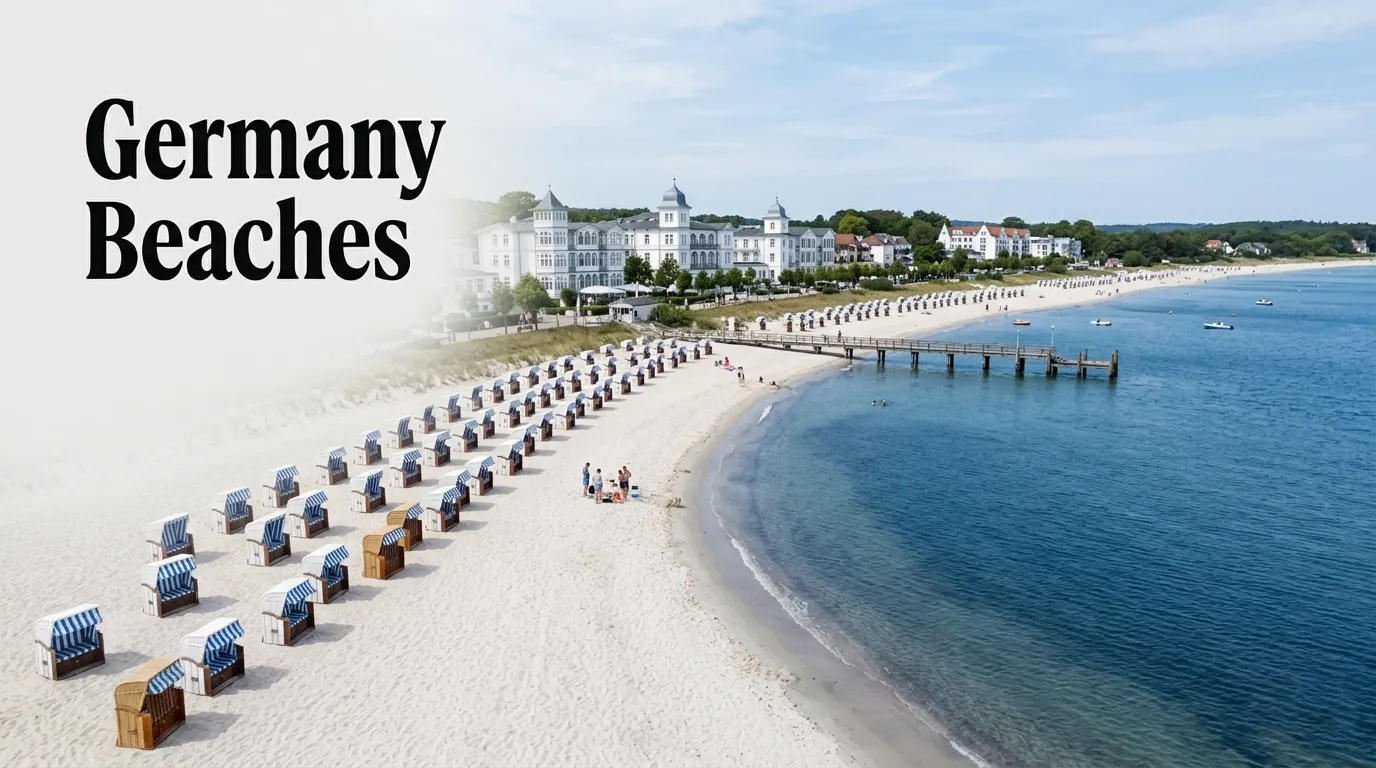
Germany Beaches 2026: Honest Baltic and North Sea Guide
Germany has beaches that stretch for hundreds of miles along two seas.
They are cold, windswept, and culturally unique, not a Mediterranean substitute.
The water reaches 20 degrees Celsius on a perfect August day.
You come here for the strandkorb, the fresh air, and the Fischbrötchen, not the
warm swim.
The German Weather Service (DWD) provides the official water temperature data.
This guide tells you which coast to pick and which island is worth the journey.
Are There Beaches in Germany?
Yes, Germany has over 1,400 miles of coastline along the North Sea and the Baltic
Sea. The beaches are a beloved, integral part of German summer culture.
The coastline is split between the rocky, cliff-backed Baltic (Ostsee) and the
muddy, tide-flat North Sea (Nordsee). These are two fundamentally different beach
experiences.
The Baltic coast is a classic, sandy beach holiday with calm, swimmable water.
The North Sea coast is a dramatic, muddy, tide-driven landscape perfect for walking.
The German islands are the crown jewels of the coastline.
Sylt, Rügen, and Usedom are the most famous and most visited.
You do not come to a German beach for tropical water or reliable sunshine.
You come for a specific, robust, and beautifully organized beach culture.
Germany Beaches
The German beach experience is defined by the strandkorb, a wicker roofed
beach chair. It is a two-person, windproof shelter that is the icon of the coast.
You rent a strandkorb for the day from a local attendant for 10 to 15 euros.
It protects you from the relentless wind and turns a cold beach into a cozy,
private nook.
The sand quality varies dramatically between the two seas.
The Baltic has fine, white, powdery sand that squeaks under your feet.
The North Sea sand is coarser, darker, and mixed with the mud of the Wattenmeer.
The water is much murkier due to the churning tidal action.
German beaches are highly organized and structured.
They are not wild, free-for-all stretches of sand but meticulously maintained
spaces.
German Beaches
A German beach day is an active, health-oriented affair, not a lazy sunbathing
session. You will see families walking barefoot on the sand at low tide for hours.
The sauna culture extends to the beach with textile-free FKK zones.
These are clearly marked and are a completely normal part of the German beach
experience.
The food culture is anchored by the Fischbrötchen, a pickled herring or shrimp
sandwich. Eat one with a cold Astra beer while huddled in your strandkorb.
The islands are the heart of the upscale beach culture.
Sylt is the celebrity island, Rügen is the nature island, and Usedom is the classic
family island.
A spa tax (Kurkarte) is required for beach access in most managed resort towns.
You pay this daily fee, typically 2 to 4 euros, at your accommodation or at a
machine.
Beaches in Germany
The most beautiful sandy beach in Germany is Binz Beach on the island of Rügen.
It is a five-mile curve of pale white sand backed by a classic, 19th-century resort
architecture.
The most exclusive beach is Kampen Beach on the island of Sylt.
The red cliff backdrop and the celebrity-studded beach bars make it the place to
see and be seen.
The best beach for a classic family holiday is Ahlbeck Beach on Usedom.
The wide, flat sand and the historic pier provide the quintessential German seaside
scene.
The best urban beach escape is Warnemünde Beach near Rostock.
A wide, sandy strip and a charming historic lighthouse are easily reached by train
from Berlin.
The Wadden Sea National Park beaches are not for swimming but for mudflat
hiking. This is a guided walk across the exposed seafloor at low tide.
Key Takeaway: Binz on Rügen is the most beautiful sandy beach. Sylt’s Kampen is the most exclusive and glamorous.
Best Beaches in Germany
The best all-around German beach for a visitor is Timmendorfer Strand on the
Baltic coast. It is easily accessible from Hamburg and offers a perfect strandkorb
beach day.
The best for a remote, island escape is the St. Peter-Ording beach on the North
Sea peninsula. The sand stretches for miles, and the stilt houses on the beach are
iconic.
| Beach | Coast | Best For | Water |
|---|---|---|---|
| Binz, Rügen | Baltic | Classic Resort Beauty | Calm, Cool |
| Kampen, Sylt | North Sea | Exclusivity, People Watching | Rough, Cold |
| Timmendorfer Strand | Baltic | Convenience, Family Ease | Calm, Warmer |
| Warnemünde | Baltic | Urban Day Trip | Calm, Shallow |
| St. Peter-Ording | North Sea | Vast Emptiness, Nature | Muddy, Tidal |
Key Takeaway: Timmendorfer Strand is the easiest and most rewarding first German beach experience.
Baltic Sea Beaches
The Baltic Sea (Ostsee) is the better coast for a classic, sandy, swimming beach
day. The water is calmer, the sand is finer, and the resort towns are more charming.
The water temperature peaks at a swimmable 20 degrees Celsius in August.
A thin wetsuit top is still recommended for all but the hardiest swimmers.
The chalk cliffs of Jasmund National Park on Rügen are the most dramatic coastal
scenery in Germany. The white cliffs plunging into the dark blue Baltic are a
Gothic, romantic masterpiece.
The Baltic coast is lined with historic, 19th-century resort architecture (Bäderarchitektur). The white villas with intricate wooden balconies define the
aesthetic.
The water is salty, but much less so than the North Sea or the Atlantic.
It is a gentle, forgiving sea that suits families and casual swimmers best.
German Beaches in Summer
German beaches in summer are a vibrant, crowded, and uniquely organized scene.
The strandkorbs fill up by 10 a.m., and the beach becomes a mosaic of wicker roofs.
July and August are the peak months, with the highest chance of a genuinely warm
day. The air can reach 30 degrees Celsius, but the water stays cool and refreshing.
The summer season is short and intensely cherished by the locals.
Every sunny Saturday feels like a national holiday dedicated to the beach.
Do not expect a deserted beach experience in the summer season.
The main resort strips are densely populated with strandkorbs and happy, loud
families.
The beach bars and restaurants operate at full capacity during the summer months.
Book a table for a seafood dinner overlooking the sea weeks in advance.
Sylt Germany Beaches
Sylt is the most famous and most glamorous German island, jutting out into the
North Sea. It is a narrow, windswept strip of sand dunes and red cliffs.
Kampen Beach is the main celebrity and luxury hub, with the famous red cliff
Rotes Kliff as a backdrop. The beach bars here serve Champagne and lobster.
Westerland Beach is the family-friendly, accessible main town beach.
It has a long promenade, lifeguards, and the highest density of strandkorbs.
The water on Sylt is the roughest and coldest of all the German coasts.
It is a North Sea surf and kitesurfing hub, not a gentle swimming destination.
Sylt is extremely expensive, with accommodation and dining costing a premium.
It is connected to the mainland by a causeway with a car train shuttle.
Book your Sylt accommodation 6 to 8 months in advance for a July 2026 stay.
The island is small, exclusive, and sells out completely for the summer season.
Usedom Germany Beaches
Usedom is a sunny Baltic island shared between Germany and Poland.
It is known for its long, wide, white sand beaches and classic spa architecture.
Ahlbeck Beach is the most beautiful section, with a historic wooden pier that
stretches deep into the sea. The promenade is lined with restored 19th-century
villas.
Heringsdorf Beach offers a more bustling, upscale atmosphere with grand hotels.
The sand is wide, clean, and perfect for a long, flat family walk.
The island has the highest number of sunshine hours in Germany.
This alone makes it a top choice for a summer beach week.
The water is the calm, warmer Baltic, ideal for gentle swimming and wading.
Usedom is genuinely the best German island for a classic family beach vacation.
Rügen Island Beaches
Rügen is Germany’s largest island, a sprawling, diverse landscape of chalk
cliffs, beech forests, and long sandy beaches. It is the most scenic and varied of
the islands.
Binz Beach is the main resort, a stunning, five-mile curve of fine white sand.
The promenade is backed by a flawless line of white Bäderarchitektur villas.
Sellin Beach features a famous, ornate pier with a restaurant perched over the
sea. The pier has been reconstructed in its original, grand 1900s style.
The Jasmund National Park chalk cliffs are Rügen’s must-see natural wonder.
The view from the cliff edge down to the dark blue Baltic is a defining German
romantic image.
The water at Binz is shallow and calm, making it the best Baltic swimming beach.
Rügen is the island for nature-loving, active couples and hiking families.
Key Takeaway: Rügen’s Binz is the single most beautiful sandy beach in all of Germany.
Beaches Near Hamburg
The best beach near Hamburg is Timmendorfer Strand, a 90-minute drive or train
ride from the city center. It is the classic, easy Baltic beach escape.
Travemünde sits at the mouth of the Trave River and is a historic port town
with a long, sandy beach and a promenade. A large ferry terminal adds a nautical
buzz.
St. Peter-Ording is a 90-minute drive to the North Sea coast from Hamburg.
It offers a completely different, vaster, and more windswept mudflat beach
experience.
Warnemünde is reachable from Hamburg by a direct train via Rostock.
It is a more rustic, local Baltic resort with a working fishing harbor.
Book a regional train ticket for the summer weekends to these beaches.
Parking at the resort towns is a genuine, expensive nightmare on a sunny Saturday.
Best German Beaches for Families
Binz Beach on Rügen is the best German beach for families.
The sand is soft, the water is shallow, and the historic promenade is stroller-friendly.
Timmendorfer Strand is the best for a family with young children who need easy
access and a gentle sea. The Baltic water is calm, and the beach is impeccably clean.
Ahlbeck Beach on Usedom is the best for a classic, nostalgic, multi-generational
family holiday. The pier, the villas, and the ice cream shops create a time-capsule
feel.
Avoid the exposed North Sea beaches of Sylt for swimming with young children.
The powerful shore break and strong currents are genuinely hazardous for small kids.
The strandkorb is a parent’s best friend on a German beach.
It provides a windproof, shaded, and sand-free zone for naps and snacks.
Best Beach for Swimming Germany
The best beach for a pure, calm-water, classic swim is Binz Beach on Rügen.
The Baltic water is gentle, the entry is gradual, and the water quality is excellent.
Timmendorfer Strand is the second-best for a warm, comfortable, non-wetsuit
swim in late August. The water here peaks at a balmy 20 degrees Celsius.
The North Sea beaches are generally poor for a relaxing, non-wetsuit swim.
The water is colder, the waves are rougher, and the tides expose miles of mud.
Warnemünde Beach provides a wide, shallow swimming zone with lifeguards in
summer. The water is a mix of the Warnow river and the Baltic, making it slightly
brackish.
Always swim in front of the lifeguarded sections indicated by the flags.
The German lifeguard system, the DLRG, is robust and reliable during the summer
season.
Best Time to Visit German Beaches
The best time is the last two weeks of August and the first week of September.
The water has reached its maximum 20-degree Celsius peak, and the crowds thin after
the school holidays.
July is the most reliable month for a warm, sunny beach day.
The water is still a cool 18 degrees Celsius, but the air temperature can soar.
June offers the longest daylight hours, with sunset after 10 p.m. on the Baltic.
The water is cold, around 15 degrees Celsius, but the extended golden evenings are
magical.
Avoid October through April for a beach-focused trip to Germany.
The strandkorbs are gone, the beach cafes are closed, and the wind is punishing.
A crisp, sunny day in May can be a beautiful, solitary beach walking experience.
The water is 12 degrees Celsius, so swimming is only for the most hardened.
Check the DWD water temperature forecast for your specific beach before booking.
It can vary by 3 to 4 degrees between the sheltered Baltic coves and the open North
Sea.
Safety and Seasonal Warnings for German Beaches
German beaches present specific North European hazards related to cold water, tides,
and wind. The organized, pleasant strandkorb scene masks some genuine natural
dangers.
Key safety and seasonal facts every visitor should know:
- Wadden Sea Tides (North Sea): The tide returns at the speed of a walking person. Never go mudflat hiking without a certified guide. The fog can roll in and disorient you completely.
- Cold Water Shock (Both Coasts): The water is rarely above 20°C. Enter the water slowly and never dive in headfirst. Hypothermia is a risk even in summer.
- Rip Currents (Sylt & St. Peter-Ording): Strong rip currents form near the sandbars. If caught, swim parallel to the shore, not against the current.
- Strandkorb Safety: The heavy wicker chairs can be blown over by a strong gust of wind. Secure the chair properly and do not climb on top of them.
- Sun and Wind Burn: The combination of high UV and relentless wind masks the intensity of the sun. Apply SPF 50 sunblock and wear a windbreaker.
- Ticks and Lyme Disease: The grassy dunes and coastal forests are tick habitats. Wear long trousers when hiking and check your body carefully in the evening.
Contact the German Maritime Search and Rescue Service (DGzRS) by dialing 112
for any coastal emergency. Notify the lifeguard tower immediately.
Frequently Asked Questions About Germany Beaches
Does Germany have warm beaches?
No, German beaches do not have warm water by tropical standards.
The Baltic Sea water peaks at a cool 20 degrees Celsius in late August.
A thin wetsuit top is recommended for a comfortable, extended swim.
Are German beaches free?
Most managed resort beaches require a spa tax (Kurkarte) to access the sand.
The daily fee is typically 2 to 4 euros, paid at your hotel or at beach machines.
Some remote, unmanaged sections of coast are free to walk on.
What is a strandkorb?
A strandkorb is a two-person, covered wicker beach chair unique to Germany.
It provides shade, wind protection, and a cozy private space on the sand.
You rent one for the day for roughly 10 to 15 euros from a local attendant.
Which is better, the Baltic or the North Sea?
The Baltic Sea is better for a classic, sandy, calm-water swimming holiday.
The North Sea is better for dramatic scenery, kitesurfing, and mudflat hiking.
Choose the Baltic for a family trip and the North Sea for an active, windswept
escape.
Can you swim in the North Sea in Germany?
Yes, you can swim at guarded North Sea beaches like Sylt and St. Peter-Ording.
The water is very cold and rough, and the tide is powerful and fast-moving.
A full wetsuit is recommended for anything more than a quick, shallow dip.
Is Sylt worth visiting?
Yes, Sylt is worth visiting for its dramatic, windswept beauty and exclusive
culture.
It is extremely expensive and the water is rough, so it is not a relaxing swim
destination.
Book your accommodation 6 to 8 months ahead for a summer 2026 stay.
A German beach day is an act of cultural immersion, not a tropical escape.
You rent a strandkorb, eat a Fischbrötchen, and walk for miles on the hard, cold
sand.
The water will never be warm, but the experience is deeply, uniquely satisfying.
Choose the Baltic for a calm, sandy family week on Rügen or Usedom.
Book your 2026 accommodation early, especially for Sylt and the peak August weeks.
Check the DWD water temperature and the Wadden Sea tide table, pack a windbreaker,
and embrace the cold. That is exactly how it is supposed to be.