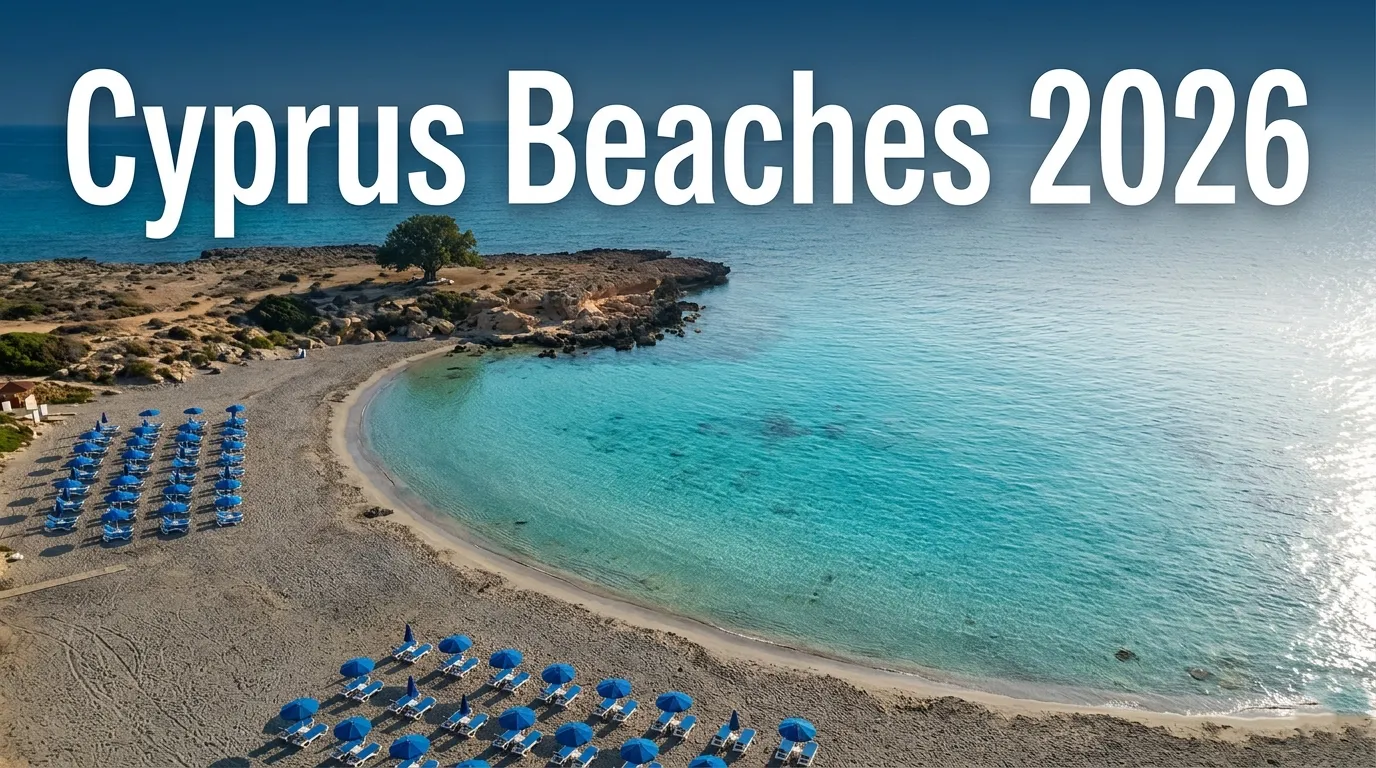
Cyprus Beaches 2026: Complete Guide to Best Shores
Cyprus beaches split across a divided island with two different political jurisdictions. The Republic of Cyprus controls the southern two-thirds of the coastline.
Northern Cyprus controls the remaining third with different access rules and infrastructure. Most visitors do not understand this division before arriving.
According to the Cyprus Deputy Ministry of Tourism, Cyprus consistently ranks among Europe’s highest concentrations of Blue Flag beaches. The water is some of the cleanest in the Mediterranean.
This guide names the specific beaches worth your time on both sides of the Green Line. It tells you honestly about sand quality, crowds, and what matters for 2026.
Cyprus Beaches
Cyprus beaches span two political jurisdictions with roughly 400 miles of Mediterranean coastline. The sand is generally gray-brown, not the golden Caribbean sand visitors often expect.
The water clarity is exceptional across the island. Visibility regularly reaches 50 feet on calm days.
Beaches fall into three main categories. Developed resort beaches with full facilities dominate the Ayia Napa and Protaras strips.
Wild undeveloped beaches characterize the Akamas Peninsula and Karpaz regions. Small-town beaches with local character fill the Paphos, Limassol, and Larnaca coastlines.
The EU Bathing Water Directive monitors water quality at all Republic of Cyprus beaches. Over 95 percent of monitored sites rate as “excellent” annually.
Blue Flag certified beaches concentrate heavily in the Ayia Napa and Protaras areas. These beaches offer the most comprehensive facilities including lifeguards, restrooms, and accessibility features.
Key Takeaway: Cyprus beaches are gray-brown sand with exceptional water clarity. They span a politically divided island with two different jurisdictions.
Which Part of Cyprus Has the Best Beaches
The Famagusta district in the southeast has the best beaches in Cyprus for facilities and swimming. Ayia Napa and Protaras anchor this coastline.
Fine gray-brown sand and calm clear water define this stretch. The highest concentration of Blue Flag beaches on the island is here.
The Paphos district in the west offers the best variety of beach experiences. Coral Bay provides a developed family beach while the Akamas Peninsula delivers wild undeveloped coves.
The Karpaz Peninsula in Northern Cyprus offers the most remote and undeveloped beaches. Golden Beach stretches for miles with almost no development.
Limassol and Larnaca districts offer convenient city-adjacent beaches. These are functional and accessible but less scenic than Ayia Napa or the Akamas.
Each region suits different traveler profiles. Ayia Napa and Protaras suit families and those wanting full facilities. The Akamas suits adventurers and couples seeking solitude.
Key Takeaway: Ayia Napa and Protaras for best facilities and swimming. Akamas Peninsula for wild beauty. Karpaz for remote isolation.
Are Cyprus Beaches Sandy
Cyprus beaches are mostly sandy but the sand is gray-brown, medium-grained, and often mixed with pebbles. It is not the soft golden sand found in the Caribbean.
Nissi Beach in Ayia Napa has the softest, most golden sand on the island. The beach here resembles a Caribbean postcard more than a Mediterranean cove.
Fig Tree Bay in Protaras offers excellent fine sand with shallow clear water. This beach consistently ranks as one of Cyprus’s finest sandy beaches.
Makronissos Beach near Ayia Napa features soft sand and calm water. The beach is wide and less crowded than Nissi Beach.
Paphos district beaches are predominantly pebble and rock with some sandy sections. Coral Bay is the primary sandy exception in the Paphos area.
Governor’s Beach near Limassol features dark sand against white cliffs. The sand color is dramatically different from the Ayia Napa golden standard.
Water shoes are useful at many Cyprus beaches, especially in the Paphos district. Pebbles and rocky entries are common outside the main resort strips.
Key Takeaway: Cyprus beaches are sandy but gray-brown, not golden. Nissi Beach and Fig Tree Bay have the softest, most golden sand.
Best Beaches in Cyprus
Nissi Beach in Ayia Napa is the most famous beach in Cyprus. The fine golden sand, shallow turquoise water, and small islet you can wade to define this beach.
The beach is extremely crowded in July and August. The party atmosphere with beach bars and DJ sets appeals to younger travelers.
Fig Tree Bay in Protaras offers the best family beach in Cyprus. The fine sand, calm shallow water, and full facilities create ideal conditions for children.
The beach is named for a lone fig tree behind the sand. It is less of a party scene than Nissi Beach.
Konnos Bay near Cape Greco is the most scenic beach in the Ayia Napa area. Pine-covered cliffs frame a sheltered cove with clear water and golden sand.
The beach is smaller than Nissi or Fig Tree Bay. Arrive before 9 AM in peak season to secure space.
Coral Bay in Paphos provides the best sandy beach on the west coast. The crescent of sand offers calm water and full facilities.
Lara Beach on the Akamas Peninsula delivers the most wild and undeveloped beach experience. The sand is coarse and the drive requires a 4×4 vehicle.
Key Takeaway: Nissi Beach for fame and soft sand, Fig Tree Bay for families, Konnos Bay for scenery, Coral Bay for west coast sand.
Cyprus Beaches North vs South
Cyprus beaches in the south (Republic of Cyprus) offer more developed infrastructure, Blue Flag certification, and easier access. Beaches in the north (Northern Cyprus) offer less development and fewer crowds.
The Republic of Cyprus uses the Euro currency and follows EU beach standards. Beach facilities, lifeguards, and water quality monitoring are comprehensive.
Northern Cyprus beaches are less developed with fewer facilities. The lack of crowds is the primary appeal for many visitors.
Golden Beach on the Karpaz Peninsula in Northern Cyprus is the most spectacular undeveloped beach on the island. Miles of golden sand stretch with almost no infrastructure.
Kyrenia (Girne) area beaches in Northern Cyprus offer smaller coves with mountain backdrops. These beaches are pebblier than the south coast.
Crossing between south and north requires passing through checkpoints in Nicosia or other designated crossing points. A passport is required for all crossings.
Car rental from the Republic of Cyprus typically does not allow driving into Northern Cyprus. Arrange separate transport or a Northern Cyprus rental if exploring both sides.
Key Takeaway: South Cyprus has developed Blue Flag beaches in Euros. North Cyprus has undeveloped uncrowded beaches in Turkish Lira. Crossing requires a passport.
Ayia Napa Cyprus Beaches
Ayia Napa beaches concentrate in a small area with the highest density of Blue Flag certified beaches in Cyprus. The sand quality and water clarity are the island’s best.
Nissi Beach is the anchor beach with its famous islet, golden sand, and shallow turquoise water. The beach bar scene and summer DJ sets create a party atmosphere.
Makronissos Beach offers a quieter alternative to Nissi with similar sand quality. The beach is wider and more spread out with a more relaxed atmosphere.
Landa Beach (also called Golden Beach) sits between Nissi and Makronissos. It is narrower but less crowded than its famous neighbors.
Glyki Nero Beach near Cape Greco offers a family-friendly alternative with calm water and good facilities. The beach is popular with local families.
Konnos Bay lies technically in the Cape Greco area between Ayia Napa and Protaras. It is the most scenic beach in the region with pine cliffs framing the cove.
All Ayia Napa beaches offer sun lounger and umbrella rentals for EUR 5 to EUR 10 per set. Water sports, restaurants, and beach bars are available at most beaches.
Key Takeaway: Ayia Napa has Cyprus’s highest concentration of excellent beaches. Nissi for party, Makronissos for space, Konnos Bay for scenery.
Protaras Cyprus Beaches
Protaras beaches offer a more family-oriented alternative to Ayia Napa with similar sand quality and clearer water. The atmosphere is calmer and less party-focused.
Fig Tree Bay is Protaras’s most famous beach. The fine sand, shallow clear water, and namesake fig tree create the region’s most photographed beach scene.
The beach is extremely crowded in peak season. Arrive before 9 AM to secure a sun lounger and space.
Sunrise Beach offers a long wide stretch of sand with excellent facilities. The beach is popular with families and less crowded than Fig Tree Bay.
Konnos Bay technically sits between Protaras and Ayia Napa. Pine cliffs, golden sand, and clear water make this the scenic highlight of the Cape Greco area.
Green Bay near Protaras is more of a snorkeling destination than a beach. The rocky shoreline and seagrass beds attract sea turtles and abundant fish.
Protaras beaches connect by a coastal boardwalk perfect for evening walks. The pedestrian path links Fig Tree Bay to Pernera Beach with sea views throughout.
Key Takeaway: Protaras offers family-friendly beaches with calmer atmosphere than Ayia Napa. Fig Tree Bay is the star, arrive early.
Nissi Beach vs Fig Tree Bay
Nissi Beach wins for soft golden sand and social atmosphere. Fig Tree Bay wins for family-friendliness and calmer water.
Nissi Beach has a more beautiful physical setting with the small islet connected by a sandbar. Wading out to the islet is a signature Cyprus beach experience.
Fig Tree Bay offers a wider beach with more space to spread out. The atmosphere is quieter and more suited to families with young children.
Nissi Beach hosts beach bars with DJ sets and a party atmosphere in summer. This appeals to younger travelers and groups but frustrates families seeking quiet.
Fig Tree Bay has beach facilities including restrooms, showers, and a restaurant. The atmosphere is relaxed and family-oriented without loud music.
Nissi Beach is more crowded in peak season. The beach is narrower and the concentration of sun loungers is denser than at Fig Tree Bay.
Both beaches offer excellent swimming with calm clear water. Both are Blue Flag certified with lifeguards in season. Choose based on the atmosphere you prefer.
Key Takeaway: Nissi Beach for sand quality and social scene. Fig Tree Bay for families, space, and calmer atmosphere.
Paphos Cyprus Beaches
Paphos district beaches are predominantly pebble and rock with fewer sandy options than the east coast. The archaeological and natural context compensates for the less comfortable beach surface.
Coral Bay is the primary sandy beach in Paphos and the best swimming beach on the west coast. The crescent of golden-brown sand offers calm water and full facilities.
The beach is popular with families and tour groups. Sun lounger and umbrella rentals cost EUR 5 to EUR 10 per set.
Aphrodite’s Rock (Petra tou Romiou) is Cyprus’s most famous beach photo spot. The pebble beach sits below a dramatic rock formation where mythology says Aphrodite emerged from the sea.
Swimming here is possible but the beach is pebbly and the water deepens quickly. It is a photo stop more than a beach day destination.
Lara Beach on the Akamas Peninsula offers a wild undeveloped beach experience within Paphos district. The coarse sand beach is a protected turtle nesting site.
Pissouri Beach between Paphos and Limassol offers a quieter sandy alternative. The beach is a mix of sand and pebbles with a relaxed local atmosphere.
Paphos beaches suit travelers who prioritize scenery and archaeology over soft sand. The Akamas Peninsula’s wild coves compensate for the lack of developed sand beaches.
Key Takeaway: Coral Bay for Paphos sand swimming. Aphrodite’s Rock for photos. Lara Beach for wild turtle-nesting coastline.
Akamas Peninsula Beaches
The Akamas Peninsula on Cyprus’s western tip offers the wildest, most undeveloped beaches on the island. A 4×4 vehicle is required to reach most beaches.
Lara Beach is the most famous Akamas beach and a critical turtle nesting site. Loggerhead and green turtles lay eggs here from May through August.
The beach is coarse sand with no facilities. Bring water, food, shade, and everything you need for the day.
Blue Lagoon is the most photogenic swimming spot on the Akamas Peninsula. The water here is impossibly clear turquoise in a protected rocky cove.
Access is by boat from Latchi or by a challenging 4×4 track. Boat trips cost EUR 20 to EUR 40 per person for a half-day excursion.
The Cyprus Department of Fisheries and Marine Research manages the Lara Beach Turtle Conservation Station. Volunteers monitor nests and educate visitors during turtle season.
The Aphrodite Trail hiking route connects several Akamas viewpoints above the coast. The trail offers access to small coves that cannot be reached by vehicle.
The Akamas is a protected Natura 2000 site. Development is restricted, preserving the wild character but meaning zero facilities on most beaches.
Key Takeaway: Akamas Peninsula beaches are wild and undeveloped. Lara Beach for turtles, Blue Lagoon for swimming, 4×4 required.
Coral Bay vs Lara Beach
Coral Bay wins for facilities, accessibility, and comfortable beach days. Lara Beach wins for wild beauty, solitude, and turtle nesting significance.
Coral Bay offers a developed sandy beach with sun loungers, umbrellas, restrooms, and restaurants. The beach is accessible by paved road with ample parking.
Lara Beach requires a 4×4 vehicle on unpaved tracks. There are zero facilities, no shade, and no services once you arrive.
Coral Bay has calm clear water ideal for swimming and wading. The beach is Blue Flag certified with lifeguards in season.
Lara Beach water is rougher with more wave action on the exposed west coast. Swimming is possible but conditions are less predictable than Coral Bay.
Coral Bay suits families, casual beachgoers, and anyone wanting a relaxing beach day. Lara Beach suits adventurers, nature enthusiasts, and those seeking solitude.
During turtle nesting season from May to August, Lara Beach access is restricted at night. Day visitors must avoid marked nests on the upper beach.
Key Takeaway: Coral Bay for comfort and facilities. Lara Beach for wild solitude and turtles. Two completely different beach experiences.
Best Beaches in Cyprus for Families
Fig Tree Bay in Protaras is the best family beach in Cyprus. Fine sand, shallow clear water, lifeguards, and full facilities create ideal family conditions.
Children can wade safely in the calm shallow water. The beach slopes gradually without sudden drop-offs.
Makronissos Beach in Ayia Napa offers the second-best family beach experience. The wide sandy beach provides space for children to play without the party atmosphere of Nissi.
Coral Bay in Paphos provides the best family beach on the west coast. The sandy crescent with calm water and full facilities serves families staying in Paphos.
Sunrise Beach in Protaras offers a long stretch of sand with family facilities and fewer crowds than Fig Tree Bay. The beach boardwalk connects to restaurants and shops.
Mackenzie Beach in Larnaca offers a convenient family beach near Larnaca Airport. The sandy beach has calm water, restaurants, and a playground nearby.
All recommended family beaches are Blue Flag certified with lifeguards in season. Water shoes help children navigate pebbly sections at some beaches.
Key Takeaway: Fig Tree Bay, Makronissos, and Coral Bay are Cyprus’s best family beaches with sand, calm water, and full facilities.
Best Beaches Cyprus Without Crowds
Golden Beach on the Karpaz Peninsula in Northern Cyprus offers miles of sand with almost no other visitors. The remote location filters out all but the most determined travelers.
Lara Beach on the Akamas Peninsula stays quiet due to the difficult 4×4 access. Even in August, you will find space to yourself here.
Konnos Bay near Cape Greco gets busy but is quieter than Nissi and Fig Tree Bay. Arrive before 9 AM or after 4 PM for the quietest experience.
Pissouri Beach between Limassol and Paphos offers a local beach atmosphere with fewer tourists. The beach is a mix of sand and pebbles with a relaxed taverna scene.
Governor’s Beach near Limassol features dark sand against white cliffs with fewer crowds than the resort strips. The beach is popular with locals, not international tourists.
Blue Lagoon on the Akamas Peninsula can only be reached by boat or 4×4. Boat trips bring crowds midday, but mornings and late afternoons offer solitude.
Avoid Nissi Beach, Fig Tree Bay, and Coral Bay if you want quiet. These beaches are the most crowded on the island in peak season.
Key Takeaway: Golden Beach (Karpaz), Lara Beach, and Pissouri Beach offer the best uncrowded beach experiences in Cyprus.
Turtle Beach Cyprus Access
Lara Beach on the Akamas Peninsula is the primary turtle nesting beach in Cyprus. Loggerhead and green turtles nest here from May through August.
Access requires a 4×4 vehicle on unpaved tracks from the Paphos area. The drive takes roughly 45 minutes from Coral Bay on rough roads.
The Cyprus Department of Fisheries and Marine Research operates a turtle conservation station at Lara Beach. Volunteers provide information and monitor nests during the season.
Golden Beach on the Karpaz Peninsula in Northern Cyprus is the second major turtle nesting site. The beach is more accessible by paved road than Lara Beach.
Turtle nesting beaches have strict rules. Do not disturb marked nests, avoid the beach at night during nesting season, and never use lights on the beach after dark.
Alagadi Beach near Kyrenia in Northern Cyprus is another monitored turtle nesting site. The Marine Turtle Conservation Project operates here during summer.
Hatchlings emerge from nests roughly 50 to 60 days after laying. This typically occurs from July through September in the early morning hours.
Key Takeaway: Lara Beach and Golden Beach are Cyprus’s primary turtle nesting sites. 4×4 required for Lara, follow conservation rules strictly.
Best Time to Visit Cyprus Beaches
June and September are the best months to visit Cyprus beaches. Water temperatures reach 75 to 82 degrees Fahrenheit with full facilities and manageable crowds.
July and August offer the warmest water at 80 to 82°F. These months bring extreme crowds at resort beaches and the highest accommodation prices.
May and October provide the best value with water at 68 to 72°F. Most beach facilities are open but some seasonal restaurants and boat services may not operate.
November through March is too cold for comfortable swimming. Water temperatures drop below 65°F and most beach facilities close entirely for winter.
Turtle nesting season from May to August brings access restrictions to Lara Beach and other nesting sites. This adds a unique wildlife dimension to early summer visits.
The Cyprus Deputy Ministry of Tourism reports that Blue Flag beaches operate lifeguard services from approximately May through October. Verify exact 2026 dates before traveling.
Key Takeaway: June and September for best balance of warm water, open facilities, and manageable crowds. Avoid July to August if you hate crowds.
Is It Safe to Swim in Cyprus Beaches
Swimming at Cyprus beaches is very safe with clean water, generally calm conditions, and lifeguards at Blue Flag beaches. The Mediterranean here is gentle compared to Atlantic coasts.
The EU Bathing Water Directive consistently rates over 95 percent of Cyprus monitored beaches as “excellent.” Water quality is among Europe’s best.
Blue Flag beaches have lifeguards on duty during the summer season from approximately May through October. Unguarded beaches require more caution.
The Mediterranean around Cyprus is generally calm with minimal wave action. The island’s eastern Mediterranean position means less wind and swell than Greek islands exposed to the Meltemi.
Sea urchins exist on rocky seabeds. Water shoes are recommended at pebble and rocky beaches, especially in the Paphos district.
Jellyfish are rare but can appear in late summer. Check with lifeguards or local authorities if you see jellyfish warnings posted.
The primary swimming hazards are sun exposure and dehydration, not water dangers. Cyprus summer temperatures regularly exceed 95°F with intense UV.
Key Takeaway: Cyprus beaches are very safe for swimming. Excellent water quality, calm conditions, and lifeguards at Blue Flag beaches.
Safety and Seasonal Warnings for Cyprus Beaches
Cyprus summer heat and UV exposure are the most significant beach hazards. Temperatures regularly exceed 95°F from June through September with intense Mediterranean sun.
Key safety and seasonal facts every visitor should know:
- Apply high-SPF sunscreen and reapply after swimming. The Cyprus sun burns unprotected skin in 15 to 20 minutes during summer midday.
- Drink water consistently throughout the day. Dehydration and heat exhaustion are common among beach visitors who underestimate the heat.
- Water shoes protect against sea urchins and hot sand. Pebble and rocky beaches in Paphos and Akamas have urchins on submerged rocks.
- Turtle nesting beaches have access restrictions from May through August. Stay off marked nests and avoid the beach at night during nesting season.
- Most beaches do not have lifeguards. Only Blue Flag certified beaches provide lifeguard services, and only during the summer season.
- Car rental insurance may not cover off-road driving. Lara Beach and Akamas Peninsula beaches require 4×4 vehicles and unpaved track driving.
- The UN Buffer Zone runs through the island. Do not approach or cross it outside designated checkpoints. Crossing requires a passport at official points.
- Winter swimming is not practical from November through March. Water temperatures below 65°F and closed facilities make winter beach visits sightseeing only.
For beach emergencies, dial 112 for general emergency services. The Cyprus Joint Rescue Coordination Center handles marine emergencies. Medical facilities are excellent in major towns but limited in remote areas like the Akamas Peninsula.
Frequently Asked Questions About Cyprus Beaches
Which part of Cyprus has the best beaches?
The Famagusta district in the southeast has the best beaches in Cyprus for soft sand and swimming.
Ayia Napa and Protaras offer the highest concentration of Blue Flag beaches with fine gray-brown sand.
The Akamas Peninsula in the west offers the most wild and undeveloped beaches for nature seekers.
Are Cyprus beaches sandy or pebbly?
Cyprus beaches are predominantly sandy but the sand is gray-brown, medium-grained, and often mixed with pebbles.
Nissi Beach and Fig Tree Bay have the softest, most golden sand on the island.
Paphos district beaches are mostly pebble and rock with Coral Bay as the primary sandy exception.
Is it safe to swim at Cyprus beaches?
Yes, swimming at Cyprus beaches is very safe with excellent water quality and generally calm Mediterranean conditions.
Over 95 percent of monitored beaches rate as excellent under the EU Bathing Water Directive.
Blue Flag beaches provide lifeguards during summer season, unguarded beaches require more personal caution.
What is the best beach in Cyprus for families?
Fig Tree Bay in Protaras is the best family beach in Cyprus with fine sand, shallow clear water, and full facilities.
Makronissos Beach in Ayia Napa offers a wide sandy alternative without the party atmosphere of Nissi.
Coral Bay in Paphos provides the best family beach on the west coast with calm water and lifeguards.
Can you visit beaches in Northern Cyprus from the south?
Yes, you can cross from the Republic of Cyprus to Northern Cyprus at designated checkpoints with a passport.
Car rental from the Republic of Cyprus typically does not allow driving into Northern Cyprus.
Arrange separate transportation or a Northern Cyprus rental car if exploring beaches on both sides.
When is the best time to visit Cyprus for a beach holiday?
June and September offer the best balance of warm water, full facilities, and manageable crowds.
July and August have the warmest water but extreme crowds and highest prices.
May and October provide good value with slightly cooler water and fewer tourists.
Cyprus delivers an extraordinary concentration of quality beaches on a compact island. The water is exceptionally clean, the facilities are excellent at Blue Flag beaches, and the variety spans wild Akamas coves to developed Ayia Napa strips.
Understanding the island’s division is essential for beach planning. The Republic of Cyprus offers EU-standard infrastructure and the Euro. Northern Cyprus offers undeveloped beaches and fewer crowds. Crossing between them requires specific procedures.
Book accommodations in Protaras or Ayia Napa for the best beach access. Rent a 4×4 for Akamas Peninsula exploration. Verify border crossing procedures, car rental restrictions, and seasonal facility dates with the Cyprus Deputy Ministry of Tourism before travel. Conditions and access rules can change.