Types of Beaches in Brazil
Brazilian beaches fall into four broad categories. Understanding this distinction saves you from booking the wrong coastline for your trip style.
The urban icons sit in cities like Rio de Janeiro. Copacabana Beach and Ipanema Beach are famous for their social energy, mountain backdrops, and lively vendor culture, not for pristine water.
The coral coast stretches across Alagoas and Pernambuco states. Beaches like Maragogi and Praia dos Carneiros feature natural reef pools that form at low tide in warm, shallow, emerald water.
The dune and lagoon frontier defines Ceará and Maranhão. At Jericoacoara, massive sand dunes meet freshwater lagoons and steady wind, creating a remote beachscape unlike anywhere else.
The island and Atlantic Forest coves cluster around Ilha Grande and Santa Catarina. Beaches here, such as Lopes Mendes, offer jungle-backed crescents accessible only by boat or hiking trail.
Key Takeaway: Brazil’s beach type changes dramatically by region. Choose an urban icon for culture, the coral coast for calm swimming, or an island for wild beauty.
Best Beaches in Brazil
The single best beach in Brazil by international consensus is Baía do Sancho in Fernando de Noronha. Its emerald-green water, permanent calm, and strict visitor caps make it a genuine world leader.
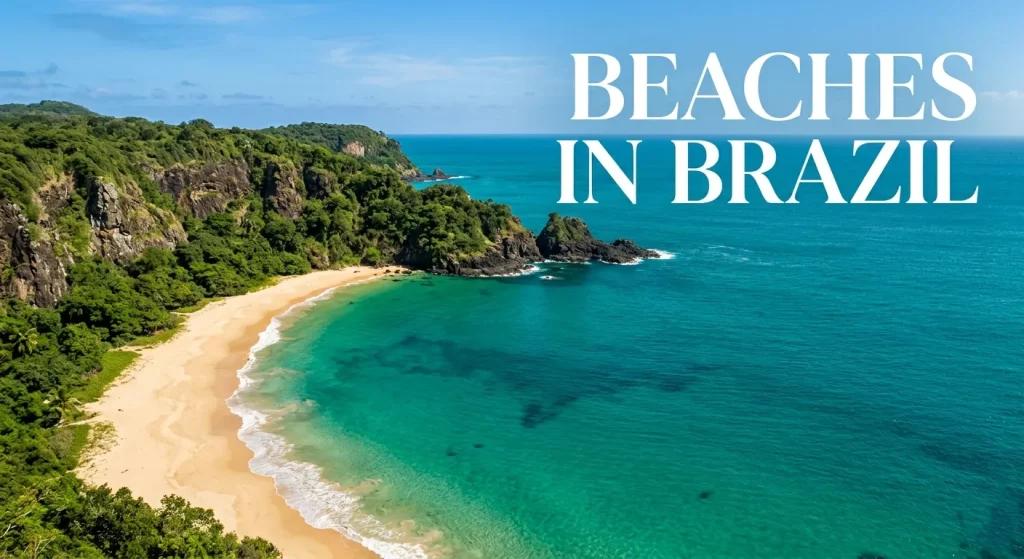
Access requires descending two steep metal ladders fixed into a cliff face. The effort filters crowds, preserving a sense of untouched isolation even during Brazilian holidays.
This beach perfectly suits honeymooners and luxury seekers who plan far ahead. It does not suit families with small children, anyone uncomfortable with heights, or last-minute visitors.
The daily visitor fee for the Fernando de Noronha marine park applies here. In 2026, ICMBio continues enforcing a strict per-person entry quota for environmental protection.
Best Beaches Comparison Table
| Beach Name | Water Type | Crowd Level | Best For |
|---|---|---|---|
| Baía do Sancho | Glass-calm, emerald | Low (permit capped) | Honeymooners, divers |
| Lopes Mendes | Clear, turquoise, moderate surf | Low to moderate | Active couples, surfers |
| Praia do Espelho | Calm, clear, warm | Low to moderate | Romantic getaways |
| Praia dos Carneiros | Shallow, calm, green | Moderate | Families, swimmers |
| Jericoacoara | Windy, warm, blue | Moderate | Kitesurfers, adventurers |
| Copacabana | Cooler, grey-blue, choppy | Very high | Culture seekers, solo |
Brazil Beaches for Swimming
The safest and most pleasant swimming in Brazil is found inside natural reef pools. Praia dos Carneiros in Pernambuco offers bathtub-warm, knee-deep water ideal for a relaxing float.
The reef line about 300 feet offshore creates a wide, shallow, protected pool at low tide. Wave action is nearly zero here, making it a genuine sanctuary for uncertain swimmers.
Families with toddlers should target this specific beach and arrive during the week. Weekends bring boat parties from Recife, and the quiet bay transforms into a crowded social scene.
Water quality at Carneiros is generally excellent outside the rainy months of May through July. Heavy rain washes sediment from the Rio Formoso into the bay, temporarily reducing clarity.
Key Takeaway: Brazil’s best pure swimming beaches are coral-protected northeastern bays, not the open-ocean urban strands of the southeast.
Best Snorkeling Brazil Beaches
The clearest snorkeling in Brazil is at Baía do Sancho, where visibility routinely exceeds 100 feet. Expect to see large parrotfish, sea turtles, rays, and the occasional reef shark.
You must bring your own mask and snorkel. There are no rental kiosks on the beach. The marine park prohibits any commercial activity on the sand itself.
Budget travelers get 85 percent of the Sancho experience at Praia do Forno in Arraial do Cabo. The water is equally clear, the marine life is abundant, and access costs nothing.
According to ICMBio, the Fernando de Noronha marine park strictly forbids standing on or touching the reef. Fines for coral damage are steep and actively enforced by park monitors.
Best Surfing Brazil Beaches
Brazil’s most reliable surf beach is Praia de Itacoatiara near Niterói, just outside Rio de Janeiro. The powerful beach break delivers consistent, heavy barrels best left to experienced surfers.
The water is colder here, typically 65 to 72 degrees Fahrenheit between June and October. A 3/2mm wetsuit is standard for comfort during the Brazilian winter months.
Intermediate surfers should head to Lopes Mendes on Ilha Grande. The long, peeling lefts and rights break over a sand bottom that is far more forgiving than the rock at Itacoatiara.
Access to Lopes Mendes requires a moderate three-hour trail hike or a water taxi from Abraão village. There are no accommodations, no restaurants, and no surfboard rentals on the beach itself.
Key Takeaway: Brazilian surf ranges from world-class heavy barrels to gentle learner waves. Choose your spot based on honest skill level, not photography.
Best Beaches in Brazil for Families
Praia dos Carneiros is the single best beach in Brazil for a family with children under 10. The natural reef pool creates a safe saltwater wading zone unmatched on the open coast.
The beach has proper infrastructure for families. Beachfront restaurants offer shade, cold drinks, and clean bathrooms with changing areas.
Nearby Maragogi Beach in Alagoas offers a second excellent family option. The catamaran trip to the offshore natural pools at low tide becomes the highlight of a child’s entire trip.
Book the earliest morning boat departure in Maragogi. The pools are least crowded before 9 a.m., and the water is clearest before the tide starts rising around midday.
Romantic Beaches Brazil
Praia do Espelho in Bahia is the most romantic beach in Brazil. At low tide, natural pools form in front of warm, amber-colored sandstone cliffs as the sun sets directly over the water.
The beach sits 16 miles south of Trancoso. The drive on an unpaved road takes about 40 minutes from the Quadrado and keeps day-tripper traffic manageably low.
Couples should book lunch at a beachfront restaurant called Silvinha, which serves fresh grilled fish with chairs set directly in the sand. The coconut water arrives in the shell with a shot of cachaça on request.
Avoid Praia do Espelho during the New Year and Carnival periods. The exclusivity collapses under a crush of holiday travelers from São Paulo and Belo Horizonte.
Key Takeaway: Romantic beaches in Brazil require careful timing. The most beautiful cove becomes an unromantic party scene during peak holidays.
How to Get to Brazilian Beaches
Reaching Brazil’s best beaches almost always requires a connecting domestic flight after your international arrival into São Paulo or Rio de Janeiro. Budget three to five extra hours for onward travel to the northeast.
Azul, LATAM, and Gol operate extensive domestic networks to coastal hubs. Booking internal flights requires a CPF number, which foreign travelers can generate online before purchasing tickets.
Once you land in hubs like Recife, Salvador, or Fortaleza, most coral-coast beaches require a rental car or private transfer. Public transit to specific beach towns is limited or nonexistent.
For Ilha Grande, fly into Rio de Janeiro, take a private transfer to Conceição de Jacareí or Mangaratiba, then board a ferry or speedboat to Abraão village. Do not attempt this transfer on a tight airline connection.
When to Visit Brazil Beaches
The safest general rule for Brazilian beaches is to visit the northeast between September and March for maximum sun. The southeast delivers its best beach weather from December through March.
Avoid the Brazilian summer holidays if you dislike dense crowds. The entire coastline from Rio to Florianópolis becomes intensely packed from Christmas through the week after Carnival.
Carnival week in 2026 falls in mid-February. Beach towns near major cities, especially Salvador and Rio, become a nonstop festival zone that is thrilling for partiers and overwhelming for families.
The northeast rainy season runs roughly April through July. Rain typically comes in heavy afternoon bursts rather than all-day washouts, but water clarity at river-adjacent beaches can degrade significantly.
Safety at Brazilian Beaches
The most important beach safety rule in Brazil is to identify rip currents before entering the water. Many seemingly calm urban beaches in Rio and the south have sudden, powerful rips that pull swimmers out fast.
Always swim near a lifeguard post when available. Corpo de Bombeiros (Fire Department) lifeguard stations are marked with red flags and are the most reliable indicator of monitored swimming zones.
Theft on the beach is a real risk, particularly on crowded urban strands. Leave your phone, passport, and large amounts of cash locked in your pousada safe.
Bring only a small amount of spending money and a towel to Rio’s beaches. A waterproof pouch worn under your clothing is better than a bag left unattended while you swim.
Key Takeaway: Brazil’s primary beach safety concerns are rip currents on open-ocean beaches and opportunistic theft on crowded urban sands.
Hidden Beaches in Brazil
Lagoinha do Leste on Florianópolis island is the best hidden beach for travelers who earn their views. The crescent of pristine sand lies between two headlands accessible only by a steep two-hour hiking trail.
No road reaches this beach. No restaurant sits behind it. The only sounds are Atlantic Forest birds and waves breaking on a shore that stays nearly empty even in January.
Solo travelers looking for genuine solitude should target this exact beach. Arrive early, carry two liters of water, and plan to stay no later than 4 p.m. for the return hike before dark.
São Miguel dos Milagres in Alagoas offers a different kind of hidden beach experience. The shore is road-accessible, but the region remains so underdeveloped that empty beaches line the coast for miles.
Brazil Beach Access and Facilities
Beach access in Brazil is constitutionally guaranteed as public land. Even beaches fronted by luxury resorts or private homes are legally open to everyone.
What changes is the infrastructure behind the sand. Urban beaches like Ipanema offer showers, bathrooms, chair rentals, and dozens of beach barracas selling food and drink.
Remote beaches like Lopes Mendes offer nothing. There is no freshwater source, no shade structure, no vendor, and no cell service. Pack everything you need and carry out every piece of waste.
Fernando de Noronha charges a daily environmental preservation tax for beach access. The tax in 2026 runs in the range of 90 to 110 Brazilian reais per person per day, with progressive increases for longer stays.
Key Takeaway: Brazil’s beach infrastructure exists on a spectrum from full-service urban barraca to zero-support remote cove. Know which category your target beach sits in before leaving your pousada.
Best Time of Year for Brazil Beaches
The single best month for Brazilian beaches overall is October. The northeast is sunny and dry, the southeast is warming up, and the domestic holiday crush is still two months away.
September delivers similar weather with even lower prices and thinner crowds. Water visibility at Fernando de Noronha peaks between September and November, making it the prime dive and snorkel window.
January is the worst month for anyone seeking a quiet beach experience. The combination of school holidays, European summer escapees, and pre-Carnival energy fills every accessible sand strip.
For southern beaches around Florianópolis, February and March offer the warmest water temperatures. Waiting until late March means you miss the Carnival chaos but still get summer conditions.
Local Favorite Beaches Brazil
Brazilians from São Paulo escape to Praia da Almada near Ubatuba when they want a wilder, less manicured beach experience than the resort towns offer. The road access keeps day-tripper numbers low.
Residents of Recife drive south to Praia de Serrambi instead of crowded Porto de Galinhas. The beach is equally beautiful, the natural pools are equally clear, and the weekend crowd is a quarter of the size.
In Bahia, locals from Salvador bypass the tourist-heavy northern coast for Praia de Pratigi on the Cocoa Coast. The beach runs for miles with a single small village providing basic food and lodging.
Key Takeaway: For every famous Brazilian beach mobbed by tourists, a local-favorite alternative sits within an hour’s drive. Ask the owner of your pousada where they go on their day off.
Northeast Brazil Beaches
Northeast Brazil holds the country’s highest concentration of world-class beaches. The region from Bahia to Maranhão delivers warm water year-round, consistent sun outside the rainy season, and soft sand in shades from gold to pure white.
Porto de Galinhas is the region’s most famous beach but also its most overdeveloped. The natural pools remain genuinely beautiful, but the main street behind the sand is now a wall of souvenir shops and chain restaurants.
For a quieter northeast experience, target Praia de Antunes in Alagoas. The water is equally warm, the reef pools are equally clear, and you will share the sand with a fraction of the Porto de Galinhas crowd.
The northeast rewards travelers who rent a car and explore spontaneously. Some of the best beaches in this region, including Praia do Patacho and Praia de Lages, have no major pousada branding and almost no English-language online presence.
Safety and Seasonal Warnings for Brazilian Beaches
Brazilian beaches present genuine risks from rip currents, strong ultraviolet exposure, and opportunistic theft. These risks are manageable with specific precautions but should not be ignored.
Key safety and seasonal facts every visitor should know:
- Rip currents are strongest at open-ocean beaches in Rio and the south. Swim only at lifeguard-patrolled areas marked with red flags.
- UV exposure is extreme year-round. Use SPF 50 minimum and reapply after swimming. The Brazilian sun burns skin faster than most visitors expect.
- Sargassum seaweed can affect northeast beaches between April and July. Verifying current conditions with your pousada before booking a specific beach week is wise.
- Jellyfish season runs sporadically. Ask locals before entering the water at beaches without a crowd in it.
- Do not leave valuables unattended on any urban beach. Even a quick swim can result in a stolen phone.
- Remote beaches often lack cell service. Tell someone where you are going and when you expect to return.
The Brazilian Navy issues daily surf and tide bulletins for major beaches. Checking these before swimming at an unguarded beach is a practical habit that costs nothing.
Frequently Asked Questions About Beaches in Brazil
What is the number one beach in Brazil?
Baía do Sancho in Fernando de Noronha is consistently ranked the number one beach in Brazil by travel publications and visitor polls.
Its emerald water, permanent calm conditions, and strictly enforced visitor caps place it in a separate tier from the mainland competition.
The access ladders and daily environmental tax mean it requires more planning than a casual beach stop.
Which part of Brazil has the best beaches?
The northeast region from Bahia to Maranhão has the best beaches in Brazil for warm water, soft sand, and consistent sunshine.
The coral coast of Pernambuco and Alagoas offers the best combination of calm swimming water and developed infrastructure.
The southeast has iconic urban beaches but cannot match the northeast for water color or year-round warmth.
Are beaches in Brazil safe for swimming?
Most coral-protected northeastern beaches are safe for swimming, with shallow, warm, low-wave conditions ideal for all skill levels.
Open-ocean beaches in Rio and the south require more caution due to rip currents and cooler water.
Always swim at lifeguard-patrolled beaches and ask about current conditions before entering unfamiliar water.
When should I avoid Brazilian beaches?
Avoid the period from Christmas Day through Carnival in February if you dislike intense crowds and inflated prices.
The northeast rainy season from April through July brings heavy afternoon downpours and can reduce water clarity.
Southern beaches are cold and often overcast from June through September, which is winter in Brazil.
Do you need a car to reach Brazil’s best beaches?
You need a rental car or private transfer to reach most top-tier northeast beaches outside the main resort clusters.
Ilha Grande requires a ferry from the mainland followed by boat or hiking to reach its best beaches.
Urban beaches in Rio are easily reached by metro, taxi, or rideshare without a car.
Are Brazil beaches good for families with young children?
Praia dos Carneiros and Maragogi are excellent for families with young children thanks to shallow, warm, reef-protected natural pools.
Many remote beaches lack shade, bathrooms, and calm water, making them poor choices for toddlers.
Choose coral-coast beaches with barraca infrastructure for the most comfortable family beach day.
Brazil’s beach quality varies more dramatically by region than most visitors expect. The urban icons deliver culture and energy. The northeast delivers warm, calm, turquoise water. The islands deliver wild beauty.
The smartest booking decision is choosing your region based on your honest travel profile. Families and swimmers should target Pernambuco and Alagoas. Romantics and hikers should look to Bahia and Ilha Grande.
Verify current sargassum conditions, domestic flight schedules, and Fernando de Noronha entry requirements before booking. Resort availability, marine park access quotas, and beachfront infrastructure can shift from year to year.