What Are St. John Beaches Like
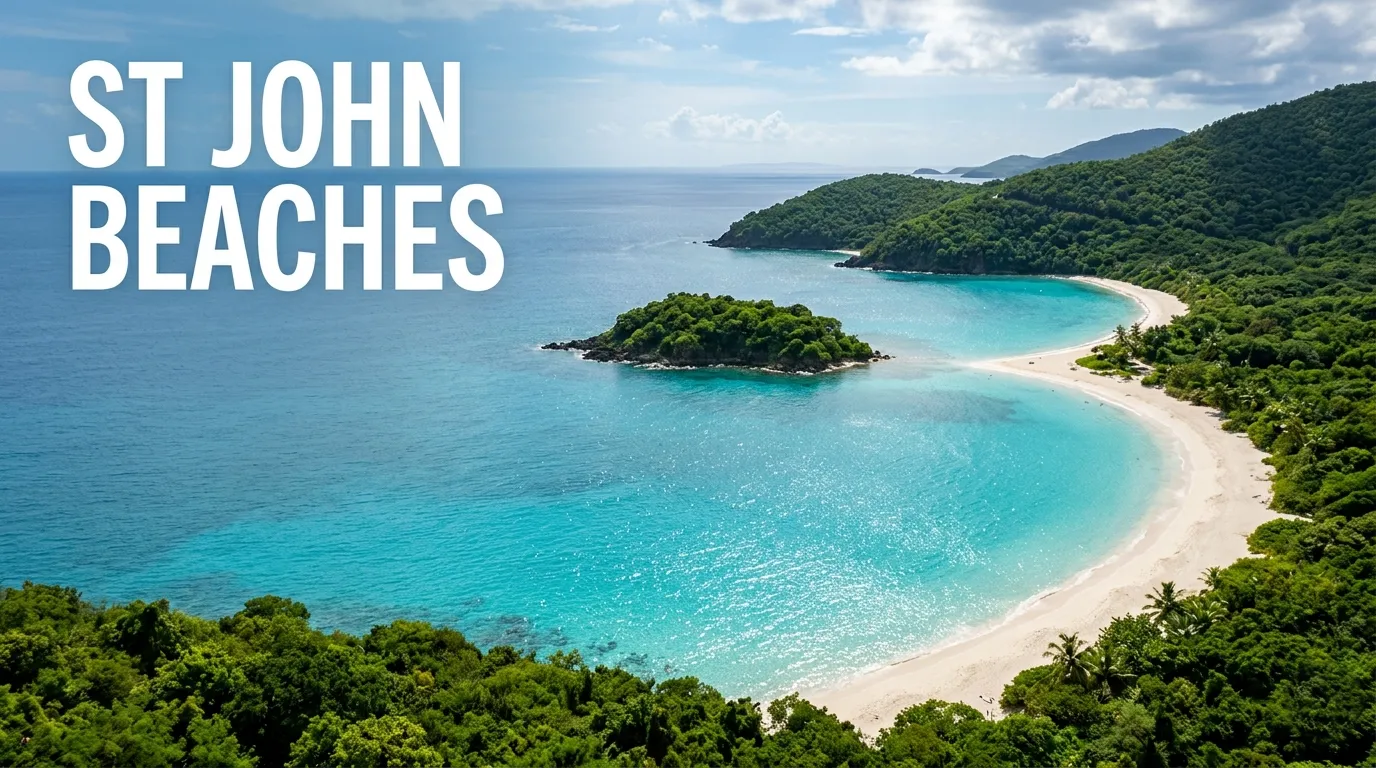
St. John beaches are narrow crescents of fine white sand backed by green hills. The water is typically calm, clear, and turquoise along the protected North Shore.
The sand is soft and cool underfoot, composed largely of coral and shell fragments. It never gets painfully hot the way some volcanic sands do farther south in the Caribbean.
Water entry is gentle at most North Shore beaches. You walk in from a flat sandy bottom that deepens gradually, which makes these beaches unusually forgiving for uncertain swimmers.
The defining feature of St. John beaches is the reef directly offshore. At almost every major North Shore bay, you can snorkel over living coral and see sea turtles within fifty feet of the beach.
Key Takeaway: St. John beaches combine national park protection, soft white sand, and immediate reef access in a concentration rare anywhere in the Caribbean.
Best Beaches in St. John
The single best beach in St. John for the broadest range of travelers is Cinnamon Bay Beach. It offers a long stretch of soft sand, reliable swimming, good snorkeling, and full facilities.
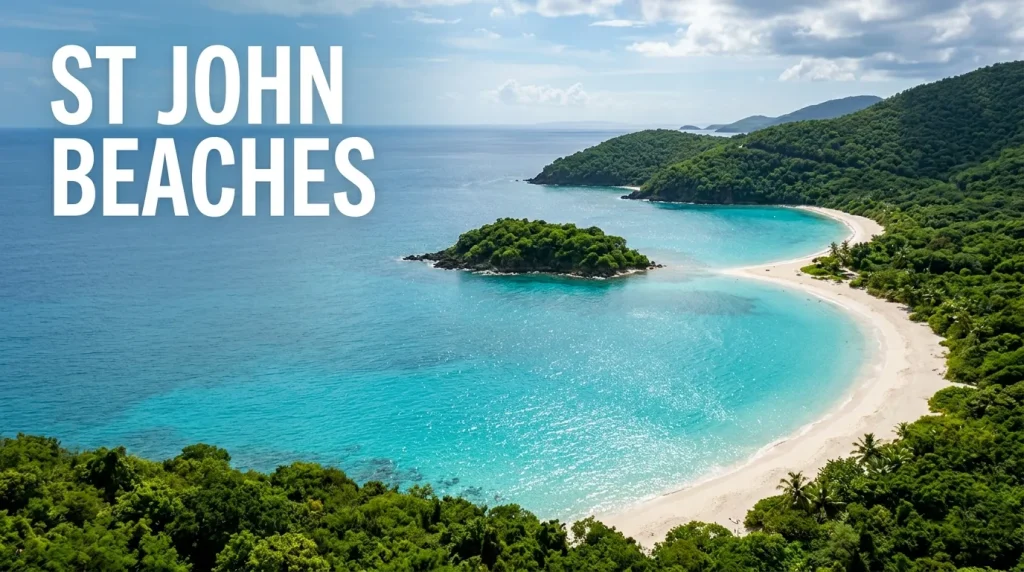
Trunk Bay Beach is the most famous and photogenic beach on the island. The sand is powder-soft, the water is electric turquoise, and the island views are spectacular from the shore.
Maho Bay Beach is the best beach for guaranteed sea turtle sightings. The shallow seagrass bed just offshore attracts green turtles that graze calmly while snorkelers watch from a respectful distance.
Hawksnest Beach is the best beach closest to Cruz Bay. You can be in the water fifteen minutes after finishing breakfast in town, which makes it the top choice for a quick afternoon swim.
St. John Beach Comparison Table
| Beach | Swimming | Snorkeling | Crowd Level | Access |
|---|---|---|---|---|
| Cinnamon Bay | Excellent | Very Good | Moderate | Drive-up |
| Trunk Bay | Excellent | Good | High | Drive-up, fee |
| Maho Bay | Very Good | Excellent (turtles) | Moderate | Drive-up |
| Hawksnest | Very Good | Good | Moderate | Drive-up |
| Salomon | Excellent | Good | Low | Hike-in |
| Honeymoon | Excellent | Good | Low to Moderate | Hike-in |
| Waterlemon Cay | Fair | Excellent | Low | Long walk |
Key Takeaway: Cinnamon Bay wins on overall balance. Trunk Bay wins on facilities and photography. Maho wins on turtles.
Best Snorkeling Beaches St. John
The best snorkeling beach in St. John is Waterlemon Cay in Leinster Bay. The current-swept channel around the small cay holds dense coral, large parrotfish, and the occasional spotted eagle ray.
This is not a beach entry snorkel for beginners. You must swim roughly 200 yards from the rocky shoreline to reach the cay, and the current can be strong on the outer side.
For a safer but still excellent snorkel, Maho Bay Beach offers sea turtles on almost every outing. The calm, shallow water makes it ideal for children and first-time snorkelers.
Follow the left shoreline to the seagrass edge. Turtles surface every few minutes to breathe, and the protected bay means you can float and observe without fighting a current.
Trunk Bay features the island’s only marked underwater snorkel trail. Virgin Islands National Park maintains underwater signs identifying coral species and fish common to the reef just offshore.
The trail is genuinely educational for beginners. But the reef here shows decades of heavy visitor impact, and experienced snorkelers will find healthier coral at Waterlemon or Haulover.
Key Takeaway: Waterlemon is the top snorkel spot for strong swimmers. Maho is the top spot for guaranteed turtles.
Swimming Beaches St. John
The best pure swimming beach on St. John is Cinnamon Bay Beach. The sandy bottom extends far out, the water is almost always calm, and the entry is perfectly gradual with no rocks.
Trunk Bay offers similarly ideal swimming conditions with the added benefit of a lifeguard stand during peak season. The designated swim zone keeps boats away from the swimming area.
Winter swells can temporarily change swimming conditions at north-facing beaches. From December through February, north swells occasionally bring waves that reduce visibility and create a shore break.
The south shore beaches near Coral Bay are generally rougher and rockier. They suit tide-pool exploration better than casual swimming, especially for families with young children.
St. John Beach Access and Parking
Almost all St. John beaches sit along North Shore Road, a narrow two-lane road running east from Cruz Bay. Parking is the single biggest practical challenge for beach access on the island.
Each major beach has a small dirt or paved pull-off lot. These lots fill by 10 a.m. during peak season, and roadside parking is prohibited and ticketed by park rangers.
Trunk Bay has the largest parking lot and the only one with a posted entry fee. The fee in 2026 typically runs around $5 per person, though the exact amount should be verified before visiting.
Cinnamon Bay and Maho Bay have free parking in moderate-sized lots. Arrive before 9:30 a.m. from December through March to secure a spot without circling for twenty minutes.
Insider Tip:
- For Hawksnest and Jumbie, park at the small Hawksnest lot or along the road shoulder where permitted. The Hawksnest lot fills before 9 a.m. in high season.
- If Trunk Bay lot is full, do not park on the road. Rangers ticket aggressively. Drive to Cinnamon Bay instead.
Key Takeaway: Parking is the limiting factor on St. John beach access. Arrive early or go after 2 p.m. when morning visitors leave.
How to Get to St. John Beaches
All St. John beaches are accessed from Cruz Bay, where the ferry from St. Thomas arrives. From Cruz Bay, you need a rental jeep to reach the North Shore beaches efficiently.
The people ferry runs from Red Hook on St. Thomas to Cruz Bay on St. John. The crossing takes about twenty minutes, and ferries depart roughly every hour during daylight.
A rental jeep is a practical necessity for beach exploration. Taxis are available but expensive for multi-beach days, and no public bus system serves the North Shore beaches.
The North Shore Road runs directly past the parking lots for Hawksnest, Trunk Bay, Cinnamon Bay, and Maho Bay. You literally pull off the road and walk onto the sand within a minute.
Best St. John Beaches for Families
Trunk Bay is the best St. John beach for families with children of any age. The lifeguard presence, bathroom facilities, snack bar, and gentle water entry solve every practical family beach need.
The underwater snorkel trail gives older children a structured, supervised snorkel experience. The reef fish are visible in chest-deep water, so weaker swimmers stay safe while seeing marine life.
Maho Bay is the second-best family beach for its calm, shallow water and guaranteed turtle sightings. Children can stand on the sandy bottom and watch turtles surface ten feet away without needing a snorkel.
Cinnamon Bay works well for families who want a full beach day with room to spread out. The long beach gives kids space to run, and the water is equally calm and shallow.
Best St. John Beaches for Couples
Salomon Beach is the best St. John beach for couples seeking a romantic, crowd-free setting. The short hike keeps day-trippers away and preserves a quiet, intimate atmosphere.
The water is calm and clear, the sand is soft white, and the tree line provides natural shade. You will share this beach with perhaps six other people on a weekday in the off-season.
Honeymoon Beach is the second-best couples beach and the easier choice logistically. The hike is shorter than Salomon, and the beach offers a small food and drink shack during high season.
For a drive-up romantic sunset, Francis Bay Beach offers a long, quiet stretch of sand with views toward Tortola and fewer visitors than any of the main North Shore beaches.
Key Takeaway: Couples should prioritize hike-in beaches like Salomon and Honeymoon for romance. The extra walking filters the crowds significantly.
Secluded Beaches St. John
The most reliably secluded beach on St. John is Denis Bay. The access is a steep, unmarked, and unmaintained trail from Peace Hill, which keeps almost everyone away.
Jumbie Beach offers a shorter, easier path to near-solitude. The small parking pull-off holds three cars, and the brief downhill trail delivers a beautiful cove that stays quiet even in high season.
Salomon Beach and Honeymoon Beach are the most beautiful of the hike-in options. Both require a one-mile walk from the Virgin Islands National Park sign at Caneel Bay, but neither is difficult.
Weekdays outside the December-to-March window can deliver solitude even at popular beaches. A Tuesday afternoon at Maho in June might see fewer than a dozen people on the entire stretch.
When to Visit St. John Beaches
The best time to visit St. John beaches is late April through June. The winter crowds have departed, the water remains calm and clear, and the weather is reliably sunny.
December through March delivers the most reliable sun and the calmest water. It is also the most expensive and crowded window, with parking lots filling by mid-morning.
Hurricane season officially runs from June through November, with the highest statistical risk from August through October. Travel insurance is wise for trips booked during these months.
Sargassum seaweed can appear on North Shore beaches irregularly, most often in summer months. USVI Department of Tourism notes that sargassum influx varies by year and by specific beach orientation.
St. John North Shore Beaches
The North Shore of St. John holds the island’s finest beaches. Seven major named beaches sit within a ten-minute drive of each other along North Shore Road.
Hawksnest is the closest to Cruz Bay and the best choice for a quick swim. Trunk Bay follows, then Cinnamon Bay, then Maho Bay, and finally Francis Bay at the eastern end.
The consistent North Shore pattern is soft white sand, calm turquoise water, and reef within swimming distance. Each beach has a slightly different personality despite sharing the same geology.
Cinnamon Bay is the widest and longest. Maho Bay is the shallowest and calmest. Francis Bay is the quietest and best for a long, solitary walk at the waterline.
Local Favorite Beaches St. John
Locals on St. John often skip Trunk Bay entirely during peak season. The crowd and the entry fee push them toward equally beautiful but quieter options just down the road.
Jumbie Beach is a local favorite precisely because the tiny parking area limits visitor numbers. The beach delivers the same white sand and turquoise water as the famous stops with a fraction of the people.
Gibney Beach and the adjacent Oppenheimer Beach are locally beloved for their unusual history and quiet charm. The small parking area holds perhaps eight cars, and the beach stays calm all day.
Francis Bay at the far end of North Shore Road is where residents go for a long, quiet afternoon. The beach stretches wide and deep, and the sunset views toward Tortola are excellent.
Key Takeaway: Local favorites are defined by limited parking and no facilities. Rent a jeep, pack water, and follow the empty pull-offs.
Snorkeling at Trunk Bay St. John
Snorkeling at Trunk Bay centers on the marked underwater trail maintained by the Virgin Islands National Park. The 225-yard trail follows a sandy bottom with coral heads on both sides.
The signage is genuinely useful for beginners who cannot identify what they are seeing. Parrotfish, sergeant majors, and blue tangs are common sightings along the trail route.
The coral at Trunk Bay shows significant wear from decades of heavy foot traffic and snorkeler impact. The reef is not dead, but it lacks the vibrance found at less-visited sites like Waterlemon Cay.
For the best Trunk Bay snorkel, enter the water at the far left end of the beach and swim toward the rocky point. The coral is healthier here, and the crowd is thinner than on the main trail.
Maho Bay Beach St. John Guide
Maho Bay Beach is the premier turtle-sighting beach on St. John. The shallow seagrass meadow just offshore serves as a daily feeding ground for green sea turtles.
The beach itself is narrower than Cinnamon or Trunk Bay. The sand is soft, the water is calm and shallow, and the tree line offers excellent natural shade along the back of the sand.
Parking is the primary limitation at Maho. The small lot fills quickly, and the alternative is a roadside pull-off along North Shore Road that requires a short walk back to the beach entrance.
Maho has no facilities beyond a portable toilet. Pack water, snacks, and sun protection. The calm, shallow water makes it an excellent choice for families with small children.
Cinnamon Bay Beach St. John
Cinnamon Bay Beach is the workhorse of the St. John beach lineup. It does everything well, from swimming to snorkeling to sunbathing, and offers the island’s best beach infrastructure after Trunk Bay.
Cinnamon Bay Resort operates a beachfront water sports shack renting kayaks, stand-up paddleboards, and snorkel gear. A small food truck and picnic area sit just behind the sand.
The beach stretches long and wide enough that even on a busy day you can find space. Walk east past the main cluster of visitors and the crowd thins considerably.
The reef off Cinnamon Bay is healthy and accessible. Enter the water at the center of the beach and swim straight out about 150 feet to find coral heads holding a variety of reef fish.
Hike In Beaches St. John
The two primary hike-in beaches on St. John are Salomon Beach and Honeymoon Beach. Both are accessed from the Virgin Islands National Park trailhead at the former Caneel Bay Resort entrance.
The hike to Salomon Beach takes roughly twenty minutes on a well-maintained dirt trail. The path is mostly flat with one brief incline, and the forest canopy provides shade for most of the walk.
Honeymoon Beach is another ten minutes past Salomon on the same trail. Honeymoon has a seasonal food and drink shack, which Salomon lacks, making it the better choice for a full beach day.
Denis Bay and Brown Bay offer more challenging hikes for true solitude seekers. These trails are unmarked, steep, and not maintained, requiring good footwear and a tolerance for navigating thick vegetation.
St. John Beach Safety
The primary safety concern on St. John beaches is the sun. The Caribbean sun at this latitude is intense even on overcast days, and the cooling trade winds mask how fast you are burning.
Water conditions on the North Shore are generally safe and calm. The exception is during winter north swells, when waves can create a strong shore break and stir up sand that reduces visibility.
No-see-ums and mosquitoes are active at dawn and dusk, especially on beaches with calm air and standing water nearby. Apply repellent if you plan to stay on the sand past 4 p.m.
Theft from unattended beach bags is rare compared to more urban Caribbean destinations but not unknown. Leave valuables locked in your jeep and carry only what you need onto the sand.
Virgin Islands National Park rangers patrol the North Shore beaches regularly. In an emergency, dial 911, but be aware that response times on the island are longer than mainland US standards.
Frequently Asked Questions About St. John Beaches
What is the most beautiful beach in St. John?
Trunk Bay is the most photographed beach in St. John with powdery white sand and electric turquoise water framed by green hills and a small cay offshore.
Salomon Beach is equally beautiful but feels more intimate because the hike-in access limits the number of people sharing the view.
Both beaches deliver the classic St. John look of soft sand, clear water, and lush green backdrop.
Which St. John beach is best for snorkeling?
Waterlemon Cay in Leinster Bay is the best snorkeling spot on St. John for strong swimmers due to dense coral and larger marine life.
Maho Bay is the best snorkeling beach for beginners and children because the calm shallow water holds sea turtles within feet of shore.
Both sites are free to access and do not require a boat.
Are St. John beaches free to access?
All St. John beaches are free to access except Trunk Bay, which charges a Virgin Islands National Park entry fee typically around five dollars per person.
The fee covers lifeguard service, bathroom facilities, and the underwater snorkel trail maintenance.
Verify the current fee before visiting as national park entrance rates can change.
Can you swim at all St. John beaches?
Most North Shore beaches offer calm, safe swimming conditions with gentle entry and clear water year-round.
Some south shore and east end beaches have rocky entries and rougher water that make swimming less comfortable.
Winter north swells can temporarily bring waves to usually calm north-facing beaches.
What is the least crowded beach in St. John?
Denis Bay and Jumbie Beach are the least crowded beaches on St. John because extremely limited parking and unmarked access keep visitor numbers low.
Salomon Beach stays uncrowded because the twenty-minute hike deters casual visitors who prefer drive-up access.
Weekdays in the off-season months of May and June offer solitude even at popular beaches.
Do you need a car to visit St. John beaches?
A rental jeep is a practical necessity for visiting multiple St. John beaches in a single day.
Taxis are available in Cruz Bay but become expensive and inconvenient for multi-stop beach itineraries.
No public bus system serves the North Shore beaches where most of the best sand sits.
St. John delivers the finest concentration of accessible, protected, genuinely spectacular beaches in the Caribbean. The island rewards travelers who rent a jeep, rise early for parking, and explore past the famous first stop at Trunk Bay.
Book your ferry from St. Thomas and your rental jeep before anything else. Those two logistics determine every beach day that follows.
Verify park entry fees, ferry schedules, and current sargassum conditions before departure. Resort amenities, trail access points, and seasonal services shift from year to year on this small island.