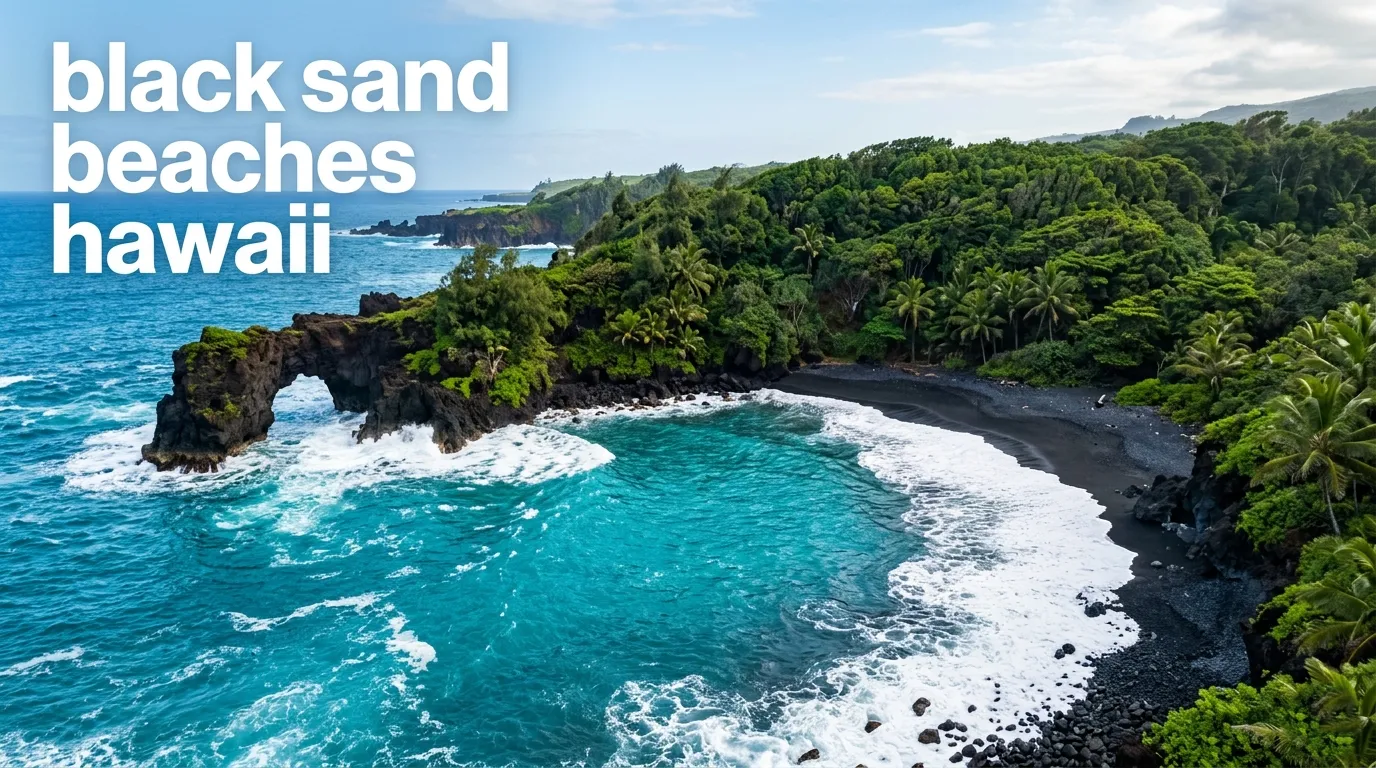
Black Sand Beaches Hawaii: 2026 Map & Honest Guide
Black sand beaches hawaii are not soft, white, tropical playgrounds. They are raw, primal, geological events made of sharp, hot, ground-up basalt lava that will cut your feet and scorch your skin on a sunny day.
The Hawaii Tourism Authority reports that the islands’ black sand is formed when molten lava reaches the cold ocean and explodes into tiny, glassy fragments. The result is a spectacle of jet-black, emerald, and silver-flecked shorelines.
This 2026 guide gives you the unvarnished truth about every major black sand beach. You will learn where the sand is sharpest, which water is shockingly cold, and how to visit without ruining your feet or your vacation.
black sand beaches in hawaii
The black sand beaches in hawaii are concentrated on the volcanically active Big Island, with one iconic state park on Maui. Oahu and Kauai have no true black sand beaches, only a few dark, pebbly coves.
The Big Island’s black sand beaches are the youngest in the archipelago. They are the direct product of the Kilauea and Mauna Loa shield volcanoes. Some are hundreds of years old, like Punalu’u, while others, like Kaimu, were buried by a 1990 lava flow and are reforming.
Maui’s Waianapanapa State Park is a small, jewel-like cove of jet-black sand and pebbles. It is the most accessible, photogenic, and tourist-ready black sand beach in the state, but it is also a tightly controlled, reservation-only experience.
Couples and photographers should target the Big Island for the raw, untamed, and crowd-free black sand experience. Maui’s Waianapanapa is a beautiful, curated, and busy photo stop on the Hana Highway.
Key Takeaway: For a wild, solitary black sand experience, go to the Big Island. For a safe, photogenic, and controlled one, go to Maui.
black sand beaches big island
The black sand beaches big island are a diverse collection of accessible county parks, remote hike-in coves, and one clothing-optional local secret. The island has over five distinct black sand beaches worth visiting.
The black sand on the Big Island is often mixed with olivine, a semi-precious green mineral crystal. On a sunny day, the black and green sand of the newest beaches sparkles with an unearthly, metallic shimmer.
The swimming conditions at the Big Island’s black sand beaches are generally poor. The windward coast locations are exposed to strong trade winds, cold freshwater springs, and powerful rip currents. These are viewing and wading beaches, not swimming beaches.
Adventurous travelers and geology nerds should base themselves in Hilo or Volcano Village for a dedicated black sand tour. The drive from Kona to Punalu’u is a long, two-hour commitment that requires a full day’s planning.
hawaii black sand beaches
The hawaii black sand beaches are all located on the younger, volcanically active islands of Hawaii and Maui. The older, more eroded islands of Oahu and Kauai lack the fresh basaltic lava flows that create the black sand.
The black sand is a temporary visitor on a geological timescale. The black basalt will eventually break down into clay and be replaced by coral sand. A black sand beach is a snapshot of an island in its violent, fertile youth.
Punalu’u Black Sand Beach on the Big Island is the most famous and accessible. It is a county park with restrooms, a large parking lot, and a resident population of Hawaiian green sea turtles that bask on the hot black sand.
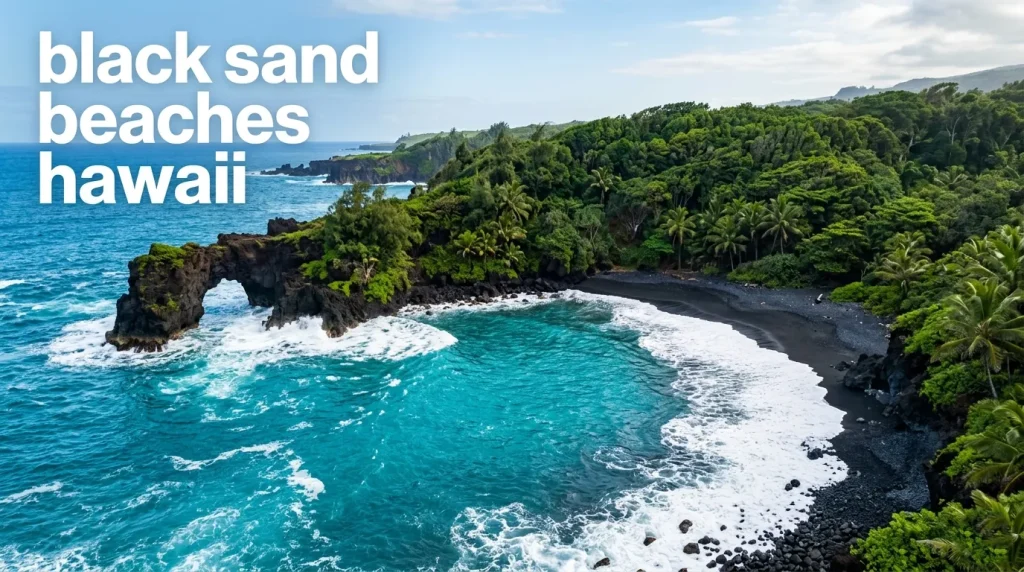
Waianapanapa Black Sand Beach on Maui is the most photographed, a small, perfect crescent of jet-black sand and pebbles framed by a sea arch and a blowhole. It is a state park with a strict reservation system.
Solo travelers and luxury seekers will not find a resort on a black sand beach. The experience is a self-guided, day-trip adventure. A comfortable rental car, a packed lunch, and a sturdy pair of water shoes are the only luxury available.
Key Takeaway: Hawaii’s black sand beaches are a self-directed, adventure-oriented experience, not a resort-based amenity.
where are there black sand beaches
Where are there black sand beaches in Hawaii that are actually worth visiting? The answer is strictly the Big Island and the Hana coast of Maui. Do not waste your time searching on Oahu or Kauai.
On the Big Island, the black sand beaches are on the south and east coasts, accessible via the Mamalahoa Highway (Route 11) and the Hawaii Belt Road. The key stops are Punalu’u, Kehena, and the hike-in valleys of Pololu and Waipi’o.
On Maui, the only accessible black sand beach is Waianapanapa State Park, located at the end of the famously winding Hana Highway. The drive from Kahului takes at least 2.5 hours without stops, and the park requires a pre-booked reservation.
Budget travelers should plan a road trip on the Big Island. The county park at Punalu’u is free to enter and park, and the scenic drive through the Kau District’s macadamia nut farms and coffee plantations is a rewarding, low-cost day out.
where are the black sand beaches in hawaii
Where are the black sand beaches in hawaii on a map? They dot the young, raw southeastern and windward coastlines of the Big Island and form a single, famous crescent on the Hana Highway in east Maui.
The Big Island’s chain begins at Punalu’u in the south, skips north to the cliffside clothing-optional Kehena Beach, and continues to the massive, road-inaccessible valleys of Pololu and Waipi’o at the northern tip.
Maui’s single, famous black sand beach is Honokalani Beach within the Waianapanapa State Park, just past the town of Hana. It is a small, 0.25-mile crescent of black sand and smooth, black pebbles.
Road-trippers should download an offline map. Cell service is non-existent on the Big Island’s southern tip and along the Maui’s Hana Highway. A pre-downloaded Google Map is not a luxury. It is a safety tool.
black beaches hawaii
Black beaches hawaii are not a monolithic experience. Each beach has a distinct personality, texture, and safety profile. The black sand at Waianapanapa is a mix of fine sand and smooth, black, water-worn pebbles.
The black sand at Punalu’u is a coarse, sharp, pure basalt grit. It gets incredibly hot on a sunny day, to the point of being unbearable to walk on barefoot. It also stains your skin, your towel, and your swimsuit a faint, inky gray.
The black sand in the Waipi’o Valley is a soft, fine, charcoal-gray powder mixed with freshwater stream sediment. It is the softest and most comfortable black sand in the state, but it is also the least accessible, requiring a steep, restricted-access hike.
Families with children should choose Waianapanapa for the safest, most contained, and most visually rewarding black sand experience. The black pebbles are smooth and cool, the cove is protected, and the park has clean restrooms.
does hawaii have black sand beaches
Does hawaii have black sand beaches that are worth planning a whole trip around? Yes, but only if you understand that they are a geological spectacle, not a comfortable, classic beach vacation.
The black sand is not a soft, Caribbean-style powder. It is heavy, dense, and sharp. A barefoot walk on a hot black sand beach is a painful, not a pleasant, experience. Water shoes are non-negotiable.
The water at the black sand beaches is often cold, murky, and dangerous. The volcanic geology creates a steep, uneven ocean floor, and the exposed windward location generates powerful rip currents and punishing shorebreaks.
Honeymooners should visit a black sand beach for a single, unforgettable photo and a quick, bracing swim. Do not plan a full, relaxing beach day around black sand. Save the all-day lounging for a soft, white-sand, leeward coast beach.
Key Takeaway: A black sand beach is a magnificent, two-hour photo and exploration stop. It is not a full-day, comfortable beach experience.
punaluu black sand beach big island
Punaluu Black Sand Beach Big Island is the most famous, accessible, and developed black sand beach in Hawaii. It is a county park on the island’s southeastern Kau Coast with a large parking lot, restrooms, and a picnic area.
The sand is a coarse, sharp, jet-black basalt grit. It is incredibly hot underfoot on a sunny day. The shoreline is backed by a dense grove of wind-sculpted coconut palms, creating the iconic, paradoxical image of a tropical beach in black.
The water is a shockingly cold, often murky mix of ocean and freshwater springs that bubble up through the black sand. The swimming is poor. The bottom is rocky, the water is chilly, and the exposed coast often has a strong shorebreak.
The real draw is the wildlife. Hawaiian green sea turtles, or honu, haul out onto the hot black sand to rest. It is illegal to touch, approach, or disturb them. The county strictly enforces a 15-foot buffer zone, and volunteers often cordon off the turtles.
Families and casual visitors should treat Punalu’u as a turtle-viewing and photo stop, not a swimming destination. Eat a picnic at the pavilion, photograph the turtles from a distance, and wade in the cold water with sturdy water shoes.
waianapanapa black sand beach maui
Waianapanapa Black Sand Beach Maui, officially named Honokalani Beach, is a small, jewel-like crescent of jet-black sand and smooth black pebbles at the end of the Hana Highway. It is the most photogenic black sand beach in the state.
The beach is a 0.25-mile cove framed by a dramatic natural sea arch, a blowhole, and a fresh water sea cave. The black sand is a mix of fine grit and smooth, water-worn pebbles that are cool and comfortable underfoot.
The water is a stunning, electric turquoise against the black sand, and the cove is protected enough for a quick, safe swim in calm conditions. The facilities are excellent, with clean restrooms, a large parking lot, and a well-maintained picnic area.
The park requires a pre-booked, timed-entry reservation for all non-resident visitors. The parking lot is small, and the reservation slots sell out weeks in advance for the summer and winter peak seasons.
Couples and families should book the earliest morning reservation slot. The beach is empty and silent in the early light, and the black sand and the turquoise water create a photographic moment that is worth the long, winding drive on the Hana Highway.
waipio valley black sand beach
Waipio Valley Black Sand Beach is a vast, wild, remote stretch of soft, charcoal-gray sand on the floor of the Big Island’s most sacred and dramatic valley. It is the most inaccessible and rewarding black sand beach in Hawaii.
The beach is a mile-long arc of fine, soft, black river sand where the Waipi’o Stream meets the ocean. The sand is the softest and most comfortable of any black sand beach in the state, a fine, powdery grit that is gentle underfoot.
The access is a severe physical challenge. The Waipi’o Valley road is a 25% grade, paved, but closed to non-resident vehicles. You must either hike down and back up a brutally steep mile-long road or secure a permit for a 4×4 shuttle.
Adventurous couples and fit, experienced hikers should consider this a wilderness trek, not a beach day. Pack water, wear sturdy hiking boots, and be prepared for the grueling, one-hour climb back up the valley wall. The reward is a nearly empty, majestic black sand beach.
The valley is a sacred, wahi pana (storied place) for Native Hawaiians. Visitors must be respectful, quiet, and leave no trace. Do not drive an unauthorized vehicle past the lookout. The fine for violating the road closure is significant.
Key Takeaway: Waipi’o Valley black sand beach is a physical achievement and a cultural pilgrimage, not a casual beach stop.
pololu valley black sand beach
Pololu Valley Black Sand Beach is the wild, windswept, and dramatic black sand and cobble beach at the base of the Kohala Mountain cliffs on the Big Island’s northern tip. The access is a steep, 0.6-mile hike down a series of switchbacks.
The beach is a mix of coarse black sand, large black boulders, and a massive amount of driftwood washed down from the rainforest above. The water is a deep, cold, churning blue, and the swimming is extremely dangerous due to the powerful rip currents.
The view from the Pololu Valley Lookout at the trailhead is one of the most spectacular in Hawaii. The lush, vertical green cliffs plunge into the violent, blue Pacific, and the black sand beach below stretches into the mist.
Solo travelers and strong hikers should make the descent for the breathtaking view from the valley floor. The beach is not for swimming. It is for standing on the black sand, staring up at the impossibly green cliffs, and feeling the raw, unfiltered power of the windward Big Island.
The hike back up is strenuous and exposed. A walking stick, a full bottle of water, and a wide-brimmed hat are essential. The dirt trail can be muddy and slippery after a rain, making the steep climb treacherous.
honokalani beach maui
Honokalani Beach Maui is the official name for the black sand beach within the Waianapanapa State Park. It is the same, small, perfect crescent of jet-black sand and smooth pebbles that defines the Hana Highway experience.
The beach itself is a quick stop on the larger park experience. The real draw of the park is the coastal hiking trail that climbs the sea cliffs and offers a stunning, sweeping view of the black sand cove from above.
The freshwater sea cave adjacent to the beach is a refreshing, cold, and dark plunge pool. The water is crystal-clear and ice-cold, a shocking and delightful contrast to the salty, turquoise ocean a few feet away.
Photographers should hike the coastal trail for the overhead shot of the crescent. The black sand, the turquoise water, and the white foam of the waves create an abstract, natural composition that is the single most famous image of a Hawaiian black sand beach.
kehena beach big island
Kehena Beach Big Island is a small, secluded, and officially clothing-optional black sand cove on the Puna coast. It is a local secret, a hippie enclave, and a Sunday drum-circle gathering spot.
The beach is accessed by a steep, rocky path down a cliff face. The sand is a coarse, deep-black grit, and the water is a dangerous, powerful shorebreak that is not safe for casual swimming.
The atmosphere is bohemian, free-spirited, and not for everyone. Nudity is common. The Sunday drum circle is a loud, lively, and unconventional Hawaiian experience that attracts a diverse, local, and countercultural crowd.
Solo travelers and open-minded adventurers can visit for the unique, free-spirited atmosphere. A respectful, quiet observation is welcomed. Families with children and conservative travelers should skip this beach.
The parking is a narrow pull-off on the highway. The climb down and back up is steep and can be muddy. Wear sturdy shoes, bring water, and leave no trace.
new black sand beach hawaii
A new black sand beach hawaii is formed whenever an active lava flow reaches the ocean. The molten rock explodes on contact with the cold water, shattering into tiny, glassy black fragments that the sea immediately begins to shape into a new beach.
The most recent and accessible new black sand beach is Kaimu Black Sand Beach, which was completely buried by a lava flow from Kilauea in 1990. The lava has since cooled and broken down, and a beautiful, raw new black sand crescent has formed.
The new beach is accessed by a short, easy walk across the 1990 lava flow from the end of Highway 137. The black sand is hot, sharp, and pristine. The coconut palms planted by locals are growing back, and the raw, regenerative power of the island is on full display.
Geology enthusiasts and curious travelers should prioritize this stop. The walk across the ropy pahoehoe lava is easy, and the sight of a brand new, jet-black beach forming in real-time is a profound, unforgettable experience.
A warning: never walk to an active lava ocean entry. The new land is unstable, the steam plume is toxic, and the lava delta can collapse into the sea without warning. The National Park Service strictly enforces closure zones.
Key Takeaway: Kaimu is the safe, legal, and accessible way to witness the rebirth of a Hawaiian black sand beach.
waianapanapa state park reservation 2026
The waianapanapa state park reservation 2026 system will continue to require a pre-booked, timed-entry reservation for all non-Hawaii resident visitors. The parking lot is small, and the demand is high.
The reservation is made on the official Hawaii DLNR State Parks website. The time slots are typically for a 2.5-hour window. The reservation must be purchased at least one day in advance, and they sell out weeks ahead for peak seasons.
The 2026 non-resident entry fee plus parking will be in the range of $10 to $15 per vehicle. The reservation is for a specific time slot and is non-transferable. You must check in at the park entry gate with your ID and your confirmation email.
To secure a spot at Waianapanapa:
- Book the first available morning slot. The light is best, and the beach is empty.
- Check the DLNR website 30 days in advance. This is when the slots are typically released.
- Do not drive the Hana Highway without a confirmed reservation. The gate attendant will turn you away, and there is no cell service to book a last-minute slot.
- Pair the reservation with a Road to Hana itinerary. The park is a stop, not the whole destination.
Families and planners who skip the reservation process will be bitterly disappointed. The black sand beach is not a spontaneous stop. It is a meticulously planned destination.
Safety and Seasonal Warnings for Hawaii Black Sand Beaches
The greatest dangers at Hawaii’s black sand beaches are the hot, sharp sand that burns and cuts bare feet, the powerful shorebreak that can cause spinal injuries, and the remote, cell-service-free locations.
Key safety and seasonal facts every visitor should know:
- Water shoes are mandatory. The black sand and the submerged lava rocks will shred bare skin. Wear thick-soled aqua socks or water sandals.
- The shorebreak is dangerous and unpredictable. Never turn your back on the ocean. A rogue wave can arrive without warning and slam you onto the hard sand.
- The sun reflects intensely off the black sand. The heat and UV radiation are extreme. A sun shirt, a wide-brimmed hat, and high-SPF mineral sunscreen are essential.
- The remote locations have no cell service. Download offline maps, tell someone your plan, and do not rely on a ride-share service to get you out of a remote valley.
Check the daily surf and weather conditions with the Hawaii Department of Land and Natural Resources (DLNR) and always swim at a lifeguarded beach whenever possible.
Frequently Asked Questions About Black Sand Beaches Hawaii
Why is the sand black in Hawaii?
The black sand is made of tiny, glassy fragments of basaltic lava.
The molten lava explodes when it hits the cold ocean and shatters into the black grains.
Over time, the black sand weathers down and is replaced by white coral sand.
Can you swim at the black sand beaches in Hawaii?
You can swim at Punalu’u and Waianapanapa with caution and water shoes.
The water is often cold, murky, and has a dangerous shorebreak.
The remote hike-in beaches like Pololu and Waipi’o are not safe for swimming.
Is the black sand hot on your feet?
Yes, the black sand absorbs the sun and becomes painfully hot, especially at midday.
Water shoes are non-negotiable for walking on a black sand beach barefoot.
The black sand at Waianapanapa is cooler because it is mixed with smooth, shaded pebbles.
Which black sand beach is best for seeing turtles?
Punalu’u Black Sand Beach on the Big Island is the best for a guaranteed turtle sighting.
Hawaiian green sea turtles haul out onto the hot sand to rest throughout the day.
You must stay at least 15 feet away, and it is illegal to touch or approach them.
Do you need a reservation for Punalu’u Black Sand Beach?
No, Punalu’u is a free, public county park with no reservation required.
Waianapanapa State Park on Maui requires a pre-booked, timed-entry reservation.
The Waipi’o and Pololu valleys are free but require a strenuous, physical hike.
Are there any black sand beaches on Oahu?
No, Oahu has no true black sand beaches.
The island is too old and eroded to have the fresh basaltic lava flows that create black sand.
The only accessible black sand beaches are on the Big Island and Maui.
Your mental map of Hawaii’s black sand beaches now separates the accessible, turtle-rich county park of Punalu’u from the photogenic, reservation-only cove of Waianapanapa, and the wild, hike-in valleys of Waipi’o and Pololu. Each serves a different traveler.
Your first booking step is to secure the Waianapanapa reservation on the DLNR website. The wrong move is driving the Hana Highway without a confirmed time slot and being turned away at the gate with no cell service and a car full of disappointed passengers.
Volcanic activity, park reservation systems, and valley road access restrictions are all subject to change for the 2026 season. Verify the latest conditions with the Hawaii DLNR before you depart.
Now pack your water shoes, leave the flip-flops in the car, and walk carefully onto that hot, sharp, magnificent black sand.