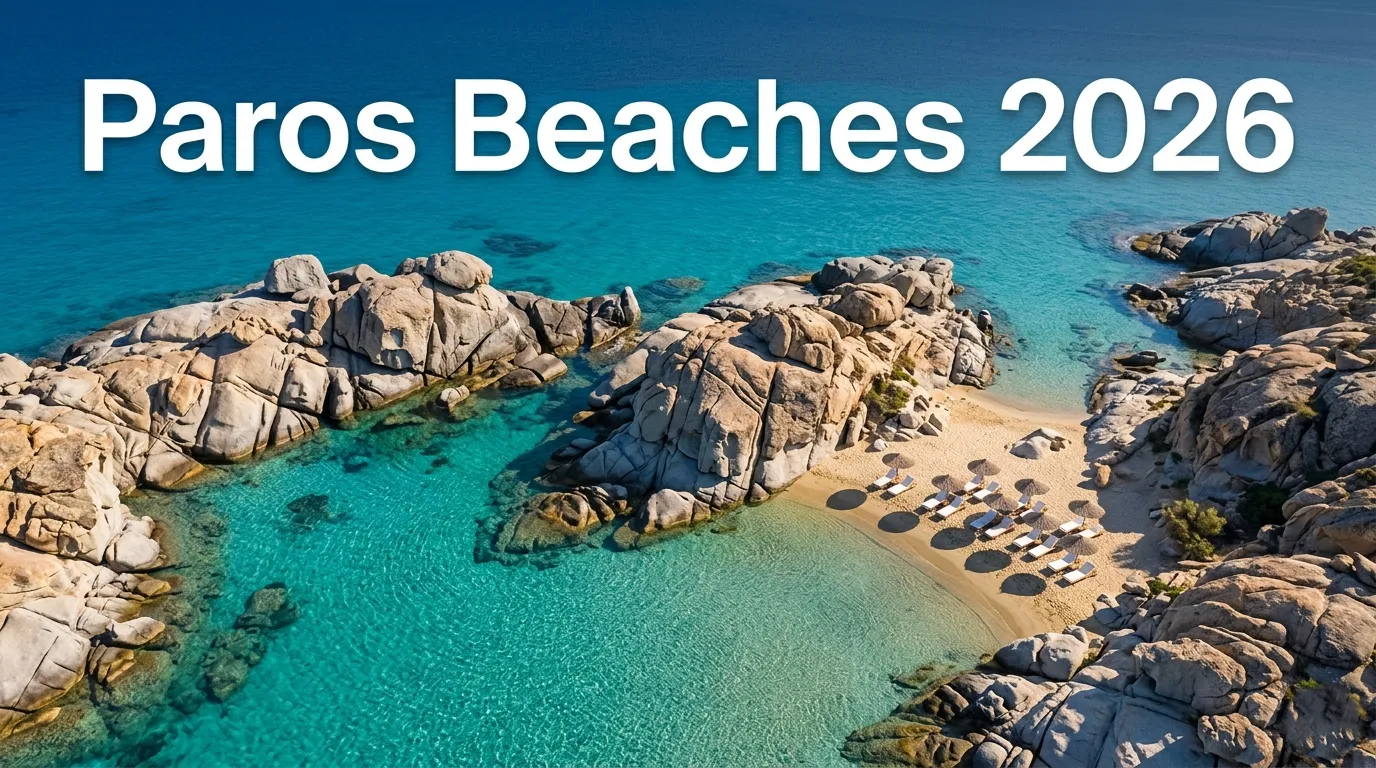
Paros Beaches 2026: Coast Guide to Best Sand and Swimming
Paros beaches are some of the finest in the Cyclades with golden sand and clear Aegean water. The Meltemi wind changes everything about which beach you should choose.
The north and east coasts catch the full force of summer winds. The south and west coasts stay sheltered and calm on the same day.
According to the Greek National Tourism Organization, Paros holds multiple Blue Flag certified beaches with excellent water quality. The island offers more beach variety than its famous neighbors Mykonos or Santorini.
This guide teaches you the coast-by-coast strategy that locals use. You will know exactly which beach to pick based on the wind and your travel profile.
Paros Beaches
Paros beaches spread across four distinct coasts, each with different wind exposure and sand quality. The island is compact enough to reach any beach within 30 minutes by car.
The east coast offers the best golden sand beaches with calm morning swimming. Golden Beach, Piso Livadi, and Logaras anchor this stretch.
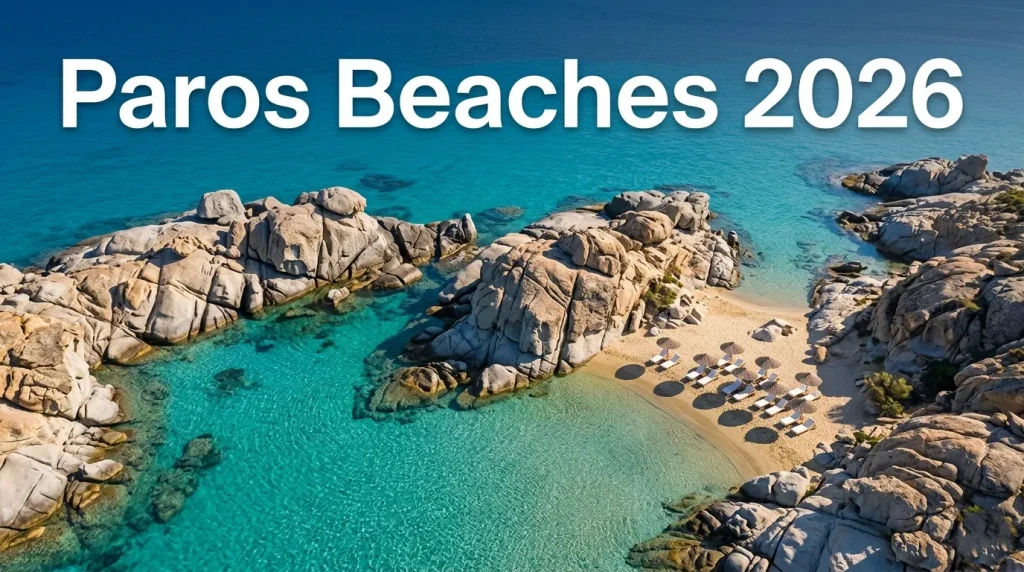
The north coast features dramatic rock formations and organized beach clubs. Kolymbithres, Santa Maria, and Monastiri are the standout beaches here.
The south coast provides the most sheltered swimming on windy days. Faragas, Aliki, and Parasporos stay calm when the north blows hard.
The west coast near Parikia offers convenient town-adjacent beaches. Marcello and Krios provide quick beach access from the capital.
Car or ATV rental is essential for beach exploration. The KTEL Paros bus connects major beaches from Parikia and Naoussa on a reduced schedule.
Key Takeaway: Paros has four distinct coasts. East for golden sand, north for scenery and clubs, south for wind shelter, west for convenience.
Which Side of Paros Has the Best Beaches
The east coast of Paros has the best beaches for swimming and golden sand. The south coast offers the best sheltered swimming on windy days.
The east coast from Golden Beach to Piso Livadi delivers fine golden sand with shallow clear water. These beaches are excellent for families and casual swimmers.
The north coast around Kolymbithres and Naoussa has the most dramatic scenery. Granite rock formations and clear coves create the island’s most photographed beaches.
The south coast at Faragas and Aliki provides reliable calm conditions. When the Meltemi howls across the north shore, these beaches remain peaceful.
The west coast near Parikia is the most convenient for ferry arrivals. The beaches are functional and pleasant but less scenic than the east and north coasts.
Couples and scenery-seekers should prioritize the north coast. Families and swimmers should prioritize the east and south coasts.
Key Takeaway: East coast for best swimming sand, south coast for wind shelter, north coast for dramatic scenery.
Are Paros Beaches Sandy
Paros beaches are predominantly sandy with golden medium-grain sand, unlike the pebble beaches common on many Greek islands. This is one of Paros’s primary advantages over neighbors.
Golden Beach (Chrysi Akti) has the finest sand on the island. The long wide stretch of golden sand rivals any beach in Greece for quality and consistency.
Kolymbithres has unique granite sand mixed with smooth rock formations. The sand sections between the rocks are soft and golden.
Santa Maria and Pounda Beach offer good sand quality with organized facilities. These beaches are sand with minimal pebble sections.
Molos Beach on the east coast has excellent fine sand with very shallow water. The beach is long and wide with a natural gentle slope.
Some north coast coves and Paros Park beaches like Monastiri have pebble sections at the waterline. Water shoes are useful at rocky entry points.
Faragas and Parasporos on the south coast are sandy with some rocky sections. The sand quality is good but not as fine as the east coast.
Key Takeaway: Paros has predominantly golden sand beaches, especially on the east coast. Golden Beach has the finest sand on the island.
Best Beaches in Paros
Kolymbithres Beach in the Bay of Naoussa is the most unique beach in Paros. Smooth granite rock formations create natural coves and sunbathing platforms.
The water between the rocks is clear and calm in the morning. The scenery here is unlike any other Cycladic beach.
Golden Beach (Chrysi Akti) on the southeast coast is the best swimming beach on Paros. The long stretch of fine golden sand offers excellent swimming and water sports.
The beach hosts international windsurfing competitions. Afternoon winds make it a water sports hub, mornings are calm for swimming.
Santa Maria Beach on the northeast coast offers the best organized beach club experience. Sun loungers, umbrellas, beach bars, and water sports create a full-service beach day.
The beach is long with several sections offering different atmospheres. The north end is quieter, the south end has the beach clubs.
Faragas Beach on the south coast is the best sheltered beach on windy days. The sandy cove stays calm when the Meltemi blasts the north shore.
A beach bar and taverna operate during summer. The atmosphere is relaxed and less crowded than north coast beaches.
Key Takeaway: Kolymbithres for unique scenery, Golden Beach for swimming and water sports, Santa Maria for beach clubs, Faragas for wind shelter.
Paros Beaches Wind
The Meltemi wind blows from the north and northeast across Paros from June through September. It is strongest from mid-July through August at 15 to 30 knots.
North coast beaches like Santa Maria and Monastiri face the full force of the Meltemi. These beaches are excellent for windsurfing but challenging for sunbathing on windy days.
East coast beaches like Golden Beach and Pounda receive side-on wind. This creates world-class windsurfing and kitesurfing conditions in the afternoon.
South coast beaches like Faragas and Aliki are the most sheltered from Meltemi. These beaches stay calm with gentle water even when the north howls.
The west coast near Parikia is partially sheltered by the island. Afternoon winds are lighter here than on the north and east coasts.
Mornings are consistently calmer across all Paros beaches. The Meltemi typically builds from late morning and peaks in the afternoon.
To choose the right beach on a windy day:
- Check the wind forecast for the day before heading out
- If north wind is blowing, choose south coast beaches (Faragas, Aliki, Parasporos)
- If calm conditions, north and east coast beaches offer the best sand and scenery
- Water sports enthusiasts should head to Golden Beach or Pounda on windy afternoons
- Morning swimming works well at any beach regardless of afternoon wind forecast
Key Takeaway: South coast beaches stay calm when Meltemi blows. North and east coasts are windier. Check wind forecast before choosing.
Kolymbithres Beach Paros
Kolymbithres Beach in the Bay of Naoussa is Paros’s most famous and photogenic beach. Smooth granite boulders worn by the sea create natural cove formations unique in the Cyclades.
The beach is actually a series of small sandy coves between the rock formations. Each cove creates a semi-private beach area with a different character.
The water between the rocks is clear and calm in the morning. Afternoon sun illuminates the granite in warm golden tones.
Access requires a drive from Naoussa or a water taxi from Naoussa port. The road is paved with parking above the beach.
Sun loungers rent for EUR 15 to EUR 20 per set in peak season. Arrive before 10 AM to secure a lounger in your preferred cove.
Kolymbithres faces north and can be windy in summer afternoons. The rocks provide some wind shelter, but sand can blow on strong Meltemi days.
The beach gets extremely crowded in July and August. Shoulder season visits in June and September offer a dramatically better experience.
Key Takeaway: Kolymbithres is Paros’s most unique beach with granite coves. Arrive early, expect crowds in peak season, morning is calmest.
Golden Beach Paros
Golden Beach (Chrysi Akti) on Paros’s southeast coast is the island’s premier swimming and water sports beach. The long wide stretch of fine golden sand is the best on Paros.
The beach hosts the Professional Windsurfing Association World Cup. Consistent afternoon winds create ideal conditions for windsurfing and kitesurfing.
Morning hours offer calm water perfect for swimming. The sand quality and gentle depth entry make this the best swimming beach on the island.
Water sports schools at Golden Beach offer rentals and lessons for all levels. Windsurfing lessons start around EUR 50 to EUR 80 per session.
Sun loungers and umbrellas rent for EUR 10 to EUR 15 per set. Several tavernas and beach bars operate along the beach during summer.
The beach is long enough to find space even in peak season. The southern end tends to be quieter with fewer water sports operations.
Golden Beach is approximately 20 minutes by car from both Naoussa and Parikia. The KTEL bus runs regular summer service to the beach.
Key Takeaway: Golden Beach is Paros’s best sand and swimming beach. Mornings for calm water, afternoons for world-class windsurfing.
Santa Maria Beach Paros
Santa Maria Beach on Paros’s northeast coast offers the island’s most developed beach club scene. The long sandy beach is divided into distinct sections with different atmospheres.
The southern section near Santa Maria Beach Bar is the most social with loud music, cocktail service, and a younger crowd. The beach club vibe dominates here.
The middle section offers organized sun loungers with a more relaxed atmosphere. Families and couples tend to gravitate toward this area.
The northern section is quieter with more space and fewer facilities. This section attracts those seeking a less club-oriented beach experience.
Sun loungers at the beach clubs are often free with a minimum consumption spend. Expect to spend EUR 20 to EUR 30 per person on drinks and food to secure loungers.
Water sports including paddleboarding and jet skiing operate from Santa Maria. The beach faces northeast and catches the Meltemi wind.
Santa Maria is approximately 10 minutes from Naoussa by car. Parking is available above the beach, filling by late morning in peak season.
Key Takeaway: Santa Maria offers Paros’s best beach club experience. Choose your section based on desired atmosphere, from party to peaceful.
Kolymbithres vs Santa Maria
Kolymbithres wins for unique scenery and intimate cove atmosphere. Santa Maria wins for sand quality, space, and beach club amenities.
Kolymbithres offers a one-of-a-kind geological experience with granite rock formations. The small coves create semi-private beach areas that feel more intimate.
Santa Maria offers a long wide sandy beach with distinct sections. The beach is better for swimming, walking, and spreading out with space.
Kolymbithres is more crowded per square foot due to the small cove sizes. Santa Maria is larger and absorbs crowds better in peak season.
Santa Maria has better beach club facilities with organized sun lounger service. Kolymbithres has loungers but less developed beach bar infrastructure.
Kolymbithres is better for couples seeking romantic scenery and photos. Santa Maria is better for groups, social travelers, and those wanting beach club atmosphere.
Both beaches face north and can be windy in summer afternoons. Neither is the best choice on strong Meltemi days.
Key Takeaway: Kolymbithres for unique scenery and romance. Santa Maria for space, beach clubs, and social atmosphere.
Golden Beach vs Pounda Beach
Golden Beach wins for sand quality, swimming, and natural beauty. Pounda Beach wins for beach club atmosphere and social scene.
Golden Beach offers a longer wider stretch of finer golden sand. The swimming conditions are excellent with gentle depth entry and clear water.
Pounda Beach is narrower with coarser sand but excellent beach club facilities. The Pounda Beach Club creates a party atmosphere with DJ sets and cocktail service.
Golden Beach is the water sports capital with world-class windsurfing. Pounda also offers water sports but is better known for the beach club scene.
Pounda Beach attracts a younger party-oriented crowd in peak season. Golden Beach attracts a wider demographic including families and water sports enthusiasts.
Both beaches face east and catch the Meltemi wind in the afternoon. Both offer excellent morning swimming before the wind builds.
Golden Beach is better for families and serious swimmers. Pounda is better for young travelers and those wanting a beach party atmosphere.
Key Takeaway: Golden Beach for swimming, water sports, and families. Pounda for beach club party atmosphere and social scene.
Naoussa Paros Beaches
Naoussa itself has a small town beach near the port, but the best beaches are a short drive or water taxi away. The town serves as the base for exploring north coast beaches.
Piperi Beach is a small pebbly cove within walking distance of Naoussa town. The beach is convenient but not a destination beach compared to others on the island.
Kolymbithres Beach is the crown jewel of the Naoussa area, reached by a 10-minute drive or water taxi. The granite rock coves are Paros’s most photographed beach setting.
Monastiri Beach in Paros Park is a 10-minute drive from Naoussa. The organized beach sits below a white monastery with clear water and a beach bar.
Santa Maria Beach is a 10-minute drive from Naoussa with the island’s best beach clubs. The long sandy beach offers multiple atmosphere options.
Laggeri Beach in Paros Park offers a wild alternative reachable by a short hike. The sandy cove has no facilities but provides solitude away from organized beaches.
Ambelas Beach is a quiet family-friendly beach a short drive south of Naoussa. The small sandy cove has a traditional taverna and calm water.
Key Takeaway: Naoussa is the ideal base for north coast beaches. Kolymbithres, Monastiri, and Santa Maria are all within 10 minutes.
Parikia Paros Beaches
Parikia beaches are convenient but not the island’s best. The capital’s beaches serve ferry arrivals and those wanting walkable beach access.
Marcello Beach is the best beach near Parikia, about a 5-minute drive or 20-minute walk from town. The sandy organized beach offers sun loungers and a beach bar.
Krios Beach is adjacent to Marcello with similar sand quality and facilities. The beach is slightly quieter than Marcello.
Livadia Beach is the closest beach to Parikia town center, a 10-minute walk from the port. The narrow sandy beach is functional but unremarkable compared to the rest of Paros.
Parasporos Beach south of Parikia is a better option a 10-minute drive from town. The sandy beach has a popular beach bar and a more relaxed atmosphere.
Parikia beaches serve as a convenient first or last beach day when arriving or departing by ferry. For dedicated beach days, the east and north coast beaches are worth the drive.
Budget travelers and those without vehicles can access Marcello and Krios by local bus or walking path. These beaches are the most accessible without a rental vehicle.
Key Takeaway: Parikia beaches are convenient but unexceptional. Marcello is the best town-adjacent option. Drive elsewhere for dedicated beach days.
Best Beaches in Paros for Families
Molos Beach on the east coast is the best family beach in Paros. The long sandy beach has extremely shallow water that stays knee-deep for a long distance.
The shallow water warms quickly and allows children to wade safely. The beach is long and wide with space for play.
Logaras Beach near Piso Livadi offers excellent family facilities with a sandy beach and calm water. The beachfront tavernas provide food and shade steps from the sand.
Golden Beach offers the best sand quality with gentle depth entry for children. The morning hours are calm and ideal for families before the afternoon wind builds.
Piso Livadi Beach is a small sandy harbor beach with calm water and excellent tavernas. The beach is protected from wind and suitable for young children.
Faragas Beach on the south coast offers sheltered swimming on windy days. Families with children will appreciate the calm water when Meltemi affects other coasts.
Aliki Beach on the south coast provides a family-friendly beach with shallow water and traditional tavernas. The beach is sandy with a gentle slope.
Key Takeaway: Molos Beach for the shallowest safest water. Logaras and Golden Beach for family facilities. Faragas and Aliki for wind shelter.
Quiet Beaches Paros Away from Crowds
Laggeri Beach in Paros Park offers a wild sandy cove reachable only by a 15-minute hike. The beach has no facilities but rewards effort with solitude.
Molos Beach on the east coast is long enough to find quiet space even in peak season. Walk south away from the main access point for the most secluded sections.
Aliki Beach on the south coast attracts fewer tourists and more local Greek families. The atmosphere is authentically local and less crowded than north coast beaches.
Parasporos Beach south of Parikia is quieter than the famous north coast beaches. The beach bar atmosphere is relaxed rather than party-focused.
Agia Irini Beach near Parikia is a small cove that stays quiet even in peak season. The beach is pebbly with clear water and a traditional taverna.
Faragas Beach is busier on weekends but quiet on weekdays. The south coast location filters out casual visitors who stay near Naoussa.
Avoid Kolymbithres, Santa Maria, and Golden Beach if you want quiet in peak season. These beaches are the most famous and the most crowded.
Key Takeaway: Laggeri, Molos (south end), Aliki, and Parasporos offer the quietest beach experiences away from peak crowds.
Paros Beach Bars Worth It
Santa Maria Beach Bar on the north coast delivers the best beach club experience on Paros. The cocktail service, music, and sun lounger setup are the island’s most polished.
Minimum consumption of EUR 20 to EUR 30 per person secures sun loungers. The atmosphere shifts from relaxed daytime to livelier afternoon DJ sets.
Pounda Beach Club on the east coast offers the most party-focused beach bar atmosphere. DJ sets, dancing, and a younger crowd define this scene.
Faragas Beach Bar on the south coast provides a more relaxed beach club experience. The sheltered cove setting and laid-back atmosphere attract couples and small groups.
Monastiri Beach Bar in Paros Park offers a unique setting below a white monastery. The atmosphere is relaxed and family-friendly with excellent sunset views.
Parasporos Beach Bar south of Parikia provides a cool relaxed scene away from the main tourist hubs. The beach bar is popular with locals and in-the-know visitors.
Beach bars on Paros typically operate from June through September. Verify 2026 opening dates with individual venues before planning.
Key Takeaway: Santa Maria for premium beach club, Pounda for party, Faragas for relaxed couples, Monastiri for sunset and families.
Best Time to Visit Paros Beaches
June and September are the best months to visit Paros beaches. Water temperatures reach 72 to 76 degrees Fahrenheit with full facilities and manageable crowds.
July and August offer the warmest water at 76 to 78°F. These months bring extreme crowds, the strongest Meltemi winds, and the highest accommodation prices.
Late May and early October provide the best value with water at 68 to 70°F. Some beach facilities may not be fully open, and the weather is less predictably sunny.
The Meltemi wind is strongest from mid-July through August. Wind-sensitive travelers should prioritize June, September, or south coast beaches during peak Meltemi.
Morning hours from 8 AM to noon offer the calmest water at all Paros beaches. The Meltemi typically builds from late morning through the afternoon.
The Municipality of Paros typically operates beach facilities and lifeguard services from June through September. Verify exact 2026 dates before travel.
Key Takeaway: June and September for best balance. Avoid July to August if you hate wind and crowds. Mornings are always calmest.
Safety and Seasonal Warnings for Paros Beaches
The Meltemi wind is the most significant beach hazard on Paros, affecting swimming safety and comfort on north and east coast beaches from June through September.
Key safety and seasonal facts every visitor should know:
- The Meltemi wind creates rough water and blowing sand on north and east coast beaches. Move to south or west coast beaches on windy days for calm safe swimming.
- Afternoon winds create dangerous conditions for paddleboards and inflatables. These can be blown rapidly offshore. Only use watercraft in calm morning conditions or at sheltered beaches.
- Sun exposure in the Cyclades is intense from June through September. Apply high-SPF sunscreen and reapply after swimming. The Aegean sun burns unprotected skin in 15 to 20 minutes.
- Water shoes are useful at Kolymbithres, Monastiri, and other rocky-entry beaches. Sea urchins exist on submerged rocks at less trafficked coves.
- Most Paros beaches do not have lifeguards. Only major organized beaches may provide lifeguard service during peak season. Swim within your ability.
- Dehydration and heat exhaustion are common in peak summer. Bring more water than you think you need and seek shade during midday hours.
- ATV and scooter accidents are common on Paros. Wear helmets, drive cautiously on unpaved beach access roads, and never drive under the influence.
- Jellyfish are rare but can appear in late summer. Check with locals or your accommodation if you see warnings posted at beaches.
For emergencies, dial 112 for general emergency services. The Paros Health Center in Parikia provides medical care. For serious emergencies, patients may be transferred to Athens by air ambulance.
Frequently Asked Questions About Paros Beaches
Which side of Paros has the best beaches?
The east coast has the best beaches in Paros for golden sand and swimming with Golden Beach, Piso Livadi, and Logaras.
The south coast offers the most sheltered beaches when the Meltemi wind is blowing.
The north coast has the most dramatic scenery with Kolymbithres and Santa Maria.
Are Paros beaches sandy?
Paros beaches are predominantly sandy with golden medium-grain sand, unlike the pebble beaches common on many Greek islands.
Golden Beach on the southeast coast has the finest sand on the island.
Some north coast coves and rocky beaches like Kolymbithres have mixed sand and pebble sections.
Which Paros beaches are best when it’s windy?
Faragas Beach on the south coast is the best sheltered beach when the Meltemi wind is blowing.
Aliki Beach and Parasporos Beach on the south coast also stay calm on windy days.
The west coast beaches near Parikia are partially sheltered and calmer than north and east beaches.
What is the best beach in Paros for families?
Molos Beach on the east coast is the best family beach with extremely shallow water and fine sand.
Logaras Beach near Piso Livadi offers excellent family facilities with calm water and beachfront tavernas.
Golden Beach has the best sand quality with gentle depth entry, ideal for families in the morning hours.
How much do sun loungers cost at Paros beaches?
Sun lounger and umbrella sets cost EUR 10 to EUR 20 per day at most organized Paros beaches.
At beach clubs like Santa Maria and Pounda, loungers are often free with minimum consumption of EUR 20 to EUR 30 per person.
Prices are highest in July and August and lower in June and September shoulder season.
When is the best time to visit Paros for a beach holiday?
June and September offer the best balance of warm water, full facilities, manageable Meltemi winds, and fewer crowds.
July and August have the warmest water but extreme crowds, strong winds, and highest prices.
Late May and early October provide the best value with slightly cooler water and fewer open facilities.
Paros delivers exceptional beach variety on a compact island with golden sand that rivals any Cycladic destination. The key to a perfect beach day is understanding the coast-by-coast wind strategy and choosing based on the Meltemi forecast.
The east coast offers the best swimming sand. The north coast delivers dramatic scenery and beach clubs. The south coast provides reliable shelter from summer winds. Each coast serves a different purpose depending on conditions.
Rent a car or ATV for maximum beach flexibility. Check the daily wind forecast before choosing your beach. Verify sun lounger pricing, beach bar opening dates, and KTEL bus schedules with the Municipality of Paros or your accommodation. Conditions and operating seasons change annually.