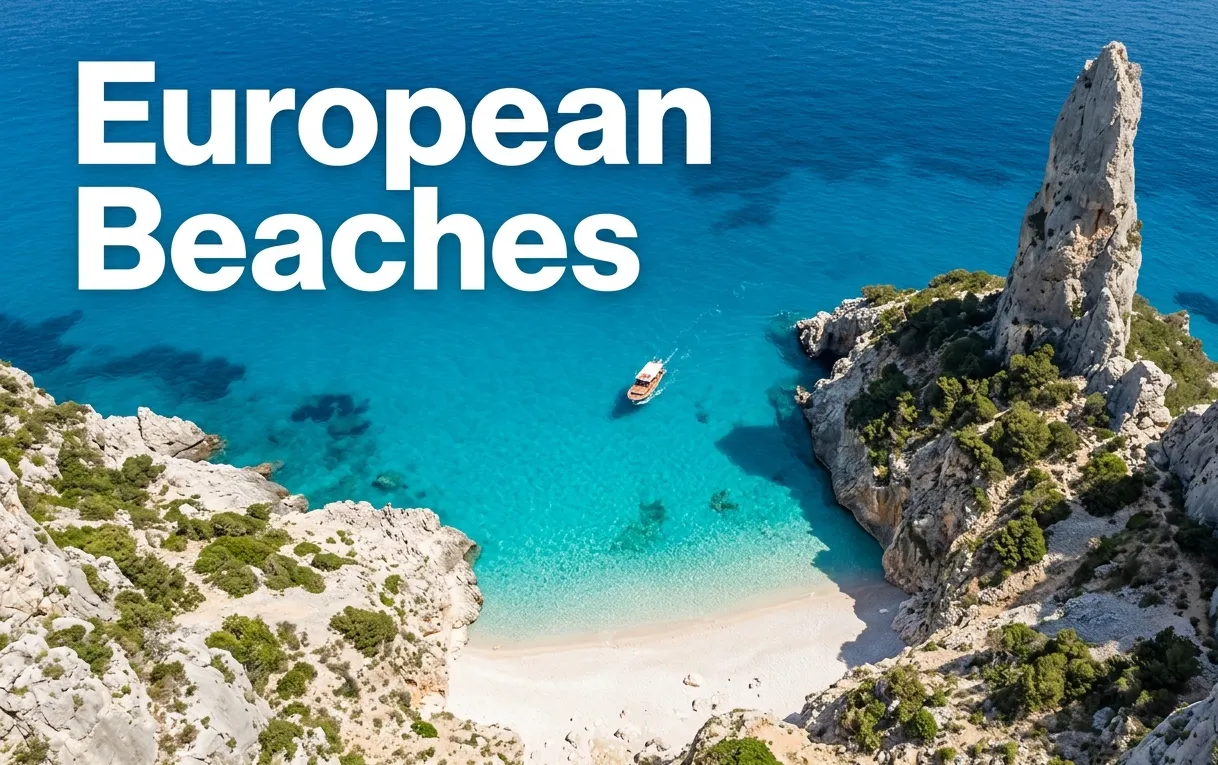
What European Beaches Are Actually Like
European beaches are wildly diverse, from volcanic black sand in Iceland to powder-fine white limestone in Greece. The water ranges from bath-warm Mediterranean turquoise to bracingly cold Baltic gray-green.
The Mediterranean dominates the classic beach dream here. Its water is salty, calm, and clear, with visibility often exceeding 50 feet on windless mornings.
Atlantic beaches in France, Portugal, and Spain deliver real surf and cooler water. The sand is often golden and wide, but the water rarely warms above 70 degrees Fahrenheit even in August.
Northern European beaches serve a different purpose entirely. Think windswept dunes, dramatic skies, and quick invigorating dips rather than all-day lounging.
Crowd behavior varies massively by region and month. An Italian beach in August is a dense mosaic of sunbeds, while that same beach in late September is nearly empty.
Budget travelers will find Greece’s public beaches and Portugal’s Algarve significantly cheaper than Italy’s private stabilimenti or France’s Côte d’Azur. The difference in sunbed cost alone can run from 5 euros to over 50 euros per day.
Couples and honeymooners should look to the Greek Islands or the quieter stretches of Sardinia. Families will find the Algarve and Spain’s Costa de la Luz more practical and affordable.
Key Takeaway: European beaches range from Arctic-cold to tropical-warm; match the coast to your swim comfort.
Navagio Beach Zakynthos Greece
Navagio Beach, also called Shipwreck Beach, is the single most photographed beach in Greece. It sits in a secluded cove on Zakynthos island’s northwest coast.
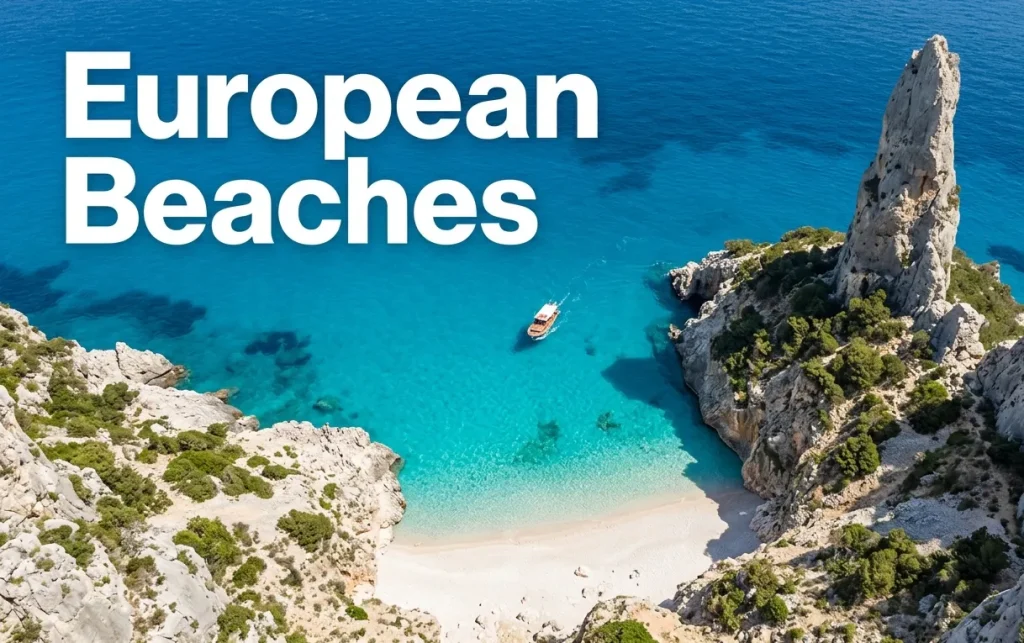
The beach is a crescent of bright white pebbles and sand surrounded by towering vertical limestone cliffs. The water is an electric, almost unreal shade of blue caused by white limestone reflecting sunlight.
You can only reach Navagio by boat from Porto Vromi or Agios Nikolaos. Most tours cost roughly 25 to 50 euros per person for a half-day trip with swim stops and viewpoint visits.
The shipwreck itself, the MV Panagiotis, rusts in the middle of the beach. Do not expect solitude here; dozens of tour boats arrive simultaneously from late morning through mid-afternoon.
Travel + Leisure notes that the beach can see over a thousand visitors per hour during peak summer midday. The magic fades fast when five boats unload at once.
Couples and photographers should book the earliest possible boat departure, ideally before 8 a.m. Families with young children will find the boat-only access and pebbly shore challenging.
The beach is occasionally closed due to landslide risk from the surrounding cliffs. Check with the Zakynthos Municipality or your tour operator for 2026 access status before booking.
The viewpoint above the beach, reached by car, delivers the iconic photograph without the boat crowd. Go for the view, take the boat once, and adjust expectations accordingly.
Key Takeaway: Navagio is visually spectacular but crowded; book the first boat of the day.
Cala Goloritzé Sardinia Italy
Cala Goloritzé on Sardinia’s Gulf of Orosei is the Mediterranean’s most perfect cove. It sits at the base of a deep limestone gorge, reachable only by a one-hour hike or by boat from Cala Gonone.
The beach is a small fan of fine white pebbles and sand. The water is a translucent turquoise that fades into deep sapphire, with visibility often approaching 100 feet.
The iconic 143-meter limestone pinnacle, Monte Caroddi, towers over the cove’s right side. It creates a visual frame that no resort could ever manufacture.
Boat access from Cala Gonone or Santa Maria Navarrese costs roughly 30 to 50 euros round trip. The hike descends from the Golgo plateau and takes about an hour each way on a rocky but well-marked trail.
UNESCO recognizes the Gulf of Orosei as a World Heritage site. The natural arch at the cove’s left side adds a surreal, cathedral-like quality to the swimming experience.
Couples and active honeymooners will find this the most romantic beach in Europe. Anyone with mobility limitations or young children should choose the boat over the hike, no question.
Arrive by 10 a.m. in peak season or the small beach fills completely. The hike limits the crowd to a manageable, respectful number, unlike the boat-only coves.
There are no services, no sunbed rentals, and no food vendors. Pack water, food, and an umbrella, and carry every scrap of trash back out with you.
Key Takeaway: Cala Goloritzé is Europe’s most beautiful cove; earn it by hike or boat.
Praia da Marinha Algarve Portugal
Praia da Marinha is the Algarve’s signature beach and a frequent contender for the most beautiful beach in Europe. It sits on Portugal’s southern coast near the town of Lagoa.
The beach is a sheltered cove of soft golden sand framed by dramatic limestone sea stacks and arches. The water is clean Atlantic blue-green, refreshingly cool even in August.
The iconic double sea arch at the right side of the cove is the Algarve’s most photographed natural feature. Swimming through the arches at low tide is the essential experience here.
Access requires descending stairs from the clifftop parking lot. Parking is free but limited, so arrive before 9:30 a.m. in summer or expect to circle for 30 minutes or more.
Blue Flag certification confirms the beach’s water quality and environmental management. A small seasonal restaurant sits above the cove, but there are no facilities on the sand itself.
Families will find the calm, clear water and manageable stairs practical. The arches and caves give children a sense of adventure without real danger.
Couples seeking solitude should walk west toward Praia de Benagil at low tide. The stretch between the two beaches has smaller coves that are only accessible by foot or kayak.
Book a kayak tour from Benagil to see the famous sea cave without the motorboat crowds. The cave interior with its collapsed ceiling and tiny beach is a genuine, if busy, natural wonder.
Key Takeaway: Praia da Marinha is the Algarve’s best beach; arrive early or kayak in.
Playa de las Catedrales Galicia Spain
Playa de las Catedrales, or As Catedrais Beach, is the most dramatic Atlantic beach in Spain. It sits on Galicia’s northern coast near the town of Ribadeo.
The beach is named for its towering rock arches and buttresses carved by the Cantabrian Sea. These formations look like a flooded Gothic cathedral nave at low tide.
You can only walk among the arches during a narrow low-tide window. Check the tide charts and the Galician regional government website before you go, as access requires a free reservation in peak season 2026.
The sand is fine and golden, but the water is cold, rarely exceeding 65 degrees Fahrenheit even in August. This is a beach for walking, photographing, and marveling, not for extended swimming.
The arches are lit from behind at sunrise, creating a spectacular golden glow through the rock windows. Photographers should plan for the first low tide of the morning.
Couples and solo travelers seeking a dramatic, non-tropical beach experience will love it. Families with young children need to watch the tide closely, as the beach disappears quickly.
The free reservation system limits the number of visitors per day during summer months. Book your slot at least a week ahead on the official Xunta de Galicia website.
Galicia’s coast is cool, green, and wild, entirely unlike the Mediterranean postcard. Embrace the bracingly fresh air and the excellent seafood in Ribadeo afterward.
Key Takeaway: Playa de las Catedrales is a low-tide cathedral of rock; book your access online.
Reynisfjara Black Sand Beach Iceland
Reynisfjara is Iceland’s most famous black sand beach and one of the most otherworldly shorelines on Earth. It sits on the south coast near the village of Vík í Mýrdal.
The sand is jet-black volcanic basalt, and the water is a cold, steely Atlantic gray. The basalt column cliffs at the eastern end form a natural geometric wall called Reynisdrangar.
Basalt sea stacks, Reynisdrangar pillars, rise from the ocean just offshore. Icelandic legend holds they are trolls turned to stone by the sunrise.
Never turn your back on the sea at Reynisfjara. The “sneaker waves” are notorious and deadly, surging far up the beach without warning and with enough force to sweep an adult out to sea.
The Icelandic Met Office and local authorities issue regular warnings about wave conditions. Obey all posted signs and stay well clear of the waterline, especially during stormy weather.
Couples and photographers will find the stark, moody beauty unparalleled. Families must keep children physically close and well back from the water at all times.
The beach appears in film and television frequently, including Game of Thrones. The reality is even more dramatic, with the North Atlantic roaring against black sand in a way no camera fully captures.
Access is free and the parking lot is a short walk from the sand. Visit in late spring or early fall for fewer crowds and the best chance of moody, dramatic skies.
Key Takeaway: Reynisfjara is visually spectacular and genuinely dangerous; never turn your back on the waves.
| Beach | Country | Sand/Water | Best For | Critical Warning |
|---|---|---|---|---|
| Navagio | Greece | White pebble, electric blue | Photos, couples | Boat crowds, landslide risk |
| Cala Goloritzé | Italy | White pebble, turquoise | Couples, hikers | No services, hike or boat only |
| Praia da Marinha | Portugal | Golden sand, Atlantic blue | Families, swimmers | Parking fills by 9:30 a.m. |
| Catedrales | Spain | Golden sand, cool gray | Photographers, walkers | Low tide only, free permit required |
| Reynisfjara | Iceland | Black sand, steely gray | Photographers, adventure | Deadly sneaker waves |
Cala Macarella and Cala Macarelleta Menorca Spain
Cala Macarella and its smaller sister Cala Macarelleta are the two most celebrated coves on Menorca, the quietest of Spain’s Balearic Islands. They sit on the island’s south coast, a 30-minute drive from Ciutadella.
Cala Macarella is a deep, protected cove of fine white sand and intensely turquoise water. The pine forest grows right to the sand’s edge, providing natural shade.
Cala Macarelleta is a ten-minute walk over the headland and is smaller, shallower, and even more photogenic. The water here is so clear you can see the sandy bottom at 30 feet.
Parking is restricted and expensive in peak season. From June through September, you must park in a designated lot and either walk 20 minutes or take the shuttle bus.
The Consell Insular de Menorca enforces strict access limits during summer months. Arrive by 9 a.m. or late afternoon to avoid the midday crush and parking chaos.
Couples and honeymooners will find the twin-cove setup perfectly romantic. Families will appreciate the calm, shallow water and the pine shade at Macarella.
The water is noticeably warmer here than on Menorca’s north coast. The south coast coves are sheltered from the prevailing wind, creating a true Mediterranean bath.
Bring snorkeling gear for Macarelleta, where the rocky edges teem with small fish. The small sandy island in the center of the cove is a perfect swimming target.
Key Takeaway: Cala Macarella and Macarelleta deliver twin-cove perfection with a parking challenge.
Zlatni Rat Golden Horn Brač Croatia
Zlatni Rat, the Golden Horn, is Croatia’s most distinctive beach. It juts out like a white pebble tongue into the Adriatic Sea from the island of Brač near the town of Bol.
The beach is a shifting spit of fine white pebbles that changes shape with the wind and currents. The tip swings left or right depending on the season and weather.
The water is clear, deep Adriatic blue, and the beach is backed by a pine grove. One side of the horn faces calm water, while the other catches the prevailing wind for windsurfing.
Windsurfing here is among the best in the Adriatic, with reliable afternoon thermals. Rentals and lessons are available steps from the beach.
The pebbles are small and smooth but still pebbles, so water shoes improve the experience. The beach gets extremely crowded from mid-morning through late afternoon in July and August.
Couples and active travelers will love Bol and Zlatni Rat. Families should stake out a spot on the calmer, western side of the horn.
Parking is limited in Bol, and the beach is a pleasant 20-minute waterfront walk from town. Many visitors arrive by catamaran from Split on a day trip.
Blue Flag certification confirms the beach’s environmental management. The Adriatic is generally clean and swimmable from June through early October.
Key Takeaway: Zlatni Rat is Croatia’s shape-shifting icon; come for the view and the windsurfing.
Dune du Pilat Atlantic Coast France
Dune du Pilat is not a beach in the traditional sense, but Europe’s tallest sand dune towering over a wild Atlantic shoreline. It sits on France’s southwest coast near Arcachon, an hour from Bordeaux.
The dune is 110 meters high, nearly three kilometers long, and 500 meters wide. Climbing it feels like scaling a mountain made of fine golden sand.
The beach below stretches for miles along the wild Atlantic coast. The water is clean but rough, with strong surf and cold temperatures even in August.
The view from the dune’s summit is one of Europe’s great panoramas. The Atlantic on one side, the pine forests and Banc d’Arguin nature reserve on the other.
Access costs a few euros for parking, and the dune is free to climb. The stairs installed in summer 2025 and expected to remain for 2026 make the ascent easier, but it is still a workout.
Couples and adventure-seeking families will find the dune-beach combo unforgettable. Budget travelers can enjoy a world-class natural spectacle for the cost of parking.
The beach here is not a lounging destination; it is a wild surf beach. Swim near the supervised areas and respect the powerful Atlantic currents.
The nearby town of Arcachon offers excellent oysters and a quieter alternative to Bordeaux. Visit in June or September for warm weather without the French holiday crowds of August.
Key Takeaway: Dune du Pilat is Europe’s biggest sand dune with a wild beach; climb it once.
Rabbit Beach Lampedusa Sicily Italy
Rabbit Beach, or Spiaggia dei Conigli, sits on the remote Italian island of Lampedusa, closer to Tunisia than to mainland Italy. It is consistently ranked among the world’s best beaches by TripAdvisor users.
The beach is a protected bay of fine white sand and impossibly clear, shallow turquoise water. Loggerhead sea turtles nest here, and the entire area is a protected nature reserve.
Access is free but restricted to protect the nesting turtles. You must hike down a trail from the parking area, and the number of daily visitors is capped in summer.
The water is among the warmest in Europe, typically hitting 80 degrees Fahrenheit by August. Snorkeling in the calm, shallow bay reveals a surprising variety of marine life.
Couples and luxury seekers willing to travel the extra distance will find a genuinely remote paradise. Families should note the limited facilities and the summer access restrictions.
The Riserva Naturale Isola di Lampedusa manages the beach and enforces its protections. Check their official channels for the 2026 access policies, as they can change seasonally.
Lampedusa is reached by a flight from Palermo or a ferry from Sicily. The journey is longer and more expensive than a typical Mediterranean beach trip, but the payoff is unique.
This is not a day trip from anywhere. Commit to a multi-day stay to justify the travel effort and to experience the island’s other wild coves.
Key Takeaway: Rabbit Beach is Europe’s remote, turtle-nesting, Caribbean-caliber cove.
Balos Lagoon Crete Greece
Balos Lagoon on the northwestern tip of Crete is a shallow, warm, impossibly turquoise lagoon between a rocky peninsula and the uninhabited island of Gramvousa. The water looks like it has been digitally altered.
The sand is a mix of white and pink crushed shells, warm and soft underfoot. The lagoon is so shallow you can wade for hundreds of feet without the water reaching your waist.
Access is either by a rough unpaved road and a hike down a steep trail, or by ferry from Kissamos port. The ferry costs roughly 25 to 30 euros round trip and includes a stop at Gramvousa Island.
The road is notoriously rough, and rental car insurance often excludes it. The hike back up from the lagoon is a hot, steep, 20-minute climb with zero shade.
The Municipality of Kissamos limits the number of daily visitors during peak summer. Book your ferry ticket online in advance, or arrive at the parking lot before 9 a.m. if driving.
Families will find the shallow, warm water perfect for young children. The ferry is the smarter family option; skip the stressful drive and hot hike.
Couples and honeymooners should aim for June or September to avoid the peak crowds. In July and August, the lagoon can feel more like a water park than a remote paradise.
Pack all food, water, and sun protection. There are limited snack bars and no natural shade on the lagoon itself.
Key Takeaway: Balos Lagoon is Crete’s wading paradise; take the ferry, not the car.
Best White Sand Beaches in the World from a European Perspective
Europe cannot compete with the Maldives or Turks and Caicos for soft, powder-white coral sand. But several European beaches deliver genuinely world-class white sand experiences.
Spiaggia dei Conigli on Lampedusa delivers the closest thing to Caribbean-grade white sand in the Mediterranean. The fine, pale sand and clear shallow water look transplanted from the tropics.
Navagio Beach in Greece has brilliant white pebble and sand that glows against the electric blue water. It is pebble, not powder, but the visual effect is stunning.
Cala Goloritzé and Cala Luna in Sardinia have fine white pebbles that mimic the look of white sand from a distance. The turquoise water does most of the aesthetic work.
Elafonissi Beach in Crete features pink-tinged white sand made from crushed shells. The shallow lagoon and Caribbean-colored water make it Greece’s top white sand contender.
Praia da Falésia in Portugal’s Algarve stretches for miles with golden-white sand backed by rust-red cliffs. It is consistently ranked among the world’s best by TripAdvisor and European Best Destinations.
Boulders Beach in South Africa and Grace Bay in Turks and Caicos remain the global white sand champions. Europe’s best white sand beaches trade pure softness for dramatic scenery and cultural context.
The honest truth is that European white sand is often coarser and darker than tropical white sand. The tradeoff is a clifftop taverna, a carafe of local wine, and two thousand years of civilization behind you.
Budget travelers will find Europe’s white sand beaches far more expensive to access than comparable beaches in Thailand or Mexico. The sunbed, parking, and dining costs add up fast.
Key Takeaway: Europe’s white sand beaches trade tropical powder for dramatic cliffs and cultural richness.
Honest Crowd and Seasonal Guide for European Beaches
Europe’s beaches operate on a completely different seasonal rhythm than the Caribbean. The season is short, intense, and compressed into roughly 12 to 16 weeks.
July and August are the absolute peak across the Mediterranean. Beaches like Navagio, Zlatni Rat, and Balos transform from postcard-worthy coves into dense mosaics of humanity.
August is specifically brutal because most of Europe takes holiday simultaneously. The Italian Ferragosto week around August 15 is the single busiest beach period on the continent.
June and September are the gold-standard months for Mediterranean beaches. The water is warm, the sun is strong, and the crowds are manageable outside of the most famous spots.
May and October offer mild to cool swimming with very thin crowds. Water temperatures range from 65 to 70 degrees Fahrenheit, which is swimmable but brisk.
Northern European beaches from France’s Brittany to Denmark’s coast have a shorter, cooler window. July and August are the only reliably warm months, and warm is a relative term.
Book beachfront accommodations 6 to 12 months in advance for any popular Mediterranean destination in July or August. Last-minute bookings during peak season get you the worst rooms at the highest prices.
Budget travelers should target the shoulder months of late May through mid-June and September through early October. You will pay 30 to 50 percent less for flights and rooms while enjoying comfortable swimming.
Key Takeaway: June and September are the only sensible Mediterranean beach months for the crowd-averse.
Safety and Seasonal Warnings for European Beaches
European beaches present specific safety risks that vary dramatically by region and season. Ignoring them can ruin a trip or, in rare cases, be deadly.
Key safety and seasonal facts every visitor should know:
- Jellyfish blooms in the Mediterranean peak in late summer when water is warmest. The mauve stinger and fried egg jellyfish are common. Vinegar or seawater rinses help stings; carry a small bottle in your beach bag.
- Sneaker waves on Atlantic coasts from Iceland to Portugal are deadly. Never turn your back on the water at Reynisfjara or any cliff-backed Atlantic beach.
- Rip currents are common on Portugal’s west coast and France’s Atlantic beaches. Swim at lifeguard-patrolled beaches and obey flag systems.
- Extreme heat in July and August across the Mediterranean regularly exceeds 95 degrees Fahrenheit. Seek shade between 11 a.m. and 3 p.m. and hydrate aggressively.
- Theft from unattended belongings is common on crowded Mediterranean beaches. Do not leave phones, wallets, or keys on your towel when swimming; use a waterproof pouch or take turns.
- Sea urchins lurk on rocky Mediterranean shorelines. Water shoes are not optional for pebble beaches and rocky coves.
- Access restrictions at protected areas like Rabbit Beach and Playa de las Catedrales change seasonally. Verify access rules and book permits weeks in advance for 2026.
The European Environment Agency monitors bathing water quality across the continent. Most named beaches in this guide hold Blue Flag certification, confirming clean, safe water.
What Tourists Get Wrong About European Beaches
Tourists assume European beaches operate like Caribbean resorts with endless service and soft white sand. They do not.
Visitors underestimate how crowded famous European beaches become in August. That Instagram photo of an empty Navagio Beach was taken at 7 a.m. from a private boat.
Many Americans and non-Europeans are shocked by the sunbed economy. A set of two sunbeds and an umbrella at a Greek or Italian beach club can cost 20 to 80 euros per day.
Northern European beach water is cold. The Baltic and North Sea rarely exceed 65 to 68 degrees Fahrenheit, which is a bracing shock compared to the bathtub-warm Mediterranean.
People assume the Algarve or Costa del Sol are year-round beach destinations. Winter on Europe’s southern coast is cool, rainy, and completely shut down for beach tourism.
Access to the most beautiful coves often requires effort. Cala Goloritzé requires a hike, Navagio requires a boat, and Dune du Pilat requires a climb.
Public transport to remote beaches is often poor or nonexistent. Renting a car or scooter is essential for reaching the best coves outside major towns.
The best European beach experience rewards planning, early arrivals, and a willingness to earn the most beautiful spots with effort. The payoff is a beach day framed by a thousand years of culture, a seaside taverna, and scenery no tropical island can replicate.
Key Takeaway: European beaches reward effort and timing; August crowds and sunbed costs shock first-timers.
Frequently Asked Questions About European Beaches
What is the most beautiful beach in Europe?
Cala Goloritzé in Sardinia is widely considered the most beautiful beach in Europe.
Its turquoise water, limestone pinnacle, and secluded cove setting create a genuinely perfect Mediterranean scene.
Navagio Beach in Greece and Praia da Marinha in Portugal are equally famous contenders.
Which European country has the best beaches?
Greece has the best overall diversity of beaches, from white sand to volcanic black pebbles.
Italy offers the most dramatic and scenic coves, particularly in Sardinia and Sicily.
Portugal’s Algarve has the best combination of accessibility, water quality, and golden sand.
Are European beaches warm enough to swim?
Mediterranean beaches are warm enough to swim comfortably from June through October.
Water temperatures peak near 80 degrees Fahrenheit in August across Greece, Italy, and southern Spain.
Atlantic and northern European beaches are cooler, rarely exceeding 70 degrees Fahrenheit.
What is the best white sand beach in Europe?
Rabbit Beach on Lampedusa, Italy, has the finest white sand in Europe.
Elafonissi Beach in Crete features unique pink-tinged white sand made from crushed shells.
Cala Macarelleta in Menorca delivers soft white sand in a stunning turquoise cove.
Are European beaches free to access?
Most European beaches are free to access, but sunbed and umbrella rentals are not.
Some protected beaches like Playa de las Catedrales require a free reservation in advance.
Beach club sunbeds in Italy and Greece can cost 20 to 80 euros per set in peak season.
When is the best time to visit European beaches?
June and September are the best months for warm water and manageable crowds.
July and August offer the warmest water but extreme crowds and peak pricing.
May and October offer thinner crowds but cooler water temperatures around 65 to 70 degrees.
European beaches deliver a depth of culture, scenery, and variety no single tropical island can match. Pick your coast and your month carefully. Book your sunbeds, your permits, and your ferries before you arrive. Verify the specific access rules for protected coves like Rabbit Beach and Playa de las Catedrales directly with the managing authorities before you lock in your 2026 plans.