Washington State Beaches Overview
Washington state beaches are wild, dramatic, and entirely unlike a typical coastal vacation. You come here for raw nature, not for swimming or sunbathing.
The coastline is split into three distinct regions. The Pacific Coast, the Strait of Juan de Fuca, and Puget Sound each offer completely different experiences.
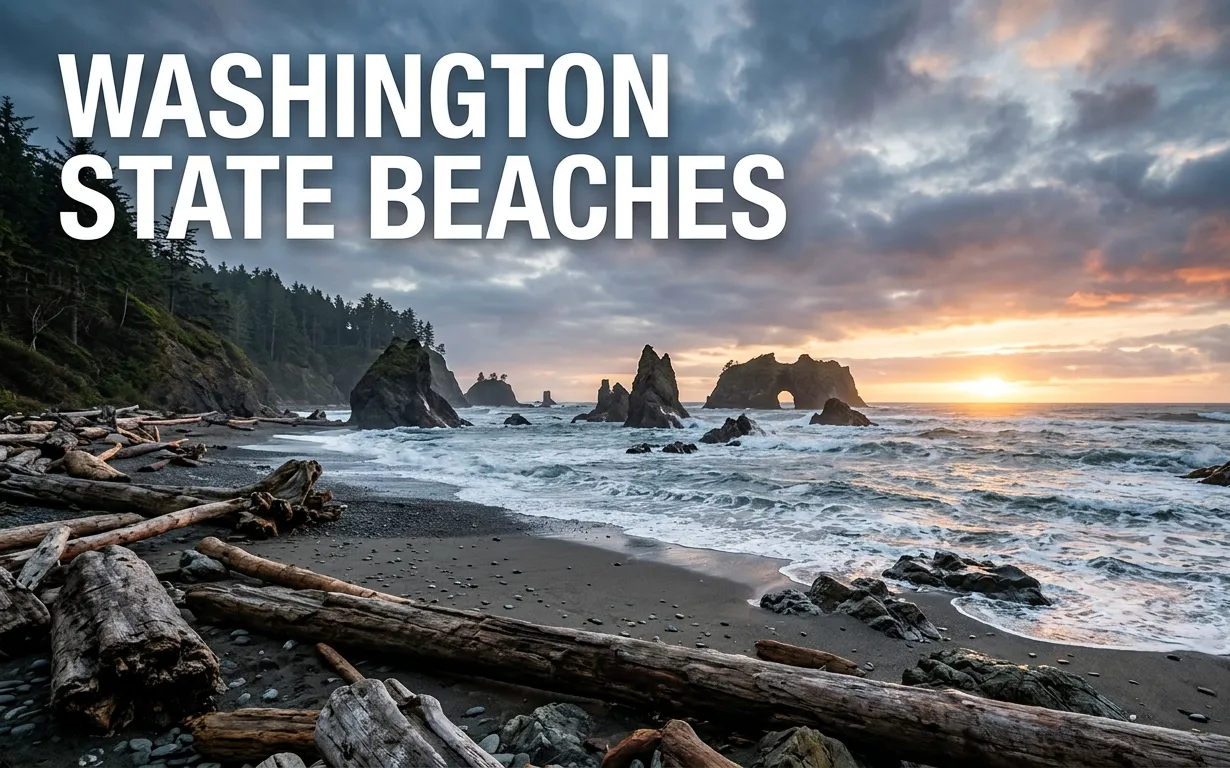
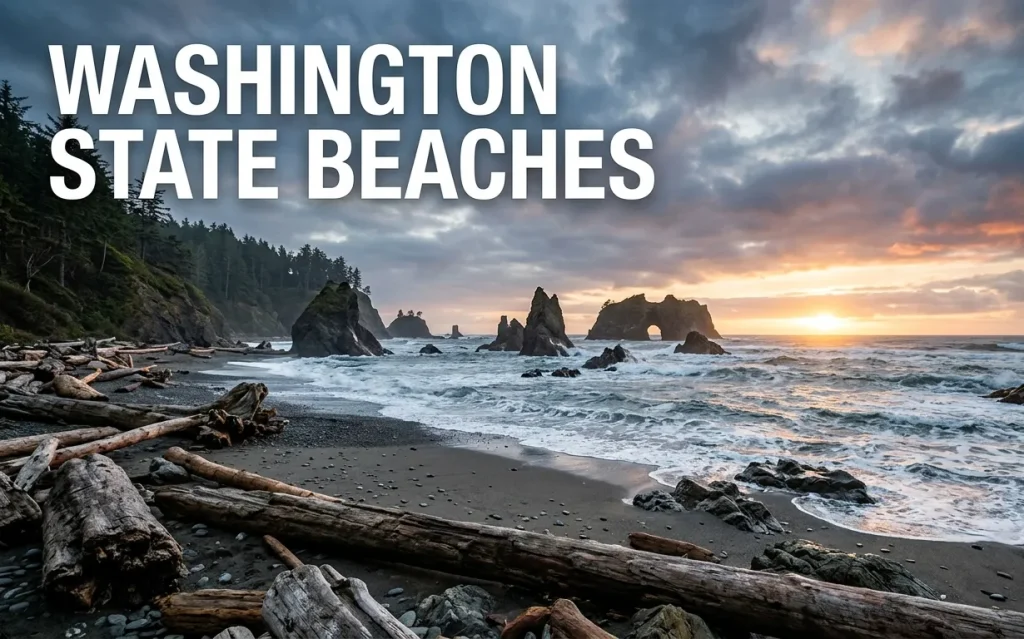
The Pacific Coast, protected largely by Olympic National Park, features towering sea stacks, old-growth driftwood, and dense coastal rainforest. Water temperatures hover near 50 degrees Fahrenheit year-round.
Puget Sound beaches are calmer, rockier, and better for gentle tide pooling. They are more accessible for families with young children and closer to Seattle.
According to the National Park Service, Olympic’s coastal strip preserves some of the last undeveloped wilderness beaches in the contiguous United States. This is not resort country.
Sand color ranges from dark gray to rich brown, mixed with polished pebbles. Driftwood the size of telephone poles litters the high-tide line.
Couples and photographers will find the scenery profoundly romantic. Budget travelers will appreciate low access costs compared to developed beach destinations.
Key Takeaway: Washington beaches are rugged wilderness destinations for exploration and hiking. They are not for casual swimming or lounging in a swimsuit.
Olympic National Park Coastal Beaches
The Olympic National Park coastline protects over 70 miles of pristine, undeveloped Pacific beach. This is the crown jewel of Washington’s coastal experience.
These beaches are accessed by short to moderate hikes through temperate rainforest. The transition from moss-draped forest to crashing ocean is genuinely cinematic.
A National Park Pass or an America the Beautiful Pass is required for entry. Day passes can be purchased at entrance stations and visitor centers.
Insider Tip: Purchase your pass online in advance during peak summer months. Park entrance lines at popular spots like the Hoh Rain Forest often back up for an hour.
The beaches here are characterized by sea stacks, arches, and caves carved from ancient seafloor basalt. Ruby Beach and Rialto Beach are the most accessible highlights.
Cell service is nonexistent once you leave Highway 101. Download tide charts and offline maps before you arrive at any trailhead.
Hikers and solo travelers will find the solitude and raw beauty unmatched. This is not a destination for travelers looking for cafes, bars, or boardwalks on the sand.
Rialto Beach Washington
Rialto Beach offers the most dramatic beach payoff for minimal hiking effort on the Olympic coast. The parking lot sits adjacent to a massive driftwood-strewn shore.
The beach is famous for its towering sea stacks and the Hole-in-the-Wall arch. This natural rock arch sits about 1.5 miles north of the parking area.
Walking on Rialto requires stepping on, around, and over enormous driftwood logs. A walking stick provides crucial stability on the uneven, slippery surface.
The sand is dark gray, coarse, and firm underfoot. Water color ranges from steel gray to a deep, churning turquoise-green under heavy surf.
Hole-in-the-Wall is only accessible around low tide. Tide-pool life, including sea stars and anemones, clusters on the rocks beyond the arch.
Families with older children who can navigate the logs will love this hike. It is not suitable for toddlers or anyone with mobility issues.
Photographers should aim for sunset when the sea stacks are silhouetted against the Pacific. Summer sunsets here can be spectacular, lasting long into the evening.
Ruby Beach Washington
Ruby Beach is the most photographed and iconic beach in Washington state. Its collection of dramatic sea stacks just off shore is instantly recognizable.
The beach is named for the pinkish hue of the sand in certain light. This color comes from crushed garnet mixed into the dark grains.
The trail from the parking lot is short and relatively easy. It descends about 100 feet through coastal spruce to the driftwood-covered shore.
This beach gets genuinely crowded during summer afternoons. Arrive before 9 AM or after 5 PM to experience it without dozens of other visitors.
A small creek, Cedar Creek, cuts through the sand and often blocks easy walking. Expect to get your feet wet crossing it or simply stay on the north side.
The sea stacks here are dangerously tempting to climb. Stay off the rocks as rogue waves can sweep them without warning.
Solo travelers will appreciate the easy access and iconic views. Couples should walk south toward the distant Destruction Island lighthouse for more privacy.
Second Beach La Push
Second Beach near the Quileute tribal town of La Push requires a 0.7-mile forest hike. The effort delivers a crescent of pure Pacific majesty.
The trail winds through a tunnel of Sitka spruce and hemlock before opening onto the beach. The reveal as the forest canopy breaks is breathtaking.
This beach lacks the Rialto crowds and feels genuinely remote. Sea stacks rise from the surf at the south end, creating a natural amphitheater.
A Makah Recreation Permit is not required here because Second Beach is on Quileute land. However, parking is limited, and a nominal fee may apply at the trailhead.
Overnight backpacking is popular here with a National Park Service wilderness permit. Camping is on the sand above the high-tide line near the driftwood.
Hikers and couples will find this the most romantic overnight trip. The sunsets with mist around the sea stacks are some of the best in the Pacific Northwest.
Always check the tide chart before hiking out. The trailhead leaves you on a stretch that can be cut off at high tide.
Key Takeaway: Second Beach offers the best ratio of effort to reward. A short, beautiful hike lands you on a stunning and less-crowded shore.
Shi Shi Beach Washington
Shi Shi Beach is the northernmost jewel of the Olympic coast and requires the most effort. Its two-mile approach through thick mud and forest deters casual visitors.
The payoff is a two-mile arc of fine, light-gray sand and towering sea stacks. The Point of Arches at the southern end is a national geographic treasure.
A Makah Recreation Permit is required to park and access the trail. Purchase it at the Washburn General Store in Neah Bay or online before arrival.
The trail has historically been notoriously muddy and unmaintained for the first mile. Verify current trail conditions with Olympic National Park before departing.
Backpackers and experienced hikers will find the overnight experience magical. Camp on the soft sand above the driftwood line and fall asleep to the Pacific roar.
Point of the Arches rivals any coastline in the world for sheer density of photogenic rock formations. The tide pools here are exceptional.
This beach is not for families with young children or anyone seeking a short walk. The commitment required keeps the crowds thin and the experience wild.
Ozette Triangle and Cape Alava
The Ozette Triangle is a 9.4-mile loop connecting Cape Alava, Sand Point, and the Ozette Ranger Station. It is the best coastal backpacking loop in Washington.
Cape Alava is the westernmost point in the contiguous United States. The trail crosses three miles of elevated boardwalk through a swampy coastal forest.
This boardwalk is a historic engineering marvel and a nature walk in itself. Watch for banana slugs, elk tracks, and eagles perched above.
Once on the beach, the hike between Cape Alava and Sand Point covers three miles of tide-pool-rich coast. This section is only passable at low tide.
A National Park Service wilderness permit is required for all overnight stays. Pick one up at the ranger station in Ozette, which is a two-hour drive from Port Angeles.
Solo backpackers will find the loop safe and well-marked. Families with older, fit children can tackle this as a two-day, one-night adventure.
Check the tide chart for the exact times of low water. Getting stuck on the headland traverse during a rising tide is a serious navigation error.
Long Beach Peninsula Washington
The Long Beach Peninsula in southwest Washington claims the title of the world’s longest continuous beach. Its 28 miles of hard-packed sand offer a different coastal experience.
This is a drivable beach, with cars allowed on certain designated stretches. The sand is flat, grayish-brown, and firm enough for a bicycle or a four-wheel-drive vehicle.
The town of Long Beach is a classic, slightly kitschy, all-American beach town. It has arcades, ice cream shops, and the seasonal Long Beach Razor Clam Festival.
This is the primary destination for razor clam digging in Washington. A license from the Washington Department of Fish and Wildlife is required.
The beach is best for long walks, kite flying, and clam digging. It lacks the dramatic sea stacks of the Olympic coast but offers incredible horizon views.
Families with young children will find this the most manageable Washington beach. The hard sand allows strollers and bikes, but the water is still dangerously cold.
Budget travelers will find more affordable lodging and dining here. The entire peninsula is a straightforward, car-centric weekend getaway from Portland or Seattle.
Puget Sound Beaches
Puget Sound beaches are the sheltered, accessible, and calmer cousins of the wild Pacific coast. They are best for gentle walks, beachcombing, and family tide pooling.
Deception Pass State Park on Whidbey Island is the crown jewel of this category. Its dramatic bridge overlooks a churning tidal channel.
Discovery Park in Seattle offers a 2.8-mile loop trail to the West Point Lighthouse. The beach here is wide, sandy, and startlingly wild for a city shoreline.
Richmond Beach Saltwater Park in Shoreline is another excellent urban escape. It has sand, driftwood, and stunning views of the Olympic Mountains.
Puget Sound water is cold and tidal, but generally calmer than the ocean. You still need a wetsuit for any water activity beyond wading.
These beaches are best for families with young children. The gentle surf and easy city access make a short, safe beach outing possible.
Insider Tip: Check the tide schedule for a low tide during a weekend morning. That combination reveals the best tide pools at Golden Gardens or Lincoln Park.
Tide Pooling Washington Beaches
Tide pooling is the most rewarding activity on Washington beaches. The intertidal zone is packed with colorful life adapted to the Pacific Northwest’s cold, oxygen-rich water.
Ruby Beach and Rialto Beach during a minus tide reveal neon green sea anemones, purple sea stars, and chitons. The Hole-in-the-Wall area is particularly rich.
Shi Shi Beach and the Ozette Triangle offer the most pristine and untouched tide pools. The pressure from visitors is lower due to their remote nature.
Salt Creek Recreation Area near Port Angeles features the Tongue Point tide pools. This is arguably the single best accessible tide pooling spot in the state.
A Discover Pass is required for Salt Creek. The rocky shelves at Tongue Point form a natural aquarium at low tide.
Never touch or remove sea creatures. Oils from human skin can harm delicate organisms. Teach children to look closely with their eyes only.
Families with children of all ages will find tide pooling an educational highlight. Bring a laminated tide pool identification card to make it a game.
Key Takeaway: The minus tides of late spring and summer mornings expose an alien world of sea life visible nowhere else.
Washington State Beach Access Permits and Fees
Washington beach access requires a strategy for passes and permits. You cannot just show up and park for free at most managed beaches.
A Discover Pass is required for all Washington State Parks. This costs a daily or annual fee, available online, at automated pay stations, or from some retailers.
An America the Beautiful or specific Olympic National Park pass is needed for Ruby, Rialto, Second, Shi Shi, and Ozette beaches. This covers the entrance fee for the entire vehicle.
A Makah Recreation Permit is mandatory for Shi Shi Beach and Cape Flattery. This is purchased from the Makah Tribe online or at locations in Neah Bay.
No single pass covers everything. A road trip covering Deception Pass, Olympic beaches, and Cape Flattery requires both a Discover Pass and a federal lands pass.
Budget travelers should buy the annual interagency pass. It typically pays for itself after just three or four visits to federal sites in a year.
Verify current pass prices before your trip. Fees are periodically adjusted. The National Park Service and Washington State Parks websites have the current rates.
Surfing Washington Coast
Surfing on the Washington coast is a cold-water, hardcore experience. It requires a thick 5/4mm wetsuit, hood, boots, and gloves year-round.
Westport is the state’s surf capital, with consistent breaks and a genuine surf culture. The Cove, Westhaven State Park, and Damon Point are the signature spots.
La Push offers a more remote and scenic surf experience. First Beach is the most accessible break with a wild backdrop of forest and mist.
Surf schools operate in Westport and offer lessons for beginners. Verify 2026 season dates and availability directly with local outfitters before booking.
The water temperature hovers near 50 degrees Fahrenheit every single day. Hypothermia is a constant threat, and the paddle-out can be punishing.
This activity is for solo travelers and experienced surf adventurers. It is not a suitable first-time surf destination for a casual family trip.
Great white sharks are present in these waters, though encounters are rare. The cold, fatigue, and rips are far more immediate and realistic hazards.
Storm Watching Washington Coast
Storm watching is a prime winter activity on the Washington coast. November through March delivers the most violent and spectacular Pacific storms.
The Kalaloch Lodge in Olympic National Park is the premier storm-watching base. Its bluff-top cabins overlook the churning ocean and are booked months in advance.
Rialto Beach during a winter king tide is a roaring, driftwood-shaking spectacle. Massive logs are tossed like toothpicks by the powerful surf.
Cape Disappointment State Park in the southwest is another elite storm-watching location. The North Head Lighthouse offers a safe, elevated vantage point over bar-fracturing waves.
Never approach the water’s edge during a storm. Waves can surge the driftwood line without warning, a true and deadly sneaker wave scenario.
Couples and solo travelers seeking a cozy, dramatic winter getaway will love this. Bring a book, a rain jacket, and a thermos for the ultimate Pacific Northwest experience.
The moody, gray, and violent sea is the attraction here. The experience is about feeling the raw power of the North Pacific, not getting a tan.
Washington Coast Tide Safety
Tide safety is the single most critical skill for visiting Washington beaches. A mistake with the tide can be fatal or leave you stranded.
Sneaker waves are powerful, unpredictable surges that run far up the beach. Never turn your back on the ocean, especially near large driftwood logs.
A rising tide can easily cut off access to beaches like Second Beach and the Ozette coast. Walk with a tide chart and know the time of the next high tide.
NOAA Tides and Currents is the official source for predictions. Download the exact chart for your specific beach, not a general regional guess.
Driftwood logs floating in the surf are deceptively heavy. A wave can roll a multi-ton log onto a person with no warning.
Families with children must stay well above the wrack line. Explain to kids that the logs are not play structures, they are deadly hazards on an active tide.
King tides in December and January offer incredible drama. Observe them only from established, high-elevation viewpoints like bluffs or headlands.
Best Time to Visit Washington Beaches
The best time for a classic hiking and exploring trip is July through September. You get the warmest, driest, and calmest weather window of the year.
Daytime highs typically sit in the 60s and low 70s Fahrenheit. Nights are cool, dropping into the 50s, requiring a fleece and a warm sleeping bag.
This window often brings morning coastal fog that burns off by noon. Patience is rewarded with spectacular, clear, sunny afternoons.
June can still be very wet and is frequently socked in with a persistent marine layer. This is locally known as “June Gloom” and is not the ideal beach experience.
October through March is the rainy season but offers the best storm watching. The beaches are empty, the air is crisp, and the sunsets through storm clouds are dramatic.
Photographers may prefer the winter light and the lack of crowds. Hikers should stick to the summer window for the most reliable trail conditions.
Verify seasonal road and trail updates before visiting Olympic National Park. Some access roads, like the Hoh Rain Forest, can close due to washouts in winter storms.
Washington State Beaches for Families
Puget Sound beaches are the safest and most accessible option for families with young children. Golden Gardens in Seattle and Deception Pass State Park are excellent choices.
Long Beach Peninsula is the best ocean beach for families. The hard, flat sand allows for bikes, kites, and digging, with the car parked nearby.
Rialto and Ruby Beach are rewarding for families with older, sure-footed children. The short walks and incredible tide pooling make nature the entertainment.
Never consider any Olympic ocean beach a swimming destination for kids. The water is dangerously cold, and sneaker waves and logs are a constant threat.
A family tide-pooling kit makes the trip memorable. Pack a laminated ID chart, closed-toe water shoes, and a strict look-but-don’t-touch policy.
Budget-friendly family tip: Camp at Kalaloch Campground to stay right on the bluffs. Book reservations through the designated federal booking platform as far in advance as possible.
The marine life and wild scenery can spark a lifelong passion for nature. This is a formative travel experience, not a lazy beach day.
Key Takeaway: A child old enough to navigate driftwood logs responsibly will treasure a trip to Rialto Beach forever.
Safety and Seasonal Warnings for Washington Beaches
The Washington coast is deceptively dangerous for visitors unfamiliar with its unique hazards. The primary killers are cold water, sneaker waves, and rolling driftwood logs.
Key safety and seasonal facts every visitor should know:
- Hypothermia from 50-degree water can incapacitate a swimmer in minutes. A wetsuit is mandatory for any water activity beyond wading.
- Sneaker waves can surge up the beach and sweep people off their feet without warning. Never turn your back on the ocean.
- Driftwood logs in the surf zone can be rolled by a wave and crush a person. Do not sit on, climb on, or walk near large logs on the wet sand.
- Tides can strand hikers on headlands and isolated beach sections. Carry a NOAA tide chart for your specific location and know when the water will rise.
- Cell service is nonexistent on almost all Olympic coastal beaches. Plan your route, tell someone your plan, and do not rely on your phone for rescue.
In a coastal emergency, call 911, but expect significant delays in rescue. Personal responsibility and proactive safety are the only reliable lines of defense.
Frequently Asked Questions About Washington State Beaches
Can you swim at Washington state beaches?
Swimming is possible but requires a thick wetsuit, hood, gloves, and booties year-round.
The Pacific Ocean and Puget Sound waters hover near 50 degrees Fahrenheit even in summer.
Hypothermia is a genuine risk, and most beaches are better suited for wading and surfing.
What is the most beautiful beach in Washington state?
Second Beach near La Push is widely considered the most stunning for its sea stacks and forested approach.
Ruby Beach is the most iconic and photographable with its easy access and dramatic rock formations.
Both are spectacular, but Second Beach offers a wilder and less-crowded experience.
Do you need a pass for Washington state beaches?
Yes, a Discover Pass is required for Washington State Parks like Deception Pass and Westhaven.
A National Park Pass or America the Beautiful Pass is needed for Olympic National Park beaches.
A Makah Recreation Permit is mandatory for Shi Shi Beach and Cape Flattery on tribal land.
Are Washington beaches safe for families?
Yes, Puget Sound and Long Beach Peninsula beaches are safe for families with careful supervision.
Olympic coast beaches are safe for families with older, sure-footed children who can follow strict rules.
The biggest dangers are cold water, sneaker waves, and unstable driftwood logs near the surf.
What is the best time of year to visit the Washington coast?
July through September offers the warmest, driest, and calmest weather for hiking and tide pooling.
October through March brings dramatic, rainy conditions perfect for storm watching from a safe viewpoint.
June often has a persistent, chilly marine layer and is not the most reliable beach month.
Where can I see tide pools in Washington state?
The Hole-in-the-Wall at Rialto Beach and the rocks at Ruby Beach offer exceptional tide pool viewing.
Tongue Point at Salt Creek Recreation Area is arguably the best accessible tide pool spot.
Shi Shi Beach and the Ozette Triangle provide the most pristine and undisturbed pools.
Washington’s beaches reward the prepared. Your enjoyment hinges entirely on packing the right gear and respecting the ocean’s power.
Start by securing your passes online, then download offline maps and your specific NOAA tide charts. These two steps transform a potentially risky trip into a safe, unforgettable adventure.
Before heading out, verify current road conditions, permit prices, and any tribal land access updates for 2026. The raw, wild beauty of this coast is waiting for those who come prepared.