Best Beaches in Oman for 2026: Wild Camping to Luxury Resorts
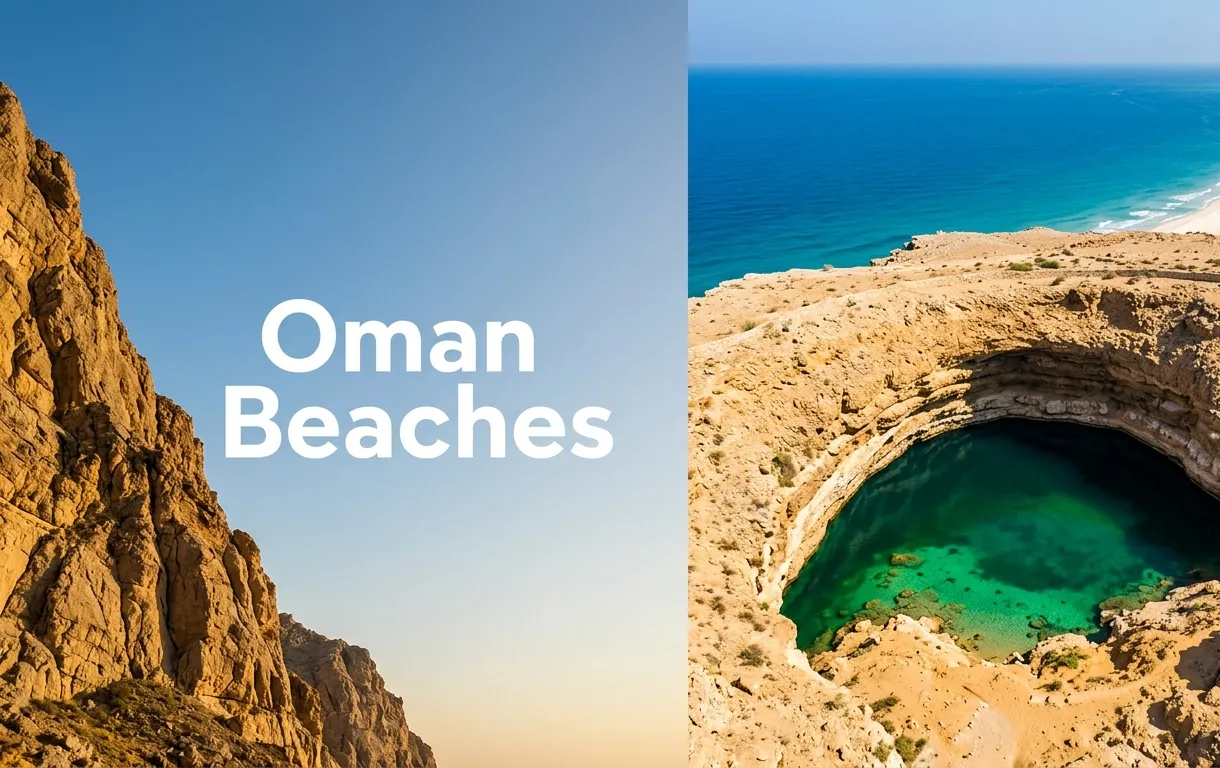
Oman’s beaches are not the soft, manicured resort strips of a glossy Dubai brochure. They are a collision of arid mountains and a deep, sapphire Arabian Sea, raw and mostly undeveloped. Understanding this promise and this limitation is the key to a brilliant trip.
The Ministry of Heritage and Tourism of Oman identifies its 3,165 kilometers of coastline as a primary draw for adventure travelers. The country actively protects this wilderness, which means strict new rules for visitors in 2026.
This guide tells you which beaches require a 4×4 and a permit. It also names the luxury resorts worth your money, and it honestly explains where you can safely swim and where you cannot.
What Are Oman’s Beaches Really Like?
Oman’s beaches are dramatic, empty, and geologically breathtaking, but they are not manicured or serviced. Sand ranges from fine beige to coarse golden grit and stretches unbroken for miles. The water is a cold, deep sapphire blue with a powerful, surging shore break.
Litter is an unfortunate reality on many accessible public beaches near Muscat. Oman does not yet have a culture of communal beach cleanup or large-scale municipal maintenance on every coastline. The more remote you go by 4×4, the more pristine the sand becomes.
The trade-off for isolation is zero infrastructure. There are no snack shacks, no sunbed rentals, and no bathrooms. A trip to a wild Omani beach is a self-sufficient expedition involving jerry cans of water, a shade tent, and a full tank of petrol.
Best Beaches in Oman at a Glance
Your beach choice hinges on how far you are willing to drive and your tolerance for rough surf. This table gives you the honest 2026 starting point.
| Beach Name / Region | Best For | Swimming Safety | Facilities | 4×4 Required? |
|---|---|---|---|---|
| Shangri-La Barr Al Jissah | Luxury Families | Excellent (Cove) | Full Resort | No |
| Wadi Shab Beach | Adventure, Scenery | Moderate (Surge) | None | No |
| Fins Beach | White Sand Picnic | Poor (Shore Break) | Basic Cabanas | No |
| Ras Al Jinz | Turtles, Wildlife | None (Protected) | Visitor Center | No |
| Mughsail Beach | Blowholes, Drama | Dangerous | Basic | No |
| Six Senses Zighy Bay | Ultra-Luxury, Honeymoon | Excellent (Bay) | Full Resort | Yes/Resort Transfer |
Key Takeaway: Match your beach to your logistics. A wild beach means no toilet and no rescue.
Best Beaches in Muscat for a Quick Escape
The best public beach in Muscat for a quick, easy afternoon is Qurum Beach. It is a long, flat, beige-sand strip in the heart of the city. The promenade behind it is lined with coffee shops and restaurants.
The water at Qurum is a murky green-blue, churned up by constant city runoff and a persistent onshore wind. It is fine for a quick toe-dip or a walk, but locals rarely swim here because of the silty water. Families will appreciate the adjacent park and playground, not the ocean.
Azaiba Beach is the better choice for a slightly cleaner swim in the capital. The water here is deeper and clearer, with a long, gentle beach break. The downside is the complete lack of shade and the intense afternoon heat radiating from the beige sand.
Insider Tip:
- Visit Muscat beaches only after 4:00 PM in summer to avoid heatstroke.
- A women-only section of Qurum Beach exists near the Crowne Plaza hotel for privacy.
- Do not leave valuables in your car at Azaiba, especially on a quiet weekday.
Iconic Wild Beaches South of Muscat
Wadi Shab is not a beach in the traditional sense, but an emerald river meeting the sea at a pebble cove. The hike in takes 45 minutes through a towering slot canyon. The reward is swimming through crystal-clear freshwater pools to a hidden waterfall inside a cave.
The actual beach at the wadi mouth is a coarse, golden sand strip. The water here is a turbulent mix of fresh and saltwater with a strong rip current pulling you out to the open ocean. Do not swim at the wadi mouth, only in the pools inland after the hike.
Fins Beach is the classic Omani white-sand photo stop. The sand here is blindingly white and powdery, contrasting violently with the bare ochre mountains. It looks like the Maldives dropped into a lunar landscape.
The disappointment at Fins is the shore break. The wave dumps powerfully onto a steep slope, making it extremely difficult and painful for casual swimmers to enter and exit. It is a photographer’s beach, not a swimmer’s paradise.
Key Takeaway: Wadi Shab is for hikers, Fins is for photographers. Neither is for serious swimming.
Ras Al Jinz and the Turtle Beaches
Ras Al Jinz is the most important green turtle nesting site in the Indian Ocean. The beach is a protected reserve, and it is not a casual swimming or sunbathing destination. Access is strictly controlled by the Ras Al Jinz Scientific and Visitor Centre.
You can only visit the beach at night on a guided tour to watch giant green turtles haul themselves ashore to lay eggs. The experience is silent, flashlight-restricted, and genuinely moving. This is a wildlife experience, not a beach day.
The only accommodation is at the reserve’s own eco-tented camp or the basic on-site hotel. The rooms are functional and overpriced for what you get, but you are paying for the location and the conservation fee. Budget travelers should book the cheapest tent option and accept the shared bathroom.
Do not attempt to sneak onto the beach independently at night. The Omani rangers patrol the reserve strictly, and the fine for disturbing a nesting turtle is severe. The 2026 regulations are tighter than ever.
The Dhofar and Salalah Monsoon Beaches
The beaches of Salalah in the Dhofar region are a completely different planet from the rest of Oman. During the summer Khareef monsoon, the barren mountains turn a shocking emerald green. The beaches are misty, cool, and dramatic, covered in swirling fog rather than baking sun.
Mughsail Beach is the main attraction. The sand is a soft, blinding white stretching for five kilometers, punctuated by blowholes that blast seawater through fissures in the rock at high tide. The view from the cliff road is dizzying and elemental.
The water at Mughsail is lethally dangerous for swimming. The combination of a powerful, steeply shelving shore break, misty fog, and frequent rip currents has led to multiple drownings. Stay on the sand and admire the blowholes, but never enter the water here.
Families will find the most joy at the freshwater springs and waterfalls within the mountains, not at the foggy, churning beaches. Luxury seekers should base themselves at the Al Baleed Resort Salalah by Anantara, which has a private, calm-lagoon beach.
Daymaniyat Islands for Snorkeling and Reefs
The Daymaniyat Islands Nature Reserve offers the single best marine experience in Oman. This is an archipelago of nine uninhabited islands a 40-minute speedboat ride from Muscat. The water clarity here reaches 20 to 30 meters, revealing pristine hard coral gardens.
Snorkeling with the resident whale sharks is the flagship draw from September to November. The islands are also a critical nesting site for hawksbill turtles. The seabirds swarm the rocks in such numbers that the whitewash resembles a snowcap.
Access is restricted to a limited number of licensed operators, and you cannot legally set foot on the islands during the nesting season without a specific research permit. The day trip cost is premium, typically $100 to $150 per person for a boat tour.
Luxury seekers should charter a private boat for a secluded afternoon. Budget travelers should join a group tour and manage their expectations about the bumpy, wet ride. The reef sharks and rays are a guarantee even on a bad day.
Musandam Fjord Beaches
The Musandam Peninsula is Oman’s remote, mountainous exclave separated from the rest of the country by the UAE. The coastline here is not a beach. It is a series of dramatic, deep-water fjords where sheer limestone cliffs drop a thousand feet into the sea.
The only way to access the beaches is by traditional wooden dhow boat. These full-day cruises anchor in secluded, turquoise-water coves where you can swim, snorkel, and hand-feed wild dolphin pods. The water is the clearest in the country.
The beach at Zighy Bay is the exception and the destination’s crown jewel for luxury. It is a private, pristine crescent of sand guarded by sheer mountains on three sides. The Six Senses Zighy Bay operates here, and the price premium for a pool villa is stratospheric at $1,000-plus per night.
Couples and honeymooners should book the Musandam dhow trip for the sheer romance of the scenery. The paragliding arrival over the mountains into Zighy Bay is one of the most dramatic check-ins on the planet.
Key Takeaway: Musandam is for boat-based scenery, not sand-based beach days.
Best Resort Beaches for Families and Luxury
The best resort beach for families in Oman is at the Shangri-La Barr Al Jissah Resort & Spa, 20 minutes south of Muscat. The property is built around a private, sheltered cove with calm, clear water and a lazy river winding between the pools. The kids’ club is the largest in the Sultanate.
The hotel itself is showing its age in places. The entry-level rooms feel generic and could belong to any Shangri-La anywhere on earth. The value lies entirely in the protected, zero-effort beach and the massive pool complex.
The most luxurious resort beach is at the Al Bustan Palace, a Ritz-Carlton Hotel. The property sits on a kilometer-long private bay with flat, pale sand and aquamarine water. The 40-meter high domed atrium and palatial lobby make it a destination in itself.
The limitation at Al Bustan for families is the distance from the rooms to the beach. The property is vast, and the walk from a back-of-resort room to the sand can take fifteen minutes in the heat.
Best Beaches for Safe Swimming
The safest swimming beaches in Oman are the private resort coves at Shangri-La and Al Bustan Palace. The water is calm, the entry is gentle, and there are trained lifeguards on the sand. These are the only beaches where you can turn off your ocean-awareness brain.
For public options, the Sifah Beach development an hour south of Muscat offers a managed swimming area. The Jebel Sifah Marina area has a netted-off swimming zone that keeps the jellyfish out during the hotter months. The drive is a smooth, modern highway.
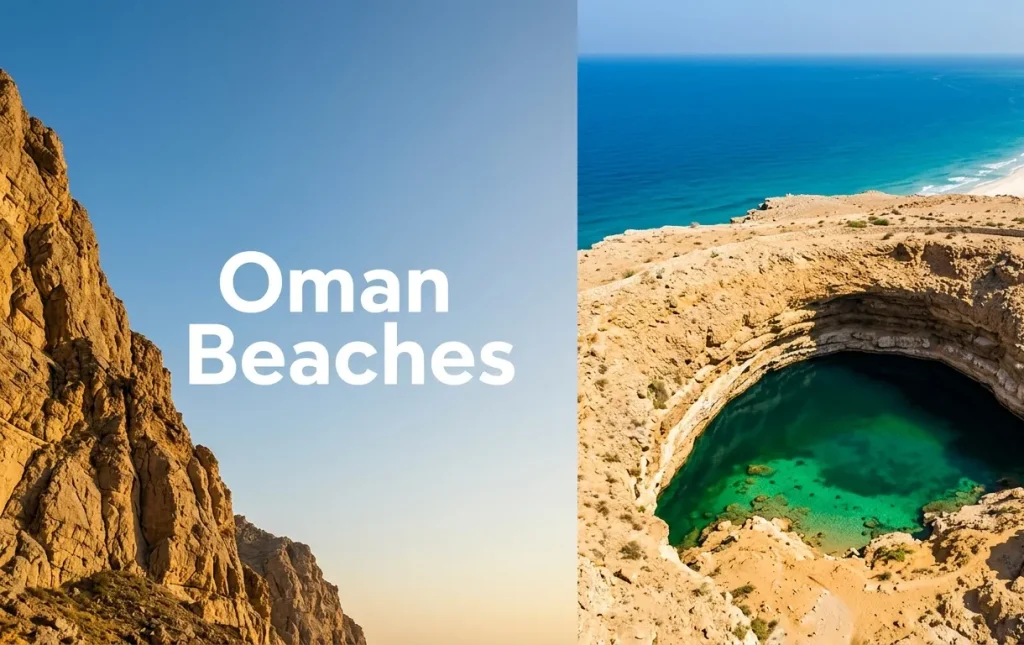
The most enticing natural pool is the Bimmah Sinkhole. This is a limestone sinkhole filled with an absurdly clear mix of fresh and emerald saltwater just 600 meters from the sea. The swimming is perfectly calm and cool, and tiny, harmless Garra rufa fish provide a free pedicure.
A warning for solo travelers: the sinkhole is a local family hangout on weekends. The atmosphere is boisterous and welcoming, but a solo female traveler may feel intensely stared at and should dress very conservatively.
Best Beaches Near Muscat Without a 4×4
You can easily reach several excellent beaches near Muscat in a standard sedan. The highway south to Sifah Beach is a flawless dual carriageway. The parking at the marina is free, and the managed swimming area is a short walk from the car.
Wadi Shab is also accessible by sedan on a paved road all the way to the parking lot. The boat ride across the estuary opening is a fixed 1 OMR ($2.60) fee per person. The only challenge is the 45-minute hike over irregular rocks to the interior pools.
Qurum Beach and Azaiba Beach require nothing more than a taxi. You can be on the sand within 15 minutes of leaving the Royal Opera House. The public bus service also stops near these beaches.
Budget travelers can base themselves entirely in Muscat and use a combination of local buses and a single rental car for a one-day wadi trip. You do not need the 4×4 until you venture south of Sur or into the interior wadi networks.
The 2026 Reality of Beach Camping in Oman
Wild camping on Omani beaches was once a free-for-all rite of passage. In 2026, the reality is much more regulated and restricted. The government has cracked down on informal camping to protect turtle nesting grounds and control litter.
You cannot legally camp on any beach within the Ras Al Jinz Turtle Reserve perimeter or the Daymaniyat Islands. The fines are steep, and the rangers patrol nightly. The designated camping areas now require a permit obtained through the Ministry of Heritage and Tourism’s online portal.
The best legal camping is still possible on remote stretches of beach south of Al Ashkharah toward Masirah Island. You need a self-contained 4×4 with recovery gear, a supply of drinking water, and a strict leave-no-trace policy for waste.
Do not camp at the mouth of a wadi. A thunderstorm in the distant Hajar Mountains can send a flash flood through the wadi bed without a moment’s notice, sweeping your vehicle out to sea. Check the weather forecast obsessively.
A 4×4 Driving and Beach Access Guide
A 4×4 is mandatory for accessing any truly remote beach in Oman. A soft-roader crossover SUV is not sufficient. You need a high-clearance vehicle like a Toyota Land Cruiser or Nissan Patrol with true low-range gearing for deep sand and wadi boulders.
Driving on the sand requires deflating your tires to 15-18 psi before you leave the pavement. You must carry a heavy-duty air compressor to reinflate them for the road. Getting stuck on a rising tide at a remote beach is a potentially life-threatening mistake.
Sabkha is the dark, crusty, salt-flat sand that looks solid but hides a bottomless, sludgy salt marsh underneath. If the sand looks wet and rainbow-oil-slicked, do not drive on it. You will sink the vehicle to its chassis in two seconds.
Purchase a local SIM card with a data package from Omantel or Ooredoo at the airport. Google Maps works, but download offline maps before you leave the city. The GPS signal disappears inside the mountain wadis.
Best Time to Visit Oman Beaches
The best time to visit the main Omani coastline is November to March. The air temperature is a perfect 75 to 85 degrees Fahrenheit, and the water is cool and refreshing. The skies are a flawless blue, and the sea is calmer for swimming and diving.
Avoid the coast from June to August. The heat combined with the humidity from the sea is a suffocating, 110-degree blanket that makes lying on a beach a genuine medical risk. Even a dip in the sea offers little relief.
The exception is Dhofar (Salalah), which comes alive during the Khareef monsoon from June to September. This is the only place in the Arabian Peninsula that turns a lush, misty green. The beach days here are moody and cool, not sunny and hot.
Honeymooners should target late October. The weather is perfect, the European summer crowds have gone, and the whale sharks are beginning to arrive at the Daymaniyat Islands.
Safety, Marine Life, and Rip Current Warnings
The Arabian Sea is a powerful, unforgiving ocean that demands respect. The shore break at many beaches is steep and violent. A single rogue wave can knock you over, fill your lungs with water, and drag you out in seconds.
Key safety facts every visitor should know:
- Rip Currents: Swim parallel to the shore if caught. Do not fight the current head-on.
- Sea Snakes: These are common in the Daymaniyat Islands and are highly venomous. They are docile and will not chase you. Do not touch them.
- Stonefish and Stingrays: Shuffle your feet in the sand when wading into murky water. A stonefish sting requires immediate hospitalization.
- Heat Exhaustion: Drink three liters of water per day minimum. The dry wind wicks sweat away instantly, hiding how dehydrated you actually are.
- Sunburn: The Arabian sun is relentless. A high-SPF sunscreen is mandatory, but a long-sleeve UPF rash guard is better.
Dial 9999 for the Royal Oman Police in an emergency. The Royal Oman Police Coast Guard is a professional and responsive unit, but their response time to a remote beach an hour south of Sur will be significant. You are your own first responder in the wild.
Frequently Asked Questions About Oman Beaches
What is the best beach in Oman for swimming?
The private cove at Shangri-La Barr Al Jissah Resort is the best for safe swimming.
It offers calm, clear water protected from the open ocean surge and has professional lifeguards.
The public Bimmah Sinkhole is the best natural swimming spot, a cool, waveless freshwater pool.
Can you camp on the beach in Oman in 2026?
Yes, but only in designated areas with the proper permit obtained online in advance.
Wild camping is now banned on the protected turtle nesting grounds at Ras Al Jinz.
Remote beaches south of Al Ashkharah are still accessible for self-sufficient campers.
How do I get to Wadi Shab beach?
Drive 90 minutes south of Muscat on the paved coastal highway to the Wadi Shab parking lot.
Pay 1 OMR for a small boat to ferry you across the estuary at the wadi mouth.
Hike 45 minutes inland over rocks and through pools to reach the cave waterfall.
Are there nice beaches near Muscat?
Yes, Qurum Beach and Azaiba Beach are long, sandy public beaches inside the city.
They are good for an afternoon walk, but the water quality is not ideal for swimming.
For a clean swim near Muscat, drive 90 minutes to Sifah Beach or book a resort day pass.
When is the best time to visit Salalah’s beaches?
Visit from late June to early September during the Khareef monsoon season.
The landscape turns a shocking green and the beaches are misty and cool.
The ocean is dangerously rough for swimming during this time, so enjoy the views from the sand.
Is it safe to swim at Oman’s wild beaches?
Many wild beaches have a powerful, steep shore break and dangerous rip currents.
It is safer to only swim at managed resort coves or the Bimmah Sinkhole.
Never swim alone at a remote beach, and never at the mouth of a wadi.
Plan for the Journey, Not Just the Sand
Oman does not hand its best beaches to you. It makes you drive for them, hike to them, and earn them with a 4×4 rental, a permit, and a healthy fear of the Arabian Sea. The reward is a coastline that feels genuinely wild and untouched by mass tourism.
Book your 4×4 before your flight, reserve a resort day pass for the one day you want facilities, and get your camping permit online a week ahead of time. Resort amenities, day pass availability, and beach access regulations shift quickly in Oman, so confirm your chosen beach’s status with your hotel before departing.
This is not a trip for a towel, a book, and a piña colada. It is a trip for a jerry can of water, a sense of adventure, and an early morning start.