Ireland Beaches 2026: Honest Water Temp and Surf Guide
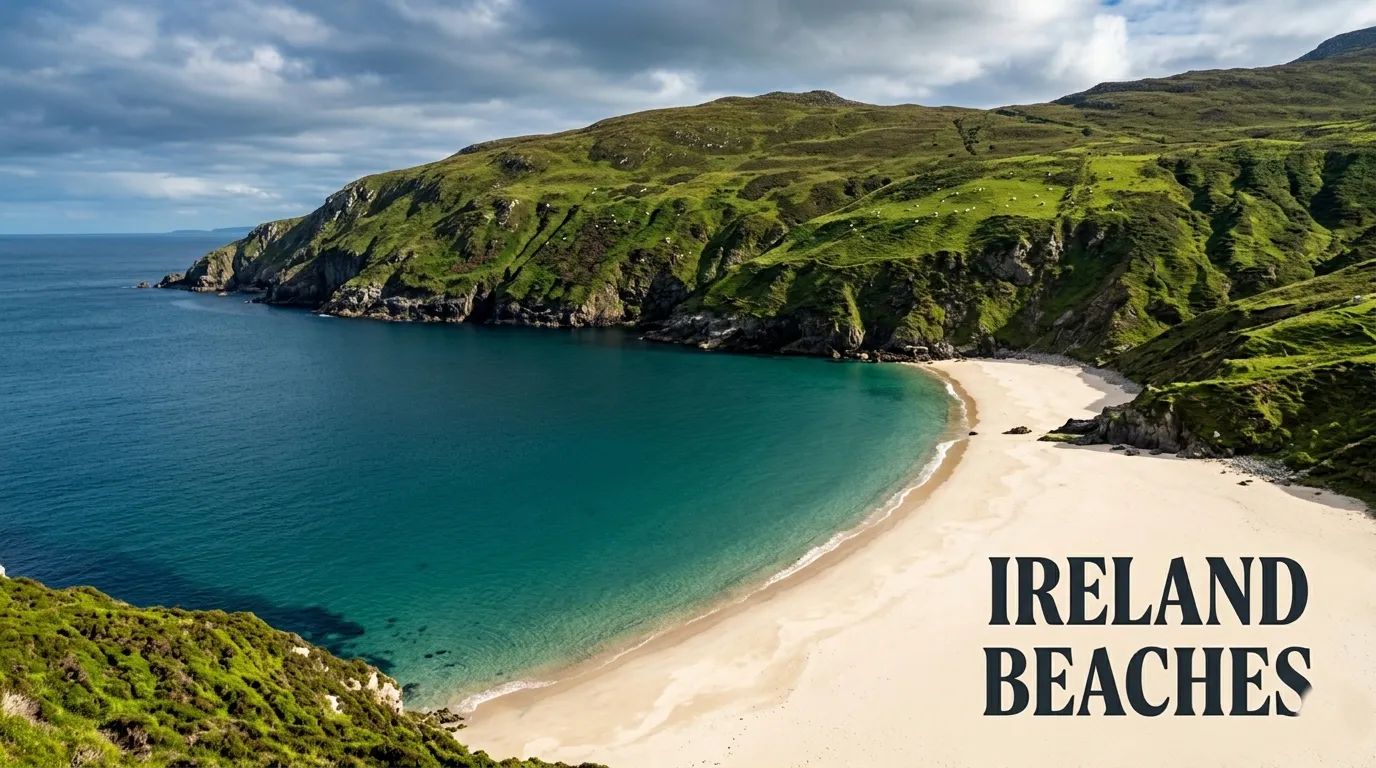
Ireland has beaches that rival the Caribbean in a photograph.
The water is 60 degrees Fahrenheit in summer, and that is your honest starting
point.
You come here for the drama, the empty sand, and the roar of the Atlantic.
You do not come for a warm, leisurely swim without a wetsuit.
Met Éireann records peak summer water temperatures rarely exceeding 16 degrees
Celsius. This guide matches a specific beach to your trip, your gear, and your
actual tolerance for cold.
Ireland Beaches
Irish beaches are a study in geologic drama and cold-water beauty.
The west coast faces the full force of the North Atlantic Ocean.
This means long, sweeping strands of white sand backed by towering dunes.
It also means powerful surf, rogue waves, and water that chills bare skin in
seconds.
The east coast, facing the Irish Sea, is calmer and shallower.
Beaches near Dublin are better suited to a gentle paddle than a powerful surf
session.
The north coast, in Northern Ireland, offers a mix of sandy coves and cliff-backed
strands. The sand quality varies from soft and golden to coarse and pebbled.
County Donegal and County Kerry hold the highest concentration of famous beaches.
The Wild Atlantic Way driving route connects the most dramatic stretches.
Irish Beaches
Irish beaches fall into two main categories for a visitor.
You pick a beach for walking and scenery, or you pick one for surfing.
Walking beaches are the long, open strands found across the west coast.
Portsalon Beach in Donegal and Barleycove in Cork offer miles of empty sand
at low tide.
Surfing beaches have consistent, powerful swell and nearby surf schools.
Lahinch Beach in Clare and Bundoran in Donegal are the two iconic surf hubs.
The water is cold, so a wetsuit is non-negotiable for any water activity.
Renting a thick, 5mm winter suit from a local shop is the standard approach.
Families should target a beach with a lifeguard hut and a gentle stream mouth.
The stream water is often slightly warmer and provides safe, shallow wading.
Check the Irish Water Safety website for the 2026 lifeguard roster.
Lifeguards are only present at specific beaches during the summer season.
Key Takeaway: Choose a west coast beach for drama and surf. Choose an east coast beach for a calmer, shallower paddle.
Does Ireland Have Warm Beaches?
No, Ireland does not have warm beaches by Mediterranean or Caribbean standards.
The warmest water temperature occurs in August and rarely exceeds 16 degrees
Celsius.
The Gulf Stream moderates the southwestern coast slightly, but the effect is subtle.
A “warm” Irish beach day means the air is 18 degrees Celsius and the wind is calm.
The southeast coast, around Wexford and Waterford, offers the mildest water
temperatures. These beaches face the shallower, slightly warmer Irish Sea.
Do not book an Irish beach trip expecting to sunbathe in a swimsuit for hours.
Pack a full wetsuit, a windbreaker, and a thick towel.
The reward for this preparation is a beach almost entirely to yourself.
A warm, sunny Saturday in August can see a brief, joyous beach scene with
bodyboarders.
A good weather window in September often feels warmer than a cloudy week in July.
Plan around the forecast, not the calendar month.
Best Beaches in Ireland
The single best beach for a classic Irish experience is Inchydoney Beach in
County Cork. It offers white sand, consistent surf, and a nearby hotel with a spa.
Dog’s Bay in County Galway is the best for a uniquely sheltered, shallow cove.
Its east-facing orientation protects it from the prevailing Atlantic wind.
Keem Bay on Achill Island is the best for a dramatic, cliff-enclosed
swimming spot. A basking shark sighting is a real possibility in early summer.
| Beach | Best For | Water | Key Hazard |
|---|---|---|---|
| Inchydoney Beach, Cork | Surfing, Resort Vibe | Cold, Strong Swell | Rip Currents |
| Dog’s Bay, Galway | Sheltered Swim, Families | Slightly Warmer | Remote, No Facilities |
| Keem Bay, Mayo | Dramatic Scenery, Wild Swim | Cold, Clear | Steep Road Access |
| Portsalon Beach, Donegal | Empty Walks, Sand Dunes | Cold, Exposed | No Lifeguards |
| Lahinch Beach, Clare | Beginner Surfing | Cold, Consistent Swell | Crowded Summer Weekends |
Key Takeaway: Inchydoney delivers the most complete package. Keem Bay is the most stunning single beach visit.
Beaches in Ireland
The beaches of County Donegal offer the wildest, most remote experience on the
island. Silver Strand at Malin Beg is a perfect, remote crescent of white sand.
Access requires a long set of steps down a steep cliff face.
The effort keeps the crowds to a near-zero level even in August.
County Kerry’s beaches are framed by the mountains of the Ring of Kerry.
Derrynane Beach offers a sheltered, historic spot near Daniel O’Connell’s
former home.
County Wexford’s beaches stretch for miles along the southeastern coast.
Curracloe Beach is a fine, soft sand strand that featured in the film Saving
Private Ryan.
Do not leave valuables in your car at isolated beach car parks.
Sadly, theft from unattended cars is a known issue at remote trailhead lots.
Wild Atlantic Way Beaches
The Wild Atlantic Way is a 2,500-kilometer signed coastal route from Donegal
to Cork. It strings together the most dramatic beaches on the west coast.
Mullaghmore Beach in Sligo is a powerful surf spot overlooked by a castle.
The wave here is one of the biggest in Ireland on a winter swell.
Silver Strand in Louisburgh, Mayo, is a quiet, tidal sandbar beach.
It connects to a small island at low tide, so monitor the tide chart closely.
Barleycove Beach in Cork sits behind a vast, protected dune system.
A boardwalk protects the fragile machair grassland that backs the sand.
The Wild Atlantic Way is best driven over several days with a flexible schedule.
Commit to one specific beach only if the weather and tide cooperate perfectly.
Rogue waves are a genuine risk on exposed Wild Atlantic Way headlands.
Never stand on wet, dark rocks near the water’s edge at a surf beach.
Ireland Beaches Swimming
Swimming at an Irish beach requires a wetsuit for all but the hardiest dippers.
A 3/2mm wetsuit is the minimum for a comfortable summer swim.
Dog’s Bay and Gurteen Bay in Connemara offer the most sheltered swim spots.
The shallow, horseshoe-shaped coves warm slightly faster than open ocean beaches.
The Forty Foot in Dublin is a famous year-round swimming spot, not a beach.
It is a deep-water, rock-entry point for experienced cold-water swimmers.
Vico Bathing Place in Killiney offers another Dublin-area deep-water swim.
These are not sandy beaches for children or casual wading.
Irish Water Safety flags must be obeyed without exception.
A red flag means no swimming. A yellow and red flag indicates a lifeguarded zone.
Never swim alone at an unpatrolled beach in Ireland.
The cold water can incapacitate a strong swimmer within minutes.
Best Surfing Beaches Ireland
Bundoran in County Donegal is the undisputed surf capital of Ireland.
Multiple surf schools, board rentals, and consistent swell define this town.
Lahinch Beach in County Clare is the best beginner surf beach on the west
coast. A long, gentle sandbank break provides a forgiving wave at mid-tide.
Easkey in County Sligo is a reef break for experienced surfers only.
The powerful, hollow wave breaks over a shallow, rocky shelf.
Portrush on the north coast of Northern Ireland offers two distinct breaks.
The East Strand is the beginner spot, while the West Strand handles bigger swells.
A 5/4mm hooded wetsuit, booties, and gloves are standard gear from October through
May. Summer surfers can drop to a 3/2mm suit from June to September.
Surf schools require advance booking during July and August.
Walk-in availability is rare during the peak school holiday weeks.
Blue Flag Beaches Ireland
A Blue Flag is an international certification for water quality, safety, and
environmental management. An Taisce administers the program in Ireland.
Ireland had over 90 Blue Flag beaches and marinas awarded for the 2025 season.
The 2026 awards list is announced each May, so check for status changes.
A Blue Flag means the water quality is tested weekly during the bathing season.
Lifeguards are present during specified hours, and facilities are well-maintained.
Curracloe Beach, Inchydoney, and Lahinch are consistent Blue Flag
holders. A beach can lose its flag mid-season if water quality dips after heavy
rain.
Do not assume a beach without a Blue Flag is dirty or dangerous.
Many remote, beautiful beaches simply do not apply due to lack of facilities.
Bathing water quality reports are public and posted at the beach entrance.
Read the notice board before you swim, especially after a heavy rainfall.
Key Takeaway: A Blue Flag guarantees safe, tested water and a lifeguard, but it does not guarantee warm water or small waves.
Best Beaches in Ireland for Families
Curracloe Beach in County Wexford is the best family beach in Ireland.
The sand is soft and shallow for a long distance, backed by a large, free car park.
Lahinch Beach suits families with older children who want to try a surf lesson.
The town has an aquarium, a playground, and plenty of fish and chip shops.
Portmarnock Beach near Dublin offers a long, flat strand close to the city.
It is the most convenient family beach for a quick day trip from the capital.
Avoid the exposed Atlantic beaches for young children who want to paddle.
The shore break is often powerful enough to knock a toddler over.
A pop-up beach tent is a game-changer for an Irish family beach day.
It blocks the wind and creates a warm, sand-free zone for snacks and naps.
Pack a flask of hot chocolate or tea, even in July.
The breeze can turn a sunny day chilly within a single cloud cover.
Ireland Beaches Near Dublin
Portmarnock Beach is the best sandy beach within a 40-minute drive of Dublin
city center. It is a long, wide strand known locally as the “Velvet Strand.”
Sandycove Beach and the Forty Foot offer a more scenic, rocky bathing
experience. These are DART-accessible spots for a quick, scenic dip, not a sand
day.
Bray Beach is a pebble and sand mix with a Victorian promenade backdrop.
It is a traditional seaside town with amusement arcades and ice cream shops.
Killiney Beach is a stony beach with stunning views of the Wicklow Mountains.
Swimming here is best at high tide when the water covers the pebbles.
Greystones in County Wicklow is a charming town with a sandy cove and a
harbour. The DART train stops directly in the town center.
Traffic on the M50 and N11 is severe on sunny summer Saturdays.
Leave Dublin before 9:00 a.m. or take the DART train to avoid the parking crush.
Beaches Northern Ireland
Whiterocks Beach near Portrush is the most beautiful beach on the Causeway
Coast. The white limestone cliffs and caves back a long, pale sand strand.
Portstewart Strand is a two-mile dune-backed beach managed by the National
Trust. You can drive your car directly onto the firm sand with a purchased pass.
Murlough Bay in County Down is a remote, stunning cove with views across to
Scotland. The winding access road is extremely narrow and not suitable for large
motorhomes.
Benone Strand is a vast, seven-mile beach on the Causeway Coast.
It rarely feels crowded, even on a bank holiday weekend.
The Causeway Coast Way walking trail connects several of these beaches.
A long walk from Portballintrae to the Giant’s Causeway is a classic route.
Check the National Trust website for 2026 parking pass updates.
Access and fee policies for Portstewart Strand can change annually.
Hidden Beaches Ireland
Silver Strand at Malin Beg in Donegal is the most photogenic hidden beach.
A steep, narrow staircase drops you into a perfect, isolated white sand cove.
Gurteen Bay in Connemara sits right beside the more famous Dog’s Bay.
It receives a fraction of the visitors while offering the same stunning setting.
Cuan Pier on the Dingle Peninsula is less a beach and more a secret swim spot.
A small sandy patch next to a working pier serves as a local, informal bathing
zone.
Secret Beach near Renvyle in Connemara is exactly what the name promises.
It requires a short walk through a field and down a grassy path to find white sand.
Do not expect any facilities, phone signal, or lifeguards at these hidden spots.
Their isolation is their protection, but it is also their primary risk factor.
Always tell someone your exact location and return time before exploring a hidden beach.
A sprained ankle at low tide can become a life-threatening situation at high tide.
Best Time to Visit Ireland Beaches
The best time is the second half of August and the first week of September.
The water has reached its maximum temperature, and the school holiday crowds are
thinning.
June offers the longest daylight hours, with sunset near 10 p.m. on the west coast.
The water is still cold, around 13 degrees Celsius, but the extended evenings are
golden.
Avoid November through February for a beach-focused trip to Ireland.
The days are short, the storms are frequent, and the water is lethally cold.
A crisp, sunny day in March can deliver the most dramatic, empty beach walk of
your life. The water is 8 degrees Celsius, so swimming is for experienced cold-water
dippers only.
May is the month for surfers chasing the last big swells before summer.
The water is still cold, but the air temperature is pleasant and the surf schools
are open.
Check the Met Éireann forecast for a specific “sunny spells” window.
A three-day high-pressure system in September is worth driving across the country
for.
Safety and Seasonal Warnings for Irish Beaches
Irish beaches present genuine dangers related to cold water, sudden weather shifts,
and powerful Atlantic waves. Do not treat a sunny beach as a safe beach.
Key safety and seasonal facts every visitor should know:
- Cold Water Shock: Enter the water slowly. Gasping and hyperventilation happen instantly in 12°C water. Wear a wetsuit for any swim longer than a quick dip.
- Rogue Waves: Never turn your back on the ocean at an exposed west coast beach. Large, unexpected waves can sweep adults off rocks and sand into deep water.
- Rip Currents: Strong rips occur at Lahinch, Inchydoney, and Bundoran. If caught, swim parallel to the shore, not against the pull.
- Tidal Cut-Off: Always check a tide table before walking to a headland or through a sea cave. Rising tide can block your return route in under an hour.
- Changing Weather: Pack a waterproof layer even under a blue sky. Atlantic squalls arrive in minutes and can drop the air temperature by 10 degrees Celsius.
- Cliff Paths: Stay on the marked trail. Eroded cliff edges are unstable and can collapse without warning.
Contact the Irish Coast Guard by dialing 112 or 999 for any coastal emergency. Ask for the Coast Guard specifically.
Frequently Asked Questions About Ireland Beaches
Can you swim at Irish beaches?
Yes, you can swim at Irish beaches, but the water is cold year-round.
A wetsuit is essential for a comfortable swim of any length.
Only experienced cold-water swimmers should attempt a skin-swim outside of July and
August.
What is the warmest beach in Ireland?
The beaches on the southeast coast, near Wexford and Waterford, are the warmest.
Curracloe Beach and Tramore Beach sit on the shallower, slightly warmer Irish Sea.
The water here peaks around 16 degrees Celsius in late August.
Are there any beaches near Dublin?
Yes, Portmarnock Beach and Sandycove Beach are within a 40-minute drive or DART
train ride of Dublin city centre.
Portmarnock is a long, sandy strand, while Sandycove is a rocky bathing spot.
Both are easily accessible for a day trip from the capital.
Do you need a wetsuit in Ireland?
Yes, you need a wetsuit for swimming in Ireland outside of a very brief summer dip.
A 3/2mm wetsuit is the minimum for summer comfort from June to September.
A 5/4mm suit with a hood, booties, and gloves is standard for the rest of the year.
What is a Blue Flag beach in Ireland?
A Blue Flag beach meets strict international standards for water quality and
safety.
The flag is awarded annually by An Taisce to beaches with lifeguards and clean
facilities.
It certifies that the water is safe for swimming based on weekly tests.
Is it safe to swim at Irish beaches?
Swimming at a lifeguarded, Blue Flag beach is safe if you follow the flag system.
Always swim between the red and yellow flags and never enter the water on a red
flag.
Be aware of rip currents, cold water shock, and never swim alone at an unpatrolled
beach.
An Irish beach day is a victory earned through good planning.
You need a wetsuit, a flask of tea, and a weather app that you trust.
The reward is a stretch of white sand that feels entirely, personally yours.
The dunes sing, the ocean roars, and the landscape does not pretend to be something
it is not.
Book your rental car now for maximum route flexibility in 2026.
Check the An Taisce Blue Flag list and the Met Éireann rainfall radar on the
morning of your beach day. The best Irish beach is the one you arrive at prepared
for the cold and open to the beauty.