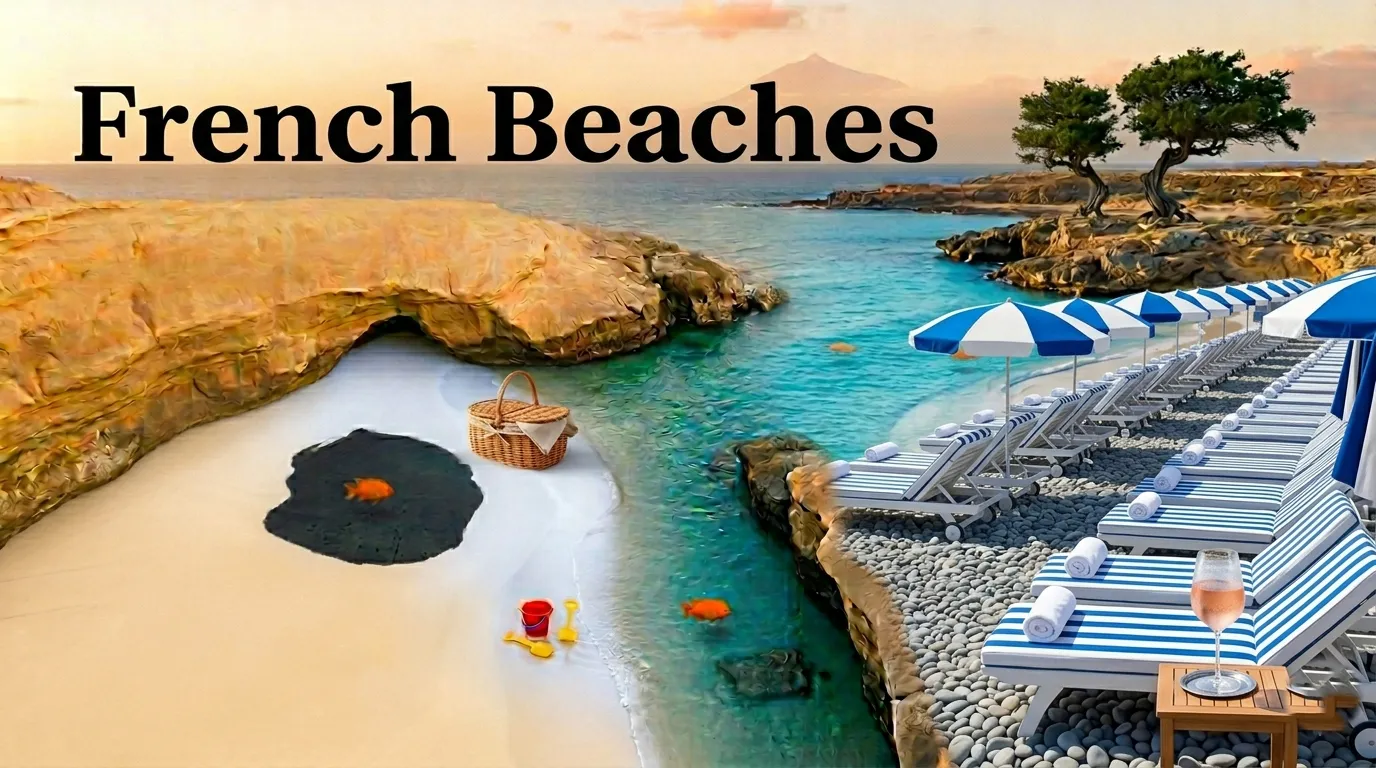
French Beaches Guide 2026: Riviera to Atlantic Coast
The French beach experience is not one single thing. The Mediterranean coast is a chic, pebbly, and expensive ritual.
The Atlantic coast is a wild, sandy, and powerful surf arena. They are two completely different countries, beach-wise.
This guide names the specific beaches that matter on each of France’s three coasts. I will tell you honestly which one fits your style, your budget, and your 2026 vacation window.
French Beaches Overview
France has three distinct beach coastlines. Each one offers a completely different experience, culture, and type of sand.
The Mediterranean coast is the French Riviera and Languedoc. The Riviera is pebbly, glamorous, and defined by private beach clubs where you pay for a sunbed, a towel, and a view of the sparkling, calm, deep-blue sea.
The Atlantic coast from Biarritz to Brittany is a vast, wild, sandy frontier. This is the surf zone, with long, empty beaches, powerful green-blue waves, and a far more laid-back, affordable culture.
The English Channel coast in Normandy is a rugged, historic, and deeply contemplative beach experience. The wide, sandy beaches are framed by chalk cliffs, the water is bracing, and the tidal range is the most extreme in Europe.
According to Atout France, the country has over 3,400 kilometers of coastline. The key to a successful trip is understanding that you choose a coast for a specific experience, not just for a generic beach day.
Key Takeaway: The Mediterranean is for glamour and pebbles. The Atlantic is for sand and surf. The Channel is for history.
Are There Beaches in France
Yes, France has thousands of beaches, but they are not the tropical, white-sand, bath-warm-water beaches you might expect. The sand and the experience vary wildly by region.
The French Riviera is famously pebbly. The beaches in Nice, Cannes, and Villefranche-sur-Mer are composed of smooth, gray, rounded stones, not soft sand.
The Atlantic coast has the long, sandy beaches you are looking for. The sand is fine, golden, and clean, stretching for miles in the Landes and Basque regions.
The island of Corsica in the Mediterranean is the exception that proves the rule. Its beaches, like Plage de Palombaggia, are a brilliant white sand and calm, clear turquoise water that rivals the Caribbean.
If your idea of a French beach is a soft, sandy, walk-in-the-surf experience, fly to Biarritz on the Atlantic or to Corsica in the Mediterranean. Do not fly to Nice expecting the same thing.
French Riviera vs Atlantic Beaches
The French Riviera and the Atlantic coast are opposite extremes of the French beach experience. One is a chic, pebbly, expensive ritual, and the other is a wild, sandy, athletic playground.
The Riviera beach is about being seen. You pay 30 euros for a sunbed at a private beach club, you order a bottle of ice-cold rosé, and you swim in calm, clear, deep-blue water that is warm in summer.
The Atlantic beach is about the sport of it. The sand is vast and empty, the water is a cold, powerful green-blue, and the culture is centered on the surfboard, not the sunbed.
A Riviera beach day is an extension of the hotel and the restaurant. An Atlantic beach day is an escape into raw, unspoiled nature, with a cheap picnic and a wetsuit.
A couple seeking a glamorous, romantic escape should choose the Riviera. A family with active children or a surfer should choose the Atlantic coast.
Best Beaches in France
The best beach in France is not one single place. It depends entirely on which French beach fantasy you are chasing.
Plage de Pampelonne near Saint-Tropez is the iconic, celebrity-studded Riviera sand strip. Plage de la Côte des Basques in Biarritz is the historic, soulful heart of French surfing.
My comparison table below provides an honest ranking. It matches each major beach to its ideal traveler, sand type, and core experience.
| Beach | Region | Sand & Water | Best For | Honest Note |
|---|---|---|---|---|
| Plage de Pampelonne | Riviera (St. Tropez) | Soft sand, calm, clear blue | Glamour, celebrity-spotting | The sand is a rare Riviera luxury, but the sunbed costs 50 euros. |
| Paloma Beach | Riviera (St-Jean-Cap-Ferrat) | Fine pebbles, calm, turquoise | Quiet luxury, swimming | A public path hides this chic, secluded cove from the road. |
| Plage de la Côte des Basques | Atlantic (Biarritz) | Golden sand, powerful surf | Surfing, history, sunsets | The birthplace of European surfing. The water is cold. |
| Plage de Saleccia | Corsica (Mediterranean) | White sand, turquoise water | A tropical fantasy in France | Accessible by a bumpy 4×4 track or a boat from Saint-Florent. |
| Plage de Deauville | Normandy (Channel) | Wide, golden sand, cold water | History, elegance, boardwalk | The iconic striped parasols are a classic French photo. |
| Plage d’Étretat | Normandy (Channel) | Smooth pebbles, bracing water | Scenery, dramatic cliffs | The beach is a stage for the colossal, arched chalk cliffs. |
A first-time France visitor should spend two nights on the Riviera for the glamour, then fly to Biarritz for two nights of the authentic, wild Atlantic surf culture.
French Riviera Beaches
The French Riviera is the world’s most famous and glamorous stretch of coastline. Its beaches are a pebbly, chic, and expensive stage for seeing and being seen.
Plage de Pampelonne near Saint-Tropez is the iconic exception. This long, curving stretch of soft, golden sand is where Brigitte Bardot made the Riviera famous, and the beach clubs here are the most legendary and expensive in France.
The beach at Paloma Beach in Saint-Jean-Cap-Ferrat is a quiet, pebbly, and deeply chic cove. The water is a flat, calm turquoise, and the view across the bay to Beaulieu-sur-Mer is a specific, unforgettable French blue.
The honest truth about a Riviera beach day is that it is a paid experience. A public section of sand or pebbles is always accessible, but the best spots, the sunbeds, and the shade are managed by private beach clubs that charge a day rate.
A couple seeking the classic Riviera glamour should budget 30 to 50 euros per person for a sunbed at a Pampelonne beach club. A budget traveler should head west to the sandy, free beaches of the Languedoc coast near Montpellier.
Key Takeaway: The Riviera is a pebbly, paid, and profoundly glamorous beach experience. Budget for the sunbed.
Paloma Beach St Tropez
Paloma Beach is not actually in Saint-Tropez. It is a quiet, pebbly, and exclusive cove on the nearby peninsula of Saint-Jean-Cap-Ferrat.
The beach is named after the daughter of the artist Pablo Picasso, who once lived on the peninsula. The water is a flat, crystal-clear, electric turquoise, and the bay is sheltered from the open sea.
The beach is divided into a small, free, public section and a larger, elegant private beach club. The private club serves a perfect, chilled, and very expensive lunch of grilled sea bass and a glass of ice-cold rosé.
This is the best beach for a couple seeking a quiet, discreet, and deeply luxurious Riviera experience. It is a poor fit for a family on a budget, as the public section is tiny and the private club is a costly, sit-down affair.
Insider Tip:
- Take the bus number 15 from Nice to the port of Saint-Jean-Cap-Ferrat, then walk the coastal path for 15 minutes.
- The public section fills instantly, so arrive by 9 AM in the summer.
- The view from the water is the best part, so pack a snorkel and swim out 50 meters.
Biarritz Beaches
Biarritz is the elegant, historic, and soulful heart of French surf culture. It sits on the Basque Coast in the southwest corner of France.
Plage de la Côte des Basques is the most important beach in European surfing history. It was here in the 1950s that an American screenwriter first surfed the waves, and the long, golden sand beach is still a consistent, forgiving, and beautiful point break.
The water is cold. Even in August, the Atlantic here rarely exceeds 68°F, and a full wetsuit is a standard, uncomplaining part of the experience.
The town of Biarritz itself is a faded, elegant, 19th-century resort city. You surf a world-class wave in the morning, then eat a perfect, fresh-baked croissant in a Belle Époque cafe for lunch.
This is the best beach town for a couple or a solo traveler who wants to combine a chic, urban French experience with a daily, world-class surf session. It is a poor fit for a traveler seeking a quiet, remote, and undeveloped beach escape.
Normandy Beaches
The beaches of Normandy are a powerful, rugged, and deeply historic landscape. They are not for a casual, warm-water swim holiday.
Plage de Deauville is the elegant, social heart of the Normandy coast. The beach is a wide, golden-sand expanse, and the iconic, colorful striped parasols are a specific, classic French image.
Plage d’Étretat is the most dramatic beach in France. The smooth, white pebble beach is framed by colossal, arched chalk cliffs that plunge into the bracing, gray-green English Channel.
The beach at Omaha Beach in Colleville-sur-Mer is a place of quiet, profound contemplation. The wide, sandy beach is the historic D-Day landing site, and the American Cemetery overlooks the shore.
The tidal range in Normandy is extreme, up to 40 feet. The beach you walk on in the morning can be completely underwater by the afternoon, and you must always know the tide schedule before setting out.
This is the best coast for a history buff or a landscape photographer. It is a poor fit for a family seeking a warm, splashy, swim-focused beach holiday.
Key Takeaway: Biarritz is for surfing elegance. Normandy is for history, scenery, and bracing walks.
French Surfing Beaches
France is one of the world’s great surf destinations, and the entire Atlantic coast is a vast, sandy surf playground.
Biarritz and the surrounding Basque Coast is the historic and cultural heart. The waves are powerful, consistent, and often crowded with fiercely local, talented surfers.
Hossegor and Capbreton, just north of Biarritz, are the epicenters of professional European surfing. The beach breaks here are heavy, hollow, and world-class, and they are for experienced surfers only.
The Landes coast between Lacanau and Biscarrosse offers miles of empty, rolling beach break. This is the best place for a beginner or an intermediate surfer to find an uncrowded peak and a forgiving wave.
A surf trip to France requires a wetsuit. A 3/2mm full suit is standard in summer, and a 4/3mm with booties is necessary from October through May.
French Family Beaches
The best family beach in France is on the Atlantic coast. The sand is soft, golden, and perfect for castles, and the vast, empty space allows children to run and play freely.
Plage de l’Espiguette near Montpellier on the Mediterranean coast is the best sandy family beach in the south. It is a vast, wild dune landscape with no development, just sand, sea, and sky.
Plage de Deauville in Normandy is the best family beach in the north. The wide, flat sand is perfect for a game of volleyball, and the elegant boardwalk provides a safe, car-free space for a bike ride.
A family with young children should avoid the pebbly, steep, and expensive beaches of the central French Riviera. The rocks are hard to walk on, the water deepens quickly, and the 50-euro sunbed fee does not buy any extra safety.
The Corsican beaches are the ultimate family fantasy, with white sand and calm, turquoise water. The island is more expensive and harder to reach than the mainland, but the reward is a genuine, warm-water Mediterranean paradise.
French Beach Clubs
A French beach club is a private, paid, and deeply ritualized experience. It is the defining feature of the French Riviera.
You pay a daily fee, typically 25 to 50 euros in 2026, for a sunbed, a towel, and a parasol. You then pay separately for lunch and drinks, which are served by a waiter directly to your sunbed.
The most famous and expensive beach clubs are on Plage de Pampelonne in Saint-Tropez. Club 55 is the legendary, iconic, and profoundly expensive original, and you must book your sunbed weeks in advance in the summer.
Paloma Beach Club on the Cap-Ferrat peninsula is a quieter, more discreet, and equally expensive alternative. The view of the turquoise bay is the specific, priceless amenity.
The honest truth is that a Riviera beach day is a significant financial commitment. A couple should budget 150 to 200 euros for a day of sunbeds, a rosé-fueled lunch, and a single dessert.
French Riviera Beach Access
Accessing the French Riviera’s beaches is a logistical puzzle. The coast is a dense, steep, and heavily developed strip of real estate.
The train is the secret weapon. The regional TER train line runs along the entire coast from Cannes to Ventimiglia, Italy, and every major beach town has a station within a short walk of the water.
A rental car is a parking liability on the Riviera. The coastal roads are a traffic jam in the summer, and the tiny, expensive parking lots near the beaches fill by 8 AM.
The best beaches, like Paloma Beach, are hidden down narrow, unsigned driveways. You must know the name of the beach, the name of the private club, and the specific bus stop before you leave your hotel.
The Riviera is a walking and public-transport beach destination. Pack light, wear comfortable shoes for the steep hills, and leave the car at the airport.
Key Takeaway: The Riviera is a train-and-walk beach destination. A car is a parking nightmare.
South of France Beaches
The South of France is more than just the pebbly Riviera. The region west of Toulon, the Languedoc, is a long, sandy, and far more affordable Mediterranean escape.
Plage de l’Espiguette is the wild, undeveloped, and vast sandy beach of the Camargue region. The dunes are some of the highest in Europe, and the beach feels like a remote Saharan edge that meets the sea.
Plage de la Courtade on the island of Porquerolles is a protected, car-free, and stunningly beautiful national park beach. The water is a calm, clear, tropical turquoise, and the sand is a soft, golden white.
The Languedoc coast from Montpellier to the Spanish border is the best region for a budget, sand-focused family beach holiday. The beaches are wide, free, and backed by simple, cheap, and excellent seafood shacks.
This is the South of France that the French themselves escape to. You trade the glamour and the pebbles of the Riviera for the simple, honest, and sandy pleasures of a long, empty beach.
French Romantic Beaches
A romantic beach in France is a quiet, chic, and stunningly scenic cove. This points directly to the Mediterranean coast.
Paloma Beach on the Cap-Ferrat peninsula is the single most romantic beach in France. The quiet, turquoise cove, the elegant beach club, and the view across the bay create a specific, unforgettable scene.
Plage de Saleccia in Corsica is the wild, remote, and deeply romantic alternative. You reach it by a rough track or a private boat, and the white sand and turquoise water feel like a secret, undiscovered world.
A romantic evening on a Normandy beach, with the vast, empty sand, the setting sun, and the dramatic cliffs, is a different, more contemplative kind of romance. Plage d’Étretat at sunset, after the day-trippers have left, is a deeply powerful and private experience.
A romantic couple should avoid the crowded, family-packed beaches of the central Riviera in July and August. The noise, the crowd, and the 50-euro sunbed do not create a romantic atmosphere.
Best Time to Visit French Riviera
The best time to visit the French Riviera’s beaches is a weekday in September. The water is still a warm 75°F, the summer crowds have vanished, and the beach clubs are still open.
June is a glorious, sunny, and slightly less expensive second choice. The water is a cooler 68°F, but the sun is strong, the lavender is blooming, and the French themselves are not yet on holiday.
July and August are the peak crush. The beaches are a dense, hot, and expensive mosaic of sunbeds, the traffic is a nightmare, and you must book every restaurant and beach club weeks in advance.
The Cannes Film Festival in May transforms the entire Riviera into a chaotic, closed-off, and impossibly expensive media circus. You must check the specific festival dates and avoid the region entirely during this week.
The best day to visit a famous Pampelonne beach club is a Tuesday in late June. You get the full summer sun and the open, fully-staffed club, but the European holiday crowd has not yet descended.
Safety and Seasonal Warnings for French Beaches
French beaches are generally safe and well-managed, but each coast has a specific, powerful natural danger. The ocean is a serious force.
Key safety and seasonal facts every visitor should know:
- Atlantic Rip Currents: The powerful surf beaches from Biarritz to Lacanau have regular, dangerous rip currents. Swim between the designated lifeguard flags, which are the only safe zones.
- Mediterranean Jellyfish: The warm, calm waters of the Riviera can host blooms of stinging pelagia jellyfish in late summer. A small bottle of vinegar in your beach bag neutralizes a sting.
- Normandy Tides: The tidal range on the English Channel is up to 40 feet. The sea withdraws for miles and then returns at a walking pace that can cut you off. Always know the tide times.
- Mistral Wind: The powerful, cold mistral wind can whip down the Rhône Valley and hammer the Mediterranean coast with gale-force gusts for days. Secure your belongings and expect a sandblasting.
- Heat and UV: The French summer sun is intense. A broad-spectrum SPF 50 sunscreen, a wide-brimmed hat, and a UV-protective rash guard are mandatory, especially for children.
For any beach emergency, dial 112, the single European emergency number. All major French beaches have trained lifeguards on duty during the peak summer season.
Frequently Asked Questions About French Beaches
Does France have sandy beaches?
Yes, but the sandy beaches are mostly on the Atlantic coast and in Corsica, not on the central French Riviera.
The Riviera from Nice to Cannes is famously composed of smooth, gray pebbles.
The long, golden-sand beaches of Biarritz and the Landes are the classic sandy French beach experience.
Are French Riviera beaches free?
Yes, every beach has a public, free section that is accessible by law.
The most desirable part of the beach is often managed by a private club.
You must pay a fee for a sunbed, an umbrella, and a towel at these private clubs.
What is the best beach in France for families?
Plage de l’Espiguette on the Languedoc coast is a vast, wild, and free sandy beach perfect for families.
The calm, white-sand, turquoise-water beaches of Corsica are the ultimate family fantasy.
The wide, flat sands of Deauville in Normandy are the best family beach in the north.
Where are the best surf beaches in France?
The entire Atlantic coast, from Biarritz to Lacanau, is a world-class surf destination.
Hossegor and Capbreton are the epicenters for experienced surfers seeking heavy, hollow waves.
The long, empty beaches of the Landes offer the best, most forgiving waves for beginners.
When is the best time to visit the French Riviera?
A weekday in September is the single best time for warm water, sun, and no crowds.
June is a glorious, less crowded, and slightly more affordable second choice.
Avoid the crushing, expensive, and chaotic peak months of July and August if possible.
Are French beaches safe for swimming?
Yes, the major beaches are safe and have lifeguards during the summer season.
The Atlantic coast has powerful rip currents, and you must always swim between the flags.
The Normandy coast has an extreme, dangerous tidal range that requires constant vigilance.
The single most important French beach truth is that the pebbles are the point, the sunbed is the price, and the rosé is the reward. France’s beaches are a cultural experience, not just a swim.
Your first step is to pick your coast. Choose the Riviera for glamour, the Atlantic for surfing, or Normandy for history.
All 2026 beach club prices, train schedules, and seasonal conditions are subject to change. Confirm the current details with Atout France before you leave home.