13 Best Hilo Beaches for 2026: Swim, Snorkel & Safety
The best Hilo beaches are not the long, sandy crescents you might expect. They are a string of protected, spring-fed volcanic lagoons along the coast.
Hilo’s shoreline is a dramatic mix of black lava and cold freshwater springs. This creates a beach experience unlike anywhere else in Hawaii.
This guide ranks the best Hilo beaches for swimming, snorkeling, and family safety in 2026. We will tell you exactly which lagoon to visit and which one to skip.
The Honest Truth About Hilo Beaches
Hilo beaches are geologically young, raw, and mostly composed of volcanic basalt rock. You will not find miles of soft, walkable white sand here.
The water is a mix of cold freshwater springs and cool ocean waves. Visibility and temperature change dramatically from one beach park to the next.
If your beach dream is baking on hot, dry sand, Hilo will disappoint you. If you crave exploring unique tide pools and snorkeling with turtles, keep reading.
Why Hilo’s Beaches Are Unlike Any Other in Hawaii
The Big Island is still volcanically active, and the east side’s coastline is brand new in geological time. There has simply not been enough time for waves to grind coral into fine white sand.
Instead, freshwater from Mauna Kea’s slopes travels underground and bubbles up as icy springs through the porous lava rock. This creates a surreal, natural plunge-pool effect at several key beach parks.
This is the defining feature of the Hilo coast. Frigid freshwater pockets mix with the tropical Pacific, a phenomenon that is rare and startling to new swimmers.
Best Beaches in Hilo for Swimming and Snorkeling
The best swimming in Hilo is found along Kalanianaʻole Avenue’s protected lava lagoons. These are Richardson Ocean Park, Carlsmith Beach Park, and Onekahakaha Beach Park.
Each park offers a different balance of brackish cold water, protective rock walls, and marine life. You will find green sea turtles and colorful reef fish at all three.
For pure snorkeling clarity with minimal cold-water shock, Carlsmith generally wins. For the most dramatic volcanic backdrop and easy entry, Richardson takes the crown.
| Beach Park | Best For | Water Feature | Honest Note |
|---|---|---|---|
| Richardson Ocean Park | Snorkeling, Turtles | Black sand, protected cove | Water can be murky after heavy Hilo rain. Can get very crowded by 10 a.m. |
| Carlsmith Beach Park | Swimming, Clarity | Spring-fed lava lagoon | The cold freshwater springs are a shock. Stairs are the primary entry point. |
| Onekahakaha Beach Park | Toddlers, Families | Sandy-bottomed wading pool | Not for snorkeling. It’s a shallow, protected pond with very limited marine life. |
| Kealoha Beach Park (4-Mile) | Local Vibe, Sunbathing | Mixed sand and rock | Water conditions are often rough and not reliably swimmable for casual swimmers. |
Key Takeaway: Do not try to visit all of them. Pick one lagoon based on your tolerance for cold water pockets and your primary activity.
Richardson Ocean Park Hilo: The Crown Jewel
Richardson Ocean Park is the only Hilo beach with a genuine black sand shoreline and a protected cove for swimming. This combination makes it the most popular destination on the east side.
A natural lava rock breakwater shields the main swimming area from the full force of Hilo Bay. This creates a large, calm pool perfect for intermediate snorkelers.
The park has full facilities, including lifeguards, showers, and restrooms. Parking fills up immediately on sunny weekends, so arrive before 9:00 a.m. in 2026.
Honu (green sea turtles) frequent the cove’s outer edge, grazing on limu on the rocks. Maintaining a 15-foot distance is both a strict federal law and critical for turtle safety.
Winter north swells can send powerful surge waves into the cove, making it dangerous. Check the surf report, and if it is over 4 feet, switch to a lagoon park.
Carlsmith Beach Park Hilo: The Lava Lagoon
Carlsmith Beach Park is not a beach in the traditional sense. It is a stunning collection of interconnected, spring-fed lava lagoons accessible by stairs.
The water here is famous for its clarity because it is constantly flushed by cold, fresh groundwater. This same influx means you will swim through alternating pockets of warm ocean and startlingly cold spring water.
The lagoon floor is a mix of sand and rock, making reef shoes absolutely mandatory. This spot is ideal for confident swimmers who enjoy a long, open-water lagoon swim.
Insider Tip:
- Bring a noodle or floatation belt. The water is deep in the center, and the temperature shifts can feel disorienting.
- The grassy areas are perfect for a picnic, with plenty of shade. It is more spread out and often less crowded than Richardson.
Onekahakaha Beach Park Hilo: The Family Choice
Onekahakaha Beach Park has a massive, shallow, sandy-bottomed pool protected from the ocean by a thick lava wall. This is the safest saltwater swimming spot for toddlers in all of Hilo.
The protected inner pool averages one to three feet deep, with water noticeably warmer than other lagoons. It acts like a natural kiddie pool without any waves.
There is a large grassy area with pavilions and lifeguards, which makes it a weekend gathering spot for local families. Snorkelers will be bored here, but kids ages 1 to 5 will be overjoyed.
Best Hilo Beaches for Kids and Toddlers
Any beach park with a shallow, wave-free lava wall is the best bet for families with young children. Onekahakaha Beach Park is the top choice for this reason alone.
For kids aged 6 and up who can handle water shoes and rocky entries, Carlsmith Beach Park and the calmer edges of Richardson Ocean Park are excellent. The volcanic geology becomes a natural science lesson.
Always brief children on the two-finger rule for the ocean floor. They should touch things with two fingers, not grab, as sea urchins (vana) and moray eels can hide in the rocks.
What works best for families on a gray Hilo day is still getting in the water. You are already in a swimsuit, and the rainwater falling on a protected lagoon is a magical, warm tropical experience.
Key Takeaway: Wear water shoes. The rocks are sharp, and this one piece of gear transforms a child’s comfort level from miserable to adventurous.
Hilo Beaches Swimming: A Safe Guide to Getting In the Water
Swimming at Hilo beaches is all about choosing a protected lagoon, not an open bay. Hilo Bay proper is murky, often polluted, and not recommended for swimming.
Always scan the horizon for a brown water line indicating storm runoff. This plume carries leptospirosis-causing bacteria from the Wailuku and Wailoa Rivers.
Enter the water at designated lagoons like Richardson or Carlsmith only. Never swim at river mouths, and always obey lifeguard warning signs posted at Kealoha Beach Park.
According to the Hawaii State Department of Health’s Clean Water Branch, enterococci levels can spike dramatically after heavy rain. Check their website for real-time advisories before your 2026 visit.
The cold freshwater shock is real, particularly at Carlsmith and Leleiwi. Wade in slowly to let your body acclimate to the sudden temperature drops.
A Quick Tour of Other Beaches Near Hilo
Reeds Bay Beach Park is a narrow sliver of calm water in the shadow of Banyan Drive’s hotels. It’s a convenient, sheltered dip if you are staying at the Grand Naniloa Hotel Hilo.
Coconut Island (Moku Ola) is a small park island connected by a footbridge, offering a tiny white sand beach. The sand was imported, making it a visual but not geological anomaly.
Leleiwi Beach Park is a long, lava-shelf coastline with numerous small coves and brilliant snorkeling. It is directly adjacent to Richardson and is best for strong swimmers who know how to exit onto lava without getting scraped.
These “other” beaches fill very specific niches. They are excellent secondary choices if the main three parks are overflowing with weekend visitors.
Hilo Black Sand Beach: Honoliʻi and Surf Culture
Honoliʻi Beach Park is Hilo’s signature black sand surf break, sitting at the mouth of the Honoliʻi stream. This is not a swimming or snorkeling beach.
The sand is made of pure black volcanic basalt, which looks like glittering coal up close. It gets intensely hot under the noon sun, so do not walk barefoot across the dry upper beach.
The bottom is a mixed reef and rock shelf that is completely unsuitable for casual wading. This beach is exclusively for surfing, bodyboarding, or watching locals ride consistent winter waves.
Honoliʻi Beach Park Hilo: When to Surf, When to Stay Out
Honoliʻi Beach Park is the most consistent surf spot on the Hilo side, working best on a north swell from October to April. A long, sloping basalt sand bottom creates long, rideable waves.
During summer months (May to September), the surf goes almost completely flat here. This is when tourists can enjoy the striking black sand scenery without the crowded surf lineup.
Never enter the water here as a swimmer without a surfboard. The rip current that pulls out through the channel is constant and extremely powerful.
The cliffside lookout offers the best vantage point for watching surfers. Access to the sand requires a steep set of stairs that is not ADA-accessible.
Key Takeaway: If you don’t surf, go to Honoliʻi for a twenty-minute photo. The sand is razor-sharp and hot, the water is for experts, and the view from the cliff is free and unforgettable.
Is It Safe to Swim at Hilo Beaches? (Brown Water and Bacteria)
The largest public health threat to a Hilo beach day is a “brown water advisory” issued after heavy rainfall. Urban runoff and river flooding flush dangerous bacteria, including leptospirosis, into Hilo Bay.
Leptospirosis is a bacterial disease that enters the body through a cut or your eyes, nose, or mouth. According to the Hawaii Department of Health, symptoms include high fever and severe headache.
You must stay out of all Hilo Bay waters and river-mouth beaches for at least 48 to 72 hours after a heavy storm. A dark, murky plume of water visible from shore is your obvious visual cue to leave.
The protected lagoons at Richardson and Carlsmith are less susceptible to runoff than open bay waters. However, if a brown water advisory is active, skip them all to be safe.
Staph and MRSA infections from untreated cuts are a secondary but serious risk at any rocky beach. Always rinse off immediately after swimming and scrub any coral or rock cuts with soap and fresh water.
Hilo Beach Packing List: What You Actually Need
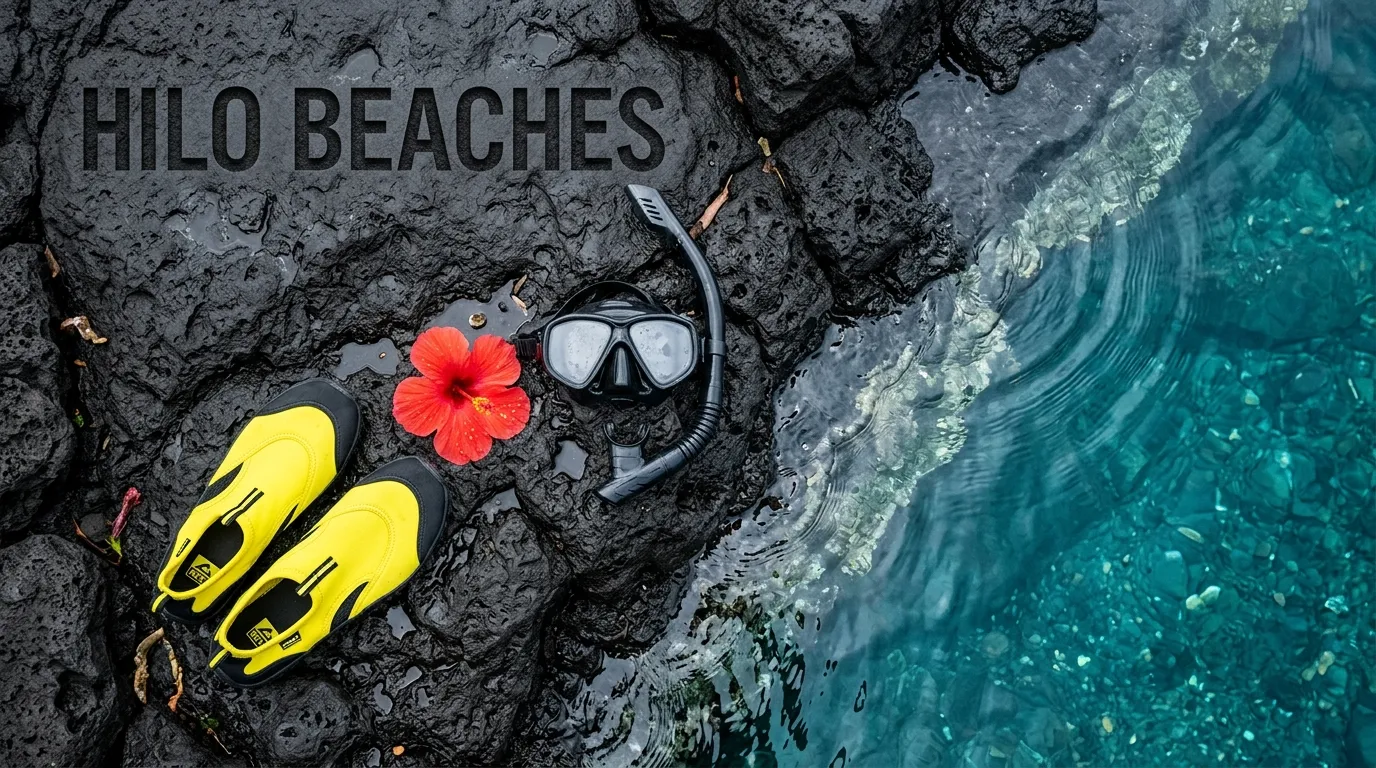
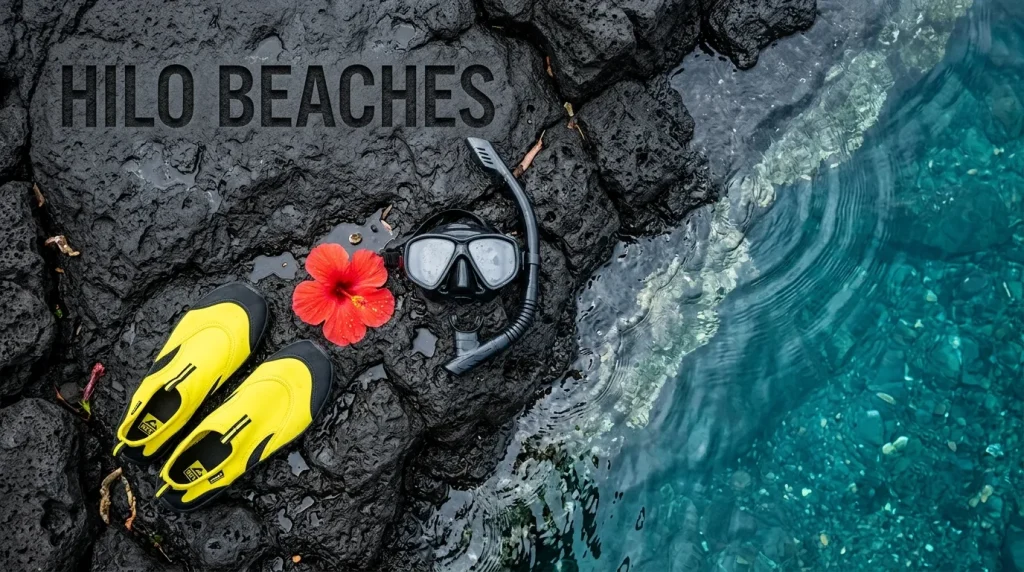
Standard beach gear is not enough for Hilo’s rocky, spring-fed coastline. You need equipment that solves the problems of sharp lava and cold water.
Packing these five items will change your experience from cautious to comfortable:
- High-quality, thick-soled water shoes (lava is razor-sharp).
- A rash guard or a thin neoprene top for the cold freshwater pockets.
- Defogging gel for your mask, since lagoon water temperature changes fog lenses instantly.
- Waterproof bandages and antiseptic cream for minor rock scrapes.
- A rain jacket, even under blue skies, because Hilo’s weather shifts in minutes.
A set of reef-safe sunscreen is non-negotiable, as standard oxybenzone-based sunscreen is banned in Hawaii. Apply it 20 minutes before entering a lagoon so it absorbs and doesn’t just wash off on the reef.
Frequently Asked Questions About Hilo Beaches
Which Hilo beach has the best snorkeling?
Richardson Ocean Park offers the best and most accessible snorkeling in Hilo.
Its protected lava cove hosts dense populations of reef fish and grazing green sea turtles.
Enter on the left side of the black sand beach and swim parallel to the lava wall.
Are there any white sand beaches in Hilo?
There are no naturally occurring white sand beaches in the Hilo area.
The white sand on Coconut Island (Moku Ola) was imported by a hotel and is not natural.
A true white coral sand beach requires a drive to the Kona side of the island.
Is it safe to swim with turtles at Hilo beaches?
Yes, it is safe to swim with turtles if you strictly obey federal law.
You must maintain a distance of at least 15 feet (4.5 meters) from any green sea turtle at all times.
Never chase, touch, or swim directly above a turtle, as this is a criminal offense.
Which Hilo beach is best for a toddler?
Onekahakaha Beach Park is the safest and best Hilo beach for a toddler.
Its massive sand-bottomed pool is naturally protected by a lava rock wall from all waves.
The water remains shallow, calm, and significantly warmer than other lagoons on the coast.
When is the best time of year to visit Hilo beaches?
The best time for swimming and snorkeling is from May through September.
These summer months bring calmer ocean swells and generally higher water clarity to the lagoons.
Winter brings high north surf that makes entries and exits at rocky beaches dangerous.
Are Hilo beach parks free?
All public beach parks in Hilo have free entry and free parking as of 2026.
The County of Hawaii Department of Parks and Recreation requires permits for large group pavilion use.
Verify this remains the case for your 2026 travel dates, but free access is the long-standing local policy.
Make Hilo’s Lava Coast Your 2026 Highlight
A Hilo beach day is not a classic tropical escape. It’s an immersion into a geologically alive coastline of cold springs and warm volcanic coves.
Do not arrive expecting soft white sand and bath-warm water. If that’s the primary goal for your 2026 trip, fly into Kona instead.
Book your accommodation on Banyan Drive for quick access to the Kalanianaʻole Avenue lagoon row. Check the Hawaii Clean Water Branch website on the morning of your swim.
All Hilo beach parks remain free, but pavilion rates and lifeguard hours can change without notice. Verify specific 2026 facility hours with the County of Hawaii Parks and Recreation before you go.
Pick one lagoon, put on your reef shoes, and go meet a green sea turtle in water that feels like a living thing. That single moment is the honest, unbeatable reason to swim in Hilo.