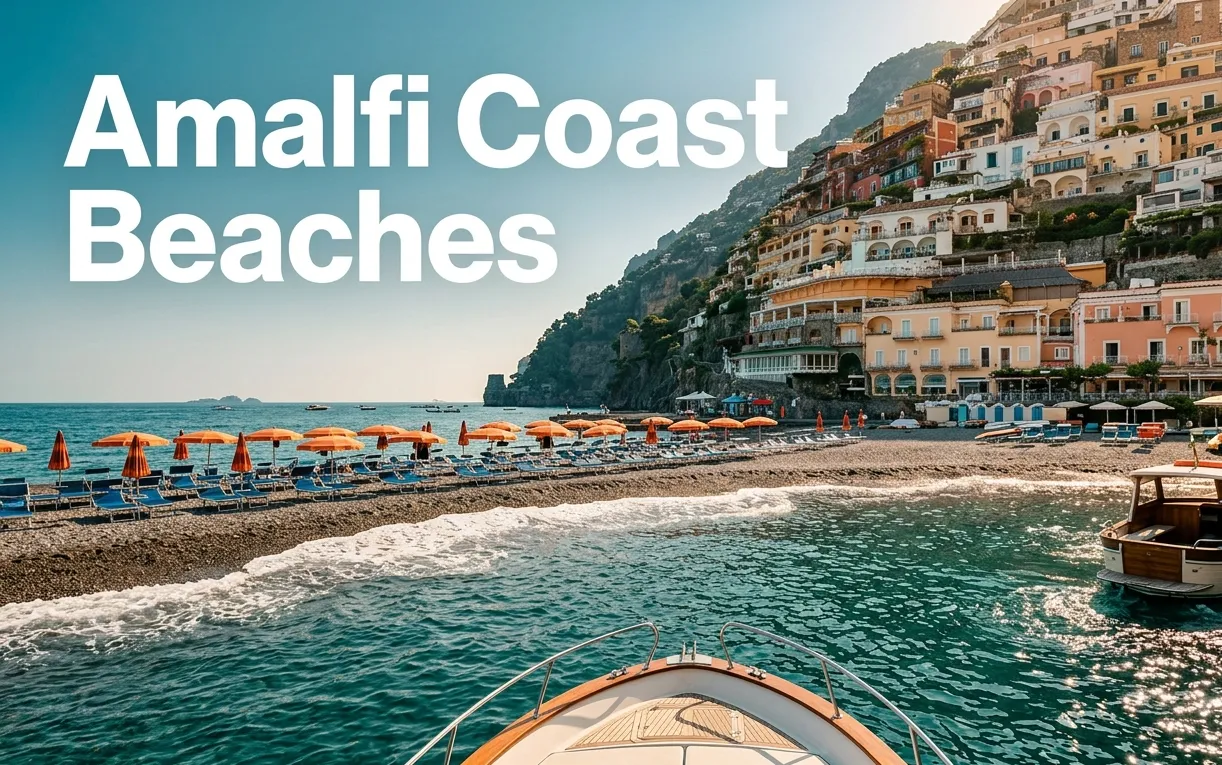
What Are Amalfi Coast Beaches Actually Like
The Amalfi Coast is not a classic long-sand beach destination. It delivers dramatic pebble coves backed by towering lemon-terraced cliffs.
Water color shifts from deep cerulean to near-emerald depending on the cove’s depth and the light. The Tyrrhenian Sea here is exceptionally clear, with visibility often exceeding 60 feet on calm days.
Pebbles dominate almost every shore, from lentil-sized to palm-sized smooth stones. Finding a truly sandy spot is rare, so water shoes are a practical necessity, not an optional accessory.
The beach scene is built around stabilimenti, private beach clubs with rows of sunbeds. Public free beaches, spiagge libere, are often narrow, crowded strips without facilities.
Your beach day is more about curated comfort and dramatic views than barefoot sand strolling. The backdrop is the real star here.
Couples and luxury seekers will find the beach club culture romantic and well-serviced. Budget travelers expecting sprawling free sand expanses will find this coast challenging and expensive.
Insider Tip:
- Never arrive without water shoes; the pebbles are hot and sharp.
- Book a beach club sunbed days ahead in July or August or you will stand.
- The most beautiful beaches are often the hardest to reach by land.
Key Takeaway: Amalfi Coast beaches are pebbly, dramatic, and best enjoyed through its beach club culture.
Spiaggia Grande Positano Beach Guide
Spiaggia Grande is the iconic Positano beach you see on every postcard. It is the coast’s most famous stretch of shoreline.
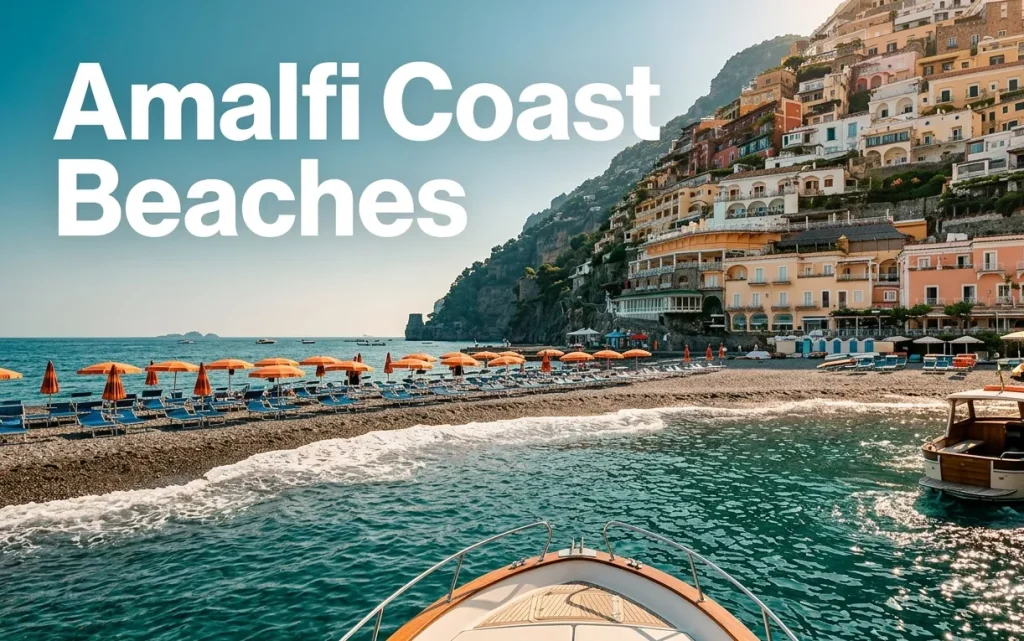
The 300-meter beach is a mix of dark volcanic sand and pebbles. Water is clean and calm but busy with ferries and small boats.
This is the social heartbeat of Positano, crowded from late morning until sunset. The cliff backdrop of pastel houses makes it genuinely stunning in person.
Public access is free at the center, though space is very tight. Paid stabilimenti like L’Incanto and Pupetto flank the public section with rows of sunbeds.
A front-row sunbed and umbrella set in peak 2026 season may run from 50 to over 80 euros. Mid-tier rows drop to roughly 30 euros.
Couples and first-time visitors will love the scene and convenience. Families with small children will find the boat traffic stressful and the drop-off steeper than expected.
July and August here are shoulder-to-shoulder packed. Arrive before 9 a.m. to secure any decent free spot or a walk-in sunbed.
The beach is a two-minute walk from the Positano ferry dock and bus stops. That total lack of stairs makes it the coast’s most physically accessible major beach.
Key Takeaway: Spiaggia Grande is for the view and scene, not for peace or budget.
Marina Grande Beach Amalfi Town Guide
Marina Grande Beach is the main waterfront of Amalfi town, a long sweep directly in front of the historic center. It is the most logistically simple beach on the coast.
The beach is mostly fine pebble with some sandy patches closer to the water. The waves are gentle, making it a safe swimming spot for most ages.
A large public spiaggia libera sits at the center, rare for a major Amalfi Coast town. You can drop your towel here without paying a euro.
Paid stabilimenti line both sides, including Lido degli Artisti and Marina Grande Beach Club. Two sunbeds and an umbrella at these clubs cost roughly 25 to 35 euros in 2026.
This beach sits steps from Amalfi’s bus terminal, ferry docks, and parking structures. No stairs are required, which is virtually unheard of elsewhere on the coast.
Families with children benefit most from this beach’s gentle entry and transport ease. Romantic travelers seeking seclusion should look elsewhere.
The sand and pebble mix is the closest thing to a classic family beach day you will find here. The adjacent promenade has cafes, gelato, and bathrooms.
The view faces the open Gulf of Salerno, not a cove, so scenery is less intimate. It still beats climbing 400 steps with a toddler and a cooler.
Key Takeaway: Marina Grande is the practical, accessible, family-sensible Amalfi Coast beach.
Arienzo Beach Positano Access and Experience
Arienzo Beach, often called Spiaggia di Arienzo, is the most celebrated beach club beach in Positano. It sits east of town, a 300-step descent from the coastal road.
The pebble beach is wide and catches sunlight from early morning until late afternoon. The water here is exceptionally clear and deepens quickly for serious swimming.
Bagni d’Arienzo Beach Club runs the full stretch with sunbeds, a restaurant, and a bar. Bookings are essential in summer, often weeks ahead for front-row spots.
A boat service runs continuously from Positano’s main dock, included with your sunbed reservation. Taking the boat saves you the brutal stair climb back up.
A full sunbed set with umbrella in 2026 will cost between 30 and 60 euros depending on the row. The beach club restaurant serves solid seafood with a view that justifies the price.
Couples and groups of friends who want a full-service beach day with music and a bar will love it. Anyone with knee issues or small children should take the boat, full stop.
The crowd skews younger and more social here than at quieter coves. The atmosphere is lively but never as chaotic as Spiaggia Grande.
The afternoon sun stays on Arienzo longer than on the main Positano beach. That makes it the best late-day swimming spot in town.
Key Takeaway: Arienzo is Positano’s best full-service beach day, but take the boat.
Fornillo Beach Positano Guide
Fornillo Beach is Positano’s quieter second beach, a ten-minute cliffside walk west from Spiaggia Grande. The path is flat enough for flip-flops and stroller wheels.
This beach is a mix of pebbles and coarse sand with a much calmer atmosphere. Fishing boats still pull up here, giving it a working-beach authenticity.
Multiple stabilimenti share the cove, including Da Ferdinando and Fornillo Beach Club. Sunbed prices are noticeably lower than at Spiaggia Grande, running roughly 20 to 35 euros for a set.
A free public section sits at the far end with decent space if you arrive by mid-morning. The swimming is excellent, with fewer boats and cleaner water than the main beach.
Families with children will find the lower-key atmosphere and reduced boat traffic perfect. Couples wanting a less performative Positano beach day will also prefer it here.
The sunset light on the Saracen tower above the cove is stunning. The beach club restaurants serve simple, honest food without the Spiaggia Grande markup.
The walk back involves a gentle slope and about 150 steps. That is still a climb but manageable for most people.
This is where Positano residents go to avoid the Spiaggia Grande circus. Take that as the strongest endorsement possible.
Key Takeaway: Fornillo gives you Positano beauty without the Positano chaos or cost.
Duoglio and Santa Croce Beaches Amalfi
Duoglio Beach is the premier beach club cove just west of Amalfi town. You reach it by descending 400 steps from the road or by a seasonal boat shuttle from Amalfi’s dock.
The beach is fine pebble with deep turquoise water that rivals any Caribbean hue. The cove is narrow and sheltered, making the water calm and swimmable almost year-round.
Santa Croce Beach is the quieter sibling, a tiny cove a ten-minute walk or swim further west. It has a single rustic restaurant and far fewer sunbeds.
Duoglio’s beach club, Lido Degli Artisti Duoglio, offers sunbeds, kayak rentals, and a seafood restaurant. Two sunbeds and an umbrella cost roughly 25 to 40 euros.
Santa Croce is reached by the same long stairs as Duoglio, then a coastal path. The isolation keeps the crowd thin even in August.
Couples and active travelers will love the adventure-to-reward ratio here. Anyone with mobility challenges or a severe stair aversion should take the boat shuttle or skip it entirely.
Kayaking from Duoglio to the hidden coves further west is a top-five Amalfi Coast experience. The sea caves and grottos along this stretch are accessible only by water.
The stair descent is intimidating but well-maintained with railings. The climb back up is the price of admission for one of the coast’s best water-quality beaches.
Key Takeaway: Duoglio and Santa Croce deliver the best water and worst stairs near Amalfi town.
| Beach | Best For | Water Conditions | Crowd Level | Insider Note |
|---|---|---|---|---|
| Spiaggia Grande | First-timers, scene-seekers | Calm, busy with boats | Extreme in summer | Book sunbeds or arrive by 8 a.m. |
| Marina Grande | Families, accessibility | Gentle, sandy patches | High | Rare no-stair beach on the coast |
| Arienzo | Couples, social groups | Clear, deep | High | Take the included boat; skip the stairs |
| Fornillo | Families, calm-seekers | Clean, few boats | Moderate | Where Positano locals go |
| Duoglio | Swimmers, kayakers | Exceptional clarity | Moderate | 400 stairs or a boat shuttle only |
| Santa Croce | Seclusion-seekers | Pristine, calm | Low | Tiny cove, one restaurant, pure peace |
Marina di Praia and La Gavitella Praiano
Marina di Praia is Praiano’s main beach, a narrow pebble cove wedged dramatically into a gorge. A Saracen tower looms above, and fishing boats line the shore.
The beach is small and intimate with a single beach club, La Scogliera, plus a small public section. La Scogliera rents sunbeds for roughly 25 to 35 euros and has a solid cliffside seafood restaurant.
The cove shelters the water exceptionally well, making it a flat calm on all but the stormiest days. The snorkeling along the gorge walls is surprisingly good for the Amalfi Coast.
Parking is a small lot above the cove, a short stair descent away. A water taxi from Positano or Amalfi is a far more relaxed approach.
La Gavitella sits on the opposite side of Praiano, facing west toward Positano. This is the rare Amalfi Coast beach that catches afternoon sun until sunset.
The beach is a concrete platform with a ladder into the sea, not a natural shore. The beach club here, La Gavitella Beach Club, is a sun-drenched, blue-and-white-styled affair with a pool.
Sunset at La Gavitella is one of the coast’s most romantic experiences. The view of Positano’s lights igniting across the bay is unforgettable.
Couples and honeymooners should prioritize La Gavitella for a late-afternoon aperitivo and swim. Marina di Praia suits those who want a genuine, unglamorous fishing-village beach experience.
Key Takeaway: Marina di Praia is authentic and sheltered; La Gavitella owns sunset.
Fiordo di Furore Beach
Fiordo di Furore is not a fjord but a stunning narrow gorge that opens to a tiny secluded beach. A 30-meter-high arched bridge spans the gorge, framing one of the coast’s most surreal views.
The beach is coarse pebble and stone, roughly 25 meters wide, tucked deep in the ravine. The water inside the gorge is cool, calm, and impossibly clear.
Access is by stairs descending from the coastal road bridge or by boat. The stairs are often closed without warning due to rockfall risk, so verify access locally in 2026 before planning your day around it.
There is no beach club, no sunbed rental, and no restaurant on the beach itself. You bring everything, including water and shade, and pack every scrap of trash back out.
The international cliff-diving competition held here annually draws huge crowds on one summer weekend. Every other day, it is a raw, self-sufficient, wildly beautiful swim spot.
Adventurous swimmers and photographers will find this place unforgettable. Families with children or anyone needing facilities should not consider it.
The bridge above offers a dramatic photo from the road without any stair descent. The true experience is swimming in the deep green water with the bridge arch soaring overhead.
Boat access avoids the stair closure issue entirely. Hire a small boat from Amalfi or Positano for the most reliable approach.
Key Takeaway: Fiordo di Furore is a wild, facility-free swim cove; verify stair access or arrive by boat.
Maiori and Minori Long Sandy Beaches
Maiori Beach is the longest stretch of genuine sandy beach on the Amalfi Coast. At nearly a kilometer long, it is a true anomaly for this rocky shoreline.
The sand is dark volcanic, coarse and packed firmly. The water entry is gradual and shallow, making it the single best beach on the coast for young children.
A long promenade lined with stabilimenti, cafes, and gelato shops runs the entire length. Lido Mediterraneo and Lido Eden are solid beach club choices with sunbed sets from 20 to 35 euros.
Minori Beach, a short walk or one bus stop from Maiori, is a smaller but equally sandy crescent. Minori feels like Maiori’s quieter, more local sibling.
Both towns sit on the flattest part of the Amalfi Coast, drastically reducing stair reliance. Parking is more available here than in Positano or Amalfi.
Families with children of any age will find Maiori and Minori vastly more practical than the cliffside coves. Couples seeking dramatic, iconic Amalfi Coast scenery may find these beaches less visually thrilling.
The sand is still not powdery Caribbean soft, but your kids can build a castle here. That is simply not true at 95 percent of the coast’s other beaches.
Maiori’s promenade has playgrounds and easy access to casual, affordable pizzerias. The entire setup is designed for a relaxed family day, not a high-concept beach club production.
Key Takeaway: Maiori and Minori are the family beach answer on a family-challenging coast.
Spiaggia del Cavallo Morto and Other Hidden Coves
Spiaggia del Cavallo Morto is a secret-level cove near Maiori accessible only by boat or a steep goat path. The name translates to “Dead Horse Beach,” which undersells its beauty significantly.
The beach is fine pebble with water so clear it glows under direct sun. It sits at the base of a cliff with no road, no stabilimento, and no facilities whatsoever.
Baia di Ieranto, near Nerano on the Sorrento Peninsula edge, is another pristine cove reachable by a two-hour hike or boat. The bay is within the Punta Campanella Marine Protected Area, so the marine life is abundant.
Laurito Beach near Positano is a tiny cove with just one restaurant, Da Adolfo. A free boat shuttle from Positano’s dock runs for diners, making access surprisingly simple.
Tordigliano Beach is a long, wild stretch between Positano and Praiano accessible by a challenging downhill trail. No services, no people, just raw coastal beauty for those willing to earn it.
Budget travelers and solitude-seekers should target these spots with a packed lunch and a sense of adventure. Luxury-seekers will find the zero-service setup frustrating.
Erchie Beach near Cetara offers a middle ground, a stunning cove with two small stabilimenti and a village feel. The local seafood at the beachside trattorias here is legendary.
The best hidden coves share one rule: arrive by boat or earn them with effort. That filter is exactly what keeps them quiet.
Key Takeaway: The coast’s most beautiful coves require a boat, a hike, or both.
Best Amalfi Coast Beach Clubs and Stabilimenti
The Amalfi Coast invented the beach club as an art form. A stabilimento here is not just a sunbed rental; it is a full-day cultural experience.
Da Adolfo in Laurito is the cult-favorite beach club and restaurant near Positano. Its free boat shuttle, rustic deck, and grilled mozzarella on lemon leaves are legendary.
Bagni d’Arienzo in Positano is the best full-service, social beach club on the coast. The included boat service, quality restaurant, and lively atmosphere justify its higher sunbed prices.
One Fire Beach Club in Praiano is the coast’s boho-chic, DJ-sunset, younger-crowd option. It is built on a rocky platform with direct sea access and a bar that runs into the evening.
La Gavitella Beach Club in Praiano is the best sunset-facing setup. The pool, the white-and-blue styling, and the Positano view make it the most romantic late-afternoon destination.
Lido degli Artisti in Amalfi is a solid, mid-priced, family-friendly stabilimento. It has a pool, a restaurant, and easy walk-on access from Amalfi’s center.
Beach club sunbed pricing is tiered by row and season. Front-row sunbeds at a premium Positano club in August can run from 50 to 100 euros or more for two beds and an umbrella.
Most clubs serve lunch, drinks, and coffee directly to your sunbed. Tipping the bagnino who manages your section is standard, typically 5 to 10 euros at the day’s end.
Book your sunbeds online or by phone at least one to two weeks ahead for any weekend in June through September. Walk-ins during peak season almost always fail at the popular clubs.
Key Takeaway: Amalfi beach clubs range from rustic and food-focused to full-blown luxury social scenes.
Amalfi Coast Beaches for Families with Children
Maiori Beach is the single best Amalfi Coast beach for families with young children. The sand, the shallow entry, and the flat promenade solve the coast’s three biggest family challenges.
Marina Grande Beach in Amalfi town is the runner-up for families. The sandy-pebble mix, lack of stairs, and central location make logistics manageable with kids.
Fornillo Beach in Positano works well for families with school-age children. The calmer atmosphere, cleaner water, and easy cliff walk from town hit the right balance.
Avoid steep-access coves like Arienzo or Duoglio with children under eight unless you take the boat. The stair count on these beaches is a genuine safety and exhaustion concern.
Beach clubs with pools offer the best of both worlds for families. Lido degli Artisti in Amalfi and Lido Mediterraneo in Maiori both have pool access included with sunbed rentals.
Pack water shoes for every child regardless of the beach. Pebbles heat up rapidly, and the shoreline is almost never soft underfoot.
Public free beaches are the hardest family option because they lack shade, bathrooms, and a safe place to leave belongings. Spending the 25 to 40 euros on a stabilimento sunbed set buys you a stress-free base.
The Amalfi Coast is fundamentally not designed as a family beach destination. Choose your beach with parking proximity and stair count as your primary filters, not Instagram aesthetics.
Key Takeaway: Maiori, Marina Grande Amalfi, and Fornillo are the only truly family-friendly beaches.
Best Amalfi Coast Beaches for Couples and Romance
La Gavitella Beach Club in Praiano is the single most romantic beach setting on the Amalfi Coast. The west-facing sunbeds, the Positano view, and sunset swims make it built for couples.
Fiordo di Furore delivers raw, dramatic romance for adventurous couples. Swimming in the narrow gorge with the bridge arch above is a shared memory that outlasts any sunset cocktail.
Santa Croce Beach near Amalfi is the intimate, forget-the-world-exists cove couples dream of. One restaurant, a handful of sunbeds, and water so clear it looks filtered.
Arienzo Beach in Positano is the best date-day beach club. The boat shuttle, the lively but not obnoxious atmosphere, and the excellent lunch restaurant strike the right tone.
For honeymooners, a private boat day is the single best investment. Hire a small boat with a skipper from Positano or Amalfi and have coves like Baia di Ieranto or Tordigliano entirely to yourselves.
Avoid Spiaggia Grande for a romantic beach day unless you are there for the social scene. The crowd density erases any sense of intimacy by 10 a.m.
Book a sunset dinner at a beach club restaurant, not just a sunbed. Da Adolfo and Santa Croce both serve dinner on the sand in peak season with advance reservations.
The Amalfi Coast is fundamentally a couples’ destination. The beach experience reflects that, with most clubs designed around pairs of sunbeds and shared seafood platters.
Key Takeaway: La Gavitella for sunset, Santa Croce for seclusion, and a private boat for the honeymoon moment.
Amalfi Coast Beach Access, Parking, and Stairs Guide
Beach access on the Amalfi Coast almost always involves descending a significant number of stairs. Marina Grande in Amalfi, Maiori, and Spiaggia Grande are the rare exceptions.
Assume a minimum of 150 to 200 stairs for any cove beach. Duoglio, Arienzo, and Santa Croce push past 400.
Parking a car anywhere near a popular beach in summer is a costly, high-stress undertaking. Public lots in Positano charge 5 to 8 euros per hour, and they fill by 9 a.m.
The SITA bus and Travelmar ferry are the correct way to move between beaches. Ferries link Positano, Amalfi, Maiori, Minori, and Cetara reliably from April through October.
Water taxis from Positano or Amalfi eliminate stairs entirely for coves like Arienzo, Laurito, and Santa Croce. A water taxi ride costs 25 to 60 euros per trip depending on distance and negotiation.
Boat shuttles included with beach club reservations are a massive logistical advantage. Prioritize clubs that offer this service if you have children or any physical limitation.
Do not rent a car specifically for beach-hopping on the Amalfi Coast. The single-lane SS163 road is a parking lot from June through September, and parking at beaches is never guaranteed.
Pack extremely light for beach days. A heavy cooler becomes a dangerous burden on 400 stairs in 90-degree heat.
Key Takeaway: Ferries, water taxis, and beach club boat shuttles beat driving every time.
Best Time to Visit Amalfi Coast Beaches in 2026
June and September are the gold-standard months for Amalfi Coast beaches in 2026. Water is warm, the sun is strong, and the crowds are manageable outside of peak midday hours.
July and August deliver the warmest water, hovering near 80 degrees Fahrenheit. They also deliver crushing crowds, peak sunbed pricing, and scarce parking at any hour.
May offers mild swimming and blooming cliffside flora with very thin crowds. Water temperature sits around 65 to 68 degrees Fahrenheit, which is brisk but swimmable for the determined.
October is the wildcard month, often warm enough for swimming through mid-month. Some beach clubs begin closing in the second half of October, so verify your target club’s 2026 closing date.
The first week of August through Ferragosto on August 15 is the absolute peak of chaos. Avoid this period entirely unless you thrive on elbow-to-elbow beach density.
Morning hours from 8 a.m. to 10 a.m. are sacred on the Amalfi Coast. The water is glassy, the light is golden, and the beaches are nearly empty even in peak season.
After 4 p.m., the crowds thin and the heat softens. A late afternoon swim followed by an aperitivo is the local rhythm.
Ferry and bus services reduce significantly from November through March. Many beach clubs dismantle their sunbeds entirely for the winter season.
Key Takeaway: June and September are the sweet spot; August is for extreme crowd tolerance only.
Amalfi Coast Beach Safety and Swimming Conditions
The Tyrrhenian Sea along the Amalfi Coast is generally calm and safe for swimming. The steep shoreline means water deepens quickly, so non-swimmers and children must be closely supervised.
Rip currents are rare but possible on windy days at west-facing coves. Know to swim parallel to shore if caught, and never fight the current directly.
Boat traffic at Spiaggia Grande and Marina Grande is a genuine swimmer safety concern. Stay within the marked swimming zones and keep your head on a swivel for approaching ferries.
Jellyfish are an occasional issue, typically arriving on warm currents in mid-summer. The mauve stinger is the most common variety here; its sting is painful but not dangerous for most people.
Vinegar or seawater rinses help with stings; do not use fresh water as it triggers more venom release. Lifeguards at beach clubs can advise on current conditions.
Water shoes protect against sharp rocks, sea urchins, and hot pebbles. Buy them before your trip; beachside vendors charge a steep markup.
The sun is intensely strong from 11 a.m. to 3 p.m. in summer months. Reef-safe sunscreen is mandatory, as the Punta Campanella Marine Protected Area restricts harmful chemical sunscreens.
Beach club stabilimenti have trained lifeguards on duty during operating hours. Public free beaches do not, so swim with a partner and know your limits.
Key Takeaway: Safe swimming is easy here; boat zones, jellyfish days, and sun intensity are the real risks.
What Tourists Get Wrong About Amalfi Coast Beaches
Tourists arrive expecting long, soft, white-sand beaches and find pebbly coves. The Amalfi Coast’s beach beauty is vertical, not horizontal.
Visitors underestimate the stair factor significantly. A “short walk to the beach” here means 300 steps down and, critically, 300 steps back up in the afternoon sun.
Many assume they can wing it with free public beaches. On peak summer days, a spiaggia libera is a towel-to-towel strip with zero shade.
People think a car is necessary for a coastal vacation. A rental car on the SS163 in summer is a liability that costs you hours of beach time in traffic and parking hunts.
Travelers book July or August thinking “summer vacation” without realizing Ferragosto chaos. The entire country of Italy is on holiday and compressed onto these same coves.
Many visitors skip the ferry system, not realizing it is the most efficient and scenic transit. The view of the coast from the water is the best perspective you will get.
Budget travelers arrive unprepared for the sunbed economy. A beautiful beach day here costs 25 to 80 euros in sunbed rentals unless you are extremely strategic about spiagge libere and timing.
The Amalfi Coast is a masterpiece best enjoyed with planning, a budget for comfort, and a willingness to earn the best spots. That reality rewards the prepared traveler enormously.
Key Takeaway: This is a vertical, pebbly, beach-club coast; plan for that and you will love it.
Frequently Asked Questions About Amalfi Coast Beaches
Does the Amalfi Coast have sandy beaches?
Yes, but they are rare and mostly dark volcanic sand, not soft white sand.
Maiori and Minori offer the longest sandy stretches on the coast.
Most other beaches are pebble or rock, so bring water shoes.
What is the best beach on the Amalfi Coast for families?
Maiori Beach is the best beach for families due to its sand and gradual water entry.
Marina Grande in Amalfi is a close second with no stairs and central facilities.
Both offer beach clubs with pools, bathrooms, and nearby restaurants.
How much do beach clubs cost on the Amalfi Coast?
Expect to pay 25 to 50 euros for two sunbeds and an umbrella at a mid-range stabilimento.
Front-row sunbeds at top Positano beach clubs in August can cost over 80 euros.
Prices drop significantly in June, September, and at clubs outside Positano.
Can you swim in the sea on the Amalfi Coast?
Yes, the Tyrrhenian Sea is clean, calm, and swimmable from May through October.
Water temperatures peak near 80 degrees Fahrenheit in August.
Stay inside marked swimming zones to avoid boat traffic at major beaches.
What is the most beautiful beach on the Amalfi Coast?
Fiordo di Furore is the most visually dramatic beach, a tiny cove in a deep gorge.
For a full-service beach club, Arienzo Beach in Positano is a stunning choice.
Beauty here often correlates with difficulty of access.
Do you need to book Amalfi Coast beach clubs in advance?
Yes, booking sunbeds in advance is essential from June through September.
Popular clubs like Da Adolfo and Bagni d’Arienzo fill up weeks ahead.
Book online or by phone before you travel to guarantee a spot.
The Amalfi Coast rewards travelers who understand its beaches are pebbly, vertical, and club-centric. Book your sunbeds and boat shuttles before you arrive. That single planning step transforms a hot, stair-heavy scramble into a curated Mediterranean beach day exactly as you imagined it. Beach club pricing, ferry schedules, and specific access conditions change seasonally. Verify the details directly with your chosen stabilimento or the Travelmar ferry service for 2026 before you commit.