Best Beaches in Southern California for 2026: The Real Guide
Southern California beaches are not the warm-water paradise most first-time visitors expect. They are something far more interesting and active. Knowing which beach matches your trip style is the entire game here.
California State Parks manages over 25 major coastal units between San Diego and Malibu. The coastal system sees over 50 million day visits annually.
This guide cuts through the generic best-of lists. It gives you 15 specific beaches, an honest seasonal reality check, and the logistical details most guides skip. You will know exactly where to go.
Southern California Beach Type Overview
Southern California beaches fall into three distinct geographic and personality zones. The type of beach experience changes dramatically as you drive north from San Diego. Understanding these zones will save you from picking the wrong vibe.
San Diego County beaches offer the most consistent, gentle surf and finest sand. Water temperatures here also run slightly cooler than points north in summer. The beach culture is laid-back and community-focused.
Orange County beaches provide long, uninterrupted stretches of sand with reliable surf breaks and upscale, polished beach towns. This is the classic California surf culture epicenter. Luxury resorts and manicured piers define the landscape here.
Los Angeles County beaches deliver dramatic scenery with cliff-backed coves and wide, iconic strands. This is the most theatrical coastline. You get people-watching at Venice, beauty at El Matador, and sheer scale at Zuma Beach.
Key Takeaway: Pick your county first based on the vacation personality you want. Let that decision guide your beach selection.
Best Southern California Beaches Ranked by Category
The best beach for you is not a single winner. It depends entirely on whether you are surfing, sunbathing with toddlers, or seeking a romantic sunset. This head-to-head table cuts through the noise.
| Beach Name | Best For | Swimming Quality | Scenery | Crowd Level |
|---|---|---|---|---|
| Coronado Beach | Families, Walkers | Gentle, Shallow | Iconic Hotel Backdrop | High Near Hotel |
| La Jolla Cove | Snorkeling, Views | Clear, Protected Reserve | Dramatic Cliffs | Very High |
| Crystal Cove | Nature Lovers | Clear, Rocky Entry | Unspoiled Bluffs | Moderate |
| Huntington City | Surfing, Volleyball | Moderate Surf | Classic Pier | High |
| El Matador Beach | Photography, Couples | Cold, Rocky | Sea Stacks, Caves | Moderate-Low |
| Zuma Beach | Large Groups, Games | Wide, Gentle Slope | Malibu Mountains | High on Weekends |
Coronado Beach sits on a peninsula across the bay from downtown San Diego. Its sand contains mica, which makes it sparkle gold. The iconic Hotel del Coronado anchors the southern end.
La Jolla Cove is an ecological reserve with near-guaranteed sea lion sightings. The water visibility inside the protected cove can reach 30 feet on a calm day. Parking here is a notorious challenge by 9:00 AM in summer.
Crystal Cove State Park near Newport Beach is the anti-Orange-County beach. Its historic district has 1930s beach cottages you can rent months in advance. The offshore reef creates decent snorkeling conditions by SoCal standards.
Best Family Beaches in Southern California
The best family beach in Southern California is Coronado Beach in San Diego. Its flat, wide sand slope creates a natural shallow wading pool at low tide. The gentle waves lack the punishing shore break that terrifies parents at other beaches.
Moonlight Beach in Encinitas is the single best-equipped family beach for a full day. It has a brand-new playground, volleyball courts, and a concession stand with hot food. The adjacent parking lot never feels enough, so arrive by 8:30 AM on weekends.
Mother’s Beach in Marina del Rey earns its nickname honestly. This is a protected inlet with zero waves. The water is calm enough for a toddler’s first swim.
The downside is that still water can mean lower water quality after heavy rain. Check the county health advisory for bacteria levels before you go. Families with strong swimmers above age eight will find it boring after an hour.
Key Takeaway: For a first-time family beach day, Coronado or Moonlight provide the best mix of safety, facilities, and actual fun.
Best Beaches in Southern California for Swimming
The best beach for pure, calm-water swimming in Southern California is La Jolla Cove. Its status as an underwater ecological reserve protects it from boats and surfboards. This creates a natural, clear-water swimming pool.
Corona del Mar State Beach in Newport Beach sits at the mouth of a harbor. The jetty eliminates big surf, creating a half-mile stretch of manageable water. The water here feels warmer than the open coast because the harbor flushes warmer bay water out with the tide.
Open-ocean swimming in SoCal comes with a constant caveat. Rip currents are a serious reality at steep, unguarded beaches. Always swim in front of an open lifeguard tower.
For lap swimmers, the long, straight stretch from Santa Monica to Venice is unbeatable. The soft sand creates a predictable bottom contour. You can swim uninterrupted for a mile parallel to the shore in summer.
Best Beaches for Couples and Romance
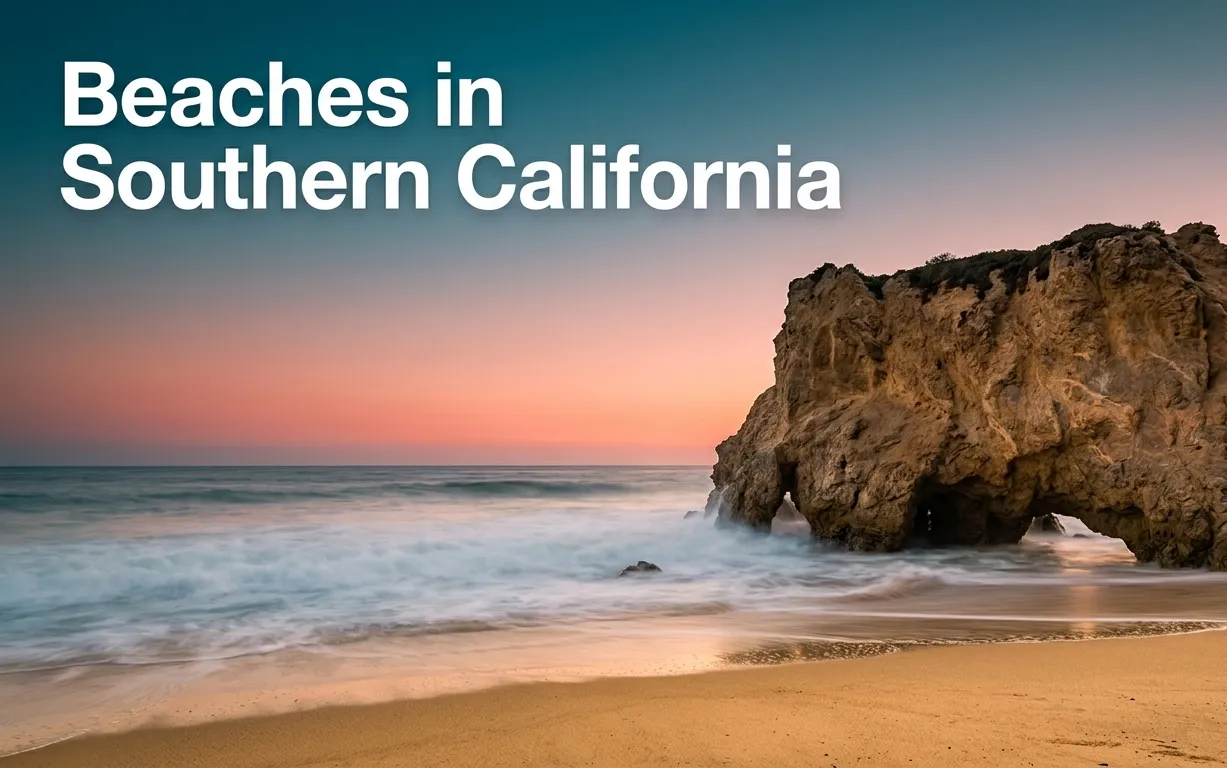
For couples, the most romantic beach in Southern California is El Matador Beach in Malibu. Massive sandstone sea stacks and natural arches create a theatrical, private-feeling landscape. The steep staircase down the cliff deters the casual tourist crowd, making it feel like a hidden discovery.
Thousand Steps Beach in Laguna Beach lives up to its name. The demanding stair descent filters out all but the most determined visitors. At low tide, you can walk north to a secret sea cave that feels completely detached from the world above.
Do not plan a romantic beach picnic at sunset without a backup plan. The marine layer can roll in on a May evening and completely erase the sunset. The most reliable month for cloudless sunset skies is October.
Couples seeking a resort-backed romantic experience should book at the Surf & Sand Resort in Laguna Beach. The property is literally built into the sand at the edge of the surf line. You can hear the waves crash from your private balcony without any public boardwalk noise.
Key Takeaway: Romance in SoCal means finding a cove that requires physical effort to access, which naturally creates a more intimate setting.
Warmest Beaches and Water Temperatures
The warmest ocean water in Southern California is consistently found in south-facing Orange County and San Diego. The warmest single beach spot is typically La Jolla Shores or Newport Beach in August. Water temperatures here peak at a genuinely comfortable 72 degrees Fahrenheit.
Do not expect the bathtub water of Florida or the Caribbean. The California Current brings cold water down from Alaska. A September swim at Coronado Beach is far warmer than a June swim at Zuma Beach.
Water temperatures can swing 10 degrees in a single day depending on wind. A persistent offshore wind pushes the warm surface water out to sea. This brings icy, 50-something-degree water right to the shoreline in a process called upwelling.
For the statistically warmest water, plan your trip for late August through early September. This is when the shallow water has been baking all summer. The air temperature is also at its peak, making the cold plunge feel more refreshing.
Prettiest Beaches and Best Scenery
The single prettiest beach for sheer, dramatic California beauty is El Matador Beach. Its towering, eroded sandstone formations look like a miniature, accessible Big Sur. Photographers clog the parking lot at golden hour every single evening.
For the most beautiful and wide-open horizon, Sunset Cliffs in San Diego offers a completely different aesthetic. You don’t sit on the sand here. You perch on the carved sandstone bluffs and watch the surf explode into the irregular caves below.
The beauty of Point Dume in Malibu is in its vantage point. A short, easy trail climbs to a flat, protected plateau. From the top, you can scan the entire Santa Monica Bay for migrating gray whales in March.
Crystal Cove State Park protects 3.2 miles of backcountry coastline from any development. This is the most beautiful undeveloped sandy stretch in Orange County. The beach looks exactly as it did in the 1930s before the Pacific Coast Highway was a major artery.
Key Takeaway: For a one-hour stop to take the best photograph, choose El Matador or Sunset Cliffs over a standard flat beach.
Best Surf Spots for Beginners
The best surf spot for a first lesson is La Jolla Shores in San Diego. The wave is a slow, rolling, forgiving beach break that peels gently to both sides. Multiple surf schools operate directly on the sand with city-issued permits for lessons.
San Onofre State Beach is the cultural heart of longboarding. The wave is slow and mushy, which is perfect for a beginner riding a nine-foot foam board. The downside is that the scene is old-school and territorial, so a lesson here provides essential surf etiquette cover.
Avoid Huntington Beach as a first-timer despite its “Surf City USA” branding. The waves close out fast and heavy on the sandbar. This is a punishing, frustrating wave for anyone who cannot read the peak and pop up in two seconds.
The best month to learn is July or August. The south swells are consistent but mild. The water is also as warm as it gets, letting you stay out for a two-hour lesson without a high-end wetsuit.
Best Beaches for Snorkeling and Tide Pools
The single best snorkeling spot in Southern California is La Jolla Cove. The ecological reserve protects a massive kelp forest and resident schools of bright orange Garibaldi. Visibility in the calm summer shallows can reach 25 feet, revealing rays buried in the sand.
For tide pools, Leo Carrillo State Park in Malibu is the most accessible and rewarding site. A vast, flat rock reef called Sequit Point is exposed at low tide. During a good minus tide in winter, you will find sea stars, anemones, and hermit crabs in impossibly dense clusters.
Little Corona del Mar in Newport Beach offers beginner-friendly tide pools just a few steps from the parking lot. The rocks here form a natural bowl that retains water after the tide recedes. It is the best spot for children under eight to see marine life safely.
Never turn your back on the ocean while searching tide pools. A rogue set wave can sweep over the rocks without warning, especially at Leo Carrillo in a winter swell. Check the tide chart before you drive out.
Key Takeaway: Water visibility for snorkeling is best in late summer and fall when the swells are calmest.
Best Beach Towns and Boardwalks
The definitive Southern California boardwalk experience is the Mission Beach and Pacific Beach Strand. It is a three-mile concrete ribbon of humanity filled with rented cruisers, skateboards, and families. The energy is pure coastal chaos, anchored by the old-school wooden Giant Dipper roller coaster at Belmont Park.
Balboa Peninsula in Newport Beach offers a more polished boardwalk. It is the best place for a family bike ride on a flat, paved path. You can stop at the Balboa Pier for a milkshake or take the tiny ferry across the harbor for a quiet afternoon.
For a beach town that feels like a European resort village, Laguna Beach is unmatched. The main beach, Main Beach, is just steps from art galleries, fine dining, and boutique hotels. You can watch a world-class sunset and walk to a five-star meal in two minutes.
Huntington Beach is the best beach town for a sports-centric, high-energy trip. The main pier is a magnet for surf contests and volleyball tournaments. The sprawling beachfront Hyatt Regency hotel offers a resort pool complex directly across from the pier.
Uncrowded and Secluded Beaches
There are no completely secret beaches left in Southern California. The key to finding space is choosing a beach with zero parking lots. El Pescador State Beach in Malibu is a small, exposed parking pull-off with no signs, which means the vast majority of tourists drive right past it.
Walk ten minutes north of any major state beach parking lot and the crowd density drops by 90 percent. At Zuma Beach, the space between lifeguard tower 4 and the north end is often nearly empty even on a Saturday in August.
The most isolated-feeling beach experience is at Santa Rosa Island in Channel Islands National Park. This requires a three-hour boat ride from Ventura. The pay-off is a white-sand beach backed by torrey pines and the constant sound of barking sea lions.
For a drive-to option, Black’s Beach below the Torrey Pines Gliderport is expansive. The steep, unpaved trail down the cliff requires a 20-minute hike. This barrier keeps the beach relatively empty, but note that the north section is clothing-optional.
Key Takeaway: Seclusion is earned through physical effort. The further you hike from the parking lot, the more room you get.
Best Beaches for Bonfires in Southern California
The best concentration of first-come, first-served fire pits is at Huntington City Beach. Concrete rings sit directly on the sand just south of the pier. On a summer Saturday, you must arrive by 6:00 AM to stake a claim, but a secured pit makes for a legendary evening.
Corona del Mar State Beach offers a smaller, more intimate bonfire setup. The pits sit between the jetty and the cliff, sheltering you from the afternoon wind. The view of the boats entering Newport Harbor adds a unique backdrop.
Dockweiler State Beach directly under the LAX flight path is the most urban bonfire experience. Jets roar overhead at 3,000 feet as you roast marshmallows on the sand. It is a uniquely Los Angeles beach evening.
Fire pits are not guaranteed. The city of San Diego, for example, bans them on all city beaches. You can have them only in designated rings at state parks or specific Orange County beaches. A propane fire pit is a legal, convenient alternative that avoids the pit-competition stress.
La Jolla vs. Laguna Beach: An Honest Comparison
La Jolla is a biological powerhouse, and Laguna is an artistic masterpiece. A traveler searching for wildlife will be disappointed by Laguna. A traveler wanting a refined, romantic village will find La Jolla’s tourist scene too broad.
Choose La Jolla if your trip priority is an active, in-water nature experience. The kayak tours to the Seven Sea Caves and the snorkeling at the Cove are the region’s best. The dining scene is excellent but geographically spread across the sprawling village, requiring a car.
Choose Laguna Beach if your trip priority is a romantic, walkable, scenic escape. The entire town is a compact, traversable map of coves, galleries, and cliffside restaurants. The swimming and surfing are significantly rougher and more dangerous than in La Jolla.
La Jolla’s sand at La Jolla Shores is wide and soft, ideal for toddlers and running. Laguna’s iconic coves like Victoria Beach and Thousand Steps are narrow and get swallowed at high tide. For a luxury hotel on the sand, the Montage Laguna Beach beats anything La Jolla can offer directly on the water.
Key Takeaway: For pure beach play, go to La Jolla. For a romantic, culture-rich beach town stay, pick Laguna.
Parking, Access, and Beach Logistics
Parking is the single greatest source of beach-day misery in Southern California. Any city beach lot from Santa Monica to San Diego fills completely by 10:00 AM on a summer weekend. Your day must be planned around the parking strategy, not the sun.
State Parks like Crystal Cove and Leo Carrillo charge a day-use parking fee of roughly $15 to $20. This is the best money you will spend all day because it guarantees you a spot and supports critical park infrastructure. Do not cheap out on a $15 fee that saves an hour of circling.
Residential neighborhoods near popular beaches have permitted-only parking zones. Read the street signs with paranoid attention. A parking ticket on Balboa Peninsula is a strict $60-plus souvenir you do not want.
For Venice Beach and Santa Monica, park in a downtown structure and walk three blocks. Trying to park within sight of the sand will break your spirit and your timeline. The multi-story lots on 2nd Street in Santa Monica offer the most affordable all-day rates near the pier.
The Pacific Surfliner train is an underused logistical weapon. It stops right at the beach in San Clemente, Oceanside, and Solana Beach. A car-free beach day is possible if you plan around these walkable stops.
The Honest Seasonal Guide to SoCal Beaches
The single best month for a Southern California beach vacation is September. The summer crowds have collapsed as kids return to school. The ocean water reaches its maximum annual temperature after three months of continuous sun.
May and June are frequently the most disappointing beach months. A dense marine layer called “May Gray” and “June Gloom” can block the sun until 2:00 PM. You can sit on a cold, gray beach for hours waiting for a sky that never clears on the worst days.
Winter is the season of extremes. A January day during a Santa Ana wind event can be 80 degrees with a crystal-clear sky. A January day during a winter storm can be 55 degrees with 10-foot waves and horizontal rain.
April is the wild card and a local favorite. The winter swells are fading, the spring flowers bloom on the coastal bluffs, and the big summer tourism machine has not yet woken up. Water remains cold in the low 60s, so this is a walking-and-beach-combing month, not a swimming month.
Check the surf forecast and marine layer satellite image every morning of your trip. This data point determines your beach choice more than any static guide. A west-facing beach like Hermosa will be sunny while a cove in Laguna sits under clouds.
Key Takeaway: Book your serious beach trip for September or October. Use May and June for culture and dining, not sunbathing.
Safety and Seasonal Warnings for Southern California Beaches
The ocean here is a powerful, cold, and dynamic machine that deserves significant respect. The rip currents at steep, unguarded beaches like those in Malibu are lethal. Never enter the water at an unguarded beach if you are not a strong, ocean-aware swimmer.
Key safety and seasonal facts every visitor should know:
- Sneaker Waves: Large, unexpected waves can sweep across dry sand and rocks. Never turn your back on the ocean at the shoreline.
- Cold Water Shock: Water in the 50s can trigger an involuntary gasp reflex. Wade in slowly and control your breathing, especially on hot days.
- Cliff Instability: The sandstone bluffs in Del Mar and Torrey Pines are prone to collapse. Never sit directly at the base of a cliff.
- Red Tide: A bioluminescent algae bloom at night is magical. During the day, it can deplete oxygen and cause respiratory irritation. Check for beach advisories.
- Stingrays: Shuffle your feet in the sand when entering shallow water in Seal Beach and Huntington. This is the “stingray shuffle” and it prevents painful barb stings.
Call 911 for all ocean rescues. The Los Angeles and San Diego County Lifeguards are the most skilled and well-equipped ocean rescue professionals in the world. Signal a lifeguard tower immediately if you see someone struggling.
Frequently Asked Questions About Southern California Beaches
What is the absolute best beach in Southern California for first-time visitors?
Coronado Beach is the best beach for first-time visitors.
It provides the iconic wide, flat sand and manageable surf that defines the SoCal dream.
The historic Hotel del Coronado gives you a landmark backdrop and a place to grab lunch.
Which Southern California beach has the warmest water right now?
Late summer water peaks in south-facing San Diego and Orange County.
La Jolla Shores in August and September typically records the warmest readings.
Verify the latest NOAA buoy data for current temperatures before you go.
Where can I find the best tide pools in Southern California?
Leo Carrillo State Park in Malibu offers the most extensive and accessible tide pools.
A vast rock reef is exposed during a low tide, especially in winter.
Visit during a minus tide of -1.0 or lower for the most rewarding experience.
Is it warm enough to swim at Southern California beaches in October?
Yes, ocean temperatures in early October are at their warmest annual peak.
Water temperatures in San Diego often hold at 68 to 70 degrees.
A neoprene top or a thin wetsuit keeps you comfortable for a long session.
How much does parking cost at Southern California state beaches?
Day-use parking at State Park lots ranges from $15 to $20.
This fee guarantees a spot inside the park boundary and funds vital coastal maintenance.
City lots and meters vary widely but are often more expensive for all-day stays.
What is the least crowded beach in Southern California during summer?
El Pescador State Beach in Malibu is one of the least crowded beaches.
Its tiny, unmarked parking pull-off limits the crowd to just a few cars.
Any beach reachable only by a 15-minute walk from the nearest lot will also feel secluded.
Your Next Beach Day Starts Here
Southern California has a beach for every possible version of a perfect coastal day. The trick is not finding the best beach on a list. The trick is matching the specific beach to the specific weather, swell, and season of your travel dates.
Do not fight the marine layer in June. Do not search for a quiet cove in July at high noon. Book a State Park parking lot early, check the tide and surf report, and let your itinerary follow the sun.
A great SoCal beach trip hangs on small, boring logistics, not just which sand you pick. Verify the parking situation and the marine layer forecast the night before. Resort amenities, fire pit rules, and seasonal lifeguard hours change without notice, so confirm those details with the property or managing agency directly before you lock in your plan.