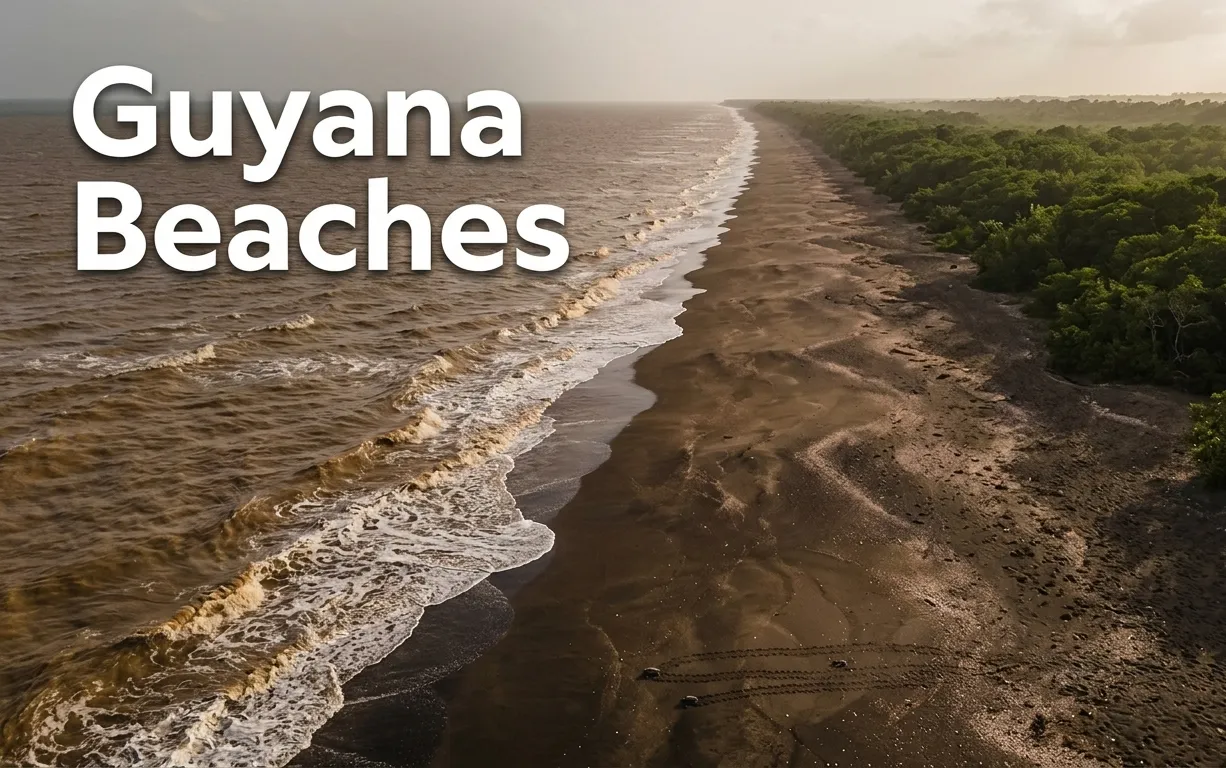
Guyana Beaches Overview
Guyana beaches are not what a typical beach vacationer expects. This is a wild, muddy, and ecologically vital Atlantic coastline.
The ocean water along the 270-mile coast is brown. This comes from the massive silt outflow of the Amazon River to the south.
You do not visit Guyana for turquoise water or white sand. You come for one of the world’s most important turtle nesting sites and raw, empty landscapes.
The coastline is mostly soft mud, mangrove forests, and wild shell-covered shores. It is undeveloped, remote, and profoundly rewarding for the right traveler.
Riverine beaches on the Essequibo River offer blackwater, tea-colored swimming. These are the spots for a refreshing dip in a jungle setting.
According to the Guyana Tourism Authority, the country promotes itself as a sustainable eco-tourism destination. Its beaches are a critical piece of that ecological story.
Nature lovers and eco-tourists will find this coastline a genuine frontier. Resort-focused travelers should look to the Caribbean islands instead.
Key Takeaway: Guyana’s beaches are an ecological treasure, not a vacation paradise. Set your expectations for wildlife, not white sand.
What Are Guyana Beaches Like
Guyana’s Atlantic beaches are wide, flat, and constantly reshaped by powerful ocean currents. The sand is typically beige, gray, or dotted with crushed shells.
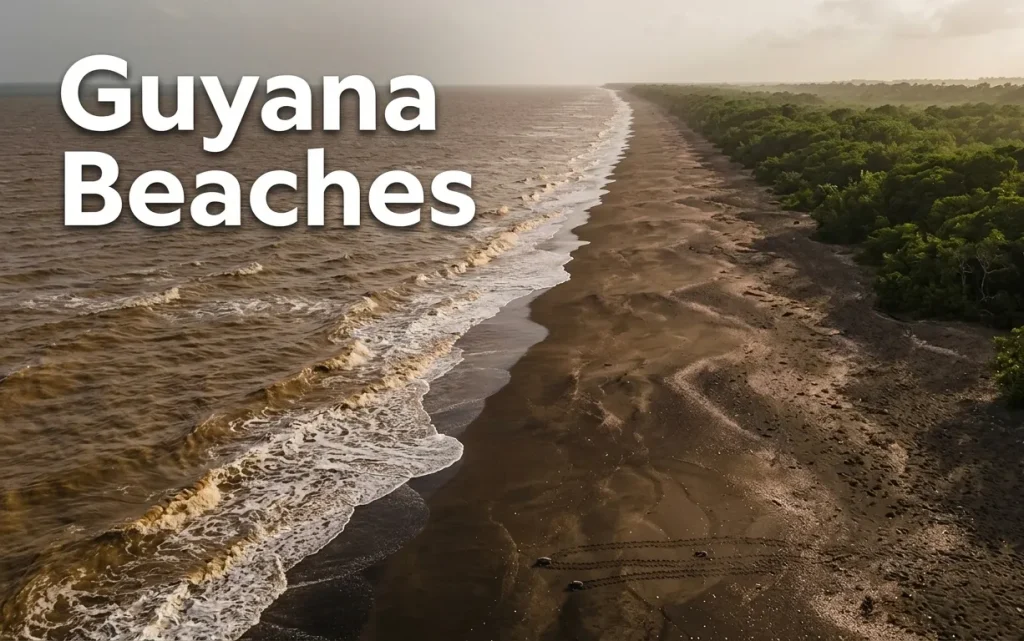
The defining feature is the water color. It is a milky brown, coffee-with-cream hue from suspended river sediment.
This sediment plume extends for miles out to sea. It creates a nutrient-rich environment that feeds a vast marine ecosystem.
The Georgetown Seawall is the most accessible place to see this dynamic coast. It is a long concrete wall protecting the city from the high Atlantic tides.
Walking the seawall at sunset is a local ritual. You see the brown water, the mudflats, and the immense South American sky.
Riverine beaches are a completely different experience. The Essequibo River near Bartica has clean, cool, and dark “blackwater” that is perfectly swimmable.
Budget travelers will find the coast accessible by local bus. However, the experience is rough, and infrastructure for tourists is minimal.
Shell Beach Guyana
Shell Beach is the crown jewel of Guyana’s coastline and its single most important conservation area. It stretches for roughly 90 miles along the northwestern coast.
This remote protected area is one of the world’s premier nesting grounds for four species of sea turtles. The leatherback, green, hawksbill, and olive ridley all nest here.
The beach is not continuous sand in the traditional sense. It is a mixture of sand, mud, and mangroves, constantly changing with the fierce Atlantic tides.
There are no hotels, bars, or restaurants on Shell Beach. Accommodation is in rustic, community-led eco-camps like the one run by the indigenous Warapoka community.
Eco-tourists and wildlife photographers will find the experience unforgettable. It is a raw, no-frills conservation immersion, not a luxury escape.
The sounds at night are a symphony of frogs, birds, and the ocean. Seeing a 1,500-pound leatherback haul herself up the beach to nest is a life-list event.
Insider Tip: Book your trip through a reputable Georgetown-based tour operator. Independent access is logistically difficult and not recommended for first-time visitors.
63 Beach Berbice Guyana
63 Beach is the most popular local beach spot on the Corentyne coast. It is located near the historic town of New Amsterdam in the Berbice region.
This is a long, wide stretch of light beige and gray sand. The Atlantic water is brown with silt, but the beach itself is a lively weekend scene.
The beach got its name from its location 63 miles from the old sugar estates. It is a cultural and social hub, not a pristine natural escape.
On weekends, local families arrive with music, food, and coolers. Vendors sell cold Banks Beer and fresh seafood right on the sand.
Budget travelers and cultural explorers will get a genuine slice of Guyanese life. You will likely be the only international visitor, which is part of the charm.
The nearby 63 Beach Resort offers basic rooms, a restaurant, and a pool. It is the most developed beachfront accommodation on Guyana’s entire coastline.
Swimming is possible but expect zero underwater visibility. The waves can be rough, and you should never swim alone or far out.
Number 63 Beach Guyana
Number 63 Beach is simply the main public access point along the 63 Beach stretch. It is often used interchangeably with the name 63 Beach.
This is where the largest concentration of food stalls and weekend visitors gather. The atmosphere is festive and loud, especially on public holidays.
Local tour operators from Georgetown sometimes run day trips here. It is a long, bumpy, several-hour drive east from the capital.
The sand here is compact and firm. Cars can drive and park right on the beach in designated areas, a true South American beach tradition.
Families with children will find the shallow water at low tide relatively safe for wading. Constant adult supervision is mandatory due to strong rips.
Solo travelers can connect with friendly locals easily here. Guyanese hospitality is warm, and a shared beer leads to quick friendships.
Bring cash, as there are no ATMs. The food stalls are cash-only, and you will want to try the fresh pepper shrimp and garlic crab.
Key Takeaway: 63 Beach is Guyana’s social beach, not a secluded retreat. It thrives on weekends and is best skipped on a rainy weekday.
Almond Beach Resort Guyana
Almond Beach Resort was once the premier beach getaway on the Corentyne coast. As of recent reports, it has been in various states of operation and closure.
Historically, this resort offered the closest thing to a traditional beach hotel in Guyana. It had a pool, bar, and rooms facing the wild Atlantic.
Before planning a trip here, verify the current operational status directly. The resort has changed ownership and management multiple times.
When operational, it serves as the most comfortable base for exploring the Corentyne’s turtle nesting. The nesting here is less famous than Shell Beach but still significant.
The property faces the same brown Atlantic water as the rest of the coast. The benefit is the pool for a clear, clean swim after a day on the sand.
Couples seeking a private, low-key escape will find it suitable if it is open. Do not expect luxury; expect rustic comfort in a remote setting.
The nearest town is Crabwood Creek, a short drive away. You will need a vehicle to reach the resort, as public transport is sparse.
Baganara Island Resort Beaches
Baganara Island Resort sits on a private island in the vast Essequibo River. This is the best riverine beach experience in all of Guyana.
The water here is not brown like the ocean. It is a dark, tea-colored “blackwater” that is clean, warm, and completely swimmable.
The resort has a soft, sandy beach area lined with palm trees. You can swim, kayak, or simply float in the calm, freshwater current.
This is a genuine, accessible tropical island experience that contrasts sharply with the coast. The island is a 30-minute speedboat ride from the town of Bartica.
Couples and honeymooners will find this the most romantic beach-adjacent option in Guyana. Day passes are typically available for non-guests, but verify before visiting.
The resort offers all-inclusive day and overnight packages. Pricing is mid-range by international standards but premium for Guyana.
The silence at night, broken only by frog calls and the river lapping, is deeply restorative. It pairs perfectly with a trip into the interior or a visit to Kaieteur Falls.
Bartica and Essequibo River Beaches
Bartica is the gateway to Guyana’s interior and the Essequibo River. The town and its surroundings have several natural white sand beaches on the riverbanks.
Marshall Falls and Kyk-Over-Al ruins are popular day-trip destinations. Both feature a picnic area and a small, clean, freshwater beach.
These riverine beaches have actual white and golden sand. The water is a cool, dark, tannin-stained blackwater, not muddy like the coast.
This is the swimming beach experience many visitors assume Guyana lacks. You swim surrounded by dense, untouched Amazonian rainforest.
Local speedboat operators in Bartica can be hired for day trips. Negotiate the price clearly before departing, and bring your own food and water.
Adventure travelers and families with older children will enjoy exploring the river. The combination of beach, history, and waterfalls makes for a perfect day.
The sun is intense, and shade can be limited on the sand. Bring a hat, reef-safe sunscreen, and insect repellent for the sand flies at dusk.
Turtle Watching Guyana Beaches
Turtle watching is the single greatest beach activity in Guyana. The country is a nesting ground of global significance, rivaling Trinidad’s Matura Beach.
Shell Beach Protected Area is the primary site, but the entire coast is active. Four of the world’s seven sea turtle species come here to lay eggs.
The season peaks from March through August. Night tours must be booked through licensed operators who work with the indigenous community-led patrols.
Tours involve walking silently along the dark beach with a guide. The moment a leatherback emerges from the surf under moonlight is genuinely profound.
Flash photography and white lights are strictly forbidden. Only guides use a low-red-light torch, as bright light disorients the nesting females.
Wildlife photographers need a fast lens and high ISO capability. The conditions are dark, sandy, and challenging for equipment.
Insider Tip: The end of the dry season, around July and August, often offers the most reliable weather and the highest nesting activity on a single night.
How to Get to Shell Beach Guyana
Getting to Shell Beach is a multi-stage, logistically complex journey. There is no road; it requires a 4×4 transfer, a river launch, and an ocean boat ride.
The most common route starts with a flight or long drive from Georgetown to the Mabaruma or Santa Rosa region. From there, a boat navigates the coast to the eco-camps.
The journey can take a full day or more each way. Bad weather can easily cause a multi-day delay, so build flexibility into your itinerary.
Organized tours handle all the intricate logistics. They arrange the permit, boat captain, guides, and basic meals at the camp.
This trip is not for budget backpackers trying to go independently. The coordination required with indigenous communities and boat captains is complex.
Solo travelers should join a small group tour to share the cost. Private charters are prohibitively expensive.
The wet season, especially May and June, can make the ocean leg very rough. Small boats batter against the chop, and seasickness is almost guaranteed for some.
Key Takeaway: A trip to Shell Beach is a serious expedition, not a day trip. You must book a licensed, community-partnered tour months in advance.
Guyana Beach Transportation and Logistics
Guyana’s beach infrastructure is minimal. You must embrace a spirit of adventure and patience to access the coast.
The main coastal road from Georgetown to Berbice is paved but long. A journey to 63 Beach can take three to four hours one way.
Beyond the main road, unpaved tracks and river crossings require a high-clearance 4×4. A local driver with knowledge of the tides is essential.
Public minibuses are the budget option but are slow, crowded, and unreliable for beach access. They do not reach remote spots like Shell Beach trailheads.
Internal flights with Trans Guyana Airways or Air Services Limited save immense time. The flight from Georgetown to Bartica or Mabaruma is a critical logistical shortcut.
Budget travelers should focus on 63 Beach via bus. Eco-tourists heading to Shell Beach should book an all-inclusive package that handles every transfer.
Carry snacks, water, and a fully charged power bank. Services are rare once you leave the main towns, and a breakdown can leave you stranded for hours.
Best Time to Visit Guyana Beaches
The best time to visit Guyana’s coast for dry weather is mid-February to April and mid-August to November. These windows avoid the heaviest rains.
For turtle nesting at Shell Beach, the optimal months are March through August. The best crossover of dry weather and high nesting activity is March, April, July, and August.
The heavy rainy season from May through August makes the roads to Shell Beach a quagmire. Even with a 4×4, deep mud can stop any vehicle.
The Atlantic coast is always humid and hot, with temperatures consistently in the 80s Fahrenheit. The sea breeze helps, but the sun is intense near the equator.
December and January are a secondary rainy season along the coast. The weather is unpredictable, with sudden heavy tropical downpours.
Photographers should aim for the dry season windows. The light is better, and the risk of your gear getting soaked is far lower.
Verify specific 2026 turtle season forecasts with the Guyana Marine Turtle Conservation Society or your tour operator. Nesting activity shifts slightly each year.
Guyana Beaches for Nature and Eco Travelers
Guyana’s beaches are purpose-built for the nature-focused traveler. The wildlife payoff is immense for those willing to endure the rough edges.
A trip combines seamlessly with Guyana’s interior highlights. You can link Kaieteur Falls, the Iwokrama Rainforest, and the coast into one epic itinerary.
Birdwatchers will be in heaven. The coastal mangroves and mudflats teem with scarlet ibis, herons, and migratory shorebirds.
The community-led conservation model at Shell Beach is a genuine travel highlight. Your visit directly funds indigenous patrols that protect turtles from poachers.
Luxury seekers have almost no options on the coast. The luxury in Guyana is the exclusive access to nature, not high-thread-count sheets or butler service.
Pack a comprehensive medical kit, including strong insect repellent and anti-malarials. The sand flies and mosquitoes are relentless, especially at dawn and dusk.
A visit to Guyana’s wild beaches is a badge of honor for an eco-traveler. It is a raw, unfiltered, and deeply memorable experience that few travelers have on their radar.
Safety and Seasonal Warnings for Guyana Beaches
Guyana’s remote beaches present genuine safety challenges. You are often hours from medical help, and the ocean currents are deceptively strong.
Key safety and seasonal facts every visitor should know:
- The ocean has powerful rip currents and zero underwater visibility. Do not swim alone, and never swim far from shore on the Atlantic coast.
- Roads to remote beaches become impassable in the rainy season. Always travel with a satellite phone or a local guide who knows the conditions.
- Insect-borne diseases, including malaria and dengue, are present. Use DEET-based repellent, wear long sleeves at dusk, and sleep under a treated net.
- The remote coast has no lifeguards, no rescue services, and no medical facilities. Carry a comprehensive first-aid kit and any necessary prescription medications.
- Sand flies and mosquitoes are extremely aggressive at Shell Beach. Bring heavy-duty, expedition-grade repellent and treat your clothing with permethrin.
Contact the Guyana Tourism Authority or your lodge for the most current security advice before traveling to any remote area.
Frequently Asked Questions About Guyana Beaches
Does Guyana have nice beaches?
Guyana has ecologically fascinating and culturally vibrant beaches, but not “nice” in the classic Caribbean sense.
The Atlantic water is brown with silt, and the sand is mostly gray and shell-covered.
The riverine beaches on the Essequibo are much more appealing for a classic swim with white sand.
Can you swim in the ocean in Guyana?
Yes, you can swim in the Atlantic Ocean, but the water is brown and visibility is zero.
Rip currents are strong and unpredictable, so never swim alone or far from shore.
The best swimming in Guyana is in the clean, tea-colored blackwater of the Essequibo River.
What is Shell Beach in Guyana known for?
Shell Beach is known as one of the world’s most important nesting sites for four species of endangered sea turtles.
The 90-mile protected coastline sees leatherback, green, hawksbill, and olive ridley turtles nest from March through August.
It is a remote, community-managed conservation area, not a resort.
What is the best time to see turtles in Guyana?
The best time is from March through August, with nesting activity peaking between April and July.
Night tours from community eco-camps offer the chance to see leatherbacks lay their eggs.
You must book through a licensed operator and follow strict rules about lights and noise.
Are there any white sand beaches in Guyana?
Yes, true white sand beaches exist on the islands and banks of the Essequibo River.
Baganara Island Resort and river beaches near Bartica offer soft, clean sand and swimmable water.
The Atlantic coast does not have white sand, only a gray and shell-based shoreline.
Is it safe to visit the beaches in Guyana?
The remote beaches are safe for travelers who join organized, reputable tours with local guides.
Independent travel to remote spots like Shell Beach is not safe due to lack of infrastructure and communication.
In populated areas like 63 Beach, use common sense with belongings and avoid swimming alone.
Guyana’s beaches are a secret weapon for the eco-traveler. They deliver raw, powerful wildlife encounters that a classic resort holiday simply cannot match.
Your next step is to contact a specialist Guyana tour operator. A well-planned package linking Shell Beach turtles with Kaieteur Falls will define your year.
Verify all 2026 access road conditions, turtle season projections, and domestic flight schedules before booking anything. The wild coast of Guyana is waiting for those ready to trade comfort for genuine discovery.