Somalia Beaches in 2026: A Risk-Calibrated Guide
Somalia possesses Africa’s longest coastline and its most dangerously misunderstood beaches. The country is not a single-risk zone.
The stable, self-declared Republic of Somaliland offers manageable coastal travel. Southern Somalia, including Mogadishu, demands a serious, professional security architecture.
This guide draws a hard, honest line between the two regions. It names specific beaches, explains the precise access protocols, and details the non-negotiable logistics you must verify before booking any flight in 2026.
Somalia Beaches
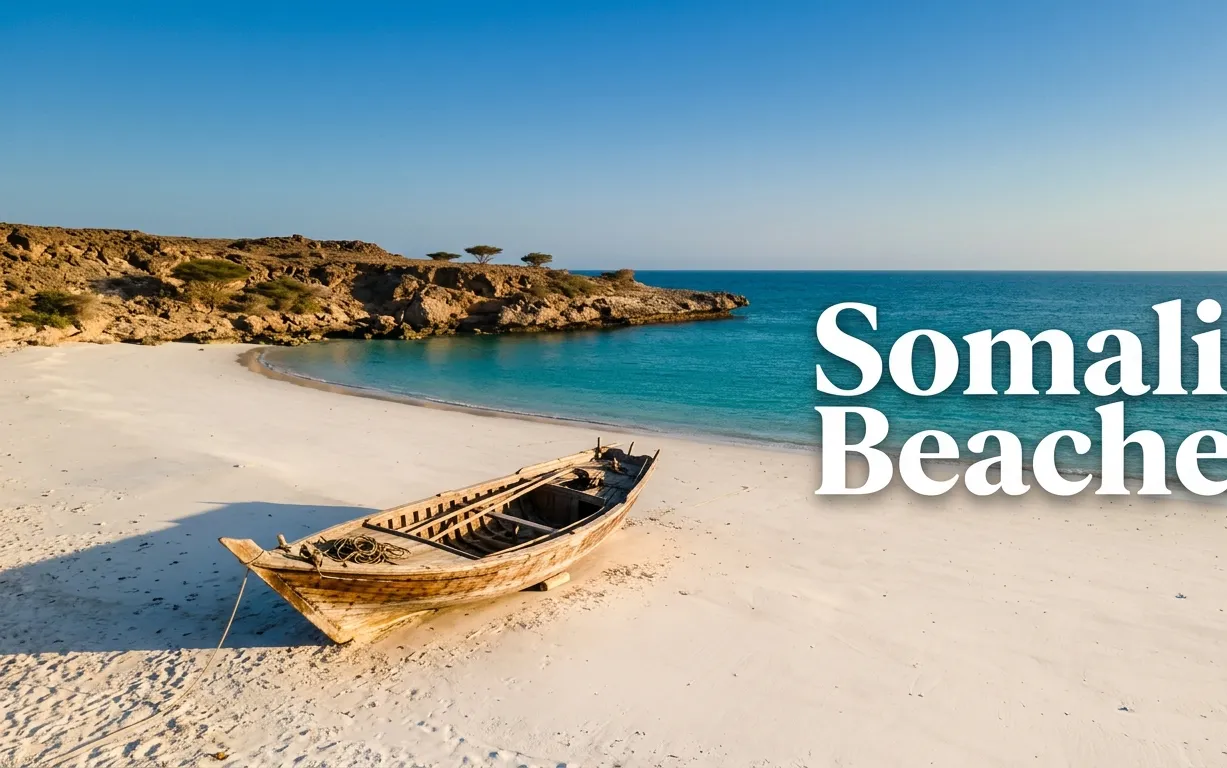
Somalia’s coastline stretches over 3,300 kilometers, facing both the Gulf of Aden and the Indian Ocean. The beach landscape is not a tourist product.
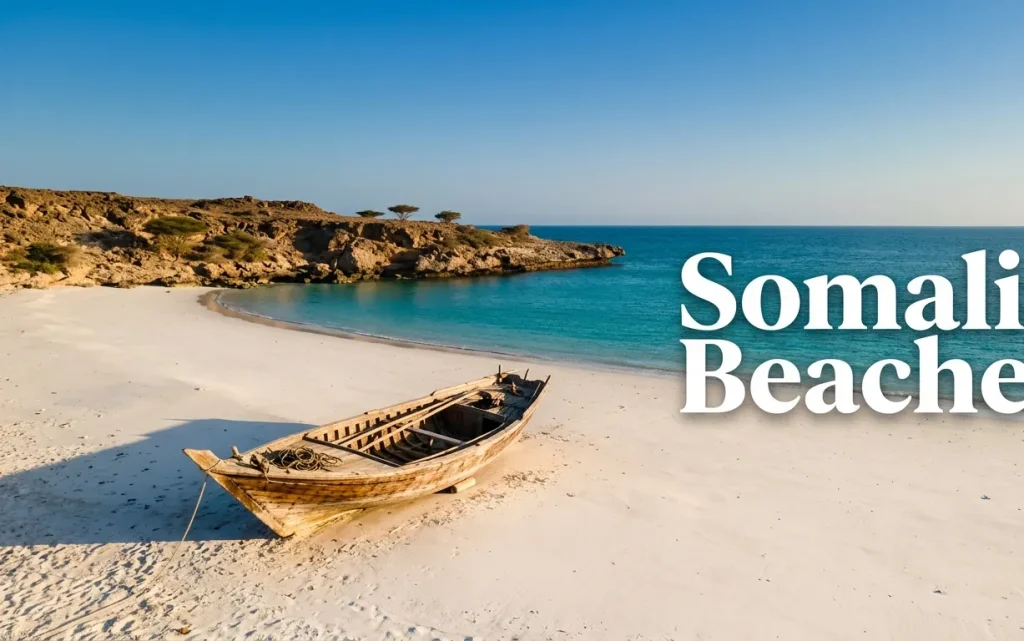
You will find endless, wind-scoured white sand, often completely empty. The water shifts from a deep, dark blue in the churning summer to a brilliant turquoise over the coral reefs in the calm season.
The beaches are a raw, physical, and profoundly uncommercialized frontier. Your experience here is entirely dependent on the security architecture you build around yourself.
Beaches in Somalia
The beach experience in Somalia splits into two distinct worlds. The southern beaches near Mogadishu are an intense, security-heavy immersion in a city rebuilding itself.
The northern coast of Somaliland offers a completely different reality. The historic ports of Berbera and Zeila provide relatively easy access to empty, pristine coves without the fortified-vehicle requirement.
Never confuse the two. A security plan designed for Berbera will fail catastrophically in Mogadishu.
| Beach Name | Region | Security Tier | Honest Scenery | Access Note |
|---|---|---|---|---|
| Lido Beach | Mogadishu | HIGH (Armed Guard) | Urban, Powerful Swell | Fixer + Secure Driver Mandatory |
| Jazeera | Mogadishu | HIGH (Armed Guard) | White Sand, Reef Break | Fixer + Secure Driver Mandatory |
| Berbera | Somaliland | MEDIUM (Guide Only) | Empty Desert-Mountain Coast | Fly to Hargeisa, Drive 2-3 Hours |
| Zeila | Somaliland | MEDIUM (Guide Only) | Historic Ruins, Flat Water | Fly to Hargeisa, Long Drive |
| Baathela | Somaliland | LOW | Turquoise Coves, Cliffs | Best Drive from Berbera |
Key Takeaway: The word “Somalia” disguises two different beach travel realities with two different rulebooks.
Lido Beach Mogadishu
Lido Beach is the living, beating heart of Mogadishu’s resilience, a wide arc of pale sand right on the city’s eastern edge. It is a social phenomenon, not a peaceful resort.
On a calm Friday, thousands of Mogadishu residents gather here. The water is a deep, powerful blue with a strong, dumping shore break that demands respect from swimmers.
You cannot simply walk onto this sand. A visit requires a local fixer and an armed guard detail coordinated through a secure, reputation-vetted company.
Lido is for the most deeply experienced conflict-zone travelers. It is categorically not for families, couples seeking romance, or anyone unprepared for an armed security presence to dictate their beach day.
The adjacent restaurants serve freshly caught lobster. The paradox of enjoying a seafood feast yards from armed guards is the defining Lido experience.
Jazeera Beach Mogadishu
Jazeera Beach, located south of Mogadishu, offers a more physically beautiful and slightly removed coastal landscape. The sand here is whiter, the dunes more pronounced, and the reef system more intact.
The surf break at Jazeera is genuinely world-class, a powerful right-hand reef point. It breaks at a distance, so a local boat captain familiar with the security zone is essential.
The overland route to Jazeera can be more exposed than central Lido. A current security assessment from a UNDSS-informed contact on the route’s status is a non-negotiable pre-departure step.
Surfers with high-budget, high-risk tolerance have made the pilgrimage. The reward is a perfect, empty wave, but the cost of the security entourage makes this a $500+ USD per day operation.
Berbera Beach Somaliland
Berbera is the great emancipated Somali beach city, a crumbling Ottoman-era port on the Gulf of Aden. The coastline here is a stark, beautiful sweep of sand backed by the Martian-red Gollis mountains.
The beach at Baathela, a short drive east, is the prize. Turquoise water laps against a white sand cove framed by low, rocky cliffs.
The water is calm, warm, and completely swimmable. This is the only place in the Somali territories where a traveler can experience a truly relaxing, guard-free beach day.
Couples and independent travelers will find Berbera a surreal, unforgettable base. The town’s decaying architecture and traditional dhow boat-building yards are as compelling as the beach.
Bold Attributed Fact:
The Somaliland Ministry of Trade and Tourism reports a slow increase in visitor numbers to the Berbera corridor. They publicly guarantee safety for tourists who use a registered local guide.
Zeila Beaches Somaliland
The coastline near Zeila, close to the Djibouti border, is the most historically layered and visually eerie in the territory. The sand is a blinding white, punctuated by the ruins of ancient mosques and colonial buildings.
The water here is exceptionally shallow and flat for a great distance. This is the best spot on the Somali coast for safe, wading swims and birdwatching among the mangroves.
Zeila is extremely remote. The drive from Hargeisa is long and requires a trusted, 4×4-equipped driver with desert convoy experience.
Solitude-seeking adventurers and photographers will find Zeila’s crumbling grandeur unmatched. Budget travelers must factor in the high cost of fuel and a multi-day driver retainer.
Key Takeaway: Zeila rewards the dedicated pilgrim with a landscape of haunting, windswept beauty completely free of other tourists.
Baathela Beach
Baathela Beach is the single most visually perfect beach in the Somali territories, an intimate cove near Berbera. The water achieves a genuine, bright-turquoise color rarely seen on the mainland coast.
The sand is clean, white, and the seabed is sandy, making for a rare, completely rock-free entry. A small, seasonal beach camp often operates here during the winter months, offering basic grilled fish.
This is the unequivocal top choice for the traveler profile seeking a classic, safe, and beautiful beach escape. Snorkelers will find some coral just off the point to the east.
The limitation is a lack of formal facilities. You must bring all your own water, shade, and supplies from Berbera town, about thirty minutes away.
The Best Swimming Beaches in Somalia
The safest, most serene swimming beach in the Somali territories is Baathela Beach near Berbera. Its sandy bottom, protected cove shape, and calm, clear water are in a class of their own.
Zeila’s vast, shallow tidal flats provide safe, flat wading for hundreds of meters. This is ideal for cooling off but not for a deep, vigorous swimming session.
The swimming at Lido Beach in Mogadishu is a powerful, adrenaline-soaked dip in a dangerous shore break. It is not a relaxing swim and is only for very strong, confident swimmers operating within the flagged security zone.
Never swim alone anywhere on the Somali coast. The powerful Somali Current, shifting tides, and a complete absence of formal lifesaving services mean you are always your own primary safety net.
Surfing in Somalia
Somalia holds some of the best and most inaccessible waves on the planet, with the undisputed epicenter at the reefs near Jazeera Beach. The point break delivers a long, powerful, and perfectly shaped right-hander.
The surf season is driven by the monsoon winds. The best, cleanest swells arrive from December to March on the north coast and June to September on the south’s exposed points.
No surf infrastructure exists. You must charter a boat and captain vetted by your security fixer in Mogadishu to even access the Jazeera lineup.
This is for professional-grade surfers with expedition-level budgets. The cost of a one-week surf-focused trip with full security in southern Somalia typically runs from $3,500 to $7,000 per person.
Beach Safety in Somalia
Beach safety in Somalia is a multi-layered concept. The primary threat in the south is not drowning or marine life, but politically motivated violence.
The ocean itself presents serious natural hazards. The rip currents at Lido are notoriously strong, and the Kharif wind season from June to September churns the sea into a chaotic, unswimmable mess.
For Mogadishu, adhering to a strict security protocol is life-saving. This means following your guard’s instructions instantly, avoiding any predictable routine, and wearing conservative clothing that blends in, not beachwear.
For Somaliland, the danger is minimal beyond petty theft. The primary safety rule is to never wander off into remote areas without your local guide, as landmines from past conflicts remain a risk in some hinterland locations.
Bold Attributed Warning:
Always consult your country’s official travel advisory and the UN Department of Safety and Security (UNDSS) reports. The security environment is fluid and can degrade within a 24-hour window. Your fixer is your only reliable real-time source.
Key Takeaway: The ocean can kill you, but in Mogadishu, the security threat is the one that demands a professional, paid team.
Somalia Beach Resorts and Hotels
A classic “beach resort” does not exist anywhere in Somalia. The accommodation infrastructure is functional, secure, or basic, never luxurious.
In Mogadishu, the standard is a secure, walled compound hotel like the Peace Hotel or Jazeera Palace Hotel. These provide hard-shell security and are the only viable base from which to take a fixer-coordinated beach trip.
In Berbera, accommodation is simpler but more free. Small guesthouses and the seasonal Baathela Beach Camp provide direct beach access without a security cordon.
Luxury seekers must completely recalibrate their expectations. The premium you pay in Mogadishu is for a concrete blast wall, a reliable generator, and armed guards, not for high-thread-count sheets.
How to Plan a Beach Trip to Somalia
Planning a beach trip to Somalia in 2026 is an exercise in logistics and security contracting. Your first and only non-negotiable step is to choose your region.
To plan a trip to the safe Somaliland coast:
- Apply for a Somaliland visa on arrival at Hargeisa Egal International Airport (HGA).
- Pre-book a reputable driver and guide through a trusted in-country network.
- Base yourself in Berbera and plan day trips to Baathela and the historic town.
- Budget $150 to $250 per day for a guide, 4×4, food, and simple accommodation.
To plan a trip to the high-risk Mogadishu coast:
- Do not attempt this without a professional, paid security fixer.
- Book a secure compound hotel and arrange for a B6-rated armored vehicle and two-man armed detail for any beach movement.
- The daily security and logistics cost alone will range from $300 to $500, excluding accommodation.
- Prepare a communications plan with your fixer and leave a copy with your embassy.
High-risk travel insurance with a kidnapping and ransom rider is mandatory. Verify your policy specifically covers travel to Somalia.
Best Time to Visit Somalia Beaches
The best time to visit Somali beaches is the winter dry season from November to March. The temperatures are hot but tolerable, and the Kharif wind is finally silent.
The water visibility during these months is at its peak, with the turquoise clarity revealing the reefs and the sand. This is the only viable window for a surf trip.
The worst time is the summer Kharif wind season from June through September. Relentless, sand-blasting winds make the beach physically painful and the sea dangerously rough.
The shoulder months of April and October are the hottest and most humid. These periods are physically draining and offer no advantage over the prime winter window.
| Month | Season | Security Risk | Travel Feasibility |
|---|---|---|---|
| Dec-Mar | Dry, Calm | Lower | Best window. |
| Apr-May | Hot, Transitional | Fluctuates | Acceptable but uncomfortable. |
| Jun-Sep | Windy, Rough | Higher (Political) | Avoid. |
| Oct-Nov | Calming, Transitional | Fluctuates | Viable, verify security status. |
Key Takeaway: November to March is the only window that delivers both safe weather and the most stable political environment.
Somali Beach Culture and What to Expect
Somali beach culture is a powerful, open-air social gathering, not a quiet, individualistic pursuit. Expect crowds of families, loud music, and groups of men playing football, particularly at Lido on a Friday.
Your behavior and dress are under intense local scrutiny. For women, this means a modest, full-coverage swimsuit with a sarong and a top, and for men, swimming in a t-shirt and knee-length shorts is the most respectful and socially invisible approach.
The khat-chewing session is a pervasive afternoon ritual, especially in the south. You will be offered it; a polite but firm “no thank you” is culturally acceptable.
Photography is a deeply sensitive act. Never photograph individuals, especially women, or any security infrastructure without explicit permission.
Frequently Asked Questions About Somalia Beaches
Is it safe to go to the beach in Mogadishu?
No, it is not safe without a hired, professional armed security detail and a local fixer.
The risk of targeted violence is real and constant, requiring a hardened vehicle and a specific protocol.
A casual, independent beach visit is not possible under the current 2026 security posture.
Do I need a visa for Somaliland?
Yes, most nationalities can obtain a Somaliland visa on arrival at Hargeisa Egal International Airport (HGA).
The cost is typically around $60 to $100 USD, but rules change, so verify with your fixer before travel.
This visa is not valid for entering southern Somalia, which is a completely separate jurisdiction.
Can you swim safely at Somalia’s beaches?
Yes, you can swim safely at Baathela Beach in Somaliland, which has calm, clear water and a sandy seabed.
The surf at Lido Beach is dangerously powerful and not safe for casual swimming.
Always ask your guide about local currents and never swim alone anywhere on the coast.
Is there any beach resort in Somalia?
No, a classic, luxury beach resort does not exist in any part of Somalia or Somaliland.
The Baathela Beach Camp near Berbera is the closest thing, offering basic tents and fresh food by the shore.
In Mogadishu, accommodation is in secure, walled compounds, and beach access is strictly a curated day trip.
What is the water temperature in Somalia?
The Indian Ocean water off Somalia is warm year-round, typically ranging from 24 to 29 degrees Celsius (75 to 84 Fahrenheit).
The coolest water occurs during the peak of the windy Kharif season from July to September.
The warmest, most pleasant swimming conditions are during the calm winter months of November to March.
Are there surfing waves in Somalia?
Yes, Somalia has world-class, powerful reef and point breaks, most notably at Jazeera Beach near Mogadishu.
These waves are completely uncrowded but require a boat, a fixer, and a security detail to access.
A dedicated surf mission is a complex, expensive, and professionally rewarding expedition for advanced surfers only.
Somalia’s coastline represents the final, raw frontier of global beach travel, a place where the scenery is untarnished but the stakes are genuine. Your entire experience balances on the single decision you make between the relative calm of Somaliland and the fortified intensity of Mogadishu.
For a beach trip that feels like an adventure but operates like a holiday, commit to Berbera. Reach out to a vetted, recommended local fixer six to eight weeks before your November-to-March travel window.
The information here, from the security landscape to the status of the fixer networks, is a 2026 snapshot. Verify it all again, directly from a credible source on the ground, in the final 72 hours before your plane lands.