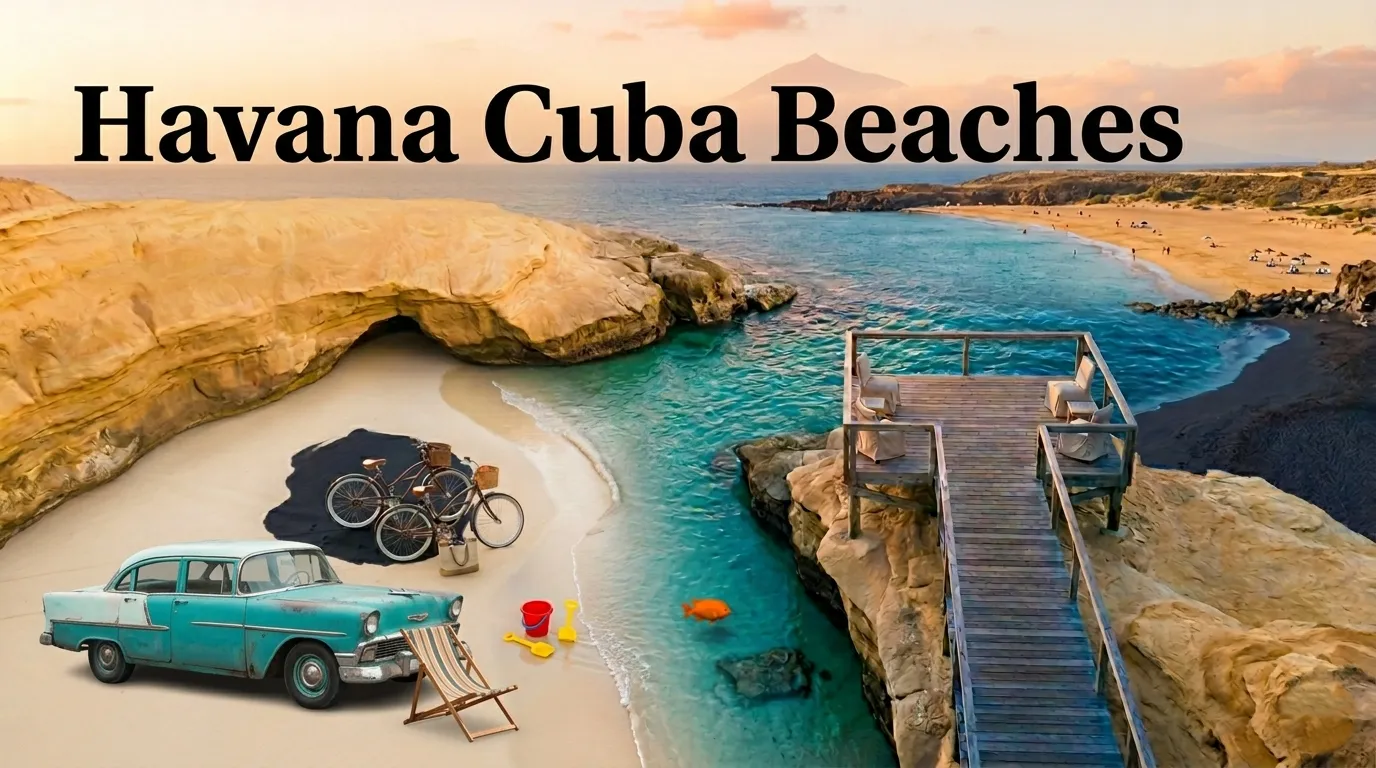
Havana Cuba Beaches 2026: A Real Guide to the Coast
Havana is not a beach resort city. The beach at the foot of the Malecón is a rocky, unswimmable patch of coral grit.
The real Havana beach experience is a 30-minute bus ride east to a string of golden-sand beaches. They are local, lively, and completely different from a packaged Caribbean resort.
This guide tells you exactly which beach to pick and how to get there. I will give you the honest logistics for a 2026 trip, from the cash-only bus fare to the specific cove where you escape the Sunday crowds.
Are There Beaches in Havana
Yes, there are beaches in Havana, but the good ones are not in the city center. The city itself sits on a rocky limestone shelf, not a sandy shore.
The Malecón is the city’s iconic sea wall, and it functions as the local beach. Havanas jump from the rocks into deep, clear water, but it is not a place for a towel, a sunbed, or a relaxed family swim.
The closest swimmable city beaches are the small, mostly rocky coves west of the Almendares River. Playa de Marianao is a local, gritty stretch of sand, but it is not recommended for tourists due to inconsistent water quality and a lack of amenities.
The genuine sandy beach experience requires a trip to the Playas del Este, a 15-kilometer strip of beaches that begins just 20 minutes east of the city center. This is where the entire city goes to swim.
Havana Cuba Beaches Overview
The Havana beach experience is defined by the Playas del Este, a string of seven distinct beaches east of the city. Each has a different character, crowd, and sand quality.
The sand here is a coarse, golden coral grit, not the fine quartz of Florida. The water is a clear, warm turquoise that rivals better-known Caribbean islands.
These are local, public beaches. You will see entire extended Havano families setting up camp with loud music, domino games, and a whole roasted pig, and you will be the only foreigner on the sand on a weekday.
The beach infrastructure is functional but basic. You can rent a sunbed and a shade umbrella for a small fee in Cuban Pesos, and a paladar will sell you a fresh mojito and a plate of fried fish for a few dollars.
According to local reports, the 2026 beach season sees the T3 tourist bus running daily from Parque Central. The trip takes 30 to 40 minutes depending on which beach you choose, and it costs roughly $5 to $10 USD for a round trip.
Key Takeaway: Playas del Este is a long strip of distinct beaches, each with its own personality. You must pick the right one.
Best Beaches in Cuba Near Havana
The best beaches near Havana are all on the Playas del Este strip. My table below provides an honest ranking of each named sector.
Santa María del Mar is the most famous, developed, and crowded. Boca Ciega is the quiet, river-mouth escape with a bohemian edge.
| Beach | Best For | Sand & Water | Crowd Level | Insider Note |
|---|---|---|---|---|
| Santa María del Mar | First-timers, families, amenities | Wide, golden sand, calm turquoise water | High on weekends | The Tropicoco Hotel zone is the epicenter. Busy but functional. |
| Boca Ciega | Quiet couples, nature lovers | Coarser sand, clear water, river lagoon | Low | Fewer amenities, but a much more peaceful, bohemian vibe. |
| Playa Guanabo | Local families, long walks | Long, wide beach, gentle surf | Moderate | The farthest end, with the most authentic, local village feel. |
| Playa Bacuranao | Quick trip, calmest water | Fine sand, protected cove | Moderate | The closest beach to Havana. A small cove, not a long strand. |
| Tarará | Secluded, snorkeling | Small, rocky-edged coves | Low | The former Hemingway marina. Often very quiet. |
| El Mégano | Scuba diving, water sports | Rocky entry, coral reef offshore | Low | The dive center beach. Better for underwater than sunbathing. |
| Mi Cayito | LGBTQ+ friendly, lively social scene | Soft sand, calm water | Moderate | A specific, well-known social section of the beach. |
A solo traveler wanting a simple, social day should go to Santa María. A couple seeking a quiet escape should stay on the bus for ten more minutes and get off at Boca Ciega.
Playas del Este Havana
Playas del Este is not one beach. It is a 15-kilometer string of seven distinct beach sectors, and the experience changes completely depending on where you get off the bus.
The T3 Transtur bus drops passengers at four main stops along the beach road. The first stop is Bacuranao, and the last stop is Guanabo, with Santa María del Mar in the middle.
The road runs parallel to the sand, separated by a thin line of low-rise hotels and casas particulares. You simply walk through a public access path between two buildings, and you are on the sand.
The honest truth about a Sunday at Playas del Este is that it is a loud, crowded, and intensely local experience. The same beach that was a tranquil paradise on a Tuesday morning becomes a city-wide block party by Sunday afternoon.
The best strategy is a weekday visit. If you must go on a weekend, go to the farthest end of Guanabo, which is the last to fill up, and arrive by 9 AM to claim your spot.
Key Takeaway: Go on a weekday, take the bus to the farthest stop, and avoid the Sunday crowds.
Santa María del Mar Beach
Santa María del Mar is the most developed and popular beach in the Playas del Este. It is the place to go for your first Cuban beach day.
The sand is wide and golden, the water is a calm, clear turquoise, and the 1950s-era Tropicoco Hotel anchors the scene with its weathered but functional beachfront. You can rent a sunbed, buy a drink, and use the hotel’s basic restrooms.
This is the best beach for a family or a first-time visitor who needs the security of amenities. You will find paladares selling pizza, fried chicken, and cold Cristal beer directly on the sand.
The honest limitation is the crowd on a Sunday. The sand is a dense mosaic of umbrellas and the water’s edge is a churning line of children, so you must go on a weekday to enjoy the clear, calm water without the chaos.
Insider Tip:
- Walk 200 meters east from the main Tropicoco entrance to find significantly more space and a calmer, more respectful local crowd.
- Bring your own toilet paper. The beachfront facilities are basic, and paper is never guaranteed.
- A sunbed rental costs a small CUP fee, but the negotiation is part of the experience. Smile and pay the asked price.
Playa Guanabo
Playa Guanabo is the last and farthest beach on the Playas del Este strip. It is where the city ends and the small coastal village begins.
The beach is long, wide, and less intensely developed than Santa María. The sand is a slightly coarser golden grit, and the water is the same warm, clear turquoise.
This is the most authentic, local beach experience you can have near Havana. The village of Guanabo has a relaxed, end-of-the-line feel, with small casas particulares and paladares lining the main street.
Guanabo is the best beach for a couple or a solo traveler who wants a long, quiet walk. The crowd here is more spread out, more local, and less oriented around the package tour bus.
The honest trade-off is the distance. The bus ride from Parque Central takes a full 40 to 50 minutes, so this is a full-day commitment, not a quick morning dip.
Key Takeaway: Boca Ciega is for quiet nature. Guanabo is for an authentic, local beach village at the end of the line.
Havana City Beaches
The only genuine city beach in Havana is the Malecón. It is not a sandy beach, but it is where Havanas go to swim, fish, and socialize.
You will see young men diving from the sea wall into deep, aquamarine water and families sitting on the wide, wave-splashed promenade. It is a public theater of urban coastal life, and it is a defining Havana experience.
The small, rocky coves west of the Almendares River, like Playa de Marianao, exist, but they are not recommended for tourists. The sand is a gritty, eroded mix, and the water quality is inconsistent.
A far better city-beach hybrid is the Blau Arenal Habana Beach club west of the city in Baracoa. This is a small, man-made beach with a pool, a restaurant, and a day-pass fee of roughly $15 to $25 USD per person.
This is the best option for a traveler who wants a quick, clean beach fix without committing to the full Playas del Este bus journey. It is a pool club with a beach, not an authentic local beach, but it is clean and functional.
Havana Snorkeling Beaches
Snorkeling near Havana is an honest but modest experience. The water is warm and clear, but the coral near the main beaches is mostly dead or degraded from decades of local fishing pressure.
The best accessible snorkeling spot is at the rocky edges of Tarará. The small, rocky coves on the eastern end of this former marina have small patches of live coral and a surprising number of small tropical fish.
The El Mégano dive center offers the best aquatic experience. You can book a scuba diving or snorkeling trip to a healthy offshore reef from the official dive shop right on the beach.
You must bring your own mask and snorkel from Havana. There are no reliable rental shops on the Playas del Este, and the dive center’s limited gear is reserved for paying dive clients.
The water visibility is best in the dry winter months from December through April. Summer brings calmer, warmer water, but the visibility drops due to plankton blooms and the occasional sargassum influx.
Havana Beach Clubs
A Havana beach club is a small, paid-entry zone that offers a pool, sunbeds, a restaurant, and a curated, foreigner-friendly beach experience. It is the opposite of the free, local Playas del Este.
The Blau Arenal Habana Beach club is the most accessible and best-known. It sits on a small, protected cove west of the city, and a day pass grants access to a clean, manicured beach, a pool, and a reliable bar.
The Club Habana in Miramar is a more exclusive, members-only club with a private beach and marina. Foreigners can sometimes purchase a day pass at the gate, but this access is unreliable and depends entirely on the mood of the gate attendant that day.
A beach club is the right choice for a family or an older traveler who finds the uncontrolled chaos of the public Playas del Este overwhelming. You trade local authenticity for a clean restroom, a guaranteed sunbed, and a predictable experience.
The honest cost in 2026 is a day pass that ranges from $15 to $50 USD per person. You will pay in cash, and the price depends on the season, the demand, and your negotiating skills.
Havana Beach Transport
Getting to the Playas del Este from Old Havana is a straightforward 30- to 50-minute bus ride. The official tourist bus is the simplest and safest option.
The T3 Transtur bus departs from Parque Central, next to the Hotel Inglaterra, every 30 to 60 minutes. You buy a round-trip ticket from the driver in cash, and the price in 2026 is estimated at $5 to $10 USD for the day.
A private taxi, either a classic American car or a modern Lada, will cost $25 to $40 USD for a one-way trip. Negotiate the fare clearly before you get in the car, and confirm whether the price is for the car or per person.
A colectivo, or shared taxi, is the local, cheaper option. You find one near the Parque Central taxi stand, and you pay a few dollars to share a ride with other passengers heading to the same beach.
The bus is crowded on weekends. You must arrive at the Parque Central stop by 8:30 AM on a Sunday to secure a seat, or you will stand for the entire 40-minute ride in a hot, unairconditioned bus.
Key Takeaway: Take the T3 tourist bus on a weekday morning. It is the simplest, cheapest, and safest option.
Havana Beach Entrance Fee
Most of the Playas del Este beaches are free. There is no official entrance fee to walk onto the sand.
You pay for the sunbed and the shade umbrella. The rental is a small, informal fee paid in CUP to the person who watches over that section of the sand, and it is a few dollars at most.
Some small coves, like the one at the Tropicoco Hotel, may charge a small entrance fee of $1 to $2 USD. This gives you access to the hotel’s cleaner, more secure beach area and restrooms.
The beach clubs are the exception. The Blau Arenal Habana Beach charges a day pass that ranges from $15 to $25 USD, which includes a sunbed and pool access.
You must carry small bills in both USD and CUP. The sunbed attendant will accept either, but the rate is better in CUP, and you cannot rely on a credit card for any transaction.
Best Havana Beach for Families
The best Havana beach for a family is Santa María del Mar. It has the most amenities, the calmest, clearest water, and the easiest access from the T3 bus drop-off.
The beach in front of the Tropicoco Hotel has a gentle, safe entry with no sudden drop-offs. The water deepens slowly, creating a large, shallow wading zone for children.
The paladares directly on the sand sell pizza, fried chicken, and ice-cold drinks. A hungry child will not have to wait long for a recognizable meal, which is a specific and significant advantage.
A family with young children should pack everything they need, including toilet paper, hand sanitizer, and a full supply of snacks. The amenities are functional but basic, and a specific brand of diaper or formula will not be available.
The honest truth about a family beach day at Santa María is that it works best on a weekday morning. A Sunday is too crowded for a parent to comfortably watch a child in the water, so you must plan a Tuesday-to-Thursday visit.
Best Time to Visit Havana Beaches
The best time to visit Havana’s beaches is a weekday in April or May. The water is a warm, clear 80°F, the sky is a cloudless blue, and the sargassum seaweed has not yet arrived.
The dry season from November through April offers the most reliable sun and the lowest humidity. The trade-off is the occasional cold front that can bring two days of blustery wind and rough, cool water.
The worst time is a Sunday in August. The water is a hot, 85°F bath, the hurricane risk is peaking, the sargassum can be thick, and the beach is crushed with the entire city of Havana.
Hurricane season officially runs from June 1 through November 30. A flexible, refundable hotel booking is essential for any trip planned between August and October, as a hurricane can shut down the island for a week.
The best time of day for a beach trip is an 8 AM arrival. The morning light on the turquoise water is beautiful, the sand is clean from the overnight tide, and you get two hours of peace before the local crowd arrives at 10 AM.
Havana Beach Safety
Havana’s beaches are generally safe for swimming, but you must take specific, informed precautions. The infrastructure is basic, and the safety net is thin.
Key safety and seasonal facts every visitor should know:
- Sargassum Seaweed: The seaward-facing beaches from Santa María to Guanabo can see heavy sargassum influx from May through October. It is not dangerous, but it piles up on the sand, rots, and smells like rotten eggs.
- Sun Intensity: The Caribbean sun at this latitude is brutal. A broad-spectrum SPF 50 sunscreen, a wide-brimmed hat, and a UV-protective rash guard are mandatory, as the hotel shop will not sell you a replacement at a fair price.
- Petty Theft: Never leave a bag unattended on the sand. The local crowd is honest, but a solo traveler’s phone and wallet are a target of opportunity. Bring only the cash you need for the day and a copy of your passport.
- Water Quality: The water at the main Playas del Este is generally clean and clear. After a heavy rain, runoff can temporarily reduce water clarity near the river mouths, so avoid swimming directly at the Boca Ciega river outlet for 24 hours after a storm.
- Jellyfish: The occasional stinging jellyfish can drift in during the summer. A small bottle of vinegar in your beach bag is a cheap, effective treatment for a sting, as a lifeguard is not always present.
The single most important safety rule is that a lifeguard is not guaranteed. You are responsible for your own water safety, so never swim alone, and never let a child swim unsupervised.
Frequently Asked Questions About Havana Cuba Beaches
Is it safe to swim at Havana beaches?
Yes, the water at Playas del Este is generally calm, clear, and safe for swimming.
The safest swimming is at Santa María del Mar, which has a gentle, deep-sand bottom and no rocks.
Avoid swimming at the rocky Malecón, as exiting the water requires a difficult, sharp climb up the sea wall.
How do I get from Old Havana to Playas del Este?
The T3 Transtur bus from Parque Central is the simplest and cheapest official tourist option.
The ride takes 30 to 50 minutes, and a round-trip ticket in 2026 costs an estimated $5 to $10 USD.
A private classic car taxi is faster and more comfortable but will cost $25 to $40 USD one way.
Are there any beaches in Havana city itself?
No, there are no sandy swimming beaches in the historic center of Havana.
The Malecón sea wall is where locals swim from the rocks, but it is not a beach.
The small, rocky coves west of the Almendares River are not recommended for tourists.
What is the best beach near Havana for a quiet day?
Boca Ciega is the quietest beach on the Playas del Este strip for a peaceful weekday escape.
It has a small, bohemian vibe with fewer amenities and far fewer people than Santa María.
For an even quieter experience, take the T3 bus to the last stop at Guanabo and walk east for 15 minutes.
Do I need cash for Havana beaches?
Yes, you must bring all the cash you need for the day in small bills.
The bus, the sunbed, the food, and the drinks are all paid for in cash only, in either USD or CUP.
No US-issued credit or debit card will work at a Cuban beach business in 2026.
When is the sargassum seaweed season in Havana?
The sargassum season typically runs from May through October, with the heaviest influx often in June.
The seaward-facing beaches at Santa María and Guanabo are the most affected.
The protected cove at Bacuranao is the best place to escape a bad sargassum day.
The single most useful thing to know is that Havana is a city trip with a beach day, not a beach resort trip with a city. Set your expectations accordingly.
Your first step is to book your flights through a licensed provider and pack all your cash. Then take the 8 AM T3 bus from Parque Central on a Tuesday to Santa María del Mar for the perfect introduction.
All 2026 bus schedules, OFAC regulations, and local exchange rates are fluid. Verify the current conditions on the US Treasury Department website and with a local host before you leave your hotel.